#Web3SecurityGuide
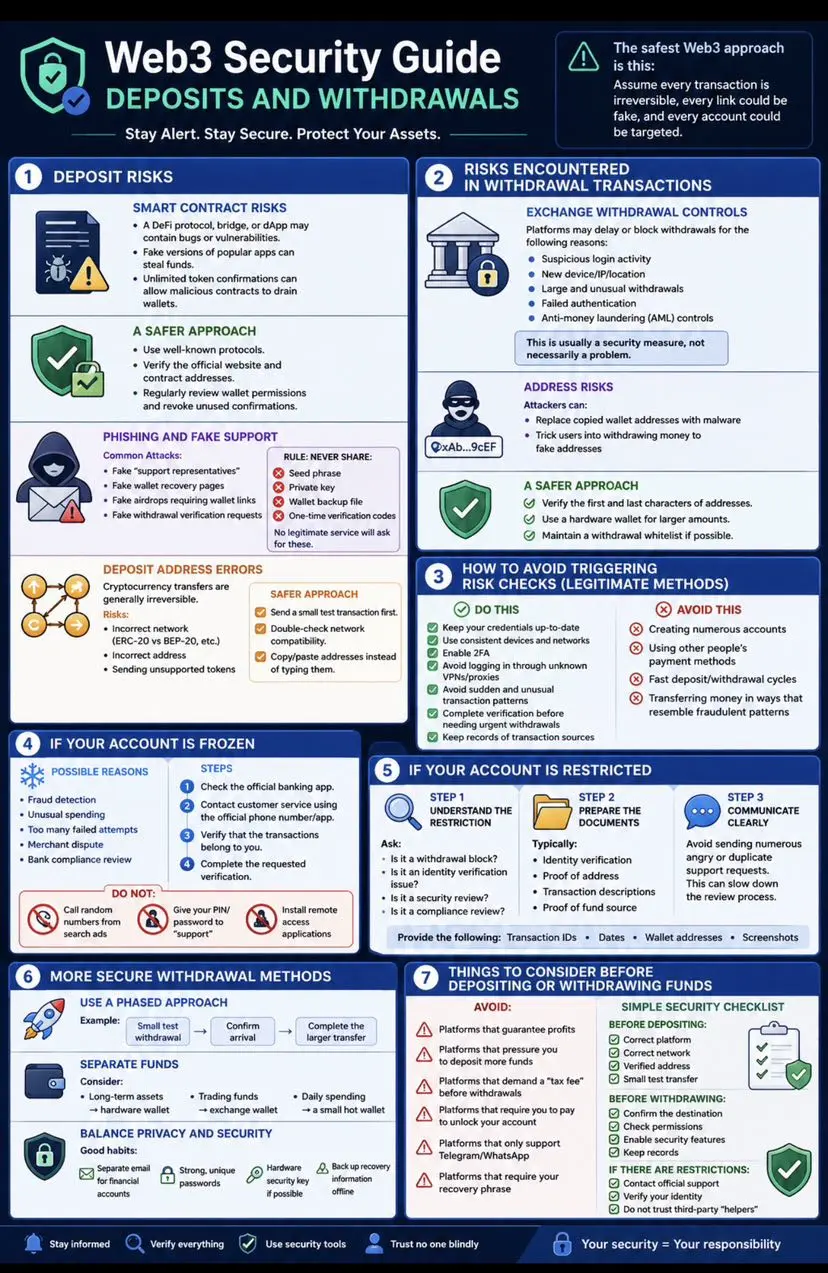
Web3 Security Guide: Deposits and Withdrawals
1. Deposit Risks
Smart Contract Risks
* A DeFi protocol, bridge, or dApp may contain bugs or vulnerabilities.
* Fake versions of popular apps can steal funds.
* Unlimited token confirmations can allow malicious contracts to drain wallets.
A Safer Approach
* Use well-known protocols.
* Verify the official website and contract addresses.
* Regularly review wallet permissions and revoke unused confirmations.
Phishing and Fake Support
Common Attacks:
* Fake “support representatives”
* Fake wallet recovery pages
* Fake airdrops requiring wallet links
* Fake withdrawal verification requests
Rule: Never share:
* Seed phrase
* Private key
* Wallet backup file
* One-time verification codes
No legitimate service will ask for these.
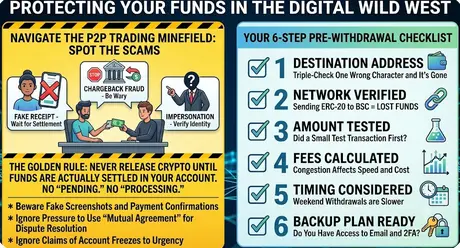
Deposit Address Errors
Cryptocurrency transfers are generally irreversible.
Risks:
* Incorrect network (ERC-20 vs BEP-20, etc.)
* Incorrect address
* Sending unsupported tokens
Safer Approach
* Send a small test transaction first.
* Double-check network compatibility.
* Copy/paste addresses instead of typing them.
2. Risks Encountered in Withdrawal Transactions
Exchange Withdrawal Controls
Platforms may delay or block withdrawals for the following reasons:
* Suspicious login activity
* New device/IP/location
* Large and unusual withdrawals
* Failed authentication
* Anti-money laundering (AML) controls
This is usually a security measure, not necessarily a problem.
Address Risks
Attackers can:
* Replace copied wallet addresses with malware
* Trick users into withdrawing money to fake addresses
A Safer Approach
* Verify the first and last characters of addresses.
* Use a hardware wallet for larger amounts.
* Maintain a withdrawal whitelist if possible.
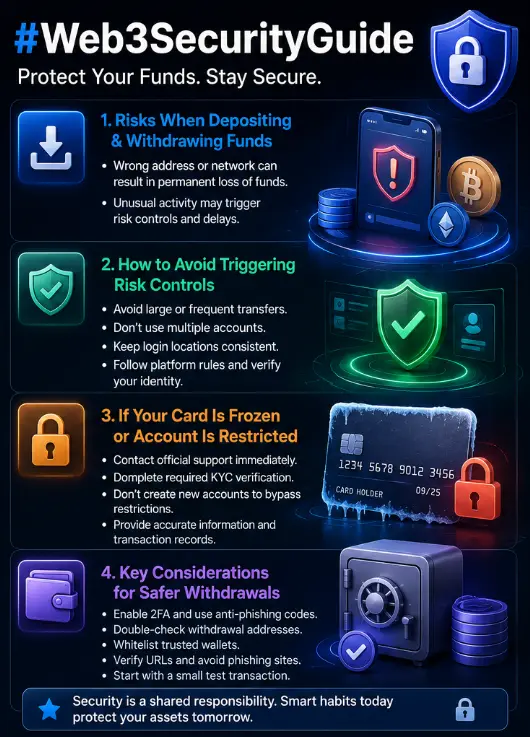
3. How to avoid triggering risk checks (legitimate methods)
You generally can't "skip" security checks, but you can reduce false alarms:
✅ Keep your credentials up-to-date
✅ Use consistent devices and networks
✅ Enable 2FA
✅ Avoid logging in through unknown VPNs/proxies
✅ Avoid sudden and unusual transaction patterns
✅ Complete verification before needing urgent withdrawals
✅ Keep records of transaction sources
Things to avoid:
* Creating numerous accounts
* Using other people's payment methods
* Fast deposit/withdrawal cycles
* Transferring money in ways that resemble fraudulent patterns
4. If your account is frozen
Possible reasons:
* Fraud detection
* Unusual spending
* Too many failed attempts
* Merchant dispute
* Bank compliance review
Steps:
1. Check the official banking app.
2. Contact customer service using the official phone number/app.
3. Verify that the transactions belong to you.
4. Complete the requested verification.
Do not:
* Call random numbers from search ads
* Give your PIN/password to "support"
* Install remote access applications
5. If your account is restricted
Do the following:
Step 1: Understand the restriction
Ask:
* Is it a withdrawal block?
* Is it an identity verification issue?
* Is it a security review?
* Is it a compliance review?
Step 2: Prepare the documents
Typically:
* Identity verification
* Proof of address
* Transaction descriptions
* Proof of fund source
Step 3: Communicate clearly
Avoid sending numerous angry or duplicate support requests. This can slow down the review process.
Provide the following:
* Transaction IDs
* Dates
* Wallet addresses
* Screenshots
6. More secure withdrawal methods
For large withdrawals:
Use a phased approach
Example:
* A small test withdrawal
* Confirm arrival
* Complete the larger transfer
Separate funds
Consider:
* Long-term assets → hardware wallet
* Trading funds → exchange wallet
* Daily spending → a small hot wallet
Balance privacy and security
Good habits:
* Separate email for financial accounts
* Strong, unique passwords
* Hardware security key if possible
* Back up recovery information offline
7. Things to consider before depositing or withdrawing funds
Avoid:
* Platforms that guarantee profits
* Platforms that pressure you to deposit more funds
* Platforms that demand a "tax fee" before withdrawals
* Platforms that require you to pay to unlock your account Platforms
* Platforms that only support Telegram/WhatsApp
* Platforms that require your recovery phrase
Simple security checklist
Before Depositing:
✅ Correct platform
✅ Correct network
✅ Verified address
✅ Small test transfer
Before Withdrawing:
✅ Confirm the destination
✅ Check permissions
✅ Enable security features
✅ Keep records
If there are restrictions:
✅ Contact official support
✅ Verify your identity
✅ Do not trust third-party "helpers"
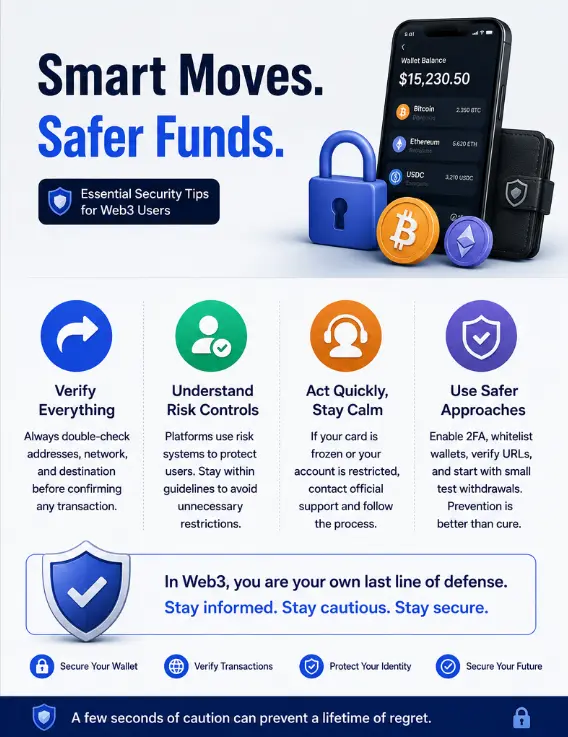
The safest Web3 approach is this: Assume every transaction is irreversible, every link could be fake, and every account could be targeted.
Web3 Security Guide: Deposits and Withdrawals
1. Deposit Risks
Smart Contract Risks
* A DeFi protocol, bridge, or dApp may contain bugs or vulnerabilities.
* Fake versions of popular apps can steal funds.
* Unlimited token confirmations can allow malicious contracts to drain wallets.
A Safer Approach
* Use well-known protocols.
* Verify the official website and contract addresses.
* Regularly review wallet permissions and revoke unused confirmations.
Phishing and Fake Support
Common Attacks:
* Fake “support representatives”
* Fake wallet recovery pages
* Fake airdrops requiring wallet links
* Fake withdrawal verification requests
Rule: Never share:
* Seed phrase
* Private key
* Wallet backup file
* One-time verification codes
No legitimate service will ask for these.
Deposit Address Errors
Cryptocurrency transfers are generally irreversible.
Risks:
* Incorrect network (ERC-20 vs BEP-20, etc.)
* Incorrect address
* Sending unsupported tokens
Safer Approach
* Send a small test transaction first.
* Double-check network compatibility.
* Copy/paste addresses instead of typing them.
2. Risks Encountered in Withdrawal Transactions
Exchange Withdrawal Controls
Platforms may delay or block withdrawals for the following reasons:
* Suspicious login activity
* New device/IP/location
* Large and unusual withdrawals
* Failed authentication
* Anti-money laundering (AML) controls
This is usually a security measure, not necessarily a problem.
Address Risks
Attackers can:
* Replace copied wallet addresses with malware
* Trick users into withdrawing money to fake addresses
A Safer Approach
* Verify the first and last characters of addresses.
* Use a hardware wallet for larger amounts.
* Maintain a withdrawal whitelist if possible.
3. How to avoid triggering risk checks (legitimate methods)
You generally can't "skip" security checks, but you can reduce false alarms:
✅ Keep your credentials up-to-date
✅ Use consistent devices and networks
✅ Enable 2FA
✅ Avoid logging in through unknown VPNs/proxies
✅ Avoid sudden and unusual transaction patterns
✅ Complete verification before needing urgent withdrawals
✅ Keep records of transaction sources
Things to avoid:
* Creating numerous accounts
* Using other people's payment methods
* Fast deposit/withdrawal cycles
* Transferring money in ways that resemble fraudulent patterns
4. If your account is frozen
Possible reasons:
* Fraud detection
* Unusual spending
* Too many failed attempts
* Merchant dispute
* Bank compliance review
Steps:
1. Check the official banking app.
2. Contact customer service using the official phone number/app.
3. Verify that the transactions belong to you.
4. Complete the requested verification.
Do not:
* Call random numbers from search ads
* Give your PIN/password to "support"
* Install remote access applications
5. If your account is restricted
Do the following:
Step 1: Understand the restriction
Ask:
* Is it a withdrawal block?
* Is it an identity verification issue?
* Is it a security review?
* Is it a compliance review?
Step 2: Prepare the documents
Typically:
* Identity verification
* Proof of address
* Transaction descriptions
* Proof of fund source
Step 3: Communicate clearly
Avoid sending numerous angry or duplicate support requests. This can slow down the review process.
Provide the following:
* Transaction IDs
* Dates
* Wallet addresses
* Screenshots
6. More secure withdrawal methods
For large withdrawals:
Use a phased approach
Example:
* A small test withdrawal
* Confirm arrival
* Complete the larger transfer
Separate funds
Consider:
* Long-term assets → hardware wallet
* Trading funds → exchange wallet
* Daily spending → a small hot wallet
Balance privacy and security
Good habits:
* Separate email for financial accounts
* Strong, unique passwords
* Hardware security key if possible
* Back up recovery information offline
7. Things to consider before depositing or withdrawing funds
Avoid:
* Platforms that guarantee profits
* Platforms that pressure you to deposit more funds
* Platforms that demand a "tax fee" before withdrawals
* Platforms that require you to pay to unlock your account Platforms
* Platforms that only support Telegram/WhatsApp
* Platforms that require your recovery phrase
Simple security checklist
Before Depositing:
✅ Correct platform
✅ Correct network
✅ Verified address
✅ Small test transfer
Before Withdrawing:
✅ Confirm the destination
✅ Check permissions
✅ Enable security features
✅ Keep records
If there are restrictions:
✅ Contact official support
✅ Verify your identity
✅ Do not trust third-party "helpers"
The safest Web3 approach is this: Assume every transaction is irreversible, every link could be fake, and every account could be targeted.