#SummerCreationCamp
U.S. Strategic Petroleum Reserve at a 43-Year Low While Oil Prices Surge More Than 20% — Why the Global Energy Market Has Entered Its Most Fragile Phase in Decades
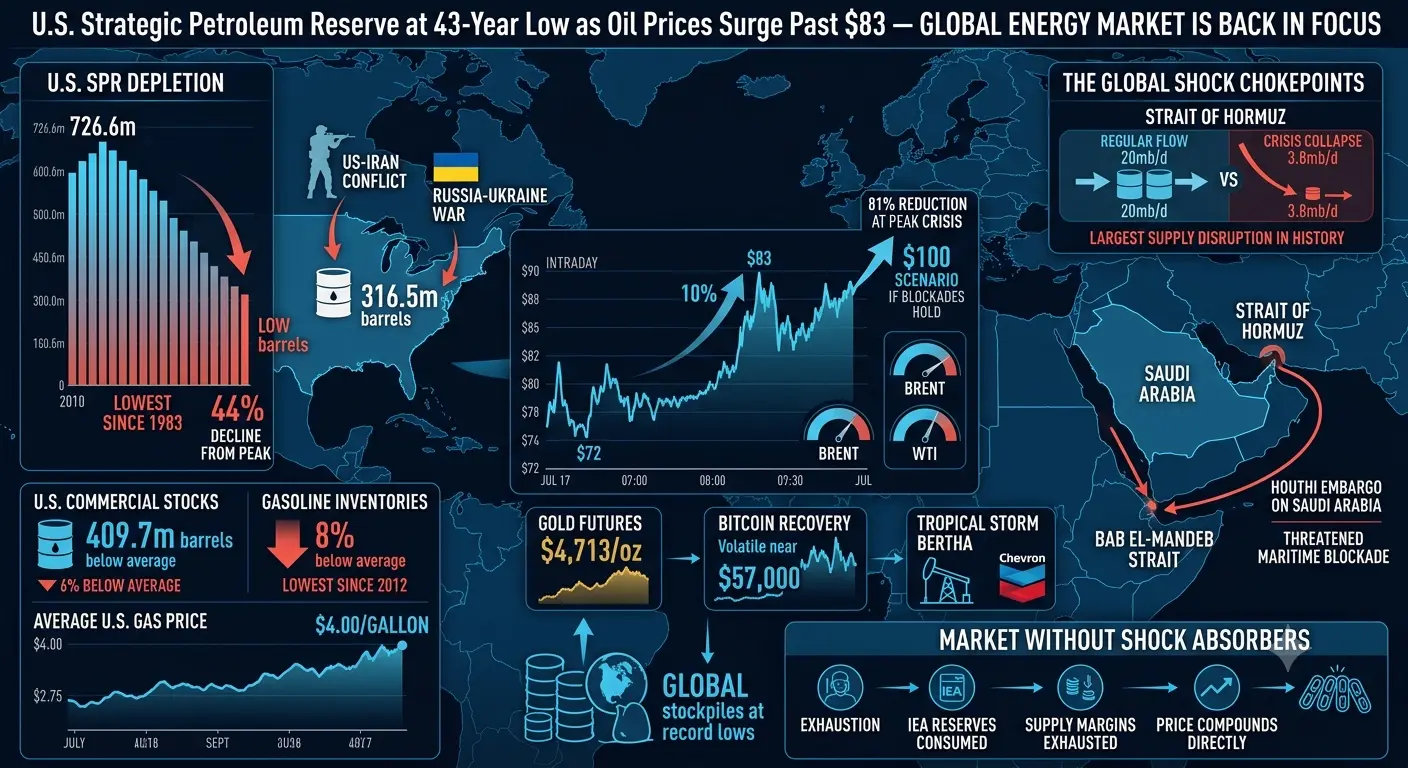
The global energy market is once again experiencing one of its most volatile periods in recent history. The U.S. Strategic Petroleum Reserve (SPR) has fallen to approximately 316.5 million barrels, its lowest level since 1983, representing a decline of more than 56% from the record 726.6 million barrels reached in 2010.
During the latest reporting period alone, the reserve declined by another 3 million barrels, while one weekly draw exceeded 6.2 million barrels, highlighting the scale of emergency deployments. The SPR was originally designed as America's last line of defense against severe oil supply disruptions, but today's inventory levels leave significantly less protection against future geopolitical or weather-related shocks.
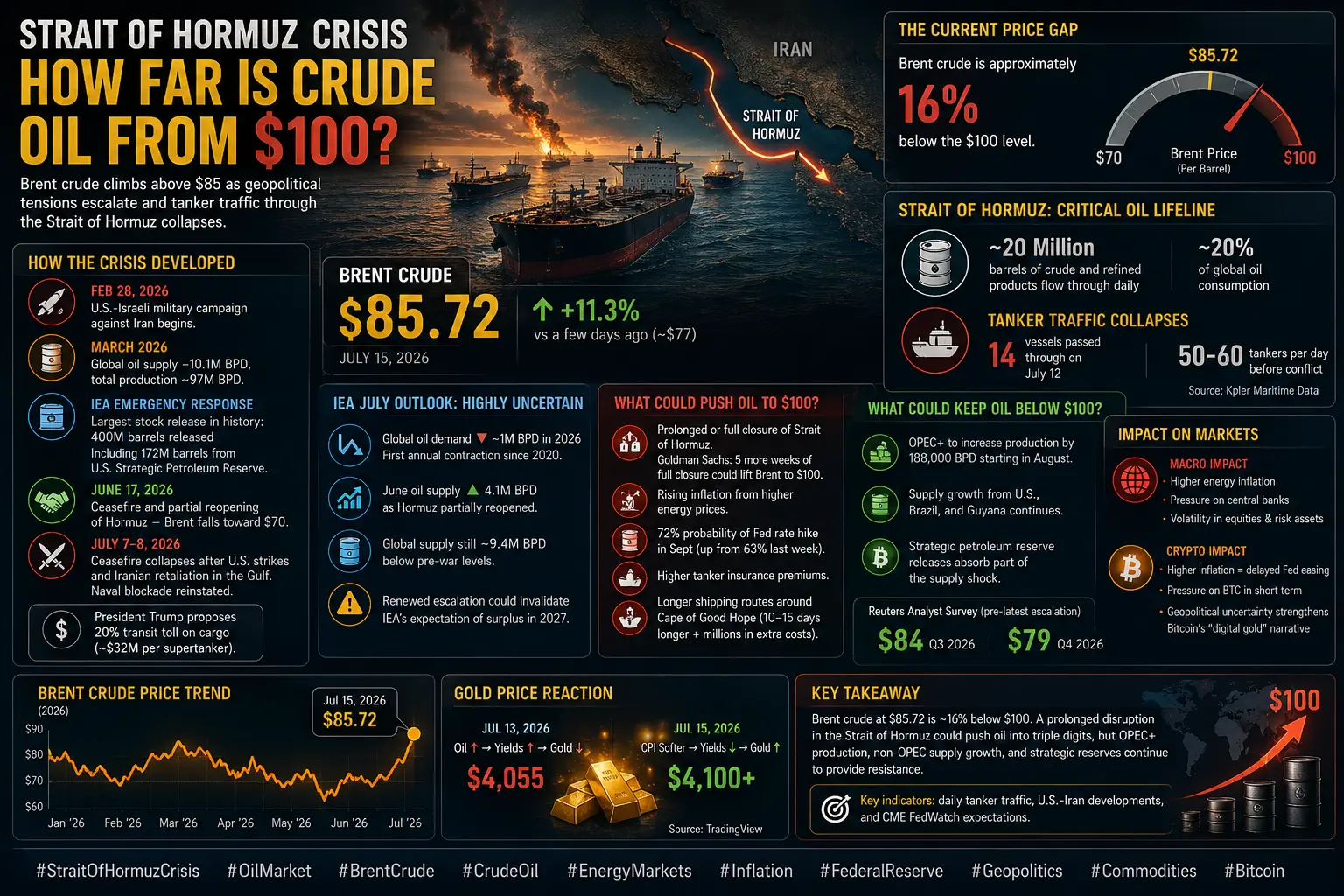
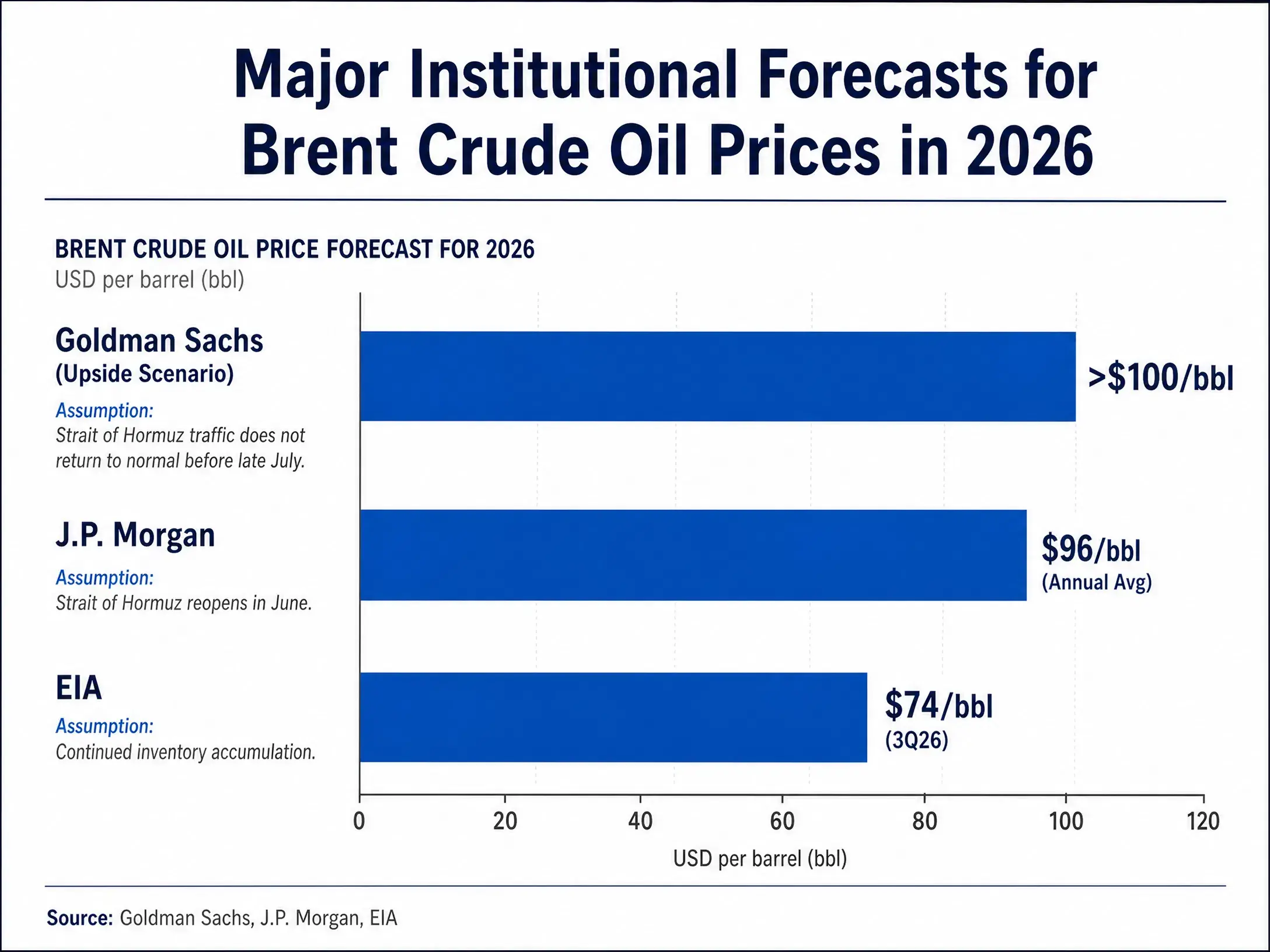
Oil prices have responded dramatically. Brent crude has rallied from around $72.68 in early July to approximately $88–90 per barrel, representing an increase of nearly 24%, while WTI crude has climbed from roughly $69 to above $82 per barrel, gaining almost 19% over the same period. Earlier in the year, Brent briefly approached $128 per barrel, meaning prices are still around 30% below those crisis highs but are rapidly moving higher as geopolitical tensions return. At one point, Brent recorded an extraordinary 10% single-day rally, one of the strongest daily advances seen in years, demonstrating how quickly geopolitical risk can reprice global energy markets.
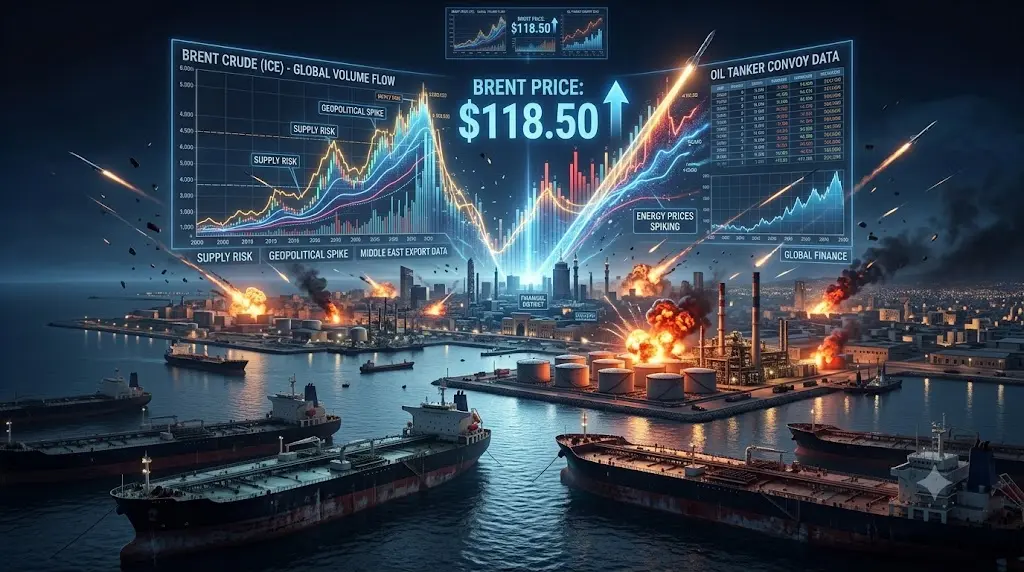
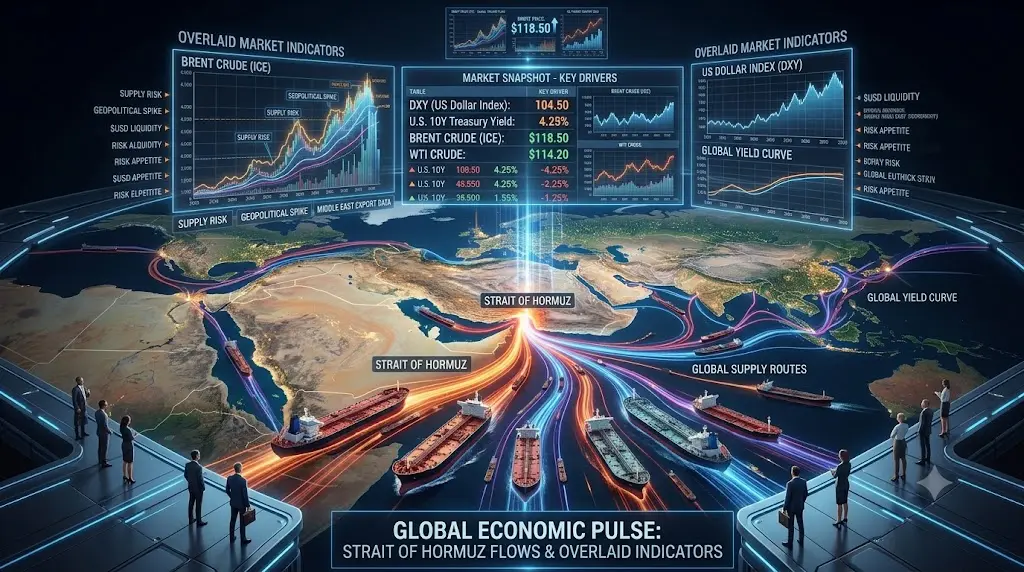
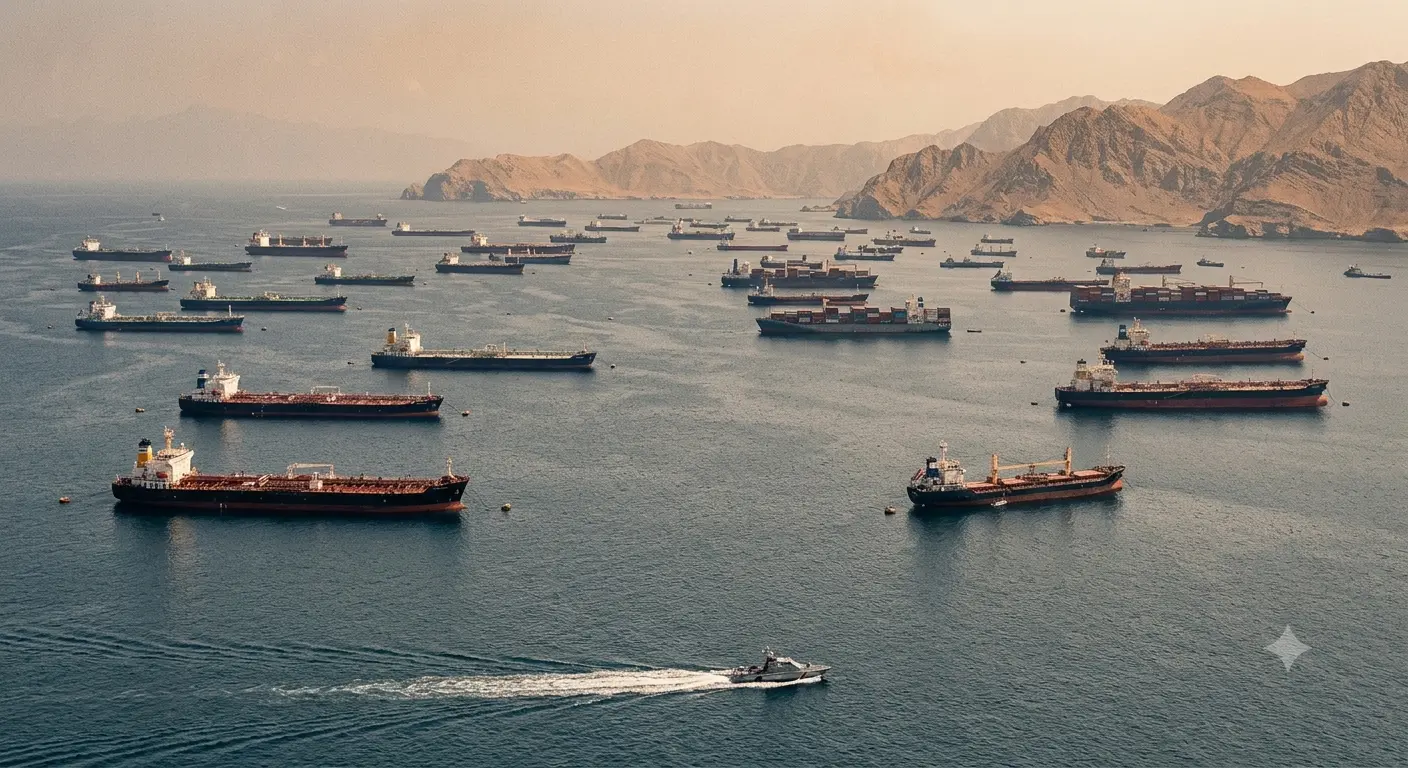
The Strait of Hormuz remains the world's most important energy chokepoint, carrying roughly 20–20.3 million barrels per day, equivalent to approximately 20% of global petroleum consumption. During the height of the regional conflict, oil flows through the Strait reportedly collapsed from nearly 20 million barrels per day to around 3.8 million barrels per day, an astonishing 81% decline. Even after partial recovery, disruptions continue to remove an estimated 11 million barrels per day from normal global supply chains after accounting for alternative routes and emergency measures. If additional disruptions affect both the Strait of Hormuz and the Bab el-Mandeb corridor simultaneously, analysts believe $100 Brent crude becomes an increasingly realistic scenario.
Inventory conditions remain equally concerning. U.S. commercial crude inventories stand roughly 6% below the five-year seasonal average, while gasoline inventories are approximately 8% below normal levels and remain at their weakest seasonal position since 2012. Diesel inventories also remain well below historical averages, while U.S. crude imports have fallen approximately 12.2% year-over-year, reflecting tighter international supply conditions. Combined U.S. petroleum inventories have declined by more than 123 million barrels, significantly reducing the overall energy buffer available to stabilize markets during future disruptions.
Consumers are already experiencing the consequences. Average U.S. gasoline prices have approached $4 per gallon, an increase of roughly 45% compared with around $2.75 one year earlier. Diesel prices have exceeded $5 per gallon, representing a remarkable 34.4% year-over-year increase. These higher fuel costs flow directly into transportation, aviation, manufacturing, agriculture, logistics, food production, and consumer goods, increasing inflationary pressure across virtually every sector of the economy.
The impact extends far beyond energy markets. Rising oil prices increase business operating expenses, compress corporate profit margins, and place upward pressure on global inflation. Persistent inflation often encourages central banks to maintain higher interest rates for longer periods, reducing liquidity across financial markets. Historically, tighter monetary conditions have created additional volatility for equities and cryptocurrencies, particularly growth-oriented assets that depend on abundant market liquidity.
Meanwhile, safe-haven assets continue attracting investor attention. Gold has climbed to around $4,713 per ounce, posting a daily gain of approximately 3.8%, while silver surged more than 7.4% in a single session. Central banks have doubled their pace of gold accumulation compared with the previous decade, purchasing around 1,000 tonnes annually over recent years as they diversify reserve holdings and reduce dependence on traditional reserve assets. This continued accumulation reflects growing concern over geopolitical fragmentation, inflation risks, and financial uncertainty.
Bitcoin has also experienced significant volatility. After falling below $57,000, the world's largest cryptocurrency rebounded nearly 10%, demonstrating continued resilience despite macroeconomic uncertainty. However, Bitcoin remains heavily influenced by ETF flows, monetary policy expectations, investor sentiment, and overall market liquidity. While many investors continue viewing Bitcoin as digital gold over the long term, short-term price movements remain closely linked to broader macroeconomic conditions rather than geopolitical headlines alone.
Additional uncertainty comes from weather-related risks. Tropical storm activity in the Gulf of Mexico has temporarily disrupted offshore production facilities, adding another supply-side challenge on top of existing geopolitical tensions. When weather disruptions coincide with military conflicts and constrained inventories, oil markets become even more vulnerable to sudden price spikes because multiple supply risks emerge simultaneously.
Looking forward, investors will closely monitor several critical catalysts, including developments surrounding the Strait of Hormuz, Red Sea shipping security, OPEC+ production policy, strategic petroleum reserve replenishment, Chinese crude demand, refinery utilization, inflation reports, and central bank decisions. Even relatively small changes in supply or demand can generate disproportionately large price movements because the market's traditional safety margins have narrowed considerably.
The global energy market has entered an era where inventories are thinner, geopolitical risks are higher, and price reactions are significantly more sensitive than in previous years. A Strategic Petroleum Reserve that has fallen more than 56% from its historical peak, Brent crude advancing roughly 24% in just weeks, WTI gaining nearly 19%, gasoline inventories 8% below normal, crude inventories 6% below average, imports declining 12.2%, diesel prices rising 34.4%, gasoline increasing nearly 45%, and temporary supply disruptions exceeding 80% through one of the world's most critical shipping lanes collectively illustrate how limited the global energy cushion has become. Until geopolitical tensions ease, supply chains normalize, and strategic reserves are rebuilt, every new geopolitical headline will continue influencing oil prices, inflation expectations, financial markets, and cryptocurrency sentiment across the globe.
#OilMarket #BrentCrude #WTI #StrategicPetroleumReserve @Gate_Square
U.S. Strategic Petroleum Reserve at a 43-Year Low While Oil Prices Surge More Than 20% — Why the Global Energy Market Has Entered Its Most Fragile Phase in Decades
The global energy market is once again experiencing one of its most volatile periods in recent history. The U.S. Strategic Petroleum Reserve (SPR) has fallen to approximately 316.5 million barrels, its lowest level since 1983, representing a decline of more than 56% from the record 726.6 million barrels reached in 2010.
During the latest reporting period alone, the reserve declined by another 3 million barrels, while one weekly draw exceeded 6.2 million barrels, highlighting the scale of emergency deployments. The SPR was originally designed as America's last line of defense against severe oil supply disruptions, but today's inventory levels leave significantly less protection against future geopolitical or weather-related shocks.
Oil prices have responded dramatically. Brent crude has rallied from around $72.68 in early July to approximately $88–90 per barrel, representing an increase of nearly 24%, while WTI crude has climbed from roughly $69 to above $82 per barrel, gaining almost 19% over the same period. Earlier in the year, Brent briefly approached $128 per barrel, meaning prices are still around 30% below those crisis highs but are rapidly moving higher as geopolitical tensions return. At one point, Brent recorded an extraordinary 10% single-day rally, one of the strongest daily advances seen in years, demonstrating how quickly geopolitical risk can reprice global energy markets.
The Strait of Hormuz remains the world's most important energy chokepoint, carrying roughly 20–20.3 million barrels per day, equivalent to approximately 20% of global petroleum consumption. During the height of the regional conflict, oil flows through the Strait reportedly collapsed from nearly 20 million barrels per day to around 3.8 million barrels per day, an astonishing 81% decline. Even after partial recovery, disruptions continue to remove an estimated 11 million barrels per day from normal global supply chains after accounting for alternative routes and emergency measures. If additional disruptions affect both the Strait of Hormuz and the Bab el-Mandeb corridor simultaneously, analysts believe $100 Brent crude becomes an increasingly realistic scenario.
Inventory conditions remain equally concerning. U.S. commercial crude inventories stand roughly 6% below the five-year seasonal average, while gasoline inventories are approximately 8% below normal levels and remain at their weakest seasonal position since 2012. Diesel inventories also remain well below historical averages, while U.S. crude imports have fallen approximately 12.2% year-over-year, reflecting tighter international supply conditions. Combined U.S. petroleum inventories have declined by more than 123 million barrels, significantly reducing the overall energy buffer available to stabilize markets during future disruptions.
Consumers are already experiencing the consequences. Average U.S. gasoline prices have approached $4 per gallon, an increase of roughly 45% compared with around $2.75 one year earlier. Diesel prices have exceeded $5 per gallon, representing a remarkable 34.4% year-over-year increase. These higher fuel costs flow directly into transportation, aviation, manufacturing, agriculture, logistics, food production, and consumer goods, increasing inflationary pressure across virtually every sector of the economy.
The impact extends far beyond energy markets. Rising oil prices increase business operating expenses, compress corporate profit margins, and place upward pressure on global inflation. Persistent inflation often encourages central banks to maintain higher interest rates for longer periods, reducing liquidity across financial markets. Historically, tighter monetary conditions have created additional volatility for equities and cryptocurrencies, particularly growth-oriented assets that depend on abundant market liquidity.
Meanwhile, safe-haven assets continue attracting investor attention. Gold has climbed to around $4,713 per ounce, posting a daily gain of approximately 3.8%, while silver surged more than 7.4% in a single session. Central banks have doubled their pace of gold accumulation compared with the previous decade, purchasing around 1,000 tonnes annually over recent years as they diversify reserve holdings and reduce dependence on traditional reserve assets. This continued accumulation reflects growing concern over geopolitical fragmentation, inflation risks, and financial uncertainty.
Bitcoin has also experienced significant volatility. After falling below $57,000, the world's largest cryptocurrency rebounded nearly 10%, demonstrating continued resilience despite macroeconomic uncertainty. However, Bitcoin remains heavily influenced by ETF flows, monetary policy expectations, investor sentiment, and overall market liquidity. While many investors continue viewing Bitcoin as digital gold over the long term, short-term price movements remain closely linked to broader macroeconomic conditions rather than geopolitical headlines alone.
Additional uncertainty comes from weather-related risks. Tropical storm activity in the Gulf of Mexico has temporarily disrupted offshore production facilities, adding another supply-side challenge on top of existing geopolitical tensions. When weather disruptions coincide with military conflicts and constrained inventories, oil markets become even more vulnerable to sudden price spikes because multiple supply risks emerge simultaneously.
Looking forward, investors will closely monitor several critical catalysts, including developments surrounding the Strait of Hormuz, Red Sea shipping security, OPEC+ production policy, strategic petroleum reserve replenishment, Chinese crude demand, refinery utilization, inflation reports, and central bank decisions. Even relatively small changes in supply or demand can generate disproportionately large price movements because the market's traditional safety margins have narrowed considerably.
The global energy market has entered an era where inventories are thinner, geopolitical risks are higher, and price reactions are significantly more sensitive than in previous years. A Strategic Petroleum Reserve that has fallen more than 56% from its historical peak, Brent crude advancing roughly 24% in just weeks, WTI gaining nearly 19%, gasoline inventories 8% below normal, crude inventories 6% below average, imports declining 12.2%, diesel prices rising 34.4%, gasoline increasing nearly 45%, and temporary supply disruptions exceeding 80% through one of the world's most critical shipping lanes collectively illustrate how limited the global energy cushion has become. Until geopolitical tensions ease, supply chains normalize, and strategic reserves are rebuilt, every new geopolitical headline will continue influencing oil prices, inflation expectations, financial markets, and cryptocurrency sentiment across the globe.
#OilMarket #BrentCrude #WTI #StrategicPetroleumReserve @Gate_Square