Pheonixprincess

vip
Age 1.4 Year
Peak Tier 5
No content yet
📢 Gate Square Daily Report | June 2
1️⃣ Market Trends: BTC falls to nearly two-month lows at $71,000, down 2.7% over the past 24 hours; Strategy sells 32 Bitcoins for the first time in four years, and the stock price drops 5%.
2️⃣ Institutional Developments: Bitcoin mining company IREN completes $3.65 billion in financing, which is intended to support an AI cloud contract signed with Microsoft.
3️⃣ AI Developments: Anthropic secretly submits a draft S-1 filing to the SEC, preparing for an IPO; the issuance size and price have not yet been determined.
4️⃣ TradFi Developments: U.S. stoc
BTC-2.17%
GateSquare
📢 Gate Square Daily Report | June 2
1️⃣ Market Trends: BTC falls to nearly two-month lows at $71,000, down 2.7% over the past 24 hours; Strategy sells 32 Bitcoins for the first time in four years, and the stock price drops 5%.
2️⃣ Institutional Developments: Bitcoin mining company IREN completes $3.65 billion in financing, which is intended to support an AI cloud contract signed with Microsoft.
3️⃣ AI Developments: Anthropic secretly submits a draft S-1 filing to the SEC, preparing for an IPO; the issuance size and price have not yet been determined.
4️⃣ TradFi Developments: U.S. stock-market retail investors have outperformed institutions for two consecutive months; in May, excess returns reached 16 percentage points, setting a historical record.
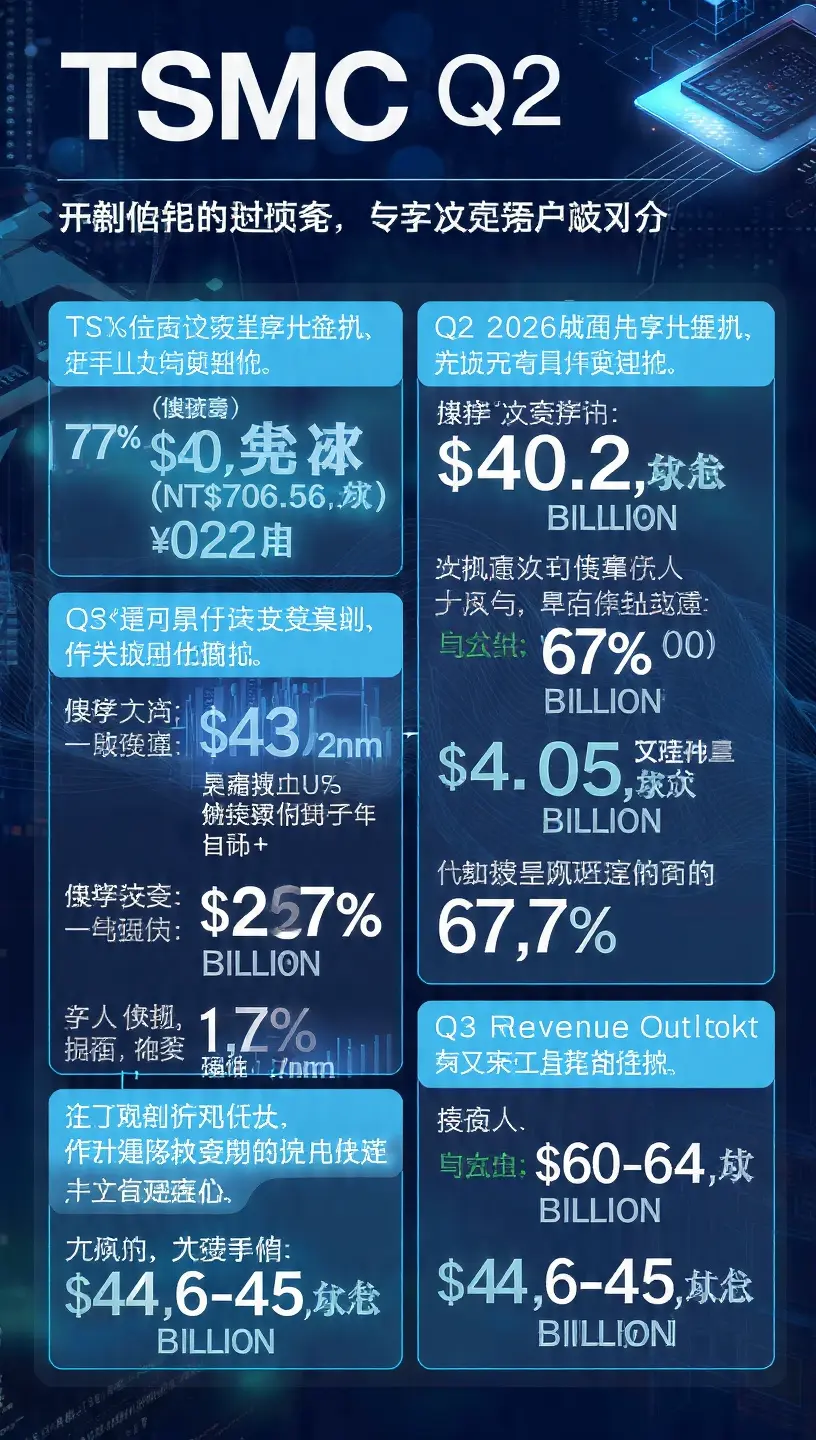
5️⃣ Market View: “New stock god” Serenity points out that Google’s $80 billion financing may benefit AI supply-chain companies such as Micron and TSMC.
repost-content-media
  • Reward
  • 5
  • Repost
  • Share
MasterChuTheOldDemonMasterChu:
Steadfast HODL💎
View More
The ride of US stock trading has already arrived at the Gate stock.
New users participating in trading tasks in the first month have a chance to share in one million Anthropic stock rights.
Get rewards for your first trade, share the prize pool daily during the first week for reaching daily targets, and unlock higher-tier benefits with increased trading volume in the first month.
Newbie package: Earn 3-10 USDT equivalent ANTHROPIC stock rewards for your first trade.
Daily tasks: Share in a $30,000 ANTHROPIC stock reward pool daily during the first week.
Monthly tasks: Complete specifie
GateSquare
The ride of US stock trading has already arrived at the Gate stock.
New users participating in trading tasks in the first month have a chance to share in one million Anthropic stock rights.
Get rewards for your first trade, share the prize pool daily during the first week for reaching daily targets, and unlock higher-tier benefits with increased trading volume in the first month.
Newbie package: Earn 3-10 USDT equivalent ANTHROPIC stock rewards for your first trade.
Daily tasks: Share in a $30,000 ANTHROPIC stock reward pool daily during the first week.
Monthly tasks: Complete specified trading volume to share in one million Anthropic stock rights.
Hidden bonus: Brokerage users can earn up to 6,000 USDT equivalent stock rights.
Event duration: 2026.06.01 20:00 - 06.30 20:00 UTC+8
Event link: https://www.gate.com/activities/Gate-Stocks-Million-Airdrop
Join via: Gate App 8.21.5 - TradFi - Stocks
repost-content-media
  • Reward
  • 4
  • 1
  • Share
MasterChuTheOldDemonMasterChu:
Steadfast HODL💎
View More
#TradeCFDWinGold
What is CFD Trading?
Contract for Differences (CFD) trading is a sophisticated financial instrument that allows traders to speculate on price movements of various assets without actually owning the underlying asset. A CFD is essentially an agreement between you and a broker to exchange the difference in the value of a financial product between the time the contract opens and closes.
When you trade CFDs, you are not purchasing physical gold, stocks, or currencies. Instead, you are entering into a contract that mirrors the price movement of the asset. If the price moves in your
HighAmbition
#TradeCFDWinGold
What is CFD Trading?
Contract for Differences (CFD) trading is a sophisticated financial instrument that allows traders to speculate on price movements of various assets without actually owning the underlying asset. A CFD is essentially an agreement between you and a broker to exchange the difference in the value of a financial product between the time the contract opens and closes.
When you trade CFDs, you are not purchasing physical gold, stocks, or currencies. Instead, you are entering into a contract that mirrors the price movement of the asset. If the price moves in your favor, the broker pays you the difference. If the price moves against you, you pay the broker the difference. This mechanism enables traders to profit from both rising and falling markets.
How CFD Trading Works
CFD trading operates on a simple yet powerful principle. When you open a CFD position, you choose whether you believe the asset price will rise or fall. If you expect the price to increase, you open a long position (buy). If you anticipate the price will decrease, you open a short position (sell).
The profit or loss is calculated based on the difference between the opening price and the closing price, multiplied by the number of contracts or units you traded. For example, if you buy a gold CFD at $2,300 per ounce and the price rises to $2,350, your profit is $50 per unit traded, minus any trading costs.
CFDs are traded on margin, which means you only need to deposit a percentage of the total trade value to open a position. This margin requirement varies depending on the asset and the broker, typically ranging from 1% to 20% of the total position value. This leverage amplifies both potential gains and potential losses.
Key Components of CFD Trading
Leverage and Margin: Leverage is one of the most attractive features of CFD trading. It allows you to control a large position with a relatively small amount of capital. For instance, with 1:100 leverage, you can control a $10,000 position with just $100 of your own money. However, leverage is a double-edged sword that magnifies both profits and losses proportionally.
Spread: The spread is the difference between the buying price (ask) and the selling price (bid) of a CFD. This represents the primary cost of trading CFDs. When you enter a trade, you start with a small loss equal to the spread, which means the asset must move in your favor by at least the spread amount before you break even.
Overnight Financing: If you hold a CFD position overnight, you may incur financing charges. These fees represent the cost of the leverage provided by the broker. For long positions, you typically pay interest, while for short positions, you may receive or pay interest depending on prevailing rates.
Understanding Gold CFD Trading
Gold CFD trading is one of the most popular forms of CFD trading. Gold, represented by the symbol XAUUSD, is a highly liquid and volatile asset that attracts traders worldwide. When you trade gold CFDs, you are speculating on the price movements of gold against the US dollar.
Gold CFDs offer several advantages over physical gold ownership. You do not need to worry about storage, insurance, or security concerns associated with holding physical gold. Additionally, you can trade gold CFDs with leverage, allowing you to control larger positions with smaller capital outlays.
Gold prices are influenced by various factors including inflation rates, interest rates, geopolitical tensions, currency fluctuations, and global economic conditions. Understanding these drivers is essential for successful gold CFD trading.
Step-by-Step Guide to Trading CFDs
Step 1: Choose a Reliable Broker: Select a regulated broker that offers competitive spreads, reliable trading platforms, and strong customer support. Ensure the broker provides access to the markets you want to trade, including gold CFDs.
Step 2: Open and Fund Your Account: Complete the account registration process, which typically involves providing identification documents and proof of address. Fund your trading account using your preferred payment method.
Step 3: Analyze the Market: Before placing any trade, conduct thorough market analysis. Use technical analysis tools such as charts, indicators, and patterns to identify potential entry and exit points. Additionally, stay informed about fundamental factors that may affect your chosen asset.
Step 4: Determine Your Position Size: Calculate how much capital you are willing to risk on each trade. A common risk management rule is to risk no more than 1% to 2% of your total account balance on any single trade.
Step 5: Place Your Trade: Decide whether to go long or short based on your analysis. Enter the number of units or lots you wish to trade and set your stop-loss and take-profit levels to manage your risk automatically.
Step 6: Monitor and Manage Your Position: Keep track of your open positions and market conditions. Be prepared to adjust your strategy if market conditions change or if your trade reaches your predetermined exit points.
Winning Strategies for Gold CFD Trading
Trend Following: Gold often exhibits strong trending behavior. Identify the prevailing trend using moving averages or trend lines and trade in the direction of the trend. When gold is in an uptrend, look for buying opportunities. When it is in a downtrend, consider short positions.
Breakout Trading: Gold prices often break out of consolidation patterns with significant momentum. Watch for price breaking above resistance levels for long entries or below support levels for short entries. These breakouts can lead to substantial price movements.
Range Trading: When gold prices are moving sideways between established support and resistance levels, you can buy near support and sell near resistance. This strategy works well in ranging markets but requires careful identification of valid support and resistance zones.
News Trading: Major economic announcements, central bank decisions, and geopolitical events can cause significant gold price movements. Stay informed about scheduled news events and be prepared to trade the volatility that follows.
Risk Management in CFD Trading
Risk management is crucial for long-term success in CFD trading. Always use stop-loss orders to limit potential losses on each trade. A stop-loss automatically closes your position when the price reaches a predetermined level, preventing catastrophic losses.
Diversify your trading portfolio across different assets and avoid concentrating all your capital in a single trade. This approach helps spread risk and reduces the impact of any single losing trade.
Never risk more than you can afford to lose. CFD trading involves significant risk, and leveraged positions can result in losses exceeding your initial deposit. Always trade with capital you can afford to lose without affecting your financial stability.
Common Mistakes to Avoid
Overleveraging: Using excessive leverage is one of the most common mistakes among CFD traders. While leverage can amplify profits, it equally amplifies losses. Start with lower leverage ratios and gradually increase as you gain experience.
Emotional Trading: Trading based on emotions such as fear or greed often leads to poor decisions. Stick to your trading plan and avoid making impulsive trades based on short-term market movements.
Ignoring Risk Management: Failing to use stop-loss orders or risking too much capital on single trades can quickly deplete your trading account. Always prioritize risk management over potential profits.
Lack of Education: Entering the CFD markets without adequate knowledge and preparation is a recipe for failure. Invest time in learning about CFD trading, market analysis, and risk management before committing real capital.
Conclusion
CFD trading offers exciting opportunities for traders to profit from price movements in various financial markets, including gold. By understanding how CFDs work, implementing sound risk management practices, and developing effective trading strategies, you can navigate the CFD markets with greater confidence.
Remember that CFD trading involves substantial risk, and success requires discipline, continuous learning, and emotional control. Start with a demo account to practice your strategies without risking real money, and only transition to live trading once you have developed a consistent approach.
Gold CFD trading, in particular, offers unique opportunities due to gold's status as a safe-haven asset and its sensitivity to global economic conditions. By mastering the fundamentals outlined in this guide and continuously refining your approach, you can work toward achieving your trading goals in the dynamic world of CFD trading.@Gate_Square
@Gate广场_Official
repost-content-media
  • Reward
  • 4
  • Repost
  • Share
MasterChuTheOldDemonMasterChu:
Steadfast HODL💎
View More
#StockTradingChallengeUpTo17000U
The challenge has multiple components: new user tasks, spot trading volume tiers, futures trading with position trial vouchers, CFD trading rankings, and ecosystem experience tasks. Each requires different approaches.
For maximizing rewards, traders should consider volume accumulation across all three tracks (spot, futures, CFDs) since rewards can stack. The highest cash rewards come from CFD trading rankings where top performers can earn up to 2,000 USDT, but this requires substantial volume (minimum 5 million USDT for top 100, up to 1 billion USDT for first
HighAmbition
#StockTradingChallengeUpTo17000U
The challenge has multiple components: new user tasks, spot trading volume tiers, futures trading with position trial vouchers, CFD trading rankings, and ecosystem experience tasks. Each requires different approaches.
For maximizing rewards, traders should consider volume accumulation across all three tracks (spot, futures, CFDs) since rewards can stack. The highest cash rewards come from CFD trading rankings where top performers can earn up to 2,000 USDT, but this requires substantial volume (minimum 5 million USDT for top 100, up to 1 billion USDT for first place).
Risk management is crucial - traders shouldn't chase volume at the expense of significant losses. The challenge rewards trading activity, not just profitability, so strategies that generate volume while controlling risk are optimal.
For spot and futures, traders should calculate the volume needed to reach the next reward tier and determine if the additional trading costs justify the reward. The ecosystem tasks (Convert, ETF, Earn, US Treasury) offer guaranteed smaller rewards for the first 500 participants, making them low-risk opportunities.
New users and referrals provide additional stacking opportunities - both inviter and invitee receive 2-10 USDT stock tokens when conditions are met.
I should present this in a structured, professional manner covering preparation, execution strategies, and risk considerations.
---
Best Strategies for the Gate Stock Trading Challenge
Pre-Challenge Preparation
Before entering, verify your account status and complete KYC requirements. The challenge runs from May 25 to June 15, 2026, giving approximately three weeks to accumulate volume. Review your available capital and determine which reward tiers are realistically achievable based on your trading capacity.
Strategy Framework: Multi-Track Optimization
The challenge rewards participation across three independent tracks, with earnings stacking across events. Your optimal approach depends on capital size and risk tolerance.
For Smaller Accounts (Under $10,000):
Focus on ecosystem tasks first. Complete the Convert task (minimum 1,000 USDT), ETF task (minimum 2,000 USDT), Earn activities (minimum 1,000 USDT), and US Treasury subscriptions (minimum 1,000 USDT held 24 hours). Each task offers 2-10 USDT for the first 500 participants. These rewards stack with other event earnings and carry minimal risk.
Simultaneously, aim for the lowest spot trading tier (5,000 USDT cumulative volume for 2 USDT reward) through normal trading activity. If you are a new user or can invite new users who complete KYC and 1,000 USDT in CFD trades, both parties receive additional 2-10 USDT stock tokens.
For Medium Accounts ($10,000-$50,000):
Target higher spot trading tiers. The 50,000 USDT volume tier pays 10 USDT, while 500,000 USDT pays 100 USDT. Calculate whether the additional trading costs justify pursuing higher tiers. For futures, the 50,000 USDT volume tier provides a 10 USDT position trial voucher, scaling up to 5,000 USDT voucher at 100 million USDT volume.
Consider using copy trading or quant bots for futures volume accumulation, as these count toward your totals. This can help reach volume targets without requiring constant manual monitoring.
For Larger Accounts ($50,000+):
Prioritize CFD trading rankings for the highest cash rewards. The top 100 rankings require minimum volumes starting at 5 million USDT, with top three positions earning 500-2,000 USDT cash. Positions 4-10 receive 1,000 USDT CFD position trial vouchers.
To rank effectively, concentrate CFD activity on stock-related assets only, as other CFD categories do not count. Maintain discipline around position sizing to avoid excessive risk while accumulating volume.
Execution Tactics
Volume Efficiency: Trading volume equals buy plus sell volume. This means round-trip trades count double. However, avoid excessive churning solely for volume, as transaction costs will erode profits. Focus on genuine trading opportunities where volume accumulation aligns with your normal strategy.
Timing Considerations: Ecosystem tasks are limited to the first 500 participants per task. Complete these early in the event period to secure guaranteed rewards. For ranking-based rewards, monitor your position on leaderboards and adjust activity accordingly.
Referral Strategy: If you have contacts interested in stock trading, invite them during the event window. Each successful referral (new registration, KYC completion, and 1,000 USDT CFD trade) benefits both parties. You can earn up to 10 invitation rewards.
Risk Management Framework
The challenge rewards trading volume, not profitability. This creates a temptation to overtrade. Maintain your standard risk parameters:
Never risk more than 1-2% of account balance per trade
Use stop-losses on all positions
Avoid increasing position sizes solely to generate volume
Account for trading fees when calculating net rewards
Calculate your break-even point. If pursuing a 100 USDT reward requires generating 500,000 USDT in volume, ensure your trading strategy maintains positive expectancy after costs. A strategy that loses money to earn a reward is counterproductive.
Tracking and Verification
Regularly check your progress on the event page. Gate's backend records determine final statistics. Note that API users, VIP 14 and above, market makers, and institutional accounts are excluded from participation.
Rewards distribute within 14 business days after the event concludes. Cash rewards go to spot accounts, while position trial vouchers appear in the Voucher Center.
Final Recommendations
1. Register immediately and complete KYC if not already done
2. Complete ecosystem tasks within the first few days
3. Focus volume accumulation on your strongest trading style (spot, futures, or CFDs)
4. Use referral opportunities if available
5. Monitor leaderboard positions if targeting ranking rewards
6. Maintain disciplined risk management throughout
The challenge structure rewards consistent participation across multiple activities rather than single large bets. Plan your approach based on realistic volume targets relative to your account size and trading experience.
@Gate_Square
repost-content-media
  • Reward
  • 5
  • Repost
  • Share
MasterChuTheOldDemonMasterChu:
DYOR 🤓 🤓
View More
#IntroducingGateStocks
#GateStocks | The Future of Investing Has Arrived
The financial world is entering a new era, and Gate is positioning itself at the center of that transformation. With the launch of Gate Stocks and its innovative xStocks ecosystem, the platform is creating a direct bridge between cryptocurrency markets and traditional U.S. equities. This is more than just another trading product—it is a structural shift that allows global investors to access some of the world's most valuable companies through blockchain-based infrastructure.
Gate has become the first platform to introduc
ABBV0.04%
NVDA-0.3%
TSLA-0.55%
COINON-3.67%
HighAmbition
#IntroducingGateStocks
#GateStocks | The Future of Investing Has Arrived
The financial world is entering a new era, and Gate is positioning itself at the center of that transformation. With the launch of Gate Stocks and its innovative xStocks ecosystem, the platform is creating a direct bridge between cryptocurrency markets and traditional U.S. equities. This is more than just another trading product—it is a structural shift that allows global investors to access some of the world's most valuable companies through blockchain-based infrastructure.
Gate has become the first platform to introduce a complete ecosystem combining tokenized stock spot trading and tokenized stock futures trading. Investors can now gain exposure to leading U.S. companies such as Apple, NVIDIA, Tesla, Coinbase, Meta, Google, Circle, Robinhood, and MicroStrategy directly through crypto-based assets backed 1:1 by real shares held in custody.
Why Gate Stocks Matters
For decades, access to U.S. stock markets has been restricted by geographical barriers, brokerage limitations, banking requirements, and complex settlement procedures. Gate eliminates many of these obstacles by allowing users to trade tokenized equities directly with USDT and other digital assets.
Key advantages include:
• 24/7 market accessibility
• Fractional share ownership
• Crypto-based settlement
• No separate brokerage account required
• Global accessibility through a single platform
• Seamless integration with existing crypto portfolios
This creates a truly borderless investment experience where users can move capital between crypto assets and traditional financial instruments without leaving the ecosystem.
The World's First Tokenized Stock Futures Market
The most revolutionary aspect of Gate Stocks is the introduction of tokenized stock futures.
For the first time, traders can:
✓ Go long on bullish expectations
✓ Go short during market declines
✓ Use leverage to amplify exposure
✓ Hedge existing positions efficiently
✓ Trade entirely within a USDT-based environment
This innovation brings sophisticated institutional trading strategies to retail participants while maintaining the flexibility and efficiency of crypto-native markets.
Building a Complete Multi-Asset Ecosystem
Gate's vision extends beyond stocks.
Through its expanding TradFi product suite, users can also access:
• Gold CFDs
• Forex markets
• Major stock indices
• Individual stock CFDs
• Cryptocurrency spot trading
• Cryptocurrency futures trading
The result is a unified financial ecosystem where investors can manage multiple asset classes from one account instead of splitting capital across several platforms.
With over 30 million users globally, thousands of listed digital assets, deep liquidity, and one of the industry's earliest Proof-of-Reserves systems, Gate continues to position itself as a leader in the convergence of traditional finance and blockchain technology.
━━━━━━━━━━━━━━━
AMD Deep Dive: AI Growth Powerhouse
Among all technology companies benefiting from the artificial intelligence revolution, AMD has emerged as one of the strongest growth stories in the semiconductor industry.
Investor confidence has surged as AMD expands its presence in data centers, cloud computing, artificial intelligence infrastructure, and enterprise computing solutions.
The market increasingly views AMD as one of the few realistic challengers capable of capturing market share in AI hardware alongside NVIDIA.
Why AMD Is Gaining Momentum
Several powerful catalysts continue driving
bullish sentiment:
1. AI Accelerator Expansion
AMD's MI300 and MI308 accelerator platforms have attracted significant attention from hyperscale cloud providers and enterprise customers seeking alternatives to NVIDIA's ecosystem.
As global AI spending continues accelerating, AMD stands to benefit from increasing demand for both training and inference workloads.
2. Data Center Growth
The data center segment has become AMD's primary growth engine.
Strong adoption of EPYC server processors has enabled the company to steadily gain market share from Intel while improving profitability and expanding enterprise relationships.
3. China Export Opportunity
Potential approval for MI308 exports to China remains one of the market's most closely watched catalysts.
A favorable regulatory outcome could unlock billions of dollars in additional revenue opportunities and further strengthen AMD's competitive position globally.
4. Consistent Earnings Execution
AMD has repeatedly exceeded analyst expectations through strong revenue growth, improving margins, and successful commercialization of next-generation products.
The company's ability to convert technological innovation into financial performance continues attracting institutional investors.
━━━━━━━━━━━━━━━
Technical Analysis
AMD remains in a strong long-term uptrend.
The 50-day moving average remains significantly above the 200-day moving average, confirming sustained bullish momentum and institutional accumulation.
Major Support Levels
• $382 – Primary support zone and 50-day moving average
• $348 – Secondary support from previous consolidation
• $257 – Long-term structural support and 200-day moving average
Major Resistance Levels
• $481 – Immediate resistance level
• $500 – Critical psychological breakout zone
• $550–$600 – Extended bullish target area
A confirmed breakout above $500 could trigger renewed buying pressure and open the path toward the $550–$600 region where many institutional projections are concentrated.
Despite the bullish outlook, investors should remain aware of several risks:
• Increased competition from NVIDIA
• Potential delays in China export approvals
• Macroeconomic uncertainty and interest-rate changes
• Semiconductor industry cyclicality
• Valuation pressure after strong price appreciation
Short-term traders should also monitor momentum indicators carefully, as elevated RSI readings suggest the possibility of consolidation or temporary pullbacks before the next major move.
AMD remains one of the most compelling AI-driven investment opportunities in the market. The combination of expanding AI infrastructure demand, accelerating data center revenue, growing server market share, and improving enterprise adoption provides a strong long-term growth foundation.
For Gate Stocks users, AMD represents a unique opportunity because traders can gain exposure through both spot and futures products within a single platform. Whether positioning for continued AI-driven growth, managing risk through hedging strategies, or trading short-term volatility, AMD remains one of the most closely watched semiconductor stocks heading into the second half of 2026.
As traditional finance and digital assets continue converging, Gate Stocks and high-growth companies like AMD may become some of the most important themes shaping the future of global markets.#StockTradingChallengeUpTo17000U @Gate_Square @Gate广场_Official
repost-content-media
  • Reward
  • 4
  • Repost
  • Share
MasterChuTheOldDemonMasterChu:
Buy the dip 😎
View More
#WinGoldBarsWithGrowthPoints
Win Gold Bars with Growth Points: Complete Guide to Earning and Rewards
Gate Community Growth Points represent an innovative rewards system designed to recognize and incentivize active community participation. This comprehensive program allows users to accumulate points through various engagement activities and convert them into valuable prizes including physical gold bars, premium merchandise, and trading benefits. Understanding how to maximize your Growth Points earnings can unlock significant rewards while enhancing your overall experience on the platform.
Und
SHIB-0.6%
HighAmbition
#WinGoldBarsWithGrowthPoints
Win Gold Bars with Growth Points: Complete Guide to Earning and Rewards
Gate Community Growth Points represent an innovative rewards system designed to recognize and incentivize active community participation. This comprehensive program allows users to accumulate points through various engagement activities and convert them into valuable prizes including physical gold bars, premium merchandise, and trading benefits. Understanding how to maximize your Growth Points earnings can unlock significant rewards while enhancing your overall experience on the platform.
Understanding Growth Points and How They Work
Growth Points serve as the currency of engagement within the Gate ecosystem. These points are earned by completing specific tasks in the Square and Chat sections of the Gate platform. The system operates on a daily refresh cycle, with points resetting at 8:00 AM UTC each day. This design encourages consistent daily participation rather than one-time massive engagement. Every 300 Growth Points accumulated translates into one draw entry, giving participants the opportunity to win from a prize pool valued at $20,000. The maximum number of draws allowed per day is 10, meaning dedicated participants can enter the lucky draw multiple times daily when they maintain sufficient point balances.
Step by Step Guide to Earning Growth Points
The primary method for earning Growth Points involves active participation in community features. Users can accumulate points by posting content in the Square section, leaving comments on existing posts, liking content shared by other community members, and sending messages through the Chat function. Each of these activities contributes to your daily Growth Points total. To access the Growth Points system, navigate through the Gate mobile application to the Square section, then proceed to the Community Center where all tasks and point balances are displayed. The interface provides real-time tracking of your accumulated points and remaining tasks available for completion.
Eligibility Requirements for Participation
Before participating in the Growth Points lucky draw events, users must meet specific eligibility criteria. Identity verification must be completed before the event concludes. This requirement ensures fair participation and prevents duplicate entries from the same individual. The platform treats sub-accounts and multiple accounts sharing the same KYC information as a single participant, maintaining equitable distribution of rewards. For certain rounds of the Growth Points draw, additional trading volume requirements apply, such as maintaining a minimum spot trading volume of $200 or futures trading volume of $500 during the event period. However, some rounds like the Summer Draw Round 19 do not impose trading volume requirements, making participation accessible to all verified users regardless of trading activity.
Detailed Prize Pool and Reward Structure
The Growth Points lucky draw features an impressive prize pool totaling $20,000 in value. The grand prize consists of a 10 gram gold bar, representing substantial tangible value. Additional rewards include exclusive merchandise such as Inter Milan shirts and 2026 WCTC T-shirts, SHIB tokens for cryptocurrency enthusiasts, position vouchers for trading benefits, trading fee rebate vouchers offering 20 percent rebates valid for 30 days, VIP plus one experience cards valid for 7 days, and lucky bags containing token distributions. The lucky bag distribution follows a proportional formula where your reward equals your lucky bag quantity divided by the total lucky bags distributed, multiplied by $200 worth of tokens.
Understanding Position Vouchers and Trading Benefits
Position vouchers represent one of the most practical rewards for active traders. These vouchers remain valid for 7 days and can be stacked for enhanced benefits. The trading fee rebate vouchers provide a 20 percent reduction on trading fees and maintain validity for 30 days, also featuring stackable properties for maximum savings. The VIP plus one experience card elevates your account status for 7 days, unlocking premium features and reduced fee structures typically reserved for higher tier members. These trading focused rewards complement the physical prizes by providing immediate utility for platform users.
Distribution Timeline and Claim Process
Rewards distribution follows a structured timeline to ensure efficient delivery. Position vouchers, tokens, and lucky bags are distributed within 30 working days following the event conclusion. Physical merchandise requires additional processing time and ships within 60 days after the event ends. Winners must actively claim their merchandise rewards by providing accurate shipping addresses through the prize page interface. Failure to complete this claim process results in forfeiture of physical prizes. In cases where delivery fails for physical items, the platform provides equivalent value conversions, such as transforming a 10 gram gold bar into a $10,000 position voucher, an Inter Milan shirt into a $500 position voucher, or a WCTC T-shirt into a $200 position voucher.
Monthly Growth Value Lucky Draw Additional Opportunities
Beyond the seasonal Growth Points draws, Gate offers a monthly Growth Value Lucky Draw program. Participants who complete tasks and earn at least 300 points monthly receive one entry into this monthly prize draw. The monthly draw features an exceptional 100 percent win rate, ensuring every participant receives some form of reward. Prizes include high value electronics such as iPhone 16 Pro Max devices and MacBook Air computers, official Gate merchandise, token airdrops, futures vouchers, and various additional rewards. This monthly program operates continuously, providing regular opportunities for community members to benefit from their engagement.
Important Participation Guidelines and Restrictions
Several key guidelines govern participation in Growth Points events. The event concludes immediately once all prizes are claimed, creating urgency for early participation. Any attempts at cheating or manipulating the system result in immediate disqualification from current and potentially future events. Users located in restricted jurisdictions cannot participate in these promotional events. Gate maintains final interpretation rights regarding all event rules and reward distributions. Growth Points data refreshes daily at 8:00 AM UTC, requiring participants to monitor their point balances and plan their draw entries accordingly.
Strategic Approach to Maximizing Rewards
To optimize your Growth Points earnings and reward potential, develop a consistent daily routine for community engagement. Complete all available tasks each day to maximize point accumulation. Monitor the Growth Points balance to ensure you have sufficient points for multiple draw entries when desired. Track event periods carefully, as each Growth Points draw round operates within specific timeframes. For instance, the Summer Draw Round 19 runs from May 26, 2026, at 10:30 UTC through June 8, 2026, at 16:00 UTC. Understanding these timeframes allows strategic planning of participation efforts.
The Gate Community Growth Points system represents more than a simple rewards program. It embodies a comprehensive approach to community building that recognizes and rewards genuine engagement. By participating actively in Square discussions, contributing meaningful comments, and maintaining regular communication through Chat features, users build both their point balances and their standing within the community. The combination of physical prizes like gold bars, practical trading benefits through vouchers and rebates, and exclusive merchandise creates a diverse reward ecosystem appealing to various participant preferences. Start your Growth Points journey today by accessing the Community Center through the Gate application and begin completing daily tasks to unlock these valuable rewards.
@Gate广场_Official @Gate_Square
repost-content-media
  • Reward
  • 3
  • Repost
  • Share
MasterChuTheOldDemonMasterChu:
Just charge forward 👊
View More
#USIranNegotiationGame
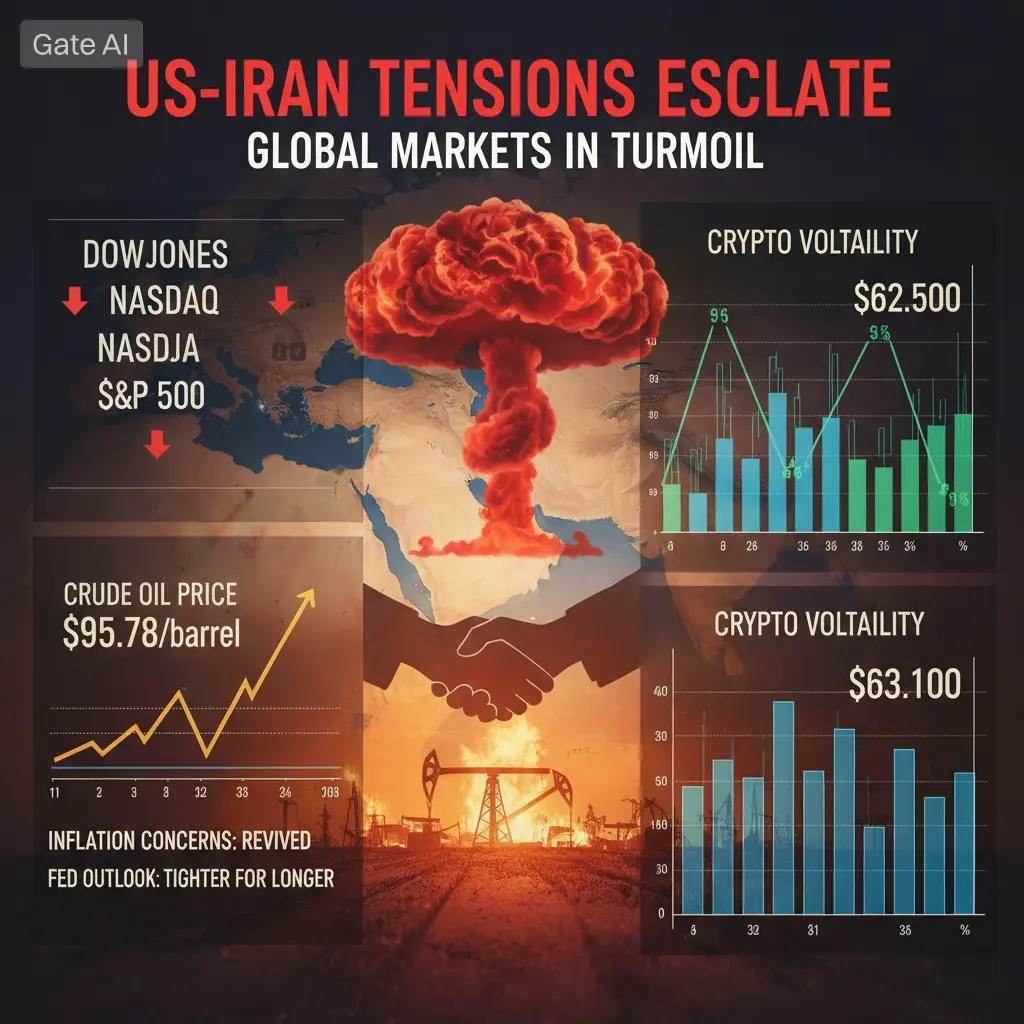
The US-Iran confrontation is the defining geopolitical crisis of 2026. It traces to nuclear negotiation collapse in June 2025 over fundamental disagreements on Iran's enrichment program, ballistic missiles, and sanctions relief. Trump withdrew from the 2015 JCPOA in 2018 believing it only delayed Iran's nuclear path. Multiple negotiation rounds in Oman through 2025 and early 2026 saw the US demanding Iran end all enrichment and constrain its missile program. Iran rejected both, insisting on enrichment rights under international treaties and viewing missiles as sovereign
HighAmbition
#USIranNegotiationGame
The US-Iran confrontation is the defining geopolitical crisis of 2026. It traces to nuclear negotiation collapse in June 2025 over fundamental disagreements on Iran's enrichment program, ballistic missiles, and sanctions relief. Trump withdrew from the 2015 JCPOA in 2018 believing it only delayed Iran's nuclear path. Multiple negotiation rounds in Oman through 2025 and early 2026 saw the US demanding Iran end all enrichment and constrain its missile program. Iran rejected both, insisting on enrichment rights under international treaties and viewing missiles as sovereign defense. Iran proposed limited civilian enrichment using IR-6 centrifuges to 20 percent purity, with the IAEA documenting 45.5 kg of uranium already enriched to 20 percent in fuel assemblies. The US considered this insufficient and dangerous.
When talks collapsed, on February 28, 2026 the US and Israel launched coordinated strikes on Iranian military and nuclear infrastructure, triggering the Iran War. Iran's immediate response was devastating: Tehran moved to close the Strait of Hormuz, the 21-nautical-mile chokepoint through which roughly 20 percent of the world's daily oil supply passes. This created a global energy crisis forcing the US to engage on terms Iran could influence.
A ceasefire brokered by Pakistan on April 8, 2026 was fragile from the start. Iran initially rejected a draft before agreeing to a two-week pause. The ceasefire was extended multiple times. By late May, both sides appeared converging on a 60-day memorandum: extend ceasefire, reopen Hormuz within 30 days, and launch formal nuclear talks. The US would withdraw forces from Iranian ports and end its naval blockade. Iran would restore shipping and remove mines. The US insisted Iran could not impose tolls on transiting vessels and would maintain Hormuz oversight.
US CHANGES TERMS AND IRAN THREATENS COUNTER-MOVES
The critical turning point came when Trump modified key terms. He insisted Iran's enriched uranium must be immediately turned over to the US for destruction or destroyed on-site, using "no dust, no dollars" to demand total nuclear capitulation as a precondition for economic relief. Trump also declared Iran would not control Hormuz and the US would "watch over it," removing any possibility Iran could retain sovereignty or revenue from the waterway.
Iran viewed these changes as unilateral demands stripping its leverage while offering nothing concrete. Iran had discussed maintaining strait control and potentially charging transiting vessels, ideas the US rejected. Iran then issued counter-threats: if the US continued violating ceasefire conditions, particularly by allowing Israel to expand Lebanon operations against Hezbollah, Iran would consider the ceasefire broken on all fronts. Foreign Minister Araghchi stated the ceasefire was "unequivocally on all fronts, including Lebanon."
IRAN HALTS NEGOTIATIONS AND VOWS FULL HORMUZ BLOCKADE
On June 1, 2026, Iran executed its threat. The IRGC-affiliated Tasnim announced negotiators would stop exchanging messages with the US through intermediaries, citing continued Israeli operations in Lebanon and ceasefire violations on all fronts. Tehran would move to completely block the Strait of Hormuz. This was the most dramatic escalation since the war began, ending diplomacy and threatening tighter energy chokehold. Oil leapt more than 5 percent within hours. Trump told CNBC "I don't care if they're over," calling talks "very boring." The US struck Iranian military sites over the weekend, and Iran's Guards targeted a US base in Kuwait in retaliation. The ceasefire exists on paper only. War escalation risk is real if the full blockade triggers a US military response to force Hormuz open, or if Israel's deepening Lebanon operations prompt coordinated Iranian retaliation.
CAN WAR RESUME FULL-SCALE?
Military strikes are already happening on both sides despite the nominal ceasefire. The US conducts "self-defense" strikes on Iranian sites. Iran's Guards fire ballistic missiles at US bases. Hormuz is tightening further. This is essentially a slow-burn conflict that could ignite into wider confrontation at any trigger point.
BITCOIN: CURRENT PRICE AND WHY THE MARKET IS DROPPING
Bitcoin trades around $71,371 as of June 1, 2026, a dramatic decline from the peak above $126,000. The Coinbase Bitcoin Premium Index fell to negative 160, lowest since February when BTC bottomed near $60,000, signaling collapsed US institutional demand. Spot ETFs recorded seven consecutive outflow days, and an investor sold $1.29 billion of BlackRock's Bitcoin ETF in a dark pool. Strategy sold 32 BTC between May 26-31 at average $77,135, its first net disposal in four years.
The decline reasons are multifaceted. First, the Iran war created massive macro uncertainty, BTC plunging 19 percent into mid-$60,000s when conflict began. Second, rising oil from Hormuz blockade stokes inflation fears, with markets pricing 50 percent probability of a Fed rate hike before year-end and 39 percent chance of a December quarter-point increase per CME FedWatch. Higher rates reduce attractiveness of non-yielding Bitcoin. Third, miners sell aggressively: Bitdeer sold over 206 BTC in a single week. Fourth, options data shows 30 percent chance BTC falls below $80,000 by late June. The broader crypto market shrunk to $2.57 trillion, down 5.57 percent weekly, showing 69 percent correlation with gold.
BTC FORECAST AND TRADING STRATEGY
If Iran's full Hormuz blockade pushes oil above $100 with intensifying inflation and rate expectations, BTC could test $65,000-$70,000 support and potentially $60,000. However, on Deribit the $80,000 call emerged as most popular trade, indicating positioning for rebound. If a deal materializes, relief rally could push toward $80,000 and potentially $100,000. Range-bound trading between $65,000-$80,000 likely persists until conflict clarity emerges. Key support at $65,700 and below $60,000. Resistance at $80,000 and $100,000. Strategy: scale into positions at support with tight risk management rather than chasing momentum in a headline-driven market where a single announcement moves prices 5 percent.
OIL: HOW HIGH PRICES HAVE CLIMBED
As of June 1, 2026, WTI opened at $88.92 and Brent at $92.54. By afternoon after Iran's blockade announcement, WTI surged to approximately $101.85 and Brent to $104.40. Earlier in the week, WTI fell to $88.53 and Brent to $94.91 on May 27 when reports suggested Hormuz traffic would restore within one month. By May 28, prices jumped over 3 percent after Iran's Guards targeted a US Kuwait base. June 1, prices leapt more than 5 percent after Iran halted negotiations.
Before February 28 strikes, analyst consensus was $63.85 for Brent and $60.38 for WTI. Forecasts revised upward three times since. HSBC raised 2026 Brent average to $95 citing longer Hormuz closure. JPMorgan revised to $96 for Brent full-year 2026, up from $60. The 2026 Brent peak reached approximately $117-$120 during worst Hormuz closure. Prices are about 20 percent below that peak after May's 19 percent monthly decline, worst since COVID. WTI projected within $71.73-$106.74 in June per LiteFinance.
OIL FORECAST AND TRADING STRATEGY
If Iran's full blockade sustains through July, WTI could retest $100-$106 and Brent could push toward $110-$120. If a deal emerges and Hormuz opens within 30 days, WTI could drop to $75-$85 and Brent to $80-$90. Environment favors momentum trading on breakout signals. Position sizing must be conservative given 5 percent intraday swings. Brent support at $89-$91, resistance at $104-$120 depending on blockade severity.
GOLD: CURRENT SITUATION AND FORECAST
Gold trades approximately $4,455-$4,517 per ounce as of June 1, 2026. Forbes reports $4,458.08, down 1.86 percent over 24 hours. Trading Economics shows $4,483.93, down 1.27 percent. CNBC reports $4,517.37. Kitco reports spot at $4,455.28, down 1.9 percent. Gold futures at $4,476, micro futures at $4,713.10. Gold remains 31 percent above its year-ago level near $3,304. The metal surged past $5,000 for the first time in January 2026 on safe-haven demand and central bank accumulation. World Gold Council reported global demand at 1,231 tonnes in Q1 2026, highest January-to-March figure on record. Gold set a weekly low of $4,450 on June 1.
The decline reflects rising oil stoking inflation, pushing the dollar higher and raising yields. Markets price 50 percent probability of a Fed rate hike this year. Higher yields and stronger dollar increase gold's opportunity cost as a non-yielding asset, creating downward pressure even as geopolitical risk supports defensive allocation. UBS cut year-end gold forecast from $5,900 to $5,500 citing elevated yields and dollar strength. JPMorgan forecasts $5,000 average for 2026, previously $6,300. HSBC expects $5,000 in first half. Resistance at $4,500-$4,514, deeper at $4,546-$4,550. Support below $4,400.
GOLD FORECAST AND TRADING STRATEGY
If conflict escalates with sustained blockade pushing oil above $100, inflation could push gold toward $4,700-$5,000 on safe-haven demand. Fed rate hikes could cap upside and pull below $4,400. If Hormuz resolves, oil collapses, inflation eases, rate pressure diminishes, gold could rally toward $5,000-$5,500 as lower rates benefit non-yielding assets. UBS's Staunovo noted gold and oil will deliver outsized gains even after the war ends. Near-term range $4,400-$4,700 with breakout potential toward $5,000 on either escalation or resolution.
BTC VS OIL VS GOLD: THE INTERCONNECTED CRISIS
Oil is the direct casualty and most headline-sensitive, surging 3-5 percent on blockade news, dropping 4-6 percent on ceasefire optimism. Oil volatility feeds inflation expectations driving Fed policy impacting both gold and Bitcoin. Higher oil means higher inflation, higher rate hike probabilities, stronger dollar, higher yields, downward pressure on both gold and Bitcoin. Geopolitical risk works oppositely with more safe-haven demand. Currently the macro channel dominates: when oil surges and rate fears rise, both gold and Bitcoin fall together, as June 1 showed gold dropping 1.9 percent and Bitcoin near $71,000 while oil jumped above $100.
WHAT TRADERS ARE THINKING AND NEXT STEPS
Bitcoin options show bifurcated sentiment: $80,000 call most popular on Deribit, but 30 percent probability of falling below $80,000 by late June indicates substantial downside awareness. Coinbase Premium collapse and seven ETF outflow days confirm US institutional capital retreating. Oil traders positioned for sustained high prices with downside hedges, those buying near $60 before conflict holding massive profits. Gold traders split between dip-buying toward $5,000-plus year-end and those believing rate fears cap below $4,700 for months.
Price ceilings for 2026: Bitcoin could reach $80,000-$100,000 on resolution or drop to $60,000 on escalation. Oil could reach $110-$120 Brent on sustained blockade or fall to $80-$90 on Hormuz reopening. Gold could reach $5,000-$5,500 on improved conditions or languish near $4,200-$4,500 on rate hikes. Position sizing and risk management matter more than directional conviction where a single announcement moves prices 5 percent in minutes.
repost-content-media
  • Reward
  • 6
  • Repost
  • Share
MasterChuTheOldDemonMasterChu:
DYOR 🤓 🤓
View More
#SaylorHintsAtMoreBTC
Michael Saylor, Executive Chairman of Strategy (formerly MicroStrategy), remains one of the most influential figures in the institutional Bitcoin landscape. His company currently holds approximately 818,334 BTC, accumulated at a total cost of around $61.81 billion, with an average acquisition price near $75,537 per Bitcoin. This position represents more than 3% of Bitcoin’s total fixed supply, reinforcing Strategy’s status as the largest publicly traded corporate Bitcoin holder globally.
Saylor has repeatedly reinforced a long-term conviction strategy centered on continu
BTC-2.17%
HighAmbition
#SaylorHintsAtMoreBTC
Michael Saylor, Executive Chairman of Strategy (formerly MicroStrategy), remains one of the most influential figures in the institutional Bitcoin landscape. His company currently holds approximately 818,334 BTC, accumulated at a total cost of around $61.81 billion, with an average acquisition price near $75,537 per Bitcoin. This position represents more than 3% of Bitcoin’s total fixed supply, reinforcing Strategy’s status as the largest publicly traded corporate Bitcoin holder globally.
Saylor has repeatedly reinforced a long-term conviction strategy centered on continuous accumulation. The company has publicly discussed an ambitious target of reaching 1 million BTC by the end of 2026, which would require acquiring roughly 182,000 additional BTC. At current market prices near $71,300, this expansion would require an estimated additional capital deployment of approximately $12.9 billion. Funding is expected to come from a blend of preferred equity instruments (STRC “Stretch”) and at-the-market equity issuance, creating a structured capital pipeline designed specifically for Bitcoin accumulation over time.
Strategic Capital Structure and Recent Development
Recently, Strategy disclosed in an 8-K filing that it sold 32 BTC between May 26 and May 31 at an average price of approximately $77,135, generating around $2.5 million. This marked the first recorded Bitcoin disposal since late 2022.
The sale was executed to support dividend payments tied to its STRC preferred shares. While the amount is extremely small relative to total holdings, the significance lies in its symbolism rather than financial impact. It shows that Strategy is willing to introduce limited liquidity actions when required for capital structure stability, without altering its broader Bitcoin-first strategy.
Importantly, this should not be interpreted as a shift away from accumulation. Instead, it reflects a more mature financial framework where Bitcoin holdings are strategically integrated into corporate balance sheet management rather than treated as completely static reserves.
Saylor’s response emphasized strengthening STRC as a high-quality credit instrument, reinforcing the idea that Bitcoin remains the core reserve asset while structured financing tools evolve around it.
Bitcoin Market Conditions and Price Behavior
Bitcoin is currently trading around $71,300, significantly below its all-time high above $109,000 earlier in the year. This represents a decline of roughly 35% from peak levels, placing the market in a corrective phase following an extended bullish cycle
.
Recent price structure shows weakening momentum after repeated failures to sustain levels above the $73,000–$74,000 zone. Market behavior has shifted toward cautious trading, with reduced liquidity appetite and increased sensitivity to macroeconomic developments.
From a broader perspective, Bitcoin is currently behaving less like a standalone hedge asset and more like a global risk-sensitive instrument, closely tied to equity market sentiment and liquidity conditions.
Macro Environment and Geopolitical Influence
A key driver of recent volatility has been ongoing US–Iran geopolitical tension, which has significantly impacted global risk sentiment.
Earlier escalation involving strikes on Iranian nuclear infrastructure triggered a sharp market reaction, pushing Bitcoin from approximately $104,000 toward sub-$100,000 levels. This move was accompanied by over $1 billion in leveraged liquidations, highlighting the fragile structure of highly leveraged crypto positioning.
A critical factor has been uncertainty around the Strait of Hormuz, a vital global oil transit route. Any disruption in this region increases oil prices, raises inflation expectations, and reduces global liquidity conditions—typically negative for risk assets including Bitcoin.
Subsequent diplomatic signals briefly improved sentiment, triggering a rebound toward the $77,000 area, but inconsistent messaging and lack of formal resolution have kept markets unstable.
The key transmission mechanism remains liquidity. When geopolitical tensions rise, oil prices increase, inflation expectations rise, and central banks maintain tighter financial conditions—all of which generally suppress speculative asset performance.
Market Sentiment and Forecast Distribution
Bitcoin forecasts for 2026 remain extremely wide, reflecting uncertainty in both macro and crypto-specific drivers.
Conservative scenarios: $60,000–$80,000
Base-case projections: $120,000–$200,000
Aggressive bullish outcomes: $250,000–$500,000
Short-term modeling suggests potential recovery attempts toward $75,000–$80,000 if current support zones hold. However, failure to maintain structural support could expose downside liquidity pockets around $65,000, with deeper risk toward $60,000 in extended correction conditions.
A notable observation is that volatility compression phases like the current one often precede sharp directional moves. The market is effectively in a “decision zone” where macro catalysts are likely to define the next major trend.
Additional Market Insight and Structural View
A key overlooked factor is the shift in institutional positioning behavior. Unlike previous cycles dominated by retail speculation, current market structure is increasingly driven by:
ETF-driven flows
Corporate treasury allocation models
Macro hedge fund rotation
Liquidity conditions tied to interest rate expectations
This means Bitcoin is now more sensitive to capital flow cycles than purely technical patterns.
Another important observation is the divergence between long-term holder conviction and short-term trader behavior. While volatility creates pressure on leveraged participants, long-term accumulation frameworks—especially corporate treasury strategies—continue to act as a stabilizing force during drawdowns.
Additionally, Bitcoin’s current correlation with equities suggests that any sustained recovery will likely require improvement in broader liquidity conditions rather than crypto-native catalysts alone.
Trading Strategy and Risk Framework
In the current environment, risk management is more important than directional conviction.
Geopolitical Sensitivity
Bitcoin remains highly reactive to developments in US–Iran negotiations. A confirmed de-escalation and stabilization of energy routes could rapidly improve risk appetite and trigger recovery toward higher resistance zones. Conversely, renewed escalation would likely extend downside pressure.
Institutional Behavior
Strategy continues to hold over 818,000 BTC, reinforcing long-term conviction. The firm’s average cost basis of approximately $75,537 places current prices slightly below their acquisition level, which may encourage continued accumulation over time.
Key Technical Zones
Resistance levels: $73,500 → $77,000 → $80,000
Support levels: $71,000 → $65,000 → $60,000
Strategy Approach
A structured dollar-cost averaging (DCA) approach remains more resilient than short-term directional trading in the current volatility regime. It reduces exposure to unpredictable geopolitical swings and avoids emotional decision-making during sharp market moves.
Macro Context
Gold remains near record levels, indicating persistent demand for defensive assets. Meanwhile, Bitcoin continues to trade as a hybrid risk asset rather than a pure safe-haven instrument, limiting upside potential during periods of macro stress.
Bitcoin currently sits at a critical inflection point shaped by three dominant forces: geopolitical uncertainty, macro liquidity conditions, and institutional accumulation behavior.
The market is essentially balancing between two scenarios:
A stabilization scenario where easing geopolitical tensions and improved liquidity conditions support a recovery toward $80,000 and above
A stress scenario where continued uncertainty pushes prices toward $65,000–$60,000 support zones
In this environment, the dominant advantage lies not in aggressive prediction, but in disciplined positioning, controlled exposure, and patience while macro conditions evolve.
repost-content-media
  • Reward
  • 3
  • Repost
  • Share
MasterChuTheOldDemonMasterChu:
Just charge forward 👊
View More
#ArthurHayesSeesHYPEOvertakingSOL
Arthur Hayes’ HYPE vs SOL Flippening Thesis – Expanded Market Deep Dive (June 2026)
Arthur Hayes’ view that HYPE could potentially outperform or even overtake SOL remains one of the most discussed relative-value narratives of this cycle. The debate is not simply about price comparison, but about a deeper structural contrast between a buyback-driven perpetual DEX economy and a mature Layer-1 blockchain moving into institutional adoption.
CURRENT MARKET SNAPSHOT
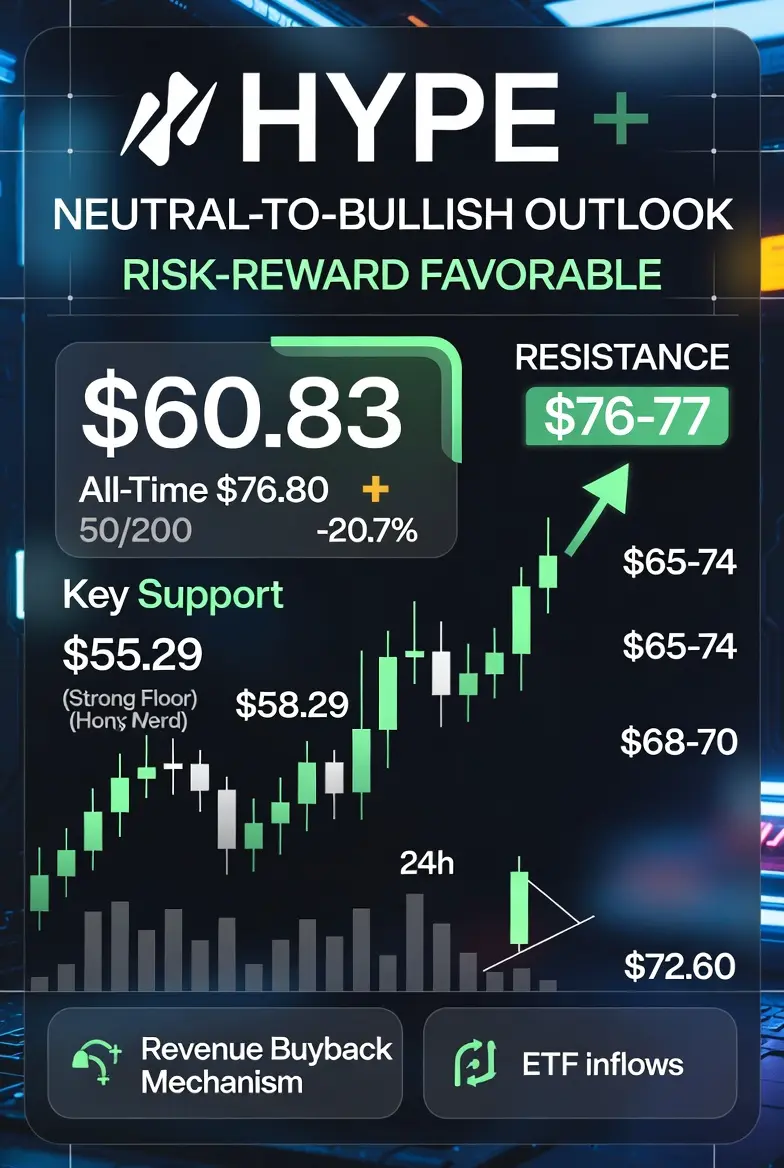
HYPE is currently trading around $75.6
with an estimated circulating market cap near $15B and FDV ar
HYPE4.69%
SOL-2.01%
HighAmbition
#ArthurHayesSeesHYPEOvertakingSOL
Arthur Hayes’ HYPE vs SOL Flippening Thesis – Expanded Market Deep Dive (June 2026)
Arthur Hayes’ view that HYPE could potentially outperform or even overtake SOL remains one of the most discussed relative-value narratives of this cycle. The debate is not simply about price comparison, but about a deeper structural contrast between a buyback-driven perpetual DEX economy and a mature Layer-1 blockchain moving into institutional adoption.
CURRENT MARKET SNAPSHOT
HYPE is currently trading around $75.6
with an estimated circulating market cap near $15B and FDV around $54B. Only a small portion of total supply is unlocked, creating a structurally tight float environment where unlock cycles can significantly influence short-term volatility.
SOL is currently trading around $80.6
with a circulating market cap near $40B and similar FDV structure in the broader range of ~$50B+ depending on supply assumptions. Unlike HYPE, SOL has a fully circulating supply, meaning price action is driven primarily by demand-side capital flows rather than scheduled unlock pressure.
This creates a key structural difference:
HYPE → supply-sensitive, unlock-driven volatility asset
SOL → demand-driven, macro-sensitive infrastructure asset
HYPERLIQUID STRUCTURAL BUYBACK ENGINE
The strongest pillar of the HYPE thesis is its protocol-level buyback system, where trading activity directly translates into token demand.
Key structural features:
A large share of protocol revenue is routed into buybacks
Continuous open-market demand reduces circulating supply
Revenue cycles directly reinforce price support
Strong reflexive feedback loop between trading volume and valuation
Reduced dependence on external speculative inflows
With over $1.16B+ in cumulative revenue and strong ongoing activity, HYPE behaves less like a traditional token and more like a cash-flow-linked crypto asset with embedded demand recycling.
This creates a structural dynamic where: higher volume → higher revenue → stronger buybacks → reduced supply → stronger price response
ECOSYSTEM EXPANSION: HIP UPGRADES AND MARKET IMPACT
Recent protocol upgrades have expanded Hyperliquid beyond a single-product derivatives platform:
HIP-3 Expansion
Introduction of tokenized equities and commodities
Increased institutional-style trading exposure
Broader asset class integration within one ecosystem
HIP-4 Expansion
Prediction markets with collateralized event contracts
New speculative and hedging instruments
Expansion into event-driven trading demand
Structural effect:
Unified margining improves capital efficiency
Reduced liquidity fragmentation
Multi-vertical trading ecosystem formation
This evolution positions Hyperliquid closer to a decentralized financial exchange layer, rather than a standard perp DEX.
SOLANA STRUCTURAL POSITION AND MARKET DYNAMICS
Solana remains one of the most important Layer-1 ecosystems in crypto, with strong institutional and developer-driven growth.
Core strengths:
High-performance blockchain infrastructure
Large and active developer ecosystem
Growing institutional participation via ETF-related flows
Increasing real-world asset (RWA) tokenization adoption
Deep global liquidity and exchange integration
However, recent market structure shows:
Reduced speculative trading intensity compared to prior cycle peaks
Stabilizing futures open interest around ~$5B region
Capital rotation toward newer high-beta ecosystems
Key accumulation zones forming near $77 and $68 levels
Solana is gradually shifting from a high-beta growth asset to a more institutional infrastructure asset, which typically reduces volatility but strengthens long-term valuation stability.
RELATIVE VALUE DYNAMICS (CORE THESIS)
The core of Arthur Hayes’ argument is not absolute valuation, but relative capital efficiency and flow mechanics.
HYPE structure:
Low float supply
High velocity trading environment
Continuous buyback pressure
Strong reflexive feedback loop
SOL structure:
High-cap infrastructure asset
Demand driven by ecosystem adoption
Institutional capital inflows
No direct supply contraction mechanism
Key distinction:
HYPE behaves like a synthetically deflationary flow asset
SOL behaves like a broad infrastructure equity-like crypto asset
This is why the comparison is structurally important—it reflects two different pricing systems within crypto markets.
FLIPPENING CONDITIONS (SCENARIO FRAMEWORK)
For HYPE to meaningfully challenge or overtake SOL in valuation terms:
Required conditions:
HYPE sustains $100–$150 expansion range
Buyback intensity remains strong or increases with volume growth
HIP-3/4 adoption significantly increases trading activity
SOL remains in consolidation or slower growth phase
At a hypothetical $150 HYPE valuation, circulating market cap would approach roughly $35B–$40B, meaning:
SOL would need to stagnate or compress relative inflows
Capital rotation would need to strongly favor derivatives ecosystems
RISK FACTORS AND BEAR CASE
HYPE risks:
Unlock cycles increasing short-term supply pressure
Competition from centralized and decentralized perp exchanges
Revenue slowdown if trading volumes normalize
Overdependence on derivatives market activity cycles
SOL risks:
Extended consolidation reducing speculative interest
Narrative rotation toward newer ecosystems
Relative underperformance in high-beta liquidity phases
TRADING AND POSITIONING OUTLOOK
HYPE:
Accumulation zone: $60 – $65
Breakout trigger: sustained volume expansion and new highs
Upside cycle range: $100 – $150+
Key risk: unlock volatility phases
SOL:
Accumulation zones: $77 and $68
Recovery range: $100 – $147
Strategy: long-term institutional hold or range accumulation
Relative trade idea:
A long HYPE / short SOL positioning reflects the purest expression of this thesis, based on:
Volume expansion
Buyback strength
Capital rotation divergence
FINAL STRUCTURAL OUTLOOK
Arthur Hayes’ thesis is fundamentally a liquidity structure argument, not just a price prediction.
HYPE represents a reflexive, revenue-driven, supply-constrained financial system
SOL represents a mature, infrastructure-driven blockchain economy
The most realistic path forward is continued relative outperformance of HYPE during liquidity expansion phases, while SOL maintains steady long-term institutional strength.
A full valuation flippening remains possible only under sustained conditions of:
Strong liquidity cycles
Continued HYPE adoption acceleration
Relative stagnation in SOL capital inflows
In essence, the competition is not just between two tokens, but between two different models of value creation in crypto markets.
repost-content-media
  • Reward
  • 10
  • Repost
  • Share
Mrworldwide:
Kee pushing 💪 and watching closely 😁
View More
#MicroStrategySells32Bitcoins
Strategy (formerly MicroStrategy), the company led by Michael Saylor, executed its first Bitcoin sale in nearly four years. Between May 26 and May 31, 2026, the company sold 32 BTC for approximately 2.5 million dollars at an average net price of 77,135 dollars per coin. This disposal represents only 0.0038 percent of Strategy's total Bitcoin holdings, which exceed 843,700 BTC. The sale was disclosed in an SEC 8-K filing on June 1, 2026. The proceeds are earmarked to fund distributions on the company's STRC preferred stock, marking a shift from Saylor's previous "
BTC-2.17%
MSTR-6.82%
HighAmbition
#MicroStrategySells32Bitcoins
Strategy (formerly MicroStrategy), the company led by Michael Saylor, executed its first Bitcoin sale in nearly four years. Between May 26 and May 31, 2026, the company sold 32 BTC for approximately 2.5 million dollars at an average net price of 77,135 dollars per coin. This disposal represents only 0.0038 percent of Strategy's total Bitcoin holdings, which exceed 843,700 BTC. The sale was disclosed in an SEC 8-K filing on June 1, 2026. The proceeds are earmarked to fund distributions on the company's STRC preferred stock, marking a shift from Saylor's previous "never sell" stance toward active balance sheet management.
**Immediate Market Reaction**
The news triggered immediate volatility across cryptocurrency markets. Bitcoin's price briefly dipped below 72,000 dollars, representing a decline of approximately 2.5 percent within 24 hours of the announcement. Strategy's own stock (MSTR) experienced sharper selling pressure, falling roughly 6 percent in pre-market trading. Retail sentiment on major platforms trended toward bearish territory as traders interpreted the sale as a potential shift in institutional conviction. However, the magnitude of the sale remains statistically insignificant relative to Strategy's massive treasury position.
**Impact on Bitcoin Price Dynamics**
The sale of 32 Bitcoin carries minimal direct price impact given the asset's daily trading volume, which typically exceeds 30 billion dollars. The psychological effect, however, warrants consideration. Strategy's position as the largest publicly traded Bitcoin holder means any selling activity influences market sentiment disproportionately to the actual volume. Traders should recognize that this sale was pre-announced and framed as a one-off treasury optimization rather than a strategic pivot. Michael Saylor subsequently emphasized on social media that Strategy's goal remains making STRC the best credit instrument globally, suggesting continued Bitcoin-centric operations.
**Current Technical Outlook**
Bitcoin currently trades near the 77,000 dollar level, having established support around 70,000 to 72,000 dollars following the announcement. The asset faces immediate resistance near 78,000 to 81,000 dollars, levels that previously acted as support before recent declines. Technical indicators show mixed signals, with RSI readings suggesting oversold conditions on shorter timeframes while longer-term momentum remains uncertain. Volume patterns indicate consolidation as market participants assess whether this event marks a local bottom or precedes further downside.
**Price Forecast Scenarios**
In the immediate term, Bitcoin appears likely to maintain range-bound behavior between 70,000 and 82,000 dollars. A successful reclaim of 78,000 dollars could open a path toward 81,000 dollars and potentially higher targets near 85,000 to 90,000 dollars if buying momentum accelerates. Conversely, failure to hold the 70,000 dollar support zone risks a deeper correction toward 65,000 to 68,000 dollars, particularly if broader macroeconomic conditions deteriorate or additional institutional selling emerges.
Medium-term projections depend heavily on institutional flow dynamics. Should Strategy resume its historical accumulation pattern, the temporary sale could prove bullish by demonstrating Bitcoin's liquidity for corporate treasury management. Analyst forecasts for 2026 vary widely, with conservative estimates targeting 80,000 to 100,000 dollars while more optimistic scenarios project 150,000 to 250,000 dollars contingent on ETF demand acceleration and favorable regulatory developments.
**Impact on Traders**
Short-term traders experienced immediate volatility that created both risk and opportunity. Those holding leveraged long positions faced liquidation pressure during the initial dip below 72,000 dollars. Swing traders monitoring support levels could have entered positions near the 70,000 to 72,000 dollar zone with defined stop-losses below 68,000 dollars. The event underscored the importance of position sizing when trading around institutional holder announcements.
For derivatives traders, implied volatility likely expanded temporarily, creating opportunities for options sellers while increasing costs for buyers. Funding rates on perpetual contracts may have turned negative briefly as short positions accumulated, potentially setting up short-squeeze conditions on any recovery above 75,000 dollars.
Long-term holders and spot buyers should view this event as noise rather than signal. The sale represents a rounding error in Strategy's holdings and does not reflect a fundamental change in Bitcoin's value proposition. Accumulation strategies remain valid, particularly on dips toward established support zones.
**Step-by-Step Trading Strategy**
**Phase One: Assessment and Positioning**
Begin by evaluating current exposure and risk tolerance. Traders with full positions should consider partial profit-taking or hedging through options. Those underexposed can prepare entry plans for support test scenarios. Establish clear price levels for action: support at 70,000 to 72,000 dollars, resistance at 78,000 to 81,000 dollars, and a critical breakdown level at 68,000 dollars.
**Phase Two: Entry Execution**
For bullish positioning, wait for confirmation of support holding above 70,000 dollars with increasing volume. Enter spot positions gradually, scaling in across 72,000 to 75,000 dollars. For leveraged futures, maintain conservative sizing given event-driven volatility, using maximum 2x to 3x leverage with stops below 68,000 dollars. Bearish traders might consider short positions on rejection at 78,000 to 81,000 dollar resistance, targeting 72,000 dollars with stops above 82,000 dollars.
**Phase Three: Risk Management**
Implement strict stop-loss discipline. For long positions, place stops at 67,500 to 68,000 dollars, representing a breakdown of key support. For shorts, use stops above 82,000 dollars. Consider trailing stops once profitable to capture trend continuation. Maintain position sizing that limits portfolio risk to 1 to 2 percent per trade.
**Phase Four: Profit Taking and Adjustment**
Scale out 25 to 50 percent of position size upon reaching 78,000 dollars. Reassess at 81,000 dollars for potential full exit or continuation hold. If the market breaks below 68,000 dollars, exit longs immediately and reassess for potential short opportunities toward 65,000 dollars. Monitor Strategy's subsequent filings for any indication of additional sales or renewed accumulation.
**Phase Five: Medium-Term Monitoring**
Track weekly closes above or below 75,000 dollars as trend confirmation. Watch for volume expansion on any move above 81,000 dollars as bullish continuation signal. Monitor broader market conditions including ETF flows, regulatory developments, and macroeconomic indicators that could override technical setups. Maintain flexibility to adjust strategy as new information emerges.
**Key Considerations**
This sale should be contextualized within Strategy's broader treasury strategy. The company has historically acquired Bitcoin through equity and debt offerings, creating a dollar-cost averaging effect over years. The small sale for dividend funding does not invalidate the multi-year accumulation thesis. Traders should avoid overreacting to headlines and instead focus on price action, volume confirmation, and risk management. The event serves as a reminder that even the strongest holders may have liquidity needs, but the magnitude and intent matter more than the fact of selling alone.@Gate_Square @Gate广场_Official #StockTradingChallengeUpTo17000U
repost-content-media
  • Reward
  • 4
  • Repost
  • Share
MasterChuTheOldDemonMasterChu:
Steadfast HODL💎
View More
#AnthropicFilesConfidentialIPO
On June 1, 2026, Anthropic, the artificial intelligence company behind the Claude AI system, officially submitted a confidential draft S-1 registration statement to the United States Securities and Exchange Commission. This marks the formal beginning of its journey toward becoming a publicly listed company.
A confidential S-1 filing allows the company to share sensitive financial data, business structure, and risk disclosures privately with regulators before any public release. This approach gives Anthropic time to refine its reporting, respond to SEC feedback,
HighAmbition
#AnthropicFilesConfidentialIPO
On June 1, 2026, Anthropic, the artificial intelligence company behind the Claude AI system, officially submitted a confidential draft S-1 registration statement to the United States Securities and Exchange Commission. This marks the formal beginning of its journey toward becoming a publicly listed company.
A confidential S-1 filing allows the company to share sensitive financial data, business structure, and risk disclosures privately with regulators before any public release. This approach gives Anthropic time to refine its reporting, respond to SEC feedback, and adjust legal and financial disclosures without immediate market pressure or public scrutiny.
At this stage, critical IPO parameters such as share count, pricing range, and final valuation target remain undisclosed. After the SEC completes its review process, a public S-1 filing will follow, revealing full financial statements including revenue, expenses, profitability status, and operational breakdown. Typically, the IPO process then moves toward market debut within approximately one month after public disclosure, depending on regulatory and market conditions.
COMPANY BACKGROUND AND FOUNDING VISION
Anthropic was founded in 2021 by Dario Amodei and Daniela Amodei, former senior researchers in advanced artificial intelligence systems. The company was established with a core mission focused on AI safety, alignment, and responsible scaling of frontier models.
Its flagship product, Claude, has rapidly expanded into enterprise markets and has become one of the most widely adopted AI assistants in business environments. Claude competes directly with other leading frontier AI systems and is widely used across enterprise automation, research, coding, and analytical workloads.
The company’s strategic positioning is unique because it combines high-scale commercial AI deployment with a strong governance and safety-first framework, which is increasingly important in global regulatory discussions around artificial intelligence.
VALUATION EXPANSION AND FUNDING LANDSCAPE
Just days before the IPO filing, on May 28, 2026, Anthropic closed a massive Series H funding round worth approximately 65 billion dollars. This round pushed its post-money valuation to around 965 billion dollars, positioning it as the most valuable private artificial intelligence company globally.
This valuation surge placed Anthropic ahead of major competitors in private markets, including OpenAI, which previously held an estimated valuation of around 852 billion dollars following its own major funding activity earlier in 2026.
The Series H round was led by major institutional investors including Altimeter Capital, Dragoneer, Greenoaks, and Sequoia Capital, each contributing multi-billion-dollar allocations. A significant portion of the funding also came from hyperscaler commitments, including approximately 15 billion dollars in previously structured infrastructure-related investments.
Amazon played a major strategic role, contributing around 5 billion dollars with broader commitments reaching up to 25 billion dollars in total partnership exposure. In return, Anthropic reportedly committed to over 100 billion dollars in long-term cloud infrastructure spending through Amazon Web Services, highlighting the extreme compute dependency of frontier AI development.
FINANCIAL GROWTH AND REVENUE EXPANSION
Anthropic’s revenue growth trajectory has been exceptionally steep. The company’s run-rate revenue reportedly reached 47 billion dollars as of May 2026, rising sharply from approximately 30 billion earlier in 2025 and around 10 billion the year prior.
This exponential growth reflects accelerating enterprise adoption, expansion of API usage, and increased integration of Claude into corporate workflows. The revenue profile positions Anthropic among the fastest-scaling technology companies in history, particularly within the AI sector.
BROADER IPO MARKET CONTEXT AND MEGA LISTING WAVE
The Anthropic filing is part of a larger wave of high-scale IPO activity across the technology and space sectors. Market analysts describe this as a reopening cycle for public listings after a prolonged period of limited IPO activity.
Several mega-cap companies are preparing or considering public listings simultaneously. SpaceX has reportedly filed confidential documentation targeting a valuation approaching 1.75 trillion dollars with potential fundraising between 50 billion and 75 billion dollars. OpenAI is also expected to move toward public markets in the near future with targeted valuations around the 1 trillion dollar mark.
Together, these potential IPOs represent one of the largest capital formation events in modern financial history, with combined potential capital absorption estimated between 104 billion and 197 billion dollars.
Earlier market signals, such as the strong debut performance of Cerebras Systems, which surged significantly on listing day, highlight strong investor appetite for AI and infrastructure-linked equities. However, historical IPO performance trends also show that long-term outperformance among mega IPOs is inconsistent, with only a small number sustaining strong returns over extended periods.
STRATEGIC COMPUTE INFRASTRUCTURE AND EXPENSE COMMITMENTS
A key structural element of Anthropic’s growth is its dependence on large-scale compute infrastructure. Recent disclosures suggest multi-billion-dollar monthly infrastructure commitments tied to advanced GPU clusters, reportedly involving hundreds of thousands of high-performance chips.
These arrangements highlight the extreme capital intensity of frontier AI development, where compute access becomes a core competitive advantage. Long-term contracts extending into the late 2020s indicate sustained infrastructure dependency and significant fixed-cost obligations.
Additionally, Anthropic has been developing next-generation models internally, though some releases remain restricted due to safety and security concerns. Internal testing reportedly identified high volumes of critical vulnerabilities requiring mitigation before broader deployment.
MACRO MARKET CONDITIONS AND BITCOIN PRICE ENVIRONMENT
At the time of this IPO development, Bitcoin is trading in a volatile range between approximately 70,000 and 74,000 dollars depending on exchange data sources. This represents a noticeable decline from prior highs above 75,000 dollars.
Market data shows mixed institutional behavior. Some large holders have reduced exposure modestly, while spot ETF products have recorded consecutive days of net outflows, signaling short-term capital rotation away from digital assets.
This environment reflects broader risk reallocation across markets, where liquidity is shifting toward high-growth equity narratives, particularly artificial intelligence.
CAPITAL ROTATION AND LIQUIDITY PRESSURE ON CRYPTO MARKETS
One of the most immediate effects of the Anthropic IPO filing is increased competition for global risk capital. Large-scale IPOs absorb significant institutional liquidity that might otherwise flow into alternative high-risk assets such as cryptocurrencies.
As investors gain direct access to high-growth AI equities, the relative demand for crypto exposure may temporarily decline. This creates a short-term liquidity pressure effect, especially during periods of strong IPO pipeline activity.
The situation is further amplified by overlapping IPO pipelines from multiple trillion-dollar companies, creating a concentrated capital absorption phase in global markets.
SENTIMENT SHIFT AND MARKET PSYCHOLOGY IMPACT
Market sentiment plays a critical role in short-term crypto price action. The rapid rise of AI-focused investment narratives has shifted investor attention toward equity-based exposure rather than decentralized digital assets.
Retail and institutional sentiment data indicates stronger bullish positioning in AI equities compared to crypto markets during this phase. This divergence contributes to capital rotation effects, as investors reposition portfolios toward perceived higher momentum sectors.
RISK-ON ROTATION DYNAMICS
Both Bitcoin and AI equities are considered high-volatility risk-on assets. However, when a structurally supported equity opportunity emerges with strong revenue visibility and institutional backing, capital tends to rotate toward that opportunity.
Anthropic’s rapid revenue growth and near-trillion-dollar valuation create a compelling alternative investment narrative, drawing liquidity from speculative macro assets including crypto.
LONGER TERM STRUCTURAL IMPLICATIONS
Despite short-term pressure, the long-term implications may be more balanced. The IPO wave increases overall participation of institutional capital in frontier technology sectors. As institutional investors expand allocations into AI equities, their broader exposure to technology may also increase.
Over time, this can indirectly benefit crypto markets as diversified technology allocations often include digital asset exposure through regulated instruments such as Bitcoin ETFs.
Additionally, the expansion of AI infrastructure investment drives demand for compute hardware, data centers, and semiconductor ecosystems. These same supply chains overlap with blockchain infrastructure requirements, creating partial convergence between AI and crypto industrial demand.
AI AND CRYPTO CONVERGENCE TREND
A growing thematic overlap is emerging between artificial intelligence and blockchain ecosystems. Crypto-native AI projects, decentralized compute networks, and data validation systems are increasingly positioning themselves as complementary infrastructure layers to centralized AI platforms.
As mainstream attention shifts toward AI through major IPO events, secondary capital flows may eventually rotate into AI-linked crypto narratives once initial IPO absorption stabilizes.
SHORT TERM OUTLOOK FOR BITCOIN
In the near term, Bitcoin faces several headwinds including ETF outflows, liquidity competition from IPO markets, and shifting investor sentiment toward equities. These factors collectively contribute to short-term price pressure and increased volatility.
However, Bitcoin continues to maintain structural support through fixed supply dynamics, long-term institutional adoption trends, and growing recognition as a macro alternative asset.
Its behavior suggests that while short-term capital rotation impacts pricing, long-term structural demand remains intact once broader market liquidity cycles rebalance.
FINAL OUTLOOK
The confidential IPO filing by Anthropic represents a major structural shift in global capital markets. It signals the acceleration of AI-driven public listings at unprecedented scale and introduces significant short-term competition for global liquidity.
While this creates temporary pressure on crypto markets, especially Bitcoin, the broader long-term effect may ultimately be expansionary for the entire technology investment ecosystem.
The current phase reflects a transitional capital cycle where liquidity is actively rotating between emerging high-growth sectors, reshaping both equity and digital asset markets simultaneously.
repost-content-media
  • Reward
  • 4
  • Repost
  • Share
MasterChuTheOldDemonMasterChu:
Get in quickly!🚗
View More
#TONRenamesNativeTokenToGram
On June 1, 2026, Telegram founder Pavel Durov announced that the native token of The Open Network (TON) has been officially renamed from Toncoin to Gram. This marks a major symbolic milestone in the project’s evolution and reconnects the token with its original identity from the 2018 whitepaper.
The original Gram token concept was discontinued after regulatory pressure forced Telegram to step back from direct issuance. However, the network was later rebuilt by the community under the TON framework. This rebrand therefore represents a return to the original vision
TON-7.9%
HighAmbition
#TONRenamesNativeTokenToGram
On June 1, 2026, Telegram founder Pavel Durov announced that the native token of The Open Network (TON) has been officially renamed from Toncoin to Gram. This marks a major symbolic milestone in the project’s evolution and reconnects the token with its original identity from the 2018 whitepaper.
The original Gram token concept was discontinued after regulatory pressure forced Telegram to step back from direct issuance. However, the network was later rebuilt by the community under the TON framework. This rebrand therefore represents a return to the original vision rather than a structural change.
Importantly, the blockchain name “TON” remains unchanged, and no token migration or swap is required. The renaming is part of a broader ecosystem roadmap focused on long-term expansion and adoption.
IMMEDIATE PRICE IMPACT
Following the announcement, TON experienced a sharp upward move of approximately 10 to 21 percent within 24 hours. The price increased from around $2.00 to a range between $2.10 and $2.25 during peak momentum.
This rapid reaction reflects strong speculative interest and a sentiment-driven rally triggered by the rebrand narrative. Trading volume expanded significantly as market participants repositioned around the expectation of increased ecosystem visibility and renewed branding strength.
The market response suggests that investors interpreted the renaming as a strategic revaluation catalyst rather than a purely cosmetic change.
CURRENT PRICE STRUCTURE AND TECHNICAL ANALYSIS
As of early June 2026, TON is trading near $2.14, holding above a key support zone around $1.88. This level previously acted as resistance, and its conversion into support indicates a successful breakout and retest structure.
Technical indicators continue to show a bullish bias on higher timeframes. Momentum remains positive, with price action forming higher lows and sustained structure above key moving averages.
Key resistance and support zones are as follows:
Immediate resistance is located between $2.37 and $2.40, followed by a stronger psychological barrier near $3.00. If momentum continues, this $3.00 zone becomes a critical breakout level that could define the next major trend phase.
Support levels remain positioned at $1.88, $1.70, and $1.61. Maintaining the $1.88 level is essential for preserving the current bullish structure.
The relative strength index sits around 63 on daily charts, indicating moderate bullish momentum with remaining upside capacity before entering overextended territory.
PRICE FORECAST AND MARKET EXPECTATIONS
Market expectations for TON vary widely depending on adoption assumptions and macro conditions.
Short-term projections focus on a move toward $3.00, driven by continuation of the current breakout structure and sustained narrative momentum.
Medium-term outlook suggests a potential range between $3.00 and $4.00 if ecosystem expansion accelerates and Telegram integration deepens across payment and application layers.
More aggressive long-term projections extend toward $20 to $40 within a full market cycle scenario, assuming large-scale adoption across the Telegram ecosystem and increased utility demand.
Conservative algorithmic models estimate a 2026 average closer to $1.77 to $1.85, reflecting slower adoption assumptions and broader market normalization. The wide dispersion in forecasts highlights uncertainty around execution speed and ecosystem scaling.
TRADER SENTIMENT AND COMMUNITY REACTION
Market sentiment has turned strongly positive following the rebrand. Traders view the shift from Toncoin to Gram as a restoration of original identity and a strengthening of brand alignment with Telegram.
Many participants compare the ecosystem structure to exchange-linked tokens, where branding and platform integration create strong utility narratives. This has reinforced expectations of long-term demand growth tied to Telegram’s global user base.
Technical traders highlight breakout confirmation above resistance zones and the formation of higher lows as evidence of sustained bullish structure. Overall sentiment remains momentum-driven with strong speculative participation.
TRADING STRATEGY AND MARKET APPROACH
From a trading perspective, the current structure presents multiple strategic setups depending on time horizon.
Short-term traders may focus on movements around the $2.20 region, using tight risk control below $2.00 support to capture volatility-driven swings.
Swing traders may target the $3.00 resistance zone, entering on pullbacks toward the $2.00–$2.10 region to optimize risk-reward positioning.
Long-term participants are gradually accumulating on dips, with broader cycle targets extending beyond $5.00 depending on ecosystem expansion and adoption success.
Risk management remains essential due to the volatility typically associated with branding-driven market events and short-term speculative inflows.
FUNDAMENTAL DRIVERS SUPPORTING LONG-TERM GROWTH
Several structural factors support the long-term bullish case for Gram and the TON ecosystem.
Telegram’s deep integration into the network provides a unique distribution advantage, with direct access to a massive global user base. This creates one of the strongest potential onboarding channels in the blockchain industry.
Ecosystem development continues across decentralized applications, payments infrastructure, and cross-chain connectivity, expanding real utility use cases.
Staking mechanisms offering competitive yields increase token holding incentives and reduce circulating supply pressure during high participation periods.
Additionally, alignment between Telegram’s platform growth and blockchain utility strengthens the long-term demand narrative.
RISK FACTORS AND BEARISH SCENARIOS
Despite strong momentum, several risks remain relevant.
The rebrand itself does not introduce technical upgrades, meaning that price movement is primarily sentiment-driven rather than protocol-driven.
Short-term volatility and profit-taking after the initial rally may create corrective pressure.
Broader crypto market conditions, particularly Bitcoin price direction and global liquidity cycles, will continue to influence TON performance regardless of internal developments.
Competition from other established blockchain ecosystems remains a structural challenge, especially in user acquisition and developer activity.
Regulatory considerations involving Telegram-related assets also remain a long-term uncertainty factor.
A breakdown below $1.88 support would weaken the current bullish structure and potentially trigger a deeper retracement phase.
LONG-TERM OUTLOOK AND ECOSYSTEM POSITIONING
The Gram rebrand represents a strategic repositioning of TON within the broader blockchain landscape. It strengthens identity alignment with Telegram and reinforces the narrative of long-term ecosystem integration.
Future roadmap developments are expected to play a key role in sustaining momentum, particularly as Telegram expands blockchain-based features across messaging, payments, and digital services.
Institutional interest in ecosystem-linked assets may grow if adoption continues, especially in regions where Telegram already holds strong user penetration.
Overall, the long-term trajectory depends on execution of ecosystem expansion, real-world utility development, and sustained user engagement growth.
The transition from Toncoin to Gram represents a significant symbolic and strategic milestone for the TON ecosystem. The immediate market reaction shows strong investor approval, driven by narrative strength and renewed branding alignment with Telegram.
Short-term price action reflects momentum continuation above key support levels, while medium to long-term outcomes will depend on ecosystem execution and adoption depth.
At current levels near $2.14 with strong support at $1.88, the market structure remains constructive, but still sensitive to broader crypto cycles and speculative sentiment shifts.@Gate_Square @Gate广场_Official
repost-content-media
  • Reward
  • 3
  • Repost
  • Share
Yusfirah:
2026 GOGOGO 👊
View More
#NvidiaSurges6PercentToRecordHigh
On June 1, 2026, Nvidia shares delivered a strong rally of more than 6 percent in a single trading session, marking one of its most significant upward moves since early 2026. The stock opened near $215.73 and accelerated sharply throughout the day, reaching an intraday high close to $224.87 before settling around $224.34.
The surge added substantial market capitalization within hours and brought Nvidia close to its previous all-time high near $235.74, reinforcing its position as one of the most dominant forces in the global equity market.
The primary catalyst
HighAmbition
#NvidiaSurges6PercentToRecordHigh
On June 1, 2026, Nvidia shares delivered a strong rally of more than 6 percent in a single trading session, marking one of its most significant upward moves since early 2026. The stock opened near $215.73 and accelerated sharply throughout the day, reaching an intraday high close to $224.87 before settling around $224.34.
The surge added substantial market capitalization within hours and brought Nvidia close to its previous all-time high near $235.74, reinforcing its position as one of the most dominant forces in the global equity market.
The primary catalyst behind this move was CEO Jensen Huang’s announcement at Computex Taipei 2026, where Nvidia introduced the RTX Spark superchip. This next-generation architecture represents a major shift in computing design, combining an ARM-based CPU developed with MediaTek and a Blackwell-class GPU system integrated with unified memory architecture.
The key innovation behind RTX Spark is its focus on local AI computing, enabling advanced AI workloads to run directly on personal devices without heavy reliance on cloud infrastructure. This expands Nvidia’s influence beyond data centers into the consumer AI computing ecosystem.
MARKET REACTION AND SECTOR WIDE IMPACT
The reaction across the technology sector was immediate and broad-based. Nvidia’s surge triggered strong momentum across multiple AI-linked equities.
Microsoft gained approximately 2.5 percent, Oracle moved higher by around 6 to 10 percent, Dell rose up to 11 percent, and ARM Holdings advanced more than 15 percent during the same session. In contrast, some traditional semiconductor names experienced mild pressure as capital rotated toward AI-focused leaders.
The Nasdaq 100 index also reached new record levels during the session, highlighting how strongly AI narratives are influencing broader market direction.
This rotation reflects a continued structural trend where capital concentrates around companies directly exposed to AI infrastructure, compute hardware, and next-generation chip design.
NVIDIA FINANCIAL FOUNDATION AND GROWTH ENGINE
Nvidia’s rally is supported by extremely strong underlying financial performance.
In fiscal Q1 2027, Nvidia reported revenue of approximately $81.6 billion, representing year-over-year growth of around 85 percent. The majority of this growth continues to be driven by the data center segment, which contributed over $73 billion alone.
Gross margins remain exceptionally strong at around 75 percent, highlighting Nvidia’s pricing power and dominance in high-performance AI computing markets. Net income reached approximately $42.9 billion, reflecting both scale efficiency and sustained demand for AI infrastructure.
For Q2 FY2027, Nvidia issued guidance near $91 billion in revenue, signaling continued momentum. This outlook remains strong even with conservative assumptions regarding certain international market constraints.
Strategic partnerships with major global technology companies continue to reinforce Nvidia’s ecosystem dominance. Roadmap developments such as Vera Rubin architecture are expected to further improve AI inference efficiency and reduce computational costs at scale.
CURRENT PRICE STRUCTURE AND TECHNICAL ANALYSIS
Nvidia is currently trading near $225.50 after an intraday surge from levels close to $211. The stock remains positioned near its 52-week high range between $135.40 and $235.74, indicating a sustained long-term bullish structure.
The technical trend remains firmly upward across multiple timeframes. The 50-day moving average is positioned near $208.50, while the 200-day moving average sits around $189.30, confirming a strong long-term uptrend.
Relative strength indicators remain in neutral territory, suggesting that despite the strong rally, the stock is not yet in extreme overbought conditions.
Key technical levels:
Immediate support is located around $208.50, aligned with the 50-day moving average zone.
Strong support is positioned between $180 and $185, representing a major historical retracement area.
Primary resistance remains at $235.74, the previous all-time high.
Extended resistance lies between $240 and $250, where liquidity concentration and option activity are expected to increase.
A confirmed breakout above $235 could open a path toward new record highs, while rejection at this level may lead to short-term consolidation.
ANALYST FORECASTS AND LONG-TERM PRICE EXPECTATIONS
Market sentiment among analysts remains broadly positive, with the majority maintaining strong buy ratings on Nvidia.
Consensus price targets generally fall within the $290 to $310 range, reflecting expectations of continued AI infrastructure expansion and data center demand growth.
More aggressive projections extend toward $350 and beyond, assuming sustained leadership in AI chip architecture and continued enterprise adoption at scale.
Conservative outlooks place Nvidia in the $250 to $270 range in scenarios where growth normalizes after recent rapid expansion phases.
Overall, expectations remain structurally bullish, but increasingly dependent on execution consistency and demand sustainability.
RISKS AND KEY CHALLENGES
Despite strong momentum, several structural risks remain relevant.
Geopolitical exposure continues to be a key factor, particularly restrictions affecting semiconductor exports and international supply chain access. These constraints can directly influence revenue assumptions and future growth guidance.
Valuation pressure is another concern. As Nvidia becomes one of the largest companies globally, maintaining high percentage growth becomes progressively more difficult due to scale effects.
Competition is also intensifying. Companies such as AMD, Intel, and multiple custom silicon developers are aggressively investing in AI-focused chip architectures. At the same time, major cloud providers are developing internal chips to reduce dependency on external suppliers.
Execution risk around new product cycles like RTX Spark also remains important. Strong adoption across both consumer and enterprise segments will be critical for long-term growth justification.
TRADING STRATEGY AND MARKET STRUCTURE
From a technical perspective, Nvidia is approaching a critical decision zone near its previous all-time high at $235.74.
A strong breakout above this level, supported by high volume, could trigger continuation toward the $240 to $250 liquidity zone. This area is expected to attract increased trading activity due to options positioning and historical price clustering.
For short-term traders, momentum-based entries near current levels remain valid, provided risk is managed carefully below key support zones.
More conservative strategies involve waiting for pullbacks toward the $208 to $215 range, where moving averages and prior consolidation areas provide stronger structural support.
Long-term investors continue to focus on Nvidia’s role as a central infrastructure provider in the global AI economy, with a long-term growth narrative tied to compute demand expansion.
FUTURE OUTLOOK AND UPSIDE POTENTIAL
Nvidia’s future trajectory remains closely linked to global AI infrastructure expansion, enterprise adoption of AI systems, and continued data center investment cycles.
The introduction of RTX Spark opens a new potential growth vertical in AI-powered personal computing, significantly expanding Nvidia’s addressable market beyond traditional GPU and data center segments.
Under base-case assumptions, Nvidia could trade within a $250 to $300 range by the end of 2026, supported by continued earnings expansion.
In more bullish scenarios driven by accelerated AI adoption, price projections extend toward $350 or higher.
However, downside scenarios toward $180 to $200 remain possible if macro conditions weaken or competitive pressure intensifies significantly.
OVERALL MARKET OUTLOOK
At current levels near $225.50, Nvidia remains in a strong structural uptrend supported by exceptional earnings growth and dominant positioning in AI infrastructure.
The stock is approaching a key resistance zone that will likely determine its next major directional move.
While short-term volatility is expected near these levels, the broader trend remains fundamentally bullish as long as AI-driven demand continues to expand globally.
Investors are closely watching whether Nvidia can sustain momentum beyond previous highs and transition into a new long-term price discovery phase driven by next-generation AI computing demand.@Gate_Square @Gate广场_Official
repost-content-media
  • Reward
  • 4
  • Repost
  • Share
MasterChuTheOldDemonMasterChu:
Steadfast HODL💎
View More
#DailyPolymarketHotspot
The Federal Reserve is scheduled to hold its next Federal Open Market Committee meeting on July 29-30, 2026, where policymakers will decide whether to maintain the current interest rate or adjust monetary policy. According to prediction markets on Polymarket and the CME Group FedWatch tool, the overwhelming consensus among traders points toward the Fed keeping interest rates unchanged at the current range of 3.50% to 3.75%.
Market Expectations from Polymarket
Prediction markets have become increasingly influential in gauging real-time sentiment about Federal Reserve po
BTC-2.17%
HighAmbition
#DailyPolymarketHotspot
The Federal Reserve is scheduled to hold its next Federal Open Market Committee meeting on July 29-30, 2026, where policymakers will decide whether to maintain the current interest rate or adjust monetary policy. According to prediction markets on Polymarket and the CME Group FedWatch tool, the overwhelming consensus among traders points toward the Fed keeping interest rates unchanged at the current range of 3.50% to 3.75%.
Market Expectations from Polymarket
Prediction markets have become increasingly influential in gauging real-time sentiment about Federal Reserve policy decisions. Based on Polymarket data, approximately 93% of traders believe the Fed will make no changes to interest rates during the July meeting. This represents a strong consensus that the central bank will maintain its current stance despite ongoing economic uncertainties.
The probability of a 25 basis point rate increase stands at roughly 7%, reflecting limited expectations for hawkish action. This marks a notable shift from earlier in the year when markets were pricing in potential rate cuts. The change in sentiment follows a series of hotter-than-expected inflation readings and concerns about persistent price pressures across the economy.
Economic Context Behind the Decision
Several factors are contributing to the current market positioning. Inflation data released in recent months has shown signs of acceleration rather than deceleration, with the Consumer Price Index rising above expectations. Energy prices, partly influenced by geopolitical tensions and supply concerns, have added upward pressure to overall inflation metrics.
The Federal Reserve under incoming Chairman Kevin Warsh, who assumed leadership in May 2026, faces a delicate balancing act. While some market participants had initially anticipated rate cuts under new leadership, recent economic data has forced a recalibration of expectations. Minutes from the April FOMC meeting revealed that a majority of Fed officials warned interest rate increases could be on the table if inflation remains above target levels.
Impact on Bitcoin and Cryptocurrency Markets
Bitcoin is currently trading around $70,700, having experienced significant volatility in recent weeks. The cryptocurrency has struggled to maintain momentum above key resistance levels, with institutional outflows from spot Bitcoin ETFs creating additional selling pressure.
The relationship between Federal Reserve policy and Bitcoin prices remains complex. Generally, lower interest rates tend to benefit risk assets including cryptocurrencies by increasing liquidity and reducing the opportunity cost of holding non-yielding assets. Conversely, higher rates or expectations of tighter monetary policy typically create headwinds for speculative investments.
If the Fed maintains rates unchanged as expected, Bitcoin may find some relief from the absence of hawkish surprises. However, the broader trajectory for cryptocurrency markets depends on multiple factors beyond monetary policy alone. Institutional adoption, regulatory developments, and macroeconomic conditions all play significant roles in determining price direction.
Current market conditions show Bitcoin facing challenges from several angles. Spot Bitcoin ETFs have recorded consecutive days of outflows, indicating reduced institutional appetite. The Coinbase Bitcoin Premium Index, which tracks the price difference between Coinbase and global markets, has fallen to levels not seen since February 2026, suggesting weakening demand from U.S. investors.
Forward-Looking Considerations
While the July meeting is expected to result in no change, markets are increasingly pricing in the possibility of rate hikes later in 2026. According to CME FedWatch data, the probability of a rate increase by December 2026 has risen substantially, with some analysts suggesting a 40% to 50% chance of higher rates by year-end.
For Bitcoin investors, this shifting landscape requires careful attention to both immediate Fed decisions and the broader policy trajectory. A prolonged period of elevated interest rates could continue to pressure cryptocurrency prices, particularly if inflation remains sticky and forces the Fed to maintain restrictive policy for longer than previously anticipated.
The current price action in Bitcoin reflects this uncertainty, with the cryptocurrency trading in a relatively tight range as investors await clarity on the Fed's path forward. Technical indicators suggest mixed signals, with some analysts pointing to potential support levels around $70,000 while others warn of further downside if macroeconomic conditions deteriorate.
Conclusion
The Federal Reserve's July 2026 meeting is widely expected to result in no change to interest rates, with prediction markets assigning approximately 93% probability to this outcome. A 25 basis point increase carries only about 7% probability according to Polymarket data. For Bitcoin, currently trading near $70,700, the Fed's decision will provide important signals about the direction of monetary policy in the months ahead. While an unchanged rate decision may offer short-term relief, the broader outlook for cryptocurrency markets remains tied to the evolving inflation picture and the Fed's willingness to adjust policy as economic conditions warrant. Investors should monitor not only the July decision but also the accompanying policy statement and economic projections for clues about the Fed's thinking on future rate moves.
repost-content-media
  • Reward
  • 5
  • Repost
  • Share
MasterChuTheOldDemonMasterChu:
Steadfast HODL💎
View More
#TradeCFDWinGold
A Comprehensive Guide to Trading CFDs and Winning with Gold
Understanding Contract for Difference Trading
Contract for Difference (CFD) trading is a popular financial instrument that allows traders to speculate on price movements without owning the underlying asset. Instead of purchasing physical gold or other assets, traders profit or lose based on the difference between the opening and closing prices of a contract.
One of the biggest advantages of CFD trading is leverage. Traders only need to deposit a fraction of the total position value as margin, allowing them to control
HighAmbition
#TradeCFDWinGold
A Comprehensive Guide to Trading CFDs and Winning with Gold
Understanding Contract for Difference Trading
Contract for Difference (CFD) trading is a popular financial instrument that allows traders to speculate on price movements without owning the underlying asset. Instead of purchasing physical gold or other assets, traders profit or lose based on the difference between the opening and closing prices of a contract.
One of the biggest advantages of CFD trading is leverage. Traders only need to deposit a fraction of the total position value as margin, allowing them to control larger positions with less capital. While leverage increases profit potential, it also magnifies losses, making risk management essential for long-term success.
CFDs provide access to multiple markets including commodities, forex, indices, stocks, and precious metals. Among these, gold remains one of the most actively traded assets due to its liquidity and global importance.
Types of CFD Trading Strategies
Trend Following Strategy
Trend trading involves identifying the market direction and trading alongside it. When gold establishes a strong uptrend, traders look for buying opportunities. During downtrends, traders focus on selling opportunities. Moving averages, trendlines, and momentum indicators are commonly used to confirm trend direction.
Breakout Trading Strategy
Breakout trading focuses on key support and resistance zones. When gold breaks above resistance or below support with strong momentum, it often signals the beginning of a larger move. Traders aim to enter positions early and ride the resulting trend
.
Range Trading Strategy
Markets do not trend all the time. During consolidation phases, gold often trades within a defined range. Traders buy near support and sell near resistance until a breakout occurs. Patience and discipline are important when using this approach.
Scalping Strategy
Scalping involves capturing small price movements throughout the trading session. Gold's high liquidity makes it attractive for short-term traders seeking multiple opportunities during the day. This strategy requires quick execution and strict risk control.
Swing Trading Strategy
Swing traders hold positions for several days or weeks to capture larger market moves. This approach reduces the need for constant monitoring while still providing significant profit opportunities.
Risk Management in CFD Trading
Risk management is the foundation of successful trading. Even the best strategies can fail without proper protection of capital.
Position sizing is one of the most important rules. Many professional traders risk no more than 1 to 2 percent of their trading capital on a single position. This approach helps protect accounts from major drawdowns.
Stop-loss orders should always be used. They automatically close positions when the market reaches a predetermined level, limiting potential losses. Trailing stops can also be useful for locking in profits during favorable market movements.
Leverage should be used responsibly. While high leverage may seem attractive, it can quickly amplify losses. Many experienced traders prefer moderate leverage levels to maintain better control over risk.
Diversification can also reduce exposure. Rather than concentrating all capital in one asset, traders may spread risk across multiple markets and strategies.
Understanding Gold Market Dynamics
Gold is widely recognized as a safe-haven asset. During periods of economic uncertainty, financial instability, or geopolitical tension, investors often move capital into gold, increasing demand and supporting prices.
The relationship between gold and the US dollar is particularly important. Since gold is priced in dollars, a stronger dollar often pressures gold prices, while a weaker dollar tends to support them.
Interest rates also play a major role. Rising rates can negatively impact gold because investors may prefer interest-bearing assets. Lower rates, on the other hand, often support gold demand.
Central bank policies significantly influence gold markets. Monetary easing, liquidity injections, and expansionary policies frequently create favorable conditions for gold appreciation.
Technical Analysis for Gold CFD Trading
Technical analysis helps traders identify potential opportunities using historical price data.
Support and resistance levels remain among the most important tools. These areas often act as barriers where prices reverse or accelerate.
Moving averages help identify market direction and trend strength. The 20-day, 50-day, and 200-day averages are widely used by traders worldwide.
The Relative Strength Index (RSI) measures momentum and highlights overbought or oversold conditions. High readings may signal potential pullbacks, while low readings can indicate recovery opportunities.
Fibonacci retracement levels are commonly used to identify potential support and resistance zones during corrections within larger trends.
Combining multiple indicators often provides stronger trading signals than relying on a single tool.
Fundamental Analysis for Gold Trading
Fundamental analysis focuses on economic and geopolitical factors that drive gold prices.
Inflation remains one of the most important influences. Gold is often viewed as a hedge against inflation, attracting investors when purchasing power declines.
Employment reports, GDP growth data, and central bank decisions can create significant volatility in gold markets. Strong economic data may reduce demand for safe-haven assets, while weaker data often supports gold.
Geopolitical developments such as conflicts, trade tensions, and political uncertainty can trigger strong demand for gold.
Central bank purchases also play an increasingly important role. Continued accumulation by global central banks provides long-term support for the gold market.
Executing Gold CFD Trades
Successful execution begins with planning.
Before entering a trade, determine the entry point, stop-loss level, profit target, and risk amount. Every trade should have a clear strategy before capital is committed.
Many traders use a minimum risk-reward ratio of 1:2, meaning the potential reward is at least twice the potential risk. This approach helps maintain profitability even when not every trade succeeds.
Market orders provide immediate execution, while pending orders allow traders to enter positions at specific price levels.
Once a trade is active, monitoring market conditions and adjusting risk accordingly becomes essential.
Advanced Gold Trading Techniques
Correlation analysis can provide additional insights. Gold often shows relationships with the US dollar, bond yields, and broader financial markets.
Multiple time frame analysis is another valuable technique. Traders may identify the overall trend on higher time frames while using lower time frames for precise entries and exits.
News trading can also be effective during major economic releases. However, it requires experience due to increased volatility and rapid price movements.
Understanding market sentiment helps traders evaluate whether bullish or bearish conditions dominate the market.
Common Mistakes to Avoid
Many traders fail because they use excessive leverage. Large position sizes can quickly result in significant losses during normal market fluctuations.
Ignoring stop losses is another common mistake. Allowing losses to grow can severely damage trading accounts.
Emotional trading often leads to poor decisions. Fear, greed, and frustration frequently cause traders to abandon their plans.
Revenge trading after losses can be particularly dangerous. Maintaining discipline and following a structured approach is essential for long-term success.
Psychological Aspects of CFD Trading
Psychology plays a major role in trading performance.
Successful traders focus on consistency rather than chasing quick profits. They understand that losses are a natural part of the process.
Maintaining a trading journal can help identify strengths and weaknesses. Reviewing past trades provides valuable insights that support continuous improvement.
Patience is equally important. Waiting for high-quality setups often produces better results than forcing trades during uncertain conditions.
Building a Sustainable Trading Career
Developing long-term success requires education, discipline, and continuous improvement.
New traders should begin with demo accounts before transitioning to live trading. This allows them to gain experience without risking real capital.
As confidence and consistency improve, position sizes can gradually increase while maintaining proper risk management principles.
Continuous learning remains essential because financial markets constantly evolve. Successful traders adapt to changing conditions while refining their strategies over time.
CFD trading offers significant opportunities for traders seeking exposure to financial markets, and gold remains one of the most attractive assets due to its liquidity, volatility, and safe-haven characteristics.
Success in gold CFD trading depends on combining technical analysis, fundamental analysis, disciplined risk management, and emotional control. Traders who focus on capital preservation, continuous learning, and strategic execution are better positioned to achieve consistent long-term results.
The path to profitability is not built on aggressive risk-taking but on patience, discipline, and a structured trading approach. By mastering these principles, traders can navigate gold markets more effectively and improve their chances of long-term success.
.@Gate_Square @Gate广场_Official
repost-content-media
  • Reward
  • 5
  • Repost
  • Share
GateUser-5962b676:
uhhh gggg hj juu Hhhhh gtuu hhh hhh hhh hhh hhh hhh hhh hhh hhh Hhhhh iihh jjjn
View More
#StockTradingChallengeUpTo17000U
Understanding the Gate Stock Trading Challenge Structure
The Gate Stock Trading Challenge is a competitive trading event designed for traders looking to test their skills and earn rewards. Running from May 25, 2026, to June 15, 2026, the competition features three major tracks: Spot Trading, Futures Trading, and CFD Trading. Participants can focus on one category or compete across multiple tracks to maximize rewards.
The challenge is structured to reward both active traders and top performers. By generating trading volume, completing tasks, and maintaining str
HighAmbition
#StockTradingChallengeUpTo17000U
Understanding the Gate Stock Trading Challenge Structure
The Gate Stock Trading Challenge is a competitive trading event designed for traders looking to test their skills and earn rewards. Running from May 25, 2026, to June 15, 2026, the competition features three major tracks: Spot Trading, Futures Trading, and CFD Trading. Participants can focus on one category or compete across multiple tracks to maximize rewards.
The challenge is structured to reward both active traders and top performers. By generating trading volume, completing tasks, and maintaining strong performance, participants can climb the rankings and qualify for various prize pools. The event creates opportunities for beginners and experienced traders alike to benefit from market activity.
Prize Distribution and Reward Mechanisms
One of the biggest attractions of the challenge is its generous reward structure. Participants can compete for rewards worth up to 17,000 USDT through a combination of ranking prizes, bonus incentives, and special event rewards.
The main prize pool is distributed among top-performing traders based on trading volume and overall participation. Additional rewards are available through referral programs, follow-trading activities, trading milestones, and promotional tasks. New users can also unlock welcome bonuses by completing deposits and first trades.
This layered reward system allows traders to earn from multiple sources instead of relying solely on leaderboard positions.
Essential Trading Strategies for the Challenge
Success in a trading competition requires a structured approach rather than random speculation.
Trend Following Strategy
Trend trading involves identifying strong market direction and trading alongside it. Assets moving in clear uptrends or downtrends often provide the best opportunities during competitions.
Breakout Trading Strategy
Breakout traders focus on major support and resistance levels. When prices break through important zones with strong momentum, significant moves often follow.
Scalping Strategy
Scalping focuses on capturing multiple small price movements throughout the day. This strategy can be effective in highly liquid markets where frequent opportunities arise.
Swing Trading Strategy
Swing traders hold positions for several days to capture larger market movements. This approach requires less screen time while still providing substantial profit opportunities.
Risk Management and Position Sizing
Risk management is the most important factor in long-term trading success.
Participants should avoid risking more than 1–2 percent of their account on a single trade. This helps preserve capital and prevents a series of losses from causing major damage.
Stop-loss orders should be placed before entering every trade. These orders automatically limit losses when markets move against expectations.
Position sizing must be calculated carefully based on account balance and risk tolerance. Larger positions may increase potential profits, but they also increase exposure to losses.
Maintaining discipline and protecting capital is often more important than chasing aggressive gains.
Platform Familiarization and Execution
Before entering the competition, traders should become comfortable with the Gate trading interface.
Understanding order types, charting tools, stop-loss functions, and risk-management features can improve execution speed and efficiency. Familiarity with the platform reduces costly mistakes during volatile market conditions.
Using demo trading or small live positions before increasing exposure can help traders gain confidence and improve execution quality.
Market Analysis and Asset Selection
Choosing the right assets is critical.
High-volume and highly liquid instruments generally provide better trading conditions due to tighter spreads and stronger market participation. Traders should create a watchlist of assets that display strong volatility and clear technical patterns.
Combining technical analysis with awareness of economic events can help identify higher-probability opportunities throughout the competition period.
Monitoring news, earnings releases, and major economic reports can also provide valuable trading insights.
Psychological Preparation and Discipline
Trading psychology often determines success more than strategy alone.
Fear and greed frequently cause traders to abandon their plans. Successful competitors follow predefined rules regardless of short-term wins or losses.
Emotional decisions such as revenge trading or increasing position sizes after losses can quickly damage performance.
Maintaining discipline, staying patient, and focusing on process rather than outcomes are key characteristics of successful traders.
Time Management and Trading Schedule
The challenge spans several weeks, allowing traders to approach the event strategically.
Rather than trading constantly, participants should focus on periods with the highest market activity. Establishing a structured daily routine for analysis, execution, and review can improve consistency.
Patience is important. Waiting for quality setups often produces better results than forcing trades during uncertain market conditions.
Leverage and Margin Considerations
Leverage can significantly increase both profits and losses.
While leveraged products such as Futures and CFDs offer attractive opportunities, traders should avoid excessive leverage. Conservative leverage ratios often provide a better balance between growth potential and risk control.
Monitoring margin levels and maintaining sufficient account equity is essential to avoid forced liquidations and unnecessary losses.
Understanding leverage mechanics before entering positions can help traders avoid common mistakes.
Performance Tracking and Strategy Adjustment
Tracking performance throughout the competition provides valuable insights.
Maintaining a trading journal allows traders to record entries, exits, position sizes, and trade reasoning. Reviewing this information regularly helps identify strengths and weaknesses.
Strategies should be evaluated objectively based on results. If a method consistently underperforms, adjustments may be necessary. However, traders should avoid changing strategies too frequently, as consistency is important for reliable performance evaluation.
Post-Trade Analysis and Continuous Learning
Every trade offers an opportunity to learn.
Successful traders review both winning and losing trades to understand what worked and what failed. This process helps refine strategies and improve future performance.
Continuous education is essential because financial markets constantly evolve. Learning from experience and adapting to changing market conditions can provide a long-term competitive advantage.
The Gate Stock Trading Challenge offers traders an exciting opportunity to compete for substantial rewards while improving their trading skills. With prizes reaching up to 17,000 USDT, the event attracts participants from different experience levels and trading backgrounds.
Success requires more than simply generating trading volume. Effective risk management, disciplined execution, proper strategy selection, and emotional control all play critical roles in achieving strong results.
By focusing on capital preservation, following a structured trading plan, and continuously improving through analysis and learning, participants can maximize their chances of success throughout the competition.@Gate_Square @Gate广场_Official
repost-content-media
  • Reward
  • 3
  • Repost
  • Share
MasterChuTheOldDemonMasterChu:
Steadfast HODL💎
View More
#Gate正式推出股票交易
#MU,
Micron Technology (MU) has been one of the most explosive stories in the semiconductor space during 2026, transforming from a cyclical memory-chip maker into an AI infrastructure powerhouse. The stock currently trades at approximately $1,034.74 as of June 1, 2026, after gaining 6.56 percent in a single session that saw the price range from a low of $1,009.50 to a high of $1,046.97. This represents an extraordinary rally of more than 237 percent year to date and approximately 900 percent over the past twelve months, pushing Micron's market capitalization past the $1 trillio
MU-0.75%
  • Reward
  • 6
  • Repost
  • Share
MasterChuTheOldDemonMasterChu:
Just charge forward 👊
View More
#Gate正式推出股票交易
#MU,
Micron Technology (MU) has been one of the most explosive stories in the semiconductor space during 2026, transforming from a cyclical memory-chip maker into an AI infrastructure powerhouse. The stock currently trades at approximately $1,034.74 as of June 1, 2026, after gaining 6.56 percent in a single session that saw the price range from a low of $1,009.50 to a high of $1,046.97. This represents an extraordinary rally of more than 237 percent year to date and approximately 900 percent over the past twelve months, pushing Micron's market capitalization past the $1 trillio
MU-0.75%
NVDA-0.3%
META-0.29%
MSFT0.23%
HighAmbition
#Gate正式推出股票交易
#MU,
Micron Technology (MU) has been one of the most explosive stories in the semiconductor space during 2026, transforming from a cyclical memory-chip maker into an AI infrastructure powerhouse. The stock currently trades at approximately $1,034.74 as of June 1, 2026, after gaining 6.56 percent in a single session that saw the price range from a low of $1,009.50 to a high of $1,046.97. This represents an extraordinary rally of more than 237 percent year to date and approximately 900 percent over the past twelve months, pushing Micron's market capitalization past the $1 trillion threshold for the first time on May 26, 2026, when shares closed at $895.88 after a 19.3 percent single-day surge. [StockInvest] [Zacks]
The driving force behind this rally is insatiable demand for high-bandwidth memory (HBM) chips used in artificial intelligence data centers. Micron's entire 2026 HBM production capacity is already sold out, and the company has secured long-term supply agreements spanning three to five years with fixed volume commitments and partially fixed pricing frameworks covering up to 30 percent of industry-wide DDR volumes. These agreements, which Micron has described as trading some near-term revenue for demand visibility and a smoother earnings profile, have fundamentally changed the way investors value the company. Hyperscalers including Meta, Microsoft, Amazon, and Alphabet are collectively planning over $725 billion in 2026 capital expenditure for AI infrastructure expansion, ensuring that demand for advanced memory chips continues to outstrip supply. [Yahoo Finance] [Yahoo Finance]
On the fundamental front, Micron posted fiscal Q1 FY2026 revenue of $13.643 billion, up 56.6 percent year over year, with the Cloud Memory Business Unit nearly doubling to $5.284 billion at a 66 percent gross margin. The company guided fiscal Q2 EPS at $8.42 with a 68 percent gross margin. For fiscal Q3, which ends around May 31 and will be reported on June 24, Micron projects approximately $33.5 billion in revenue, while Wall Street analysts expect the company to beat guidance and announce $33.8 billion, representing 263 percent year-over-year growth. If Micron can surpass expectations and deliver quarterly guidance above $40 billion for the next quarter, where analysts expect roughly $39.6 billion, the stock could see a significant post-earnings rally. [Motley Fool] [247 Wall St]
The analyst community remains overwhelmingly bullish, with 30 analysts maintaining a consensus Buy rating and a consensus price target of approximately $712.50 based on Benzinga data, though this average is quickly becoming outdated as analysts scramble to raise targets. UBS analyst Timothy Arcuri more than tripled his price target to $1,625 from $535, making it the highest target among 46 brokerages covering the stock, implying a potential valuation close to $1.8 trillion. UBS argued there is no reason Micron should trade much differently from Nvidia on a price-to-earnings basis. Raymond James raised its target from $530 to $1,100 while keeping a Buy rating. Mizuho lifted its target to $1,150 from $800 with an outperform rating. DA Davidson reiterated a buy and pushed its target to $1,500 from $1,000. However, the wide dispersion of targets is notable, with Yahoo Finance reporting 39 analysts offering an average of $684.26 and a range from a low of $125 to a high of $1,750. GuruFocus estimates a GF Value of $694.39, suggesting roughly 28 to 30 percent downside from the recent $971 level, which indicates the stock is pricing in substantial optimism already. [Benzinga] [Kitco] [Yahoo Finance] [Investor's Business Daily]
From a technical standpoint, the picture is mixed. The 14-day RSI stands at 78.01, firmly in overbought territory above the 70 threshold, and CNBC identified Micron as one of the most overbought stocks after its 29 percent rally during the week ending May 30. This overbought reading signals that a pullback or consolidation could be on the horizon. The stock holds buy signals from both short-term and long-term moving averages, confirming the broader uptrend remains intact. The immediate support level sits at $904.38, which represents the broken trendline that could provide a second-chance entry on any pullback. Below that, deeper support zones include $877.69, which was tested during a recent intraday dip, and the psychologically important $800 level near the UBS-inspired premarket jump to $798.37. On the resistance side, fan-theory projects the next possible trend-top at $1,125.93, a level that may not be broken on the first attempt. The all-time intraday high reached $1,046.97 on June 1, and beyond $1,125, the next major resistance targets would be $1,200 and then $1,250, the latter being the five-year target discussed by 247 Wall St for 2031. [GuruFocus] [CNBC] [StockInvest] [Phemex]
For trading strategy, the current environment presents two distinct approaches depending on risk tolerance. For aggressive traders who believe the AI memory super-cycle has further room to run, buying on minor dips toward the $904 to $910 support zone offers a favorable entry with a defined risk level. A stop-loss placed below $877, which was the recent intraday support, would limit downside exposure. The upside target for this approach would be $1,125 in the near term, with a secondary target of $1,200 if earnings on June 24 deliver a strong beat and guidance above $40 billion for the next quarter. Position sizing should be conservative given the overbought RSI, with no more than 2 to 3 percent of total capital allocated to this trade. For more cautious traders, the overbought condition and the valuation disconnect between the current price and the average analyst target of $684 suggest waiting for a meaningful pullback before entering. A pullback to the $800 to $850 zone, representing a 17 to 23 percent decline from current levels, would bring the RSI back toward neutral territory and align the price closer to fundamental valuation benchmarks. This deeper pullback entry would offer a wider margin of safety and a more favorable risk-reward ratio for a longer-term position targeting $1,250 over a twelve-month horizon. [TradingView] [Yahoo Finance]
The June 24 earnings report is the single most important catalyst in the near term. A strong beat on the $33.8 billion revenue consensus, combined with forward guidance above $40 billion and commentary confirming that long-term supply agreements remain robust, could propel the stock toward or beyond $1,125. Conversely, any sign of HBM pricing pressure, margin compression, or cautious guidance could trigger a sharp correction given the elevated valuation and overbought technical condition. The 16x forward earnings ratio based on FY2026 projections provides some valuation support, but history suggests that semiconductor stocks at these momentum extremes can experience violent reversals when sentiment shifts. Micron's 9x surge over the past year echoes prior cycle peaks, and the structural risks identified by Trefis include potential HBM margin deterioration if supply eventually catches up with demand, competitive pressure from SK Hynix and Samsung in the HBM space, and the inherent cyclicality of memory markets even when AI demand appears structural. [Trefis]
In summary, Micron Technology stands at a pivotal inflection point. The AI-driven memory demand story is real and supported by sold-out HBM capacity, long-term supply contracts, and hyperscaler capital expenditure commitments exceeding $725 billion. The upcoming June 24 earnings report will determine whether the stock can sustain its meteoric rise or faces a corrective pullback. Key support levels to watch are $904, $877, and $800, while resistance targets are $1,125, $1,200, and $1,250. The RSI at 78 confirms overbought conditions that demand caution. Traders should size positions conservatively, use defined stop-losses, and monitor the earnings outcome closely before committing significant capital at current elevated levels.#ShareYourUSStocksWinNvidia #WinGoldBarsWithGrowthPoints #StockTradingChallengeUpTo17000U
repost-content-media
  • Reward
  • 4
  • Repost
  • Share
MasterChuTheOldDemonMasterChu:
Just charge forward 👊
View More
#Gate正式推出股票交易
#SNDK
SanDisk Corporation (SNDK) has become one of the most remarkable success stories in global equity markets during 2026. As of June 1, 2026, shares closed at $1,761.43 after gaining 3.92% in a single session, extending a powerful five-day winning streak. During the trading session, the stock fluctuated between an intraday low of $1,686.16 and a high of $1,804.00, highlighting the intense volatility that now characterizes the stock.
The performance has been extraordinary. SNDK has appreciated more than 642% year-to-date and over 3,300% during the past twelve months, transfor
HighAmbition
#Gate正式推出股票交易
#SNDK
SanDisk Corporation (SNDK) has become one of the most remarkable success stories in global equity markets during 2026. As of June 1, 2026, shares closed at $1,761.43 after gaining 3.92% in a single session, extending a powerful five-day winning streak. During the trading session, the stock fluctuated between an intraday low of $1,686.16 and a high of $1,804.00, highlighting the intense volatility that now characterizes the stock.
The performance has been extraordinary. SNDK has appreciated more than 642% year-to-date and over 3,300% during the past twelve months, transforming from a niche semiconductor name into one of the market's most closely watched AI beneficiaries. The stock currently trades near its all-time high while maintaining a market valuation that reflects investor confidence in the long-term expansion of artificial intelligence infrastructure. With a P/E ratio near 58.92, investors continue to assign a substantial premium to SanDisk's future earnings potential.
The AI Infrastructure Boom and NAND Flash Supercycle
The primary driver behind SanDisk's explosive rally is the ongoing NAND flash memory supercycle fueled by artificial intelligence, cloud computing, and hyperscale data-center expansion. The company delivered exceptional fiscal Q3 FY2026 results, reporting revenue of $5.95 billion, surpassing analyst expectations by a significant margin.
The most impressive segment was the datacenter business, where revenue surged 645% year-over-year to $1.467 billion. At the same time, gross margins expanded from 22.5% to an extraordinary 78.4%, demonstrating the immense pricing power created by tight supply conditions and accelerating AI-related demand.
This margin expansion has fundamentally changed investor perception of SanDisk. Rather than being viewed as a cyclical memory producer, the company is increasingly being valued as a strategic supplier to the AI ecosystem. With global AI infrastructure investment projected to approach $1 trillion by the end of the decade, investors believe SanDisk is positioned to remain a major beneficiary of long-term industry growth.
Financial Strength and Balance Sheet Transformation
Another major factor supporting the bullish thesis is the company's rapid balance-sheet improvement. Following its corporate restructuring, SanDisk aggressively reduced debt and strengthened liquidity. Management retired approximately $1.35 billion of the original $2 billion spin-off debt within ten months, shifting from a net debt position of $419 million to roughly $889 million in net cash.
This transformation provides SanDisk with greater flexibility for future capital expenditures, strategic acquisitions, research and development initiatives, and shareholder returns. Strong cash generation combined with industry-leading margins has significantly improved investor confidence in the sustainability of future earnings growth.
The stock also received a major institutional catalyst when it joined the Nasdaq-100 Index on April 20, 2026. The inclusion forced index-tracking funds and passive investment vehicles to accumulate shares, creating an additional source of demand and further accelerating upward momentum.
Tokenized SNDK Exposure Through Crypto Markets
A unique development for crypto investors is the emergence of SNDKON, a tokenized representation of SanDisk stock created through real-world asset infrastructure. The token offers economic exposure designed to mirror the performance of SNDK shares while allowing participation through blockchain-based markets.
SNDKON currently trades near $1,687 per token with daily trading volume around $3.97 million. This structure provides an alternative avenue for investors seeking exposure to SanDisk without traditional brokerage access. However, traders should recognize that tokenized assets introduce additional considerations, including exchange liquidity, regulatory developments, counterparty exposure, and smart-contract risks that do not exist in conventional equity ownership.
Analyst Targets and Institutional Expectations
Wall Street remains broadly constructive on SanDisk despite the massive appreciation already recorded. Current analyst coverage maintains a consensus Buy rating, although price targets vary substantially, reflecting uncertainty regarding future valuation expansion.
The average 12-month analyst target stands near $1,498.27. However, several major firms have dramatically increased projections following recent earnings results. Susquehanna raised its target to $2,000 while maintaining a Positive rating, citing sustained NAND pricing strength and AI-driven demand. Other analysts continue to project targets between $1,200 and $1,500, while some independent forecasts suggest the stock could approach $2,300 if current industry conditions persist into 2027.
At the same time, several market strategists have adopted a more cautious stance. They argue that much of the AI growth story has already been reflected in the share price and that valuation multiples leave little room for operational disappointment. The unusually wide range of analyst targets highlights the ongoing debate between momentum-driven upside and valuation-related risks.
Technical Analysis and Key Price Levels
From a technical perspective, SNDK remains in a powerful long-term uptrend, although signs of consolidation have begun to emerge following the historic rally. Current chart structure suggests immediate resistance near the recent intraday high of $1,804. A decisive breakout above this level could trigger another momentum leg toward $1,900 and eventually the psychologically important $2,000 milestone.
On the downside, the most important support zone remains between $1,436 and $1,500. This region aligns with major Fibonacci retracement levels and represents a critical area where institutional buyers may seek re-entry.
Options markets are pricing elevated volatility. Current implied expectations suggest potential short-term price movement of nearly 9% in either direction, emphasizing that traders should prepare for significant swings regardless of trend direction.
Trading Strategy and Position Management
For conservative investors, patience remains the preferred strategy. Waiting for a retracement toward the $1,436 to $1,500 support zone could provide a more favorable risk-reward profile. Entries within this range may target upside toward $1,900 and $2,000 while utilizing stop-loss protection near $1,350.
Aggressive traders willing to accept elevated volatility may consider exposure near current levels around $1,760. For this approach, maintaining disciplined risk management is essential. A stop below $1,600 could help protect capital while preserving upside participation if momentum continues.
Swing traders may focus on volatility-driven opportunities between support and resistance levels, particularly as implied volatility remains elevated ahead of future earnings catalysts.
Regardless of strategy, position sizing should remain conservative. The stock's historic gains and elevated expectations create conditions where both upside acceleration and sharp corrections remain realistic outcomes.
Key Risks and Bearish Scenarios
Despite the compelling growth narrative, investors should remain aware of several significant risks. The most obvious concern is valuation. After advancing more than 3,300% in a year, expectations have become exceptionally high.
Any slowdown in AI infrastructure spending, deterioration in NAND pricing discipline, weaker-than-expected datacenter demand, or margin compression could trigger a substantial correction. Semiconductor cycles have historically been volatile, and even structurally strong businesses can experience severe drawdowns when sentiment shifts.
Broader macroeconomic risks also remain relevant. Interest-rate policy, global economic conditions, geopolitical developments affecting semiconductor supply chains, and changes in hyperscaler capital spending could all influence future performance.
For tokenized asset participants, additional risks include liquidity limitations, regulatory uncertainty, smart-contract vulnerabilities, and exchange-specific operational concerns.
Medium-Term Outlook
Looking ahead, SanDisk's investment case remains heavily tied to the continuation of the AI infrastructure boom. Analysts currently expect approximately $8.11 billion in quarterly revenue and earnings per share near $32.82 in upcoming results.
A strong earnings beat accompanied by continued margin expansion could push the stock toward the $2,000 level and potentially establish new highs. Conversely, any indication that growth is normalizing or pricing power is weakening could trigger a meaningful correction toward major support zones.
Overall, SanDisk remains one of the most influential and controversial stocks in the semiconductor sector. The company benefits from exceptional industry tailwinds, powerful earnings momentum, and strong institutional support. However, the magnitude of its rally demands disciplined risk management. Traders should closely monitor earnings results, NAND pricing trends, AI infrastructure spending, and technical support levels as the next phase of the story unfolds.#ShareYourUSStocksWinNvidia #StockTradingChallengeUpTo17000U #TradeCFDWinGold
repost-content-media
  • Reward
  • 3
  • Repost
  • Share
Yusfirah:
2026 GOGOGO 👊
View More
#Gate正式推出股票交易
#CRCLX
CRCLX, the tokenized stock representing Circle equity exposure, is currently trading around 103.18 USDT as of early June 2026. During the latest 24-hour session, the asset opened near 110.24 USDT, reached a high of 110.40 USDT, and fell to a low of 102.50 USDT before settling near current levels. Daily trading volume exceeded 11,000 tokens, generating approximately 1.16 million USDT in turnover.
The recent decline extends a broader short-term correction that has pushed CRCLX down from roughly 139.50 USDT at the end of May to just above 103 USDT today, representing a pull
CRCLX-5.9%
HighAmbition
#Gate正式推出股票交易
#CRCLX
CRCLX, the tokenized stock representing Circle equity exposure, is currently trading around 103.18 USDT as of early June 2026. During the latest 24-hour session, the asset opened near 110.24 USDT, reached a high of 110.40 USDT, and fell to a low of 102.50 USDT before settling near current levels. Daily trading volume exceeded 11,000 tokens, generating approximately 1.16 million USDT in turnover.
The recent decline extends a broader short-term correction that has pushed CRCLX down from roughly 139.50 USDT at the end of May to just above 103 USDT today, representing a pullback of approximately 26 percent in only a few trading sessions.
Price History and Major Trends
CRCLX has been one of the most volatile tokenized equity assets throughout 2026. The token traded near 61 USDT in late February before launching into a powerful rally that carried prices above 80 USDT, then 100 USDT, and eventually into the 120 USDT region by April.
The strongest rally occurred during mid-April when CRCLX surged to an all-time high near 136.32 USDT. Following that advance, a major correction emerged on April 21, when the price collapsed from above 124 USDT to nearly 101 USDT in a single session as volume exploded. The correction continued through early May, ultimately reaching a low around 85.90 USDT.
A strong recovery followed during mid-to-late May. Buyers pushed the token back above 120 USDT and eventually toward a new cycle high near 139.50 USDT. However, profit-taking quickly returned, triggering the current decline that has brought the asset back toward the important 100 USDT support region.
Technical Analysis
Current technical indicators lean slightly bearish but do not signal extreme weakness. Bollinger Bands, MACD, Moving Averages, and KDJ indicators all show a modest advantage for sellers, while RSI remains close to neutral territory, suggesting the market is neither significantly overbought nor oversold.
The recent decline has damaged short-term momentum, but the asset remains above the major support area that previously triggered strong buying interest. Historically, CRCLX has demonstrated the ability to recover rapidly after sharp corrections, making support levels especially important to monitor.
Key Support and Resistance Levels
The most important support zone currently sits between 100 and 103 USDT. This area is being tested now and will likely determine the next major directional move.
If support fails, the next downside targets are located near 95 USDT, followed by the stronger historical support region between 85 and 92 USDT where buyers previously regained control.
On the upside, initial resistance is located around 110 USDT. A successful breakout above this level could open the path toward 120 USDT and eventually the 130 to 140 USDT resistance zone, which has repeatedly capped rallies throughout 2026.
A decisive break above 140 USDT would be highly bullish and could create conditions for a move toward 150 USDT and potentially 160 USDT under favorable market conditions.
Price Outlook
Most forecasts suggest CRCLX will remain highly volatile throughout 2026. Conservative projections place the asset within a broad range of 80 to 115 USDT, while more optimistic models suggest a return toward 130 USDT or higher if Circle continues benefiting from stablecoin growth and expanding digital payment adoption.
The most realistic medium-term scenario is continued movement between 90 and 135 USDT, with price direction largely dependent on Circle's business performance, regulatory developments surrounding stablecoins, and broader crypto market sentiment.
Trading Strategy
For conservative traders, the current 100 to 103 USDT zone offers a potential accumulation area. Entries near support can target a recovery toward 110 to 115 USDT while maintaining stop-loss protection below 95 USDT.
Aggressive traders may prefer waiting for a confirmed breakout above 110 USDT. Such a move would indicate renewed momentum and could support a rally toward 120 to 130 USDT. In this scenario, stops near 105 USDT help manage downside risk.
Swing traders should monitor volume closely. Strong buying volume near support would increase the probability of a rebound, while heavy selling volume below 100 USDT would strengthen the bearish case and increase the likelihood of a move toward the 85 to 92 USDT support zone.
Risk Factors
CRCLX remains a high-volatility asset. As a tokenized stock, it carries risks beyond normal cryptocurrency exposure, including liquidity limitations, regulatory uncertainty, tracking differences relative to underlying equity valuation, and sharp price swings caused by relatively low circulating supply.
Single-day moves exceeding 20 percent have occurred multiple times throughout its trading history, making disciplined risk management essential. Traders should size positions appropriately and avoid excessive leverage given the asset's volatility profile.
Outlook and Conclusion
The 100 to 103 USDT support zone is the most important level to watch in the near term. If buyers successfully defend this area, a recovery toward 110 to 120 USDT becomes increasingly likely. If support breaks, downside risk toward 85 to 92 USDT increases significantly.
Over the remainder of 2026, CRCLX is expected to remain one of the more volatile tokenized equity assets. The long-term opportunity remains tied to Circle's growth as a leading stablecoin issuer and digital finance company. While upside potential toward 130 to 140 USDT remains achievable, traders should balance that opportunity against the possibility of further corrections and maintain strict risk management at all times.#ShareYourUSStocksWinNvidia #StockTradingChallengeUpTo17000U #TradeCFDWinGold
repost-content-media
  • Reward
  • 3
  • Repost
  • Share
Yusfirah:
To The Moon 🌕
View More
  • Pinned