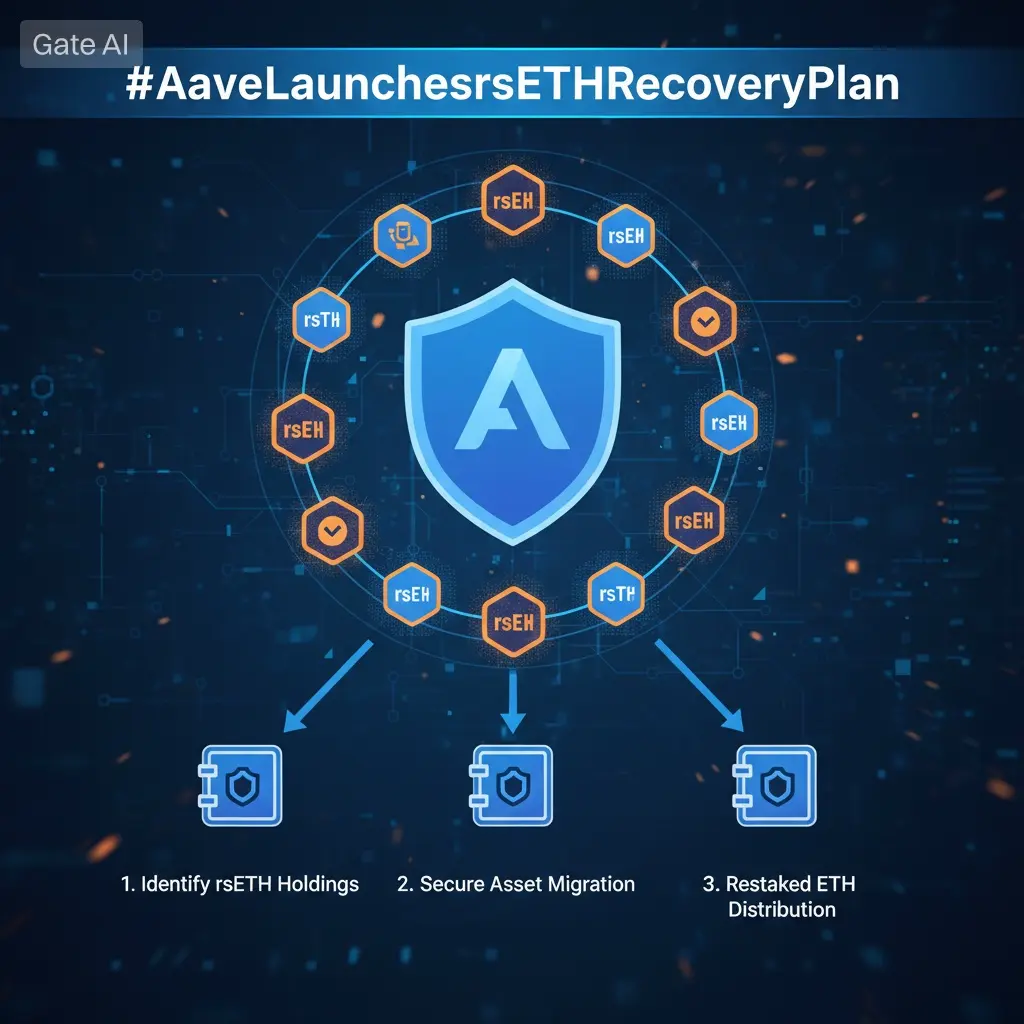
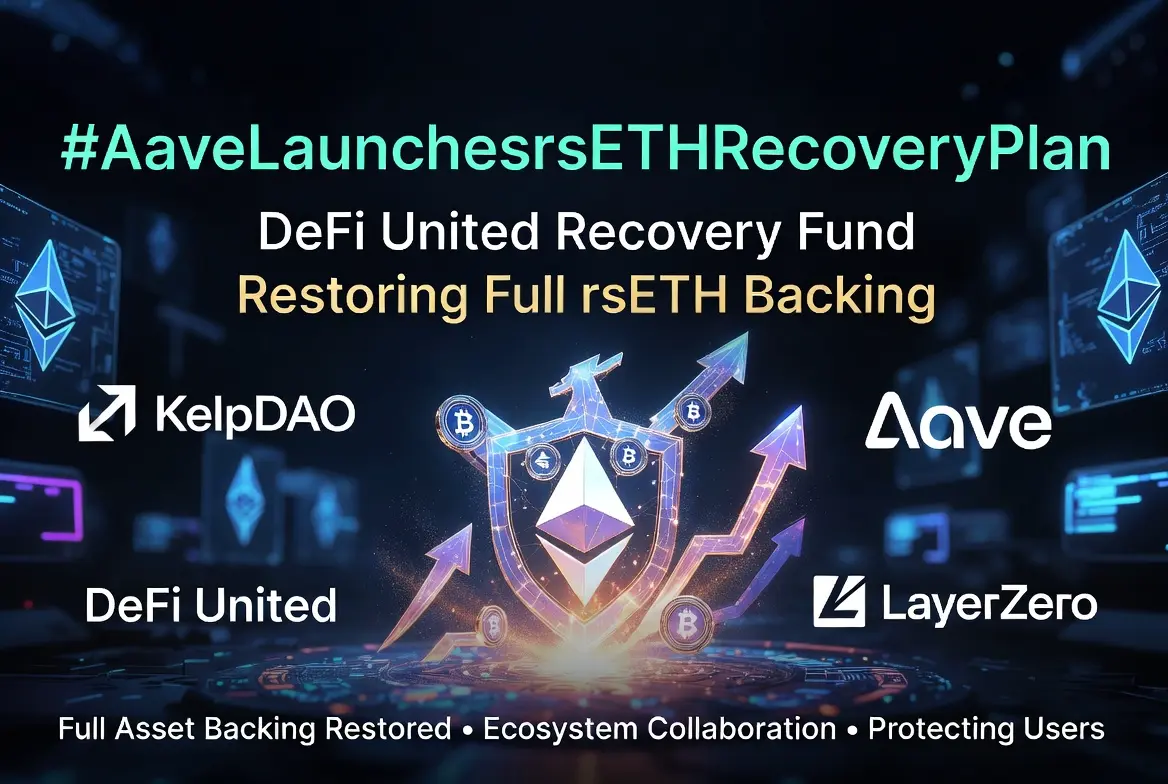
# AaveLaunchesrsETHRecoveryPlan

1.03M
#AaveLaunchesrsETHRecoveryPlan
Aave has introduced a structured rsETH Recovery Plan after liquidity stress and collateral inefficiencies affected rsETH positions across its lending markets, making this one of the more closely watched DeFi risk management responses in recent months because it highlights how decentralized protocols deal with real-time market disruptions while trying to protect users and maintain system stability.
At the time of this event, Ethereum is trading in the $2,300–$2,400 range, reflecting relatively stable price action compared to previous volatile phases, but the rsET
AAVE-5.83%
ETH-3.5%
HighAmbition
#AaveLaunchesrsETHRecoveryPlan
Aave has introduced a structured rsETH Recovery Plan after liquidity stress and collateral inefficiencies affected rsETH positions across its lending markets, making this one of the more closely watched DeFi risk management responses in recent months because it highlights how decentralized protocols deal with real-time market disruptions while trying to protect users and maintain system stability.
At the time of this event, Ethereum is trading in the $2,300–$2,400 range, reflecting relatively stable price action compared to previous volatile phases, but the rsETH situation clearly shows that stability in ETH price does not automatically translate into stability in DeFi derivatives, because assets like rsETH depend heavily on liquidity depth, staking mechanics, and redemption efficiency rather than just underlying token value.
The core issue began when rsETH, a liquid staking derivative backed by Ethereum staking exposure, experienced liquidity pressure that created market inefficiencies and pricing friction, which directly impacted users who were using rsETH as collateral on Aave, since reduced liquidity made it harder to unwind positions smoothly and increased the risk of liquidation during stress conditions, even without a major ETH price collapse.
Aave’s recovery plan starts with a detailed on-chain impact assessment to identify affected users, measure exposure levels, and understand how liquidation events were triggered, ensuring that all decisions are based on transparent data rather than assumptions, which is essential for maintaining fairness and trust in decentralized systems.
After the assessment phase, Aave is focusing on structured user support and possible compensation mechanisms designed to reduce user losses while ensuring that the protocol remains financially stable, because in DeFi systems any recovery action must balance user protection with long-term sustainability to avoid introducing new systemic risks.
A major part of the plan is improving rsETH liquidity conditions across the ecosystem, as liquidity is the key factor that determines how efficiently users can enter or exit positions, and Aave aims to strengthen market depth through parameter adjustments, ecosystem coordination, and improved integration support, which helps reduce slippage and stabilize collateral behavior.
The protocol is also reviewing risk parameters such as collateral ratios, liquidation thresholds, and borrowing limits, since these settings directly control how assets behave under stress, and updating them helps prevent similar issues in the future while maintaining efficient capital usage for users.
Governance plays a central role in this process, as Aave decisions are made through community voting, meaning the recovery plan is not centrally enforced but instead shaped by token holders and stakeholders, ensuring transparency and decentralized control over critical financial adjustments.
From a broader perspective, this event highlights a key reality in DeFi markets: even when major assets like Ethereum remain relatively stable around the $2,300–$2,400 range, structural risks in derivative assets and liquidity systems can still create significant disruptions, showing that DeFi risk is multi-layered and not dependent on price alone.
Overall, Aave’s rsETH Recovery Plan represents a structured and transparent response to a complex liquidity event, combining impact assessment, risk management adjustments, liquidity restoration efforts, and governance participation, and while the incident exposes the inherent complexity of decentralized finance, it also demonstrates how mature protocols are evolving to handle stress scenarios in a more controlled and user-focused way.
repost-content-media
  • Reward
  • 3
  • Repost
  • Share
HighAmbition:
Just charge forward 👊
View More
#AaveLaunchesrsETHRecoveryPlan
Aave’s rsETH Recovery Plan is emerging as one of the most significant DeFi developments of 2026 because it highlights a major shift in how decentralized finance handles systemic risk. This is no longer just about yield farming, staking rewards, or protocol competition—it is about whether DeFi can survive stress events through coordination rather than collapse under complexity.
At the center of this event is rsETH, a restaked Ethereum derivative designed to give users exposure to multiple layers of yield while maintaining liquidity. Through platforms like Kelp DA
AAVE-5.83%
ETH-3.5%
post-image
post-image
  • Reward
  • 2
  • Repost
  • Share
MasterChuTheOldDemonMasterChu:
Just charge forward 👊
View More
#AaveLaunchesrsETHRecoveryPlan
🚨 Major DeFi Response: Aave Unveils rsETH Recovery Framework After Market Stress Event
Aave has officially launched a structured recovery plan for rsETH exposure, following the recent liquidity shock that impacted restaking markets and triggered widespread volatility across DeFi lending ecosystems.
This move is being seen as a critical stabilization effort aimed at restoring confidence, protecting protocol health, and preventing further contagion risk across Ethereum-based lending markets.
---
📊 What Is the Recovery Plan About?
The rsETH recovery initiative is
AAVE-5.83%
ETH-3.5%
post-image
  • Reward
  • 7
  • Repost
  • Share
MrFlower_XingChen:
2026 GOGOGO 👊
View More
#AaveLaunchesrsETHRecoveryPlan The recent launch of Aave’s rsETH Recovery Plan has become one of the most important DeFi developments of 2026, not just because of the technical response itself, but because of what it represents for the entire decentralized finance ecosystem. This is not simply a protocol update or a liquidity adjustment — it is a coordinated recovery effort inside one of the most complex and interconnected sectors of crypto: restaked Ethereum markets.
To understand why this matters, we need to go beyond headlines and look at the deeper structure of what actually happened, how
SoominStar
#AaveLaunchesrsETHRecoveryPlan The recent launch of Aave’s rsETH Recovery Plan has become one of the most important DeFi developments of 2026, not just because of the technical response itself, but because of what it represents for the entire decentralized finance ecosystem. This is not simply a protocol update or a liquidity adjustment — it is a coordinated recovery effort inside one of the most complex and interconnected sectors of crypto: restaked Ethereum markets.
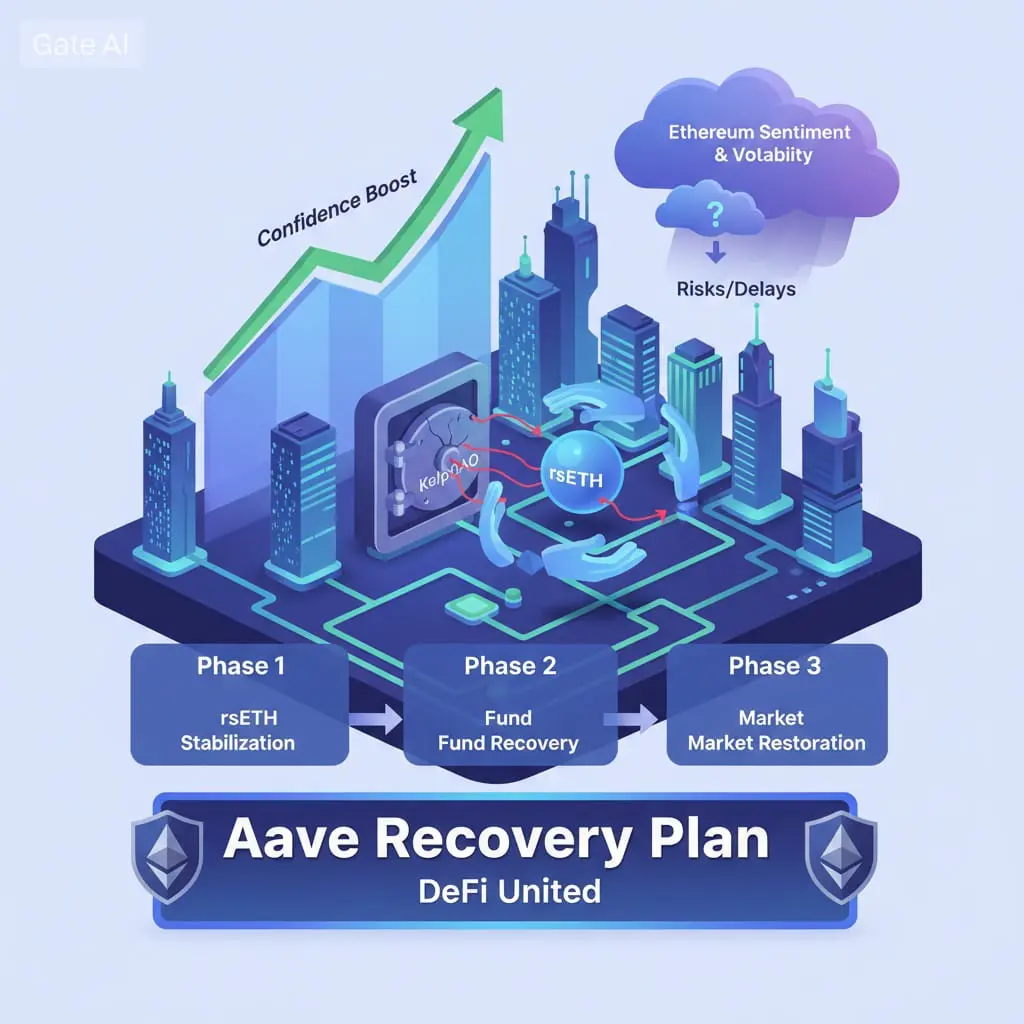
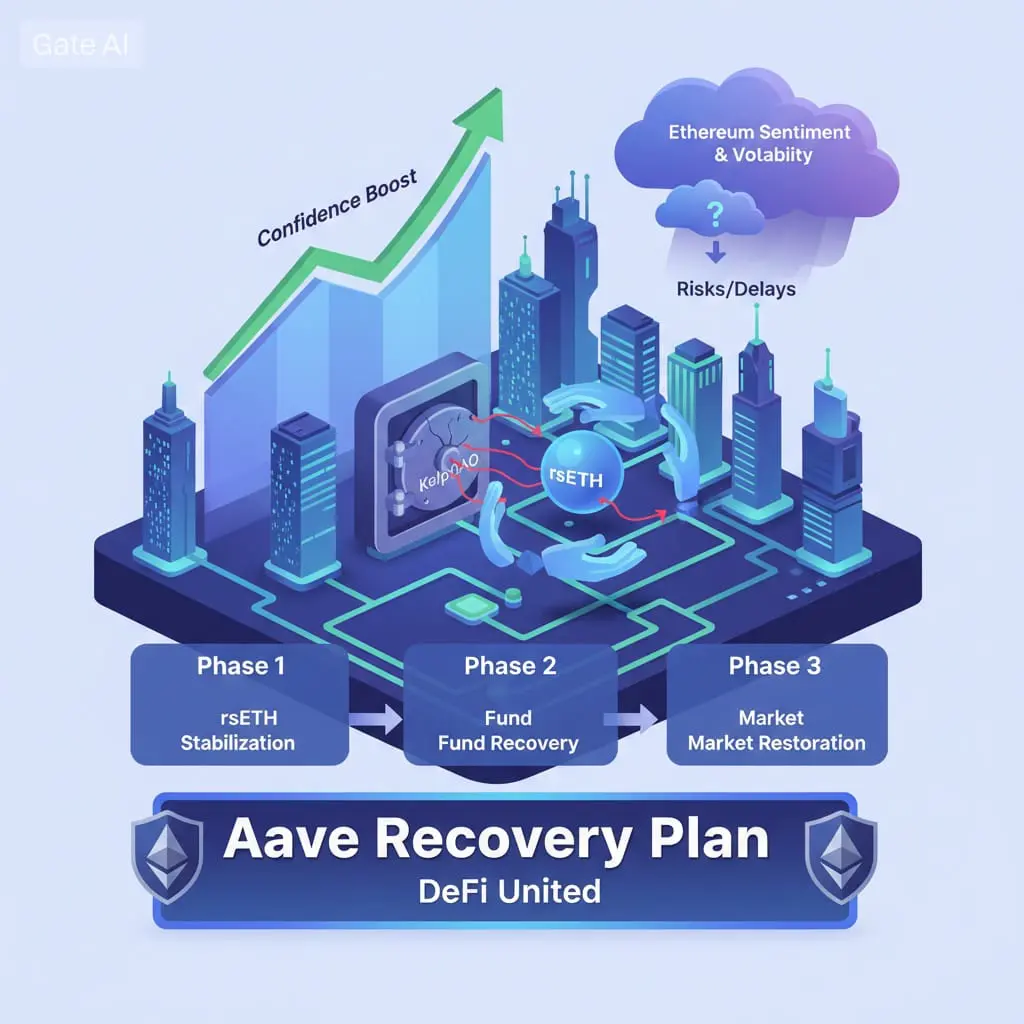
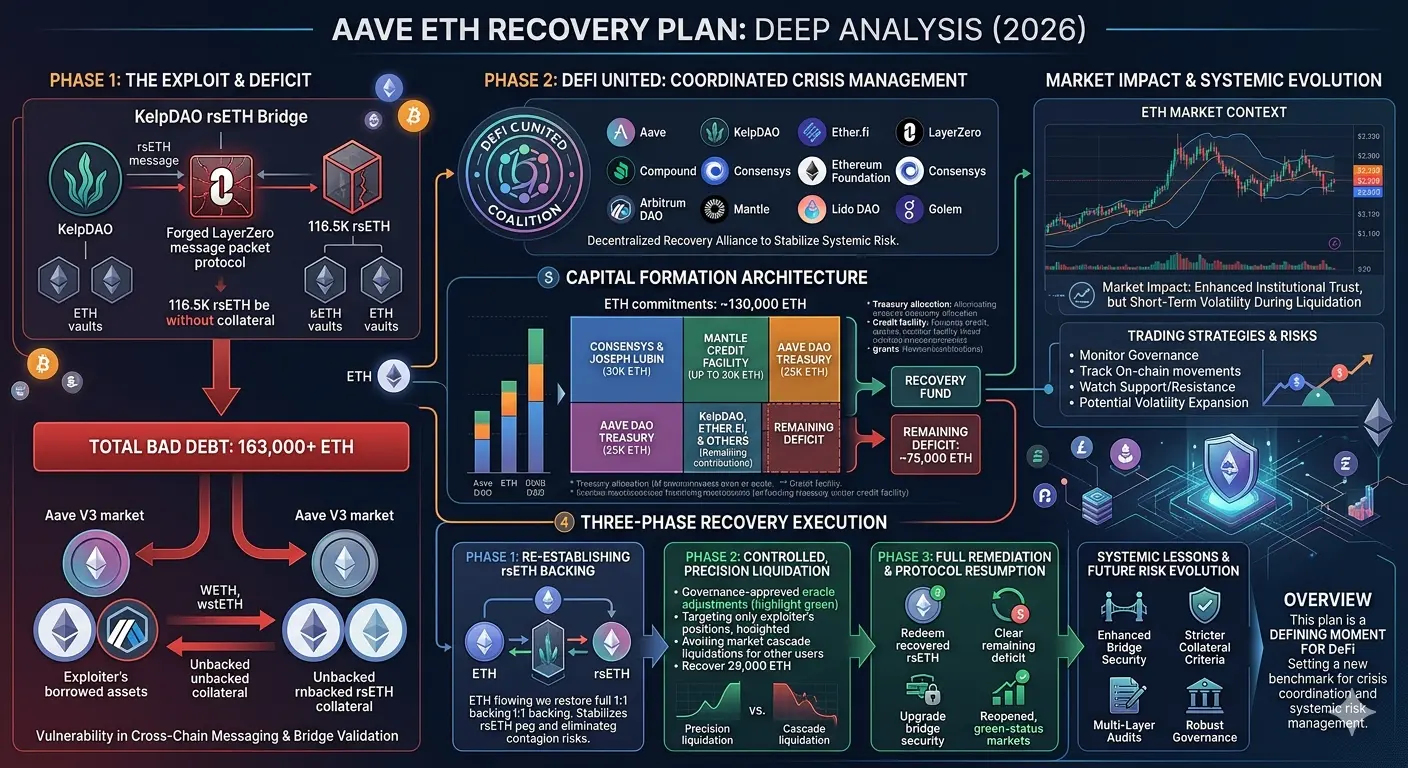
To understand why this matters, we need to go beyond headlines and look at the deeper structure of what actually happened, how rsETH became exposed to imbalance, and why Aave’s intervention through the “DeFi United” initiative is being seen as a turning point for risk management in decentralized systems.
At its core, rsETH represents restaked ETH exposure — an asset designed to allow users to earn layered yield from Ethereum staking while maintaining liquidity through derivative structures. Platforms like Kelp DAO enabled users to restake ETH and receive rsETH in return, effectively creating a financial abstraction layer on top of Ethereum’s staking economy.
This system worked efficiently during stable conditions. But in volatile environments, especially when bridging infrastructure or liquidity routing mechanisms experience stress, small imbalances can quickly amplify across interconnected DeFi protocols. That is exactly what happened during the April 18, 2026 incident, where a bridging disruption created a temporary shortfall in rsETH backing mechanisms.
The market reaction was immediate. Confidence in restaked ETH markets weakened, liquidity conditions tightened, and protocols that depended on rsETH collateral began experiencing stress signals. While the issue was not catastrophic in terms of total system failure, it was significant enough to expose how deeply interconnected modern DeFi ecosystems have become.
This is where Aave’s intervention becomes critical.
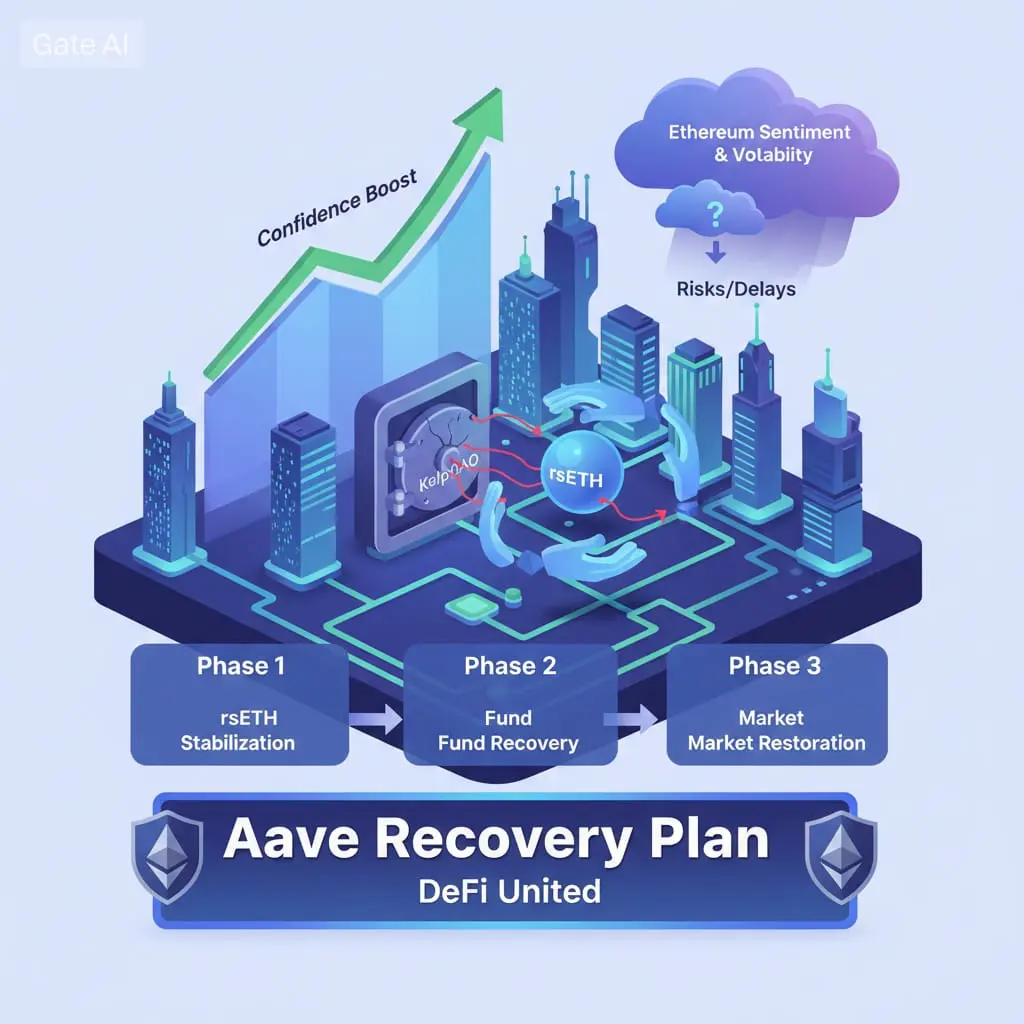
Aave, as one of the largest decentralized lending protocols in the ecosystem, plays a foundational role in DeFi liquidity infrastructure. When collateral assets experience instability, lending markets are often the first to feel pressure. Recognizing this, Aave launched what it calls the “DeFi United Initiative,” a coordinated recovery framework designed to stabilize rsETH exposure, restore confidence, and prevent cascading liquidation risks across connected protocols.
The rsETH Recovery Plan is not a bailout in the traditional sense. Instead, it is a structured liquidity restoration mechanism that involves multiple layers of coordination between DeFi protocols, liquidity providers, and restaking platforms. The goal is not just to patch the immediate issue, but to rebuild confidence in the underlying system architecture.
One of the most important aspects of this recovery plan is how it treats risk distribution. In traditional finance, risk is often absorbed by centralized institutions. In DeFi, risk is distributed across smart contracts, liquidity pools, and protocol participants. This means that when something breaks, recovery cannot come from a single authority — it must come from ecosystem-wide coordination.
Aave’s approach reflects this philosophy. Instead of centralizing control, the recovery plan focuses on liquidity rebalancing, collateral stabilization, and structured market incentives to gradually restore equilibrium.
At a technical level, the plan includes mechanisms that help re-anchor rsETH value alignment, improve redemption pathways, and stabilize liquidity pools that were temporarily impacted by the shortfall. It also introduces coordinated incentive structures to encourage liquidity providers to return capital to affected markets in a controlled manner.
What makes this especially important is the timing. The DeFi ecosystem in 2026 is significantly larger and more interconnected than in previous cycles. Restaking, liquid staking derivatives, cross-protocol lending, and automated yield strategies have created a layered financial system where one imbalance can propagate quickly across multiple platforms.
This is why the rsETH event did not remain isolated. It influenced confidence across restaked ETH markets broadly, not just within a single protocol. Traders and liquidity providers began reassessing risk exposure, particularly in assets tied to complex yield structures.
However, despite initial fear, the system did not collapse. Instead, it triggered a coordinated response — and that response is what we are now seeing in the form of Aave’s recovery initiative.
From a market psychology perspective, this is extremely important. In earlier DeFi cycles, similar incidents often led to long-lasting trust erosion. But in this case, the ecosystem responded faster, more transparently, and with greater coordination. That alone signals maturity in decentralized financial infrastructure.
Still, the situation is not without risk.
Restaked ETH markets remain inherently complex because they combine multiple layers of financial abstraction. ETH is staked, then restaked, then tokenized, then used as collateral, and then further integrated into lending markets. Each layer introduces efficiency — but also dependency. When one layer experiences disruption, the impact can cascade across the entire structure.
This is exactly what the rsETH incident revealed: DeFi is no longer a collection of isolated protocols. It is an interconnected financial network where liquidity, trust, and collateral value are deeply intertwined.
Aave’s response aims to reinforce this network rather than dismantle it. By introducing structured recovery mechanisms, the protocol is effectively stress-testing the idea that DeFi can self-correct through coordinated incentives rather than centralized intervention.
From a market impact perspective, the immediate effect of the recovery plan has been stabilization rather than expansion. Volatility in rsETH-related markets has begun to normalize, liquidity conditions are gradually improving, and liquidation risk in affected lending pools has been reduced.
However, confidence recovery takes longer than technical recovery.
Traders and liquidity providers are still evaluating whether restaked ETH instruments carry hidden systemic risks. Some participants view this incident as a warning signal — that yield stacking strategies may introduce more fragility than previously assumed. Others interpret it as a healthy stress test that ultimately strengthens the ecosystem by exposing weaknesses early.
Both interpretations are valid depending on risk appetite.
What is clear, however, is that DeFi is entering a new phase where risk management becomes as important as yield generation. In earlier cycles, the focus was heavily on maximizing returns. In 2026, the focus is shifting toward sustainability, resilience, and cross-protocol stability.
Aave’s initiative also highlights another important trend: protocol-level coordination is becoming more common. Instead of isolated responses, major DeFi platforms are beginning to collaborate during crisis events. This “DeFi United” approach suggests that the ecosystem is slowly evolving toward a more structured financial architecture, even while maintaining decentralization principles.
In the broader Ethereum ecosystem, this event also intersects with rising institutional participation. As more institutional capital enters DeFi through structured products, ETFs, and staking derivatives, system reliability becomes a critical requirement. Incidents like rsETH shortfalls highlight why robust risk frameworks are necessary before full-scale institutional adoption can expand further.
Interestingly, despite the disruption, Ethereum itself has not shown structural weakness. ETH continues to function as the foundational settlement layer for DeFi activity, and long-term staking participation remains strong. This reinforces the idea that while derivative layers may experience stress, the base layer infrastructure remains resilient.
Another important observation is that liquidity is not leaving the ecosystem — it is rotating. Capital is becoming more selective, moving away from higher-risk structured yield products and toward more stable or transparent DeFi instruments. This kind of rotation is common during periods of uncertainty and often leads to healthier market structure in the long term.
From a technical standpoint, Aave’s recovery plan may also set a precedent for future DeFi crisis management. If successful, it could become a blueprint for how decentralized protocols respond to liquidity shocks without centralized intervention. That would represent a significant evolution in how risk is handled across blockchain-based financial systems.
In conclusion, the Aave rsETH Recovery Plan is not just a response to a technical imbalance — it is a defining moment for DeFi risk architecture. It demonstrates that decentralized systems are capable of coordinated self-correction, but also reveals the increasing complexity of modern crypto financial engineering.
The incident highlights three major realities: DeFi is deeply interconnected, not isolated
Restaking introduces both yield and systemic complexity
Recovery in decentralized systems requires ecosystem-wide coordination
While short-term sentiment may remain cautious, the long-term implication is more constructive. Each stress event forces the ecosystem to evolve, improve transparency, and strengthen resilience.
So rather than signaling weakness, the rsETH recovery effort may ultimately be remembered as another step in DeFi’s evolution from experimental infrastructure into a more mature, interconnected financial system — one that is still learning, still adapting, but increasingly capable of surviving its own complexity. 🟣📊🚀
  • Reward
  • 11
  • Repost
  • Share
MasterChuTheOldDemonMasterChu:
Chong Chong GT 🚀
View More
#AaveLaunchesrsETHRecoveryPlan
Aave has officially moved from emergency response into structured recovery mode after the rsETH incident, marking one of the most coordinated rescue efforts seen in decentralized finance in recent years. What initially started as a security shock has now evolved into a multi-layered plan involving funding, governance, and technical execution across several protocols.
The situation originated from a major exploit tied to the rsETH ecosystem, where over 116,000 rsETH tokens were released without proper backing due to a bridge vulnerability. This created a signific
AAVE-5.83%
ETH-3.5%
post-image
post-image
  • Reward
  • 7
  • Repost
  • Share
QueenOfTheDay:
To The Moon 🌕
View More
#AaveLaunchesrsETHRecoveryPlan
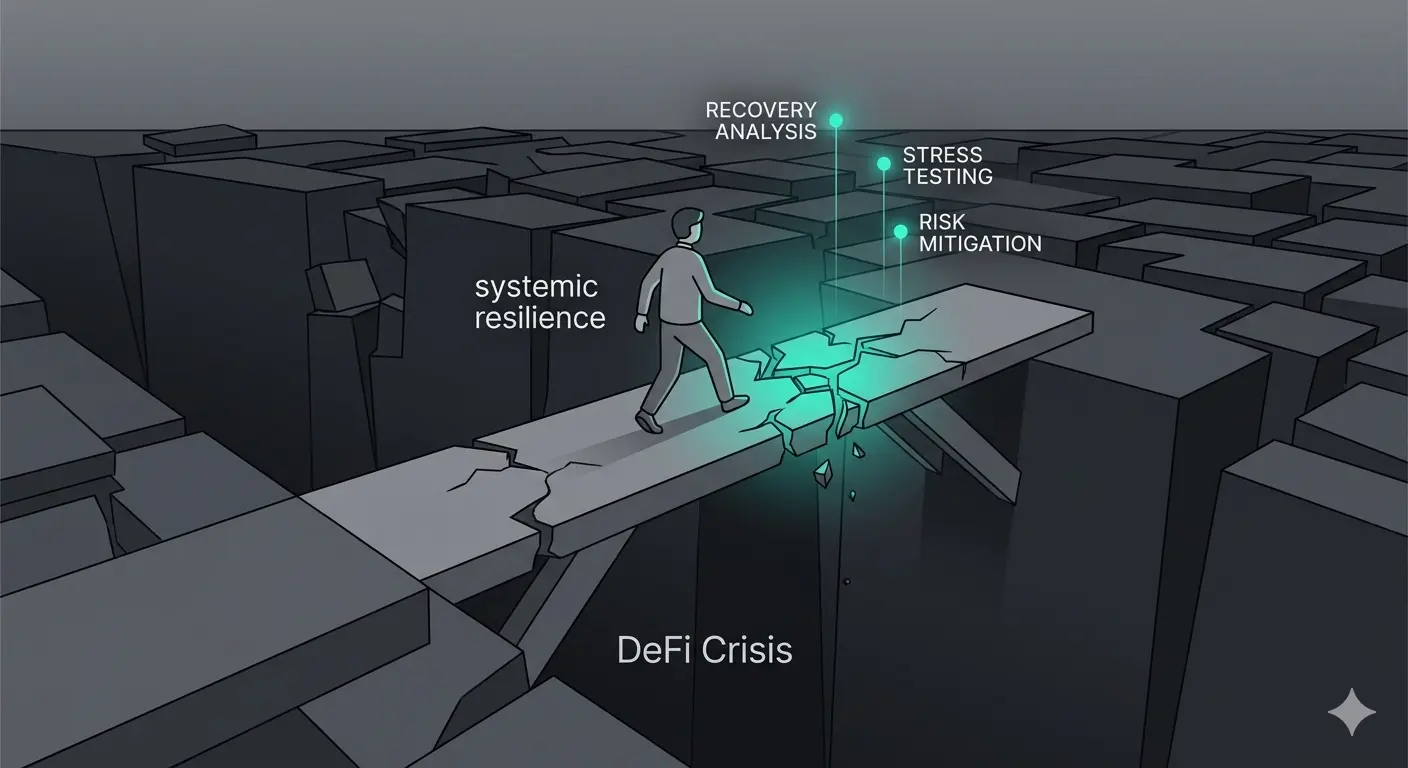
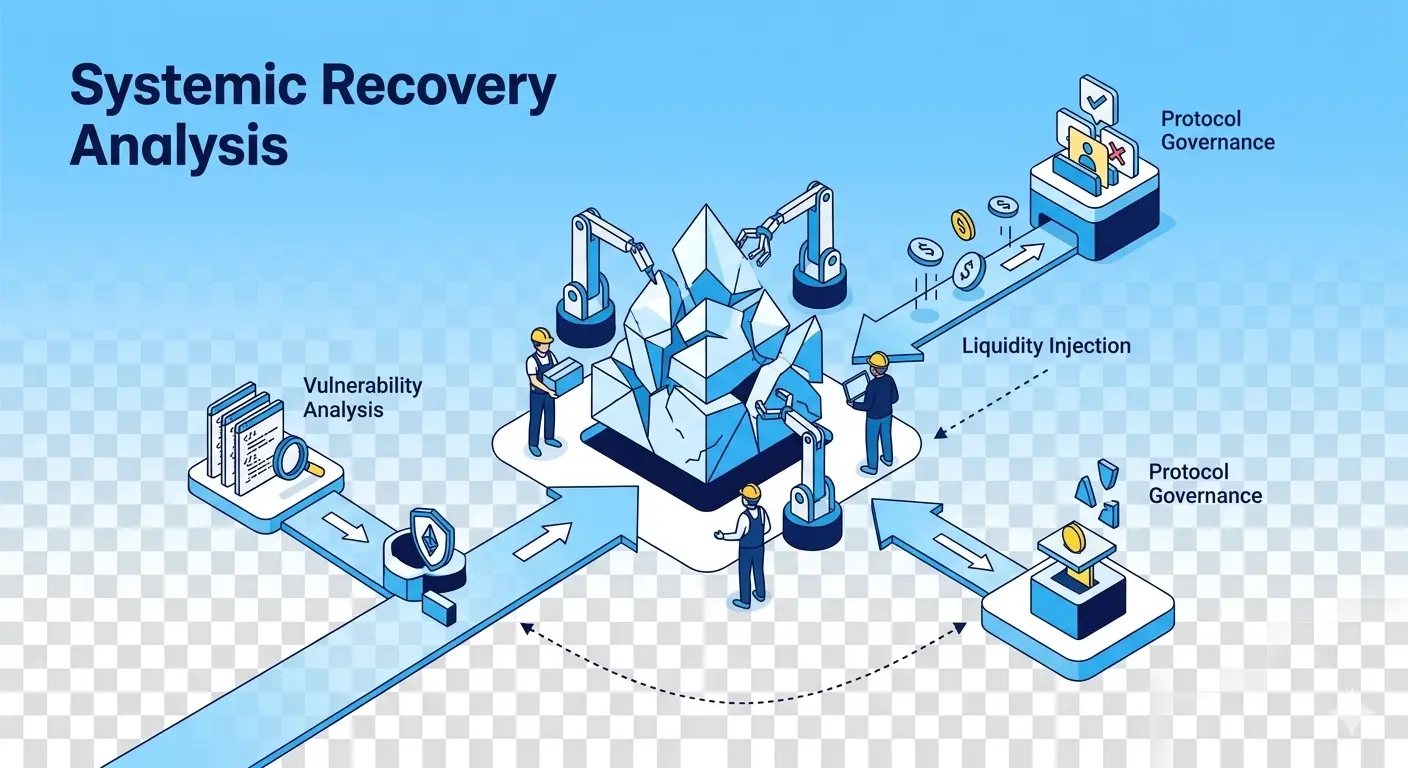
DeFi Crisis Response and Systemic Recovery Analysis
Aave has entered a structured recovery phase following the rsETH incident, marking a significant moment in decentralized finance history. What began as a sudden protocol shock has now evolved into a coordinated, multi-layer recovery effort involving governance decisions, liquidity restructuring, and cross-protocol collaboration. The shift from emergency reaction to organized recovery reflects a maturing DeFi ecosystem that is increasingly capable of handling systemic stress without immediate collapse.
The root
AAVE-5.83%
ETH-3.5%
post-image
post-image
post-image
post-image
  • Reward
  • 29
  • Repost
  • Share
Yajing:
Buy To Earn 💰️
View More
#AaveLaunchesrsETHRecoveryPlan
Aave has introduced a recovery-focused plan for rsETH, aiming to improve stability, liquidity handling, and risk management within the ecosystem.
This type of update is important because it reflects how DeFi protocols actively respond to stress scenarios and asset risk conditions in real time.
Key focus areas of the plan:
Improving liquidity stability for rsETH
Strengthening risk management mechanisms
Enhancing protocol safety during volatility
Supporting better asset recovery pathways
In DeFi systems, recovery plans are not just reactive — they are part of long
AAVE-5.83%
ETH-3.5%
post-image
post-image
post-image
post-image
  • Reward
  • 2
  • Repost
  • Share
MrFlower_XingChen:
To The Moon 🌕
View More
#AaveLaunchesrsETHRecoveryPlan Ethereum ($2,300–$2,400) remains stable, the structural health of liquid restaking tokens (LRTs) depends entirely on liquidity depth and redemption efficiency.
Here is a breakdown of how Aave is addressing the rsETH liquidity stress.
🔍 The Root of the Issue
While ETH price action was relatively flat, rsETH faced liquidity pressure that created pricing friction. For Aave users, this meant:
Collateral Inefficiency: Difficulty in unwinding positions.
Liquidation Risk: Increased vulnerability to "bad debt" or unfair liquidations due to slippage, even without a broad
ETH-3.5%
AAVE-5.83%
post-image
post-image
post-image
  • Reward
  • 5
  • Repost
  • Share
MrFlower_XingChen:
To The Moon 🌕
View More
#AaveLaunchesrsETHRecoveryPlan
Market Impact Analysis
The introduction of a recovery framework for rsETH-related exposure signals a structured attempt to contain cascading liquidation risk within DeFi lending architecture.
In protocols like Aave, recovery mechanisms are not just operational updates—they directly influence system-wide collateral confidence. When recovery plans are activated, the market interprets it as a stabilization response to previously stressed collateral positions.
On Gate.io, this type of DeFi risk management narrative typically translates into:
Short-term ETH derivativ
AAVE-5.83%
ETH-3.5%
post-image
post-image
  • Reward
  • 12
  • Repost
  • Share
MasterChuTheOldDemonMasterChu:
Steadfast HODL💎
View More
#AaveLaunchesrsETHRecoveryPlan
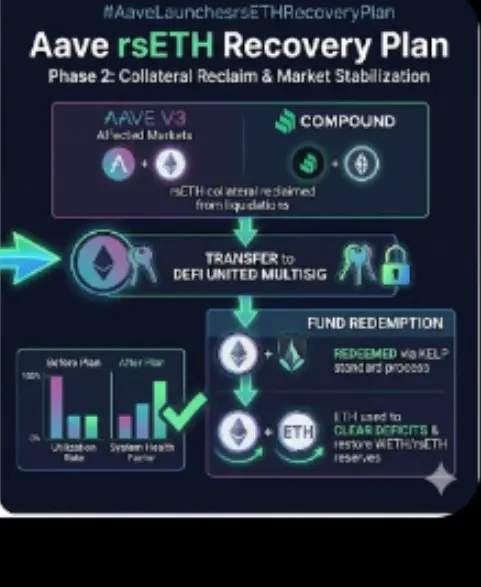
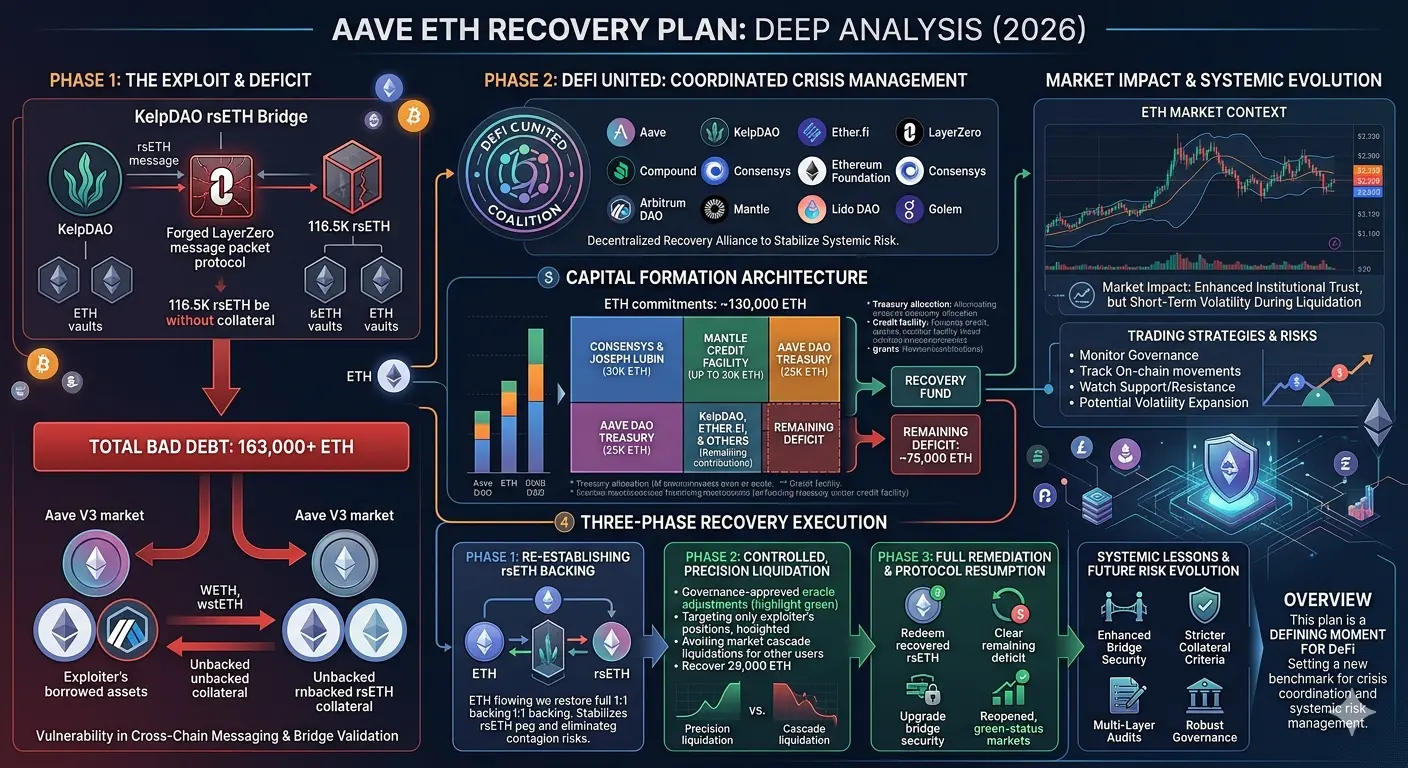
The recovery plan for rsETH, following the April 18, 2026, KelpDAO bridge exploit, is being coordinated by a coalition called DeFi United. This initiative is designed to restore full asset backing to rsETH and resolve bad debt across lending protocols like Aave and Compound without socializing losses among users.
Core Objectives of the Plan
The strategy aims to replenish the collateral backing for the 116,500 rsETH minted in the exploit and clear the resulting deficit in lending markets. As of late April 2026, the coalition has secured over $300 million in ETH c
ETH-3.5%
AAVE-5.83%
post-image
post-image
  • Reward
  • 15
  • Repost
  • Share
MasterChuTheOldDemonMasterChu:
Chong Chong GT 🚀
View More
Load More

Join 40 M users in our growing community

⚡️ Join 40 M users in the crypto craze discussion
💬 Engage with your favorite top creators
👍 See what interests you