Leeessa

vip
Futures Trading Strategist
On-chain Analyst
Airdrop Hunter
My character is defined by respect, integrity, and a strong belief in equal opportunity for everyone
#ETHStandsAbove1900
Ethereum Is Not Just Testing Price — It Is Testing Investor Confidence
Ethereum is currently in a phase where the market is watching every move closely.
The price decline has created fear, but the bigger story is not only about how far ETH has fallen.
The real question is:
Is Ethereum losing its strength, or is the market creating a new opportunity for investors who can look beyond short-term pressure?
Right now, ETH is trading around the $1,670–$1,836 range, with a market capitalization of approximately $221.6 billion and daily trading volume near $11 billion.
These numbe
ETH1.41%
SOL1.42%
BNB-0.01%
MrFlower_XingChen
#ETHStandsAbove1900
Ethereum Is Not Just Testing Price — It Is Testing Investor Confidence
Ethereum is currently in a phase where the market is watching every move closely.
The price decline has created fear, but the bigger story is not only about how far ETH has fallen.
The real question is:
Is Ethereum losing its strength, or is the market creating a new opportunity for investors who can look beyond short-term pressure?
Right now, ETH is trading around the $1,670–$1,836 range, with a market capitalization of approximately $221.6 billion and daily trading volume near $11 billion.
These numbers show that Ethereum is still one of the biggest and most liquid assets in the crypto market.
But strong assets also experience difficult cycles.
The market is currently caught between two different views:
Short-term traders are focused on weakness.
Long-term investors are watching whether this weakness creates value.
And this is where the real analysis begins.
The Story Behind Ethereum’s Correction
Ethereum’s recent performance has been challenging.
The asset has moved between the $1,500 and $2,000 range in recent weeks, and the breakdown below the $2,000 level in early June became an important psychological event.
Why was $2,000 important?
Because it represented more than a price level.
It represented market confidence.
When ETH failed to hold that area, many traders started reducing risk, increasing selling pressure and pushing sentiment toward fear.
Today, Ethereum is trading far below its previous cycle peak.
One year ago, ETH was around $2,450, meaning the current price is approximately 31% lower.
Compared with its all-time high near $4,878 in November 2021, Ethereum is still trading at a significant discount.
But history shows that major opportunities often appear when markets are uncomfortable.
The challenge is identifying whether the weakness is temporary or a sign of a deeper problem.
Technical Analysis: The Market Is Searching For A Bottom
Ethereum’s technical picture is showing an interesting situation.
The RSI recently dropped near 18, entering extremely oversold territory.
This tells us that selling pressure has become intense and many traders have already exited their positions.
However, oversold conditions do not automatically guarantee a reversal.
A market can remain weak if buyers are not ready to step in.
The key zones are now clear.
The first major support area is:
$1,500–$1,700
This zone could decide whether Ethereum builds a recovery base or continues lower.
The important resistance area remains:
$1,900–$2,000
A successful recovery above $2,000 would be a major confidence signal.
It would show that buyers are not only defending lower prices but are willing to challenge previous resistance.
Market Sentiment: Fear Is Dominating The Conversation
One of the biggest reasons behind Ethereum’s weakness is not only technical pressure.
It is investor sentiment.
Ethereum ETF outflows have created additional selling pressure, showing that institutional demand has slowed during this period.
When institutions reduce exposure, the market often becomes more cautious.
But there is another side of the story.
Markets usually create the best opportunities when confidence is lowest.
Fear does not always mean the fundamentals are broken.
Sometimes fear simply means the market is adjusting before the next major phase.
The important question is:
Are investors leaving because Ethereum’s future is weaker, or are they reacting to short-term uncertainty?
Institutional Perspective: A More Realistic Market View
Institutional expectations have also changed.
Standard Chartered has adjusted its Ethereum price target lower, with expectations around the $4,000 level for 2026.
This shows that institutions are becoming more realistic about market conditions.
The crypto market today is influenced by more than adoption.
Liquidity, interest rates, macro conditions, and global risk appetite all play a major role.
Ethereum is now part of the broader financial system.
That means investors must watch both crypto-specific developments and global economic conditions.
Liquidation Zones: Where Volatility Could Increase
One area traders should closely monitor is the $1,500–$1,700 liquidation zone.
Large liquidation areas can create sudden price movements because leveraged positions can accelerate selling.
If ETH moves into this area and sellers dominate, volatility could increase.
But if buyers absorb the pressure, it could become an important accumulation zone.
The reaction around this level will reveal whether stronger investors are stepping in.
The Bigger Picture: Ethereum’s Fundamentals Remain Strong
While the price chart looks weak, Ethereum’s long-term foundation remains one of the strongest in crypto.
Ethereum continues to power:
• Decentralized Finance (DeFi)
• Staking infrastructure
• Tokenized real-world assets
• Layer-2 settlement networks
• Smart contract innovation
The most important point is that Ethereum is not only a trading asset.
It is infrastructure.
Thousands of developers continue building on the network.
Millions of users interact with Ethereum-based applications.
This long-term activity is what separates Ethereum from many speculative projects.
Competition: The Next Challenge For Ethereum
Ethereum remains a leader, but the competition is becoming stronger.
Solana is attracting attention with speed and lower transaction costs.
BNB Chain benefits from a large ecosystem.
Other networks continue improving scalability and user experience.
Ethereum’s advantage remains its security, liquidity, developer community, and institutional recognition.
But maintaining leadership requires continuous innovation.
Risk Factors Investors Should Not Ignore
A strong ecosystem does not remove all risks.
Ethereum still faces challenges:
• Continued ETF outflows
• Weak market liquidity
• Higher interest rate pressure
• Strong dollar conditions
• Competition from other blockchains
• Broader crypto market weakness
Investors should not only focus on upside potential.
Understanding downside risk is equally important.
Market Outlook: What Happens Next?
Ethereum is currently at a decision point.
Bullish Scenario
If ETH successfully holds the $1,700 area and breaks back above $2,000 with strong volume, market confidence could improve significantly.
Potential targets:
$2,200
$2,500+
This would indicate that buyers are returning and the recovery has real strength.
Bearish Scenario
If ETH loses the $1,500 support zone, the market could experience another wave of selling.
This would suggest that more time is needed before a sustainable recovery begins.
Investor Strategy: Focus On The Bigger Picture
For short-term traders, the important things are:
Support and resistance levels.
Volume confirmation.
Risk management.
For long-term investors, the focus should remain on:
Ethereum adoption.
Network growth.
Institutional demand.
Market cycles.
The biggest mistake in investing is allowing emotions to control decisions.
Fear creates panic.
Greed creates FOMO.
Successful investors focus on probability and preparation.
Final Thoughts
Ethereum’s current situation is not simply a price decline.
It is a test.
A test of investor confidence.
A test of market demand.
And a test of whether long-term fundamentals can overcome short-term fear.
The current correction has pushed ETH far below its previous highs, but it has also brought the asset into a zone where serious investors are paying attention.
The next major move will depend on whether buyers can turn this fear into accumulation.
Ethereum does not need another temporary bounce.
It needs evidence that confidence is returning.
Because the strongest recoveries are not built on hype.
They are built on adoption, demand, and trust.
Disclaimer: This is my personal market analysis for educational purposes only and should not be considered financial advice. Always do your own research before making investment decisions.
#SummerCreationCamp
@Gate_Square
@GateSquare
$ETH

repost-content-media
  • Reward
  • Comment
  • Repost
  • Share
#广场预测世界杯赢40000U
Spain vs Argentina — The World Holds Its Breath for One Final Night
Some football matches decide a champion.
This one has the power to define an era.
On 20 July 2026, the lights of New York/New Jersey will shine on the biggest stage in world football as Spain and Argentina battle for the FIFA World Cup trophy. It is more than a final. It is a meeting of two footballing philosophies, two generations, and two unforgettable stories that have been building throughout the tournament.
For Spain, this final represents the arrival of a new football dynasty. Built around fearless young
MrFlower_XingChen
#广场预测世界杯赢40000U
Spain vs Argentina — The World Holds Its Breath for One Final Night
Some football matches decide a champion.
This one has the power to define an era.
On 20 July 2026, the lights of New York/New Jersey will shine on the biggest stage in world football as Spain and Argentina battle for the FIFA World Cup trophy. It is more than a final. It is a meeting of two footballing philosophies, two generations, and two unforgettable stories that have been building throughout the tournament.
For Spain, this final represents the arrival of a new football dynasty. Built around fearless young talent, relentless pressing, technical precision, and complete tactical discipline, they have looked like the most balanced team in the competition. Every knockout victory has reinforced the belief that this generation is ready to lead world football for years to come.
Their journey has been nothing short of impressive. A commanding 3-0 victory over Austria announced their intentions before they eliminated Portugal in a tense tactical battle. They followed that with a hard-earned win against Belgium, proving they can control matches while also finding solutions under pressure. Spain haven't simply won games—they've imposed their identity on every opponent.
Argentina's path has been different, but equally impressive. Defending a World Cup title is one of football's hardest challenges, yet they have repeatedly shown why champions should never be underestimated. They have survived difficult moments, adapted to different opponents, and delivered when the pressure reached its highest point. Their semifinal victory over England once again highlighted their ability to rise on football's biggest occasions.
At the heart of Argentina's story is Lionel Messi.
At 39 years old, this could be the final World Cup appearance of a player who transformed modern football. Every minute he spends on the pitch carries historical significance. For Argentina, this is not only about defending a title—it's about giving one of the greatest players in history the perfect farewell. Few sporting stories carry the emotional weight that surrounds this final.
Standing across from Messi is Lamine Yamal, the teenager many believe will shape football's next generation. Watching the sport's brightest young star compete against one of its greatest legends creates a storyline that no scriptwriter could have imagined. One player represents a legendary legacy; the other represents football's future.
The tactical battle could be every bit as captivating as the emotional one.
Spain will likely dominate possession, using quick passing, intelligent movement, and aggressive pressing to control the tempo. Rodri will attempt to dictate play from midfield while Spain's attacking players constantly stretch Argentina's defensive structure.
Argentina, meanwhile, are unlikely to panic without possession. Their strength lies in patience, defensive organization, and ruthless efficiency in transition. They understand tournament football better than almost anyone, knowing that finals are often decided by a single mistake, a single moment of brilliance, or a single opportunity that must be taken.
One of the most fascinating duels will be Rodri against Messi. If Rodri succeeds in limiting the space between Argentina's midfield and attack, Spain gain a major advantage. If Messi finds pockets of freedom, even for a few seconds, he possesses the vision and creativity to completely change the outcome of the match.
Weather could also become an unexpected factor. Thunderstorms and lightning disrupted both teams' final training sessions in New Jersey, and similar conditions remain a possibility. Should the weather affect the game, adaptability, concentration, and mental resilience may become just as important as tactical preparation.
Prediction markets currently give Spain a slight edge, reflecting their consistency, tactical balance, and dominant tournament performances. However, numbers alone rarely decide World Cup finals. Argentina possess something statistics cannot measure—championship experience, belief under pressure, and the motivation to deliver one final historic moment for Lionel Messi.
This is not simply youth versus experience.
It is fearless ambition against proven greatness.
It is relentless pressing against calculated patience.
It is football's future standing face to face with one of the greatest legacies the game has ever witnessed.
Regardless of who lifts the trophy, this final promises to become one of the defining moments in World Cup history. Millions will watch. Millions more will debate every decision, every goal, and every tactical adjustment. The world will stop for ninety minutes—or perhaps even longer—to witness history unfold.
When the final whistle echoes through New York, one team will celebrate becoming world champions.
The other will leave behind a story that football will remember forever.
Who lifts the trophy—Spain's golden generation or Argentina's legendary champions?
#SummerCreationCamp
@Gate_Square
@GateSquare
repost-content-media
  • Reward
  • Comment
  • Repost
  • Share
#BTC
Bitcoin Is Testing a Turning Point—But the Next Move Will Decide Everything
After weeks of uncertainty, Bitcoin is finally showing signs of renewed strength.
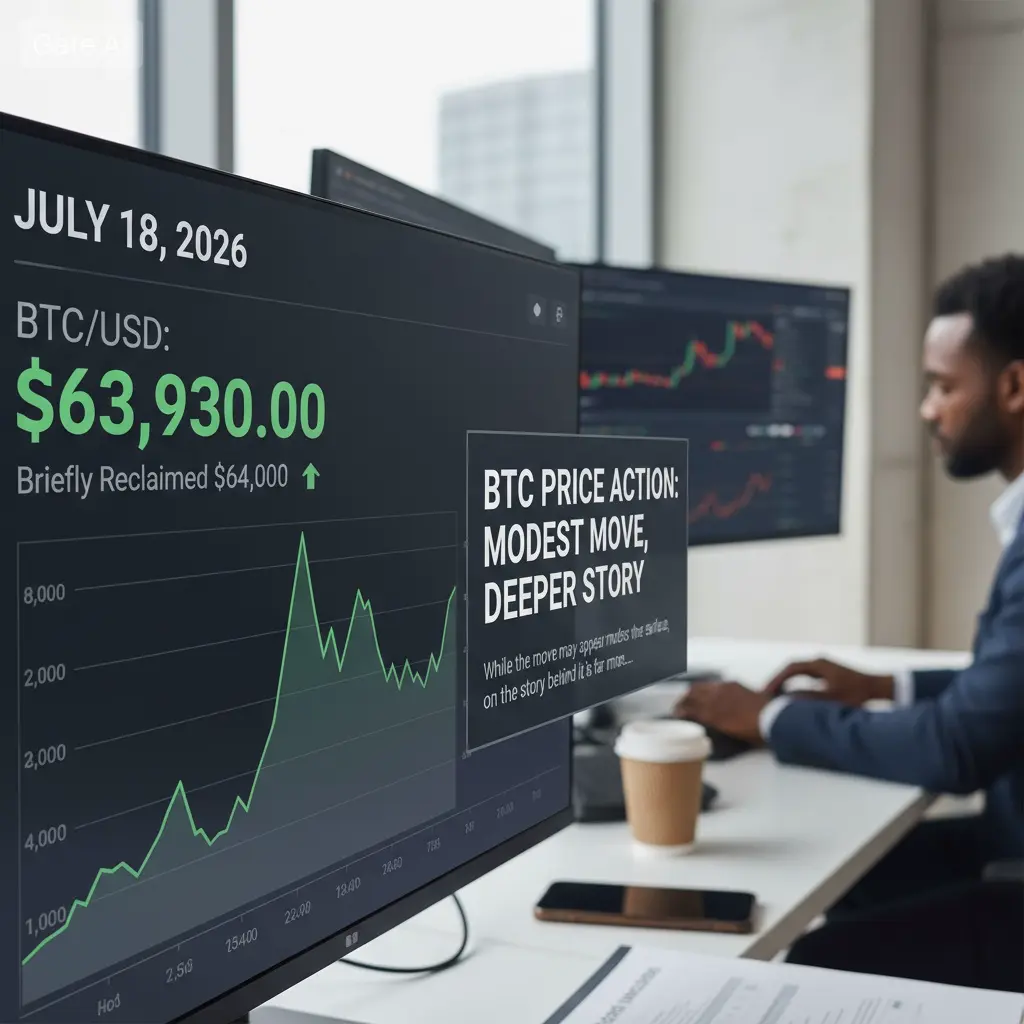
As of July 18, 2026, BTC is trading around $63,930, after briefly reclaiming the $64,000 level. While the move may appear modest on the surface, the story behind it is far more important. This rally wasn't driven by hype alone—it was fueled by improving macroeconomic sentiment, a wave of short liquidations, and growing expectations that monetary conditions could become more favorable in the months ahead.
The biggest catalyst came fr
BTC0.71%
BLK-1.32%
MrFlower_XingChen
#BTC
Bitcoin Is Testing a Turning Point—But the Next Move Will Decide Everything
After weeks of uncertainty, Bitcoin is finally showing signs of renewed strength.
As of July 18, 2026, BTC is trading around $63,930, after briefly reclaiming the $64,000 level. While the move may appear modest on the surface, the story behind it is far more important. This rally wasn't driven by hype alone—it was fueled by improving macroeconomic sentiment, a wave of short liquidations, and growing expectations that monetary conditions could become more favorable in the months ahead.
The biggest catalyst came from the latest U.S. CPI inflation data released around July 14–15. Inflation came in softer than expected, strengthening market expectations that the Federal Reserve may begin cutting interest rates sooner than previously anticipated. Risk assets responded immediately, and Bitcoin benefited the most.
The stronger buying pressure forced a large number of bearish positions out of the market. Around $135 million in short positions were liquidated, creating a classic short squeeze that accelerated Bitcoin's move above $64K. It was a reminder that in crypto, momentum can change far faster than sentiment.
From a technical perspective, Bitcoin is now sitting at a critical decision point.
The $63,000 level has transformed from resistance into support, and the market has so far managed to defend it successfully. As long as buyers continue protecting this zone, the broader market structure remains constructive. Holding above this level would indicate that recent gains are being accepted rather than immediately sold.
The next challenge lies higher.
The $65,600–$67,000 region is the most important resistance zone currently facing Bitcoin. A convincing daily close above $65,600 would significantly strengthen the bullish structure and could open the door toward $68,200. Analysts also identify $67,200 as another major technical barrier where selling pressure could increase.
If Bitcoin fails to hold current support, attention will quickly shift toward the $61,000–$60,000 range. This remains the key defensive area that bulls cannot afford to lose if they want to maintain the current recovery trend.
Market sentiment is also showing gradual improvement, although caution still dominates.
The Fear & Greed Index currently stands at 28, placing the market in the Fear zone. While confidence is slowly returning, investors have not yet entered full risk-on mode. This often creates an environment where price can remain volatile as traders wait for stronger confirmation before committing new capital.
Institutional participation continues to provide mixed signals.
Spot Bitcoin ETFs are still attracting fresh inflows, showing that long-term institutional interest remains intact. However, the negative Coinbase Premium suggests that demand from U.S.-based institutional investors has not fully recovered. This divergence highlights that the market is improving, but conviction is still developing.
Another encouraging signal comes from the broader macro narrative.
BlackRock CEO Larry Fink recently reiterated his bullish long-term outlook on cryptocurrencies, pointing to the possibility of institutional FOMO over the next twelve months. While comments alone do not move markets, they reinforce the growing belief that digital assets continue gaining acceptance among major financial institutions.
Looking ahead, the roadmap is becoming increasingly clear.
For the bullish trend to strengthen, Bitcoin must first defend the $63K–$64K support region. Once that foundation is secured, a sustained breakout above $65,600–$67,000 would provide stronger confirmation that buyers are regaining control. Continued support from favorable macroeconomic developments and institutional adoption would further improve the probability of higher prices.
Historical market behavior also deserves attention. Previous bear market cycles have often produced meaningful relief rallies during July and August, and the current recovery shares several characteristics with those periods. While history never guarantees future performance, it reminds investors that strong recoveries frequently begin when overall market sentiment is still dominated by fear.
Bitcoin has regained momentum, but the real test is only beginning.
The market has reclaimed an important psychological level. Now it must prove that this breakout is the start of a sustained recovery rather than another temporary rally. The coming sessions around $63K support and $65.6K–$67K resistance are likely to determine the direction of Bitcoin's next major move.
#SummerCreationCamp @Gate_Square
@GateSquare
$BTC
repost-content-media
  • Reward
  • Comment
  • Repost
  • Share
#SummerCreationCamp
Meta's Biggest AI Gamble Yet — Expensive Today, Profitable Tomorrow?
Every major technology revolution begins with one difficult question:
Who is willing to spend billions before anyone knows what the final reward will be?
Meta has answered that question louder than almost anyone else.
The company has raised its 2026 AI capital expenditure guidance to $125–145 billion, increasing its previous forecast by another $10 billion. At first glance, the announcement looked like a strong vote of confidence in artificial intelligence. Surprisingly, however, many investors reacted by
META-2.78%
SK Hynix-11.52%
SKHY0.89%
SKHYV-0.98%
MrFlower_XingChen
#SummerCreationCamp
Meta's Biggest AI Gamble Yet — Expensive Today, Profitable Tomorrow?
Every major technology revolution begins with one difficult question:
Who is willing to spend billions before anyone knows what the final reward will be?
Meta has answered that question louder than almost anyone else.
The company has raised its 2026 AI capital expenditure guidance to $125–145 billion, increasing its previous forecast by another $10 billion. At first glance, the announcement looked like a strong vote of confidence in artificial intelligence. Surprisingly, however, many investors reacted by selling the stock instead of buying it.
That reaction wasn't driven by fear of AI.
It was driven by uncertainty.
Why Did the Market Turn Cautious?
Wall Street doesn't only care about how much a company invests—it cares about when that investment starts generating profits.
Meta is building one of the largest AI infrastructures in the world. That requires enormous spending on advanced chips, next-generation servers, networking equipment, and massive data centers capable of training and running increasingly powerful AI models.
The challenge is simple.
Those expenses arrive today.
The financial rewards may take years.
For investors focused on quarterly earnings, that's enough to create hesitation.
AI Is Becoming More Expensive
Meta also revealed that higher component prices and expanding data center costs are pushing overall investment requirements even higher.
This tells us something important.
The AI race is no longer just about developing better software. The real competition is now shifting toward owning the physical infrastructure behind artificial intelligence.
Whoever controls the computing power may ultimately control the future AI economy.
Then Everything Changed...
Only days later, the market narrative shifted.
Meta introduced Meta Compute, a new business designed to rent excess AI computing power to external customers.
This announcement completely changed how many investors viewed the company's strategy.
Instead of seeing billions of dollars disappearing into endless AI spending, the market suddenly saw a possible business model capable of transforming infrastructure into a long-term revenue engine.
That single shift in perception helped drive a strong rebound in Meta's share price.
The Hidden Impact Most Investors Missed
While Meta benefited from the announcement, another part of the technology sector felt immediate pressure.
Semiconductor and memory companies such as Samsung and SK Hynix experienced selling as investors questioned whether Meta's growing cloud ambitions could increase competition across the AI infrastructure market.
This is exactly how modern financial markets work.
One company's strategic decision can reshape expectations across an entire industry.
The winners and losers are rarely limited to a single stock.
What This Means for Investors
Meta's latest move highlights one of the biggest investment debates of 2026.
Should companies prioritize short-term profits...
Or aggressively invest today to dominate tomorrow?
There is no easy answer.
Investing billions into AI creates pressure on margins today, but it could also build competitive advantages that last for years.
The market is trying to calculate something that cannot yet be measured with complete certainty—the future value of AI infrastructure.
My Perspective
I don't see Meta's spending as reckless.
I see it as a calculated long-term strategy.
History has shown that companies leading major technological shifts often look expensive before they look successful.
Whether it was cloud computing, smartphones, or e-commerce, the businesses willing to invest before everyone else often became the ones defining the next decade.
AI may follow the same pattern.
The real question isn't whether Meta is spending too much.
The real question is whether competitors can afford to spend less.
Because if Meta successfully converts today's massive infrastructure into tomorrow's recurring AI revenue, this could become one of the boldest and most profitable strategic decisions in the company's history.
Sometimes, the biggest investments create the biggest doubts.
Years later, they create the biggest winners.
#SummerCreationCamp
@Gate_Square
@GateSquare
repost-content-media
  • Reward
  • Comment
  • Repost
  • Share
#SummerCreationCamp
Swing Trading or Day Trading? Bitcoin's Current Market Structure Is Giving a Clear Answer
Not every Bitcoin rally is a signal to trade aggressively.
Sometimes the market rewards patience more than speed, and the current BTC structure is one of those moments.
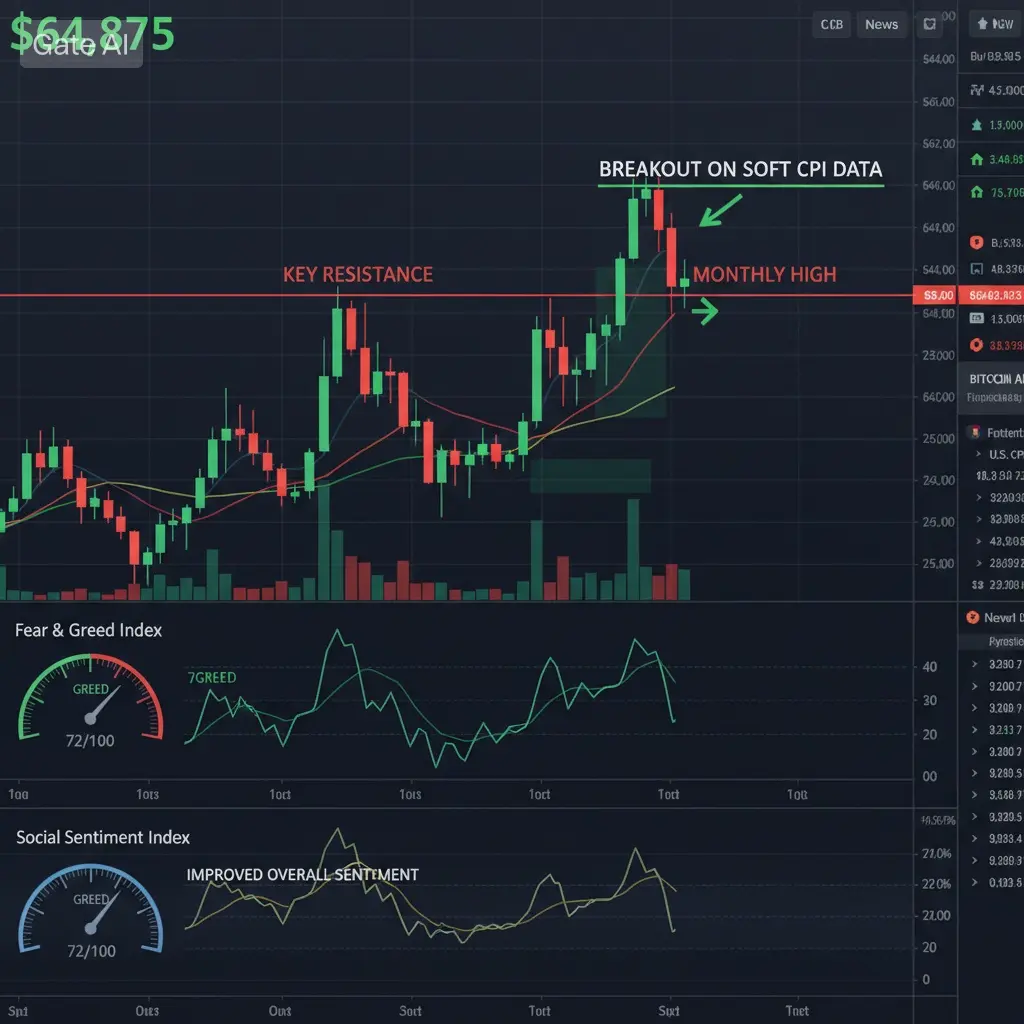
After breaking above the key $64,000 resistance following softer-than-expected U.S. CPI data, Bitcoin is now trading around $64,000, slightly below its recent monthly high near $65,000. While the breakout improved overall sentiment, price action has entered a consolidation phase, making strategy selection more importan
BTC0.71%
MrFlower_XingChen
#SummerCreationCamp
Swing Trading or Day Trading? Bitcoin's Current Market Structure Is Giving a Clear Answer
Not every Bitcoin rally is a signal to trade aggressively.
Sometimes the market rewards patience more than speed, and the current BTC structure is one of those moments.
After breaking above the key $64,000 resistance following softer-than-expected U.S. CPI data, Bitcoin is now trading around $64,000, slightly below its recent monthly high near $65,000. While the breakout improved overall sentiment, price action has entered a consolidation phase, making strategy selection more important than simply predicting direction.
Current Market Picture
Bitcoin is moving within a relatively tight $63,000–$65,000 range. Buyers continue defending support, while sellers remain active near resistance.
This kind of price action usually reflects a market that is preparing for its next major move rather than trending strongly in one direction.
For traders, that changes everything.
Why Swing Trading Makes More Sense Right Now
Instead of focusing on small intraday moves, the current market structure favors traders who are willing to hold positions for several days or even weeks.
1. Consolidation Favors Patience
BTC is trading inside a defined range instead of making higher highs every session.
When markets consolidate, many short-term trades end up being stopped out by random price swings, while swing traders can wait for a confirmed breakout before increasing exposure.
2. Volume Doesn't Support Aggressive Scalping
Recent price action shows that short-term volume remains relatively weak.
Without strong buying pressure, breakouts often fail, making quick trades more difficult and increasing the risk of false signals.
3. The Federal Reserve Could Be the Next Big Catalyst
The upcoming Federal Reserve meeting at the end of July could become the event that determines Bitcoin's next major direction.
Interest-rate expectations continue to influence crypto markets, and any shift in monetary policy could trigger a significant move beyond the current trading range.
4. Bitcoin Is Holding a Critical Support Zone
The $64,000–$64,200 area has become the most important support level.
As long as buyers defend this region, the broader market structure remains constructive.
However, if this support fails, attention could quickly shift toward the $63,000 area and lower support zones.
5. Resistance Still Needs to Be Broken
The immediate challenge remains $65,000.
A strong breakout above this level, supported by healthy trading volume, would improve the probability of a move toward $70,000 and potentially $78,000 in the medium term.
Until then, the market remains in confirmation mode.
6. Institutional Activity Still Deserves Attention
Spot Bitcoin ETF flows have remained relatively weak after $4.5 billion was pulled during June.
A recovery in institutional inflows would strengthen confidence and provide additional support for a sustained bullish trend.
Trading Strategy
Based on the current market structure, swing trading appears more favorable than aggressive short-term trading.
A disciplined approach would be to:
- Watch whether BTC continues holding above $64K.
- Look for a confirmed breakout above $65K before becoming more bullish.
- Keep risk controlled if price falls below the key support zone around $63.5K.
Final Thoughts
Bitcoin has already completed the first step by reclaiming an important psychological level.
Now comes the difficult part—proving that the breakout has enough strength to continue.
With consolidation, weak short-term volume, cautious institutional participation, and the Federal Reserve meeting approaching, this is a market where patience may outperform speed.
Sometimes the best trade isn't the fastest one.
It's the one backed by confirmation.
#SummerCreationCamp
@Gate_Square
@GateSquare
repost-content-media
  • Reward
  • Comment
  • Repost
  • Share
#SummerCreationCamp
Trade Smarter with Gate: AI, Automation, and Powerful Trading Tools in One Platform
Crypto markets never sleep.
Bitcoin can move thousands of dollars while you're asleep, an altcoin can break out in the middle of the night, and a trading opportunity can disappear within minutes. That's why modern trading is no longer just about watching charts—it's about using the right technology at the right time.
Gate has built an ecosystem where AI, automation, and smart trading tools are already available to help traders manage the market more efficiently. Whether you're a beginner lo
BTC0.71%
MrFlower_XingChen
#SummerCreationCamp
Trade Smarter with Gate: AI, Automation, and Powerful Trading Tools in One Platform
Crypto markets never sleep.
Bitcoin can move thousands of dollars while you're asleep, an altcoin can break out in the middle of the night, and a trading opportunity can disappear within minutes. That's why modern trading is no longer just about watching charts—it's about using the right technology at the right time.
Gate has built an ecosystem where AI, automation, and smart trading tools are already available to help traders manage the market more efficiently. Whether you're a beginner looking for simple automation or an experienced trader building advanced strategies, Gate offers tools designed for different trading styles and market conditions.
Automated Trading Is Already Available on Gate
Instead of placing every order manually, Gate Trading Bots can execute strategies automatically based on your chosen settings.
For traders who prefer range-bound markets, Spot Grid automatically buys low and sells high within a predefined price range.
If you trade perpetual contracts, Futures Grid applies the same grid strategy to the futures market.
For investors focused on long-term accumulation, Spot Martingale gradually builds positions using a Dollar-Cost Averaging approach during market declines.
Markets don't always stop at a fixed target, which is why Infinite Grid allows profitable trends to continue without an upper price limit.
Users looking for leveraged automation can choose Margin Grid, while portfolio investors can use Smart Rebalancing to automatically maintain their preferred asset allocation.
On the mobile app, AI Bot Pro adds another layer of automation by using AI-powered trading management.
Gate AI Strategy Takes Automation Further
One of Gate's most innovative features is Gate AI Strategy.
Rather than simply running trades automatically, it helps users create and improve trading strategies with artificial intelligence.
Inside Gate, traders can:
- Generate trading strategies using AI.
- Optimize trading code.
- Backtest strategies using historical market data.
- Test ideas through simulated trading.
- Deploy strategies into live automated trading when ready.
This allows users to test their ideas before committing real capital, helping reduce emotional decision-making and improve trading discipline.
Learn From Experienced Traders Through Gate Copy Trading
Not every trader has years of market experience.
That's why Gate Copy Trading allows users to automatically follow experienced Lead Traders.
Instead of guessing every market move, users can browse traders based on returns, drawdown, assets under management, trading pairs, and other performance metrics before deciding who to follow.
Once selected, trades can be copied automatically according to the user's preferred investment amount.
For experienced traders, Gate also provides the opportunity to apply as a Lead Trader and share strategies with the wider community.
Manage Your Funds Without Delays
Fast execution isn't only important for trading.
Capital management matters too.
With Gate Internal Asset Transfer, users can instantly move funds between Spot, Futures, Margin, Options, Delivery, TradFi, and other supported accounts.
There are no blockchain confirmation delays and no network fees, making it easier to rebalance portfolios, add margin, or prepare for new trading opportunities within seconds.
Why These Features Matter
The crypto market is becoming more competitive every year.
Successful trading is no longer determined only by market predictions. It also depends on execution speed, disciplined strategy, efficient capital management, and the ability to remove emotional decision-making.
By integrating AI Strategy, Trading Bots, Copy Trading, and Internal Asset Transfers into a single platform, Gate is giving traders practical tools that can help simplify trading while adapting to different market conditions.
Technology alone cannot guarantee profits, but when combined with proper risk management and a well-planned strategy, it can help traders operate more efficiently and consistently.
As crypto continues to evolve, platforms are no longer competing only on the number of listed assets—they're competing on the quality of tools they provide.
Gate is positioning itself as more than just an exchange. It's building a complete AI-powered trading ecosystem where automation, strategy development, and portfolio management are already available for users who want to trade smarter, not harder.
@Gate_Square
@GateSquare
  • Reward
  • Comment
  • Repost
  • Share
#SummerCreationCamp
𝗕𝗲𝗳𝗼𝗿𝗲 𝗬𝗼𝘂 𝗧𝗵𝗶𝗻𝗸 𝗔𝗯𝗼𝘂𝘁 𝗣𝗿𝗼𝗳𝗶𝘁, 𝗟𝗲𝗮𝗿𝗻 𝗛𝗼𝘄 𝘁𝗼 𝗖𝗼𝗻𝘁𝗿𝗼𝗹 𝗬𝗼𝘂𝗿 𝗥𝗶𝘀𝗸
One lesson changed the way I look at trading forever.
The size of your profit doesn't determine whether you're a good trader. The way you manage your risk does.
Many beginners spend hours searching for the perfect entry signal, the next breakout, or the indicator that never fails. But they often ignore the two things that matter most before every trade—position sizing and stop-loss placement.
These aren't just technical concepts. They are the foundation of long-t
MrFlower_XingChen
#SummerCreationCamp
𝗕𝗲𝗳𝗼𝗿𝗲 𝗬𝗼𝘂 𝗧𝗵𝗶𝗻𝗸 𝗔𝗯𝗼𝘂𝘁 𝗣𝗿𝗼𝗳𝗶𝘁, 𝗟𝗲𝗮𝗿𝗻 𝗛𝗼𝘄 𝘁𝗼 𝗖𝗼𝗻𝘁𝗿𝗼𝗹 𝗬𝗼𝘂𝗿 𝗥𝗶𝘀𝗸
One lesson changed the way I look at trading forever.
The size of your profit doesn't determine whether you're a good trader. The way you manage your risk does.
Many beginners spend hours searching for the perfect entry signal, the next breakout, or the indicator that never fails. But they often ignore the two things that matter most before every trade—position sizing and stop-loss placement.
These aren't just technical concepts. They are the foundation of long-term survival in the market.
Why Every New Strategy Should Start with a Small Test Trade
Whether you're testing a new setup or trading an unfamiliar market, there's no reason to commit a large portion of your capital immediately.
Professional traders often begin with a small test position. The purpose isn't to make a fortune from one trade—it's to see whether the market behaves as expected while keeping risk under control.
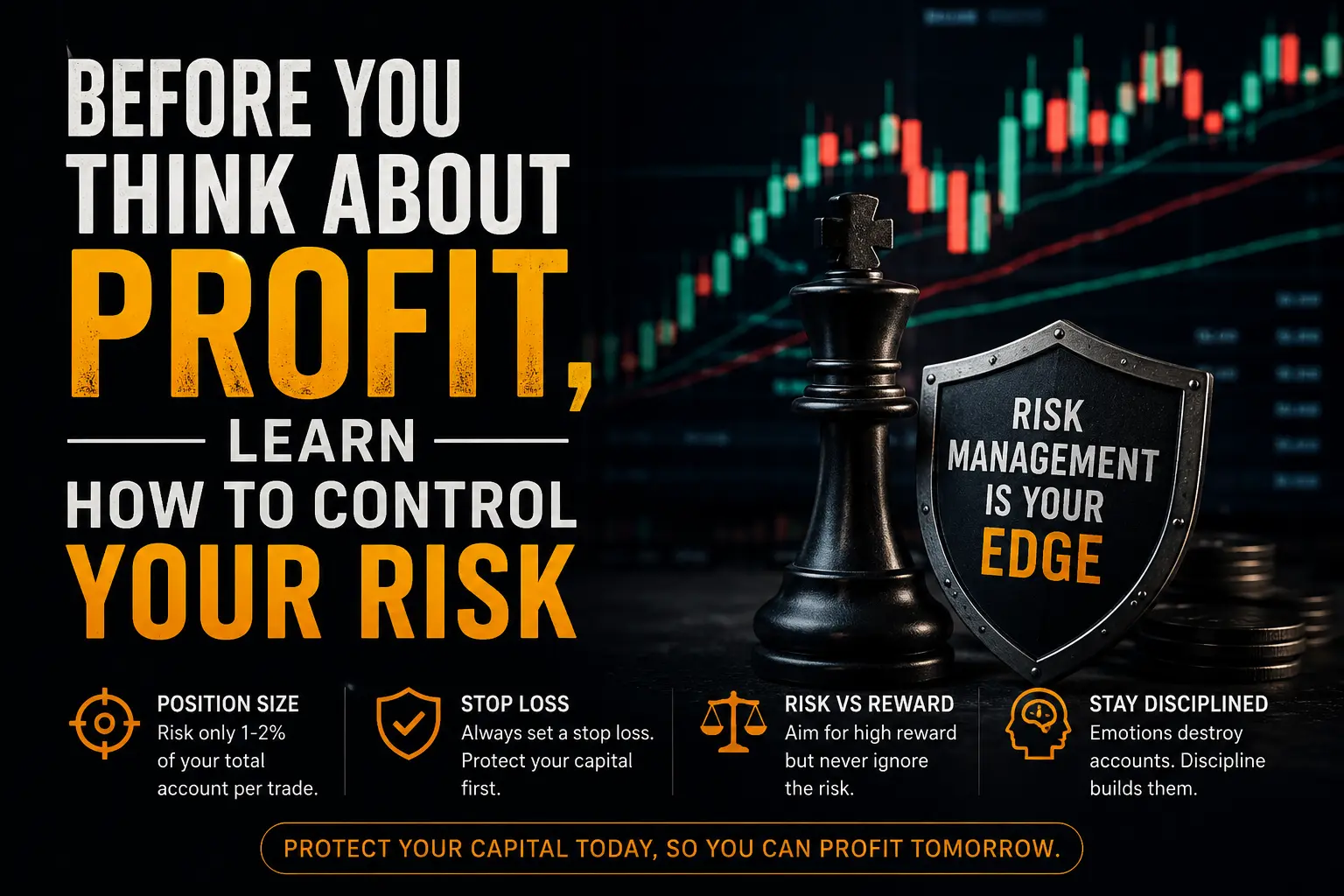
A simple rule followed by many disciplined traders is to risk only 1–2% of the total account balance on a single test trade. This approach protects your account from one bad decision and gives you enough room to stay consistent over time.
Position Size Should Be Calculated, Not Guessed
One of the biggest mistakes beginners make is choosing a position size based on emotion instead of mathematics.
A practical way to calculate it is:
Position Size = (Account Balance × Risk %) ÷ (Entry Price − Stop-Loss Price)
This formula keeps your risk consistent regardless of market conditions.
For traders testing a strategy, starting with the minimum available position, such as 1–5 contracts depending on the asset, is often a smarter approach than opening oversized positions.
Trading isn't about proving confidence.
It's about protecting capital while gathering quality market information.
A Stop Loss Is Your Safety Net
Every trade should have a planned exit before it is even opened.
The most common method is to place the stop loss according to the chart structure.
- For long positions, many traders place the stop below a recent support level.
- For short positions, the stop is commonly placed above a recent resistance level.
This allows the trade enough room to develop while protecting capital if the market moves in the opposite direction.
Some traders also use percentage-based stops.
- 2–5% from the entry price is commonly used for short-term trades.
- 5–10% is often considered for swing trades where larger price swings are expected.
Another popular method is using the Average True Range (ATR) to adjust the stop loss according to market volatility, with many traders using around 1.5× to 2× ATR.
The objective isn't simply to avoid losses.
The objective is to avoid unnecessary losses.
The Rule That Never Changes
No matter how strong a setup looks, never risk more money than you're completely willing to lose on a test trade.
Markets are unpredictable.
Even the best strategies experience losing trades.
What separates successful traders from everyone else isn't a perfect win rate—it's the ability to control losses while allowing opportunities to grow.
Final Thought
The market rewards discipline far more often than excitement.
A small position, a calculated risk, and a properly planned stop loss may not look impressive on social media, but they are the habits that keep traders in the game year after year.
Before chasing your next winning trade, ask yourself one question:
Have I planned my risk as carefully as I've planned my profit?
Because successful trading doesn't begin with the perfect entry.
It begins with protecting the capital that makes every future opportunity possible.
@Gate_Square
@GateSquare
repost-content-media
  • Reward
  • Comment
  • Repost
  • Share
#TSMCQ2NetProfitSurges77%
A 77% surge in TSMC's Q2 net profit sends a clear message: the AI boom is far from over.
Behind these earnings is relentless demand for advanced chips powering AI models, cloud computing, and next-generation data centers. When the world's largest chipmaker posts this kind of growth, it signals that technology investment is still accelerating despite macro uncertainty.
For crypto, the impact is indirect but important. Strong confidence in AI and tech often improves overall market sentiment, encouraging investors to take on more risk. If capital continues flowing into
TSM-2.97%
BTC0.71%
MrFlower_XingChen
#TSMCQ2NetProfitSurges77%
A 77% surge in TSMC's Q2 net profit sends a clear message: the AI boom is far from over.
Behind these earnings is relentless demand for advanced chips powering AI models, cloud computing, and next-generation data centers. When the world's largest chipmaker posts this kind of growth, it signals that technology investment is still accelerating despite macro uncertainty.
For crypto, the impact is indirect but important. Strong confidence in AI and tech often improves overall market sentiment, encouraging investors to take on more risk. If capital continues flowing into innovation, digital assets could also benefit as part of the broader technology ecosystem.
However, this isn't a guaranteed bullish trigger. Bitcoin and the wider crypto market will still depend on liquidity, monetary policy, and institutional demand. Strong earnings create a supportive backdrop—but price action will ultimately decide whether bulls can capitalize on it.
Is TSMC's blockbuster quarter the first sign of another tech-led risk rally, or will crypto continue waiting for its own catalyst?
Share your thoughts below.
#SummerCreationCamp
@Gate_Square
@GateSquare
  • Reward
  • 2
  • Repost
  • Share
BeautifulDay:
To The Moon 🌕
View More
#WarshSaysFedDecidesIfAIInflation
AI isn't the inflation problem. The real question is whether the Federal Reserve can manage the AI investment boom without allowing inflation to return.
That was the key message from Kevin Warsh during his testimony before the Senate Banking Committee.
Many headlines focused on his warning that AI-driven investment could push prices higher. But his broader point was far more important: AI itself isn't inflationary. The outcome depends on how the Federal Reserve responds.
Today, AI is driving one of the largest investment cycles in decades. Companies are inves
MrFlower_XingChen
#WarshSaysFedDecidesIfAIInflation
AI isn't the inflation problem. The real question is whether the Federal Reserve can manage the AI investment boom without allowing inflation to return.
That was the key message from Kevin Warsh during his testimony before the Senate Banking Committee.
Many headlines focused on his warning that AI-driven investment could push prices higher. But his broader point was far more important: AI itself isn't inflationary. The outcome depends on how the Federal Reserve responds.
Today, AI is driving one of the largest investment cycles in decades. Companies are investing heavily in advanced semiconductors, data centers, cloud infrastructure, and energy capacity. This rapid expansion increases demand for resources, skilled labor, construction, and chip production, creating short-term inflationary pressure as supply struggles to keep pace.
However, Warsh believes the story doesn't end there.
As AI adoption expands, businesses can become more productive, operating costs can decline, and entirely new industries can emerge. If productivity grows faster than inflationary pressure, AI could eventually become a disinflationary force, supporting stronger economic growth instead of sustaining higher prices.
This is why Warsh stressed that the Federal Reserve—not AI—will determine whether today's investment boom becomes a temporary price adjustment or a longer-term inflation challenge.
He also cautioned against interpreting June's CPI improvement as a final victory over inflation. According to Warsh, inflation often appears with a delay during major investment cycles, meaning policymakers should remain vigilant rather than assume the battle has already been won.
Market Impact
• AI Stocks: Strong long-term demand remains intact, but higher interest rates could continue to pressure valuations.
• Crypto: Digital assets remain highly sensitive to liquidity. A restrictive Fed could weigh on risk assets, while AI-driven productivity and easing inflation may create a more supportive environment over time.
• Gold & U.S. Dollar: Higher rates generally favor the U.S. dollar and pressure gold. However, if inflation concerns persist, gold could regain strength as an inflation hedge.
My Market View
The most important takeaway isn't whether AI can raise prices. Markets already understand that.
The real story is that innovation and monetary policy are now more connected than ever. The next major market cycle will depend on how AI-driven productivity, inflation, and Federal Reserve policy evolve together.
Do you think AI will ultimately reduce inflation through productivity, or will the Fed need to keep policy tighter for longer?
Stay informed. Manage your risk.
#SummerCreationCamp
@Gate_Square
@GateSquare
  • Reward
  • Comment
  • Repost
  • Share
#USPPIComesInBelowExpectations
One inflation report can change market sentiment. It shouldn't change your entire market outlook.
June's Producer Price Index (PPI) surprised to the downside, reinforcing the recent trend of easing inflation. Producer prices fell 0.3% month-over-month, the largest monthly decline since April 2020, while the annual increase came in below market expectations. Much of the decline was driven by lower energy costs, particularly gasoline prices, easing cost pressures across transportation, manufacturing, and supply chains.
At first glance, this looks like a clear win
BTC0.71%
ETH1.41%
GAS-1.14%
MrFlower_XingChen
#USPPIComesInBelowExpectations
One inflation report can change market sentiment. It shouldn't change your entire market outlook.
June's Producer Price Index (PPI) surprised to the downside, reinforcing the recent trend of easing inflation. Producer prices fell 0.3% month-over-month, the largest monthly decline since April 2020, while the annual increase came in below market expectations. Much of the decline was driven by lower energy costs, particularly gasoline prices, easing cost pressures across transportation, manufacturing, and supply chains.
At first glance, this looks like a clear win for financial markets.
Lower producer inflation reduces the risk of future consumer price increases, strengthens expectations that the Federal Reserve may avoid another near-term rate hike, and improves the outlook for liquidity-sensitive assets. Following the CPI and PPI reports, market expectations for additional tightening eased noticeably.
However, I think the bigger story is what hasn't changed.
Fed Chair Kevin Warsh welcomed the softer inflation data but made it clear that one month's improvement isn't enough to declare victory over inflation. The Fed remains committed to restoring price stability and will look for consistent evidence before changing its policy stance.
What does this mean for markets?
Crypto: Softer inflation supports liquidity expectations, which is generally constructive for Bitcoin and Ethereum. But if inflation rebounds, expectations for tighter policy could quickly pressure risk assets again.
AI & Tech Stocks: Lower rate expectations improve valuations for growth companies, although future performance will still depend on earnings and economic momentum.
Gold & U.S. Dollar: A less aggressive Fed could reduce support for the dollar and provide room for gold to recover. If inflation returns, that relationship could reverse.
My Market View
The June PPI report is an encouraging signal—not a final confirmation.
Markets often react to headlines, while central banks react to trends. The next CPI, PPI, Core PCE, employment data, and Fed guidance will determine whether today's optimism develops into a sustained macro shift or proves temporary.
The smartest investors won't chase a single data release—they'll follow the trend.
Do you think cooling inflation is enough to fuel the next crypto rally, or is it still too early to celebrate?
Stay informed. Manage your risk.
#SummerCreationCamp
@Gate_Square
@GateSquare
  • Reward
  • 1
  • Repost
  • Share
BeautifulDay:
To The Moon 🌕
#USCoreCPIMissesExpectations
Markets celebrated the softer inflation report. I think the bigger opportunity lies in understanding what comes next.
June's U.S. CPI came in below expectations, giving investors a reason to breathe. Inflation eased more than forecast, helped by a sharp decline in energy prices, while core inflation also remained softer than expected. The immediate reaction was predictable: Treasury yields fell, equities moved higher, and crypto sentiment improved as traders reduced expectations for near-term Fed tightening.
But one inflation report doesn't define an economic tren
GAS2.74%
BTC0.71%
ETH1.41%
MrFlower_XingChen
#USCoreCPIMissesExpectations
Markets celebrated the softer inflation report. I think the bigger opportunity lies in understanding what comes next.
June's U.S. CPI came in below expectations, giving investors a reason to breathe. Inflation eased more than forecast, helped by a sharp decline in energy prices, while core inflation also remained softer than expected. The immediate reaction was predictable: Treasury yields fell, equities moved higher, and crypto sentiment improved as traders reduced expectations for near-term Fed tightening.
But one inflation report doesn't define an economic trend.
A large part of June's improvement came from lower energy prices. When oil and gasoline fall, transportation, manufacturing, and logistics become cheaper, easing inflation across the economy. The challenge is that energy is one of the most volatile components of inflation. If geopolitical tensions continue to pressure oil markets, today's relief could fade much faster than investors expect.
This is why I believe the market should focus less on the headline and more on the underlying trend.
Inflation is moving in the right direction, but price pressures haven't disappeared. Housing, services, and labor costs remain key variables, and the Federal Reserve will likely want to see several months of consistent improvement before making any major policy shift. Fed Chair Kevin Warsh reinforced this view by warning that one encouraging CPI report should not be treated as "mission accomplished."
What does this mean for investors?
Crypto: Softer inflation improves liquidity expectations, which is generally supportive for Bitcoin and Ethereum. However, if inflation rebounds, expectations for tighter monetary policy could quickly return and pressure risk assets.
Technology Stocks: Lower bond yields improve the outlook for growth companies, but future performance will still depend on earnings, AI investment, and economic resilience.
U.S. Dollar & Gold: A less aggressive Fed could weaken the dollar and support gold. On the other hand, renewed inflation would likely strengthen the dollar while limiting gold's upside.
What I'm Watching Next
Instead of reacting to one data release, I'll be watching four indicators:
• Core PCE Inflation – the Fed's preferred inflation gauge.
• Employment and wage growth – to measure underlying inflation pressure.
• Energy prices – especially crude oil and gasoline trends.
• Federal Reserve guidance – because policy expectations still drive global liquidity.
My Market View
June's CPI report didn't end the inflation story—it simply started a new chapter.
The market is beginning to price in a more optimistic outlook, but optimism alone doesn't create a sustainable bull market. Consistent inflation improvement, stable economic growth, and clear Federal Reserve direction will determine whether this becomes the beginning of a lasting risk-on cycle or just another temporary rally.
The smartest investors don't chase headlines. They follow the trend before everyone else sees it.
Stay informed. Manage your risk.
#SummerCreationCamp
@Gate_Square
@GateSquare
  • Reward
  • Comment
  • Repost
  • Share
𝗧𝘂𝗿𝗻 𝗮 𝟭𝟬,𝟬𝟬𝟬 𝗨𝗦𝗗𝗧 𝗗𝗲𝗽𝗼𝘀𝗶𝘁 𝗶𝗻𝘁𝗼 𝗠𝗼𝗿𝗲 𝗩𝗮𝗹𝘂𝗲: 𝗕𝗿𝗲𝗮𝗸𝗶𝗻𝗴 𝗗𝗼𝘄𝗻 𝗚𝗮𝘁𝗲'𝘀 𝗠𝗶𝗹𝗹𝗶𝗼𝗻 𝗗𝗲𝗽𝗼𝘀𝗶𝘁 𝗖𝗮𝘀𝗵𝗯𝗮𝗰𝗸 𝗖𝗮𝗺𝗽𝗮𝗶𝗴𝗻
Crypto exchanges often compete by offering lower fees, trading rewards, or deposit bonuses. However, the real question for investors is whether these promotions create genuine value or simply encourage unnecessary trading. Gate's Million Deposit Cashback campaign is interesting because it rewards users who were already planning to deposit funds for trading or investment activities.
Instead of looking only at the head
OPENAI1.43%
MrFlower_XingChen
𝗧𝘂𝗿𝗻 𝗮 𝟭𝟬,𝟬𝟬𝟬 𝗨𝗦𝗗𝗧 𝗗𝗲𝗽𝗼𝘀𝗶𝘁 𝗶𝗻𝘁𝗼 𝗠𝗼𝗿𝗲 𝗩𝗮𝗹𝘂𝗲: 𝗕𝗿𝗲𝗮𝗸𝗶𝗻𝗴 𝗗𝗼𝘄𝗻 𝗚𝗮𝘁𝗲'𝘀 𝗠𝗶𝗹𝗹𝗶𝗼𝗻 𝗗𝗲𝗽𝗼𝘀𝗶𝘁 𝗖𝗮𝘀𝗵𝗯𝗮𝗰𝗸 𝗖𝗮𝗺𝗽𝗮𝗶𝗴𝗻
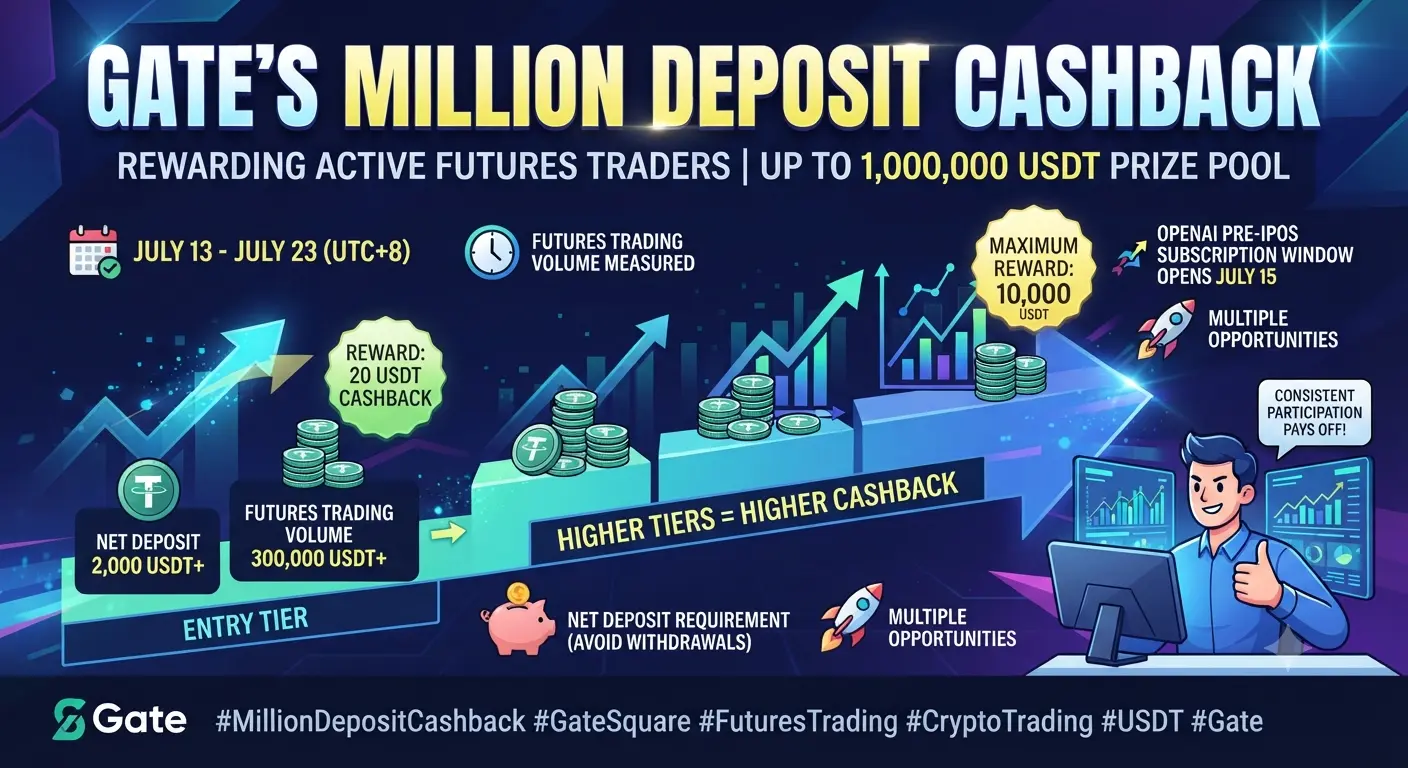
Crypto exchanges often compete by offering lower fees, trading rewards, or deposit bonuses. However, the real question for investors is whether these promotions create genuine value or simply encourage unnecessary trading. Gate's Million Deposit Cashback campaign is interesting because it rewards users who were already planning to deposit funds for trading or investment activities.
Instead of looking only at the headline reward, let's examine how the campaign works, what it actually costs, and where it may provide the greatest value.
Understanding the Campaign
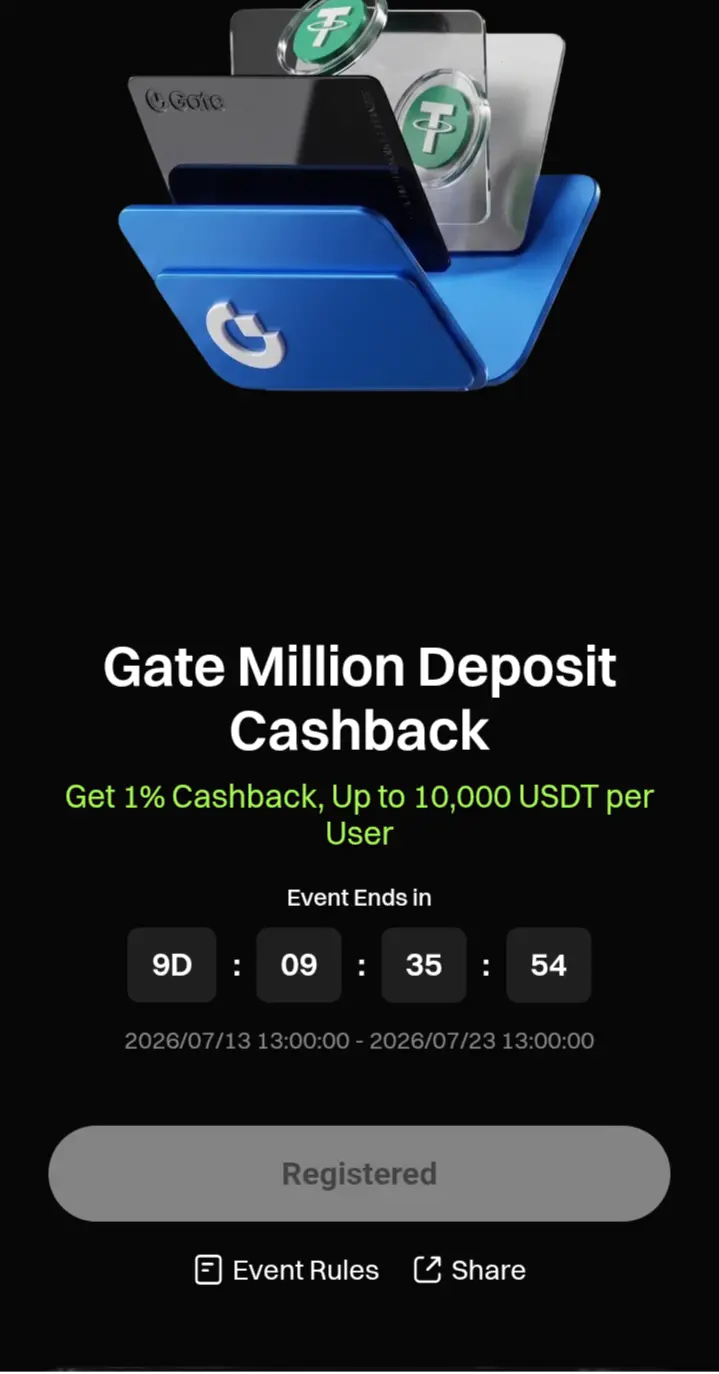
The campaign runs from July 13 to July 23 with a total reward pool of 1,000,000 USDT. Depending on the amount of new funds deposited and the required futures trading volume, eligible users can receive cashback of up to 10,000 USDT.
The promotion is structured in multiple tiers, allowing both retail and larger investors to participate based on their capital size.
Why the 10,000 USDT Tier Deserves Attention
For many active traders, the 10,000 USDT tier is likely the most practical balance between capital commitment and reward potential.
To qualify, users need:
- Net deposit of 10,000 USDT
- Cumulative futures trading volume of 1.5 million USDT
- Cashback reward of 100 USDT
At first glance, 1.5 million USDT in trading volume appears intimidating. Many people assume they need that amount of capital, but trading volume and account balance are two completely different things.
Trading Volume Is Not the Same as Capital
One of the biggest misunderstandings among new traders is confusing trading volume with investment size.
Suppose a trader deposits 10,000 USDT and uses 10× leverage.
Opening and closing positions repeatedly allows cumulative trading volume to increase with each completed trade. A position worth 15,000 USDT, traded multiple times, gradually contributes toward the required 1.5 million USDT volume.
This does not eliminate trading risk. Leverage amplifies both profits and losses, and users should only trade according to their own risk management strategy. The campaign rewards trading activity—it does not guarantee profitability.
Looking Beyond the Cashback
A 100 USDT cashback on a 10,000 USDT deposit represents an immediate 1% return before considering any trading performance.
For investors who already planned to deposit funds, this effectively lowers the overall cost of participating in the platform ecosystem.
Rather than viewing the reward as "free money," it is better understood as a reduction in participation costs for users who would have deposited anyway.
Trading Fees Matter
Every futures trade generates fees.
Depending on whether orders are executed as maker or taker, trading costs differ.
If a trader eventually reaches 1.5 million USDT in cumulative trading volume, total fees can become meaningful.
The 100 USDT cashback helps offset part of these expenses, reducing the effective cost of trading for eligible participants.
The exact savings depend on individual trading style, order execution, fee tier, and VIP status.
Larger Deposit Tiers
The campaign also includes rewards for higher capital commitments.
Examples include:
- 50,000 USDT net deposit with required trading volume of 7,000,000 USDT, earning 500 USDT cashback.
- Up to 1,000,000 USDT net deposit with 150,000,000 USDT cumulative trading volume, allowing qualified users to receive the maximum 10,000 USDT cashback.
These higher tiers are primarily designed for professional traders, institutions, and high-volume participants.
A Strategic Opportunity for OpenAI Pre-IPO Participants
Timing is one of the most interesting aspects of this campaign.
The cashback promotion runs during the same period as Gate's OpenAI Pre-IPO subscription event, which opens on July 15.
Investors who were already planning to deposit funds for the OpenAI subscription may find themselves eligible for cashback simply by completing their funding during the promotional period, provided all campaign requirements are met.
This creates an opportunity to combine two separate platform initiatives into a single funding strategy.
Is the Promotion Worth It?
The answer depends entirely on your original investment plan.
If you were already planning to:
- Deposit capital onto Gate
- Trade futures actively
- Participate in the OpenAI Pre-IPO subscription
then the cashback campaign may provide additional value by lowering your overall participation cost.
On the other hand, depositing funds or increasing leverage solely to chase a reward may expose traders to unnecessary risk that outweighs the cashback itself.
#MillionDepositCashback
repost-content-media
  • Reward
  • Comment
  • Repost
  • Share
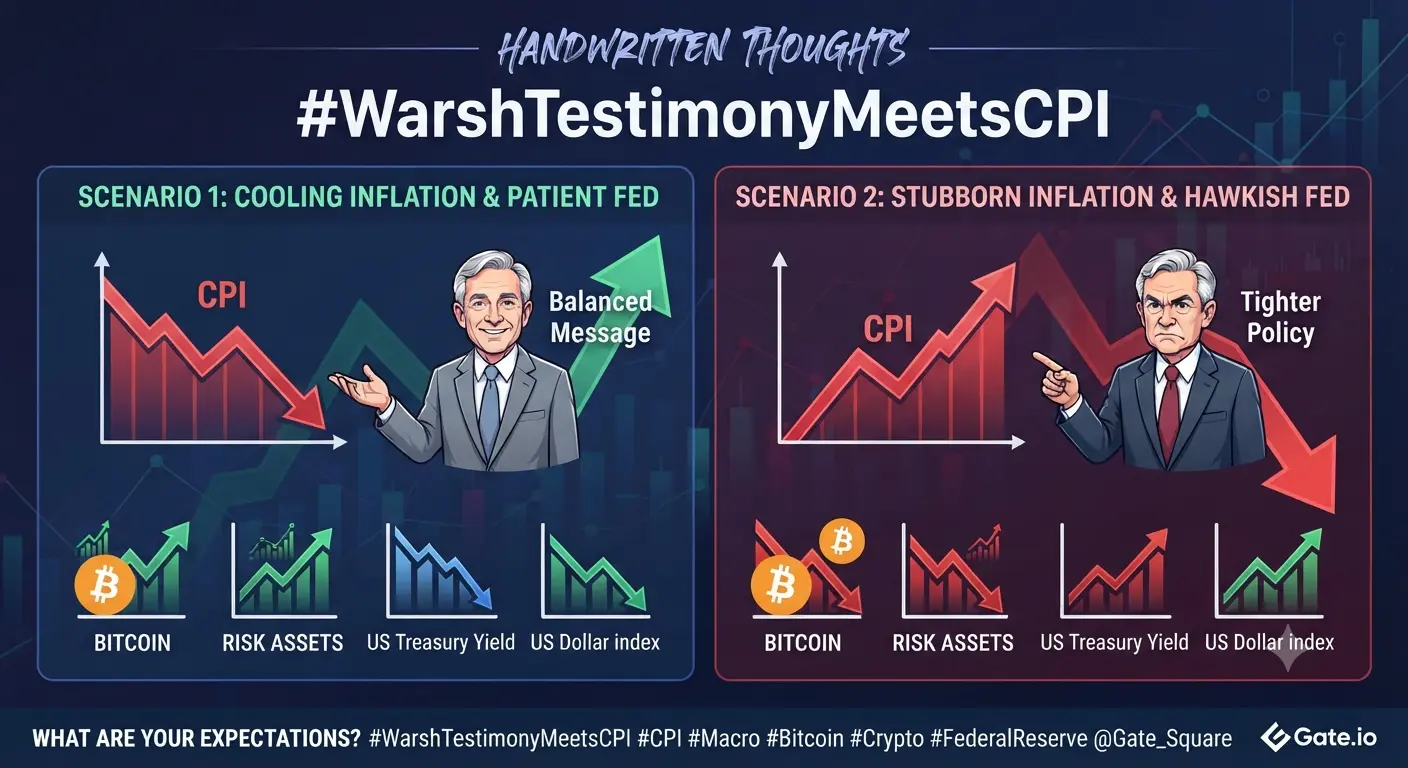
#WarshTestimonyMeetsCPI
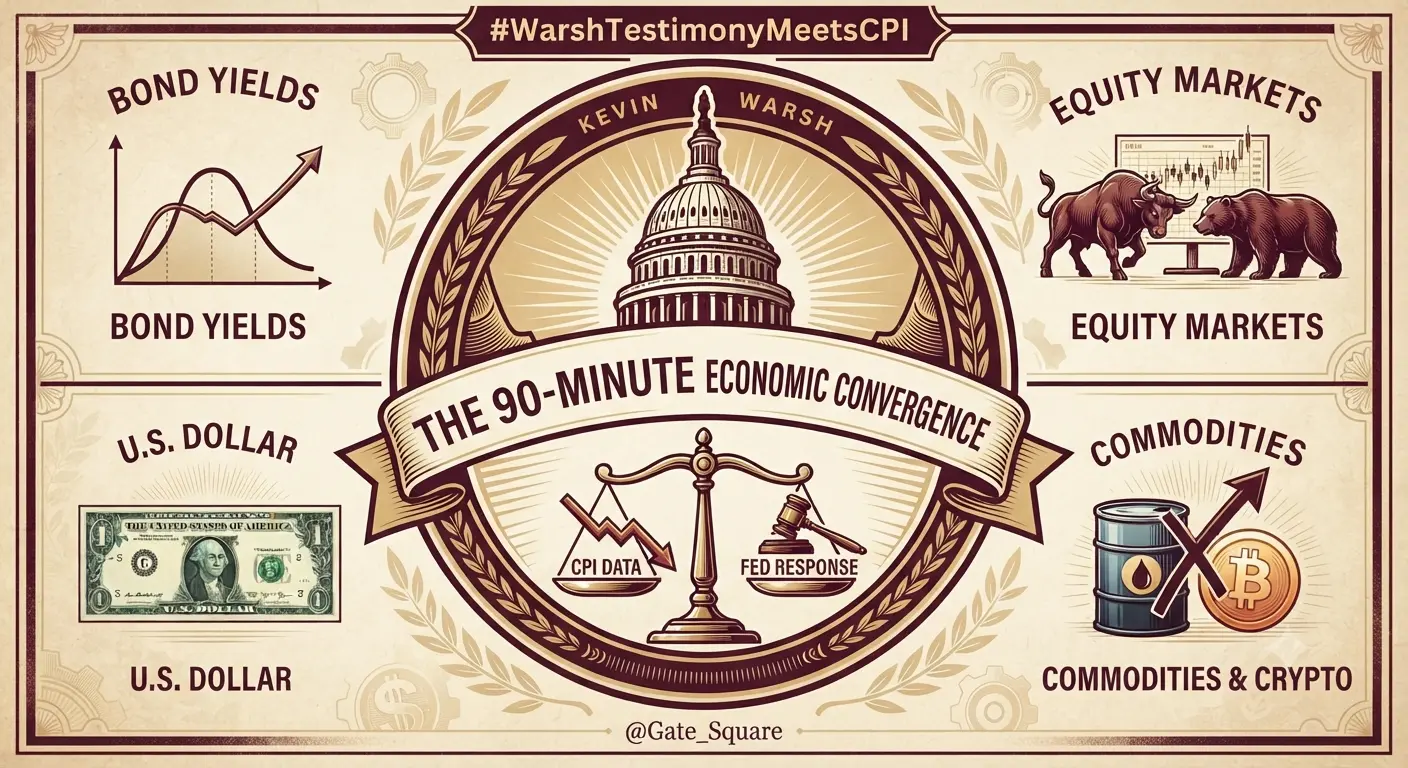
One of the most important macro events of the week is about to unfold. The June U.S. Consumer Price Index (CPI) will be released just 90 minutes before Federal Reserve Chair Kevin Warsh delivers his first congressional testimony. This rare timing means investors won't have much time to digest the inflation data before hearing the Fed's response, making it a potentially high-volatility event for global markets.
Why This Event Matters
Inflation and monetary policy are the two biggest drivers of financial markets right now. The CPI report will provide the latest snapshot
BTC0.71%
MrFlower_XingChen
#WarshTestimonyMeetsCPI
One of the most important macro events of the week is about to unfold. The June U.S. Consumer Price Index (CPI) will be released just 90 minutes before Federal Reserve Chair Kevin Warsh delivers his first congressional testimony. This rare timing means investors won't have much time to digest the inflation data before hearing the Fed's response, making it a potentially high-volatility event for global markets.
Why This Event Matters
Inflation and monetary policy are the two biggest drivers of financial markets right now. The CPI report will provide the latest snapshot of inflation, while Warsh's testimony will offer insight into how the Federal Reserve views that data and whether current policy needs to change.
The combination of fresh economic data and immediate central bank communication could significantly influence market expectations.
The 90-Minute Window
The June CPI report will be released first, followed only 90 minutes later by Warsh's appearance before the House of Representatives. His Senate testimony follows the next day.
This short gap means markets will react to the inflation numbers first, then quickly reassess after hearing the Fed Chair's comments. If the data and Warsh's message point in the same direction, market moves could become even stronger.
Interest Rate Expectations
Investors remain divided over the Fed's next move.
Interest-rate swaps currently imply around 32 basis points of additional tightening by year-end, suggesting markets still expect the possibility of further rate increases.
At the same time, prediction markets show a different outlook, highlighting how uncertain investors remain about future monetary policy.
The Role of Energy Prices
One of the biggest variables is energy.
Lower oil prices could help reduce headline inflation, giving the Federal Reserve more room to wait before making additional policy changes.
However, if inflation remains elevated despite weaker energy prices, policymakers may conclude that underlying inflation pressures are still too strong, increasing the likelihood of maintaining a restrictive policy stance.
Bond Market Impact
Treasury yields are expected to react immediately.
If CPI comes in above expectations and Warsh delivers a hawkish message, yields could move higher as investors price in tighter monetary policy.
If inflation slows and Warsh adopts a more balanced tone, yields may ease as markets reduce expectations for future rate increases.
U.S. Dollar Outlook
The U.S. dollar will also respond to both events.
A hawkish Fed generally supports a stronger dollar, while softer inflation combined with a less aggressive policy outlook could weaken the currency.
Dollar movements often influence global capital flows and investor sentiment across multiple asset classes.
Impact on Stock Markets
Equity markets typically dislike uncertainty.
Higher inflation and expectations of tighter monetary policy could pressure growth and technology stocks.
If inflation surprises on the downside and the Fed signals patience, equities could benefit from improving investor confidence.
Cryptocurrency Market
Bitcoin and the broader crypto market are also sensitive to macroeconomic developments.
Lower inflation combined with a balanced Fed outlook could encourage greater demand for risk assets.
On the other hand, stronger inflation and a hawkish policy message may increase volatility and trigger short-term selling pressure across digital assets.
What Investors Should Watch
The most important questions this week are:
- Does the CPI report show inflation continuing to cool?
- Does Warsh acknowledge progress on inflation?
- Does he suggest the Fed can remain patient?
- Or does he signal that further tightening may still be necessary?
The answers to these questions will likely shape market expectations for the remainder of the year.
Trading Considerations
Events like this often create sharp market movements within minutes.
Investors should monitor both the CPI release and Warsh's testimony together rather than focusing on only one event.
Managing leverage, protecting capital, and waiting for confirmation after the announcements may help reduce unnecessary trading risk.
Conclusion
This week's CPI report and Kevin Warsh's first congressional testimony form one of the most closely watched macroeconomic events of the month. With only 90 minutes separating the inflation data from the Fed Chair's remarks, financial markets could experience significant volatility across bonds, the U.S. dollar, equities, commodities, and cryptocurrencies.
Whether the data supports easing inflation or signals continued price pressures, the interaction between the CPI report and Warsh's policy outlook will play a major role in determining the next direction for global financial markets.
@Gate_Square
repost-content-media
  • Reward
  • Comment
  • Repost
  • Share
#OpenAIRemovesCodex5HourLimit
The AI industry is entering a new phase where success is no longer measured only by building the most advanced models. Today, user experience, accessibility, pricing, computing efficiency, and ecosystem growth have become equally important. OpenAI's decision to temporarily remove the five-hour usage limit for Codex and ChatGPT Work is more than a simple product update—it reflects the growing competition among AI companies to attract, retain, and support millions of active users.
Why This Update Matters
OpenAI has temporarily lifted the five-hour usage limit for C
META-2.78%
MrFlower_XingChen
#OpenAIRemovesCodex5HourLimit
The AI industry is entering a new phase where success is no longer measured only by building the most advanced models. Today, user experience, accessibility, pricing, computing efficiency, and ecosystem growth have become equally important. OpenAI's decision to temporarily remove the five-hour usage limit for Codex and ChatGPT Work is more than a simple product update—it reflects the growing competition among AI companies to attract, retain, and support millions of active users.
Why This Update Matters
OpenAI has temporarily lifted the five-hour usage limit for Codex and ChatGPT Work across Plus, Pro, and Business subscriptions, while also resetting user quotas once. The move gives subscribers greater flexibility to complete coding projects, research tasks, document analysis, and business workflows without frequent interruptions.
This decision highlights how AI providers are becoming increasingly responsive to user needs as demand for professional AI tools continues to grow.
Rising Competition in AI
The announcement came shortly after Anthropic extended access to Claude following user feedback and subscription cancellations. This timing illustrates how competitive the AI market has become.
Instead of competing only on benchmark performance, companies are now competing through better subscription value, fewer restrictions, improved reliability, and enhanced customer experience.
Growing User Adoption
One of the strongest signals behind this update is the rapid increase in adoption.
Codex and ChatGPT Work have reportedly surpassed 6 million active users, showing that businesses, developers, researchers, students, and enterprises are integrating AI into their daily workflows faster than ever before.
As user demand grows, platforms must continuously improve scalability while maintaining service quality.
Compute Efficiency
Running advanced AI models requires enormous computing resources.
Every prompt consumes GPU capacity, electricity, networking resources, and cloud infrastructure. Removing usage limits increases demand, making optimization essential.
OpenAI's improvements to GPT-5.6 Sol's usage calculations demonstrate how efficiency has become just as important as raw model performance.
Customer Retention
Subscription businesses depend heavily on customer satisfaction.
Frequent usage limits can interrupt workflows, particularly for developers and professionals working on complex projects.
Providing greater flexibility helps reduce frustration, improve retention, and strengthen long-term subscriber loyalty.
Infrastructure Investment
Supporting millions of active users requires continuous investment in AI infrastructure.
Large-scale GPU clusters, advanced networking, high-speed storage, and efficient data centers have become essential components of every leading AI company's strategy.
Companies capable of expanding infrastructure while controlling operating costs may gain a competitive advantage.
Enterprise Adoption
Business customers increasingly rely on AI for software development, customer service, document generation, workflow automation, data analysis, and internal productivity.
Reducing usage restrictions makes these tools more practical for enterprise environments where uninterrupted access is essential.
Pricing Strategy
The AI industry is gradually shifting from competing solely on technology toward competing on value.
Subscription pricing, available features, response quality, usage limits, and customer support are becoming major factors influencing user decisions.
Companies that offer better value without compromising performance may continue attracting larger user bases.
Innovation Race
Competition between OpenAI, Anthropic, Google, xAI, Meta, and other AI companies continues accelerating innovation.
Each platform is introducing new models, reasoning capabilities, coding assistants, enterprise solutions, and multimodal features in an effort to strengthen its ecosystem.
This intense competition ultimately benefits users through faster innovation and improved products.
Challenges Ahead
Despite rapid progress, several challenges remain.
Growing infrastructure costs, increasing demand for advanced GPUs, regulatory developments, cybersecurity risks, data privacy requirements, and rising operational expenses will continue shaping the industry's future.
Balancing innovation with sustainable business growth will remain one of the biggest priorities for AI companies.
Market Impact
The latest update reinforces a broader industry trend.
AI providers are recognizing that long-term success depends not only on building intelligent models but also on delivering consistent access, competitive pricing, efficient infrastructure, and an excellent user experience.
As adoption continues accelerating, companies capable of combining technological leadership with customer-focused services may strengthen their position within the global AI market.
Conclusion
OpenAI's decision to remove the temporary usage limit demonstrates how rapidly the AI industry is evolving. The focus is expanding beyond model intelligence toward accessibility, customer satisfaction, infrastructure efficiency, and enterprise scalability. As competition intensifies, future leadership will likely belong to companies that successfully balance innovation, performance, affordability, and user experience while supporting millions of professionals worldwide.
@Gate_Square
repost-content-media
  • Reward
  • Comment
  • Repost
  • Share
#DEXE
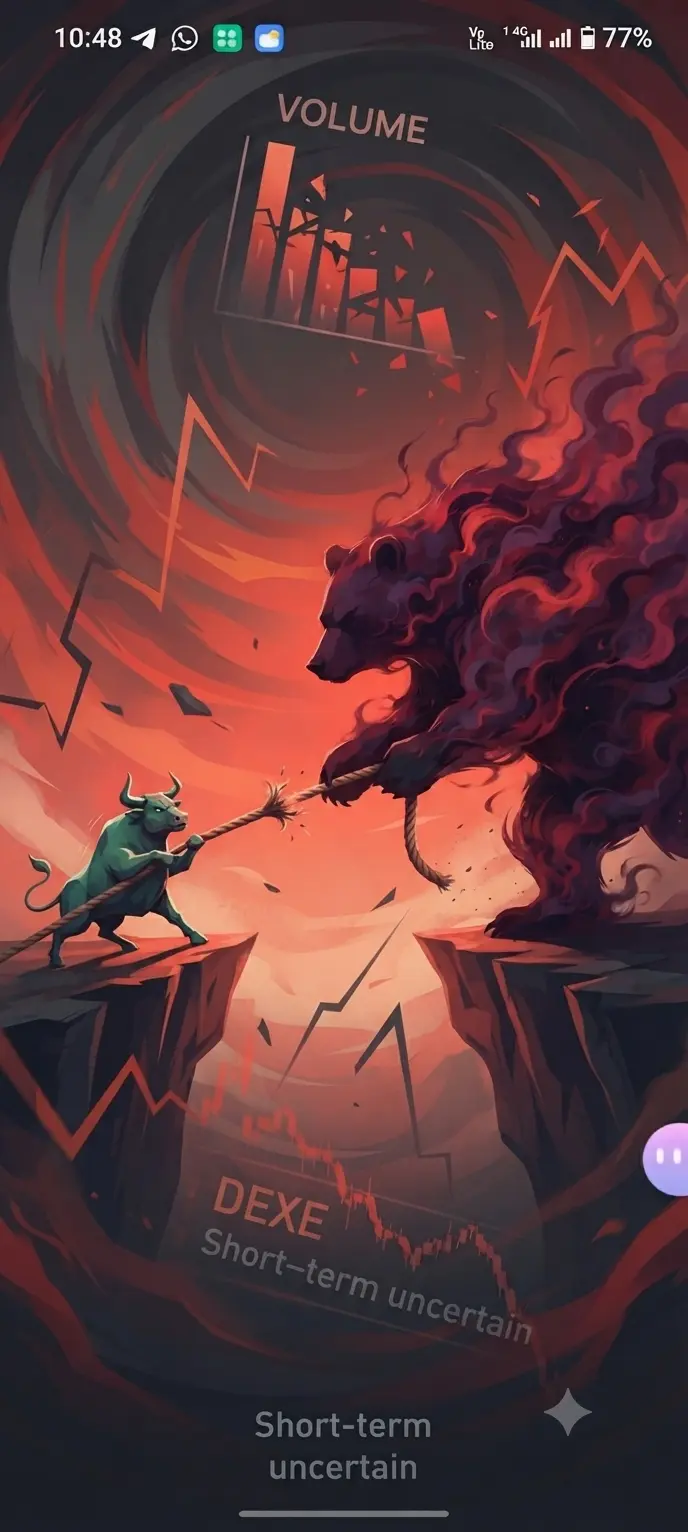
DEXE is currently trading around $48.54, making it one of the strongest-performing cryptocurrencies in today's market. The token has recorded a remarkable gain of more than 25% within a single trading session, reflecting exceptional buying pressure and growing investor confidence. Such a rapid move has attracted significant attention from traders looking for momentum opportunities as well as long-term investors monitoring high-performing blockchain projects.
Technical Analysis
From a technical perspective, DEXE continues to display a strong bullish market structure. The price has broken
DEXE-9.60%
BTC0.71%
MrFlower_XingChen
#DEXE
DEXE is currently trading around $48.54, making it one of the strongest-performing cryptocurrencies in today's market. The token has recorded a remarkable gain of more than 25% within a single trading session, reflecting exceptional buying pressure and growing investor confidence. Such a rapid move has attracted significant attention from traders looking for momentum opportunities as well as long-term investors monitoring high-performing blockchain projects.
Technical Analysis
From a technical perspective, DEXE continues to display a strong bullish market structure. The price has broken above several important resistance levels and remains comfortably above both the 50-day and 200-day Exponential Moving Averages (EMAs). This alignment is widely regarded as confirmation that the long-term trend remains positive. Higher highs and higher lows continue to form on the chart, showing that buyers are still controlling market direction. Unless this structure is broken, the overall outlook remains favorable for further upside.
Trading Volume
One of the most encouraging aspects of the recent rally is the sharp increase in trading volume. Strong volume confirms that the price movement is supported by genuine market participation rather than temporary speculation. When both price and volume rise together, it often indicates that institutional investors and large market participants are entering the market with confidence. Continued volume expansion will be an important factor in determining whether DEXE can sustain its current momentum.
Momentum Indicators
Momentum indicators continue to favor the bulls. The Relative Strength Index (RSI) has moved above 80, showing that buying pressure remains extremely strong. However, an RSI at this level also suggests that the market is becoming overheated in the short term. This does not necessarily indicate the beginning of a bearish trend, but it increases the probability of a brief consolidation or healthy pullback before the next upward movement. Such pauses are common during strong bull markets and often help establish a stronger foundation for future gains.
On-Chain Analysis
On-chain data continues to support the bullish outlook. Transaction activity has increased, wallet participation is expanding, and token transfers have become more active as investor interest grows. These improvements indicate that network activity is strengthening alongside price performance. Sustainable on-chain growth often reflects increasing adoption and stronger ecosystem participation, both of which are positive indicators for long-term value.
Whale Activity
Large investors appear to be maintaining confidence in DEXE despite its recent surge. Current market behavior shows no clear signs of aggressive whale distribution, suggesting that major holders are not rushing to take profits. Stable whale positions during a strong rally generally indicate confidence in higher future prices. Nevertheless, investors should continue monitoring large wallet transactions because significant whale selling can quickly increase market volatility.
Market Sentiment
Overall sentiment surrounding DEXE remains highly optimistic. The token has become one of the market's top-performing assets, attracting increased attention across the cryptocurrency community. Growing media coverage, expanding social engagement, and stronger trading activity have all contributed to improving investor confidence. As long as positive sentiment remains intact, buyers are likely to continue supporting the current trend.
Ecosystem Development
The DeXe ecosystem continues to strengthen through its focus on decentralized governance and community-driven decision-making. Increasing user participation, governance activity, and ecosystem development contribute to the project's long-term fundamentals. Continued innovation and active community involvement will remain important drivers of future growth and investor confidence.
Risks
Despite the impressive rally, investors should remain aware of potential risks. The market is currently trading in overbought territory, increasing the possibility of short-term profit-taking. High volatility around major resistance levels can create sudden price swings, while weakness in the broader cryptocurrency market could temporarily slow DEXE's momentum. Managing risk remains essential during periods of rapid price appreciation.
Competitors
DEXE operates within the rapidly expanding decentralized governance sector, where competition continues to increase. Numerous blockchain projects are developing governance platforms and decentralized treasury management solutions. To maintain its competitive position, DEXE must continue expanding its ecosystem, improving user adoption, and delivering meaningful innovation that differentiates it from competing projects.
Market Outlook
The medium-term outlook remains constructive. If buying momentum continues and the broader cryptocurrency market remains supportive, DEXE has the potential to extend its current rally. The next few trading sessions will be especially important because they will reveal whether buyers have enough strength to maintain control above current price levels. Strong volume combined with sustained demand would further strengthen the bullish outlook.
Bullish Scenario
A decisive breakout above the important $50 psychological resistance could trigger another wave of buying interest. Such a move would increase the probability of DEXE advancing toward $55, while sustained momentum could eventually allow the token to challenge the major $60 resistance area. Continued positive market sentiment and healthy trading volume would provide additional support for this scenario.
Bearish Scenario
If buying momentum weakens after the recent rally, DEXE could enter a period of consolidation or experience a healthy correction. The first major support remains near $38.64, while stronger long-term support is located around $26.37. As long as these support zones remain intact, the broader bullish trend would still be considered valid.
Support and Resistance
The immediate resistance level remains at $50, followed by $55 and the major long-term target of $60. On the downside, $38.64 represents the first important support area, while $26.37 continues to serve as the strongest structural support for the longer-term trend.
Trading Strategy
Momentum traders may prefer waiting for a confirmed breakout above $50 before considering new entries, while long-term investors may benefit from gradually accumulating during healthy market pullbacks instead of chasing extended rallies. Monitoring trading volume, Bitcoin's overall trend, and whale activity will remain essential for evaluating future price direction. Effective risk management and disciplined position sizing should always remain a priority.
Investor Guide
Investors should evaluate DEXE using both technical indicators and fundamental developments rather than focusing solely on short-term price movement. Monitoring ecosystem growth, on-chain activity, whale behavior, trading volume, and overall market sentiment can provide a more balanced perspective. Patience and disciplined decision-making often produce better long-term results than emotional reactions to market volatility.
Conclusion
DEXE continues to demonstrate one of the strongest bullish structures in the cryptocurrency market. Technical indicators remain positive, trading volume supports the breakout, on-chain activity is improving, and whale behavior continues to favor accumulation. Although short-term volatility is possible after such a powerful rally, the overall trend remains constructive. The $50 level is likely to determine whether DEXE begins its next bullish leg toward $55 and $60, or temporarily consolidates before continuing higher.
Disclaimer
This market analysis is provided for educational and informational purposes only and should not be considered financial advice. Cryptocurrency markets are highly volatile and involve substantial risk. Always conduct your own research and use appropriate risk management before making any investment decisions.
$DEXE
repost-content-media
  • Reward
  • Comment
  • Repost
  • Share
#PreIPOsSeason2OpenAISubscription
OpenAI (OPENAI) Pre-IPO Is Almost Here – Subscription Opens in Just 2 Days
The countdown has officially begun. Gate's Pre-IPOs Round 2 featuring OpenAI (OPENAI) is now live, giving eligible users time to prepare before the subscription window opens. As one of the most recognized names in artificial intelligence, OpenAI continues to attract global attention, making this one of the most anticipated Pre-IPO opportunities on the platform.
A total of 27,700 OPENAI shares have been allocated for subscription, with each subscription priced at $722. Users can partici
GUSD-0.01%
MrFlower_XingChen
#PreIPOsSeason2OpenAISubscription
OpenAI (OPENAI) Pre-IPO Is Almost Here – Subscription Opens in Just 2 Days
The countdown has officially begun. Gate's Pre-IPOs Round 2 featuring OpenAI (OPENAI) is now live, giving eligible users time to prepare before the subscription window opens. As one of the most recognized names in artificial intelligence, OpenAI continues to attract global attention, making this one of the most anticipated Pre-IPO opportunities on the platform.
A total of 27,700 OPENAI shares have been allocated for subscription, with each subscription priced at $722. Users can participate using either USDT or GUSD, providing flexible payment options for those planning to join the event.
The subscription period will run from July 15 at 15:00 (UTC+8) until July 17 at 15:00 (UTC+8). After the subscription phase ends, pre-market trading is scheduled to begin on July 20 at 16:00 (UTC+8), allowing participants to access the market before broader trading opportunities become available.
Beyond the subscription itself, Gate has introduced additional incentives for participants. Eligible subscribers can receive GT airdrop rewards while also benefiting from a 3.8% GUSD minting yield, adding extra value beyond the allocation opportunity. Users holding VIP5 or higher status, along with qualified super agents, can also enjoy additional exclusive free airdrop rewards.
For investors interested in gaining early exposure to innovative technology companies, this event represents another example of how blockchain platforms are creating new ways to participate in emerging investment opportunities. As demand for artificial intelligence continues to expand worldwide, OpenAI remains one of the companies attracting the greatest attention across both the technology and investment communities.
Before participating, investors should carefully review the subscription rules, eligibility requirements, allocation mechanism, and potential risks. Understanding the complete process is essential before committing funds to any Pre-IPO opportunity.
Key Information
• Subscription Price: $722 per OPENAI
• Total Allocation: 27,700 OPENAI
• Supported Assets: USDT & GUSD
• Subscription Period: July 15, 15:00 – July 17, 15:00 (UTC+8)
• Pre-Market Trading Begins: July 20, 16:00 (UTC+8)
• Subscriber Benefits: GT Airdrop Rewards + 3.8% GUSD Minting Yield
• Extra Benefits: Additional free airdrops for VIP5+ users and Super Agents
As always, every investment carries risk. Participate responsibly, understand the subscription mechanism, and make decisions based on your own research and financial goals.
Go to the Pre-IPOs subscription page: https://www.gate.com/ipos/21
More details: https://www.gate.com/announcements/article/100622
@Gate_Square
repost-content-media
  • Reward
  • Comment
  • Repost
  • Share
#LABPlunges53PercentInTwoDays
LAB Drops 53% in Just Two Days – A Wake-Up Call for Every Crypto Investor
The cryptocurrency market has once again demonstrated how quickly momentum can change. LAB experienced a dramatic 53% decline in only two trading days, catching many traders by surprise and becoming one of the market's biggest talking points. Such a rapid move highlights both the opportunities and the risks that define digital asset investing.
Only a short time ago, market sentiment around LAB was optimistic. Strong buying activity and rising prices attracted momentum traders looking to ben
LAB-19.25%
BTC0.71%
MrFlower_XingChen
#LABPlunges53PercentInTwoDays
LAB Drops 53% in Just Two Days – A Wake-Up Call for Every Crypto Investor
The cryptocurrency market has once again demonstrated how quickly momentum can change. LAB experienced a dramatic 53% decline in only two trading days, catching many traders by surprise and becoming one of the market's biggest talking points. Such a rapid move highlights both the opportunities and the risks that define digital asset investing.
Only a short time ago, market sentiment around LAB was optimistic. Strong buying activity and rising prices attracted momentum traders looking to benefit from the uptrend. However, when buying pressure weakened, sentiment shifted almost instantly. What had been a strong rally quickly turned into an aggressive sell-off, reminding investors that crypto markets can reverse direction much faster than traditional financial markets.
Understanding the Sharp Decline
Price crashes of this magnitude rarely occur because of a single event. Instead, they are usually driven by several factors acting together. Early investors often begin locking in profits after a strong rally, reducing buying support. As prices fall below important technical levels, leveraged positions can be automatically liquidated, adding further selling pressure. This creates a chain reaction where fear replaces confidence and more investors rush to exit their positions.
In highly volatile markets, liquidity also plays a major role. When sell orders significantly outnumber buy orders, prices can fall rapidly until new buyers are willing to step in. During these periods, market emotions often become stronger than fundamentals, causing exaggerated price swings.
Technical Perspective
From a technical standpoint, the breakdown below key support levels significantly weakened LAB's short-term market structure. Momentum indicators that previously reflected strong buying interest have likely shifted toward bearish territory, while trading volume during the decline suggests that selling pressure accelerated as the price continued falling.
The next phase will depend on whether buyers can establish a solid support zone. Without renewed demand, further volatility may continue before the market reaches equilibrium.
Market Sentiment Changes Faster Than Fundamentals
One of the biggest lessons from LAB's decline is that market sentiment often changes much faster than a project's long-term fundamentals. Fear and uncertainty can dominate price action even when there has been no major change in the project's underlying development.
This emotional cycle—optimism, excitement, fear, and panic—is common throughout cryptocurrency markets. Investors who understand these cycles are generally better prepared to avoid emotional decisions during periods of extreme volatility.
Risk Management Matters More Than Ever
Events like this reinforce why risk management should always come before potential profits. Successful investors focus not only on identifying opportunities but also on protecting their capital when market conditions become unpredictable.
Diversifying investments, controlling position sizes, avoiding excessive leverage, and maintaining disciplined entry and exit strategies can significantly reduce the impact of sudden market movements. Preserving capital during difficult periods often creates better opportunities for future growth.
Could LAB Recover?
History shows that sharp corrections do not always signal the end of a project. Some cryptocurrencies have recovered strongly after major declines, while others have continued searching for lower support levels. LAB's future direction will largely depend on renewed investor confidence, improving market liquidity, ecosystem development, and the overall performance of the broader cryptocurrency market.
If buying activity returns and market sentiment stabilizes, recovery remains possible. However, continued selling pressure could keep volatility elevated in the near term.
What Investors Should Watch Next
Market participants should closely monitor trading volume, support and resistance levels, whale wallet activity, and overall cryptocurrency market sentiment. Bitcoin's direction will also remain an important factor, as broader market weakness often affects altcoins more severely during periods of uncertainty.
Rather than reacting emotionally to headlines, investors should focus on objective market data and disciplined decision-making.
Key Takeaway
LAB's 53% decline in just two days is a powerful reminder that cryptocurrency markets can create both extraordinary opportunities and significant risks. Rapid gains can disappear just as quickly when momentum changes, making patience, preparation, and disciplined risk management essential for every investor.
The market will eventually determine whether this correction becomes a temporary setback or the beginning of a longer consolidation phase. Until then, staying informed, protecting capital, and making decisions based on analysis rather than emotion remain the most valuable strategies any investor can follow.
Disclaimer: This post is for educational and informational purposes only and should not be considered financial advice. Cryptocurrency investments involve substantial risk. Always conduct your own research before making investment decisions
$LAB
repost-content-media
  • Reward
  • Comment
  • Repost
  • Share
#MillionDepositCashback
Every serious trader looks for opportunities that reward activity without changing their existing trading plan. Gate's Million Deposit Cashback campaign is built around that idea. Instead of rewarding only a few winners, this event offers tier-based cashback for users who complete qualifying deposits and futures trading volume during the campaign period.
The campaign features a 1,000,000 USDT prize pool, making it one of the larger promotional events for active traders. Participants who meet the required conditions can receive up to 1% USDT cashback, with a maximum rew
MrFlower_XingChen
#MillionDepositCashback
Every serious trader looks for opportunities that reward activity without changing their existing trading plan. Gate's Million Deposit Cashback campaign is built around that idea. Instead of rewarding only a few winners, this event offers tier-based cashback for users who complete qualifying deposits and futures trading volume during the campaign period.
The campaign features a 1,000,000 USDT prize pool, making it one of the larger promotional events for active traders. Participants who meet the required conditions can receive up to 1% USDT cashback, with a maximum reward of 10,000 USDT per user.
The first milestone starts with a net deposit of at least 2,000 USDT and 300,000 USDT in futures trading volume, which qualifies users for a 20 USDT cashback reward. From there, higher deposit tiers unlock higher cashback amounts, giving traders a clear path toward larger rewards.
One detail that should not be overlooked is the net deposit requirement. Deposits alone are not enough—withdrawals during the campaign can reduce the net amount and affect eligibility. Anyone planning to participate should manage their funds carefully until the event ends.
Another important point is the futures trading volume requirement. The campaign measures trading volume, not profit or loss. That means every trade contributes toward the target, but risk management remains essential. Increasing leverage only to generate volume can expose traders to unnecessary liquidation risk, so position sizing and capital protection should remain the priority.
The campaign runs from July 13, 16:00 to July 23, 16:00 (UTC+8). Interestingly, it overlaps with the OpenAI Pre-IPOs subscription window opening on July 15, creating an opportunity for users who are planning their capital allocation across multiple Gate events. Good planning can help traders participate in both without disrupting their overall strategy.
Before joining, every participant should read the campaign rules carefully, calculate the required trading volume in advance, and ensure that their deposit strategy aligns with the event requirements. Chasing rewards without a proper trading plan often leads to unnecessary risk, while disciplined traders can treat cashback as an additional benefit on top of their normal activity.
This campaign is not simply about depositing funds—it encourages consistent participation, capital management, and responsible futures trading. For traders who are already active on Gate, it provides an opportunity to earn extra USDT while continuing their regular trading routine.
What do you think about this campaign? Will you aim for the entry tier or try to reach one of the higher cashback levels?
#MillionDepositCashback
@Gate_Square
repost-content-media
  • Reward
  • Comment
  • Repost
  • Share
#WarshTestimonyMeetsCPI
This is one of those weeks where the economic calendar deserves more attention than the price chart. Many traders spend hours looking for technical signals, but sometimes a single macro event can completely change market direction within minutes. This week brings exactly that kind of setup.
The biggest focus is the release of the US Consumer Price Index (CPI), followed shortly afterward by Fed Chair Kevin Warsh's congressional testimony. The short gap between these two events means markets may not have enough time to fully digest the inflation data before receiving fre
BTC0.71%
MrFlower_XingChen
#WarshTestimonyMeetsCPI
This is one of those weeks where the economic calendar deserves more attention than the price chart. Many traders spend hours looking for technical signals, but sometimes a single macro event can completely change market direction within minutes. This week brings exactly that kind of setup.
The biggest focus is the release of the US Consumer Price Index (CPI), followed shortly afterward by Fed Chair Kevin Warsh's congressional testimony. The short gap between these two events means markets may not have enough time to fully digest the inflation data before receiving fresh guidance from the Federal Reserve. That combination could create rapid volatility across stocks, bonds, the US dollar, and the cryptocurrency market.
Inflation will tell us where prices are heading, but the Fed's response is what traders will be listening for. A lower-than-expected CPI reading could strengthen expectations that inflation is cooling. If Chair Warsh also delivers a balanced and patient message, investors may become more confident that monetary policy will gradually become less restrictive. In that environment, Bitcoin and other cryptocurrencies could benefit from renewed buying interest, Treasury yields may move lower, and the US dollar could lose some strength.
On the other hand, if inflation remains stubbornly high and the Fed continues to emphasize inflation risks, markets may quickly price in the possibility of tighter policy for longer. That would likely support the US dollar and Treasury yields while putting pressure on risk assets, including crypto and equities. These are the moments when market sentiment can change in just a few minutes.
Another important piece of the puzzle is energy prices. Recent stability in oil and other energy markets could help reduce headline inflation, but policymakers are likely to pay closer attention to core inflation, which removes the effects of food and energy. If core inflation remains elevated, the Fed may remain cautious even if headline CPI shows improvement.
For crypto traders, this is not simply another news event. Bitcoin often reacts sharply to changes in interest-rate expectations because liquidity and investor confidence play a major role in digital asset prices. A single statement from the Fed can sometimes have a greater impact than technical indicators or short-term market trends.
My approach during events like this is to stay disciplined rather than chase the first market move. The initial reaction after CPI can reverse completely once the Fed Chair begins speaking. Waiting for confirmation may mean missing the first few candles, but it can also help avoid emotional decisions during periods of extreme volatility.
This week is a reminder that successful trading is not only about predicting the numbers. It is about understanding how economic data and central bank communication work together to shape market expectations. When inflation data and the Fed send the same message, markets usually find direction. When they conflict, uncertainty often becomes the dominant force.
What are your expectations? Will softer inflation and a measured Fed message support another rally in Bitcoin and risk assets, or do you believe persistent inflation will keep pressure on the market for longer?
#WarshTestimonyMeetsCPI #CPI @Gate_Square
repost-content-media
  • Reward
  • Comment
  • Repost
  • Share
#IranClosesStraitOfHormuz
The reported closure of the Strait of Hormuz has become one of the most important geopolitical developments for global financial markets. This narrow waterway is far more than a regional shipping route—it is one of the world's most critical energy corridors. Any disruption here has the potential to influence oil prices, inflation, global trade, and investor sentiment within hours. While headlines are moving quickly, understanding the broader picture is far more important than reacting emotionally.
The first factor every investor should watch is global oil supply. Aro
FUEL-0.73%
NG0.35%
MrFlower_XingChen
#IranClosesStraitOfHormuz
The reported closure of the Strait of Hormuz has become one of the most important geopolitical developments for global financial markets. This narrow waterway is far more than a regional shipping route—it is one of the world's most critical energy corridors. Any disruption here has the potential to influence oil prices, inflation, global trade, and investor sentiment within hours. While headlines are moving quickly, understanding the broader picture is far more important than reacting emotionally.
The first factor every investor should watch is global oil supply. Around one-fifth of the world's seaborne crude oil passes through the Strait of Hormuz. If shipping remains disrupted, energy markets could experience tighter supply and increased uncertainty.
Oil price volatility is likely to remain elevated. Markets often react before physical shortages appear, meaning even the risk of prolonged disruption can push crude prices significantly higher as traders price in geopolitical uncertainty.
Commercial shipping activity is another critical factor. Reduced vessel traffic, higher insurance premiums, and increased security costs can make global transportation more expensive, affecting businesses well beyond the Middle East.
Inflation expectations could rise again if energy prices remain elevated. Higher fuel costs increase transportation and manufacturing expenses, eventually raising the cost of goods and services worldwide.
Global stock markets may experience increased pressure. Energy-intensive sectors such as airlines, logistics, manufacturing, and transportation often struggle when fuel prices climb rapidly, while market volatility increases across major indices.
Safe-haven assets may attract stronger demand. During periods of geopolitical uncertainty, investors frequently shift capital toward assets viewed as more defensive, reflecting a cautious market environment.
Energy companies could become relative beneficiaries if crude oil prices continue moving higher. Producers and exporters generally perform better during periods of sustained energy price strength.
The response from governments and international organizations will play a major role in shaping market sentiment. Diplomatic negotiations, official statements, or additional military actions could rapidly change investor expectations.
Supply chains should also remain in focus. The Strait of Hormuz is vital not only for crude oil but also for refined petroleum products and liquefied natural gas. Any prolonged disruption could affect industries across multiple continents.
Central banks may face new challenges if higher energy prices slow progress on inflation. Expectations for future interest-rate decisions could change, influencing both equity and bond markets.
The cryptocurrency market may also experience higher volatility. Some investors reduce exposure to risk assets during geopolitical crises, while others view digital assets as an alternative store of value during periods of uncertainty.
Regional stability remains one of the biggest unknowns. Markets will closely monitor whether tensions remain limited or expand into a broader regional conflict, as this could significantly increase economic risks.
Global economic growth may weaken if elevated energy prices persist. Higher operating costs reduce business profitability, weaken consumer purchasing power, and create additional pressure on economic activity.
Investor psychology will be just as important as economic data. Fear and uncertainty often create sharp market swings, making discipline and patience more valuable than emotional reactions to breaking news.
The most important factor is risk management. Headlines can change within minutes during geopolitical events, and markets can move sharply in either direction. Investors who manage risk carefully, avoid excessive leverage, and stay focused on verified information are generally better positioned to navigate periods of uncertainty.
The situation surrounding the Strait of Hormuz is more than a regional political story—it is a global economic event with the potential to influence commodities, equities, currencies, and cryptocurrencies simultaneously. The coming days will be critical as markets monitor shipping activity, diplomatic developments, military responses, and the overall impact on global energy supply. Staying informed and focusing on facts rather than speculation will be essential for every investor.
@Gate_Square
repost-content-media
  • Reward
  • Comment
  • Repost
  • Share
  • Pinned