# RoaringKittyAccountHacked

10.24K

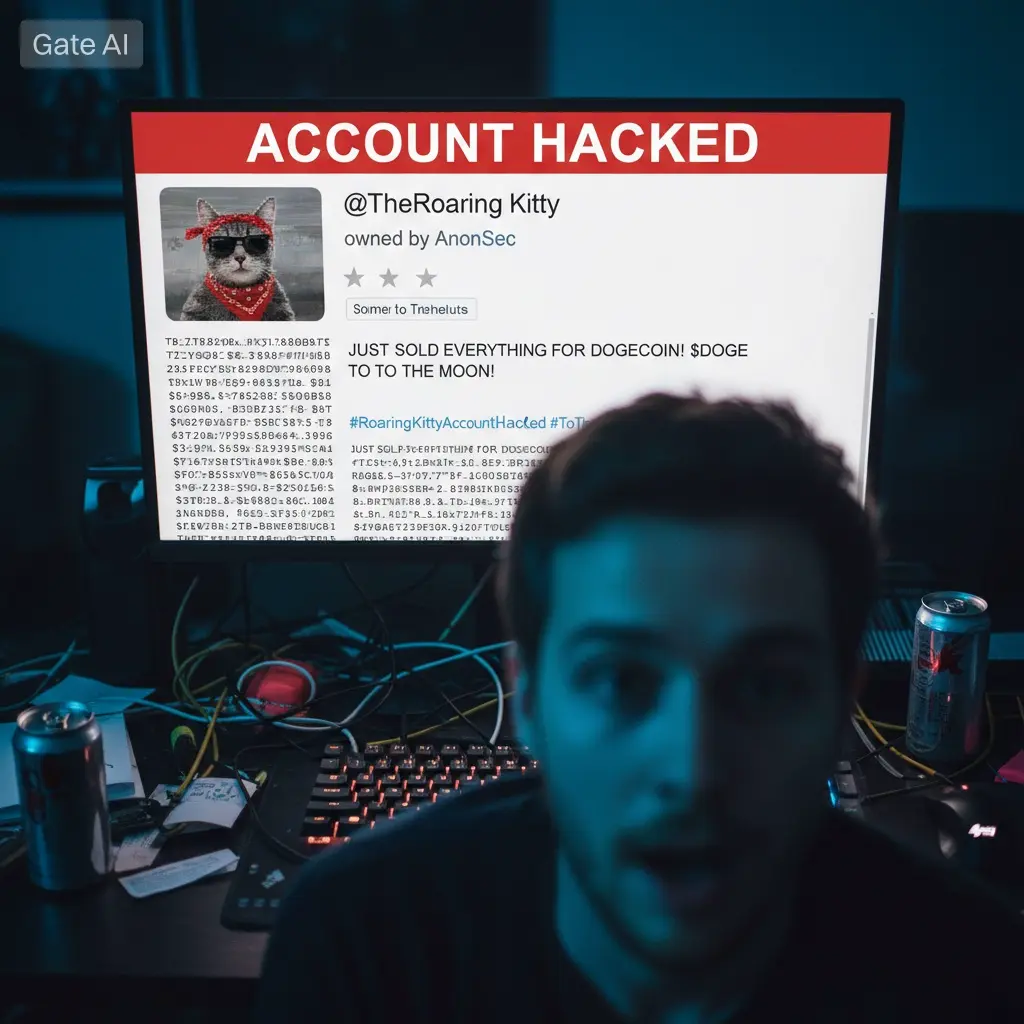
The X account of GameStop saga protagonist Roaring Kitty was compromised this morning. A hacker posted a meme coin contract for RKC, sending its market cap briefly to 12 million US dollars before it crashed to 1.8 million US dollars. The related tweets have been deleted. This is a classic "hacker pump and dump" event with extreme short term volatility. Proceed with caution.

#RoaringKittyAccountHacked
𝐑𝐎𝐀𝐑𝐈𝐍𝐆 𝐊𝐈𝐓𝐓𝐘 𝐀𝐂𝐂𝐎𝐔𝐍𝐓 𝐇𝐀𝐂𝐊 𝐓𝐑𝐈𝐆𝐆𝐄𝐑𝐒 𝐕𝐈𝐎𝐋𝐄𝐍𝐓 𝐑𝐊𝐂 𝐏𝐔𝐌𝐏-𝐀𝐍𝐃-𝐃𝐔𝐌𝐏, 𝐄𝐗𝐏𝐎𝐒𝐈𝐍𝐆 𝐓𝐇𝐄 𝐍𝐄𝐗𝐓 𝐄𝐕𝐎𝐋𝐔𝐓𝐈𝐎𝐍 𝐎𝐅 𝐒𝐎𝐂𝐈𝐀𝐋-𝐃𝐑𝐈𝐕𝐄𝐍 𝐅𝐈𝐍𝐀𝐍𝐂𝐈𝐀𝐋 𝐌𝐀𝐍𝐈𝐏𝐔𝐋𝐀𝐓𝐈𝐎𝐍
The crypto and meme-trading ecosystem witnessed another major reminder of how powerful social influence has become in modern financial markets after the X account associated with Roaring Kitty — one of the most recognizable figures from the GameStop retail trading era — was reportedly compromised in a coordinated hacking inciden
MrFlower_XingChen
#RoaringKittyAccountHacked
𝐑𝐎𝐀𝐑𝐈𝐍𝐆 𝐊𝐈𝐓𝐓𝐘 𝐀𝐂𝐂𝐎𝐔𝐍𝐓 𝐇𝐀𝐂𝐊 𝐓𝐑𝐈𝐆𝐆𝐄𝐑𝐒 𝐕𝐈𝐎𝐋𝐄𝐍𝐓 𝐑𝐊𝐂 𝐏𝐔𝐌𝐏-𝐀𝐍𝐃-𝐃𝐔𝐌𝐏, 𝐄𝐗𝐏𝐎𝐒𝐈𝐍𝐆 𝐓𝐇𝐄 𝐍𝐄𝐗𝐓 𝐄𝐕𝐎𝐋𝐔𝐓𝐈𝐎𝐍 𝐎𝐅 𝐒𝐎𝐂𝐈𝐀𝐋-𝐃𝐑𝐈𝐕𝐄𝐍 𝐅𝐈𝐍𝐀𝐍𝐂𝐈𝐀𝐋 𝐌𝐀𝐍𝐈𝐏𝐔𝐋𝐀𝐓𝐈𝐎𝐍
The crypto and meme-trading ecosystem witnessed another major reminder of how powerful social influence has become in modern financial markets after the X account associated with Roaring Kitty — one of the most recognizable figures from the GameStop retail trading era — was reportedly compromised in a coordinated hacking incident that triggered a massive speculative frenzy surrounding a token called RKC.
The attacker used the compromised account to publish a meme coin contract address connected to the RKC token. Due to Roaring Kitty’s enormous cultural influence among retail traders, meme communities, and high-risk speculative circles, the post spread across crypto markets within minutes, immediately attracting traders who believed the token launch may have been legitimate or directly endorsed.
What followed was a textbook example of modern attention-driven market behavior.
Within moments of the post appearing, automated trading bots, momentum traders, meme coin speculators, and social-driven communities flooded into the token. Trading volume exploded across decentralized exchanges as fear of missing out accelerated rapidly across online trading groups.
The market capitalization of RKC surged aggressively, briefly approaching nearly $12 million despite lacking any verified utility structure, meaningful liquidity foundation, audited infrastructure, or established development credibility.
But the rally collapsed almost as quickly as it emerged.
As doubts surrounding account authenticity and security began circulating, speculative buying pressure instantly reversed into panic selling. Within a short period, RKC’s market capitalization crashed toward approximately $1.8 million, wiping out substantial trader capital and delivering another brutal reminder of how fragile low-liquidity meme markets can become during hype-driven cycles.
The suspicious posts were later deleted, reinforcing widespread belief that the event was entirely unauthorized and specifically designed to exploit the speed of retail speculation before verification systems could react.
Many analysts now view the incident as a modern form of social-engineering-based financial manipulation, where compromised influence itself becomes the primary weapon.
The event highlights a much deeper structural transformation occurring across modern markets:
Social media platforms are increasingly functioning as real-time liquidity engines.
In the digital asset era, platforms like X no longer simply distribute information — they actively move capital. Viral narratives can now create multi-million-dollar market movements faster than traditional verification systems, exchanges, regulators, or communities can respond.
This is especially dangerous in meme coin ecosystems where valuation is often driven more by visibility, virality, and momentum than by underlying fundamentals or sustainable economic utility.
The RKC incident also demonstrates how vulnerable speculative micro-cap assets remain to rapid manipulation.
In many low-liquidity crypto environments, only a relatively small amount of initial buying pressure is required to create explosive percentage gains. When a high-profile account with millions of followers suddenly posts a token contract, momentum algorithms and retail traders can collectively generate massive short-term price acceleration within seconds.
At that point, distinguishing organic speculation from deliberate manipulation becomes increasingly difficult.
Cybersecurity experts are now warning that financial influencer accounts may become some of the highest-value hacking targets in the digital economy.
Unlike traditional cyberattacks focused purely on stealing funds or personal data, modern account compromises can now be directly monetized through market manipulation itself. A single fraudulent post can generate millions in trading activity before platforms or users fully recognize the breach.
This creates a dangerous intersection between cyber warfare, behavioral psychology, and decentralized finance.
The broader concern is that these risks may intensify significantly over the coming years.
As token-launch infrastructure becomes faster, cheaper, and more automated, attackers may gain the ability to create, promote, and exploit speculative assets within minutes using hacked accounts, coordinated viral campaigns, fake narratives, or synthetic online engagement.
Artificial intelligence could accelerate this trend even further.
AI-generated announcements, deepfake videos, cloned voice recordings, synthetic livestreams, and automated engagement systems may eventually make fraudulent market-moving events appear increasingly authentic. In such environments, traders may have only seconds — rather than minutes — to verify legitimacy before volatility erupts.
This is rapidly transforming how risk management functions in modern speculative markets.
Verification speed, wallet analysis, liquidity depth monitoring, source authentication, and on-chain behavior tracking are becoming just as important as technical analysis, chart structure, or timing entries — especially in meme-driven ecosystems where narratives move faster than fundamentals.
The incident may also increase pressure on both regulators and social media companies to strengthen security standards for high-profile financial accounts.
Institutional-grade cybersecurity protection, advanced authentication systems, behavioral anomaly detection, and faster breach-response infrastructure could become essential as online personalities increasingly function as indirect market-moving entities capable of influencing billions in speculative capital flows.
At a deeper level, the Roaring Kitty breach reflects a fundamental reality about the future of digital markets:
Attention itself has become financial infrastructure.
In today’s environment, information is no longer simply consumed — it is instantly monetized, traded, amplified, and weaponized across decentralized networks operating 24/7 in real time.
The result is a financial ecosystem where psychology, virality, cybersecurity, and liquidity are becoming increasingly interconnected.
Ultimately, the RKC collapse serves as another powerful reminder that modern crypto markets operate at the intersection of narrative economics, technological acceleration, and crowd behavior.
As digital finance continues evolving, the line separating social influence, market infrastructure, speculative trading, and cyber manipulation may become increasingly blurred — making verification, security, and situational awareness more important than ever before.
𝐓𝐇𝐄 𝐅𝐔𝐓𝐔𝐑𝐄 𝐎𝐅 𝐌𝐀𝐑𝐊𝐄𝐓𝐒 𝐌𝐀𝐘 𝐁𝐄 𝐃𝐄𝐅𝐈𝐍𝐄𝐃 𝐍𝐎𝐓 𝐉𝐔𝐒𝐓 𝐁𝐘 𝐂𝐀𝐏𝐈𝐓𝐀𝐋 — 𝐁𝐔𝐓 𝐁𝐘 𝐖𝐇𝐎 𝐂𝐎𝐍𝐓𝐑𝐎𝐋𝐒 𝐀𝐓𝐓𝐄𝐍𝐓𝐈𝐎𝐍
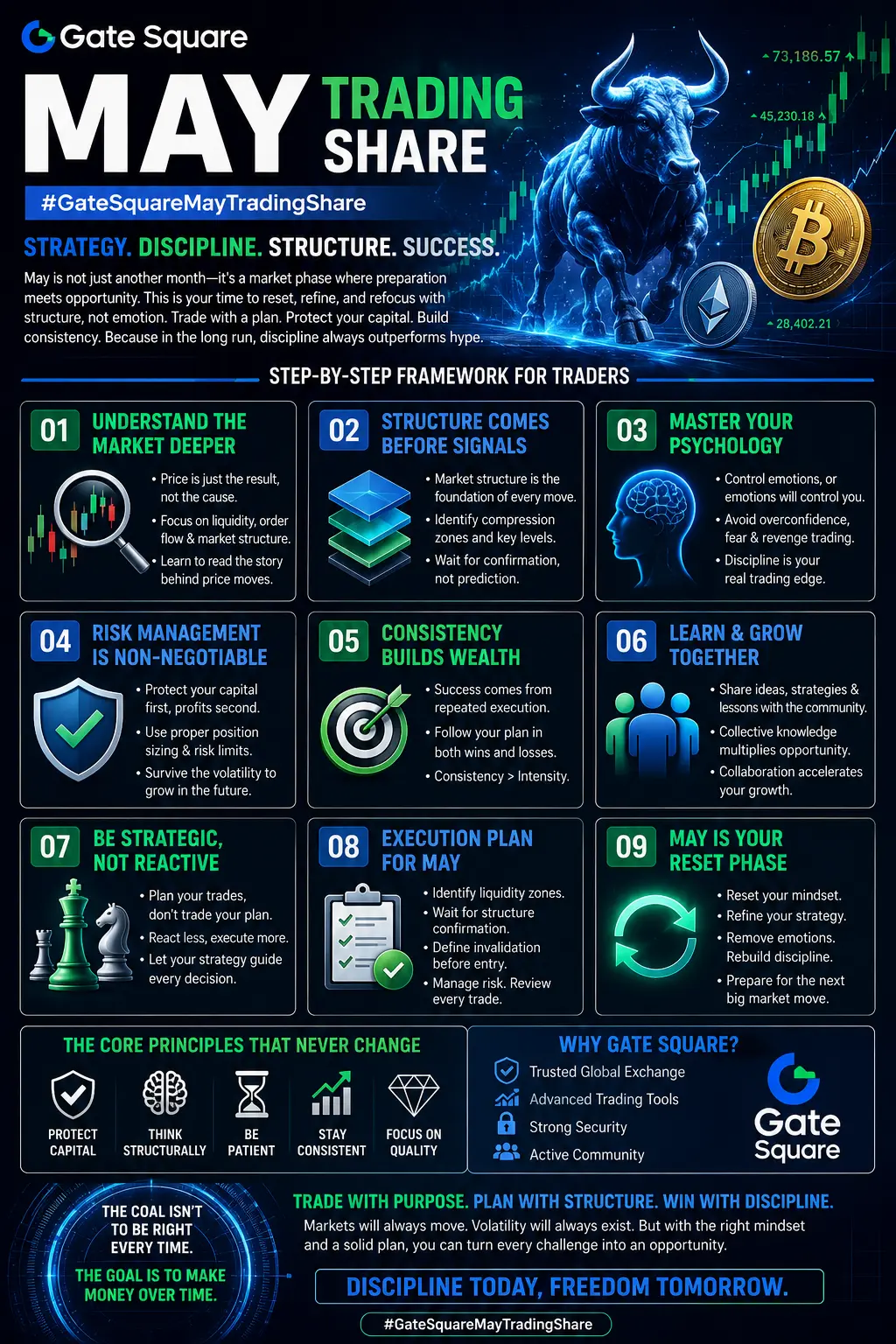
#GateSquareMayTradingShare
repost-content-media
  • Reward
  • Comment
  • Repost
  • Share
#RoaringKittyAccountHacked
𝐑𝐎𝐀𝐑𝐈𝐍𝐆𝐊𝐈𝐓𝐓𝐘 𝐀𝐂𝐂𝐎𝐔𝐍𝐓 𝐇𝐀𝐂𝐊 𝐓𝐑𝐈𝐆𝐆𝐄𝐑𝐒 𝐌𝐀𝐒𝐒𝐈𝐕𝐄 𝐑𝐊𝐂 𝐏𝐔𝐌𝐏 𝐀𝐍𝐃 𝐃𝐔𝐌𝐏, 𝐄𝐗𝐏𝐎𝐒𝐈𝐍𝐆 𝐓𝐇𝐄 𝐅𝐔𝐓𝐔𝐑𝐄 𝐑𝐈𝐒𝐊𝐒 𝐎𝐅 𝐒𝐎𝐂𝐈𝐀𝐋-𝐃𝐑𝐈𝐕𝐄𝐍 𝐂𝐑𝐘𝐏𝐓𝐎 𝐌𝐀𝐑𝐊𝐄𝐓𝐒
The crypto and meme trading ecosystem witnessed another major example of how social media influence can instantly move millions of dollars in speculative capital after the X account of Roaring Kitty — one of the most recognized figures from the GameStop retail trading era — was reportedly compromised in a coordinated hacking incident that triggered
MrFlower_XingChen
#RoaringKittyAccountHacked
𝐑𝐎𝐀𝐑𝐈𝐍𝐆𝐊𝐈𝐓𝐓𝐘 𝐀𝐂𝐂𝐎𝐔𝐍𝐓 𝐇𝐀𝐂𝐊 𝐓𝐑𝐈𝐆𝐆𝐄𝐑𝐒 𝐌𝐀𝐒𝐒𝐈𝐕𝐄 𝐑𝐊𝐂 𝐏𝐔𝐌𝐏 𝐀𝐍𝐃 𝐃𝐔𝐌𝐏, 𝐄𝐗𝐏𝐎𝐒𝐈𝐍𝐆 𝐓𝐇𝐄 𝐅𝐔𝐓𝐔𝐑𝐄 𝐑𝐈𝐒𝐊𝐒 𝐎𝐅 𝐒𝐎𝐂𝐈𝐀𝐋-𝐃𝐑𝐈𝐕𝐄𝐍 𝐂𝐑𝐘𝐏𝐓𝐎 𝐌𝐀𝐑𝐊𝐄𝐓𝐒
The crypto and meme trading ecosystem witnessed another major example of how social media influence can instantly move millions of dollars in speculative capital after the X account of Roaring Kitty — one of the most recognized figures from the GameStop retail trading era — was reportedly compromised in a coordinated hacking incident that triggered a violent pump-and-dump event surrounding a newly promoted token called RKC.
The attacker used the compromised account to publish a meme coin contract address connected to the RKC token. Due to Roaring Kitty’s enormous cultural influence among retail traders and speculative communities, the post spread across crypto trading circles within minutes, rapidly attracting traders looking to capitalize on what many initially believed was a legitimate launch or endorsement.
Almost immediately after the contract appeared, trading volume exploded across decentralized exchanges as speculative buyers rushed into the token. The market capitalization of RKC surged aggressively, briefly reaching nearly 12 million dollars in valuation despite having virtually no established liquidity structure, utility model, or verified development background.
However, the rally collapsed just as fast as it formed.
As concerns about account security and authenticity began spreading, panic selling quickly replaced speculative buying pressure. Within a short period, the token’s market capitalization crashed toward approximately 1.8 million dollars, wiping out a significant portion of trader capital and creating another textbook example of how quickly hype-based meme markets can reverse under unstable liquidity conditions.
The suspicious posts were later deleted, strengthening the belief that the incident was entirely unauthorized and designed specifically to exploit the speed of retail speculation. Many analysts now view the event as a classic social-engineering-driven crypto manipulation scheme, where compromised influence is temporarily weaponized to generate artificial market demand before liquidity rapidly exits.
The incident highlights a much deeper structural issue developing across modern financial markets: the growing merger between social media virality and speculative capital flows.
In today’s digital trading environment, platforms like X have effectively become real-time liquidity engines where narratives can create billion-dollar market movements faster than traditional verification systems can respond. Meme coins, low-cap tokens, and trend-driven assets are especially vulnerable because valuation is often driven more by attention and momentum than by underlying fundamentals or sustainable economic models.
The RKC event also demonstrates how fragile meme coin liquidity truly is. In many micro-cap crypto assets, only a relatively small amount of capital is needed to generate extreme percentage moves. When a high-profile account with millions of followers suddenly posts a token contract, automated bots, momentum traders, and speculative communities can collectively create explosive short-term buying pressure within seconds.
This creates an environment where market manipulation becomes increasingly difficult to distinguish from organic speculation.
Security experts are also warning that financial influencer accounts are becoming prime cyberattack targets because of their direct ability to move retail capital instantly. Unlike traditional hacks focused purely on stealing assets, modern account compromises can now be monetized through market manipulation itself. A single compromised post can trigger millions of dollars in trading volume before platforms or users fully recognize the breach.
The broader concern is that this trend may accelerate in the future as meme coin infrastructure becomes faster, more automated, and increasingly integrated with AI-driven trading systems. As token creation tools become more accessible and decentralized exchanges continue lowering listing barriers, attackers may gain the ability to launch, promote, and exploit speculative assets within minutes using hacked accounts, fake narratives, or coordinated viral campaigns.
Artificial intelligence could further intensify these risks. AI-generated posts, deepfake videos, synthetic voice clips, and automated engagement systems may eventually make fraudulent announcements appear increasingly realistic, reducing the time traders have to verify authenticity before entering volatile positions.
This evolving landscape is forcing traders to rethink risk management strategies in social-driven markets. Verification speed, wallet analysis, liquidity monitoring, and source authentication are becoming just as important as technical analysis or market timing, especially in highly speculative sectors like meme coins and low-cap digital assets.
The incident may also increase pressure on social media platforms and regulators to improve account security standards for high-profile financial influencers. Multi-layer authentication systems, institutional-grade cybersecurity protection, and faster breach detection mechanisms could become critical as online personalities increasingly function as indirect market-moving entities.
Ultimately, the Roaring Kitty account breach and the resulting RKC collapse serve as a powerful reminder of how modern crypto markets operate at the intersection of psychology, technology, and attention economics. The event reflects a future where information itself has become a tradable financial catalyst — capable of generating enormous wealth creation or destruction within minutes.
As digital markets continue evolving, the line between social influence, financial infrastructure, and cyber warfare may become increasingly blurred, making security, verification, and market awareness more important than ever before.
#GateSquareMayTradingShare
repost-content-media
  • Reward
  • Comment
  • Repost
  • Share
#RoaringKittyAccountHacked
𝐑𝐎𝐀𝐑𝐈𝐍𝐆 𝐊𝐈𝐓𝐓𝐘 𝐀𝐂𝐂𝐎𝐔𝐍𝐓 𝐇𝐀𝐂𝐊 𝐓𝐑𝐈𝐆𝐆𝐄𝐑𝐒 𝐕𝐈𝐎𝐋𝐄𝐍𝐓 𝐑𝐊𝐂 𝐏𝐔𝐌𝐏-𝐀𝐍𝐃-𝐃𝐔𝐌𝐏, 𝐄𝐗𝐏𝐎𝐒𝐈𝐍𝐆 𝐓𝐇𝐄 𝐍𝐄𝐗𝐓 𝐄𝐕𝐎𝐋𝐔𝐓𝐈𝐎𝐍 𝐎𝐅 𝐒𝐎𝐂𝐈𝐀𝐋-𝐃𝐑𝐈𝐕𝐄𝐍 𝐅𝐈𝐍𝐀𝐍𝐂𝐈𝐀𝐋 𝐌𝐀𝐍𝐈𝐏𝐔𝐋𝐀𝐓𝐈𝐎𝐍
The crypto and meme-trading ecosystem witnessed another major reminder of how powerful social influence has become in modern financial markets after the X account associated with Roaring Kitty — one of the most recognizable figures from the GameStop retail trading era — was reportedly compromised in a coordinated hacking inciden
MrFlower_XingChen
#RoaringKittyAccountHacked
𝐑𝐎𝐀𝐑𝐈𝐍𝐆 𝐊𝐈𝐓𝐓𝐘 𝐀𝐂𝐂𝐎𝐔𝐍𝐓 𝐇𝐀𝐂𝐊 𝐓𝐑𝐈𝐆𝐆𝐄𝐑𝐒 𝐕𝐈𝐎𝐋𝐄𝐍𝐓 𝐑𝐊𝐂 𝐏𝐔𝐌𝐏-𝐀𝐍𝐃-𝐃𝐔𝐌𝐏, 𝐄𝐗𝐏𝐎𝐒𝐈𝐍𝐆 𝐓𝐇𝐄 𝐍𝐄𝐗𝐓 𝐄𝐕𝐎𝐋𝐔𝐓𝐈𝐎𝐍 𝐎𝐅 𝐒𝐎𝐂𝐈𝐀𝐋-𝐃𝐑𝐈𝐕𝐄𝐍 𝐅𝐈𝐍𝐀𝐍𝐂𝐈𝐀𝐋 𝐌𝐀𝐍𝐈𝐏𝐔𝐋𝐀𝐓𝐈𝐎𝐍
The crypto and meme-trading ecosystem witnessed another major reminder of how powerful social influence has become in modern financial markets after the X account associated with Roaring Kitty — one of the most recognizable figures from the GameStop retail trading era — was reportedly compromised in a coordinated hacking incident that triggered a massive speculative frenzy surrounding a token called RKC.
The attacker used the compromised account to publish a meme coin contract address connected to the RKC token. Due to Roaring Kitty’s enormous cultural influence among retail traders, meme communities, and high-risk speculative circles, the post spread across crypto markets within minutes, immediately attracting traders who believed the token launch may have been legitimate or directly endorsed.
What followed was a textbook example of modern attention-driven market behavior.
Within moments of the post appearing, automated trading bots, momentum traders, meme coin speculators, and social-driven communities flooded into the token. Trading volume exploded across decentralized exchanges as fear of missing out accelerated rapidly across online trading groups.
The market capitalization of RKC surged aggressively, briefly approaching nearly $12 million despite lacking any verified utility structure, meaningful liquidity foundation, audited infrastructure, or established development credibility.
But the rally collapsed almost as quickly as it emerged.
As doubts surrounding account authenticity and security began circulating, speculative buying pressure instantly reversed into panic selling. Within a short period, RKC’s market capitalization crashed toward approximately $1.8 million, wiping out substantial trader capital and delivering another brutal reminder of how fragile low-liquidity meme markets can become during hype-driven cycles.
The suspicious posts were later deleted, reinforcing widespread belief that the event was entirely unauthorized and specifically designed to exploit the speed of retail speculation before verification systems could react.
Many analysts now view the incident as a modern form of social-engineering-based financial manipulation, where compromised influence itself becomes the primary weapon.
The event highlights a much deeper structural transformation occurring across modern markets:
Social media platforms are increasingly functioning as real-time liquidity engines.
In the digital asset era, platforms like X no longer simply distribute information — they actively move capital. Viral narratives can now create multi-million-dollar market movements faster than traditional verification systems, exchanges, regulators, or communities can respond.
This is especially dangerous in meme coin ecosystems where valuation is often driven more by visibility, virality, and momentum than by underlying fundamentals or sustainable economic utility.
The RKC incident also demonstrates how vulnerable speculative micro-cap assets remain to rapid manipulation.
In many low-liquidity crypto environments, only a relatively small amount of initial buying pressure is required to create explosive percentage gains. When a high-profile account with millions of followers suddenly posts a token contract, momentum algorithms and retail traders can collectively generate massive short-term price acceleration within seconds.
At that point, distinguishing organic speculation from deliberate manipulation becomes increasingly difficult.
Cybersecurity experts are now warning that financial influencer accounts may become some of the highest-value hacking targets in the digital economy.
Unlike traditional cyberattacks focused purely on stealing funds or personal data, modern account compromises can now be directly monetized through market manipulation itself. A single fraudulent post can generate millions in trading activity before platforms or users fully recognize the breach.
This creates a dangerous intersection between cyber warfare, behavioral psychology, and decentralized finance.
The broader concern is that these risks may intensify significantly over the coming years.
As token-launch infrastructure becomes faster, cheaper, and more automated, attackers may gain the ability to create, promote, and exploit speculative assets within minutes using hacked accounts, coordinated viral campaigns, fake narratives, or synthetic online engagement.
Artificial intelligence could accelerate this trend even further.
AI-generated announcements, deepfake videos, cloned voice recordings, synthetic livestreams, and automated engagement systems may eventually make fraudulent market-moving events appear increasingly authentic. In such environments, traders may have only seconds — rather than minutes — to verify legitimacy before volatility erupts.
This is rapidly transforming how risk management functions in modern speculative markets.
Verification speed, wallet analysis, liquidity depth monitoring, source authentication, and on-chain behavior tracking are becoming just as important as technical analysis, chart structure, or timing entries — especially in meme-driven ecosystems where narratives move faster than fundamentals.
The incident may also increase pressure on both regulators and social media companies to strengthen security standards for high-profile financial accounts.
Institutional-grade cybersecurity protection, advanced authentication systems, behavioral anomaly detection, and faster breach-response infrastructure could become essential as online personalities increasingly function as indirect market-moving entities capable of influencing billions in speculative capital flows.
At a deeper level, the Roaring Kitty breach reflects a fundamental reality about the future of digital markets:
Attention itself has become financial infrastructure.
In today’s environment, information is no longer simply consumed — it is instantly monetized, traded, amplified, and weaponized across decentralized networks operating 24/7 in real time.
The result is a financial ecosystem where psychology, virality, cybersecurity, and liquidity are becoming increasingly interconnected.
Ultimately, the RKC collapse serves as another powerful reminder that modern crypto markets operate at the intersection of narrative economics, technological acceleration, and crowd behavior.
As digital finance continues evolving, the line separating social influence, market infrastructure, speculative trading, and cyber manipulation may become increasingly blurred — making verification, security, and situational awareness more important than ever before.
𝐓𝐇𝐄 𝐅𝐔𝐓𝐔𝐑𝐄 𝐎𝐅 𝐌𝐀𝐑𝐊𝐄𝐓𝐒 𝐌𝐀𝐘 𝐁𝐄 𝐃𝐄𝐅𝐈𝐍𝐄𝐃 𝐍𝐎𝐓 𝐉𝐔𝐒𝐓 𝐁𝐘 𝐂𝐀𝐏𝐈𝐓𝐀𝐋 — 𝐁𝐔𝐓 𝐁𝐘 𝐖𝐇𝐎 𝐂𝐎𝐍𝐓𝐑𝐎𝐋𝐒 𝐀𝐓𝐓𝐄𝐍𝐓𝐈𝐎𝐍
#GateSquareMayTradingShare
repost-content-media
  • Reward
  • Comment
  • Repost
  • Share
#RoaringKittyAccountHacked
𝐑𝐎𝐀𝐑𝐈𝐍𝐆 𝐊𝐈𝐓𝐓𝐘 𝐀𝐂𝐂𝐎𝐔𝐍𝐓 𝐇𝐀𝐂𝐊 𝐓𝐑𝐈𝐆𝐆𝐄𝐑𝐒 𝐕𝐈𝐎𝐋𝐄𝐍𝐓 𝐑𝐊𝐂 𝐏𝐔𝐌𝐏-𝐀𝐍𝐃-𝐃𝐔𝐌𝐏, 𝐄𝐗𝐏𝐎𝐒𝐈𝐍𝐆 𝐓𝐇𝐄 𝐍𝐄𝐗𝐓 𝐄𝐕𝐎𝐋𝐔𝐓𝐈𝐎𝐍 𝐎𝐅 𝐒𝐎𝐂𝐈𝐀𝐋-𝐃𝐑𝐈𝐕𝐄𝐍 𝐅𝐈𝐍𝐀𝐍𝐂𝐈𝐀𝐋 𝐌𝐀𝐍𝐈𝐏𝐔𝐋𝐀𝐓𝐈𝐎𝐍
The crypto and meme-trading ecosystem witnessed another major reminder of how powerful social influence has become in modern financial markets after the X account associated with Roaring Kitty — one of the most recognizable figures from the GameStop retail trading era — was reportedly compromised in a coordinated hacking inciden
MrFlower_XingChen
#RoaringKittyAccountHacked
𝐑𝐎𝐀𝐑𝐈𝐍𝐆 𝐊𝐈𝐓𝐓𝐘 𝐀𝐂𝐂𝐎𝐔𝐍𝐓 𝐇𝐀𝐂𝐊 𝐓𝐑𝐈𝐆𝐆𝐄𝐑𝐒 𝐕𝐈𝐎𝐋𝐄𝐍𝐓 𝐑𝐊𝐂 𝐏𝐔𝐌𝐏-𝐀𝐍𝐃-𝐃𝐔𝐌𝐏, 𝐄𝐗𝐏𝐎𝐒𝐈𝐍𝐆 𝐓𝐇𝐄 𝐍𝐄𝐗𝐓 𝐄𝐕𝐎𝐋𝐔𝐓𝐈𝐎𝐍 𝐎𝐅 𝐒𝐎𝐂𝐈𝐀𝐋-𝐃𝐑𝐈𝐕𝐄𝐍 𝐅𝐈𝐍𝐀𝐍𝐂𝐈𝐀𝐋 𝐌𝐀𝐍𝐈𝐏𝐔𝐋𝐀𝐓𝐈𝐎𝐍
The crypto and meme-trading ecosystem witnessed another major reminder of how powerful social influence has become in modern financial markets after the X account associated with Roaring Kitty — one of the most recognizable figures from the GameStop retail trading era — was reportedly compromised in a coordinated hacking incident that triggered a massive speculative frenzy surrounding a token called RKC.
The attacker used the compromised account to publish a meme coin contract address connected to the RKC token. Due to Roaring Kitty’s enormous cultural influence among retail traders, meme communities, and high-risk speculative circles, the post spread across crypto markets within minutes, immediately attracting traders who believed the token launch may have been legitimate or directly endorsed.
What followed was a textbook example of modern attention-driven market behavior.
Within moments of the post appearing, automated trading bots, momentum traders, meme coin speculators, and social-driven communities flooded into the token. Trading volume exploded across decentralized exchanges as fear of missing out accelerated rapidly across online trading groups.
The market capitalization of RKC surged aggressively, briefly approaching nearly $12 million despite lacking any verified utility structure, meaningful liquidity foundation, audited infrastructure, or established development credibility.
But the rally collapsed almost as quickly as it emerged.
As doubts surrounding account authenticity and security began circulating, speculative buying pressure instantly reversed into panic selling. Within a short period, RKC’s market capitalization crashed toward approximately $1.8 million, wiping out substantial trader capital and delivering another brutal reminder of how fragile low-liquidity meme markets can become during hype-driven cycles.
The suspicious posts were later deleted, reinforcing widespread belief that the event was entirely unauthorized and specifically designed to exploit the speed of retail speculation before verification systems could react.
Many analysts now view the incident as a modern form of social-engineering-based financial manipulation, where compromised influence itself becomes the primary weapon.
The event highlights a much deeper structural transformation occurring across modern markets:
Social media platforms are increasingly functioning as real-time liquidity engines.
In the digital asset era, platforms like X no longer simply distribute information — they actively move capital. Viral narratives can now create multi-million-dollar market movements faster than traditional verification systems, exchanges, regulators, or communities can respond.
This is especially dangerous in meme coin ecosystems where valuation is often driven more by visibility, virality, and momentum than by underlying fundamentals or sustainable economic utility.
The RKC incident also demonstrates how vulnerable speculative micro-cap assets remain to rapid manipulation.
In many low-liquidity crypto environments, only a relatively small amount of initial buying pressure is required to create explosive percentage gains. When a high-profile account with millions of followers suddenly posts a token contract, momentum algorithms and retail traders can collectively generate massive short-term price acceleration within seconds.
At that point, distinguishing organic speculation from deliberate manipulation becomes increasingly difficult.
Cybersecurity experts are now warning that financial influencer accounts may become some of the highest-value hacking targets in the digital economy.
Unlike traditional cyberattacks focused purely on stealing funds or personal data, modern account compromises can now be directly monetized through market manipulation itself. A single fraudulent post can generate millions in trading activity before platforms or users fully recognize the breach.
This creates a dangerous intersection between cyber warfare, behavioral psychology, and decentralized finance.
The broader concern is that these risks may intensify significantly over the coming years.
As token-launch infrastructure becomes faster, cheaper, and more automated, attackers may gain the ability to create, promote, and exploit speculative assets within minutes using hacked accounts, coordinated viral campaigns, fake narratives, or synthetic online engagement.
Artificial intelligence could accelerate this trend even further.
AI-generated announcements, deepfake videos, cloned voice recordings, synthetic livestreams, and automated engagement systems may eventually make fraudulent market-moving events appear increasingly authentic. In such environments, traders may have only seconds — rather than minutes — to verify legitimacy before volatility erupts.
This is rapidly transforming how risk management functions in modern speculative markets.
Verification speed, wallet analysis, liquidity depth monitoring, source authentication, and on-chain behavior tracking are becoming just as important as technical analysis, chart structure, or timing entries — especially in meme-driven ecosystems where narratives move faster than fundamentals.
The incident may also increase pressure on both regulators and social media companies to strengthen security standards for high-profile financial accounts.
Institutional-grade cybersecurity protection, advanced authentication systems, behavioral anomaly detection, and faster breach-response infrastructure could become essential as online personalities increasingly function as indirect market-moving entities capable of influencing billions in speculative capital flows.
At a deeper level, the Roaring Kitty breach reflects a fundamental reality about the future of digital markets:
Attention itself has become financial infrastructure.
In today’s environment, information is no longer simply consumed — it is instantly monetized, traded, amplified, and weaponized across decentralized networks operating 24/7 in real time.
The result is a financial ecosystem where psychology, virality, cybersecurity, and liquidity are becoming increasingly interconnected.
Ultimately, the RKC collapse serves as another powerful reminder that modern crypto markets operate at the intersection of narrative economics, technological acceleration, and crowd behavior.
As digital finance continues evolving, the line separating social influence, market infrastructure, speculative trading, and cyber manipulation may become increasingly blurred — making verification, security, and situational awareness more important than ever before.
𝐓𝐇𝐄 𝐅𝐔𝐓𝐔𝐑𝐄 𝐎𝐅 𝐌𝐀𝐑𝐊𝐄𝐓𝐒 𝐌𝐀𝐘 𝐁𝐄 𝐃𝐄𝐅𝐈𝐍𝐄𝐃 𝐍𝐎𝐓 𝐉𝐔𝐒𝐓 𝐁𝐘 𝐂𝐀𝐏𝐈𝐓𝐀𝐋 — 𝐁𝐔𝐓 𝐁𝐘 𝐖𝐇𝐎 𝐂𝐎𝐍𝐓𝐑𝐎𝐋𝐒 𝐀𝐓𝐓𝐄𝐍𝐓𝐈𝐎𝐍
#GateSquareMayTradingShare
repost-content-media
  • Reward
  • Comment
  • Repost
  • Share
#RoaringKittyAccountHacked
𝐑𝐎𝐀𝐑𝐈𝐍𝐆 𝐊𝐈𝐓𝐓𝐘 𝐀𝐂𝐂𝐎𝐔𝐍𝐓 𝐇𝐀𝐂𝐊 𝐓𝐑𝐈𝐆𝐆𝐄𝐑𝐒 𝐕𝐈𝐎𝐋𝐄𝐍𝐓 𝐑𝐊𝐂 𝐏𝐔𝐌𝐏-𝐀𝐍𝐃-𝐃𝐔𝐌𝐏, 𝐄𝐗𝐏𝐎𝐒𝐈𝐍𝐆 𝐓𝐇𝐄 𝐍𝐄𝐗𝐓 𝐄𝐕𝐎𝐋𝐔𝐓𝐈𝐎𝐍 𝐎𝐅 𝐒𝐎𝐂𝐈𝐀𝐋-𝐃𝐑𝐈𝐕𝐄𝐍 𝐅𝐈𝐍𝐀𝐍𝐂𝐈𝐀𝐋 𝐌𝐀𝐍𝐈𝐏𝐔𝐋𝐀𝐓𝐈𝐎𝐍
The crypto and meme-trading ecosystem witnessed another major reminder of how powerful social influence has become in modern financial markets after the X account associated with Roaring Kitty — one of the most recognizable figures from the GameStop retail trading era — was reportedly compromised in a coordinated hacking inciden
post-image
post-image
  • Reward
  • 31
  • Repost
  • Share
ybaser:
To The Moon 🌕
View More
#RoaringKittyAccountHacked
🚨 Roaring Kitty Got Hacked — And Someone Just Lost Real Money
This morning's Roaring Kitty hack is a painful reminder that in crypto, the most dangerous moments are the ones that feel most exciting.
Here is exactly what happened. A hacker compromised Roaring Kitty's X account — one of the most recognizable names in retail trading history thanks to the GameStop saga — and immediately posted a meme coin contract for RKC. The market cap briefly exploded to $12 million before crashing violently to $1.8 million. Tweets deleted. Damage done. Money gone.
Classic pump and
Crypto_Buzz_with_Alex
#RoaringKittyAccountHacked
🚨 Roaring Kitty Got Hacked — And Someone Just Lost Real Money
This morning's Roaring Kitty hack is a painful reminder that in crypto, the most dangerous moments are the ones that feel most exciting.
Here is exactly what happened. A hacker compromised Roaring Kitty's X account — one of the most recognizable names in retail trading history thanks to the GameStop saga — and immediately posted a meme coin contract for RKC. The market cap briefly exploded to $12 million before crashing violently to $1.8 million. Tweets deleted. Damage done. Money gone.
Classic pump and dump. Textbook execution. Completely preventable for anyone who knew the signs.
Think about the psychology being exploited here. Roaring Kitty has a massive following of loyal retail traders who made money following his calls during the GME short squeeze. When his account posts a contract address — the instinct for his community is to trust and act fast. The hacker understood that instinct perfectly and weaponized it.
This is social engineering at its most ruthless. Not a technical exploit of a blockchain. Not a smart contract vulnerability. Just a compromised Twitter account and human trust being turned into exit liquidity.
The people who bought RKC in those first few minutes after the post — they were not being stupid. They were being human. They trusted a source they had reason to trust. That is exactly what makes this attack so effective and so damaging.
The warning signs were all there though. Unannounced contract drop with no context. Extreme urgency in the post. No official confirmation from any secondary source. A completely unknown token with zero prior community building. Every single red flag that should trigger immediate skepticism in any experienced crypto user.
Before buying any token promoted on social media — even from accounts you trust — verify through at least two independent sources. Check if the account shows any signs of unusual behavior. Never buy within the first few minutes of any sudden contract announcement. The urgency you feel in those moments is manufactured. It is the trap.
Roaring Kitty's real account will likely post a warning soon. But for the people who bought at $12 million market cap and watched it crash to $1.8 million — the lesson came at a steep price.
Stay sharp out there. In crypto your security habits protect your portfolio just as much as your trading strategy.
Have you ever encountered a hacked account pump and dump? Share your experience below 👇
#RoaringKittyAccountHacked #GateSquare #CryptoSecurity
repost-content-media
  • Reward
  • 28
  • Repost
  • Share
Osman_Gazi:
To The Moon 🌕
View More
#RoaringKittyAccountHacked
🚨 Roaring Kitty Got Hacked — And Someone Just Lost Real Money
This morning's Roaring Kitty hack is a painful reminder that in crypto, the most dangerous moments are the ones that feel most exciting.
Here is exactly what happened. A hacker compromised Roaring Kitty's X account — one of the most recognizable names in retail trading history thanks to the GameStop saga — and immediately posted a meme coin contract for RKC. The market cap briefly exploded to $12 million before crashing violently to $1.8 million. Tweets deleted. Damage done. Money gone.
Classic pump and
post-image
  • Reward
  • 7
  • Repost
  • Share
Crypto_Buzz_with_Alex:
LFG 🔥
View More
#GateSquareMayTradingShare #GateSquareMayTradingShare BREAKING: Roaring Kitty's X Account Hacked Meme Coin Rug Pull Extracts Hundreds of Thousands in Minutes

The crypto and meme-stock communities are reeling after Keith Gill's iconic X account @TheRoaringKitty with over 1.6 million followers was compromised in the early hours of May 12, 2026. What followed was a textbook social media exploit that left traders scrambling and a newly launched token crashing from millions to near zero.

🚨 What Happened

After 16 months of silence from the account, a sudden post appeared featuring a Solana-ba
SOL-3.2%
MEME-3.53%
TOKEN-6.99%
  • Reward
  • Comment
  • Repost
  • Share
#RoaringKittyAccountHacked
#RoaringKittyAccountIncident 🚨
𝐑𝐎𝐀𝐑𝐈𝐍𝐆 𝐊𝐈𝐓𝐓𝐘 𝐗 𝐀𝐂𝐂𝐎𝐔𝐍𝐓 𝐂𝐎𝐌𝐏𝐑𝐎𝐌𝐈𝐒𝐄 𝐓𝐑𝐈𝐆𝐆𝐄𝐑𝐒 𝐒𝐇𝐀𝐑𝐏 𝐌𝐄𝐌𝐄 𝐂𝐎𝐈𝐍 𝐒𝐏𝐈𝐊𝐄 𝐀𝐍𝐃 𝐂𝐑𝐀𝐒𝐇
A sudden security incident involving the X account associated with Keith Gill has reportedly triggered extreme volatility across meme coin markets earlier today.
According to market chatter, the compromised account was used to share a meme token contract (RKC), which immediately caught attention due to the account’s massive influence within retail trading culture.
Within minutes, speculative inflo
post-image
  • Reward
  • Comment
  • Repost
  • Share
#GateSquareMayTradingShare
BREAKING: Roaring Kitty X Account Compromise Sparks Coordinated Meme Coin Liquidity Trap and Cross-Market Volatility Shock
The latest incident involving the alleged compromise of Keith Gill’s widely followed X account has triggered one of the most intense short-duration liquidity distortions seen in the intersection of meme-driven crypto markets and sentiment-sensitive equities. While many will reduce this event to a simple “hack and rug pull,” that interpretation is too shallow and fails to capture the deeper structural weaknesses exposed across modern digital asse
Dubai_Prince
#GateSquareMayTradingShare
BREAKING: Roaring Kitty X Account Compromise Sparks Coordinated Meme Coin Liquidity Trap and Cross-Market Volatility Shock
The latest incident involving the alleged compromise of Keith Gill’s widely followed X account has triggered one of the most intense short-duration liquidity distortions seen in the intersection of meme-driven crypto markets and sentiment-sensitive equities. While many will reduce this event to a simple “hack and rug pull,” that interpretation is too shallow and fails to capture the deeper structural weaknesses exposed across modern digital asset ecosystems.
What actually occurred is a layered demonstration of how narrative authority, identity trust, and execution-speed liquidity can be weaponized in seconds before any meaningful verification mechanism has time to respond.
This is not just about one token or one account breach. It is about how fragile the entire attention-based financial layer has become.
🚨 Step 1: The Narrative Trigger and Trust Exploitation Vector
The initial phase of the event did not begin with trading, but with perception manipulation.
A previously dormant high-impact social media identity suddenly reactivated and posted content linked to a newly deployed Solana-based meme token. The critical vulnerability was not technical complexity, but psychological authority transfer.
In modern retail-driven markets, certain identities function as implicit trust anchors. When such an identity appears active, the market does not immediately ask “is this real?” Instead, it first reacts emotionally: “this must be intentional.”
That single cognitive shortcut is where exploitation begins.
The attached visuals and messaging were not random. They were engineered to mirror established community symbolism associated with the persona, creating an illusion of continuity rather than disruption.
This is where the first structural failure occurs: identity imitation becomes sufficient to generate financial belief.
📊 Step 2: Liquidity Formation Through Reflex Trading
Once the post circulated, capital did not enter gradually or rationally. It entered reflexively.
This is a defining characteristic of meme-driven micro-cap ecosystems: liquidity is not allocated based on valuation frameworks, but on perceived narrative ignition.
Within minutes, trading activity escalated dramatically. Early participants were not investors in the traditional sense; they were latency-sensitive speculators attempting to front-run what they believed was insider-driven momentum.
At this stage, price discovery ceases to be analytical and becomes purely behavioral.
The token’s valuation expanded rapidly into multi-million-dollar territory, not because of underlying value creation, but because attention density temporarily exceeded skepticism density.
This imbalance is always temporary.
📉 Step 3: Structural Exit and Liquidity Drain Phase
The collapse phase followed a predictable but devastatingly fast sequence.
Once sufficient liquidity accumulated, sell-side pressure emerged in a highly concentrated manner. Whether through coordinated wallets, pre-positioned supply distribution, or automated exit strategies, the result was identical: liquidity evacuation faster than reaction time.
The key analytical insight here is not the crash itself, but the speed asymmetry between entry and exit.
In systems driven by attention, entry is distributed and emotional, while exit is concentrated and mechanical. That asymmetry guarantees structural fragility.
As liquidity drained, market capitalization collapsed by over 90 percent from peak levels, effectively erasing speculative gains and locking late entrants into irreversible losses.
This is not volatility. This is liquidity extraction architecture functioning as designed.
💥 Step 4: Cross-Market Contamination into Equity Sentiment
One of the more sophisticated dimensions of this event was its spillover into traditional equity markets, particularly GameStop (GME), which remains psychologically linked to the Roaring Kitty identity narrative.
Initial reactions in equity markets were driven by assumption-based algorithmic interpretation. Systems and traders inferred that renewed account activity signaled renewed bullish engagement.
As a result, short-term upward pressure emerged in GME pricing.
However, once the compromised nature of the account activity became clearer, the narrative inverted rapidly, and the temporary equity momentum retraced.
This highlights a critical modern phenomenon: narrative entanglement across asset classes.
In previous market cycles, crypto and equities were partially segmented. Today, identity-linked narratives travel seamlessly across both, creating synchronized volatility responses to a single informational trigger.
🧠 Step 5: Community Detection and Behavioral Consistency Analysis
Despite the speed of the exploit, experienced participants within the ecosystem began identifying inconsistencies almost immediately.
The detection mechanism was not technical—it was behavioral.
The historical profile associated with Keith Gill is characterized by long-term, research-driven conviction strategies focused on fundamental equity positioning. A sudden pivot toward promotional activity involving a newly launched meme token is statistically inconsistent with that behavioral record.
This inconsistency triggered early skepticism among informed observers.
What this reveals is an emerging form of crowd intelligence: behavioral fingerprint verification.
Rather than relying solely on official confirmation, the community increasingly evaluates whether actions align with long-term behavioral continuity. When they do not, legitimacy is questioned instantly.
This represents an important shift in decentralized market cognition.
⚠️ Step 6: Information Void and Synthetic Narrative Expansion
After the initial posts were removed and access was restored, the information vacuum created an additional secondary wave of disruption.
This phase is often underestimated.
In the absence of verified clarity, multiple competing narratives emerge simultaneously. AI-generated statements, impersonation posts, and fabricated clarifications began circulating rapidly.
At this point, the market is no longer responding to the original event but to derivative uncertainty layers.
This creates a compounding effect where misinformation becomes a secondary liquidity driver, as traders react not to facts, but to interpretations of what might be true.
The result is narrative fragmentation, where truth becomes secondary to speed of belief propagation.
🔐 Step 7: Structural Lessons for Market Participants
This event reinforces several deep structural realities that every participant in modern digital markets must understand.
First, authority is no longer stable. Identity can be replicated, compromised, or impersonated with minimal friction. Therefore, authority alone cannot be treated as validation.
Second, speed has become a weapon. The faster liquidity moves, the less time verification systems have to intervene. This creates an environment where execution precedes confirmation.
Third, meme liquidity is inherently non-linear. It does not scale gradually; it expands explosively and collapses asymmetrically. This makes it structurally incompatible with traditional investment logic.
Fourth, cross-platform narratives are now fully integrated. A single identity event can simultaneously impact crypto tokens, equities, and social sentiment layers.
Fifth, misinformation is not collateral damage—it is part of the post-event trading environment.
🔮 Step 8: Forward Implications and Systemic Risk Evolution
The most important question is not what happened, but what this implies for future market structure.
If compromised or impersonated high-profile accounts can generate multi-million-dollar liquidity events within minutes, then identity security becomes a systemic financial variable, not a personal security issue.
We are entering a phase where:
Identity breaches create market micro-crises
Narrative manipulation becomes executable strategy
Liquidity responds faster than verification systems
Social media becomes a de facto trading infrastructure layer
Unless structural safeguards evolve, similar incidents will not decrease—they will scale in frequency and sophistication.
The core takeaway is uncomfortable but necessary: markets are no longer just reacting to information. They are reacting to identity signals, and identity signals are now exploitable assets.
Final perspective: this was not simply a hack or a meme coin failure. It was a live demonstration of how modern financial ecosystems collapse temporarily under synchronized belief manipulation and how quickly liquidity can be extracted from attention before truth has time to stabilize.
In this environment, survival is not about speed alone—it is about skepticism calibrated faster than narrative formation.
#RoaringKittyAccountHacked #RoaringKitty
repost-content-media
  • Reward
  • Comment
  • Repost
  • Share
Load More