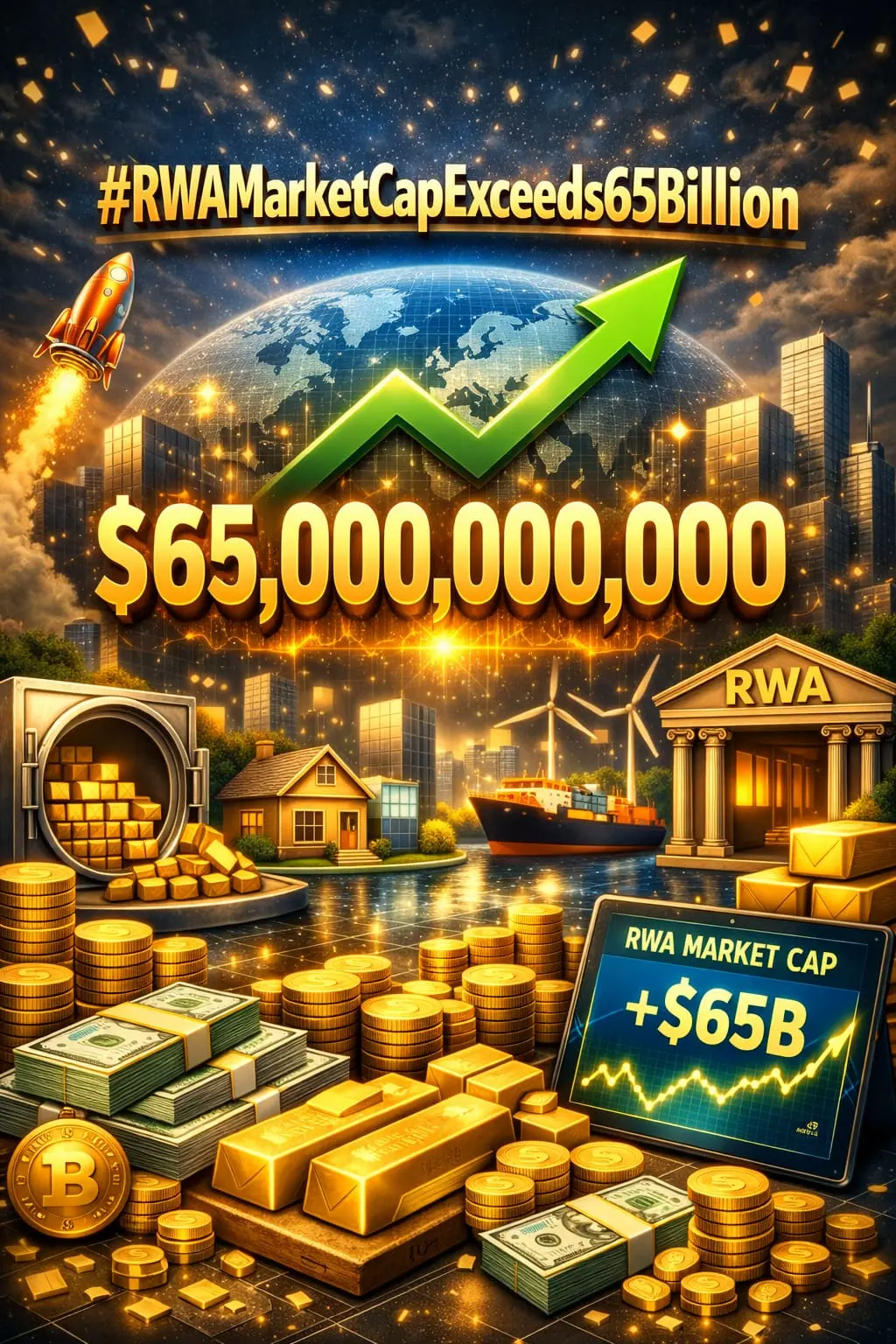
#RWAMarketCapExceeds65Billion
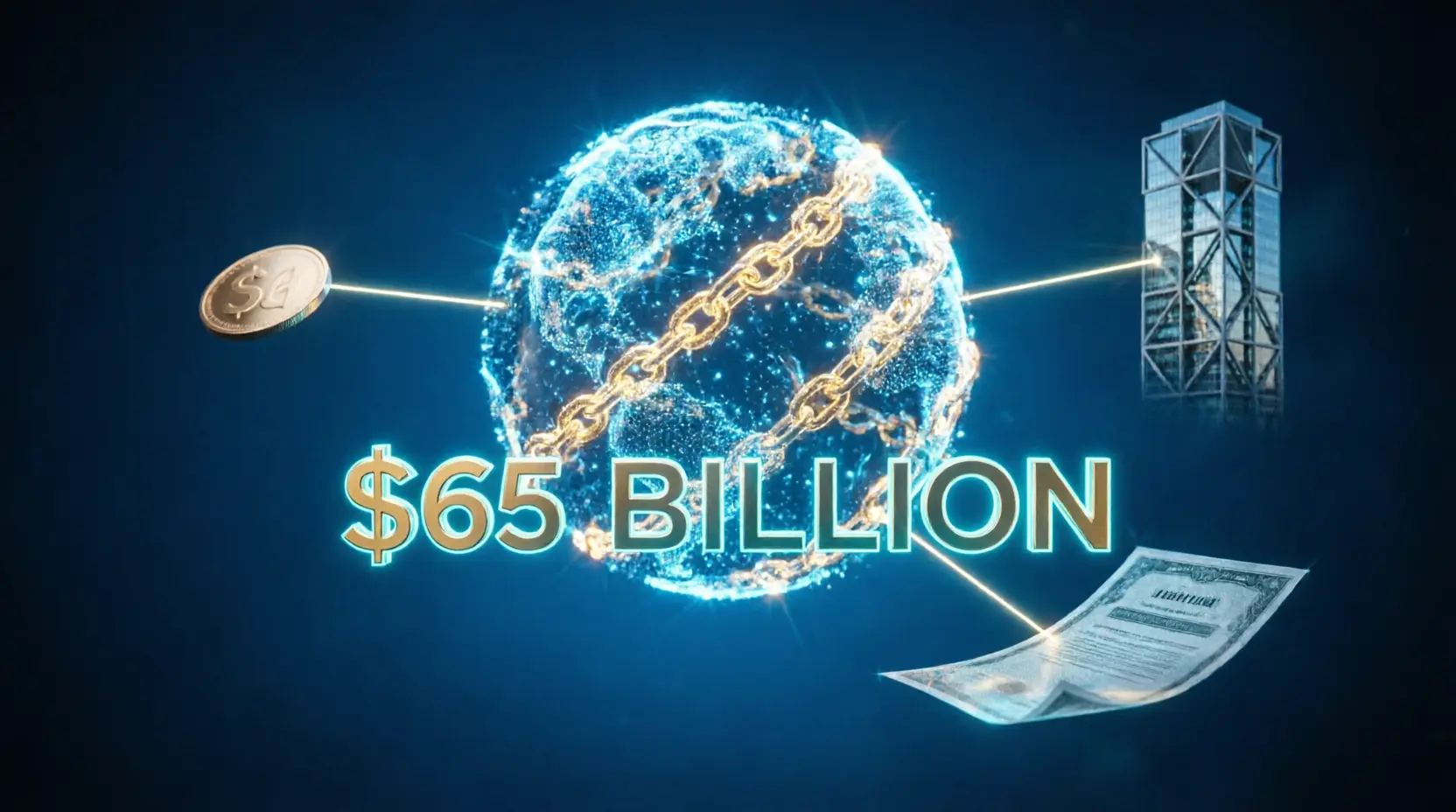
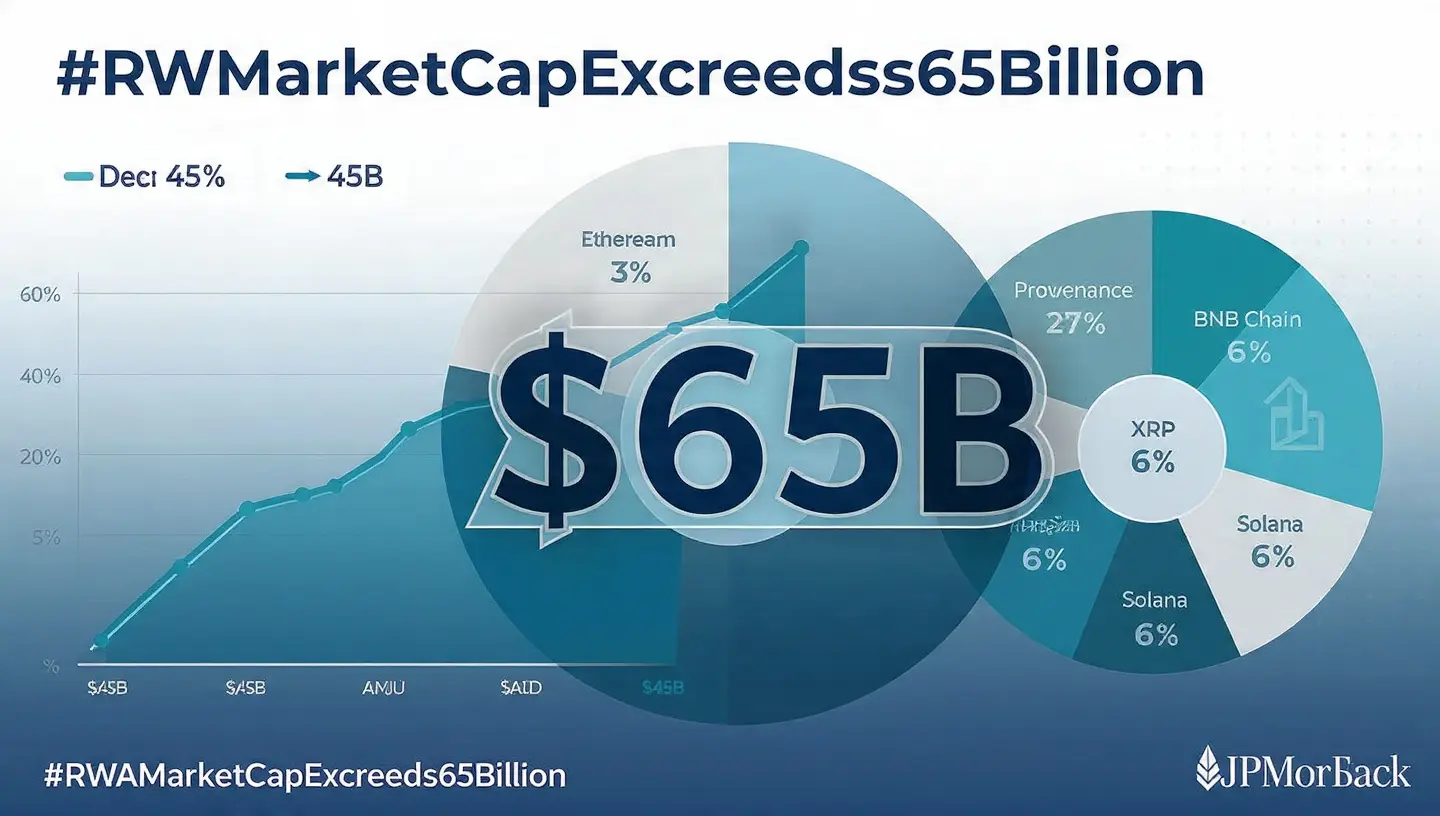
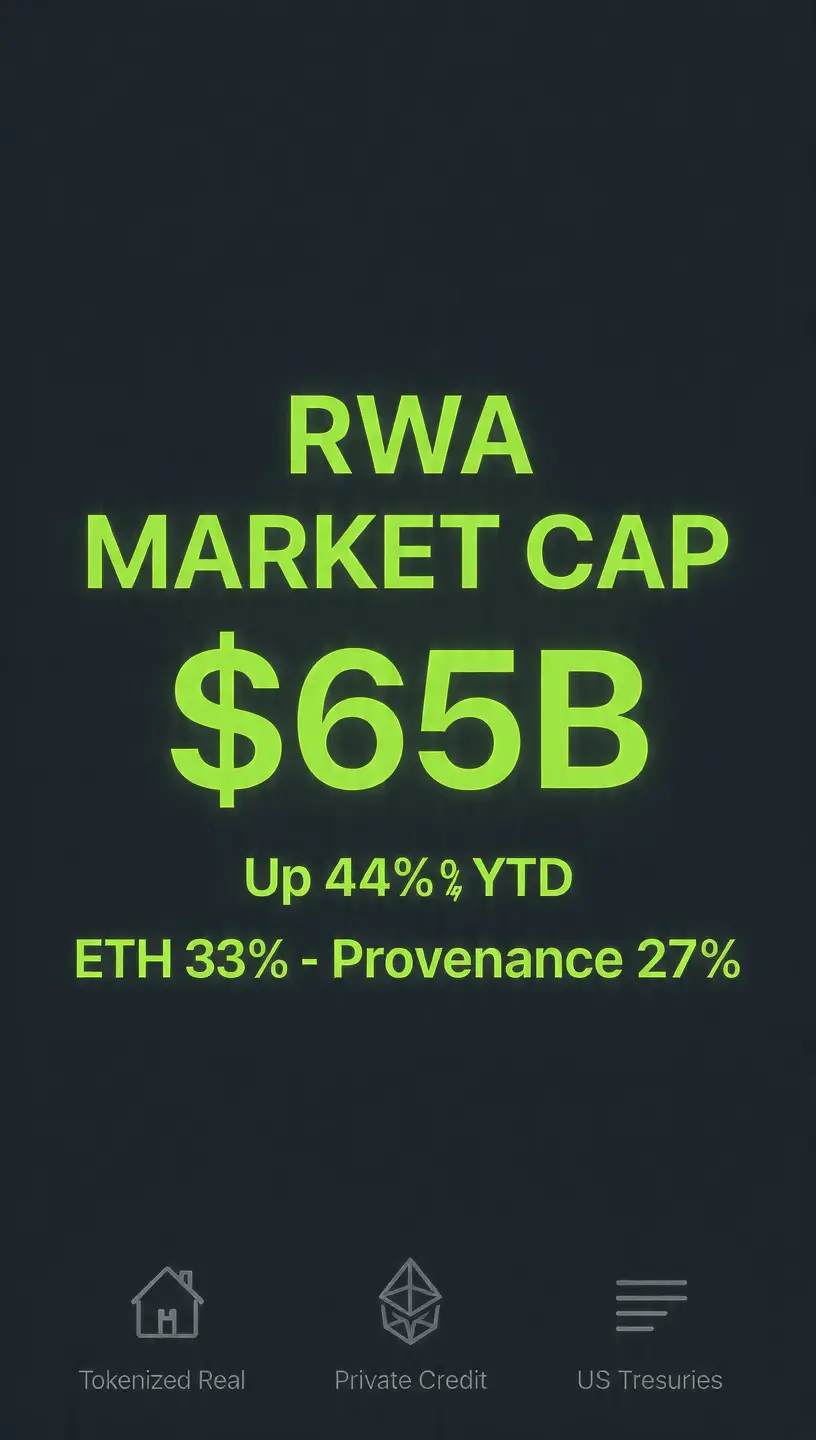
The global financial system is entering a structural transition phase where traditional markets and blockchain infrastructure are increasingly converging into a unified liquidity ecosystem. The milestone of Real-World Assets (RWA) surpassing a $65 billion market capitalization is not just another statistical update. It represents a deeper transformation in how value is created, transferred, and represented across global financial rails. This shift reflects a gradual but powerful integration between traditional finance systems and decentralized blockchain infrastructure, where real economic assets are being digitized and brought on-chain for improved efficiency, accessibility, and composability.
What makes this development significant is not the number itself, but what it represents in terms of institutional behavior, capital migration, and long-term financial restructuring. RWAs are effectively bridging the gap between legacy financial systems and the emerging digital economy, enabling assets like government bonds, private credit, real estate, commodities, and alternative yield instruments to exist in tokenized form on blockchain networks. This allows previously illiquid or restricted assets to become more accessible, transparent, and programmable within modern financial ecosystems.
The Structural Shift Behind RWA Growth
The rise of RWAs is being driven by a fundamental shift in investor demand. Market participants are no longer focused purely on speculative digital assets. Instead, there is a growing preference for yield-generating, real-backed financial instruments that exist within blockchain infrastructure. This transition reflects a broader maturity phase in the crypto market, where capital is increasingly flowing toward assets backed by real economic activity rather than purely narrative-driven speculation.
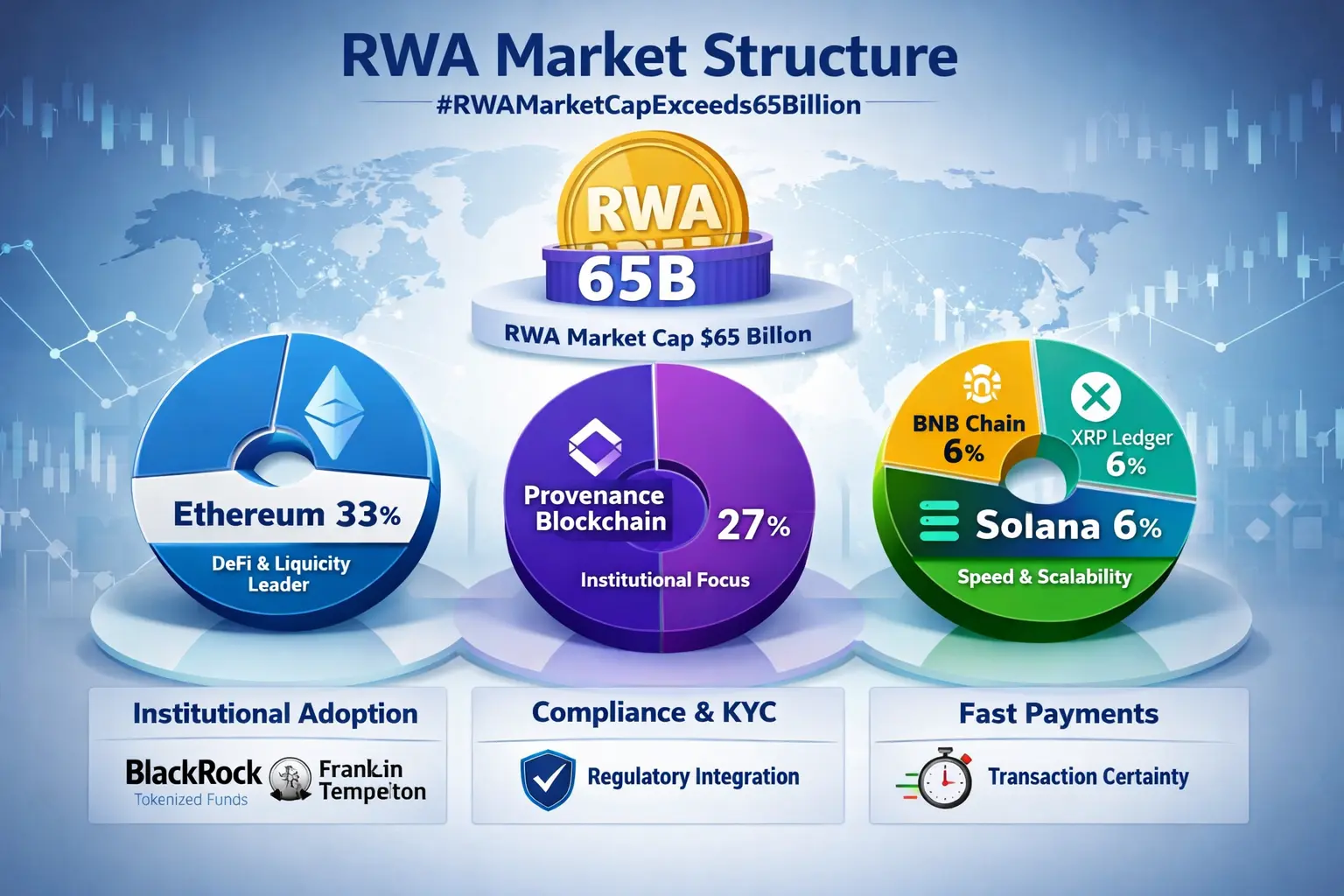
Institutional participation has played a key role in this evolution. Traditional financial institutions, asset managers, and regulated funds are actively exploring tokenization frameworks to improve settlement efficiency, reduce operational friction, and expand access to global liquidity pools. This has led to the emergence of tokenized Treasury products, on-chain money market funds, and blockchain-based credit systems that mirror traditional financial instruments while leveraging decentralized infrastructure for execution and settlement.
Tokenized Treasuries as the Core Driver
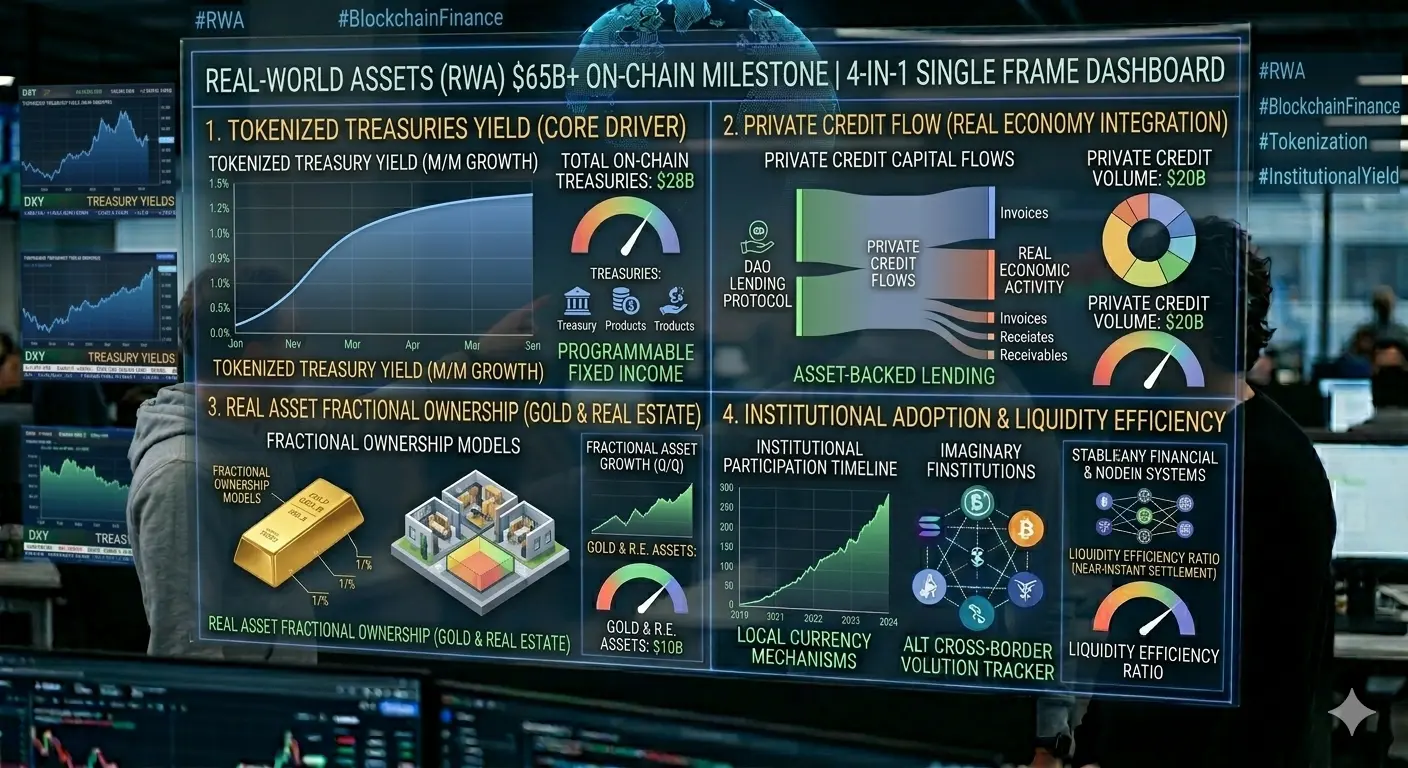
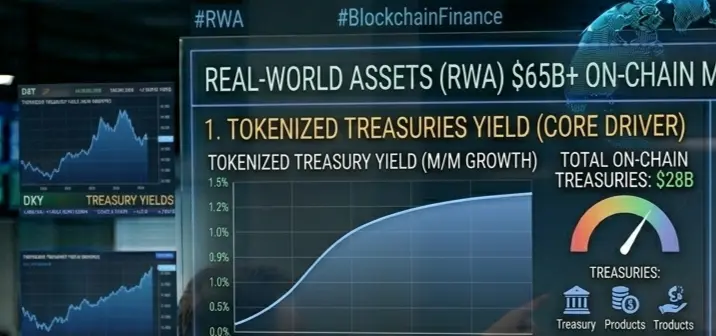
One of the most important components of the RWA ecosystem is tokenized U.S. Treasury exposure. These instruments have become a cornerstone of on-chain yield generation, especially in environments where interest rates remain elevated. Investors are increasingly allocating capital toward tokenized government debt instruments as a low-risk alternative within the digital asset ecosystem.
This segment has attracted significant attention because it provides stable yield while maintaining blockchain accessibility. Unlike traditional fixed-income products, tokenized Treasuries operate within programmable environments, allowing them to interact directly with decentralized finance protocols, collateral systems, and automated liquidity strategies. This composability creates an entirely new financial layer where traditional yield-bearing instruments become active components of on-chain capital markets.
Private Credit and Real Economy Integration
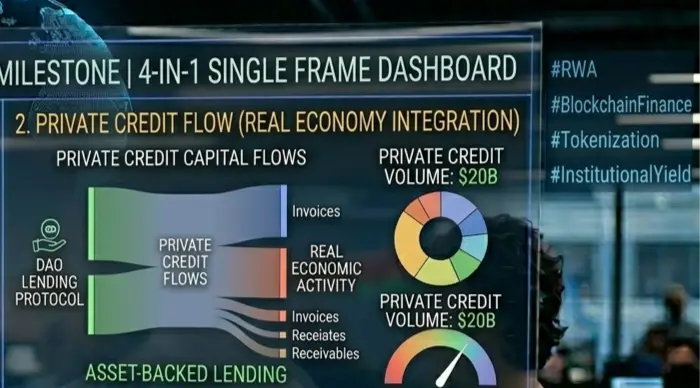
Another rapidly expanding segment within RWAs is private credit. This category connects real-world borrowing demand with decentralized lending infrastructure. Businesses seeking capital can access funding through blockchain-based platforms, while lenders earn yield backed by real economic activity such as invoices, receivables, or asset-backed lending structures.
This integration of real-world cash flows into blockchain systems represents a major step toward financial system digitization. It reduces dependency on traditional banking intermediaries and introduces more direct capital allocation mechanisms. However, it also introduces structural complexities related to risk assessment, credit underwriting, and off-chain legal enforcement, which remain key considerations for long-term scalability.
Commodities and Real Asset Tokenization
Commodities such as gold and real estate continue to play a significant role in the RWA ecosystem. Tokenized gold products allow fractional ownership of physical assets, making them more accessible to retail and institutional investors alike. Real estate tokenization, although slower due to regulatory and jurisdictional constraints, is gradually expanding in select regions where legal frameworks support digital asset ownership structures.
These developments are important because they introduce liquidity into historically illiquid asset classes. By converting physical assets into blockchain-based representations, markets can enable fractional ownership, 24/7 transferability, and improved transparency in ownership structures. This fundamentally changes how real-world value is accessed and traded.
Institutional Adoption and Market Validation
The involvement of major financial institutions has significantly strengthened the credibility of the RWA sector. Large asset managers and traditional finance entities are no longer observing from the sidelines. Instead, they are actively launching tokenized financial products and exploring blockchain-based settlement systems.
This institutional participation acts as a validation signal for the entire sector. It indicates that tokenization is not a temporary experiment but a long-term structural evolution of global financial infrastructure. As more regulated entities enter the space, the boundary between traditional capital markets and blockchain-based systems continues to blur.
Liquidity Efficiency and Capital Mobility
One of the key advantages of RWA tokenization is improved liquidity efficiency. Traditional financial systems often suffer from settlement delays, operational friction, and limited accessibility. Blockchain-based asset representation reduces these inefficiencies by enabling near-instant settlement, global accessibility, and programmable liquidity movement.
This improved capital mobility allows assets to move more freely across financial ecosystems, increasing overall market efficiency. It also enables new forms of financial engineering where tokenized assets can be used as collateral, integrated into yield strategies, or composed into multi-layered financial products.
Risk Considerations and Structural Limitations
Despite its rapid growth, the RWA ecosystem is not without challenges. Legal uncertainty surrounding asset ownership, custodial risk, regulatory fragmentation, and oracle dependency remain key structural limitations. The enforceability of off-chain assets represented on-chain varies across jurisdictions, creating potential legal and operational complexities.
Additionally, liquidity fragmentation across multiple blockchains and platforms remains a concern. Without standardized interoperability frameworks, capital efficiency may be constrained, limiting the full potential of tokenized financial systems.
The Macro Perspective Behind RWAs
From a macroeconomic perspective, the rise of RWAs reflects a broader shift toward yield-driven capital allocation in a higher interest rate environment. Investors are increasingly prioritizing stable returns over speculative appreciation, leading to capital rotation toward real yield instruments.
This trend also aligns with global financial fragmentation, where cross-border capital flows are becoming more complex due to geopolitical tensions and shifting monetary policies. Tokenized assets offer a potential solution by enabling more flexible, programmable, and borderless financial infrastructure.
The Future of Tokenized Financial Systems
Looking forward, the RWA sector is likely to expand beyond its current $65 billion valuation as institutional adoption deepens and regulatory clarity improves. Future developments may include tokenized equities, integrated central bank digital currency settlement systems, and fully programmable global capital markets operating on blockchain rails.
This evolution suggests a future where financial infrastructure is no longer divided between traditional and decentralized systems, but instead operates as a hybrid ecosystem where both coexist and interact seamlessly.
Final Perspective
The $65 billion milestone in Real-World Asset tokenization is not an endpoint but an early stage marker in a much larger transformation. It signals the beginning of a structural shift where blockchain technology transitions from speculative infrastructure to core financial plumbing for global markets.
As this transition continues, the distinction between traditional finance and decentralized finance will gradually fade. In its place, a unified digital financial system will emerge—one defined by programmability, transparency, and global accessibility.
The real story of RWAs is not just about growth in market capitalization. It is about the redesign of global financial architecture itself.
The global financial system is entering a structural transition phase where traditional markets and blockchain infrastructure are increasingly converging into a unified liquidity ecosystem. The milestone of Real-World Assets (RWA) surpassing a $65 billion market capitalization is not just another statistical update. It represents a deeper transformation in how value is created, transferred, and represented across global financial rails. This shift reflects a gradual but powerful integration between traditional finance systems and decentralized blockchain infrastructure, where real economic assets are being digitized and brought on-chain for improved efficiency, accessibility, and composability.
What makes this development significant is not the number itself, but what it represents in terms of institutional behavior, capital migration, and long-term financial restructuring. RWAs are effectively bridging the gap between legacy financial systems and the emerging digital economy, enabling assets like government bonds, private credit, real estate, commodities, and alternative yield instruments to exist in tokenized form on blockchain networks. This allows previously illiquid or restricted assets to become more accessible, transparent, and programmable within modern financial ecosystems.
The Structural Shift Behind RWA Growth
The rise of RWAs is being driven by a fundamental shift in investor demand. Market participants are no longer focused purely on speculative digital assets. Instead, there is a growing preference for yield-generating, real-backed financial instruments that exist within blockchain infrastructure. This transition reflects a broader maturity phase in the crypto market, where capital is increasingly flowing toward assets backed by real economic activity rather than purely narrative-driven speculation.
Institutional participation has played a key role in this evolution. Traditional financial institutions, asset managers, and regulated funds are actively exploring tokenization frameworks to improve settlement efficiency, reduce operational friction, and expand access to global liquidity pools. This has led to the emergence of tokenized Treasury products, on-chain money market funds, and blockchain-based credit systems that mirror traditional financial instruments while leveraging decentralized infrastructure for execution and settlement.
Tokenized Treasuries as the Core Driver
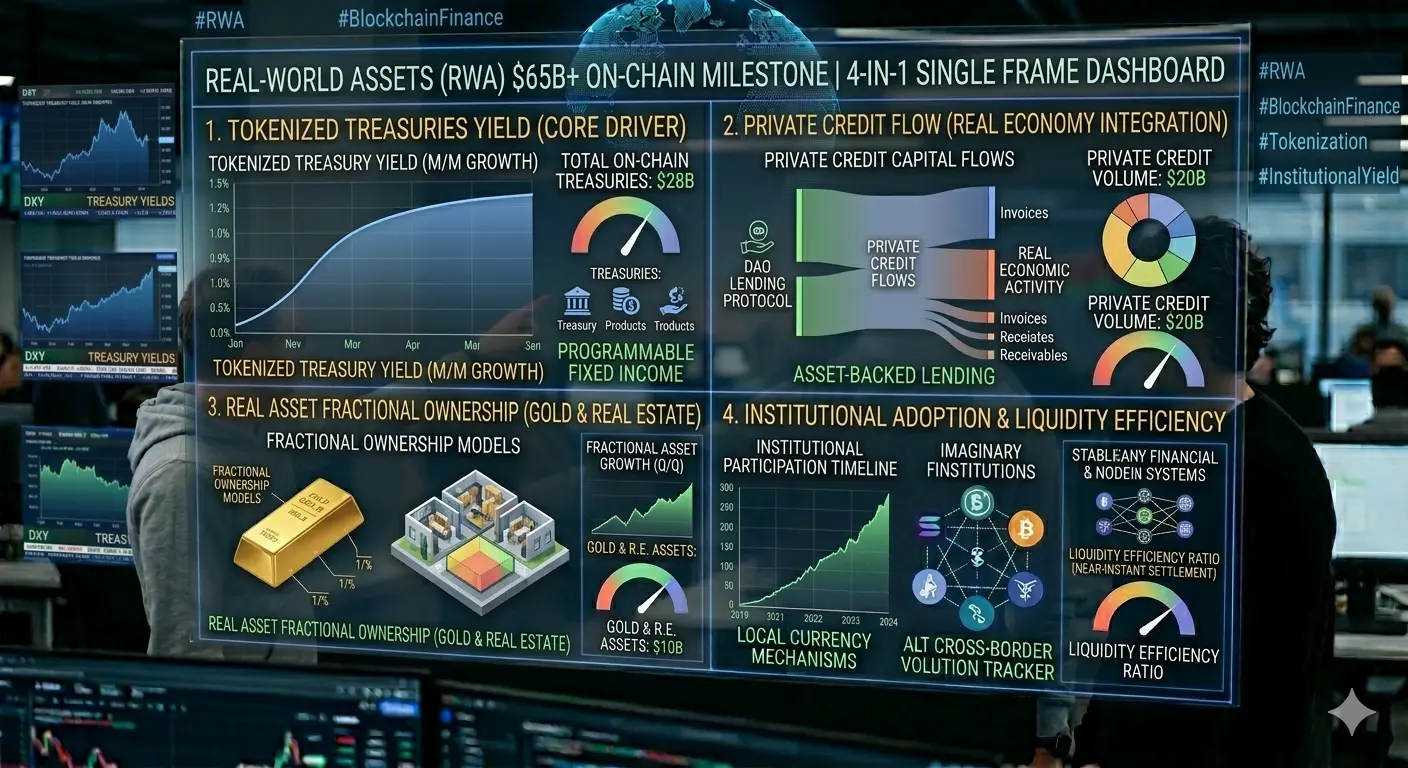
One of the most important components of the RWA ecosystem is tokenized U.S. Treasury exposure. These instruments have become a cornerstone of on-chain yield generation, especially in environments where interest rates remain elevated. Investors are increasingly allocating capital toward tokenized government debt instruments as a low-risk alternative within the digital asset ecosystem.
This segment has attracted significant attention because it provides stable yield while maintaining blockchain accessibility. Unlike traditional fixed-income products, tokenized Treasuries operate within programmable environments, allowing them to interact directly with decentralized finance protocols, collateral systems, and automated liquidity strategies. This composability creates an entirely new financial layer where traditional yield-bearing instruments become active components of on-chain capital markets.
Private Credit and Real Economy Integration
Another rapidly expanding segment within RWAs is private credit. This category connects real-world borrowing demand with decentralized lending infrastructure. Businesses seeking capital can access funding through blockchain-based platforms, while lenders earn yield backed by real economic activity such as invoices, receivables, or asset-backed lending structures.
This integration of real-world cash flows into blockchain systems represents a major step toward financial system digitization. It reduces dependency on traditional banking intermediaries and introduces more direct capital allocation mechanisms. However, it also introduces structural complexities related to risk assessment, credit underwriting, and off-chain legal enforcement, which remain key considerations for long-term scalability.
Commodities and Real Asset Tokenization
Commodities such as gold and real estate continue to play a significant role in the RWA ecosystem. Tokenized gold products allow fractional ownership of physical assets, making them more accessible to retail and institutional investors alike. Real estate tokenization, although slower due to regulatory and jurisdictional constraints, is gradually expanding in select regions where legal frameworks support digital asset ownership structures.
These developments are important because they introduce liquidity into historically illiquid asset classes. By converting physical assets into blockchain-based representations, markets can enable fractional ownership, 24/7 transferability, and improved transparency in ownership structures. This fundamentally changes how real-world value is accessed and traded.
Institutional Adoption and Market Validation
The involvement of major financial institutions has significantly strengthened the credibility of the RWA sector. Large asset managers and traditional finance entities are no longer observing from the sidelines. Instead, they are actively launching tokenized financial products and exploring blockchain-based settlement systems.
This institutional participation acts as a validation signal for the entire sector. It indicates that tokenization is not a temporary experiment but a long-term structural evolution of global financial infrastructure. As more regulated entities enter the space, the boundary between traditional capital markets and blockchain-based systems continues to blur.
Liquidity Efficiency and Capital Mobility
One of the key advantages of RWA tokenization is improved liquidity efficiency. Traditional financial systems often suffer from settlement delays, operational friction, and limited accessibility. Blockchain-based asset representation reduces these inefficiencies by enabling near-instant settlement, global accessibility, and programmable liquidity movement.
This improved capital mobility allows assets to move more freely across financial ecosystems, increasing overall market efficiency. It also enables new forms of financial engineering where tokenized assets can be used as collateral, integrated into yield strategies, or composed into multi-layered financial products.
Risk Considerations and Structural Limitations
Despite its rapid growth, the RWA ecosystem is not without challenges. Legal uncertainty surrounding asset ownership, custodial risk, regulatory fragmentation, and oracle dependency remain key structural limitations. The enforceability of off-chain assets represented on-chain varies across jurisdictions, creating potential legal and operational complexities.
Additionally, liquidity fragmentation across multiple blockchains and platforms remains a concern. Without standardized interoperability frameworks, capital efficiency may be constrained, limiting the full potential of tokenized financial systems.
The Macro Perspective Behind RWAs
From a macroeconomic perspective, the rise of RWAs reflects a broader shift toward yield-driven capital allocation in a higher interest rate environment. Investors are increasingly prioritizing stable returns over speculative appreciation, leading to capital rotation toward real yield instruments.
This trend also aligns with global financial fragmentation, where cross-border capital flows are becoming more complex due to geopolitical tensions and shifting monetary policies. Tokenized assets offer a potential solution by enabling more flexible, programmable, and borderless financial infrastructure.
The Future of Tokenized Financial Systems
Looking forward, the RWA sector is likely to expand beyond its current $65 billion valuation as institutional adoption deepens and regulatory clarity improves. Future developments may include tokenized equities, integrated central bank digital currency settlement systems, and fully programmable global capital markets operating on blockchain rails.
This evolution suggests a future where financial infrastructure is no longer divided between traditional and decentralized systems, but instead operates as a hybrid ecosystem where both coexist and interact seamlessly.
Final Perspective
The $65 billion milestone in Real-World Asset tokenization is not an endpoint but an early stage marker in a much larger transformation. It signals the beginning of a structural shift where blockchain technology transitions from speculative infrastructure to core financial plumbing for global markets.
As this transition continues, the distinction between traditional finance and decentralized finance will gradually fade. In its place, a unified digital financial system will emerge—one defined by programmability, transparency, and global accessibility.
The real story of RWAs is not just about growth in market capitalization. It is about the redesign of global financial architecture itself.