#IranAttacksIsrael
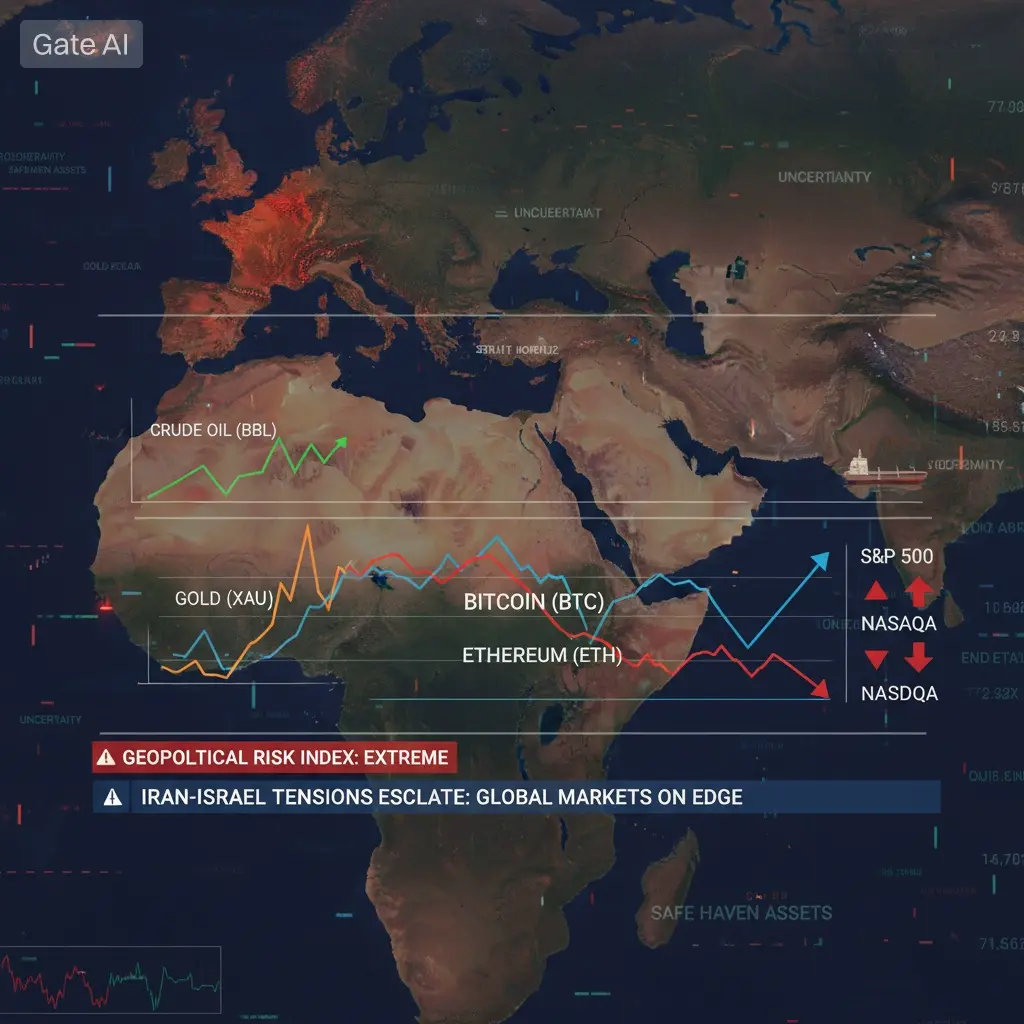
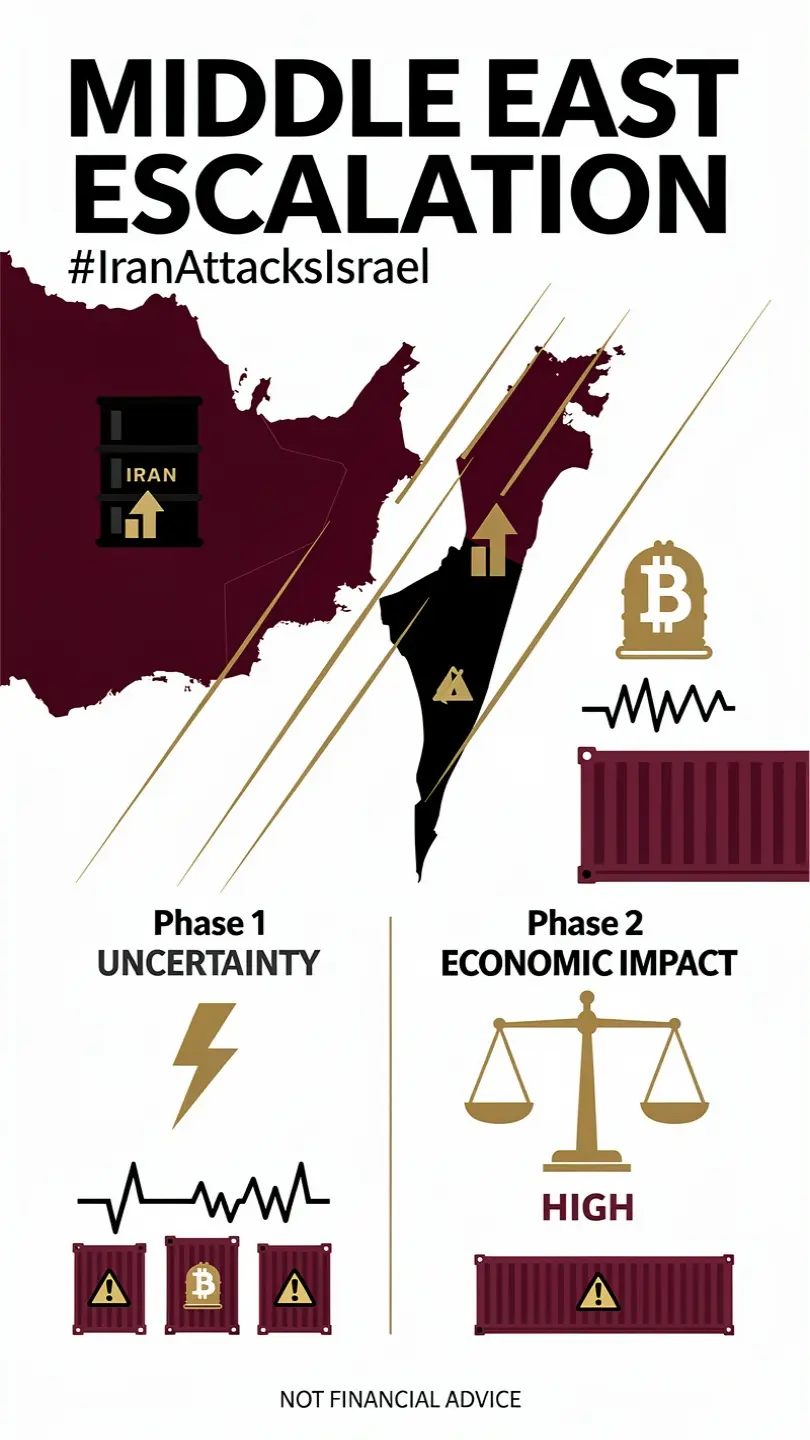
The Middle East is witnessing one of its most significant military escalations in decades, with the conflict between Iran and Israel entering a dangerous new phase that is sending shockwaves through global financial markets. The situation has evolved rapidly, with multiple actors involved and various asset classes experiencing heightened volatility.
The Conflict Timeline and Current Situation
The conflict began with coordinated military strikes by the United States and Israel against Iran on February 28, 2026, under the codename "Operation Epic Fury." This operation resulted in the death of Iran's Supreme Leader Ali Khamenei and other senior officials, fundamentally altering the geopolitical landscape of the region. Following this initial strike, Iran retaliated against Israel, and Israel responded in kind, creating a cycle of escalation that has persisted for months.
The most recent developments have added fuel to an already volatile situation. On June 8, 2026, Iran launched a salvo of missiles at Israeli targets in retaliation for an Israeli attack on the outskirts of Beirut. This prompted President Donald Trump to intervene, attempting to prevent further escalation by urging Israeli Prime Minister Benjamin Netanyahu not to strike back. However, the situation took another turn when a U.S. Army Apache helicopter was downed near the Strait of Hormuz, leading the United States to launch new strikes against Iran on June 9, 2026.
The Strait of Hormuz, a narrow waterway through which approximately 20 percent of the world's daily oil supply flows, has become a critical flashpoint. Iran has continued to block most shipping through this vital chokepoint, creating significant supply concerns for global energy markets.
Cryptocurrency Market Analysis
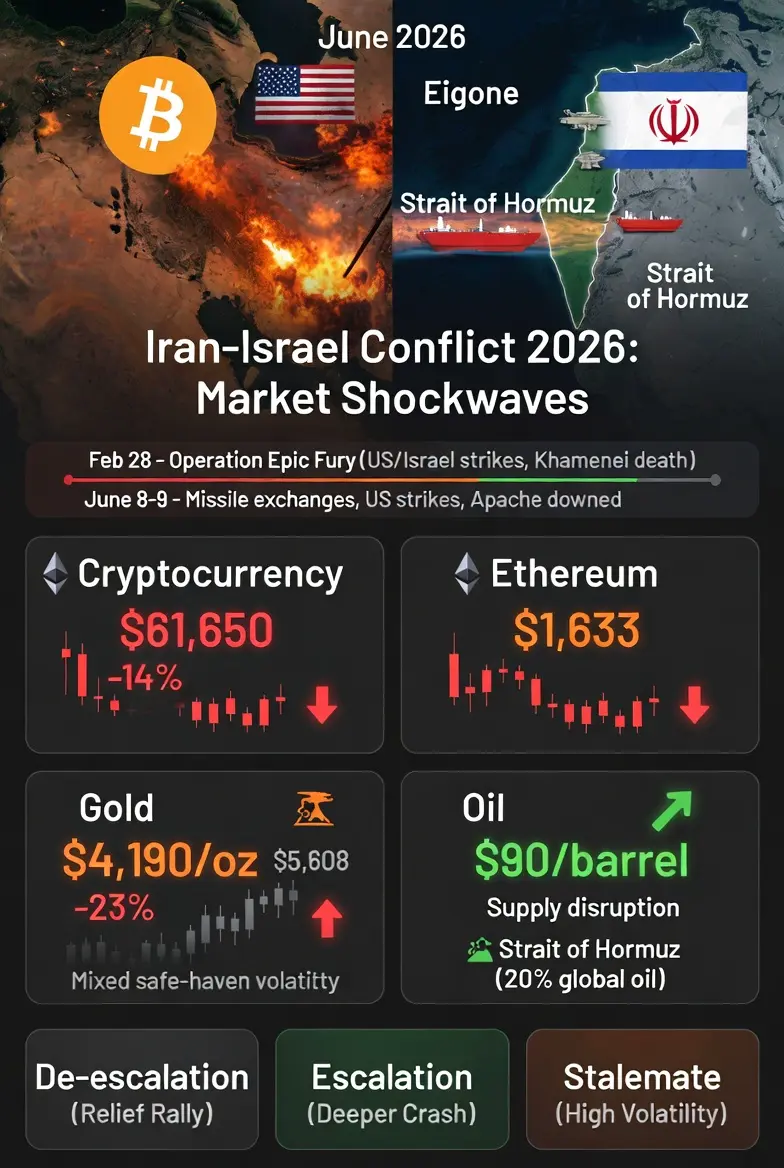
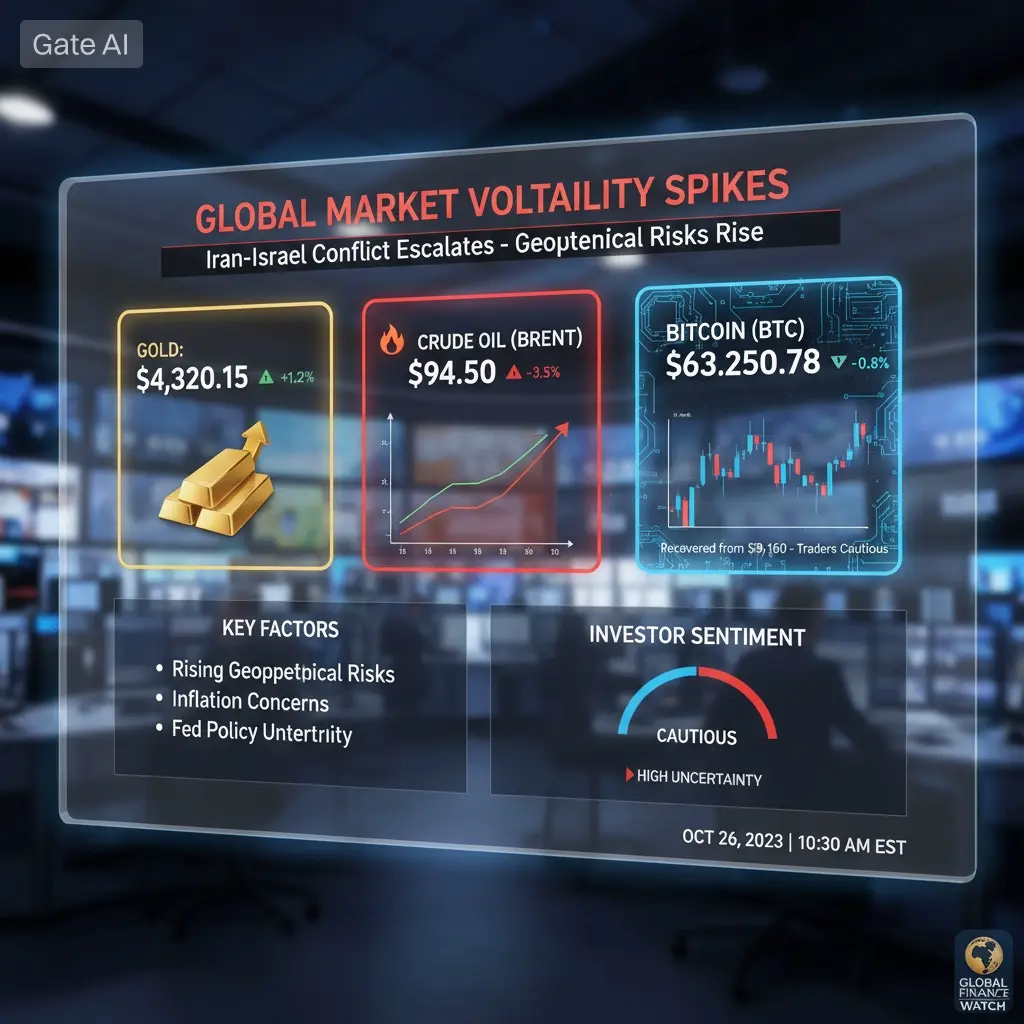
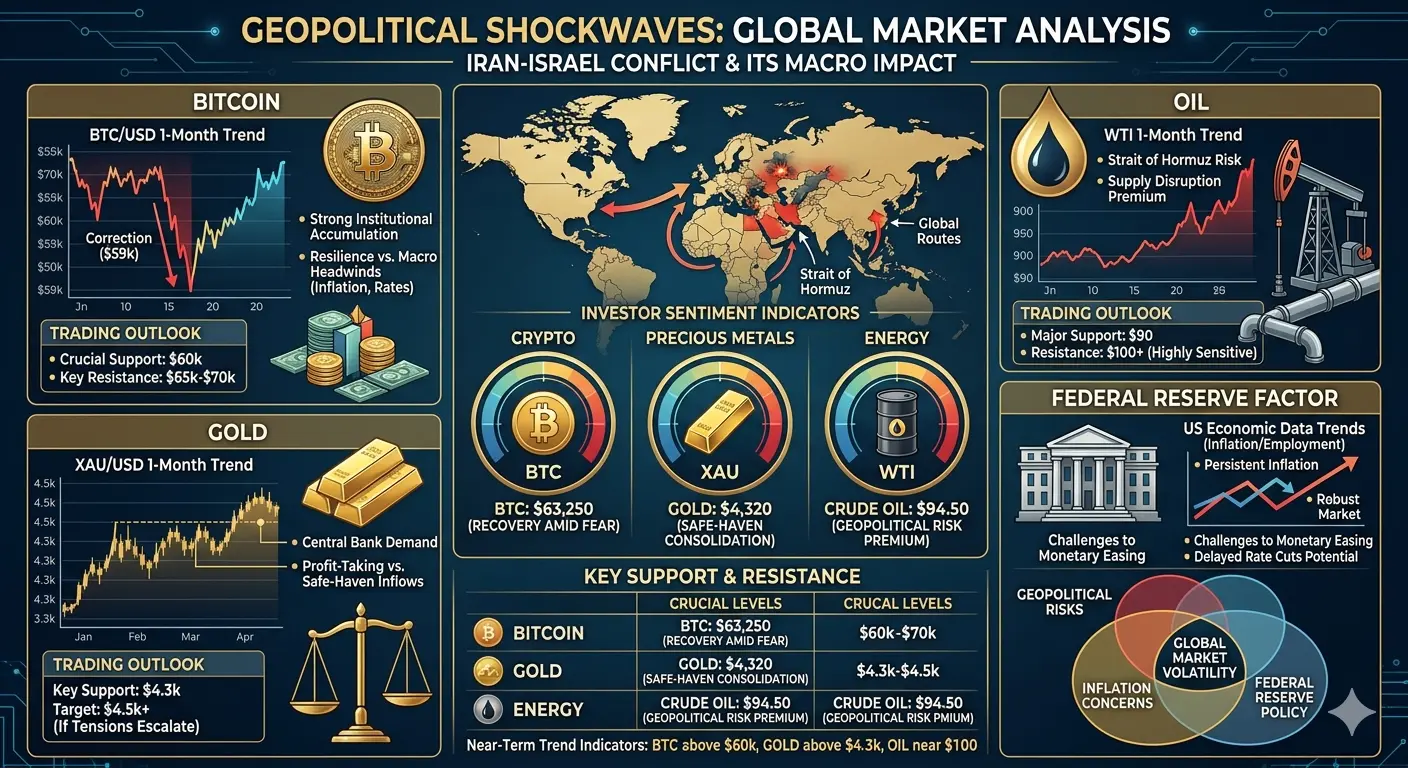
Bitcoin is currently trading at approximately $61,650, representing a significant decline from previous levels. The cryptocurrency has experienced substantial pressure, falling nearly 14% over the past week and briefly penetrating the $60,000 mark. Several factors are contributing to this weakness, including rising oil prices, increasing Treasury yields, recent outflows from spot Bitcoin ETFs, and broader risk-off sentiment among investors.
Ethereum is trading around $1,635, also showing considerable weakness. The second-largest cryptocurrency by market capitalization has been caught in the crossfire of geopolitical uncertainty and broader market de-risking. According to analysts, the current bear market context means that geopolitical headwinds are exacerbating selling pressure on digital assets, causing prices to decline further.
Experts suggest that the bottom may not yet be in for cryptocurrency markets. Greg Magadini, Amberdata's director of derivatives, stated that he does not believe the bottom has been reached at all. Julio Moreno, CryptoQuant's head of research, noted that in the current bear market environment, geopolitical tensions would continue to pressure digital assets like Bitcoin and Ethereum, potentially driving prices lower still.
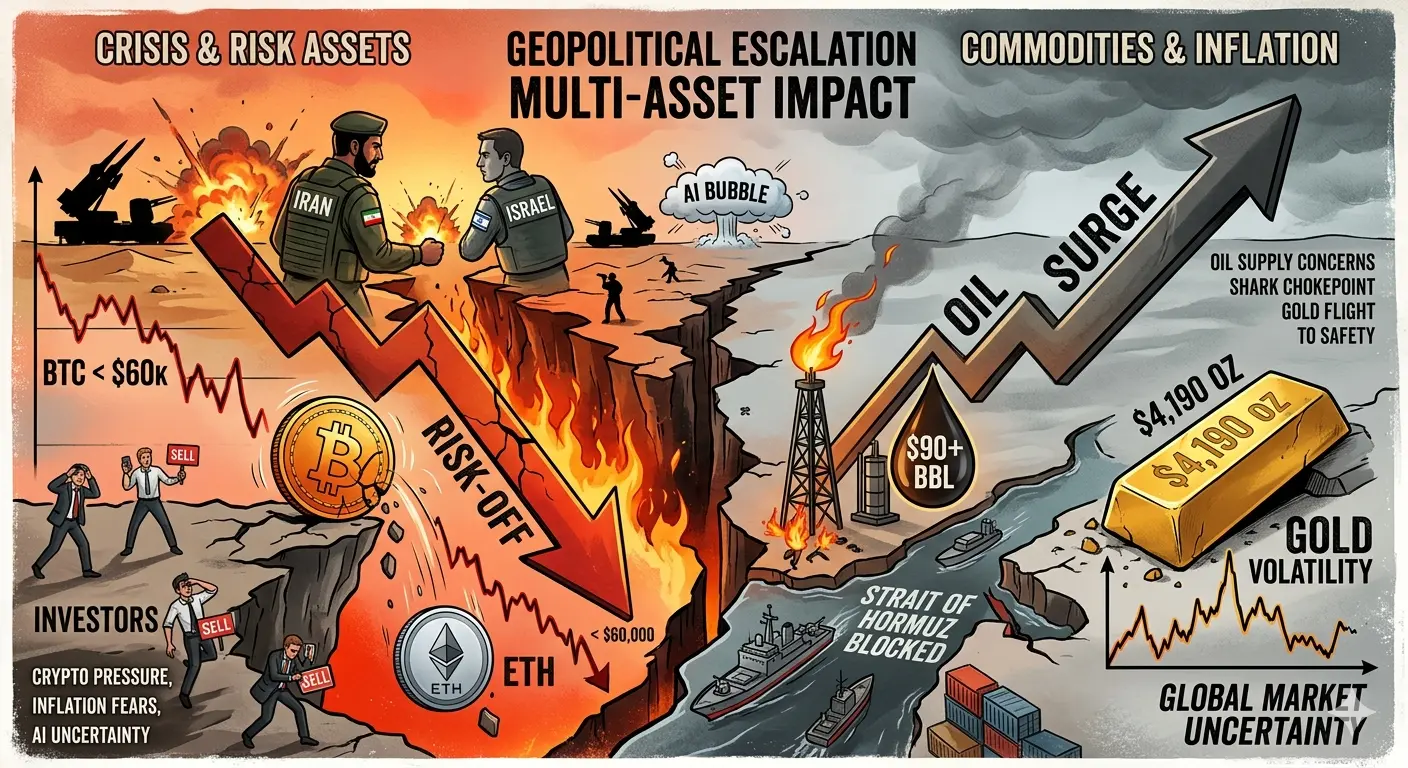
The cryptocurrency market is facing a triple threat: the reigniting Iran war, signs of an AI bubble potentially bursting, and the likelihood of Federal Reserve rate hikes following strong jobs data. Additionally, SpaceX's upcoming IPO could draw significant demand, potentially causing investors to raise cash by selling other assets, including cryptocurrencies.
Gold Market Dynamics
Gold is currently trading at approximately $4,190 per ounce, though it has experienced significant volatility in recent weeks. The precious metal reached a peak of $5,608 per ounce in January 2026 but has since declined by roughly 23% to current levels. This decline comes despite the ongoing geopolitical conflict and above-target inflation, which would traditionally support higher gold prices.
The weakness in gold can be attributed to several factors. Strong U.S. jobs data has boosted expectations of Federal Reserve rate hikes, with markets now pricing in more than a 70% chance of a rate hike in December. Higher interest rates typically pressure gold prices, as the non-yielding asset becomes less attractive compared to interest-bearing investments. Additionally, Western outflows from gold investments have continued, offsetting central bank purchases of approximately 19 tonnes in April 2026.
However, some analysts remain structurally bullish on gold. JPMorgan forecasts that demand from central banks and investors will ultimately push gold prices to $6,300 per ounce by the end of 2026, despite near-term volatility. The bank expects a risk premium of 5% to 10% in gold prices in the aftermath of continued conflict in the Middle East.
Silver has experienced an even steeper correction, dropping approximately 44% from its high above $121 to around $67.30. This more severe decline reflects silver's dual role as both a precious metal and an industrial commodity, making it more sensitive to economic growth concerns.
Oil Market Conditions
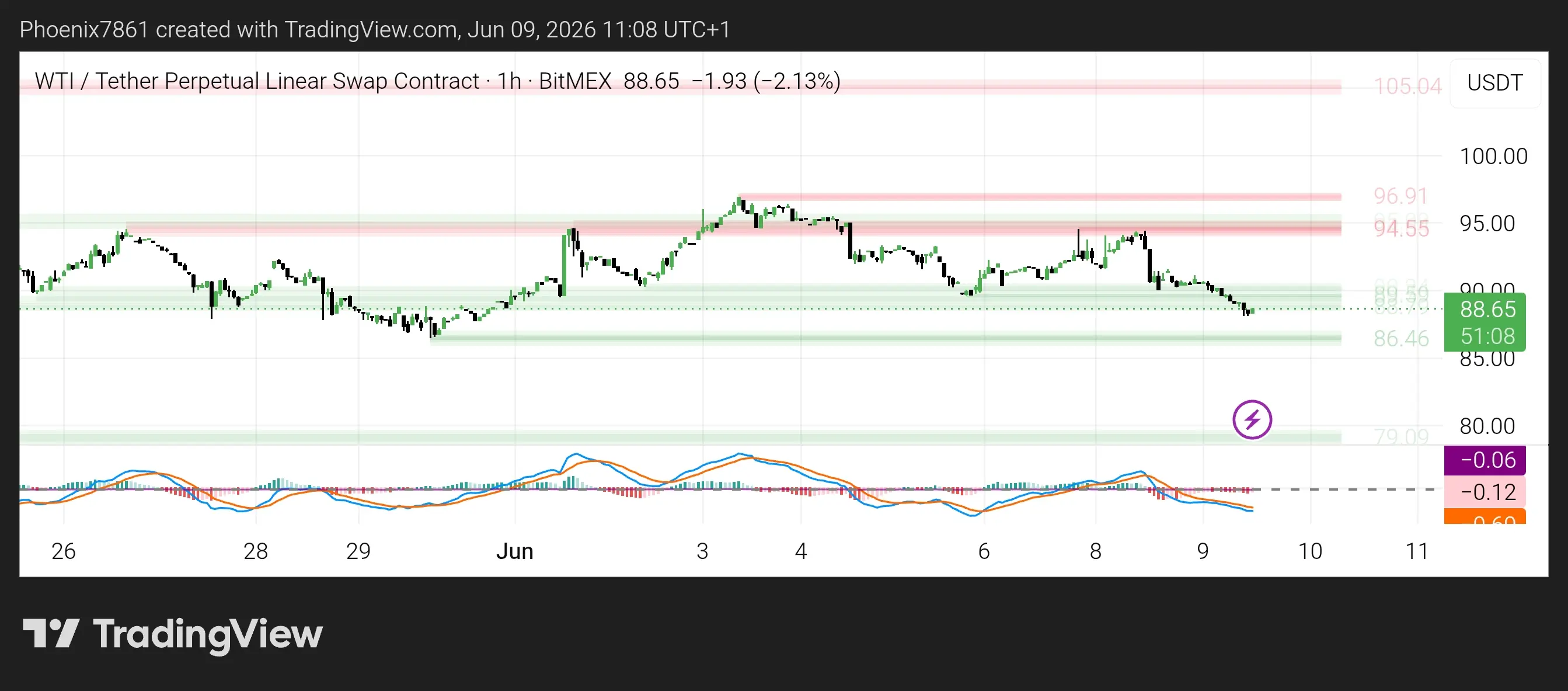
Oil prices are currently trading around $90 per barrel, showing relative resilience compared to other asset classes. The commodity experienced a surge above $100 per barrel at the peak of the conflict, driven by concerns about potential closure of the Strait of Hormuz and disruption to global supply chains.
The U.S. Energy Information Administration has projected that the Iran war would slash world petroleum production to an average of 99.0 million barrels per day in 2026, down from a record 106.1 million barrels per day in 2025. U.S. crude oil inventories have fallen for eight consecutive weeks, while gasoline stocks have also declined, indicating tight supply conditions.
Oil prices have benefited from the supply constraints created by the conflict, even as other risk assets have declined. The commodity's role as a geopolitical hedge has become increasingly apparent, with investors seeking exposure to energy assets as a safeguard against further escalation.
Global Economic Implications
The conflict is having far-reaching implications for the global economy. The disruption to Strait of Hormuz shipping lanes has created logistical challenges for energy markets, while the uncertainty has contributed to risk-off sentiment across asset classes. The U.S.-Iran conflict has helped lift U.S. CPI to 3.8% year-over-year in April 2026, raising concerns about inflationary pressures.
President Trump has attempted to de-escalate the situation, suggesting that an agreement to end the Middle East conflict could be signed within two to three days. However, ceasefire talks have stalled, and Israel's refusal to end its campaign against Iran-backed Hezbollah has hindered efforts to extend the tenuous ceasefire into a durable settlement.
Market Outlook and Future Scenarios
The question on every investor's mind is whether the current market weakness represents a buying opportunity or if further declines are imminent. Several scenarios could unfold in the coming weeks and months.
In a de-escalation scenario, where diplomatic efforts succeed in establishing a durable ceasefire, risk assets including cryptocurrencies could experience a significant rebound. The removal of geopolitical uncertainty would likely lead to a relief rally, with Bitcoin and Ethereum potentially recovering lost ground. Gold might experience some weakness as safe-haven demand diminishes, while oil prices could decline as supply concerns ease.
In a continued escalation scenario, where the conflict expands to involve more actors or disrupts critical infrastructure further, risk assets could face additional pressure. Bitcoin could test lower support levels, potentially approaching or breaking below $60,000. Ethereum might face similar weakness, while gold could resume its upward trajectory as safe-haven demand intensifies. Oil prices would likely surge higher, potentially exceeding $100 per barrel if the Strait of Hormuz becomes completely blocked.
In a prolonged stalemate scenario, where the conflict continues without significant escalation or resolution, markets could enter a period of heightened volatility with no clear directional trend. This environment would favor active traders and those with the ability to navigate choppy market conditions.
Key Factors to Monitor
Investors should closely monitor several key developments. The status of ceasefire negotiations between the United States and Iran remains critical, as any breakthrough could spark a significant market reaction. Israeli military actions in Lebanon and against Hezbollah could escalate the conflict further, particularly if Iran feels compelled to respond more aggressively. The status of the Strait of Hormuz is paramount, as any complete closure would have immediate and severe implications for global energy markets. Federal Reserve policy decisions will continue to influence all asset classes, with rate hikes potentially pressuring cryptocurrencies and gold while supporting the dollar. Finally, the flow of funds into and out of spot Bitcoin ETFs will provide important signals about institutional sentiment toward cryptocurrency markets.
Conclusion
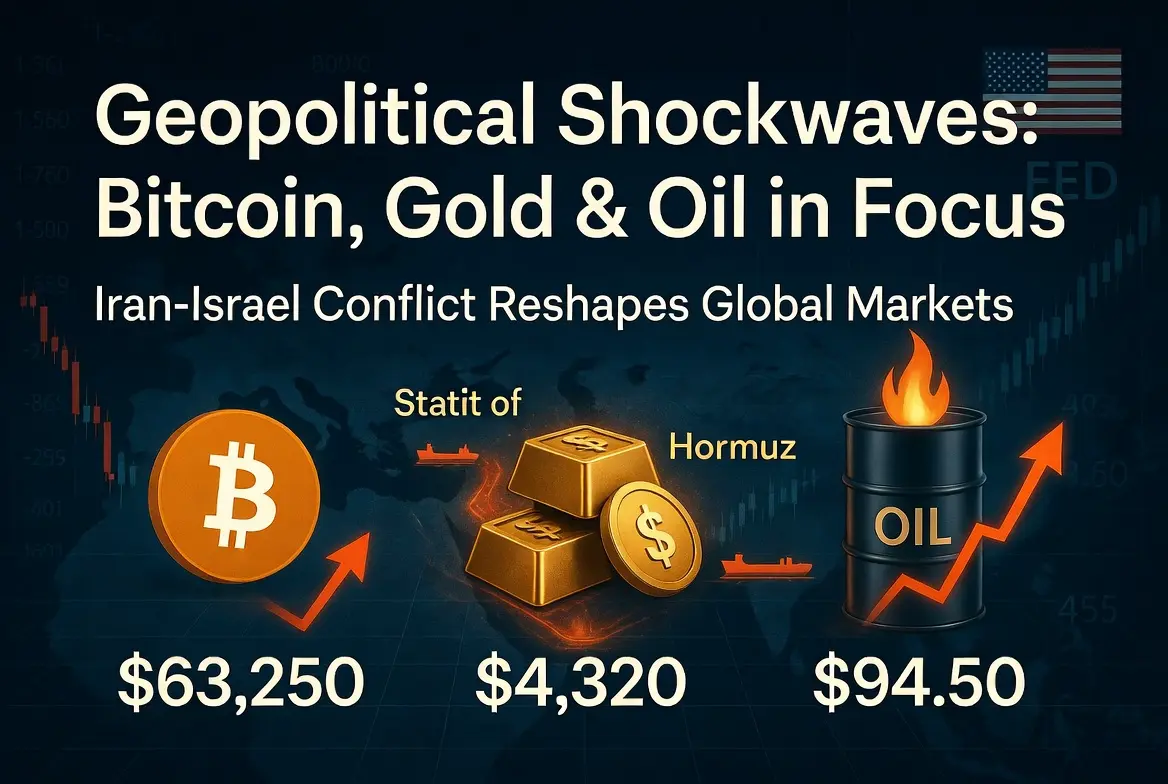
The Iran-Israel conflict represents a significant geopolitical risk factor for global markets, with implications extending across asset classes. Bitcoin at $61,650 and Ethereum at $1,635 are experiencing considerable pressure from risk-off sentiment, while gold at $4,190 has declined from its highs despite its traditional safe-haven status. Oil at $90 remains relatively supported by supply concerns.
The path forward remains uncertain, with the potential for either de-escalation or further escalation. Investors should remain vigilant, diversify their portfolios, and maintain flexibility to respond to rapidly changing market conditions. The interplay between geopolitical developments, monetary policy, and market sentiment will continue to drive price action in the coming weeks and months.@Gate_Square #StrategyAdds1550BTCatLowerPrices #BMNRSurges6%AsItKeepsAddingETH
#CertifiedCreatorPromotionTask
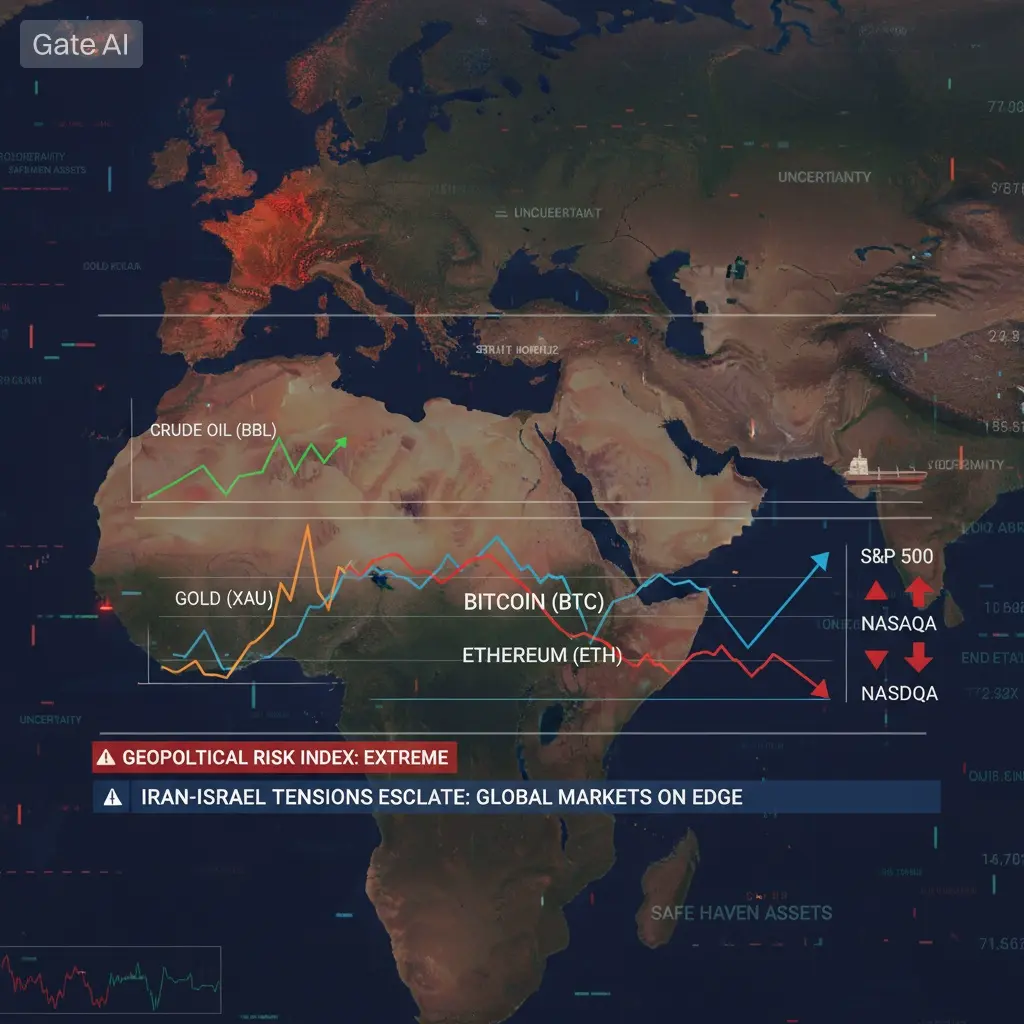
The Middle East is witnessing one of its most significant military escalations in decades, with the conflict between Iran and Israel entering a dangerous new phase that is sending shockwaves through global financial markets. The situation has evolved rapidly, with multiple actors involved and various asset classes experiencing heightened volatility.
The Conflict Timeline and Current Situation
The conflict began with coordinated military strikes by the United States and Israel against Iran on February 28, 2026, under the codename "Operation Epic Fury." This operation resulted in the death of Iran's Supreme Leader Ali Khamenei and other senior officials, fundamentally altering the geopolitical landscape of the region. Following this initial strike, Iran retaliated against Israel, and Israel responded in kind, creating a cycle of escalation that has persisted for months.
The most recent developments have added fuel to an already volatile situation. On June 8, 2026, Iran launched a salvo of missiles at Israeli targets in retaliation for an Israeli attack on the outskirts of Beirut. This prompted President Donald Trump to intervene, attempting to prevent further escalation by urging Israeli Prime Minister Benjamin Netanyahu not to strike back. However, the situation took another turn when a U.S. Army Apache helicopter was downed near the Strait of Hormuz, leading the United States to launch new strikes against Iran on June 9, 2026.
The Strait of Hormuz, a narrow waterway through which approximately 20 percent of the world's daily oil supply flows, has become a critical flashpoint. Iran has continued to block most shipping through this vital chokepoint, creating significant supply concerns for global energy markets.
Cryptocurrency Market Analysis
Bitcoin is currently trading at approximately $61,650, representing a significant decline from previous levels. The cryptocurrency has experienced substantial pressure, falling nearly 14% over the past week and briefly penetrating the $60,000 mark. Several factors are contributing to this weakness, including rising oil prices, increasing Treasury yields, recent outflows from spot Bitcoin ETFs, and broader risk-off sentiment among investors.
Ethereum is trading around $1,635, also showing considerable weakness. The second-largest cryptocurrency by market capitalization has been caught in the crossfire of geopolitical uncertainty and broader market de-risking. According to analysts, the current bear market context means that geopolitical headwinds are exacerbating selling pressure on digital assets, causing prices to decline further.
Experts suggest that the bottom may not yet be in for cryptocurrency markets. Greg Magadini, Amberdata's director of derivatives, stated that he does not believe the bottom has been reached at all. Julio Moreno, CryptoQuant's head of research, noted that in the current bear market environment, geopolitical tensions would continue to pressure digital assets like Bitcoin and Ethereum, potentially driving prices lower still.
The cryptocurrency market is facing a triple threat: the reigniting Iran war, signs of an AI bubble potentially bursting, and the likelihood of Federal Reserve rate hikes following strong jobs data. Additionally, SpaceX's upcoming IPO could draw significant demand, potentially causing investors to raise cash by selling other assets, including cryptocurrencies.
Gold Market Dynamics
Gold is currently trading at approximately $4,190 per ounce, though it has experienced significant volatility in recent weeks. The precious metal reached a peak of $5,608 per ounce in January 2026 but has since declined by roughly 23% to current levels. This decline comes despite the ongoing geopolitical conflict and above-target inflation, which would traditionally support higher gold prices.
The weakness in gold can be attributed to several factors. Strong U.S. jobs data has boosted expectations of Federal Reserve rate hikes, with markets now pricing in more than a 70% chance of a rate hike in December. Higher interest rates typically pressure gold prices, as the non-yielding asset becomes less attractive compared to interest-bearing investments. Additionally, Western outflows from gold investments have continued, offsetting central bank purchases of approximately 19 tonnes in April 2026.
However, some analysts remain structurally bullish on gold. JPMorgan forecasts that demand from central banks and investors will ultimately push gold prices to $6,300 per ounce by the end of 2026, despite near-term volatility. The bank expects a risk premium of 5% to 10% in gold prices in the aftermath of continued conflict in the Middle East.
Silver has experienced an even steeper correction, dropping approximately 44% from its high above $121 to around $67.30. This more severe decline reflects silver's dual role as both a precious metal and an industrial commodity, making it more sensitive to economic growth concerns.
Oil Market Conditions
Oil prices are currently trading around $90 per barrel, showing relative resilience compared to other asset classes. The commodity experienced a surge above $100 per barrel at the peak of the conflict, driven by concerns about potential closure of the Strait of Hormuz and disruption to global supply chains.
The U.S. Energy Information Administration has projected that the Iran war would slash world petroleum production to an average of 99.0 million barrels per day in 2026, down from a record 106.1 million barrels per day in 2025. U.S. crude oil inventories have fallen for eight consecutive weeks, while gasoline stocks have also declined, indicating tight supply conditions.
Oil prices have benefited from the supply constraints created by the conflict, even as other risk assets have declined. The commodity's role as a geopolitical hedge has become increasingly apparent, with investors seeking exposure to energy assets as a safeguard against further escalation.
Global Economic Implications
The conflict is having far-reaching implications for the global economy. The disruption to Strait of Hormuz shipping lanes has created logistical challenges for energy markets, while the uncertainty has contributed to risk-off sentiment across asset classes. The U.S.-Iran conflict has helped lift U.S. CPI to 3.8% year-over-year in April 2026, raising concerns about inflationary pressures.
President Trump has attempted to de-escalate the situation, suggesting that an agreement to end the Middle East conflict could be signed within two to three days. However, ceasefire talks have stalled, and Israel's refusal to end its campaign against Iran-backed Hezbollah has hindered efforts to extend the tenuous ceasefire into a durable settlement.
Market Outlook and Future Scenarios
The question on every investor's mind is whether the current market weakness represents a buying opportunity or if further declines are imminent. Several scenarios could unfold in the coming weeks and months.
In a de-escalation scenario, where diplomatic efforts succeed in establishing a durable ceasefire, risk assets including cryptocurrencies could experience a significant rebound. The removal of geopolitical uncertainty would likely lead to a relief rally, with Bitcoin and Ethereum potentially recovering lost ground. Gold might experience some weakness as safe-haven demand diminishes, while oil prices could decline as supply concerns ease.
In a continued escalation scenario, where the conflict expands to involve more actors or disrupts critical infrastructure further, risk assets could face additional pressure. Bitcoin could test lower support levels, potentially approaching or breaking below $60,000. Ethereum might face similar weakness, while gold could resume its upward trajectory as safe-haven demand intensifies. Oil prices would likely surge higher, potentially exceeding $100 per barrel if the Strait of Hormuz becomes completely blocked.
In a prolonged stalemate scenario, where the conflict continues without significant escalation or resolution, markets could enter a period of heightened volatility with no clear directional trend. This environment would favor active traders and those with the ability to navigate choppy market conditions.
Key Factors to Monitor
Investors should closely monitor several key developments. The status of ceasefire negotiations between the United States and Iran remains critical, as any breakthrough could spark a significant market reaction. Israeli military actions in Lebanon and against Hezbollah could escalate the conflict further, particularly if Iran feels compelled to respond more aggressively. The status of the Strait of Hormuz is paramount, as any complete closure would have immediate and severe implications for global energy markets. Federal Reserve policy decisions will continue to influence all asset classes, with rate hikes potentially pressuring cryptocurrencies and gold while supporting the dollar. Finally, the flow of funds into and out of spot Bitcoin ETFs will provide important signals about institutional sentiment toward cryptocurrency markets.
Conclusion
The Iran-Israel conflict represents a significant geopolitical risk factor for global markets, with implications extending across asset classes. Bitcoin at $61,650 and Ethereum at $1,635 are experiencing considerable pressure from risk-off sentiment, while gold at $4,190 has declined from its highs despite its traditional safe-haven status. Oil at $90 remains relatively supported by supply concerns.
The path forward remains uncertain, with the potential for either de-escalation or further escalation. Investors should remain vigilant, diversify their portfolios, and maintain flexibility to respond to rapidly changing market conditions. The interplay between geopolitical developments, monetary policy, and market sentiment will continue to drive price action in the coming weeks and months.@Gate_Square #StrategyAdds1550BTCatLowerPrices #BMNRSurges6%AsItKeepsAddingETH
#CertifiedCreatorPromotionTask