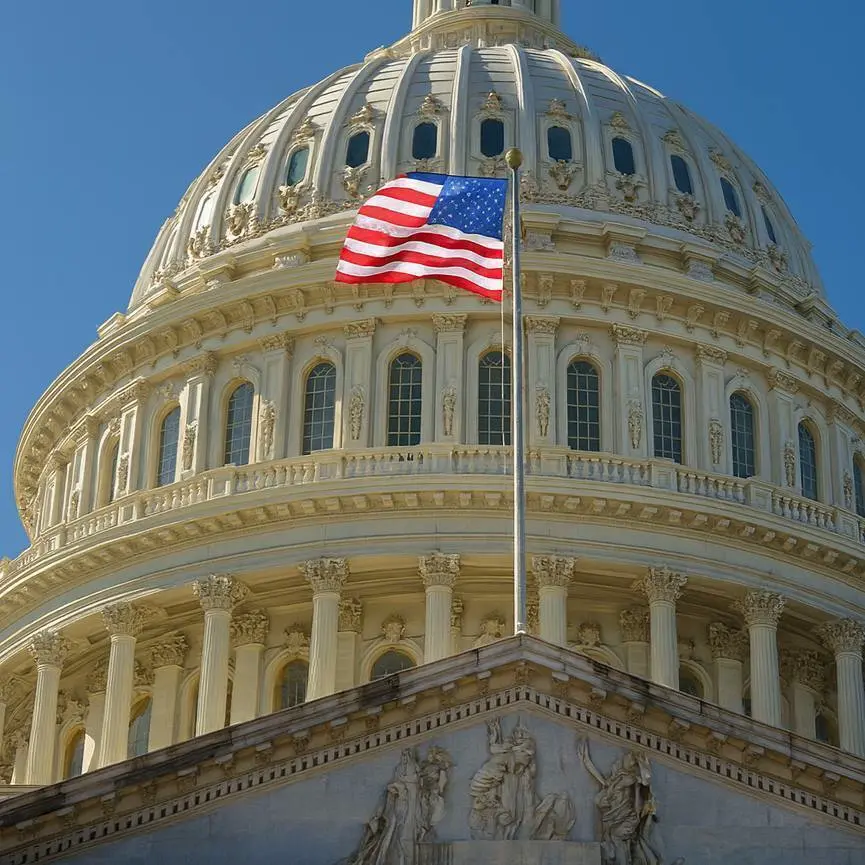
# CLARITYActStalled

3.29M

The CLARITY Act is seen as a regulatory cornerstone for the U.S. crypto industry. Recent reports suggest progress has stalled, with bipartisan disagreements over stablecoin yield provisions. If delayed until Q3 or later, the compliance path for institutional entry could become uncertain. Legislative progress remains the top macro variable to watch.

📢 Gate Square | 5/7 Hot Topics: #CLARITY法案推进受阻
The U.S. Senate is actively pushing the CLARITY Act for critical review on May 11th. However, the banking alliance is mounting a fierce opposition, worried that the "member rewards" clause in the bill will trigger a massive bank run. Supporters warn that if it is not passed before August, the U.S. may permanently lose its dominance in digital assets. Current market forecasts show a probability of over 60% for passage within the year.
🎁 Predict the legislative outcome and draw 5 lucky winners to share a $1,000 trading position experience voucher
View Original
post-image
Clarity Act signed into law in 2026?
Yes 65%
No 37%
$5.13K Vol
  • Reward
  • 13
  • Repost
  • Share
Crypto_Buzz_with_Alex:
✅ The CLARITY Act passes within 2026 — with moderate amendments to the member rewards clause to satisfy banking concerns. ✅ Passage triggers a 15–25% crypto market rally within 30 days as institutional confidence surges. ✅ Stablecoin market cap doubles within 12 months of implementation. The U.S. cannot afford to sit this one out. Digital asset dominance, once lost, does not come back
View More
Anchorage Digital is moving fast after the GENIUS Act.
✨ GENIUS ACT EFFECT
The GENIUS Act, signed in July 2025, established the first federal framework for payment stablecoins, mandating 1:1 reserves, instant redemptions, and Bank Secrecy Act compliance for issuers.
✨ ANCHORAGE LEADS
Anchorage Digital Bank, the first federally chartered crypto bank, launched white-label stablecoin issuance under OCC oversight, leveraging the GENIUS Act for regulatory clarity. Anchorage partnered with Ethena Labs to launch USDtb, described as the first GENIUS-compliant, federally regulated stablecoin, enabling
GENIUS-3.97%
ENA-1.29%
User_any
Anchorage Digital is moving fast after the GENIUS Act.
✨ GENIUS ACT EFFECT
The GENIUS Act, signed in July 2025, established the first federal framework for payment stablecoins, mandating 1:1 reserves, instant redemptions, and Bank Secrecy Act compliance for issuers.
✨ ANCHORAGE LEADS
Anchorage Digital Bank, the first federally chartered crypto bank, launched white-label stablecoin issuance under OCC oversight, leveraging the GENIUS Act for regulatory clarity. Anchorage partnered with Ethena Labs to launch USDtb, described as the first GENIUS-compliant, federally regulated stablecoin, enabling US institutions to access regulated digital dollars.
✨ Market reports highlight growing institutional demand: the stablecoin queue now includes 20 banks and tech giants waiting to issue tokens with Anchorage Digital. Anchorage already serves as the regulated issuer behind multiple major stablecoin initiatives, including Tether's US operations, Ethena, and Western Union, plus custody rails for BlackRock's BUIDL.
✨ WHY IT MATTERS
Federal chartering removes issuance caps and reduces state-by-state regulatory friction, allowing end-to-end issuance, multi-chain deployment, and full reserve backing for 1:1 USD redemption. This positions Anchorage as core infrastructure for the next wave of bank-issued stablecoins.
✨ With 20 institutions lined up, stablecoin issuance shifts from crypto-native firms to regulated banks and tech giants. Watch for accelerated USD stablecoin supply, deeper integration with traditional finance, and increased demand for compliant custody and settlement rails.
#CryptoStocksRally
#CLARITYActStalled
#CreatorCarnival
#BTCPullback
#GateSquareMayTradingShare
repost-content-media
  • Reward
  • Comment
  • Repost
  • Share
#CLARITYActStalled
Crypto was supposed to enter 2026 with clarity.
Instead, the industry entered another cycle of delay, uncertainty, and political hesitation.
The slowdown surrounding the CLARITY Act is no longer being viewed as a temporary legislative issue. It is becoming a direct signal of how disconnected traditional political systems are from the speed of technological evolution.
For years, the digital asset sector has operated inside a regulatory gray zone where exchanges, builders, institutional investors, and startups are forced to navigate overlapping agencies, inconsistent enforcem
BTC-2.17%
CryptoChampion
#CLARITYActStalled
Crypto was supposed to enter 2026 with clarity.
Instead, the industry entered another cycle of delay, uncertainty, and political hesitation.
The slowdown surrounding the CLARITY Act is no longer being viewed as a temporary legislative issue. It is becoming a direct signal of how disconnected traditional political systems are from the speed of technological evolution.
For years, the digital asset sector has operated inside a regulatory gray zone where exchanges, builders, institutional investors, and startups are forced to navigate overlapping agencies, inconsistent enforcement, and unclear classifications. One regulator treats tokens as securities, another views them as commodities, while lawmakers continue debating definitions that the market itself moved beyond long ago.
The result is growing exhaustion across the industry.
What makes this situation more important now is timing.
The global crypto economy is no longer experimental. Bitcoin ETFs are live. Tokenization is accelerating inside traditional finance. Major asset managers are building blockchain infrastructure quietly behind the scenes. Stablecoins are increasingly discussed as part of future payment systems. Banks that once rejected crypto are now researching custody and on-chain settlement solutions internally.
Meanwhile, political systems are still debating whether digital assets even deserve a separate regulatory framework.
That disconnect is becoming impossible to ignore.
The real danger behind delayed legislation is not simply short-term market volatility. It is the long-term migration of capital, innovation, and talent away from jurisdictions that fail to adapt quickly enough.
While the United States struggles to finalize crypto policy, other regions are moving aggressively.
The UAE continues positioning itself as a global hub for digital asset businesses through faster licensing pathways and crypto-friendly frameworks. Europe is advancing through MiCA implementation with a more structured regulatory direction. Hong Kong has reopened participation for regulated crypto activity while actively competing for institutional liquidity.
Markets reward certainty.
Builders follow environments where rules are understandable. Institutions allocate capital where operational risks are clearer. Developers scale ecosystems where innovation is encouraged rather than politically delayed.
History repeatedly shows that technological revolutions rarely wait for governments to catch up.
The internet evolved faster than regulators expected. Artificial intelligence is now moving faster than governments can regulate. Crypto is following the same path.
And this is where the CLARITY Act discussion becomes symbolic beyond the bill itself.
The market is beginning to recognize that regulatory uncertainty may no longer be a temporary phase. It risks becoming a strategic disadvantage for countries that fail to modernize financial frameworks while the rest of the world advances.
At the same time, institutional behavior reveals an important difference compared to retail sentiment.
Retail investors often react emotionally to political headlines, expecting immediate approvals, rapid bullish momentum, or instant legal breakthroughs. Institutions operate differently. Large firms prepare infrastructure years before regulation becomes fully mature because they understand one critical reality: capital demand eventually forces regulatory adaptation.
That is why institutional Bitcoin exposure has remained relatively resilient despite political uncertainty.
Bitcoin dominance staying elevated suggests that larger investors increasingly separate long-term adoption from short-term regulatory noise. They are positioning for the structural future of digital assets rather than reacting solely to temporary legislative delays.
Another issue creating tension across the market is selective enforcement.
Many crypto firms argue regulators continue relying on lawsuits and reactive crackdowns instead of delivering transparent operational rules beforehand. That environment creates hesitation for startups, discourages innovation, and increases legal risk for builders trying to operate responsibly.
Over time, uncertainty itself becomes a hidden tax on innovation.
Yet despite the frustration, crypto continues demonstrating unusual resilience.
The industry has already survived exchange collapses, banking pressure, aggressive rate environments, multi-year bear markets, and repeated predictions of failure. Every cycle introduces new political pressure, but adoption continues expanding because the underlying technology keeps solving real financial inefficiencies.
That is why long-term investors continue focusing on the bigger picture.
Volatility created by regulation often produces fear-driven reactions in the short term, but historically it has also created opportunities for strategic positioning. Strong participants understand that transformational industries rarely develop in straight lines. Growth usually arrives through cycles of resistance, skepticism, regulation, and eventual integration.
The bigger story now extends far beyond a single bill.
The global race for digital asset leadership is accelerating.
The countries that provide regulatory clarity, encourage innovation, and attract blockchain infrastructure today may ultimately shape the future architecture of global finance tomorrow.
And if political systems continue moving slower than technological adoption, the market may eventually decide leadership on its own.
#CLARITYActStalled
repost-content-media
  • Reward
  • Comment
  • Repost
  • Share
#CLARITY法案推进受阻
The global financial and digital asset ecosystem is currently entering one of its most politically sensitive phases, where regulatory direction, institutional resistance, and market expectations are all interacting at the same time. The CLARITY Act discussion scheduled for May 11 in the U.S. Senate is no longer just a routine legislative review; it has evolved into a defining moment for the future structure of digital asset regulation in the United States and potentially across global markets. This importance is further intensified by the fact that major banking institutions ar
post-image
post-image
post-image
  • Reward
  • Comment
  • Repost
  • Share
#CLARITY法案推进受阻
CLARITYActStalled
The proposed U.S. crypto regulatory framework known as the CLARITY Act is becoming one of the most important macro factors for the future of the digital asset industry. Recent developments suggest negotiations have slowed significantly due to bipartisan disagreements, particularly around stablecoin yield regulations and oversight structure.
For the crypto market, this is not just political noise — it directly affects institutional confidence, capital inflows, and long-term adoption.
📊 Why This Matters:
Large financial institutions do not operate comfortably
post-image
Gate广场_Official
📢 Gate Square | 5/7 Hot Topics: #CLARITY法案推进受阻
The U.S. Senate is actively pushing the CLARITY Act for critical review on May 11th. However, the banking alliance is mounting a fierce opposition, worried that the "member rewards" clause in the bill will trigger a massive bank run. Supporters warn that if it is not passed before August, the U.S. may permanently lose its dominance in digital assets. Current market forecasts show a probability of over 60% for passage within the year.
🎁 Predict the legislative outcome and draw 5 lucky winners to share a $1,000 trading position experience voucher!
💬 This discussion:
1️⃣ Can bipartisan cooperation help the bill break through amid banking opposition?
2️⃣ Once stablecoin policies are implemented, what impacts will they have on traditional finance and the crypto market?
Participate in Polymarke prediction: https://gate.onelink.me/Hls0/prediction?page=detail&event_ticker=158505&source=cex
🔗 Share now: https://www.gate.com/post
📅 Deadline: 5/9 18:00 (UTC+8)
repost-content-media
  • Reward
  • Comment
  • Repost
  • Share
#CLARITYActStalled 1. The "Member Rewards" Stalemate & Compromise
The biggest hurdle has been the stablecoin rewards framework.
Banking Opposition: Major institutions, led by groups like the American Bankers Association (ABA), argue that yield-bearing stablecoins create a "deposit flight" risk. They fear that if users can earn high yields on stablecoins within digital wallets, they will move trillions out of traditional low-interest savings accounts, destabilizing bank liquidity.
The Tillis-Alsobrooks Compromise: As of early May 2026, a tentative deal has emerged. The updated language restri
BTC-2.17%
post-image
  • Reward
  • 2
  • Repost
  • Share
discovery:
To The Moon 🌕
View More
#CLARITYActStalled
The current financial landscape is entering a critical phase where regulatory delay is becoming as impactful as regulation itself. The CLARITY Act stall is not just a legislative pause; it is a structural uncertainty shock that is directly influencing global crypto liquidity, institutional positioning, and cross-asset volatility behavior. In modern market structure, clarity acts as fuel, while uncertainty acts as compression. At this moment, the crypto market is operating under compression conditions where capital is reactive rather than directional, and price movement is h
post-image
  • Reward
  • 3
  • Repost
  • Share
MissCrypto:
1000x VIbes 🤑
View More
#CLARITYActStalled
#CLARITY法案推进受阻
The current situation around the CLARITY Act is better understood as a financial system restructuring conflict rather than a standard legislative dispute. On the surface, it appears to be a disagreement over stablecoin rewards and regulatory scope, but underneath it is a deeper struggle over how future money infrastructure will be controlled, distributed, and monetized.
The banking sector opposition is not just political lobbying in the traditional sense. It is rooted in a structural concern about deposit displacement risk. In the traditional banking system,
post-image
post-image
  • Reward
  • 3
  • Repost
  • Share
Dubai_Prince:
Auort ko aurt smjhti ha aur support krti ha wrna engagement ni bnti like me ☺️
View More

Reuters reported on February 13, 2026 that US Treasury Secretary Scott Bessent told CNBC Congress should deliver the digital asset rules bill to President Donald Trump for signature this spring.

Bessent described the Clarity Act as legislation that would bring great comfort to the market during elevated volatility. He acknowledged resistance from parts of the crypto industry, while pointing to a bipartisan group eager to advance the bill. He warned this coalition could dissolve if Democrats gain House control in November.

Senate floor time remains limited. Stablecoin yield rules remain
BTC-2.17%
ETH-2.65%
post-image
  • Reward
  • 1
  • Repost
  • Share
SaharaDreams:
2026 GOGOGO 👊
#CLARITYAct#CLARITYActStalled
The momentum behind the proposed CLARITY Act has hit a significant roadblock, and the implications are rippling across the digital asset industry. Designed to bring long-awaited regulatory clarity to the cryptocurrency space in the United States, the bill was expected to define jurisdictional boundaries, establish compliance frameworks, and reduce uncertainty for both innovators and investors. However, with progress now stalled, the market finds itself once again navigating a landscape shaped more by ambiguity than structure.
At its core, the CLARITY Act was inten
BTC-2.17%
ETH-2.65%
MrFlower_XingChen
#CLARITYActStalled
The debate around the CLARITY Act has become one of the most closely watched developments in global crypto regulation, not just in the United States but across the entire digital asset ecosystem. As the Senate moves toward its May 11 review window, the discussion is no longer limited to technical policy details. Instead, it has evolved into a broader struggle between traditional banking interests, emerging decentralized finance systems, and the geopolitical race for digital financial dominance.
At the center of the controversy is a fundamental question: how far should regulated stablecoins be allowed to compete with traditional banking products? The so-called “member rewards” or yield-bearing stablecoin structures have triggered strong resistance from banking lobbies. Their argument is straightforward — if users can hold dollar-pegged digital assets that generate returns comparable to savings accounts or money market funds, then traditional deposit systems could face significant outflows. This concern is not purely theoretical. Even modest capital migration from banks into stablecoins could reshape liquidity dynamics across the financial system.
However, the political reality is more complex than a simple banking-versus-crypto conflict. Within Congress, there is a growing recognition that digital asset regulation is now a strategic issue rather than a niche financial debate. Lawmakers increasingly view stablecoin infrastructure as part of the United States’ broader monetary influence in the digital age. If the U.S. fails to define clear rules, other jurisdictions — particularly the European Union and parts of Asia — are positioned to establish competing regulatory frameworks that could reduce dollar dominance in on-chain finance.
This geopolitical layer is one of the strongest arguments in favor of bipartisan cooperation. Even lawmakers who are cautious about crypto speculation often acknowledge that stablecoin infrastructure is already deeply embedded in global payment flows. From cross-border remittances to institutional settlement layers, dollar-backed tokens are increasingly functioning as programmable extensions of the U.S. financial system. The question is no longer whether they should exist, but whether they should be regulated domestically or shaped offshore.
Still, the path to consensus is unlikely to be smooth. The most realistic outcome, according to many policy observers, is not a clean legislative approval but a heavily negotiated compromise. Adjustments to yield mechanisms, stricter reserve requirements, and tighter compliance frameworks are all expected to be part of the final version. These modifications are designed to reduce systemic risk concerns while preserving the innovation potential of the stablecoin sector.
From a market perspective, the anticipation surrounding the CLARITY Act is already influencing investor sentiment. Institutional players tend to price regulatory clarity in advance, especially when it reduces long-term uncertainty. If the bill progresses meaningfully through the Senate, it could act as a catalyst for increased institutional participation, particularly in regulated stablecoin products and tokenized financial instruments.
Beyond stablecoins, the broader impact on decentralized finance could be even more significant. Clear legal definitions would likely encourage traditional financial institutions to explore blockchain-based settlement systems more aggressively. This could accelerate the integration of tokenized real-world assets, on-chain treasury management, and programmable payment infrastructure. In such a scenario, DeFi would gradually transition from a retail-driven experimental sector to a hybrid institutional ecosystem.
At the same time, traditional banks would face a dual pressure: innovation demand from customers and competitive pressure from digital yield-bearing instruments. However, it is unlikely that banks would be displaced in the short term. Instead, they would likely adapt by integrating stablecoin services, offering hybrid accounts, and participating in regulated digital asset custody and settlement networks.
Globally, the stakes extend beyond financial markets. Stablecoin regulation in the United States has implications for the future structure of the international monetary system. A well-regulated dollar-backed digital ecosystem could reinforce USD dominance in a tokenized economy. Conversely, regulatory delays or fragmentation could create openings for alternative currency blocs to expand their influence in digital finance.
In summary, the CLARITY Act represents more than just a regulatory update — it is a foundational decision about how digital money will operate within and beyond the traditional banking system. While passage before August remains uncertain due to strong lobbying resistance and legislative complexity, momentum is clearly building toward some form of eventual approval, albeit with significant amendments.
The coming months will likely determine whether the United States sets the global standard for stablecoin regulation or enters a more fragmented competitive environment where multiple jurisdictions shape the rules of digital finance independently.
#Gate13thAnniversaryLive
#GateSquareMayTradingShare
#TopCopyTradingScout
#WCTCTradingKingPK
repost-content-media
  • Reward
  • 7
  • Repost
  • Share
MoonGirl:
Ape In 🚀
View More
Load More