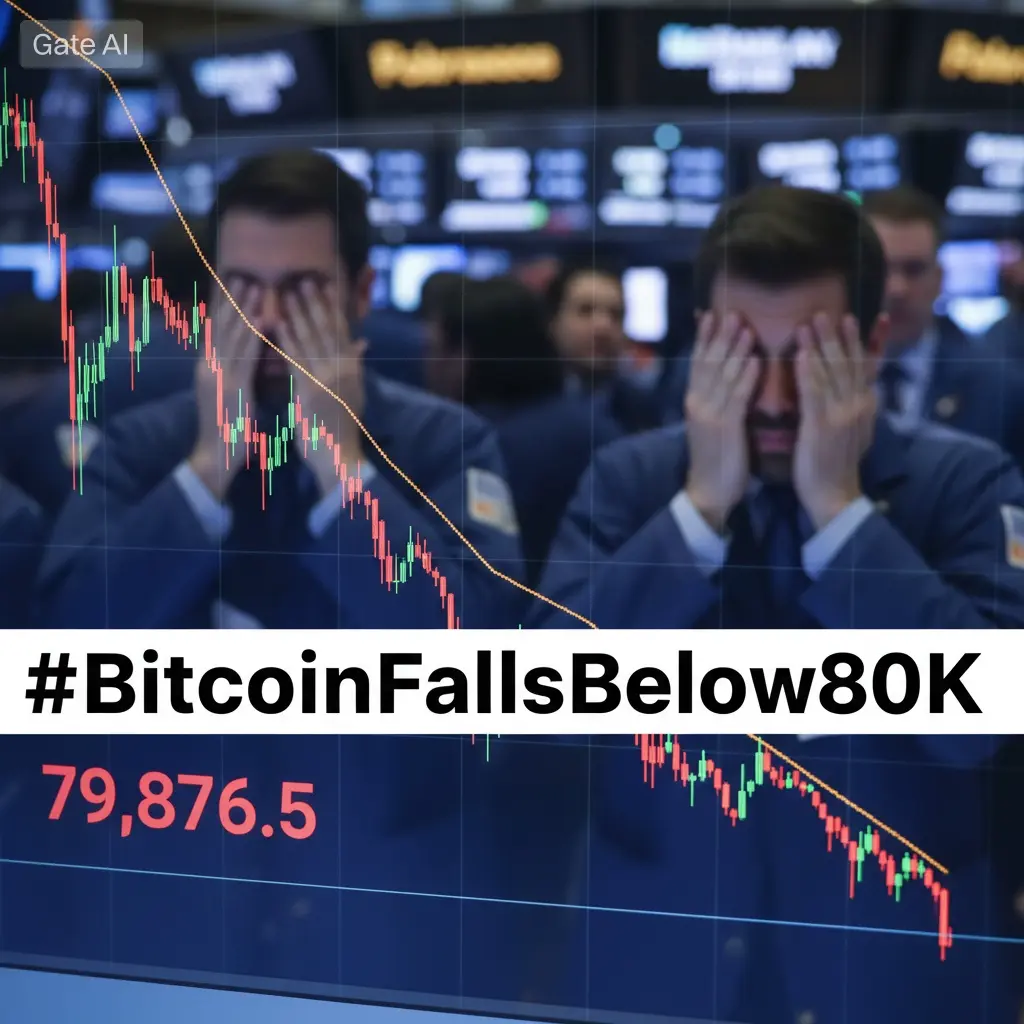

#BitcoinFallsBelow80K
The cryptocurrency market has entered a highly sensitive phase after Bitcoin unexpectedly lost the critical $80,000 support region, triggering a sharp wave of uncertainty across both spot and derivatives markets. What makes this decline particularly important is not only the numerical drop itself, but the broader message the market may be sending about weakening momentum, fragile investor confidence, and the growing influence of global macroeconomic pressure on digital assets.
For several weeks, Bitcoin had maintained relatively strong upward momentum, encouraging traders to believe that the market was preparing for another major expansion phase. Optimism increased rapidly as institutional participation remained active, ETF-related discussions continued attracting attention, and retail traders aggressively positioned themselves for higher price targets. However, markets driven heavily by leverage and momentum can reverse with equal speed once confidence begins to weaken. The breakdown below $80K demonstrated exactly how quickly bullish sentiment can transform into defensive positioning when key support levels fail to hold.
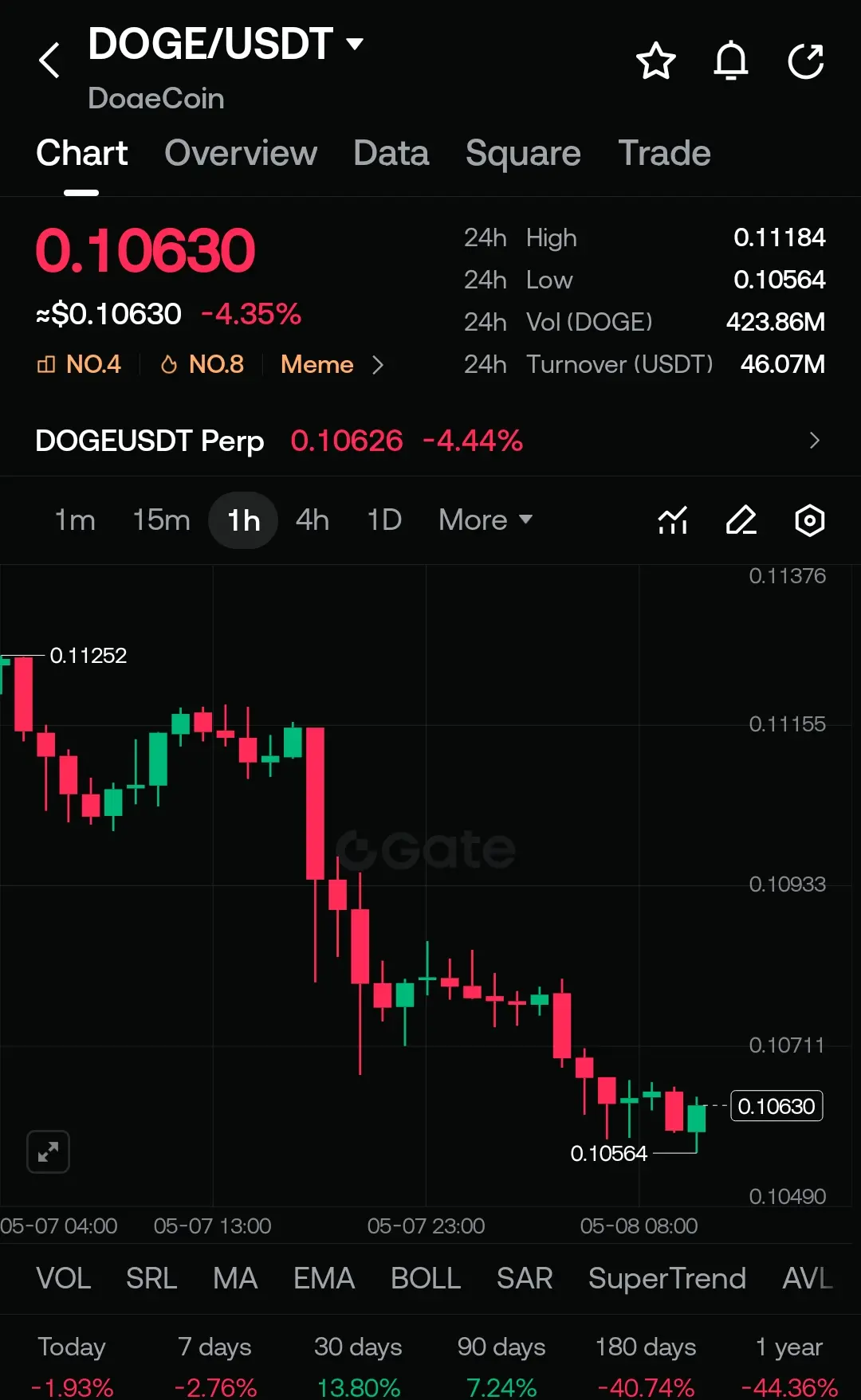
The decline immediately affected the entire crypto ecosystem. Ethereum, Solana, Dogecoin, and multiple high-cap altcoins experienced synchronized selling pressure as traders rushed to reduce exposure amid rising volatility. This broad market weakness highlights an important reality about current crypto conditions: despite narratives around diversification inside digital assets, Bitcoin still acts as the central liquidity anchor for the entire sector. When Bitcoin experiences sharp structural weakness, the rest of the market usually follows.
One of the largest contributors to the severity of the correction was excessive leverage accumulation in futures markets. During the previous rally, traders increasingly opened high-risk long positions under the assumption that bullish momentum would continue uninterrupted. As long as Bitcoin continued climbing, leverage amplified profits and encouraged even more aggressive positioning. But once the market reversed and key support zones failed, forced liquidations accelerated rapidly.
This created a classic cascading liquidation environment where exchanges automatically closed leveraged positions to protect collateral requirements, adding additional selling pressure to an already weakening market. The result was a rapid downward move that appeared far more violent than a standard correction because the market structure had become overly dependent on speculative leverage rather than stable spot demand.
The current situation also reflects the growing connection between crypto markets and broader global macroeconomic conditions. Earlier market optimism was largely fueled by expectations that major central banks would begin shifting toward monetary easing and eventual interest rate cuts. Investors believed improving liquidity conditions could once again strengthen risk assets, including cryptocurrencies. However, recent economic data and inflation concerns have complicated those expectations considerably.
As hopes for rapid monetary easing weakened, financial markets globally began reassessing risk exposure. Higher-for-longer interest rate expectations tend to pressure speculative assets because tighter financial conditions reduce excess liquidity available for high-risk investments. Cryptocurrencies, despite their decentralized foundations, are no longer isolated from these macroeconomic forces. Instead, they now respond increasingly like global risk-sensitive assets influenced by capital flows, liquidity cycles, and institutional portfolio adjustments.
At the same time, geopolitical tensions added another layer of instability to already fragile market conditions. Renewed uncertainty surrounding international relations and regional conflicts has increased caution across financial markets. Investors often move toward defensive positioning during periods of geopolitical stress because uncertainty makes speculative exposure less attractive in the short term. Crypto markets, which are naturally more volatile than traditional assets, tend to react even more aggressively under such conditions.
Another major debate emerging from this decline involves the long-term sustainability of Bitcoin’s recent growth cycle. Supporters of the bullish outlook argue that corrections like this are normal and even necessary inside broader uptrends. According to this perspective, the market had become overheated due to excessive leverage, unrealistic short-term expectations, and emotionally driven momentum trading. A correction therefore resets market conditions, removes weak positions, and creates healthier foundations for future growth.
Critics, however, believe the situation could be more serious. They argue that crypto markets remain heavily dependent on liquidity expansion and speculative participation rather than organic economic utility. If global financial conditions continue tightening and risk appetite weakens further, digital assets may struggle to maintain aggressive valuations. From this viewpoint, the drop below $80K could represent the beginning of a larger market reevaluation rather than a temporary setback.
Technical analysts are now closely monitoring whether Bitcoin can recover above the broken support zone or whether the market establishes a lower trading range. Psychological price levels play an extremely important role in crypto because they influence trader behavior, sentiment, and algorithmic positioning simultaneously. Once a major level breaks, market psychology often changes rapidly as fear replaces optimism and participants become increasingly cautious about re-entering risk positions.
The derivatives market will likely remain one of the most important indicators moving forward. If leverage continues decreasing and liquidation pressure slows, the market may eventually stabilize and rebuild momentum gradually. However, if volatility remains elevated and traders continue opening excessively leveraged positions during uncertain conditions, further instability could emerge quickly.
Institutional behavior will also remain under close observation. Large financial players typically focus less on short-term emotional volatility and more on macro trends, regulatory development, and long-term adoption potential. While current conditions may encourage temporary caution, many institutions still view Bitcoin as an evolving financial asset class with growing strategic relevance. This creates an unusual market structure where short-term speculation and long-term accumulation narratives continue existing simultaneously.
Another important aspect of the current decline is its effect on retail investor psychology. During strong rallies, social sentiment across crypto communities often becomes dominated by expectations of nonstop growth, leading many inexperienced participants to underestimate risk. Corrections like the current one serve as reminders that volatility remains deeply embedded within digital asset markets regardless of long-term bullish narratives. Sustainable participation requires risk management, patience, and awareness of broader macro conditions rather than purely emotional decision-making.
The coming weeks may become extremely important for determining the next direction of the crypto market cycle. If Bitcoin successfully stabilizes and gradually reclaims lost momentum, many traders may interpret the recent decline as a healthy reset within a larger bullish structure. In that scenario, confidence could slowly return, especially if macroeconomic conditions improve or liquidity expectations strengthen again.
On the other hand, if the market continues losing key support levels while macro uncertainty intensifies, downside pressure may extend further across both Bitcoin and altcoins. Investor confidence could weaken substantially if participants begin questioning the sustainability of recent valuations and institutional inflow narratives.
Regardless of short-term direction, the current correction highlights a fundamental transformation inside cryptocurrency markets. Bitcoin is no longer moving independently based solely on internal crypto narratives. Instead, it now reacts directly to global monetary expectations, geopolitical developments, institutional positioning, liquidity flows, and broader financial sentiment. This increasing integration into the global financial system may strengthen Bitcoin’s long-term legitimacy, but it also means the asset is becoming more exposed to traditional macroeconomic pressures.
The break below $80,000 therefore represents far more than a temporary headline event. It reflects the ongoing struggle between speculative optimism and economic reality inside one of the world’s most volatile financial sectors. Whether this decline becomes remembered as a short-term panic event or the beginning of a larger structural correction will depend on how markets respond to liquidity conditions, macroeconomic policy, geopolitical developments, and investor confidence in the period ahead.
#Bitcoin #CryptoNews #BTC #CryptoMarket
The cryptocurrency market has entered a highly sensitive phase after Bitcoin unexpectedly lost the critical $80,000 support region, triggering a sharp wave of uncertainty across both spot and derivatives markets. What makes this decline particularly important is not only the numerical drop itself, but the broader message the market may be sending about weakening momentum, fragile investor confidence, and the growing influence of global macroeconomic pressure on digital assets.
For several weeks, Bitcoin had maintained relatively strong upward momentum, encouraging traders to believe that the market was preparing for another major expansion phase. Optimism increased rapidly as institutional participation remained active, ETF-related discussions continued attracting attention, and retail traders aggressively positioned themselves for higher price targets. However, markets driven heavily by leverage and momentum can reverse with equal speed once confidence begins to weaken. The breakdown below $80K demonstrated exactly how quickly bullish sentiment can transform into defensive positioning when key support levels fail to hold.
The decline immediately affected the entire crypto ecosystem. Ethereum, Solana, Dogecoin, and multiple high-cap altcoins experienced synchronized selling pressure as traders rushed to reduce exposure amid rising volatility. This broad market weakness highlights an important reality about current crypto conditions: despite narratives around diversification inside digital assets, Bitcoin still acts as the central liquidity anchor for the entire sector. When Bitcoin experiences sharp structural weakness, the rest of the market usually follows.
One of the largest contributors to the severity of the correction was excessive leverage accumulation in futures markets. During the previous rally, traders increasingly opened high-risk long positions under the assumption that bullish momentum would continue uninterrupted. As long as Bitcoin continued climbing, leverage amplified profits and encouraged even more aggressive positioning. But once the market reversed and key support zones failed, forced liquidations accelerated rapidly.
This created a classic cascading liquidation environment where exchanges automatically closed leveraged positions to protect collateral requirements, adding additional selling pressure to an already weakening market. The result was a rapid downward move that appeared far more violent than a standard correction because the market structure had become overly dependent on speculative leverage rather than stable spot demand.
The current situation also reflects the growing connection between crypto markets and broader global macroeconomic conditions. Earlier market optimism was largely fueled by expectations that major central banks would begin shifting toward monetary easing and eventual interest rate cuts. Investors believed improving liquidity conditions could once again strengthen risk assets, including cryptocurrencies. However, recent economic data and inflation concerns have complicated those expectations considerably.
As hopes for rapid monetary easing weakened, financial markets globally began reassessing risk exposure. Higher-for-longer interest rate expectations tend to pressure speculative assets because tighter financial conditions reduce excess liquidity available for high-risk investments. Cryptocurrencies, despite their decentralized foundations, are no longer isolated from these macroeconomic forces. Instead, they now respond increasingly like global risk-sensitive assets influenced by capital flows, liquidity cycles, and institutional portfolio adjustments.
At the same time, geopolitical tensions added another layer of instability to already fragile market conditions. Renewed uncertainty surrounding international relations and regional conflicts has increased caution across financial markets. Investors often move toward defensive positioning during periods of geopolitical stress because uncertainty makes speculative exposure less attractive in the short term. Crypto markets, which are naturally more volatile than traditional assets, tend to react even more aggressively under such conditions.
Another major debate emerging from this decline involves the long-term sustainability of Bitcoin’s recent growth cycle. Supporters of the bullish outlook argue that corrections like this are normal and even necessary inside broader uptrends. According to this perspective, the market had become overheated due to excessive leverage, unrealistic short-term expectations, and emotionally driven momentum trading. A correction therefore resets market conditions, removes weak positions, and creates healthier foundations for future growth.
Critics, however, believe the situation could be more serious. They argue that crypto markets remain heavily dependent on liquidity expansion and speculative participation rather than organic economic utility. If global financial conditions continue tightening and risk appetite weakens further, digital assets may struggle to maintain aggressive valuations. From this viewpoint, the drop below $80K could represent the beginning of a larger market reevaluation rather than a temporary setback.
Technical analysts are now closely monitoring whether Bitcoin can recover above the broken support zone or whether the market establishes a lower trading range. Psychological price levels play an extremely important role in crypto because they influence trader behavior, sentiment, and algorithmic positioning simultaneously. Once a major level breaks, market psychology often changes rapidly as fear replaces optimism and participants become increasingly cautious about re-entering risk positions.
The derivatives market will likely remain one of the most important indicators moving forward. If leverage continues decreasing and liquidation pressure slows, the market may eventually stabilize and rebuild momentum gradually. However, if volatility remains elevated and traders continue opening excessively leveraged positions during uncertain conditions, further instability could emerge quickly.
Institutional behavior will also remain under close observation. Large financial players typically focus less on short-term emotional volatility and more on macro trends, regulatory development, and long-term adoption potential. While current conditions may encourage temporary caution, many institutions still view Bitcoin as an evolving financial asset class with growing strategic relevance. This creates an unusual market structure where short-term speculation and long-term accumulation narratives continue existing simultaneously.
Another important aspect of the current decline is its effect on retail investor psychology. During strong rallies, social sentiment across crypto communities often becomes dominated by expectations of nonstop growth, leading many inexperienced participants to underestimate risk. Corrections like the current one serve as reminders that volatility remains deeply embedded within digital asset markets regardless of long-term bullish narratives. Sustainable participation requires risk management, patience, and awareness of broader macro conditions rather than purely emotional decision-making.
The coming weeks may become extremely important for determining the next direction of the crypto market cycle. If Bitcoin successfully stabilizes and gradually reclaims lost momentum, many traders may interpret the recent decline as a healthy reset within a larger bullish structure. In that scenario, confidence could slowly return, especially if macroeconomic conditions improve or liquidity expectations strengthen again.
On the other hand, if the market continues losing key support levels while macro uncertainty intensifies, downside pressure may extend further across both Bitcoin and altcoins. Investor confidence could weaken substantially if participants begin questioning the sustainability of recent valuations and institutional inflow narratives.
Regardless of short-term direction, the current correction highlights a fundamental transformation inside cryptocurrency markets. Bitcoin is no longer moving independently based solely on internal crypto narratives. Instead, it now reacts directly to global monetary expectations, geopolitical developments, institutional positioning, liquidity flows, and broader financial sentiment. This increasing integration into the global financial system may strengthen Bitcoin’s long-term legitimacy, but it also means the asset is becoming more exposed to traditional macroeconomic pressures.
The break below $80,000 therefore represents far more than a temporary headline event. It reflects the ongoing struggle between speculative optimism and economic reality inside one of the world’s most volatile financial sectors. Whether this decline becomes remembered as a short-term panic event or the beginning of a larger structural correction will depend on how markets respond to liquidity conditions, macroeconomic policy, geopolitical developments, and investor confidence in the period ahead.
#Bitcoin #CryptoNews #BTC #CryptoMarket