Z谋谋nxcrypto

vip
Airdrop Hunter
Memecoin Hunter
On-chain Analyst
Crypto Farmer
$BTC 👉#MyGateTradeStory 👀
Bitcoin is currently stuck between 62,000 and 64,000. And both sides of that band are extremely significant levels from a technical perspective.
I sat down at my desk this weekend and wrote down the whole picture layer by layer. Because what we're seeing in the market right now isn't just news-induced fluctuations. It's a deeper structural picture.
The death cross has been active for 204 days.
In February 2026, the 50-day moving average crossed below the 200-day moving average. This signal hasn't been resolved since then. Similar death crosses in 2014, 2017, and 202
BTC-0.10%
User_any
$BTC 👉#MyGateTradeStory 👀
Bitcoin is currently stuck between 62,000 and 64,000. And both sides of that band are extremely significant levels from a technical perspective.
I sat down at my desk this weekend and wrote down the whole picture layer by layer. Because what we're seeing in the market right now isn't just news-induced fluctuations. It's a deeper structural picture.
The death cross has been active for 204 days.
In February 2026, the 50-day moving average crossed below the 200-day moving average. This signal hasn't been resolved since then. Similar death crosses in 2014, 2017, and 2022 each saw an additional drop of between 46% and 52% before reaching the true bottom. This statistic alone says a lot about the picture.
The 50-day average is currently around $74,000. The 200-day average is around $77,000. For these two averages to cross again, the 50-day average needs to climb to $77,000. The price is currently between 62,000 and 64,000. So we are $15,000 away from bullish structural confirmation.
This isn't a very long road. But it's a road that can be overcome with sustained buying pressure, not a news-based spike.
The 200-week moving average is currently critical.
This week, the 200-week simple moving average of $61,800 was briefly broken. This level historically corresponds to the sharpest pressure points in crypto cycles. The December 2018 low was formed at this level. This level was tested during the March 2020 COVID crash. In both cases, strong recoveries followed.
But there is a difference this time. In those periods, the break of this level was instantaneous and sharp, then quickly reversed. Whether or not a break occurred on a closing basis this time is still debatable. If the weekly close holds above 62,000, this level can be considered as not having broken through support. If it doesn't hold, $49,000 is the next level indicated by analysts.
The technical structure currently includes three scenarios.
First scenario: Consolidation continues between 62,000 and 64,000. Waiting for a catalyst. No volume, no big movement. This is the most likely short-term scenario.
Second scenario: If 64,200 and then 65,700 are broken, a short squeeze may begin. Short positions are near a nine-year high. If the price surpasses these levels with increasing volume, liquidations will begin and the movement will accelerate. There is significant resistance in the 50-day moving average region between 70,000 and 71,900.
Third scenario: If 61,800 is broken with a weekly close, 59,130 will be retested. If it doesn't hold there, the 49,000 scenario comes into play. I don't see this as the base scenario right now, but I'm not ignoring it either.
Now I'm looking at the on-chain chart.
The MVRV Z-score is approaching the low valuation zone. The realized price is approximately $53,600. This reflects the cost for the vast majority of the market. As the price approaches this level, long-term holders enter aggressive accumulation mode, as history has shown.
Whales accumulated 125,000 BTC throughout June. This figure was confirmed by on-chain data. Strategy also bought this week. SpaceX joined the list of institutional holders with 18,712 BTC. These big players are buying at the $62,000 level. This information is not a guarantee for the price, but it is an important clue for the direction.
The macro picture in brief:
The Fed came out hawkish. The dot plot signaled an increase for 2026. The PCE forecast was raised to 3.6 percent. The dollar strengthened. Risk appetite weakened.
The BOJ rose to 1 percent, a 31-year high. But the yen did not strengthen as much as expected because the interest rate differential between the US and Japan is still very large.
Oil is below $81. If the Iran deal holds, energy inflation will decline. If the July CPI data reflects this effect, the Fed's tone may change. The Clarity Act is pending in the Senate with a target of July 4th.
How do I read this picture and what am I doing?
A hawkish Fed and a 204-day death cross are preventing me from making aggressive purchases. I don't apologize for that.
But I also see this: The 200-week average has historically been a buying zone. Whale accumulation continues. Short positions are at record levels, and this means fuel for short squeeze. Energy inflation, the heaviest source of macroeconomic pressure, is on the path to resolution.
These two scenarios coexist. The bearish structure is real. But the bullish signals are also real.
In this contradiction, my preference is this: Small positions, not large positions. Tight risk management, not wide stop-loss orders. Waiting mode until macroeconomic changes, ready when they do.
$59,130 could be the bottom of this cycle. Or it might not be. I don't know. But this band between $61,800 and $64,000 is the last major support zone that historical data shows when everything is put together.
Being in this zone is unsettling. But the best opportunities in the market are always hidden in its most unsettling places.
My plan is written. My size is consistent with the plan. I'm following my signals.
⚠️ Not financial advice.

repost-content-media
  • Reward
  • 2
  • 1
  • Share
discovery:
To The Moon 🌕
View More
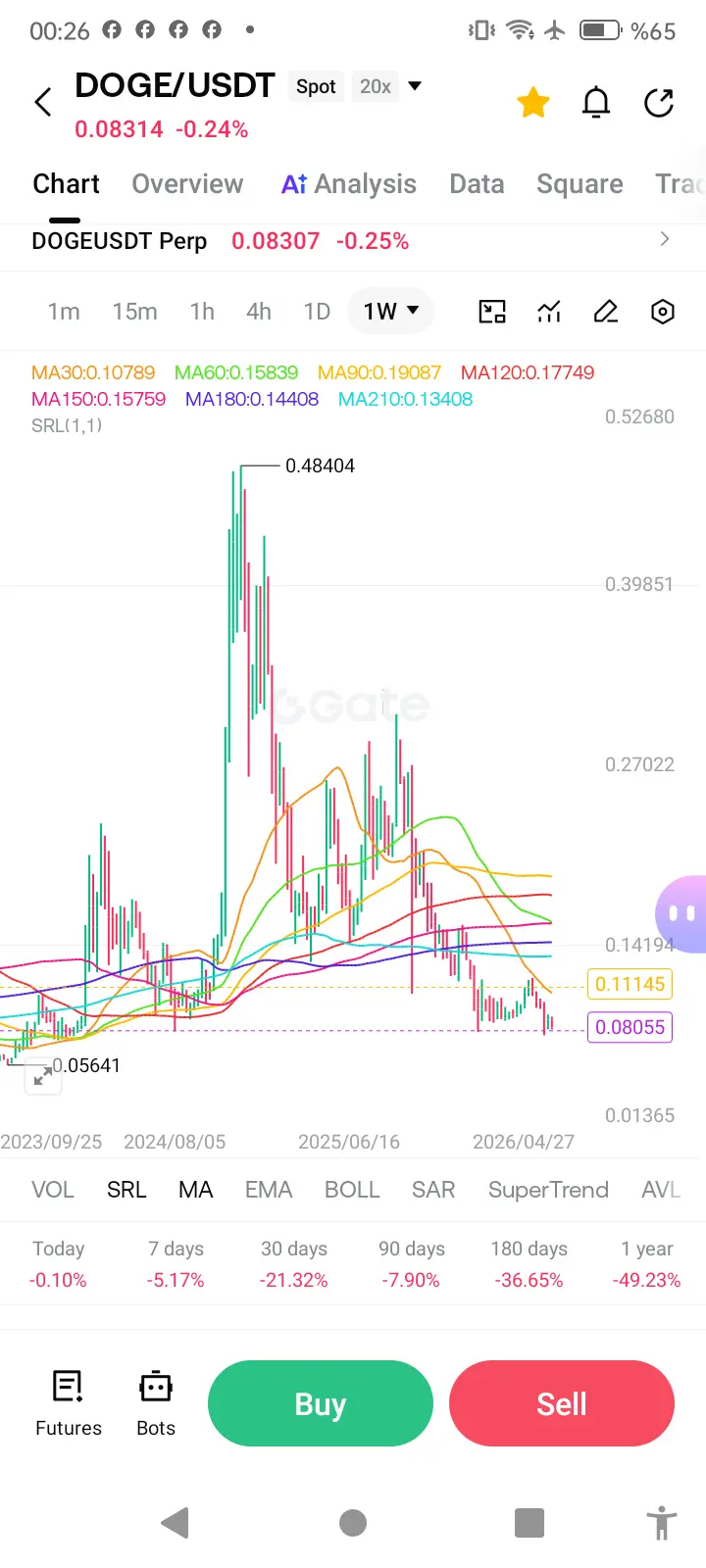
$DOGE is currently between 0.081 and 0.083. This area is both critical support and the most interesting day trade setup for me.
Why interesting? Because it's at the lower boundary of a five-year parallel channel. It has been tested five times since March. It held each time. The sixth test is happening now.
I see three scenarios for the day trade and I will act according to which one occurs.
The first scenario is the cleanest setup for me. The 0.081 to 0.083 support band holds. A bullish engulfing candle forms with volume on the 15-minute or 1-hour chart. This is a confirmation signal. Entry i
DOGE-0.41%
User_any
$DOGE is currently between 0.081 and 0.083. This area is both critical support and the most interesting day trade setup for me.
Why interesting? Because it's at the lower boundary of a five-year parallel channel. It has been tested five times since March. It held each time. The sixth test is happening now.
I see three scenarios for the day trade and I will act according to which one occurs.
The first scenario is the cleanest setup for me. The 0.081 to 0.083 support band holds. A bullish engulfing candle forms with volume on the 15-minute or 1-hour chart. This is a confirmation signal. Entry is between 0.083 and 0.085. First target 0.090. Second target 0.095. Stop below 0.079. The risk-reward ratio is approximately 1 to 2. This is acceptable for day trading.
The second scenario is more aggressive but has a higher return. If I see a close above 0.090 with volume, that's a breakout confirmation. I'll enter at that point. Target 0.095 then 0.100. Stop loss is set below 0.087. Momentum trading. Waiting time may be longer, but the movement is cleaner.
The third scenario is to be avoided. If it breaks with a daily close of 0.081, I'm passing this setup. The target will shift to between 0.06 and 0.07. I'm not opening short without a breakout signal because this band has held five times. It could hold a sixth time.
I'm waiting now.
Why is DOGE a suitable tool for day trading? Volume is $361 million in 24 hours. Spread is narrow. Liquidity is sufficient. Open position is $632 million. Funding rate is 0.0022, neutral. This rate doesn't mean excessive long or excessive short. There's no major squeeze. The ground is ready for a clean price movement.
What do I need to watch out for? DOGE gets instant and sharp movements from news related to Musk. This is both an opportunity and a risk. If this kind of news comes while I'm in a position, I might deviate from my plan. That's why I never open a position without setting stop orders. Never.
Also, volume is everything in this setup. Without volume, a breakout of 0.090 could be false. False breakouts have happened a lot in DOGE. I'm waiting for the close, not the breakout. I prefer a 4-hour candle close.
Position size is fixed in day trading. In this type of setup, I risk two percent of my portfolio. No more. If I win, great. If I lose, I'll continue with the next setup.
I wait until the picture becomes clearer.
#MyGateTradeStory
⚠️ Not financial advice.
repost-content-media
  • Reward
  • 2
  • Repost
  • Share
discovery:
To The Moon 🌕
View More
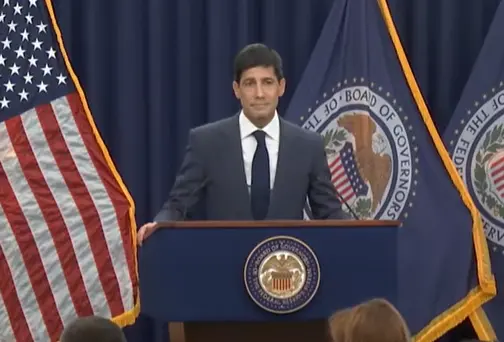
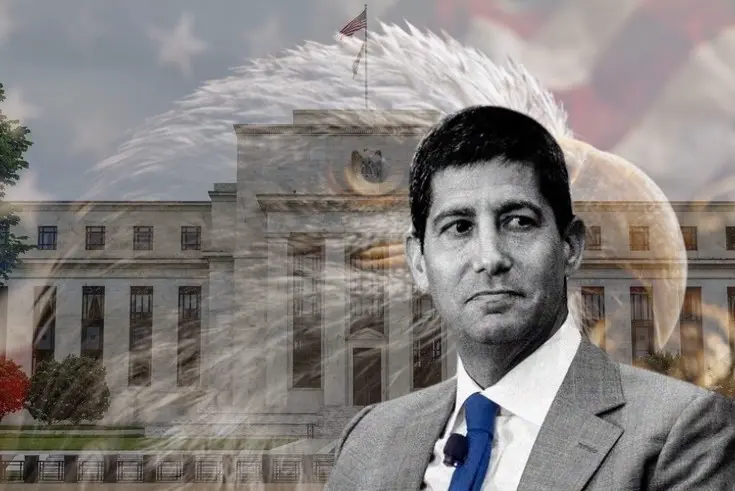
June 17, 2026. Kevin Warsh concludes his first FOMC meeting. And markets immediately understood how critical it was.
The decision was expected. Interest rates remained stable between 3.50% and 3.75%. 12 votes against 0. Unanimous.
But the picture beneath the unanimous vote looked quite the opposite.
The dot plot, which shows the Fed members' interest rate expectations, erased the single rate cut for 2026. Not only did it erase it, it went beyond that. Nine of the 18 members predicted at least one increase by the end of 2026. Seventeen indicated that the risk of inflation is skewed upwards. Thi
SinCity
June 17, 2026. Kevin Warsh concludes his first FOMC meeting. And markets immediately understood how critical it was.
The decision was expected. Interest rates remained stable between 3.50% and 3.75%. 12 votes against 0. Unanimous.
But the picture beneath the unanimous vote looked quite the opposite.
The dot plot, which shows the Fed members' interest rate expectations, erased the single rate cut for 2026. Not only did it erase it, it went beyond that. Nine of the 18 members predicted at least one increase by the end of 2026. Seventeen indicated that the risk of inflation is skewed upwards. This is a radical shift since the March meeting. In March, the median dot plot indicated a rate cut during the year. In June, the median is now pointing above today's level.
The PCE inflation forecast was lowered from 2.7% to 3.6%. The GDP growth forecast was lowered to 2.2%. Inflation is rising while growth is slowing. This combination has revived fears of stagflation.
And Warsh has radically altered all previous press releases.
The previous Fed statement was 341 words. Warsh's statement is 130 words. All language regarding the tendency towards a pullback has been removed. Hints about what might be done in the future have been erased. Warsh summarized it like this: This statement simply gives you the facts, as far as we can.
Forward guidance is gone. This means that the guidance bar that markets have relied on for years has been broken. What is the Fed thinking now, what will it do, when will it do it? The answer to these questions is now uncertain until data comes in.
How did the markets price this uncertainty?
The dollar immediately strengthened. Gold fell sharply, then partially recovered. Stocks reacted mixed. The S&P 500 fell 1 percent in the first hours. The Nasdaq closed slightly lower. But the bond market reacted most sharply. The 10-year US Treasury yield jumped from 4.45 to 4.58. This move means additional pressure on risk assets because as risk-free returns rise, the premium demanded for taking on risk also increases.
CME FedWatch raised the probability of an increase to 60.7% for October 2026. It was close to zero before this meeting.
How did crypto react to this?
Bitcoin was between 65,000 and 67,000 before the decision. After Warsh's press conference, it dropped to $62,236. A drop of about 5% in 48 hours. This is historically considered the middle of post-FOMC crypto reactions. Hard, but not a collapse.
Ethereum, XRP, and other majors were hit harder than Bitcoin. The altcoin season index fell even further. Total market capitalization dropped to $2.15 trillion, just above the annual low.
But there's an interesting detail.
Warsh didn't include his own prediction in the dot plot. He made that clear. He said it would be premature to present his own opinion along with the other members' at the beginning of his term. This means the guiding voice of the Fed chairman has disappeared. What remains are the individual estimates of the 18 members. And these estimates are very scattered.
8 members want to keep interest rates at the current level. 1 member wants a cut. 9 members expect an increase. This deep division is a message in itself. There is a real disagreement within the Fed. Warsh announced that he has established five working groups to resolve this disagreement.
Now I'm looking at the big picture.
The essence of Warsh's message is this: The Fed is data-dependent. We will not act until inflation returns to 2 percent. But we will raise if the data requires it.
This message is not the language of 2024. It's the language of 2023. During that period, markets had to get used to a "longer period of highs." And during that process, risk assets were significantly under pressure. But this time there is a difference.
Oil is below $81. The Strait of Hormuz is open. The trade agreement between the EU and the US has been approved. The energy component, which pushed the May CPI to 4.2 percent, will retreat in the June and July data. This decline could change the views of members questioning Warsh's dot plot. If the data changes, the language changes. If the language changes, expectations change. If expectations change, the market changes.
Markets price events in advance. They start pricing in months before the real Fed pivot arrives. In 2024, the Bitcoin rally started long before the Fed's language change. This dynamic hasn't changed.
I draw the following conclusion from this picture:
The short term is clear. The market is relearning a hawkish Fed. This process is suppressing risk appetite. Crypto is struggling to rise in this environment.
The medium term is uncertain, but there is material for a positive scenario. Oil is falling. The risk of a trade war has decreased. Inflation data will begin to soften. The Law of Clarity is on the agenda. If one or more of these catalysts coincide, the picture may change.
What am I doing in this environment?
I have reduced my positions. I haven't completely closed them. My plan is to reduce the size during such periods of uncertainty, not to eliminate them entirely. My limit orders are between 59,000 and 62,000. Current holdings are at planned levels.
Warsh said, "I'm just giving the facts." I'm doing the same.
The truth is: the market is in a difficult environment. But difficult environments don't last. And even within this environment, signals heralding a turnaround are slowly emerging.
I'm sticking to my plan. As always.
#MyGateTradeStory
This content is for informational purposes only and does not constitute financial advice.
$BTC $VIX $GT
  • Reward
  • Comment
  • Repost
  • Share
$BTC 🆚 $XAUT 👀
Both Bitcoin and gold are down year-to-date. Bitcoin is off 28 percent. Gold is off 2 percent. That makes them the two worst-performing major asset classes tracked. And that is weird. Historically Bitcoin and gold have not both underperformed simultaneously across a full calendar year. The joint weakness suggests broad risk-off sentiment and reduced safe-haven demand across alternative assets.
But the technical picture right now tells two different stories.
Bitcoin – oversold bounce or dead cat
Bitcoin has been fluctuating between 62,318 and 63,416 over the past 24 hours. The
BTC-0.10%
XAUT0.53%
CryptoSpecto
$BTC 🆚 $XAUT 👀
Both Bitcoin and gold are down year-to-date. Bitcoin is off 28 percent. Gold is off 2 percent. That makes them the two worst-performing major asset classes tracked. And that is weird. Historically Bitcoin and gold have not both underperformed simultaneously across a full calendar year. The joint weakness suggests broad risk-off sentiment and reduced safe-haven demand across alternative assets.
But the technical picture right now tells two different stories.
Bitcoin – oversold bounce or dead cat
Bitcoin has been fluctuating between 62,318 and 63,416 over the past 24 hours. The daily timeframe is still in a downtrend – MA7 below MA30 below MA120. That is a classic bearish structure. But the 4-hour chart is showing a bullish divergence. Price made new lows but the MACD histogram is rising. The 4-hour Williams %R is at negative 81 – oversold territory. The 15-minute chart is actually showing a bullish alignment. Trading volume increased alongside the price rise. That suggests some capital participation on the bounce.
But let me be honest. A 4-hour oversold signal in a daily downtrend is not a trend reversal. It is a relief rally setup at best. The daily RSI is at 35.1. That is oversold on the daily too. But oversold can stay oversold for a long time in a bear market. The key level to watch is 62,000. If that holds we could see a bounce toward 65,000. If it breaks the next support is 60,000 and then 58,000.
Gold – getting crushed
XAUT traded between 4,113.9 and 4,219.7 over the past 24 hours. Down 1.58 percent. The technicals are uniformly bearish across all timeframes – MA7 below MA30 below MA120 on the 15-minute, 4-hour, and daily charts. The 4-hour and daily PDI are below MDI with high ADX. That is a strong downtrend. RSI on the 4-hour is 32.55. Daily RSI is 34.83. Both are oversold. CCI and Williams %R are also signaling oversold conditions.
The volume pattern is the most concerning part. The 24-hour trading volume surged while prices fell. That is a massive selloff with panic. The 4-hour RSI at 31.45 is technically oversold but the momentum is still downward. Compared to Bitcoin which gained 1.22 percent today, gold underperformed by 3 percent. That is significant.
Why is this happening?
The Fed just signaled rate hikes are back on the table. The 2-year yield spiked to 4.2 percent. The dollar index is back above 100. Both Bitcoin and gold are being repriced as the opportunity cost of holding non-yielding assets rises.
But here is the divergence. Bitcoin is being sold because it is a risk asset. Gold is being sold because the dollar is strengthening and real yields are rising. The same Fed hawkishness that hurts Bitcoin also hurts gold but through different channels.
The bottom line
Both are down year-to-date. That is unusual. The oversold conditions suggest bounces are possible. But the daily structures are still bearish. The volume on the gold selloff is panic-level. The Bitcoin bounce is thin. Until the Fed pivots or the dollar weakens meaningfully both assets face headwinds.
The 4-hour oversold signals on both are real. But in a strong downtrend oversold just means the selling is done for the day – not for the trend. Watch 62,000 on Bitcoin and 4,100 on gold. Those are the lines in the sand. If they hold we get a bounce. If they break we get another leg down.
#MyGateTradeStory
⚠️ Not financial advice.
  • Reward
  • 3
  • Repost
  • Share
discovery:
LFG 🔥
View More
$TAO is cascading like a waterfall on the 4-hour chart, dropping from 236 to 222 in one go. It bounced back to 227.4 but got pushed down again, now sitting at 223.5, stuck in limbo. The MA20 and MA50 are both applying pressure, with the 1h/4h/daily charts all in bearish territory. On one hand, we’ve got negative rates and a shrinking position
TAOUSDT
Perp
223.82
-4.79%
, while on the other, the takers are still aggressively pulling it up—structure dictates the game, and that bounce is just a paper tiger. Going short around 223.5, aiming for targets at 222/220/217, with a stop-loss at 226. If y
TAO-1.54%
CryptoSpecto
$TAO is cascading like a waterfall on the 4-hour chart, dropping from 236 to 222 in one go. It bounced back to 227.4 but got pushed down again, now sitting at 223.5, stuck in limbo. The MA20 and MA50 are both applying pressure, with the 1h/4h/daily charts all in bearish territory. On one hand, we’ve got negative rates and a shrinking position
TAOUSDT
Perp
223.82
-4.79%
, while on the other, the takers are still aggressively pulling it up—structure dictates the game, and that bounce is just a paper tiger. Going short around 223.5, aiming for targets at 222/220/217, with a stop-loss at 226. If you're worried about getting cut, don’t hesitate; opportunities don’t wait for anyone.#MyGateTradeStory
  • Reward
  • 2
  • Repost
  • Share
discovery:
LFG 🔥
View More
#MyGateTradeStory
#我的Gate交易时刻
My journey began with excitement, but experience taught me that consistency matters far more than emotion.
In the early days, I focused too much on short-term results. I quickly realized that success does not come from chasing every move. It comes from patience, preparation, and respecting risk.
I started keeping detailed records after every session. Reviewing entries helped me understand my strengths, identify mistakes, and improve decision-making. Setting clear targets and protecting capital became more important than seeking rapid gains.
There were challengin
YamahaBlue
#MyGateTradeStory
#我的Gate交易时刻
My journey began with excitement, but experience taught me that consistency matters far more than emotion.
In the early days, I focused too much on short-term results. I quickly realized that success does not come from chasing every move. It comes from patience, preparation, and respecting risk.
I started keeping detailed records after every session. Reviewing entries helped me understand my strengths, identify mistakes, and improve decision-making. Setting clear targets and protecting capital became more important than seeking rapid gains.
There were challenging periods, and not every decision produced the outcome I expected. Those moments became valuable lessons. They taught me the importance of discipline, emotional balance, and following a well-defined plan instead of reacting impulsively.
Over time, I developed a routine built on research, patience, and continuous learning. Small but consistent progress brought greater satisfaction than occasional large wins. More importantly, confidence came from having a structured approach rather than relying on luck.
Today, when friends ask what has made the biggest difference in my journey, my answer is simple: knowledge, discipline, and the willingness to learn from every experience.
The greatest reward has never been a single result. It has been the transformation from an impatient beginner into someone who values consistency, responsibility, and long-term growth. That evolution is the story I am most proud of sharing.
#MyGateTradingMoment
@Gate_Square
  • Reward
  • Comment
  • Repost
  • Share
#GateSpotVolumeLeadsGlobalGrowth
The latest CoinDesk Exchange Review data confirms that Gate has carved out impressive gains, managing to outpace the broader centralized exchange market's slight downward turn in May.
While combined global spot and derivatives volumes across the industry fell by roughly 3.45% month-over-month, Gate's performance metrics tell a very different story:
Spot Trading Momentum: Gate's spot trading volume bucked the trend entirely, jumping 11.5% to $43.8 billion. This secured its spot as the fastest-growing major global exchange for the month
ybaser
#GateSpotVolumeLeadsGlobalGrowth
The latest CoinDesk Exchange Review data confirms that Gate has carved out impressive gains, managing to outpace the broader centralized exchange market's slight downward turn in May.
While combined global spot and derivatives volumes across the industry fell by roughly 3.45% month-over-month, Gate's performance metrics tell a very different story:
Spot Trading Momentum: Gate's spot trading volume bucked the trend entirely, jumping 11.5% to $43.8 billion. This secured its spot as the fastest-growing major global exchange for the month
  • Reward
  • Comment
  • Repost
  • Share
#MyGateTradeStory
#我的Gate交易时刻
My Big LUNA Crash Story: From a Brutal Blow to a Comeback
In early May 2022, LUNA still looked strong. After its April peak near $119, the price moved around the $80–87 range. Like many others, I held a long position. I had faith in the ecosystem, Anchor’s high yield, and UST’s $1 peg. I had used leverage to grow a position worth several thousand dollars. I kept telling myself, “This setup is solid. Even if a depeg hits, it will recover fast.”
Everything began to shift on May 7. Huge withdrawals hit Anchor. Two big wallets pulled out roughly 375 million UST. U
LUNA0.10%
BTC-0.10%
discovery
#MyGateTradeStory
#我的Gate交易时刻
My Big LUNA Crash Story: From a Brutal Blow to a Comeback
In early May 2022, LUNA still looked strong. After its April peak near $119, the price moved around the $80–87 range. Like many others, I held a long position. I had faith in the ecosystem, Anchor’s high yield, and UST’s $1 peg. I had used leverage to grow a position worth several thousand dollars. I kept telling myself, “This setup is solid. Even if a depeg hits, it will recover fast.”
Everything began to shift on May 7. Huge withdrawals hit Anchor. Two big wallets pulled out roughly 375 million UST. UST slipped below $0.99, then seemed to recover. I bought the dip and added more. By May 8 and 9, LUNA’s market value was getting close to UST supply, yet I still had faith. I thought LFG would defend the peg with its BTC reserves.
On May 9, the crisis sped up. UST lost its peg for good. It fell to $0.75 and then to roughly $0.35. People rushed to swap UST for LUNA. This blew up LUNA supply. From May 11 to 13, supply grew from one billion to 5.89 trillion. LUNA dropped from $80 to $6, then to ten cents, and later below $0.00005. I had no stop loss. Due to leverage, my margin melted away and I got wiped out. Most of my savings vanished within days. I spent sleepless nights in front of my screen, asking myself why I did not leave sooner. The empty feeling was huge.
That loss crushed me, yet it also woke me up. I chose study over panic. I dug into peg drift, LUNA supply growth, Anchor withdrawal flow, on-chain moves, and the LUNA/UST market value ratio. Old-school chart work was not enough. This was a death spiral. Supply growth kept pushing price lower while swaps sped up the cycle.
I built a method based on three key ideas: peg drift, supply growth speed, and liquidity flow.
In simple form:
- If UST fell below $0.98 and LUNA market value got close to UST supply, I got a warning.
- I tracked huge withdrawals and swap volume with live explorer tools.
- While using leverage for short-term shorts, I kept risk per trade near 2–3%.
- I took partial profit at preset levels, such as 50% or 80%, and used a trailing stop for the rest.
During the crash, around May 10–12, I put this setup to work. Once LUNA broke below the $20–30 zone, I opened a small short. As supply shot into the trillions and price collapse grew worse, I added size while staying disciplined. I locked in gains after every 30–40% drop. As the death spiral kept going, my shorts worked very well. In the end, I recovered a huge share of my early loss, plus a bit more. I did not feel joy. I felt relief. The process had done its job.
This whole event taught me one key lesson: no asset is too big to fail. With complex systems like algorithmic stablecoins, simple HODL is not enough. Flexible risk control and deep study of system logic matter. I still use this method today, with fresh settings.
The LUNA crash hurt millions of people, yet it gave me my most costly and most useful lesson. Markets do not reward emotion. They reward data and discipline.
That is my story. I lost, I grew, I built a better way, and I walked away with a comeback. I hope it gives hope to other people as well.
repost-content-media
  • Reward
  • Comment
  • Repost
  • Share
#WarshDebutsAsFedHoldsRatesSteady
So Kevin Warsh just ran his first FOMC meeting. Rates didn't move – but everything else did.
The decision itself was boring
The Fed held rates at 3.50% to 3.75% for the fourth straight time. Unanimous 12‑0 vote. First unanimous vote since June of last year. Markets had priced in a 99.6% chance of no change. So that part was a snooze.
The dot plot flipped the table
Nine of 18 officials now see at least one rate hike by year‑end. In March that number was zero. One official penciled in 75 basis points of hikes. Five want 50 basis points. Three want 25. The media
US500-0.17%
User_any
#WarshDebutsAsFedHoldsRatesSteady
So Kevin Warsh just ran his first FOMC meeting. Rates didn't move – but everything else did.
The decision itself was boring
The Fed held rates at 3.50% to 3.75% for the fourth straight time. Unanimous 12‑0 vote. First unanimous vote since June of last year. Markets had priced in a 99.6% chance of no change. So that part was a snooze.
The dot plot flipped the table
Nine of 18 officials now see at least one rate hike by year‑end. In March that number was zero. One official penciled in 75 basis points of hikes. Five want 50 basis points. Three want 25. The median year‑end rate projection jumped from 3.4% to 3.8%.
And Warsh? He didn't submit a dot at all. First Fed chair in 14 years to skip it. His explanation was blunt: "for me it's not helpful".
The statement got gutted
April's statement was 341 words. This one clocked in around 130. That's a 62% haircut. They stripped out the easing bias entirely. No forward guidance. No hints about future moves. No vote breakdown – just "unanimous". Warsh called it "a bit shorter, a bit simpler". He also said "we've dropped forward guidance" because it's "not well suited for the current policy conjuncture".
His press conference was revealing
He's launching five task forces to review everything – communications, balance sheet, data sources, productivity and jobs, and the inflation framework. Most should wrap by year‑end.
On inflation: he's not budging from 2%. "I see no reason to revisit the 2% goal until we've reached it". Asked what he'd tell someone in a grocery store, he said the Fed can't control specific prices like oil or eggs – but it can stop those price changes from "broadening in the economy". And "persistently high prices are a burden for the American people".
Markets got rattled
The 2‑year yield spiked about 15 basis points to nearly 4.20%. The dollar jumped back above 100. Gold got crushed – spot dropped over 2% and broke below $4,300. The S&P 500 and Nasdaq both fell more than 1%. Fed funds futures started pricing a 38.5% chance of a July hike and over 86% by December.
And Trump? He was weirdly calm
When asked about the hold he said "It's all right. Whatever.". On the possibility of hikes he admitted "It could happen" but added "We have a very good guy over there right now so I'm guided by what he wants". That's a 180 from the Powell years.
The bottom line
Warsh just signaled a new era. Shorter statements. No forward guidance. No dot from the chair. A Fed that wants markets watching data not the chair's mouth. The inflation fight is real – and rate hikes are back on the table. Markets are repricing everything in real time.
repost-content-media
  • Reward
  • Comment
  • Repost
  • Share
#WarshDebutsAsFedHoldsRatesSteady
So Warsh finally spoke. And honestly his prepared remarks were almost boring. That is the point. He is trying to sound boring. Predictable. Stable. The opposite of Powell's "data dependent" dance.
Let me break down what he actually said
Economic activity is expanding at a solid pace despite geopolitical uncertainties. Productivity growth and capital investment are strong. Job gains are in line with labor force growth and unemployment barely moved.
On inflation he was direct. They know it has been running well above 2 percent for over five years. Persistently
User_any
#WarshDebutsAsFedHoldsRatesSteady
So Warsh finally spoke. And honestly his prepared remarks were almost boring. That is the point. He is trying to sound boring. Predictable. Stable. The opposite of Powell's "data dependent" dance.
Let me break down what he actually said
Economic activity is expanding at a solid pace despite geopolitical uncertainties. Productivity growth and capital investment are strong. Job gains are in line with labor force growth and unemployment barely moved.
On inflation he was direct. They know it has been running well above 2 percent for over five years. Persistently high prices are a burden for the American people. That is not new language. But it is acknowledgment that they have been failing on this mandate for half a decade.
Then he dropped this line: "The recent past need not be prologue to our future". That is important. He is saying past inflation does not guarantee future inflation. They can still get it back to 2. He is not surrendering to a higher target.
He stressed the FOMC is unanimous and committed on price stability. That unanimous vote was the first in nearly a year. That sends a clear signal – no internal dissent on this path.
The shift in tone
His language is simpler than Powell's. No long paragraphs about "transitory" or "asymmetric risks". Just clean sentences. Short ones. He also signaled explicitly that forward guidance will be dialed back. He is not going to pre‑commit to anything. Markets need to watch data not his mouth.
What is missing from this quote
He did not mention the dot plot. He did not mention his own decision to skip submitting a projection. He did not talk about the task forces reviewing everything from communications to balance sheet. Those came later in the Q&A. But his prepared remarks were careful. Measured. Almost scripted to sound like a central banker.
My take
Warsh is not trying to shock markets on day one. He is trying to reset expectations. The Fed is not going to ease anytime soon. But they are also not rushing to hike. The dot plot shows hikes are possible. But his words are neutral. He is buying time. Letting markets adjust to a Fed that no longer guides. That is a bigger change than any rate move.
And that line about "recent past need not be prologue" – that is his way of saying "we have a plan and we are sticking to it". Whether markets believe him is another question. But he is building credibility step by step. No fireworks. Just steady hands. That is his style.
This content is for informational purposes only and does not constitute financial advice.
#MyGateTradeStory
repost-content-media
  • Reward
  • Comment
  • Repost
  • Share
$HYPE #MyGateTradeStory
Hyperliquid is currently at $60.40. It's up 0.84% in the last 24 hours. While Bitcoin fell 0.72%, HYPE went up. It's not a huge move. But this small divergence tells me something.
The altcoin season index is at 47, in neutral territory. Spot volume dropped 34% in 24 hours. HYPE's own volume also decreased by 15%, falling to $475 million. So this rise came with low volume. Technically, this is a weak signal. It looks more like the random movement of capital in a low-liquidity environment than buying pressure.
But when you look beyond the price chart, the picture changes
HYPE-4.43%
BTC-0.10%
SPX500-0.12%
US500-0.17%
discovery
$HYPE #MyGateTradeStory
Hyperliquid is currently at $60.40. It's up 0.84% in the last 24 hours. While Bitcoin fell 0.72%, HYPE went up. It's not a huge move. But this small divergence tells me something.
The altcoin season index is at 47, in neutral territory. Spot volume dropped 34% in 24 hours. HYPE's own volume also decreased by 15%, falling to $475 million. So this rise came with low volume. Technically, this is a weak signal. It looks more like the random movement of capital in a low-liquidity environment than buying pressure.
But when you look beyond the price chart, the picture changes completely.
When I first learned about Hyperliquid, I had only one question in mind: How can a decentralized exchange achieve such a large volume? A year and a half later, I no longer ask that question. Because I've seen the answer.
Currently, 23 of the 30 most actively traded assets on Hyperliquid are not cryptocurrencies. They are commodities, stocks, and indices. Last March, the S&P 500 futures contract received its official license and began being offered on the blockchain. Before the SpaceX IPO, SPCX futures volume on the platform surged from $20 million to $1.2 billion. And the platform mirrored the closing price of this stock almost identically to Nasdaq. This is concrete evidence of how effective it is to bring real-world prices to an on-chain environment.
Last month, a major institutional integration took place. One of the world's largest crypto infrastructure players began managing its USDC treasury on Hyperliquid. This agreement connected a massive user base to the HYPE economy. A portion of USDC revenue goes to HYPE token buybacks and burning. As the protocol grows, so does the demand for HYPE.
On June 13th, a $4.4 billion USDC transfer occurred. This is an operational move, but it directly impacts Hyperliquid's liquidity environment. More stablecoins mean a deeper order book, less slippage. AQA v2 governance vote has passed. USDC reserve yield now directly funds HYPE buybacks. The protocol is establishing a self-sustaining economy.
On the regulatory side, a very important process is underway.
Hyperliquid is currently inaccessible in the United States. It lacks the necessary regulatory registration because it offers leveraged derivatives. But this is beginning to change.
The Hyper Foundation established a policy center in Washington in February 2026. The former policy director of the Blockchain Association was appointed to head this structure. The task: to obtain a specific regulatory framework for on-chain futures trading.
Bloomberg wrote in mid-May that news was circulating that the SEC could announce an innovation exemption for tokenized stock trading at any moment. This exemption would allow decentralized platforms to offer tokenized stock experimentally without full brokerage registration. If this framework is implemented, Hyperliquid is effectively opening up to America.
Hyperliquid has already achieved a daily volume of $1.2 billion without having any US users. It's difficult to even predict where this figure could go if the US door opens.
A major asset manager applied for an ETF for HYPE in March 2026. This process is ongoing.
Let me return to the technical chart.
$59.50 is a critical support level. Holding above this level is essential to prevent the short-term outlook from deteriorating. The funding rate is currently in negative territory, with short positions dominating. When this rate turns positive, it will indicate the start of real buying pressure. Seeing a close above $62 with increased volume would turn the short-term structure back to bullish.
On June 14th, $27.9 million worth of liquidations occurred in the market. HYPE accounted for $4.54 million of this. Leveraged positions are active, and volatility can instantly amplify this in either direction.
In the short term, HYPE is stuck in a low-volume, cautious environment. It's difficult to break out of this band without a clear direction from the Fed decision. But in the medium term, what Hyperliquid is building is a scenario that the market hasn't fully priced in yet. An exchange infrastructure ranging from crypto derivatives to real-world assets. Institutional integrations. SEC exemption on the horizon. ETF application in progress.
All of this doesn't appear in a low-volume 0.84% move. But it's there.
HYPE position on Gate. I'm not touching it as long as 59.50 holds support.
This content is for informational purposes only and does not constitute financial advice.
  • Reward
  • Comment
  • 1
  • Share
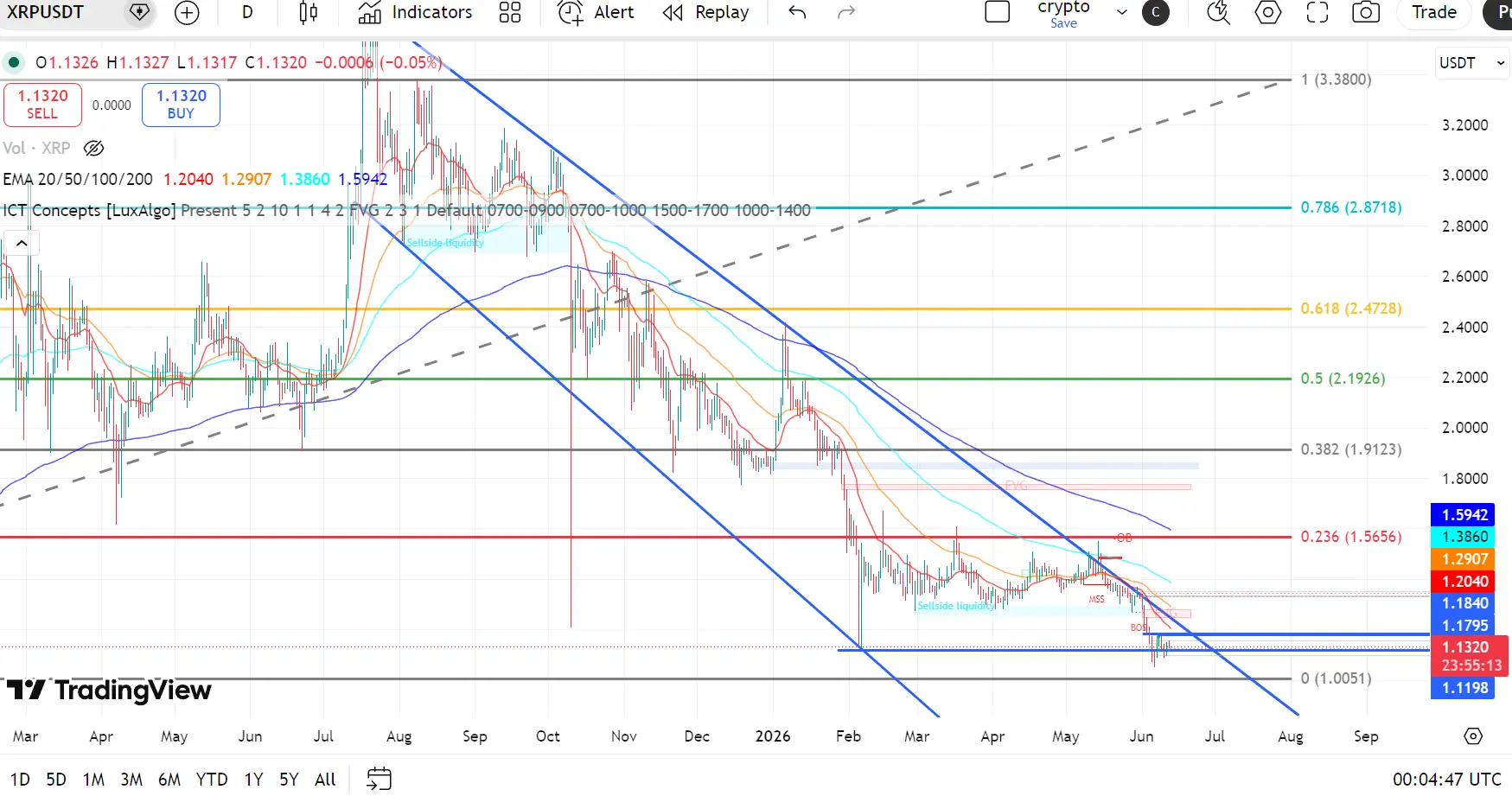
Technical Outlook: XRP Tests Cycle Lows Near $1.13 — Bears Remain Firmly in Control
XRP continues trading within a strong bearish structure after breaking below multiple support levels and failing to reclaim key resistance zones. Price is currently consolidating around the $1.13 support area, with sellers maintaining dominance across higher timeframes.
The broader market structure remains defensive, and bullish momentum is still absent unless XRP can reclaim major resistance levels overhead.
📈 EMA Structure (Strongly Bearish)
20 EMA: $1.2040
50 EMA: $1.2907
100 EMA: $1.3860
200 EMA: $1.5942
X
XRP-1.16%
asiftahsin
Technical Outlook: XRP Tests Cycle Lows Near $1.13 — Bears Remain Firmly in Control
XRP continues trading within a strong bearish structure after breaking below multiple support levels and failing to reclaim key resistance zones. Price is currently consolidating around the $1.13 support area, with sellers maintaining dominance across higher timeframes.
The broader market structure remains defensive, and bullish momentum is still absent unless XRP can reclaim major resistance levels overhead.
📈 EMA Structure (Strongly Bearish)
20 EMA: $1.2040
50 EMA: $1.2907
100 EMA: $1.3860
200 EMA: $1.5942
XRP remains below all major EMAs
Bearish EMA alignment persists (20 < 50 < 100 < 200)
Recent recovery attempts continue facing rejection from the 20 EMA
The 100 EMA and 200 EMA remain significant macro resistance levels
👉 The $1.20 – $1.39 zone continues acting as a major resistance cluster.
📐 Fibonacci & Market Structure
1.0 Fib (Cycle High): $3.3800
0.786 Fib: $2.8718
0.618 Fib: $2.4728
0.5 Fib: $2.1926
0.382 Fib: $1.9123
0.236 Fib: $1.5656
0 Fib (Cycle Low): $1.0051
XRP remains well below the key 0.236 Fibonacci level ($1.5656)
Price is currently trading just above the cycle-low support region
Market structure continues printing lower highs and lower lows
No meaningful bullish market structure shift has been confirmed
👉 Remaining below the 0.236 Fib keeps the broader trend decisively bearish.
🧠 Market Structure Insight (ICT Concepts)
XRP continues respecting a long-term descending trendline
Previous rallies have been aggressively rejected from supply zones
Recent breakdown swept nearby sell-side liquidity and pushed price toward cycle lows
Current structure reflects:
Persistent bearish order flow
Weak recovery attempts
Continued lower-high formation
Strong overhead supply pressure
Price is now approaching a critical support zone where buyers may attempt to defend the market.
👉 A breakdown below the cycle-low region could trigger another significant downside expansion.
📉 RSI Momentum
RSI (14): 35
Momentum remains weak despite a small bounce from oversold levels
RSI is still trading below the neutral 50 zone
Bearish momentum continues to dominate overall trend structure
👉 Short-term relief rallies remain possible, but trend confirmation is still lacking.
📊 Key Levels
🔴 Resistance
$1.20 — Immediate resistance / 20 EMA
$1.29 — 50 EMA resistance
$1.39 — 100 EMA resistance
$1.57 — 0.236 Fibonacci resistance
$1.59 — 200 EMA macro resistance
🟢 Support
$1.13 — Current support zone
$1.10 — Local demand area
$1.005 — Cycle low / major support
$1.00 — Psychological support level
📌 Summary
XRP remains under significant pressure as price continues trading below all major moving averages and key Fibonacci resistance levels. The recent breakdown keeps the broader trend bearish, while price hovers near cycle-low territory.
✅ Reclaiming $1.20 – $1.39 could improve short-term sentiment and open the path toward $1.57
❌ Losing the $1.10 – $1.00 support region could trigger another wave of selling and new cycle lows
👉 Overall, XRP remains in a defensive market structure. Bulls need a confirmed breakout above the EMA resistance cluster and descending trendline to shift momentum back in their favor.
$XRP
repost-content-media
  • Reward
  • Comment
  • Repost
  • Share
#PredictWorldCup🇺🇸vs🇵🇾
2026 World Cup Prediction Markets Are Entering a New Era
The excitement surrounding the 2026 World Cup is extending far beyond the football field. Prediction markets are rapidly becoming one of the most discussed sectors, with analysts estimating that global trading activity linked to tournament outcomes could reach billions of dollars throughout the competition.
The United States versus Paraguay matchup has generated significant attention among fans and traders alike. Market participants are closely monitoring team form, tactical approaches, player availability, an
Yusfirah
#PredictWorldCup🇺🇸vs🇵🇾
2026 World Cup Prediction Markets Are Entering a New Era
The excitement surrounding the 2026 World Cup is extending far beyond the football field. Prediction markets are rapidly becoming one of the most discussed sectors, with analysts estimating that global trading activity linked to tournament outcomes could reach billions of dollars throughout the competition.
The United States versus Paraguay matchup has generated significant attention among fans and traders alike. Market participants are closely monitoring team form, tactical approaches, player availability, and public sentiment as they evaluate probabilities before kickoff.
What makes prediction markets unique is their ability to reflect collective expectations in real time. Prices evolve continuously as new information becomes available, creating an environment where traders can respond dynamically to changing conditions rather than waiting solely for the final result.
As the tournament progresses, liquidity is expected to increase substantially. Every goal, injury update, lineup announcement, and tactical adjustment has the potential to reshape market expectations and generate new opportunities.
My perspective is that successful prediction market participants focus on information quality rather than emotion. Understanding probabilities, managing risk effectively, and remaining objective often produces better outcomes than simply following public sentiment.
The 2026 World Cup is shaping up to be one of the most influential events ever for sports-related prediction markets, combining global excitement with rapidly expanding market participation.
repost-content-media
  • Reward
  • Comment
  • Repost
  • Share
Diplomacy Pivots?
A Memorandum of Understanding text has been agreed between the United States and Iran, according to Axios. Final sign-off is still pending, but the shift in tone is seismic. Hours ago, markets braced for fresh strikes. Now, the conversation is pivoting to a 60-day ceasefire, the potential reopening of the Strait of Hormuz, and a framework to address Iran's uranium stockpile.
🔹 The Terms on the Table
The proposed deal includes a 60-day ceasefire extension, a clear framework for Iran's uranium enrichment, the reopening of the Strait of Hormuz to commercial shipping, and ceasef
User_any
Diplomacy Pivots?
A Memorandum of Understanding text has been agreed between the United States and Iran, according to Axios. Final sign-off is still pending, but the shift in tone is seismic. Hours ago, markets braced for fresh strikes. Now, the conversation is pivoting to a 60-day ceasefire, the potential reopening of the Strait of Hormuz, and a framework to address Iran's uranium stockpile.
🔹 The Terms on the Table
The proposed deal includes a 60-day ceasefire extension, a clear framework for Iran's uranium enrichment, the reopening of the Strait of Hormuz to commercial shipping, and ceasefire provisions that reportedly extend to Lebanon. If finalized, this agreement would begin unwinding the supply chokehold that has strangled global energy markets since late February.
🔹 A Chokepoint Poised to Breathe
The Strait of Hormuz has remained effectively sealed for over three months, cutting off roughly 20% of global oil supply. Middle East producers slashed output by more than 11 million barrels per day. The mere prospect of reopening has already sent crude futures lower in early electronic trading, with Brent retreating from $96 toward $92. A signed deal could accelerate that unwinding dramatically.
🔹 The Market Repricing Has Begun
Oil prices are the transmission mechanism. A sustained drop in crude would cool inflation readings that have kept Fed Chair Kevin Warsh in hawkish territory. Diesel and jet fuel costs, up over 60% in 2026, would ease. The pressure on household budgets would lift. Equities would celebrate the prospect of a friendlier rate path. Crypto, starved of liquidity for months, would find fresh oxygen.
🔹 Caution Holds the Pen
The Memorandum is agreed in text, not signed. Diplomacy has collapsed twice before in this conflict — once in March, once in April. The market is pricing hope, but the ink is still dry. Until signatures are inked and tankers begin moving through the strait, the risk of a breakdown remains real. Skepticism is warranted. Optimism is building.
Three months of conflict. Eleven million barrels offline. One signature away from a turning point.
Friends, do you believe this deal gets signed, or is the market setting itself up for another disappointment?
repost-content-media
  • Reward
  • Comment
  • Repost
  • Share
— BTC: $63,501 (-0.01%)
— ETH: $1,662 (-0.85%)
— SOL: $66.58 (-0.64%)
— XRP: $1.13 (-1.20%)
— DOGE: $0.086 (-0.27%)
— XAUT (Gold): $4,198 (-0.07%)
Everything is in the red. But they aren't equally red. And that difference tells a story.
BTC is leading — it's the least active. It's acting as an anchor.
ETH and SOL are following — they're ecosystem bets.
XRP and DOGE are strengthening with higher beta and higher volatility.
XAUT is hardly moving at all; it's a hedge, an insurance.
When I was new, I chased the biggest percentage move. I lost money three times doing that.
Then I started examining
BTC-0.10%
ETH0.02%
SOL0.39%
XRP-1.16%
DOGE-0.39%
User_any
— BTC: $63,501 (-0.01%)
— ETH: $1,662 (-0.85%)
— SOL: $66.58 (-0.64%)
— XRP: $1.13 (-1.20%)
— DOGE: $0.086 (-0.27%)
— XAUT (Gold): $4,198 (-0.07%)
Everything is in the red. But they aren't equally red. And that difference tells a story.
BTC is leading — it's the least active. It's acting as an anchor.
ETH and SOL are following — they're ecosystem bets.
XRP and DOGE are strengthening with higher beta and higher volatility.
XAUT is hardly moving at all; it's a hedge, an insurance.
When I was new, I chased the biggest percentage move. I lost money three times doing that.
Then I started examining the relationships between assets. How they acted together, how they separated.
And slowly, slowly, I started making better decisions.
My advice to every new investor at Gate is this:
Don't look at a single cryptocurrency. Look at the whole screen.
The market is a conversation between assets.
Learn to listen before you start talking.
I got this data at 01:42 because the market doesn't care what time it is.
But now I don't care either.
#MyGateTradeStory
This content is for informational purposes only and does not constitute financial advice.
repost-content-media
  • Reward
  • Comment
  • Repost
  • Share
#btc $BTC ‌The price dropped from the 24-hour high of $64,212.8 down to $61,576.3, marking a 4.03% decline. This is not just a small pullback. The volume behind this move is 14.65K BTC, with total turnover at $920.23 million. When you see this kind of volume on red candles, it means sellers are in control and the move has real weight.
Looking at the moving averages, all of them are stacked above price. MA5 is at $61,617.8, MA10 sits at $62,032.2, and MA30 is all the way up at $62,523.1. Price being under all three tells us the short-term trend is down. Every small bounce so far has stopped ri
BTC-0.10%
discovery
#btc $BTC ‌The price dropped from the 24-hour high of $64,212.8 down to $61,576.3, marking a 4.03% decline. This is not just a small pullback. The volume behind this move is 14.65K BTC, with total turnover at $920.23 million. When you see this kind of volume on red candles, it means sellers are in control and the move has real weight.
Looking at the moving averages, all of them are stacked above price. MA5 is at $61,617.8, MA10 sits at $62,032.2, and MA30 is all the way up at $62,523.1. Price being under all three tells us the short-term trend is down. Every small bounce so far has stopped right at MA10 or MA5, which shows those lines are acting as dynamic resistance.
The MACD is also weak. MACD is at -103.4, with DIF at -342.3 and DEA at -238.9. The histogram bars are red and getting longer. Until we see DIF cross back above DEA, any move up should be treated as a relief bounce, not a reversal.
So where are the key levels? For support, the first zone is $61,140 to $61,200. This is where price bounced earlier and it matches the 24-hour low. If Bitcoin loses this area, the next support comes in at $60,800. That was a base before the last leg up, and buyers may try to defend it again. The big psychological level is $60,000. If we get there, expect fast moves because many stop orders and liquidations sit around round numbers.
On the upside, resistance starts at $61,750 to $61,800. Price failed there after the last drop. Above that, $62,030 is the next hurdle because it lines up with MA10. The most important level for bulls is $62,500 to $62,680. That is where MA30 is, and it was also the point where the breakdown started. If Bitcoin can close above $62,500 on strong volume, the short-term trend shifts back up. The major ceiling is still $64,200, the 24h high.
For traders on Gate, the strategy is simple. As long as BTC trades below $62,500, the path of least resistance is down. Selling bounces makes more sense than buying dips. If you want to long, wait for price to reclaim $61,800 and hold it, with a stop under $61,100. For spot investors, note the average price tag on the chart is $78,475. A lot of people are holding at a loss. That means every rally toward $63,500 to $64,200 will likely run into selling from traders trying to get out at break-even.
What should you watch next? First, volume. If price keeps dropping but volume shrinks, sellers may be getting tired. If volume spikes on another red candle, $60,000 becomes the target. Second, check the BTCUSDT Perp price. It is at $61,548.9, slightly below spot. If the gap gets wider, it means futures traders are more bearish than spot. Third, watch Gate’s order book around $61,000. If those buy orders disappear, the drop can accelerate.
In short, Bitcoin is bearish on this timeframe. Bulls need $62,500. Bears are in control under $61,750. The $61,140 level is critical today. Trade the levels, manage risk, and do not assume a bottom until the chart gives confirmation.
repost-content-media
  • Reward
  • Comment
  • Repost
  • Share
#IranAttacksIsrael
#ShareYourUSStocksWinNvidia
WTIUSDT Slides as Middle East Tensions Ease, Bears Target Key Support
West Texas Intermediate (WTI) futures continue to retreat on Tuesday, falling nearly 1.8% to around $88.10 and extending losses of more than 6% from Monday's peak near $93.50. The sharp decline follows easing geopolitical concerns after Iran reportedly agreed to halt attacks on Israeli territory, reducing fears of a broader regional conflict.
Crude oil initially surged at the start of the week as renewed exchanges between Israel and Iran raised concerns about disruptions to th
Phoenix786
#IranAttacksIsrael
#ShareYourUSStocksWinNvidia
WTIUSDT Slides as Middle East Tensions Ease, Bears Target Key Support
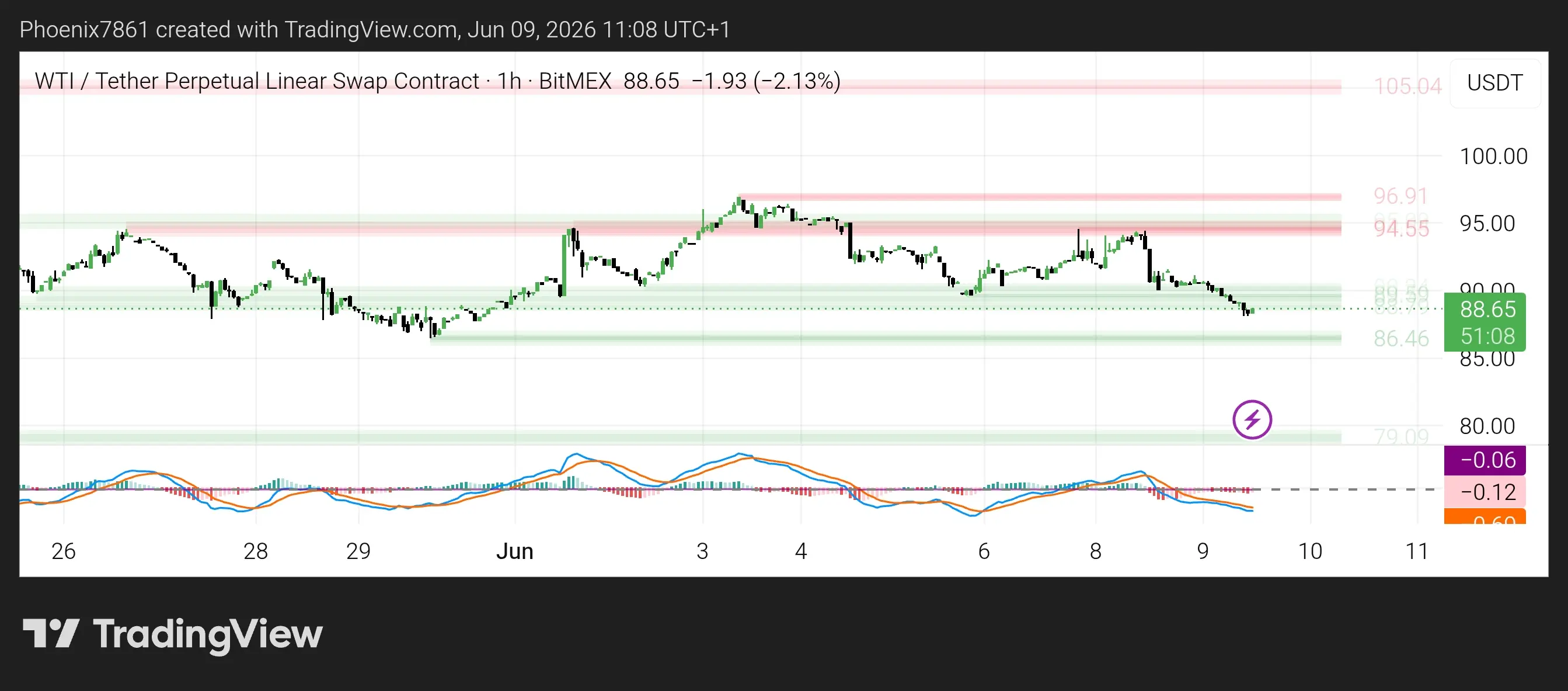
West Texas Intermediate (WTI) futures continue to retreat on Tuesday, falling nearly 1.8% to around $88.10 and extending losses of more than 6% from Monday's peak near $93.50. The sharp decline follows easing geopolitical concerns after Iran reportedly agreed to halt attacks on Israeli territory, reducing fears of a broader regional conflict.
Crude oil initially surged at the start of the week as renewed exchanges between Israel and Iran raised concerns about disruptions to the Strait of Hormuz, a critical route responsible for nearly one-fifth of global oil shipments. However, sentiment quickly shifted after US President Donald Trump indicated that negotiations with Iran are approaching their final stages and suggested the Strait could reopen within days if an agreement is reached. Expectations of restored energy flows have significantly reduced supply-risk premiums, weighing heavily on oil prices.
WTIUSDT Technical Outlook: Bears Tighten Control
WTIUSDT remains firmly under bearish pressure on the 1-hour timeframe after failing to sustain gains above the $94.5–95.0 resistance zone. The rejection from this supply region triggered aggressive selling, pushing prices back toward the key demand area between $88.6 and $89.2.
The broader market structure continues to favor sellers, with a clear sequence of lower highs and lower lows reinforcing downside momentum. Recent rebounds have lacked follow-through, indicating weak buying interest and allowing sellers to maintain control of the trend.
The $88.6–89.2 support region is now a critical battleground. A confirmed break below this area could open the door for a decline toward $86.5, with the potential for further downside if bearish momentum accelerates. On the upside, any relief rally may encounter resistance around $90.0–92.0, while the stronger supply zone remains positioned at $94.5–95.0.
For traders, the outlook remains negative while price trades beneath major resistance levels. Unless buyers reclaim the $94.5 area and invalidate the current bearish structure, rallies are likely to be viewed as selling opportunities.
Key Levels to Watch
Support: $88.6, $86.5, $79.1
Resistance: $90.0, $94.5, $96.9
Trading Bias: Bearish
Momentum: Weak and deteriorating
Market Structure: Lower highs and lower lows
Outlook: Sustained trading below $88.6 could trigger a deeper correction toward $86.5 and beyond, while recovery attempts are likely to remain capped beneath the $94.5 resistance zone.
$XTIUSD
repost-content-media
  • Reward
  • Comment
  • Repost
  • Share
#GateIPOAccessSpaceX
SpaceX is going public. $135 per share. $75 billion raised. The biggest IPO in history. Bigger than anything that came before. And the market is currently, today, repositioning itself around it in real time.
🔹 The part that changed my mind is this:
Individual investors bought 30% of the offering. Three times the normal amount. It seems generous. But the demand was so huge that most people still got less than they wanted. So what do you do when you want more shares and the allocation is insufficient? You sell what you already own to get cash. Millions of people are doing
User_any
#GateIPOAccessSpaceX
SpaceX is going public. $135 per share. $75 billion raised. The biggest IPO in history. Bigger than anything that came before. And the market is currently, today, repositioning itself around it in real time.
🔹 The part that changed my mind is this:
Individual investors bought 30% of the offering. Three times the normal amount. It seems generous. But the demand was so huge that most people still got less than they wanted. So what do you do when you want more shares and the allocation is insufficient? You sell what you already own to get cash. Millions of people are doing this at the same time. This is one of the reasons why the shares you hold look the way they do today.
🔹 Then the second wave comes
Nasdaq quietly rewrote its rules earlier this year. Now any company large enough joins the Nasdaq-100 index after just 15 trading days. It used to take months. SpaceX joined in early July. When this happens, every fund tracking this index automatically buys SpaceX stock, regardless of whether the fund manager wants to or not. Estimates suggest this wave of automatic purchases will reach between $22 and $27 billion. To finance these purchases, all other stocks within the index are being slightly reduced. Across trillions of dollars worth of tracked assets. This pressure is already mounting.
🔹 So what are you watching right now?
Retail investors are selling today to catch tomorrow's IPO. Institutions are repositioning ahead of the July wave of index inclusions. Both are happening simultaneously. Both are perfectly logical from their own perspectives. The combined effect is appearing as red numbers on everyone's screens.
I took part in the IPO with Gate. If you want to consider it, you can join by following the steps below and using the link I will provide, and you can access detailed information.
🔹Update your Gate App to version 8.21.5 or above — stock trading requires it.
🔹Complete identity verification.
🔹 Funds committed during subscription are frozen until distribution — ensure you have liquidity outside the locked amount.
🔹 This is an intent subscription, not a guaranteed allocation. Understand the risk before participating.
👉 Subscribe now: https://www.gate.com/ipos/13
👉 More Details: https://www.gate.com/announcements/article/51592
repost-content-media
  • Reward
  • Comment
  • Repost
  • Share
#GateIPOAccessSpaceX
🚀 Get Early to Participate in the SpaceX IPO: A Revolutionary Opportunity with Gate.io
SpaceX, the most exciting company of the space age, is finally on its way to an IPO. Founded by Elon Musk in 2002, this giant not only launches rockets; it is also reshaping the future of humanity with satellite internet (Starlink), space computing, and vertical landing technologies.
But what if you had the chance to participate in this revolutionary company's IPO before trading even begins?
That's where Gate.io's IPO Access feature comes in.
🌍 A Next-Generation Platform That Removes
YamahaBlue
#GateIPOAccessSpaceX
🚀 Get Early to Participate in the SpaceX IPO: A Revolutionary Opportunity with Gate.io
SpaceX, the most exciting company of the space age, is finally on its way to an IPO. Founded by Elon Musk in 2002, this giant not only launches rockets; it is also reshaping the future of humanity with satellite internet (Starlink), space computing, and vertical landing technologies.
But what if you had the chance to participate in this revolutionary company's IPO before trading even begins?
That's where Gate.io's IPO Access feature comes in.
🌍 A Next-Generation Platform That Removes Traditional Barriers
IPO Access offers investors access to the IPOs of the world's most valuable technology companies. Specifically for SpaceX, the process works as follows:
• Indicator Price Per Share: 135 USDT (may change depending on the final IPO price)
• Minimum Investment: 100 USDT
• Maximum Investment: 500,000 USDT
• Intent Submission Fee: 5% (charged upon successful submission)
• Lock Period: None – 100% trading freedom
SpaceX shares will be transferred directly to your Gate Stock Account within 24 hours of the IPO. You can then trade real shares, like US stocks and ETFs, using version 8.21.5 and above of the application.
⚠️ Note: No Allocation Guarantee
This is an “Intent Submission”. The final allocation amount depends on the size of the IPO and the amount of stock the platform obtains. You may receive a full allocation, a partial allocation, or no allocation at all. However, in all cases, the process is transparent, and the investor is only charged a fee upon successful submission.
📈 Why Gate?
Because Gate offers its investors the following through a single account:
• Early access to companies' growth phases with Pre-IPO
• Participation in IPOs with IPO Access
• Trading real US stocks and ETFs with Gate Stocks
You no longer have to navigate between multiple platforms, exchanges, and accounts. All opportunities are at your fingertips on a single screen, with a familiar and integrated experience.
🧭 To Get Started
1. Update your Gate app to version 8.21.5 or later.
2. Go to the IPO Access section.
3. Create your SpaceX intention to participate.
Investing in a company pushing the boundaries of space is no longer a dream.
Don't miss the opportunity to participate in the SpaceX IPO.
Because sometimes the biggest gains come from early access to the world's most advanced technologies.
https://www.gate.com/ipos/13
  • Reward
  • Comment
  • 1
  • Share
#Gate直通IPO认购SpaceX
Gate has officially launched its Direct IPO Access feature, and the debut project is SpaceX, the aerospace and technology company founded by Elon Musk in 2002. This marks a major milestone for retail participation in large-scale private-to-public transitions, with SpaceX positioned as one of the most anticipated IPO events in modern financial history. The offering is being discussed around a target valuation of approximately 1.75 trillion dollars with an estimated fundraising size of 75 billion dollars under the Nasdaq listing narrative. This places SpaceX among the most va
discovery
#Gate直通IPO认购SpaceX
Gate has officially launched its Direct IPO Access feature, and the debut project is SpaceX, the aerospace and technology company founded by Elon Musk in 2002. This marks a major milestone for retail participation in large-scale private-to-public transitions, with SpaceX positioned as one of the most anticipated IPO events in modern financial history. The offering is being discussed around a target valuation of approximately 1.75 trillion dollars with an estimated fundraising size of 75 billion dollars under the Nasdaq listing narrative. This places SpaceX among the most valuable companies ever to enter public markets, potentially surpassing historic benchmarks set by previous mega-IPOs.
SpaceX has evolved far beyond a traditional rocket manufacturer. It operates as a vertically integrated aerospace and connectivity ecosystem, combining reusable rocket technology, satellite infrastructure, and global internet services. Its Starlink division remains the core revenue driver, serving millions of users worldwide and expanding rapidly into underserved regions including rural, maritime, and aviation connectivity. In 2025, SpaceX generated an estimated 18.7 billion dollars in revenue, with Starlink contributing the majority share. Growth in subscriber numbers and improving operational efficiency have strengthened its position as a global internet infrastructure competitor.
Beyond space and communications, SpaceX has expanded into artificial intelligence integration through its absorption of xAI, which was reorganized into an internal AI division in 2026. This development positions the company as both a space infrastructure leader and an emerging AI-powered systems operator. The AI segment is focused on autonomous flight systems, satellite optimization, and mission planning tools. However, this expansion has also increased financial pressure, with reported net losses in 2025 reaching approximately 4.94 billion dollars and significant monthly cash burn linked to AI infrastructure scaling. Despite this, the company continues to treat these costs as long-term strategic investments.
The valuation history of SpaceX highlights rapid growth across private funding cycles. From roughly 74 billion dollars in 2021, the company rose to around 350 billion in late 2024, then 800 billion in 2025 private transactions, and approximately 1.25 trillion in early 2026 funding rounds. The current IPO narrative of 1.75 trillion reflects continued investor optimism around Starlink expansion, reusable launch dominance, and future AI-space integration. This trajectory represents one of the fastest valuation escalations in private market history.
The IPO reference price is set at 135 dollars per share with roughly 555.6 million shares offered. At this level, SpaceX would rank among the largest public companies globally and surpass Tesla in market capitalization based on current projections. Elon Musk’s combined holdings, including equity and options, could reach an estimated valuation near 688 billion dollars if post-IPO pricing holds, further amplifying global attention on this listing.
Through Gate Direct IPO Access, users can participate using USDT with a minimum entry threshold of 100 USDT. This significantly lowers traditional barriers that typically require institutional access or high-net-worth investor status. The subscription price is based on the 135 dollar reference level with an additional 5 percent fee, bringing the effective cost to approximately 141.75 USDT per share. The maximum subscription limit per user is set at 500,000 USDT. Importantly, there is no lock-up period, meaning allocated shares become tradable immediately after distribution.
The subscription system uses a time-weighted allocation model. Users who commit funds earlier and maintain their position throughout the full subscription window gain higher allocation weight compared to late participants. The subscription window runs for approximately 66 hours, and the average locked balance across this period determines final allocation strength. Early participation therefore plays a critical role in maximizing potential share distribution.
After the subscription period ends, allocations are expected to be distributed shortly after closing, with trading activation following on the same day through the Gate stock interface. This allows users to transition directly from subscription to secondary market trading within the same ecosystem, reducing friction typically associated with IPO participation across multiple platforms.
It is important to note that this is an intent-based subscription model. Final allocations depend on total demand and the quota secured by Gate from underwriters. Investors may receive full, partial, or no allocation depending on oversubscription levels. If the final IPO price remains within a 20 percent range of the reference price, allocations proceed automatically. Larger deviations may trigger additional confirmation steps to protect investor consent.
Secondary market indicators show varied pricing expectations. Some private trading venues place SpaceX shares around 144.94 dollars, indicating strong demand ahead of listing, while others show lower quotes near 115 dollars depending on liquidity conditions. These differences reflect fragmented private market pricing rather than official IPO valuation.
Analyst opinions remain divided. Some research estimates suggest a fair value closer to 780 billion dollars, arguing that current projections may be aggressive given ongoing losses and execution risks. Others remain bullish, citing long-term opportunities in global satellite internet, AI infrastructure, deep space logistics, and future interplanetary transport systems. SpaceX’s projected total addressable market is often discussed in multi-trillion-dollar terms, driven largely by Starlink expansion and AI-enabled space systems.
A key structural factor is the limited public float, estimated at around 3 percent of total shares. This restricted supply combined with strong institutional and retail demand creates a potentially volatile post-listing environment. Additionally, inclusion expectations in major indices such as Nasdaq 100 within weeks of listing could generate passive fund inflows, adding further demand pressure.
For participation on Gate, users must complete identity verification before the subscription window opens. Funds must be available in USDT without leverage or borrowed capital. Subscription is executed through the Direct IPO Access section, where users select SpaceX, enter their desired amount, and confirm intent. The minimum allocation unit is 0.01 shares, ensuring fractional participation even for smaller investors.
This IPO represents a significant moment in the evolution of public market access. SpaceX combines aerospace engineering, global communications infrastructure, and artificial intelligence development into a single ecosystem, making it one of the most complex and ambitious companies ever to reach public markets. At the same time, it carries meaningful risks due to ongoing losses, aggressive expansion, and uncertain long-term profitability timelines. Investors are encouraged to evaluate both growth potential and downside risk carefully before participation.
The subscription window opens on June 9 at 18:00 UTC+8 and closes on June 12 at 12:00 UTC+8. Every hour of participation affects allocation weight, making timing an important factor. This is a rare opportunity in a high-demand offering where early engagement may significantly influence final results.
Gate直通IPO认购SpaceX
#Gate直通IPO认购SpaceX
@Gate_Square
  • Reward
  • Comment
  • Repost
  • Share
  • Pinned