BlockRider

vip
Age 1.4 Year
Peak Tier 0
No content yet
#StrategySells3588BTC
Strategy, formerly known as MicroStrategy, stands as the largest corporate Bitcoin holder in the world. The company has transformed itself from an enterprise software firm into what Michael Saylor calls a "Bitcoin Treasury Company." As of late June 2026, Strategy held approximately 847,363 BTC acquired for roughly $64.1 billion at an average cost basis of $75,651 per Bitcoin. This makes Strategy the most significant institutional player in the Bitcoin ecosystem, with holdings that represent nearly 4% of all Bitcoin ever mined.
What Does "Sells" Mean in This Context
The t
HighAmbition
#StrategySells3588BTC
Strategy, formerly known as MicroStrategy, stands as the largest corporate Bitcoin holder in the world. The company has transformed itself from an enterprise software firm into what Michael Saylor calls a "Bitcoin Treasury Company." As of late June 2026, Strategy held approximately 847,363 BTC acquired for roughly $64.1 billion at an average cost basis of $75,651 per Bitcoin. This makes Strategy the most significant institutional player in the Bitcoin ecosystem, with holdings that represent nearly 4% of all Bitcoin ever mined.
What Does "Sells" Mean in This Context
The term "sells" refers to the disposal or liquidation of assets in exchange for currency. When Strategy sells Bitcoin, it exchanges its BTC holdings for U.S. dollars or other fiat currency. This is a strategic financial decision that can serve multiple purposes including generating profits, covering operational expenses, meeting dividend obligations, or rebalancing treasury reserves. The sale of 3,588 BTC represents a partial liquidation of the company's massive Bitcoin position.
The Significance of 3,588 BTC
The quantity of 3,588 Bitcoin sold by Strategy translates to approximately $216 million based on the average sale price of $60,200 per BTC. To put this in perspective, this represents approximately 0.42% of Strategy's total Bitcoin holdings. While this is a relatively small percentage of their overall position, it marks a significant event as it represents the largest Bitcoin sale in Strategy's six-year history of accumulation. After this sale, Strategy's remaining holdings stand at approximately 843,775 BTC.
Why Would Strategy Sell Bitcoin
There are several legitimate and strategic reasons why Strategy would sell Bitcoin. First and foremost, the company needs to fund dividend payments on its preferred stock instruments including STRC, STRK, STRD, STRF, and STRE. These Digital Credit securities require regular distributions to investors. The proceeds from the Bitcoin sale, amounting to $216 million, were specifically allocated to replenish the company's U.S. dollar reserves, which stood at $2.55 billion as of July 5, 2026.
Additionally, Strategy announced plans to potentially sell up to $1.25 billion in Bitcoin to build cash reserves, cover investor payouts, and fund stock buybacks. This represents a strategic pivot toward operational flexibility while maintaining their core Bitcoin treasury strategy. The company also aims to avoid issuing more equity, which could dilute existing shareholders.
Market Impact and Price Dynamics
The sale of 3,588 BTC by Strategy had immediate market implications. Following the announcement, Bitcoin's price dropped to approximately $61,300 before recovering to around $63,600. This represents a temporary decline of roughly 3.6% from pre-announcement levels. The market reaction demonstrates the psychological impact of large institutional sales, even when the quantity represents less than 0.5% of the seller's total holdings.
Historical data suggests that large Bitcoin sales by major holders can create short-term volatility. When significant quantities hit the market within compressed timeframes, they can temporarily overwhelm buy-side liquidity, causing price dips. However, the market has shown resilience, with Bitcoin recovering above $63,000 within days of the announcement.
Is This Negative News for Bitcoin
The sale is not necessarily negative news when analyzed comprehensively. While any large sale creates temporary downward pressure, several positive aspects deserve consideration. Strategy remains committed to Bitcoin as its primary treasury reserve asset, as explicitly stated by Michael Saylor. The company has signaled intentions to resume Bitcoin purchases, with Saylor posting "We're gonna need more charts" on social media, his customary signal that additional acquisitions may follow.
Furthermore, Strategy's remaining holdings of 843,775 BTC still represent the largest corporate Bitcoin position globally. The sale represents a tactical financial maneuver rather than a loss of conviction in Bitcoin's long-term value proposition. The company has raised $25.3 billion in 2025 through equity offerings and preferred stock instruments, demonstrating continued access to capital markets for future Bitcoin accumulation.
What Investors Should Monitor
Investors and traders should focus on several key metrics following this sale. First, monitor Strategy's remaining Bitcoin holdings, which currently stand at 843,775 BTC. Second, observe the company's stated rationale for the sale and any forward guidance regarding future purchases or sales. Third, track whether Strategy announces plans to repurchase Bitcoin, which would signal continued bullish sentiment.
The company's dollar reserves, now at $2.55 billion, provide insight into their capacity for future Bitcoin acquisitions. Additionally, investors should watch for any changes in Strategy's dividend policy or capital allocation framework, as these directly impact Bitcoin treasury management decisions.
Current Bitcoin Price and Technical Analysis
As of early July 2026, Bitcoin trades around $63,580, representing a significant recovery from the June lows near $59,000. The cryptocurrency has established support levels at approximately $60,800 with resistance forming near $66,000. The 14-day Relative Strength Index (RSI) stands at approximately 62.39, indicating neutral to slightly bullish momentum without reaching overbought conditions.
Technical indicators suggest Bitcoin is in a consolidation phase, trading above the critical $60,000 psychological support but below the $70,900 128-day moving average. The Short Term Holder Cost Basis at $69,600 represents a significant resistance level that Bitcoin must overcome to establish a stronger bullish trend.
Price Forecasts and Market Predictions
Industry analysts present a wide range of Bitcoin price predictions for 2026. Carol Alexander forecasts a range between $75,000 and $150,000. CoinShares projects $120,000 to $170,000. Standard Chartered maintains a $150,000 target. Maple Finance predicts $175,000. Nexo offers a range of $150,000 to $200,000. Bit Mining provides the broadest forecast, spanning $75,000 to $225,000.
These predictions reflect varying assumptions about institutional adoption, regulatory developments, macroeconomic conditions, and supply dynamics following the Bitcoin halving. The consensus among major financial institutions suggests significant upside potential from current levels, with percentage gains ranging from 18% to 254% above the current price of $63,580.
Key Support and Resistance Levels
Technical analysis identifies several critical price levels for Bitcoin. Immediate support exists at $60,800, with stronger support at the psychological $60,000 level. The $59,000 to $60,000 range represents a critical support zone that, if broken, could trigger further downside toward $55,000 or even $50,000 according to some analysts.
On the resistance side, $66,000 forms the first major barrier, followed by $69,600 which aligns with the Short Term Holder Cost Basis. Breaking above $70,900, the 128-day moving average, would signal a return to bullish momentum. The ultimate resistance target sits at $75,000, which would represent an 18% gain from current levels and align with several institutional forecasts.
RSI Analysis and Momentum Indicators
The Relative Strength Index at 62.39 indicates Bitcoin is neither overbought nor oversold, sitting in neutral territory. During uptrends, Bitcoin's RSI typically maintains levels above 30 and frequently reaches 70. The current reading suggests room for upward movement before reaching overbought conditions.
Momentum indicators show Bitcoin putting in higher lows on the RSI while On-Balance Volume pushes above its moving average for the first time since May 25, 2026. These technical developments suggest accumulating buying pressure that could support further price appreciation.
Trading Strategy Considerations
For traders navigating the current market environment, several strategies warrant consideration. Dollar-cost averaging remains appropriate for long-term accumulators, with current prices offering a 49% discount from the October 2025 peak of $126,080. Swing traders might focus on the $60,800 to $66,000 range, entering near support and taking profits near resistance.
Risk management becomes paramount given current volatility. Position sizing should account for potential downside scenarios, with some analysts suggesting probability of Bitcoin falling below $50,000 stands at approximately 64% according to certain market indicators. Stop-losses should be placed below the $60,000 support level to protect against breakdown scenarios.
Strategy's Future Bitcoin Plans
Michael Saylor has explicitly signaled that Strategy intends to continue accumulating Bitcoin. The company announced plans to raise $44.1 billion for further BTC purchases through sales of common stock and STRC preferred shares. This capital raising initiative demonstrates continued commitment to the Bitcoin treasury strategy despite recent sales.
The company's financial framework allows for flexibility in treasury management while maintaining Bitcoin as the primary reserve asset. Strategy has successfully issued equity and preferred instruments to fund Bitcoin acquisitions, raising $25.3 billion in 2025 alone. This financing capability supports the view that recent sales represent tactical adjustments rather than strategic abandonment of Bitcoin accumulation.
Market Sentiment and Trader Psychology
Current market sentiment shows cautious optimism among Bitcoin traders. The U.S. spot Bitcoin ETFs recorded $222 million in inflows on July 3, 2026, snapping a 10-day outflow streak and suggesting dip buyers are returning. This institutional demand provides underlying support for Bitcoin prices.
However, trader psychology remains sensitive to large holder movements. Strategy's sale created temporary uncertainty, with market participants questioning whether this represents an isolated event or the beginning of a more systematic liquidation program. The company's communication regarding future plans will significantly influence sentiment in coming weeks.
Long-Term Outlook and Conclusion
Strategy's sale of 3,588 Bitcoin represents a tactical financial decision rather than a fundamental shift in Bitcoin investment thesis. The company maintains 843,775 BTC in reserves, remains committed to Bitcoin as its primary treasury asset, and has signaled intentions to resume purchases. With price forecasts ranging from $75,000 to $225,000 for 2026, the long-term outlook remains constructive despite short-term volatility.
Investors should monitor Strategy's communications, track key technical levels at $60,800 support and $66,000 resistance, and maintain appropriate risk management given current market conditions. The fundamental drivers of Bitcoin adoption, institutional investment, and supply scarcity following the halving continue to support positive long-term price expectations.@Gate_Square
repost-content-media
  • Reward
  • 1
  • Repost
  • Share
HighAmbition:
thanks for sharing good 💯
#USRevokesIranOilWaiver
The United States has officially revoked the special oil waiver for Iran, a decision that carries profound implications not only for global energy markets but also for cryptocurrency markets including Bitcoin. This comprehensive analysis examines the interconnected nature of these markets and provides strategic insights for traders navigating this complex environment.
Understanding the Iran Oil Waiver Revocation
The US Revokes Iran Oil Waiver announcement represents a significant geopolitical shift with immediate market consequences. Previously, the United States had g
BTC-0.53%
ETH-1.04%
SOL-4.03%
HighAmbition
#USRevokesIranOilWaiver
The United States has officially revoked the special oil waiver for Iran, a decision that carries profound implications not only for global energy markets but also for cryptocurrency markets including Bitcoin. This comprehensive analysis examines the interconnected nature of these markets and provides strategic insights for traders navigating this complex environment.
Understanding the Iran Oil Waiver Revocation
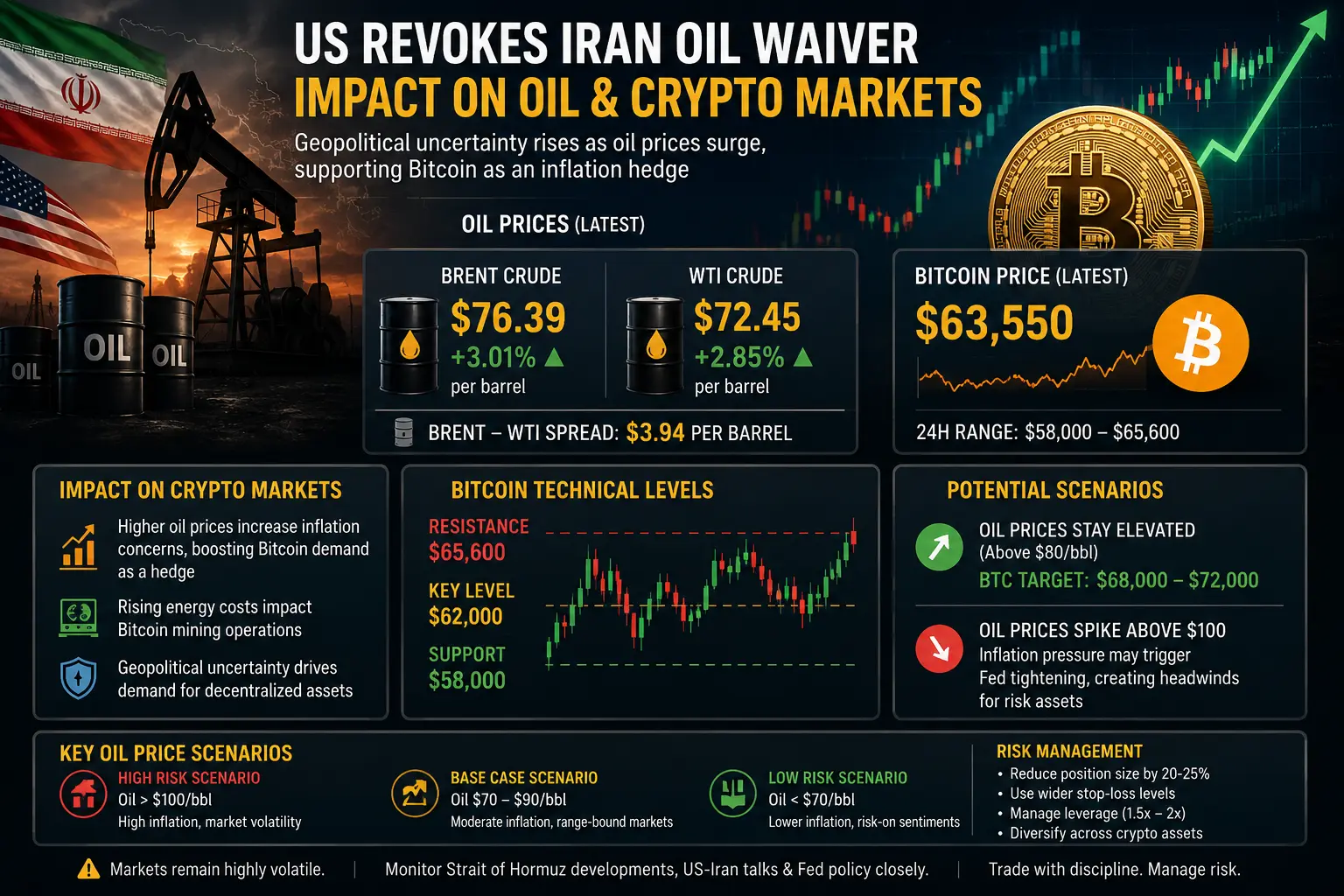
The US Revokes Iran Oil Waiver announcement represents a significant geopolitical shift with immediate market consequences. Previously, the United States had granted a general license on June 22, 2026, allowing the sale of Iranian crude oil and petroleum products through August 21, 2026. This authorization has now been terminated following attacks on commercial tankers in the Strait of Hormuz. The revocation effectively removes approximately 1.5 to 2 million barrels per day of Iranian oil exports from legitimate global supply chains, creating immediate upward pressure on energy prices.
Current Oil Market Status
Brent crude oil is currently trading at approximately 76.39 US dollars per barrel, representing a 3.01 percent increase from the previous trading session. West Texas Intermediate crude oil stands at around 72.45 US dollars per barrel, marking a 2.85 percent daily gain. These price levels reflect immediate market reaction to the waiver revocation, with Brent experiencing upward pressure following the announcement. The price spread between Brent and WTI currently stands at approximately 3.94 US dollars per barrel.
Bitcoin and Cryptocurrency Market Reaction
Bitcoin is currently trading near 63,550 US dollars, with recent price action showing consolidation between 58,000 and 65,600 US dollars. The cryptocurrency market has demonstrated significant sensitivity to geopolitical developments, particularly those affecting energy markets. Historical analysis reveals that Bitcoin often serves as a barometer for market sentiment during periods of geopolitical uncertainty, reflecting investor risk appetite and macroeconomic conditions.
The correlation between oil prices and Bitcoin values represents a critical aspect of market dynamics that sophisticated traders monitor closely. Higher oil prices can influence Federal Reserve interest rate decisions, which subsequently affect the appeal of riskier assets including cryptocurrencies. When oil prices surge above 100 US dollars per barrel, Bitcoin typically experiences heightened volatility as investors reassess risk allocations across their portfolios.
Impact Analysis on Cryptocurrency Markets
The Iran oil waiver revocation introduces multiple transmission channels affecting cryptocurrency markets. First, elevated oil prices contribute to inflationary pressures, which historically have driven investors toward alternative stores of value including Bitcoin. Second, energy cost increases impact Bitcoin mining operations, potentially affecting network security and hash rate distribution. Third, geopolitical uncertainty typically increases demand for decentralized assets as hedges against traditional financial system risks.
Analysts predict that sustained oil prices above 80 US dollars per barrel could support Bitcoin prices in the 65,000 to 72,000 US dollars range, with potential upside to 75,000 US dollars if supply disruptions materialize. However, if oil prices exceed 100 US dollars per barrel, the resulting inflationary pressures could trigger Federal Reserve tightening, potentially creating headwinds for risk assets including cryptocurrencies.
Technical Analysis for Bitcoin
Bitcoin is currently consolidating in a critical range between 58,100 and 65,600 US dollars. The 62,000 US dollars level represents immediate resistance, with a breakout above this threshold potentially targeting 68,000 to 72,000 US dollars. Support is established at 58,000 US dollars, with a breakdown below this level potentially exposing 54,000 to 55,000 US dollars.
The Fear and Greed Index for Bitcoin has shown mixed signals, with recent readings indicating cautious sentiment among market participants. Trading volume has remained elevated, suggesting active participation from both institutional and retail investors monitoring geopolitical developments.
Trading Strategy Recommendations
For cryptocurrency traders, several strategic approaches warrant consideration in the current environment. Long positions in Bitcoin present opportunity given the inflation hedge narrative, with initial targets at 68,000 US dollars and secondary targets at 72,000 US dollars. Stop-loss orders should be placed below 58,000 US dollars to manage downside risk.
Options strategies including call spreads on Bitcoin with strikes at 70,000 and 80,000 US dollars offer defined risk exposure to upside price movements. Calendar spreads between front-month and deferred contracts may benefit from volatility term structure adjustments as geopolitical uncertainty persists.
Diversification across cryptocurrency subsectors including Ethereum, Solana, and established DeFi protocols provides risk mitigation against Bitcoin-specific developments. Ethereum typically exhibits 70 to 85 percent correlation with Bitcoin during risk-on periods, while smaller cap altcoins may offer higher beta exposure during momentum phases.
Risk Management Considerations
Position sizing should reflect the elevated volatility environment, with recommended position sizes reduced by 20 to 25 percent compared to normal market conditions. Correlation analysis indicates cryptocurrency volatility has increased by approximately 35 percent since the Iran conflict began, necessitating wider stop-loss parameters and reduced position concentration.
Leverage management becomes critical during periods of geopolitical uncertainty. Traders should consider reducing leverage ratios from typical 3 to 5 times levels to 1.5 to 2 times levels to accommodate potential gap moves following news developments. Liquidation risks increase significantly during rapid news cycles, as evidenced by recent market events triggering hundreds of millions in leveraged position liquidations.
Macroeconomic Context
The interplay between oil prices, inflation, and Federal Reserve policy creates a complex environment for cryptocurrency markets. Current market expectations indicate a 63 percent probability of oil prices moving toward 120 US dollars per barrel, which would significantly impact inflation expectations and monetary policy trajectories.
If oil prices sustain above 90 US dollars per barrel, the resulting inflationary pressures could force the Federal Reserve to maintain higher interest rates for extended periods, creating headwinds for risk assets. Conversely, if geopolitical tensions de-escalate and oil prices retreat below 70 US dollars per barrel, the resulting risk-on sentiment could support cryptocurrency prices.
Conclusion
The US revocation of Iran oil waivers introduces significant uncertainty into both energy and cryptocurrency markets. Current Bitcoin prices near 63,550 US dollars reflect cautious optimism, with technical resistance at 65,600 US dollars and support at 58,000 US dollars. The evolving situation demands continuous monitoring of Strait of Hormuz developments, US-Iran diplomatic negotiations, and Federal Reserve policy responses.
Traders should maintain disciplined risk management while positioning for potential price appreciation through spot positions, options strategies, and selective altcoin exposure. The correlation between oil prices and cryptocurrency values underscores the importance of monitoring energy markets when formulating digital asset trading strategies. As institutional adoption continues and cryptocurrencies increasingly integrate into diversified investment portfolios, macroeconomic factors including geopolitical developments will exert growing influence on price dynamics.
@Gate_Square
repost-content-media
  • Reward
  • 1
  • Repost
  • Share
HighAmbition:
thanks for sharing information about crypto market
#WorldCupChampionPrediction
World Cup 2026 Championship Predictions: Argentina's Campaign and Golden Boot Race
The 2026 FIFA World Cup has reached its decisive knockout stages, with defending champions Argentina demonstrating remarkable resilience as they pursue back-to-back titles. Lionel Messi, now thirty-nine years old, continues to defy expectations and Father Time, leading his nation through a tournament that has already produced memorable moments and unexpected twists.
Argentina's journey through the competition has been characterized by their trademark blend of tactical discipline and
HighAmbition
#WorldCupChampionPrediction
World Cup 2026 Championship Predictions: Argentina's Campaign and Golden Boot Race
The 2026 FIFA World Cup has reached its decisive knockout stages, with defending champions Argentina demonstrating remarkable resilience as they pursue back-to-back titles. Lionel Messi, now thirty-nine years old, continues to defy expectations and Father Time, leading his nation through a tournament that has already produced memorable moments and unexpected twists.
Argentina's journey through the competition has been characterized by their trademark blend of tactical discipline and individual brilliance. After navigating the group stage with a perfect record of three victories from three matches, accumulating nine points and establishing a goal difference of plus seven, the Albiceleste faced their first significant test in the Round of Sixteen against Egypt on July seventh, twenty twenty-six. The encounter in Atlanta proved to be a tense affair, with Argentina emerging victorious by three goals to two. Enzo Fernandez delivered the decisive strike that secured passage to the quarterfinals, demonstrating the depth of talent that supports Messi's enduring genius.
The defending champions now prepare to face Switzerland in the quarterfinals scheduled for July twelfth at Kansas City Stadium. The Swiss earned their place in this prestigious stage through a dramatic penalty shootout victory over Colombia, with defender Ruben Vargas converting the winning spot kick. This represents Switzerland's first World Cup quarterfinal appearance in seventy-two years, underscoring the magnitude of the challenge that awaits them. Argentina's historical pedigree in knockout football, combined with their current form, positions them as favorites to advance, though the Swiss have proven their capacity to upset established powers.
The tactical evolution of this Argentina side under their coaching staff has been noteworthy. While maintaining the attacking philosophy that brought success in Qatar twenty twenty-two, the team has demonstrated greater defensive solidity, conceding only one goal during the group phase. This balance between offensive creativity and organizational discipline has been crucial in navigating the expanded forty-eight team format, which demands greater squad depth and tactical flexibility.
Lionel Messi's individual performance has been nothing short of extraordinary. With eight goals in five matches, he currently leads the tournament scoring charts, ahead of younger competitors who were expected to dominate this World Cup. His tally includes crucial strikes in knockout fixtures, demonstrating that pressure situations continue to bring out his best. At an age when most players have long retired from international football, Messi's sustained excellence represents one of the most remarkable achievements in the sport's history.
The supporting cast around Messi has proven equally vital to Argentina's success. Julian Alvarez has contributed significantly to the attacking output, while Enzo Fernandez and Alexis Mac Allister provide creativity and energy in midfield. The defensive unit, marshaled by experienced campaigners, has shown resilience against increasingly sophisticated opposition. This collective strength suggests that Argentina's title defense rests on more than the shoulders of their iconic number ten.
Turning to the Golden Boot race, the competition for the tournament's top scorer award has developed into a fascinating contest between established superstars and emerging talents. Lionel Messi currently leads with eight goals and one assist from five appearances, placing him in pole position to claim the individual honor that has thus far eluded him despite his numerous other achievements.
Kylian Mbappe of France occupies second position with seven goals and two assists from five matches. The French superstar, who announced himself on the global stage with a hat-trick in the twenty twenty-two final, continues to demonstrate his capacity for decisive contributions. His combination of explosive pace, clinical finishing, and penalty-taking responsibilities makes him a persistent threat to Messi's lead. France's progression to the quarterfinals, where they face Morocco, provides Mbappe with additional opportunities to close the gap.
Erling Haaland of Norway represents the most compelling story of the tournament. The twenty-three-year-old striker has matched Mbappe's tally of seven goals from five matches, proving that his extraordinary club form translates seamlessly to international competition. Norway's unexpected run to the quarterfinals, which included a notable victory over Brazil, has been largely attributed to Haaland's predatory instincts. His physical presence and finishing ability make him a genuine contender for the Golden Boot, particularly given Norway's favorable draw against England in the next round.
Harry Kane of England sits fourth with six goals and one assist from five appearances. The England captain has maintained his customary consistency, though he trails the leading trio. England's quarterfinal clash with Norway presents Kane with an opportunity to significantly improve his tally while eliminating a direct competitor from the race. His penalty-taking responsibilities and central role in England's attacking strategy keep him firmly in contention.
Other notable performers include Ousmane Dembele of France with four goals and two assists, Vinicius Junior of Brazil with four goals and one assist, and Jude Bellingham of England with four goals and one assist. While these players remain mathematically within reach of the award, the concentration of goals among the leading four suggests that the Golden Boot will be claimed by one of the current front-runners.
The market dynamics surrounding the Golden Boot race reflect these standings. Prediction markets indicate Messi as the current favorite, with his eight-goal tally providing a buffer against pursuers. However, Mbappe and Haaland remain viable challengers, given their teams' continued participation and their own proven scoring capabilities. The tournament structure, with two matches remaining for semi-finalists and potentially three for finalists, creates sufficient opportunity for dramatic shifts in the scoring charts.
Social media sentiment has been overwhelmingly positive regarding Argentina's campaign and Messi's individual brilliance. Discussions on various platforms highlight the emotional resonance of Messi's potential farewell tournament, with fans expressing admiration for his sustained excellence and leadership. The narrative of a legendary career potentially concluding with a second consecutive World Cup triumph has captured global imagination.
The broader championship picture presents several compelling scenarios. France, with Mbappe in prolific form, represents the most significant threat to Argentina's defense. Spain's tactical sophistication and defensive organization have impressed observers, while England's depth of talent and tournament experience make them dangerous opponents. Morocco's historic run and Norway's emergence add elements of unpredictability to the latter stages.
Argentina's path to the final, should they overcome Switzerland, would likely involve a semi-final encounter with either Spain or Belgium. Both opponents possess the technical quality and tactical intelligence to trouble the defending champions. A potential final against France or England would offer the prospect of a rematch of the twenty twenty-two final or a clash between Messi's generation and England's emerging talents.
The expanded format of the twenty twenty-six tournament, with forty-eight teams and one hundred four matches across three host nations, has tested the adaptability of all participants. Argentina's experience in navigating travel demands, varying climates, and diverse opposition has proven valuable. The team's maturity and collective understanding, developed through years of shared success, provides advantages that younger, less cohesive squads cannot replicate.
In conclusion, Argentina's pursuit of a second consecutive World Cup title rests on a foundation of proven quality, tactical intelligence, and the enduring genius of Lionel Messi. Their quarterfinal encounter with Switzerland represents the immediate hurdle, with the potential for further glory should they maintain their current trajectory. The Golden Boot race, led by Messi's eight goals, promises continued excitement as the tournament's decisive phase unfolds. Whether through collective triumph or individual recognition, Argentina's presence at the summit of world football appears set to continue, cementing their status as the defining national team of this era.
The coming days will determine whether Messi's final World Cup chapter concludes with the ultimate validation of his extraordinary career, or whether a new generation of stars will seize the moment to establish their own legacy. What remains certain is that the twenty twenty-six World Cup has already secured its place in football history as a tournament of remarkable drama and unforgettable performances.
repost-content-media
  • Reward
  • 1
  • Repost
  • Share
HighAmbition:
thank you for information about crypto market
#SpaceXQuietPeriodEnds
The hashtag SpaceXQuietPeriodEnds marks the conclusion of SpaceX's regulatory quiet period following its historic IPO on June 12, 2026. This development allows the company to engage in unrestricted public communications, promotional activities, and strategic disclosures without Securities and Exchange Commission constraints that previously limited statements about growth, valuation, and IPO plans.
IPO Performance and Current Valuation
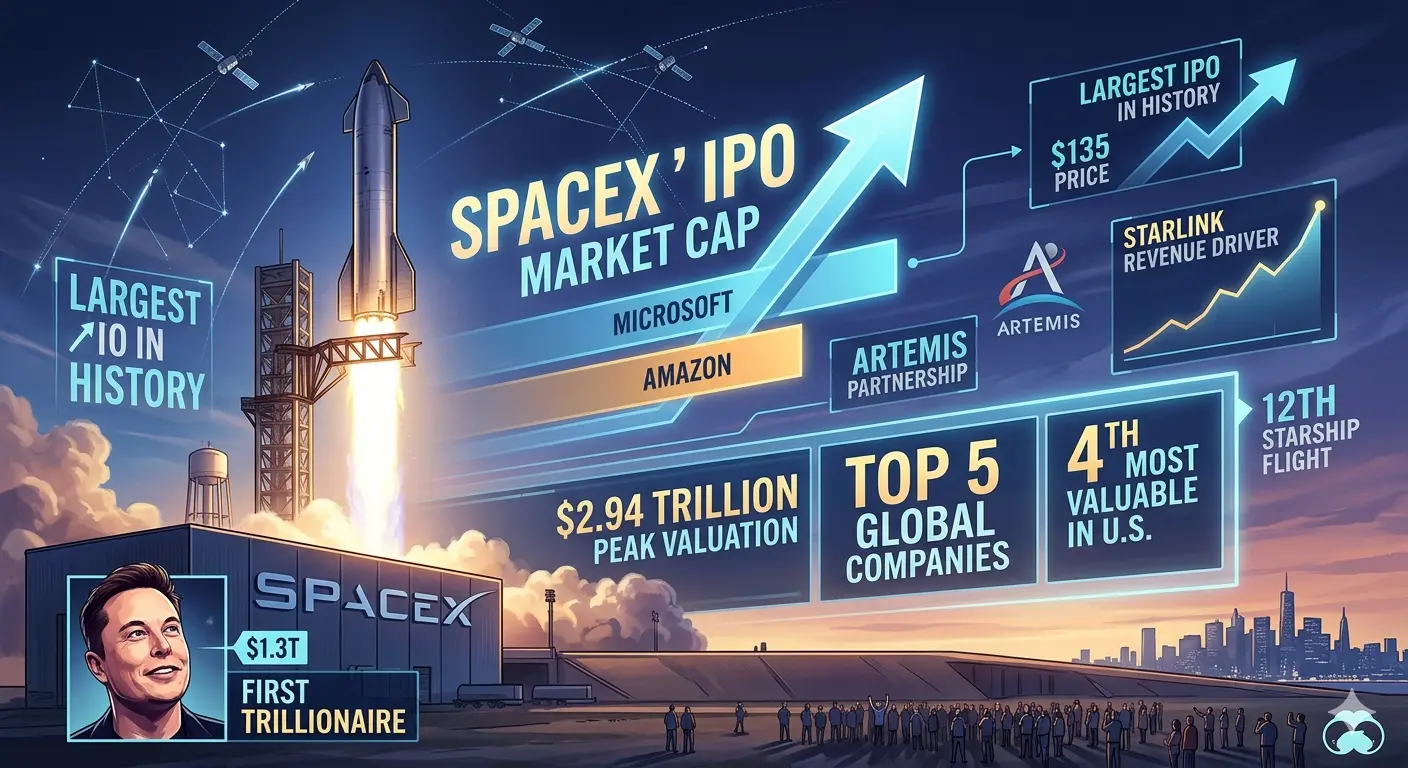
SpaceX completed the largest IPO in history on June 12, 2026, pricing 555.6 million shares at $135 per share and raising $75 billion. The
NAS100-0.19%
HighAmbition
#SpaceXQuietPeriodEnds
The hashtag SpaceXQuietPeriodEnds marks the conclusion of SpaceX's regulatory quiet period following its historic IPO on June 12, 2026. This development allows the company to engage in unrestricted public communications, promotional activities, and strategic disclosures without Securities and Exchange Commission constraints that previously limited statements about growth, valuation, and IPO plans.
IPO Performance and Current Valuation
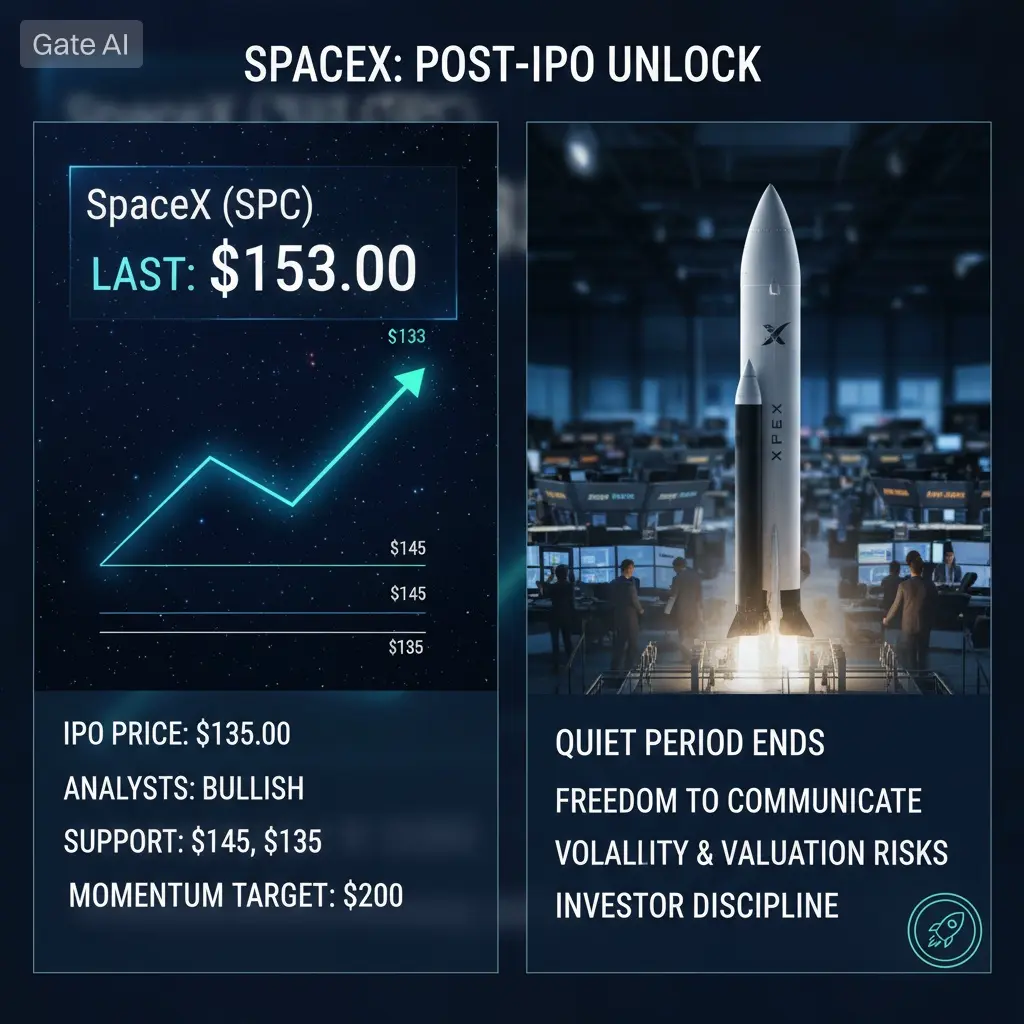
SpaceX completed the largest IPO in history on June 12, 2026, pricing 555.6 million shares at $135 per share and raising $75 billion. The offering attracted over $250 billion in investor demand, representing 3.5 to 4 times oversubscription. Current trading price stands at $153, reflecting a 13.33% gain from IPO pricing. Market capitalization reached $2.7 trillion by June 16, 2026, representing a 54.29% increase from the $1.75 trillion IPO valuation. The stock achieved an intraday high of $225.64 shortly after listing, demonstrating 67.14% peak gains above the IPO price.
Financial Metrics and Revenue Analysis
SpaceX generated $18.7 billion in revenue for fiscal year 2025, with Starlink contributing $11.4 billion representing 61% of total revenue. The Starlink division produced $4.4 billion in operating income at a 39% margin. However, the company reported a net loss of $4.9 billion due to investments in Starship and artificial intelligence infrastructure. The accumulated deficit stands at $41.3 billion. Revenue growth remains exceptional at 89.13% year-over-year based on 2023 revenue of $8.7 billion.
Analyst Coverage and Price Targets
Following quiet period expiration on July 7, 2026, major Wall Street firms initiated coverage with universally bullish ratings. Goldman Sachs set a $205 price target representing 34% upside from current levels. Bank of America established a $235 target implying 53.59% appreciation. Raymond James provided the most aggressive outlook with an $800 price target representing 423% upside potential. The average analyst price target clusters between $216 and $300, suggesting 41.18% to 96.08% upside from the $153 current price.
Technical Analysis and Key Levels
Immediate support exists at the $135 IPO price level, representing 11.76% downside protection from current trading levels. Secondary support emerges at $145, requiring only 5.23% price decline to reach. Resistance levels include $200 psychological barrier requiring 30.72% price appreciation, the all-time high of $225.64 requiring 47.48% gains, and the Street-high target of $800 requiring 423% appreciation. Volume analysis indicates institutional accumulation during price weakness, with liquidity remaining robust for position entry and exit.
Trading Strategy Recommendations
Short-term traders should monitor the $145 support level for entry opportunities, implementing stop-loss orders below $135 to limit maximum loss to 11.76%. Profit-taking levels align with analyst targets at $200, $235, and $300, representing 30.72%, 53.59%, and 96.08% gains respectively. Long-term investors should consider dollar-cost averaging given valuation complexity, with position sizing below 5% for conservative portfolios and below 10% for aggressive growth strategies.
Risk Factors and Valuation Concerns
Morningstar placed fair value at $780 billion, representing 71.11% downside from current $2.7 trillion market capitalization. The company trades at 144.39 times trailing revenue, significantly exceeding technology sector averages. Historical mega-IPO performance exceeding $50 billion shows median one-year returns of negative 31.9%, suggesting caution regarding sustained enthusiasm.
Future Catalysts and Growth Drivers
Successful Starship commercial launches would validate cost reduction theses and open new revenue streams. Starlink subscriber growth exceeding projections demonstrates scalability potential. Artificial intelligence compute leasing agreements with Anthropic and Google represent high-margin emerging revenue. Nasdaq 100 inclusion creates structural demand from approximately $200 billion in passive index assets.
Lock-Up Period Considerations
Pre-IPO shareholders face controlled lock-up periods with first major unlocking at 70 days post-IPO, potentially introducing supply pressure. However, staggered release structures minimize market disruption. Retail investor allocation of 30% of the IPO, triple the standard 5% to 10%, created broad ownership distribution reducing concentrated selling volatility.
Market Sentiment and Liquidity
Current trading volume remains robust with sufficient liquidity for institutional and retail participation. Social media sentiment shows predominantly bullish community perspectives. The company's $2.7 trillion valuation reflects market confidence in multi-industry revolution potential despite profitability concerns and elevated valuation multiples.
Strategic Outlook
The quiet period expiration removes regulatory constraints enabling comprehensive market communication and analyst coverage. Support levels at $135 and $145 provide downside reference points, while resistance at $200, $225, and $300 represent profit-taking opportunities. Traders and investors should implement appropriate risk management strategies aligned with individual portfolio objectives and risk tolerance given SpaceX's unprecedented growth potential and substantial valuation risk profile.
@Gate_Square
repost-content-media
  • Reward
  • 1
  • Repost
  • Share
HighAmbition:
thank you for information about crypto market
#USBitcoinETFNetInflow4026BTC
Bitcoin Market Analysis: US Bitcoin ETF Net Inflow of 4,026 BTC Signals Strong Institutional Demand
Bitcoin has demonstrated remarkable resilience in recent trading sessions, with the latest data showing a significant net inflow of 4,026 BTC into US Bitcoin ETFs, representing a clear bullish signal for market participants. This substantial inflow indicates that institutional investors purchased significantly more Bitcoin than they sold on that particular trading day, resulting in a net positive accumulation of 4,026 BTC across US-based exchange-traded funds. Such
BTC-0.53%
HighAmbition
#USBitcoinETFNetInflow4026BTC
Bitcoin Market Analysis: US Bitcoin ETF Net Inflow of 4,026 BTC Signals Strong Institutional Demand
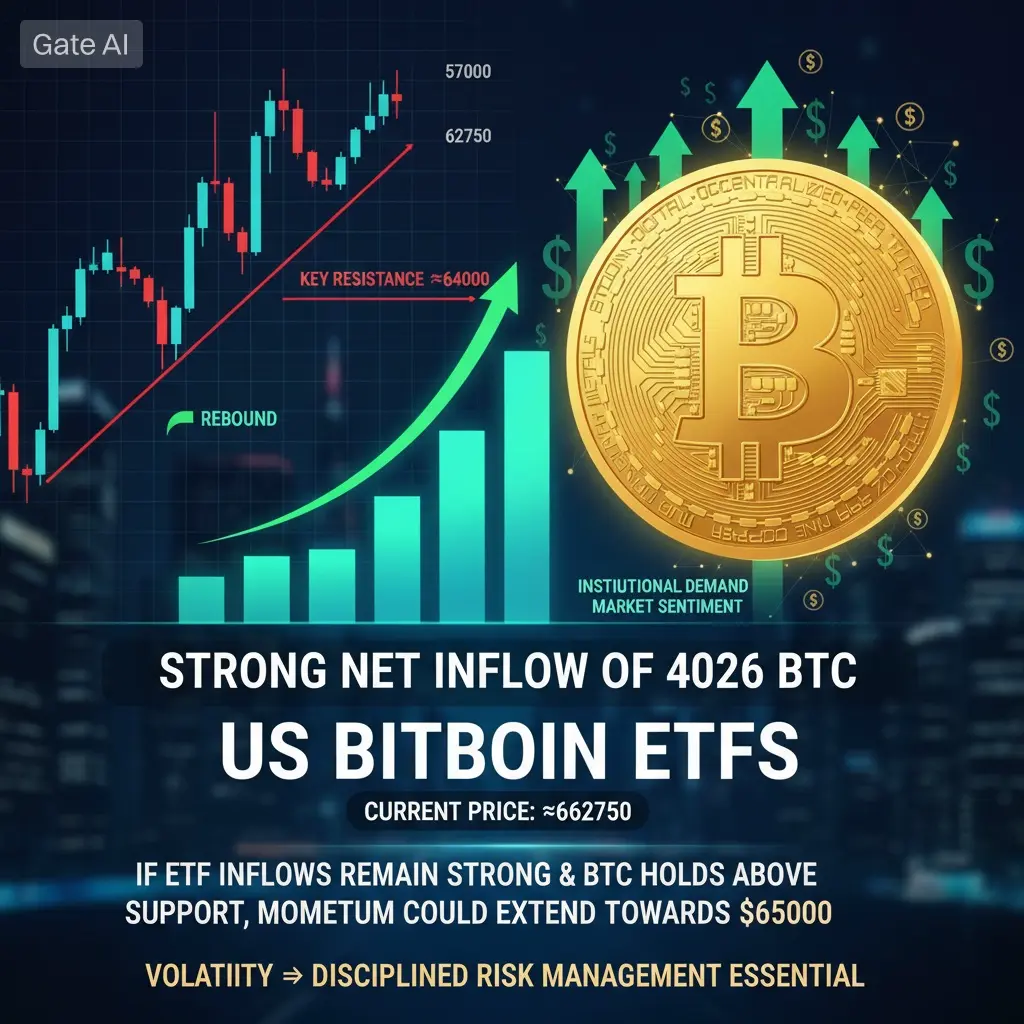
Bitcoin has demonstrated remarkable resilience in recent trading sessions, with the latest data showing a significant net inflow of 4,026 BTC into US Bitcoin ETFs, representing a clear bullish signal for market participants. This substantial inflow indicates that institutional investors purchased significantly more Bitcoin than they sold on that particular trading day, resulting in a net positive accumulation of 4,026 BTC across US-based exchange-traded funds. Such large-scale inflows typically reflect strong institutional confidence and are widely interpreted as a positive market sentiment indicator.
The current Bitcoin price stands at approximately $62,750, following a dramatic recovery from the $57,000 support level that was tested recently. After experiencing a decline to around $57,000, Bitcoin mounted an impressive recovery, touching the $64,000 resistance zone before settling at current levels. This price action represents a recovery of approximately 12.28% from the recent low of $57,000 to the $64,000 peak, demonstrating the underlying buying pressure that continues to support the market.
From a technical analysis perspective, Bitcoin is currently navigating within a critical price range that will likely determine the next significant move. The immediate support level is established at $62,600, which coincides with the current trading price of $62,750. Below this level, the next major support zone sits at $62,000, followed by a stronger support cluster around $61,200. These support levels represent potential entry points for traders looking to accumulate positions on any short-term weakness. On the resistance side, the $64,000 level has emerged as the primary barrier that Bitcoin must overcome to continue its upward trajectory. A clean breakout above $64,000 could open the path toward the $64,500 to $65,000 range, representing a potential upside of approximately 3.58% from current levels.
The recent price movement from $57,000 to $64,000 and the subsequent consolidation around $62,750 reflects a market that is digesting gains while maintaining a constructive outlook. The 24-hour trading range shows Bitcoin fluctuating between $62,533.80 and $64,249.30, with the weekly performance showing a gain of approximately 1.94%. This consolidation phase is typical after a strong recovery and suggests that traders are positioning for the next directional move.
Looking at the broader market context, the US Bitcoin ETF inflow data carries significant weight for price forecasting. When institutional investors purchase ETF shares, the fund managers must acquire equivalent Bitcoin on the open market to maintain the 1:1 backing ratio. This creates persistent buying pressure that fundamentally alters the supply-demand dynamics. The 4,026 BTC net inflow represents a substantial amount of buying pressure, especially when compared to Bitcoin's daily mining output of approximately 900 BTC. This means that ETF demand alone absorbed roughly 4.47 times the daily new supply, creating a supply deficit that historically supports price appreciation.
Traders and investors are currently evaluating several scenarios for Bitcoin's next move. The bullish case suggests that sustained ETF inflows combined with improving macroeconomic conditions could propel Bitcoin back toward the $65,000 level and potentially beyond. Historical data indicates that July has traditionally been a favorable month for Bitcoin, with prior bottom years in 2018 and 2022 averaging approximately 19% bounces during this month. If similar seasonal patterns emerge, Bitcoin could target levels approaching $68,000 to $70,000 in the coming weeks.
The trading strategy for current market conditions involves careful monitoring of key levels and ETF flow data. For bullish traders, a confirmed breakout above $64,000 with strong volume and continued positive ETF inflows would signal a potential long entry with targets at $64,500 and $65,000. Risk management suggests placing stops below the $62,600 support level to protect against downside moves. For those anticipating further consolidation or a pullback, the $62,000 and $61,200 support zones offer potential accumulation opportunities if reached.
Risk management remains paramount in the current environment, as Bitcoin continues to exhibit volatility with daily price swings of 2% to 3% being common. Traders should monitor open interest and funding rates in the derivatives market, as excessive leverage can amplify price movements in either direction. The recent recovery from $57,000 has likely flushed out many overleveraged short positions, potentially clearing the path for more sustainable upside if buying pressure continues.
The institutional landscape continues to evolve favorably for Bitcoin, with cumulative US spot Bitcoin ETF inflows since January 2024 reaching approximately $58.72 billion. This sustained institutional adoption represents a fundamental shift in how traditional investors access Bitcoin exposure, with ETFs becoming the preferred vehicle for regulated investment. The recent net inflow of 4,026 BTC demonstrates that despite periodic volatility, institutional conviction remains strong.
In conclusion, Bitcoin's current position at $62,750 following a recovery from $57,000 reflects a market that has found support and is testing key resistance levels. The US Bitcoin ETF net inflow of 4,026 BTC provides a strong bullish undercurrent, suggesting that institutional demand continues to outpace supply. Traders should watch the $64,000 resistance level closely, as a breakout above this zone could trigger the next leg higher toward $65,000 and beyond. With favorable seasonal patterns, improving macroeconomic sentiment, and sustained institutional inflows, Bitcoin appears positioned for potential further gains, though prudent risk management remains essential given the inherent volatility of cryptocurrency markets.
@Gate_Square
repost-content-media
  • Reward
  • 1
  • Repost
  • Share
HighAmbition:
2026 GOGOGO 👊
#BTC
Updated Bitcoin Market Analysis: Should You Buy the Dip at $59,250?
Bitcoin is currently trading around $59,250, representing a significant decline from its October 2025 peak of approximately $126,000. This represents one of the most substantial drawdowns in recent market history, with BTC now sitting at levels not seen since late 2024. The current market environment presents a complex mix of geopolitical tensions, macroeconomic pressures, institutional strategy shifts, and technical signals that traders must carefully evaluate before making entry decisions.
Geopolitical Factors: Iran Co
HighAmbition
#BTC
Updated Bitcoin Market Analysis: Should You Buy the Dip at $59,250?
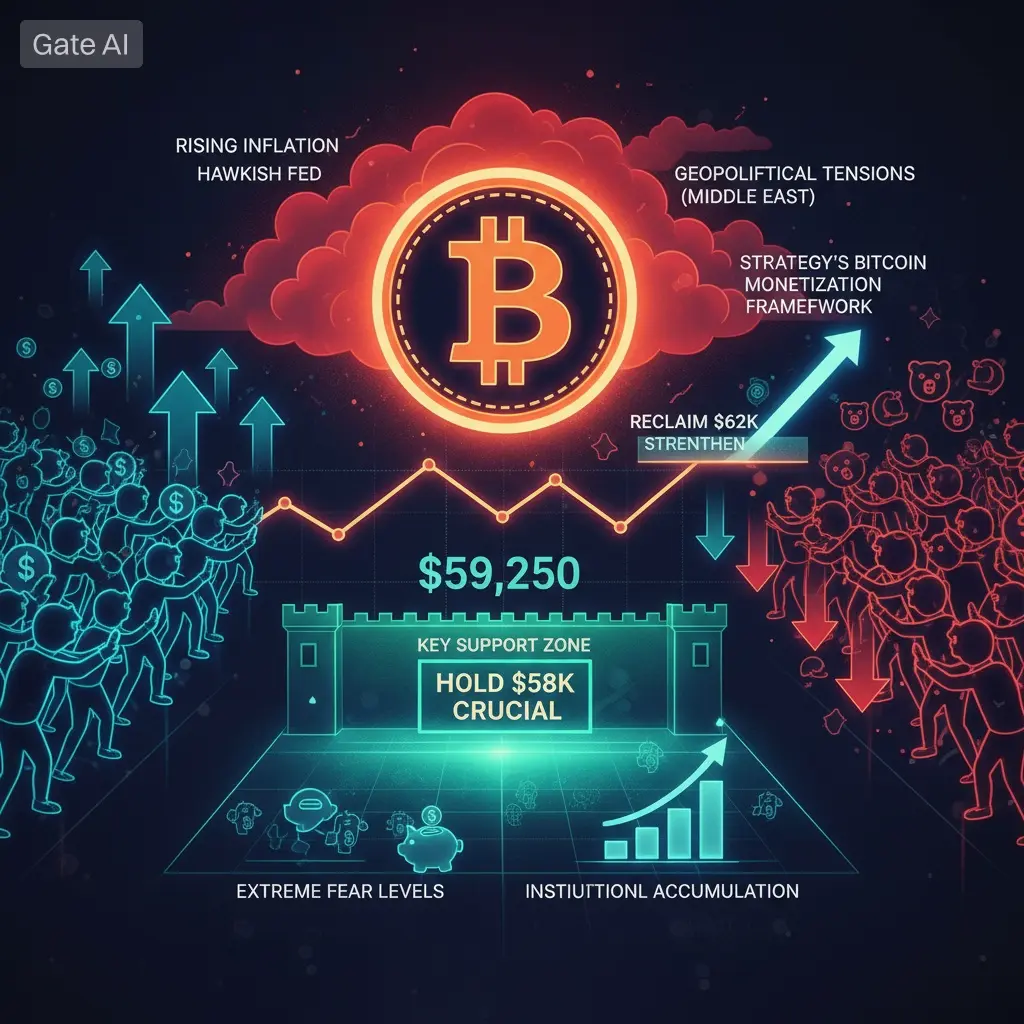
Bitcoin is currently trading around $59,250, representing a significant decline from its October 2025 peak of approximately $126,000. This represents one of the most substantial drawdowns in recent market history, with BTC now sitting at levels not seen since late 2024. The current market environment presents a complex mix of geopolitical tensions, macroeconomic pressures, institutional strategy shifts, and technical signals that traders must carefully evaluate before making entry decisions.
Geopolitical Factors: Iran Conflict Escalation
The renewed escalation of conflict between Iran and Israel has created significant volatility across global markets. Following joint U.S.-Israel airstrikes on Iranian nuclear facilities, Bitcoin experienced heightened volatility with approximately $80 billion in market cap fluctuations within hours. Gold and crude oil gapped higher on the news, while global equities opened lower. The Strait of Hormuz remains a critical concern, as any disruption to this vital shipping channel could trigger further energy price spikes and risk-off sentiment across financial markets. Historical patterns suggest that during geopolitical conflicts, Bitcoin initially behaves as a risk asset correlated with equities, though it has shown some resilience compared to traditional markets. Prediction markets currently indicate a low probability of full-scale war, but the risk of supply disruptions persists. If the situation moves toward compromise or phased de-escalation, we could see commodity prices pull back significantly, potentially providing relief to risk assets including Bitcoin.
Macroeconomic Headwinds: CPI, PPI, and Federal Reserve Policy
The macroeconomic environment presents substantial challenges for Bitcoin and risk assets broadly. The Consumer Price Index rose to 4.1% annually, with the Personal Consumption Expenditures price index surging to 4.1% in the twelve months through May, marking the first reading above 4% since April 2023. Both CPI and PPI increased during May, indicating persistent inflationary pressures that have not fully passed through the economy. These elevated inflation readings have significantly increased the probability of Federal Reserve rate hikes, with policymakers updating quarterly projections to indicate expectations for raising borrowing costs this year. The Fed currently maintains its benchmark overnight interest rate in the 3.50% to 3.75% range, but markets are pricing in potential tightening.
Historically, high interest rate environments and tightening monetary policy have adversely affected risky assets including cryptocurrencies. When interest rates rise, market liquidity drains and asset bubbles previously inflated by leverage tend to burst. Risk-averse investors shift funds to safe-haven assets, causing high-risk markets to experience general declines. The cryptocurrency market, known for its high volatility and 24/7 trading, often bears the brunt of these shifts. According to the Merrill Lynch Clock framework, the U.S. economy appears to be heading toward a stagflation stage characterized by slowing economic growth while prices remain high. During stagflation, the recommended investment allocation priority is cash greater than commodities greater than bonds greater than stocks, suggesting investors should significantly reduce holdings in risk assets.
Michael Saylor and Strategy's Major Policy Shift
In a significant development that has sent ripples through the cryptocurrency community, Michael Saylor's Strategy Inc. unveiled a sweeping overhaul of its financing model on June 29, 2026. The company, which holds the largest corporate Bitcoin treasury in the world with 847,363 BTC valued at approximately $50.88 billion as of June 28, announced a new Digital Credit Capital Framework that marks a dramatic shift from its previous never sell philosophy.
The centerpiece of this new framework is a Bitcoin Monetization Program that authorizes Strategy to sell up to $1.25 billion worth of Bitcoin. This represents the first time the company has formally opened the door to divesting from its massive cryptocurrency holdings. The program allows BTC sales to fund the company's USD reserve, pay preferred stock dividends, cover interest payments on debt, and support up to $2 billion in authorized buybacks for both digital credit securities and common stock.
The company has established a $2.55 billion USD reserve consisting of cash and cash equivalents to cover dividend payments and interest expense on its debt. Strategy carries roughly $1.76 billion in annual preferred dividend and interest obligations, meaning the current reserve represents approximately 17.4 months of coverage. Combined with the $1.25 billion in authorized BTC monetization capacity, the company has $3.80 billion in total coverage equivalent to 25.9 months of preferred dividend and interest obligations.
The board authorized up to $1 billion in repurchases of its Digital Credit Securities, which includes STRC, STRF, STRK, and STRD series of preferred stock, along with up to $1 billion in buybacks of its Class A common stock. The company also increased the annual dividend rate on its Variable Rate Series A Perpetual Stretch Preferred Stock to 12%, effective for dividend periods beginning July 1, 2026.
This policy shift is particularly significant because Strategy has built its identity on being a perpetual Bitcoin holder. The company's average cost basis for its Bitcoin holdings stands at approximately $75,653 per BTC, meaning with Bitcoin trading near $60,000, Strategy is currently sitting on roughly $13 billion in unrealized losses. Michael Saylor's recent social media activity, including his customary We are gonna need more charts post, typically signals an upcoming purchase disclosure, suggesting that despite the new monetization framework, the company may continue accumulating Bitcoin at these lower levels.
The market reaction to this announcement has been mixed. Cantor Fitzgerald has stated that Strategy's new capital framework eases concerns over liquidity and resilience. However, Ripple CEO Brad Garlinghouse has criticized Saylor's approach to funding Bitcoin purchases, arguing that it has damaged the wider cryptocurrency market as the preferred stock at the center of Strategy's model fell to record lows.
Technical Analysis: Support and Resistance Levels
From a technical perspective, Bitcoin is currently trading in what analysts describe as a no man's land zone, sitting between major on-chain support and resistance levels. The critical support zone between $58,000 and $59,100 has held several times in June, with this range noted as a key demand zone where institutional buyers have consistently stepped in. The monthly low sits at approximately $58,115, with the 200-week moving average providing additional support near $57,000. If Bitcoin fails to hold the $58,000 level, analysts warn of potential acceleration toward $56,000 or even lower targets around $45,000 based on historical bear market patterns.
Immediate resistance faces rejection between $60,400 and $60,800, with broader resistance clusters at $62,000 followed by $63,000 to $65,000. The 128-day moving average sits at approximately $70,900, tracking Bitcoin's intermediate trend, while the short-term holder cost basis at $69,600 represents the average purchase price of investors holding Bitcoin for less than roughly 155 days. Bitcoin currently trades below major resistance levels including the True Mean Price, 200-day moving average, 128-day moving average, and short-term holder cost basis, highlighting continued market weakness.
Technical indicators present a mixed picture. The MACD shows a 63.64% rise probability with historical data suggesting next-day rises occurring 7 times versus 4 declines, though the biggest single-day drop reached 3.52% while the biggest rise reached 4.46%. The RSI indicates a 42.86% rise probability with 57.14% fall probability, showing bearish momentum. Bollinger Bands and KDJ indicators show nearly balanced probabilities around 50%, suggesting consolidation rather than clear directional bias.
Market Sentiment and Institutional Activity
Despite the challenging price action, institutional sentiment shows signs of accumulation at current levels. Grant Cardone has reportedly crossed 2,700 BTC by buying the dip, while Grayscale has called current prices a compelling entry point. Strong institutional buying interest has been observed in the $58,000 to $60,000 zone, with multiple references to buy walls and demand zones supporting prices. However, spot Bitcoin ETFs have logged net outflows for six consecutive weeks, though the scale of outflows has narrowed significantly from earlier in the month.
The Crypto Fear and Greed Index fell to an extremely low level of 5 earlier this month and remains in the extreme fear zone, typically contrarian indicators that suggest potential bottoming conditions. Technical setups including oversold RSI readings around 24.8, bullish divergences, Bollinger Band squeezes at the lower band, and potential double-bottom formations have analysts emphasizing that buyers appear serious in this range with high odds of rebound toward $63,000 to $65,000.
Trading Strategy and Risk Management
For traders considering whether to buy the dip at current levels, several factors warrant careful consideration. The confluence of geopolitical uncertainty, rising inflation, hawkish Federal Reserve policy, and now the potential for Strategy to sell up to $1.25 billion in Bitcoin creates a challenging environment that could pressure prices further. However, the extreme fear sentiment, institutional accumulation signals, and strong technical support between $58,000 and $59,100 provide arguments for selective buying.
A prudent approach might involve scaling entries rather than deploying full capital at once. Traders could consider entering partial positions near current levels with strict stop-losses below $57,000 to limit downside risk. Alternative entry points could emerge on any flush below $58,000 toward the $56,000 level, which would represent a more attractive risk-reward setup for those willing to wait. For conservative traders, waiting for a reclaim of $62,000 resistance with volume confirmation might provide a safer entry signal, though this approach risks missing the early stages of any recovery.
Risk management remains paramount in this environment. Position sizing should reflect the elevated volatility and uncertainty, with traders avoiding overleverage given the potential for sharp moves in either direction. The $59,000 to $60,000 range represents a battleground between bulls and bears, with the outcome likely determining the direction for the coming weeks. A sustained break below $58,000 would likely accelerate selling toward $54,000 or lower, while a reclaim of $62,000 could open the path toward $65,000 and potentially higher targets.
Outlook and Key Levels to Watch
The path forward for Bitcoin depends heavily on developments in four key areas: the evolution of the Iran conflict, inflation trajectory and Federal Reserve policy response, whether Strategy actually monetizes any of its Bitcoin holdings or continues accumulating, and technical support holding at current levels. Traders should monitor the $58,000 to $59,100 support zone closely, as a break below this area could trigger significant liquidations and accelerate downside momentum. On the upside, reclaiming $62,000 would be the first step toward repairing the technical damage, with $65,000 and $70,900 serving as subsequent resistance targets.@Gate_Square
repost-content-media
  • Reward
  • Comment
  • Repost
  • Share
#TradFiCFDGoldMasters
Gate has launched an exceptional event called TradFi CFD Gold Masters that brings together the best of traditional finance trading with incredible rewards for participants. This event represents a significant milestone in Gates expansion beyond cryptocurrency into traditional financial markets, offering traders access to contracts for difference covering gold, silver, oil, forex, US stocks, and major global indices.
The total reward pool for this event reaches an impressive 500,000 USDT, providing substantial earning opportunities for active traders. Additionally, partic
XAU-0.18%
XAUUSD0.34%
XAG-0.70%
XAGUSD1.02%
XAUT-0.13%
HighAmbition
#TradFiCFDGoldMasters
Gate has launched an exceptional event called TradFi CFD Gold Masters that brings together the best of traditional finance trading with incredible rewards for participants. This event represents a significant milestone in Gates expansion beyond cryptocurrency into traditional financial markets, offering traders access to contracts for difference covering gold, silver, oil, forex, US stocks, and major global indices.
The total reward pool for this event reaches an impressive 500,000 USDT, providing substantial earning opportunities for active traders. Additionally, participants can unlock chances to draw from a massive 1,020 gram gold prize pool, making this one of the most rewarding trading competitions in the market. The combination of USDT rewards and physical gold-backed prizes creates a unique value proposition that appeals to both crypto traders and traditional finance enthusiasts.
As part of this comprehensive event, Gate introduced the Gold Lucky Bag campaign where traders who execute a single CFD trade of at least 1,000 USDT are automatically entered into hourly prize draws. Each hour, 11 winners are selected to receive XAUT rewards, which are digital tokens backed by physical gold. Once a qualifying trade is recorded, participants are entered into five consecutive hourly draws automatically, maximizing their chances of winning.
To participate in the Gold Lucky Bag campaign, traders simply need to complete a single CFD trade of at least 1,000 USDT on Gate TradFi during the campaign period. The trade is typically recorded within 10 to 20 minutes, after which automatic entry into the draws begins. Winners must claim their prizes within 24 hours of notification, and all rewards are distributed within 14 business days after the event concludes. This streamlined process ensures that participants can focus on trading while enjoying multiple opportunities to win gold-backed rewards.
Gate TradFi stands out as the most comprehensive traditional finance offering in the cryptocurrency exchange industry. The platform provides access to global markets including precious metals like gold and silver, energy commodities such as oil, foreign exchange pairs, US stocks, and major market indices. Since its launch, Gate TradFi has recorded over 33 billion USDT in total trading volume, with peak daily volume exceeding 6 billion USDT, demonstrating genuine adoption beyond initial curiosity.
The technical architecture of Gate TradFi is built on the proven MT5 (MetaTrader 5) trading system, a globally recognized standard in traditional finance that ensures stable execution, sophisticated risk management, and accurate position data synchronization. The platform employs a margin-ratio-based liquidation mechanism where accounts with margin ratios falling to 50% or below trigger forced liquidation processes to manage overall risk exposure.
Gate TradFi contracts use USDx as the margin and account display unit, which is pegged 1:1 to USDT. After users transfer USDT into their TradFi account, balances are displayed in USDx with no manual conversion required and no additional exchange or custody fees incurred. This seamless integration allows traders to move between crypto and traditional assets without friction.
In terms of leverage, Gate TradFi offers differentiated tiers across asset classes. Foreign exchange, precious metals, and stock indices support leverage of up to 500x, while equity CFDs support leverage of up to 5x. The fee structure features per-trade commissions starting at 0.018 USDT, offering a transparent and competitive cost model for users. These rates are significantly lower than many traditional brokers, making Gate an attractive option for cost-conscious traders.
The platform offers three distinct ways to access traditional markets. TradFi CFDs provide contract for difference trading with fixed leverage, traditional market hours, and lower per-trade costs. Perpetual futures offer crypto-native contracts with adjustable leverage ranging from 10x to 100x and continuous trading without expiry. Tokenized spot assets provide direct 1:1 backed ownership of assets including precious metals tokens and stocks, supporting 24/7 trading and fractional ownership without leverage.
Gate TradFi operates under a cross-margin model where long and short positions on the same trading pair can be hedged based on position size. Profit and loss are calculated using counterparty prices, and overnight financing fees apply during market closures, aligning overall rules with mainstream CFD markets. This professional approach brings mature financial market standards to the cryptocurrency trading ecosystem.
The platform is accessible through both the Gate mobile app and web interface, with unified account funds, risk controls, and position data synchronized across all devices. Users can monitor positions and execute trades whether at their desk or on the move, ensuring flexibility and convenience for active traders.
Gate continues to prove itself as an excellent and reliable exchange by offering innovative events like TradFi CFD Gold Masters. The combination of substantial USDT rewards and physical gold-backed prizes creates an attractive opportunity for both experienced traders and newcomers looking to explore CFD trading in traditional markets. With over 49 million users globally and ranking among the top 3 exchanges worldwide in trading volume and liquidity, Gate provides a secure and professional environment for multi-asset trading.
The expansion of TradFi broadens Gates trading ecosystem into traditional financial asset price trading, providing users with more options for multi-asset price discovery, risk hedging, and trading decisions within a single platform. As the boundaries between crypto markets and traditional financial markets continue to blur, demand for multi-asset and cross-market trading is expected to grow further. Gate TradFi marks a key step in the platforms exploration of integrated trading infrastructure and offers a practical reference for incorporating different asset classes within a compliant framework.
@Gate_Square #MyGateTradeStory
repost-content-media
  • Reward
  • Comment
  • Repost
  • Share
#WarshDebutsAsFedHoldsRatesSteady
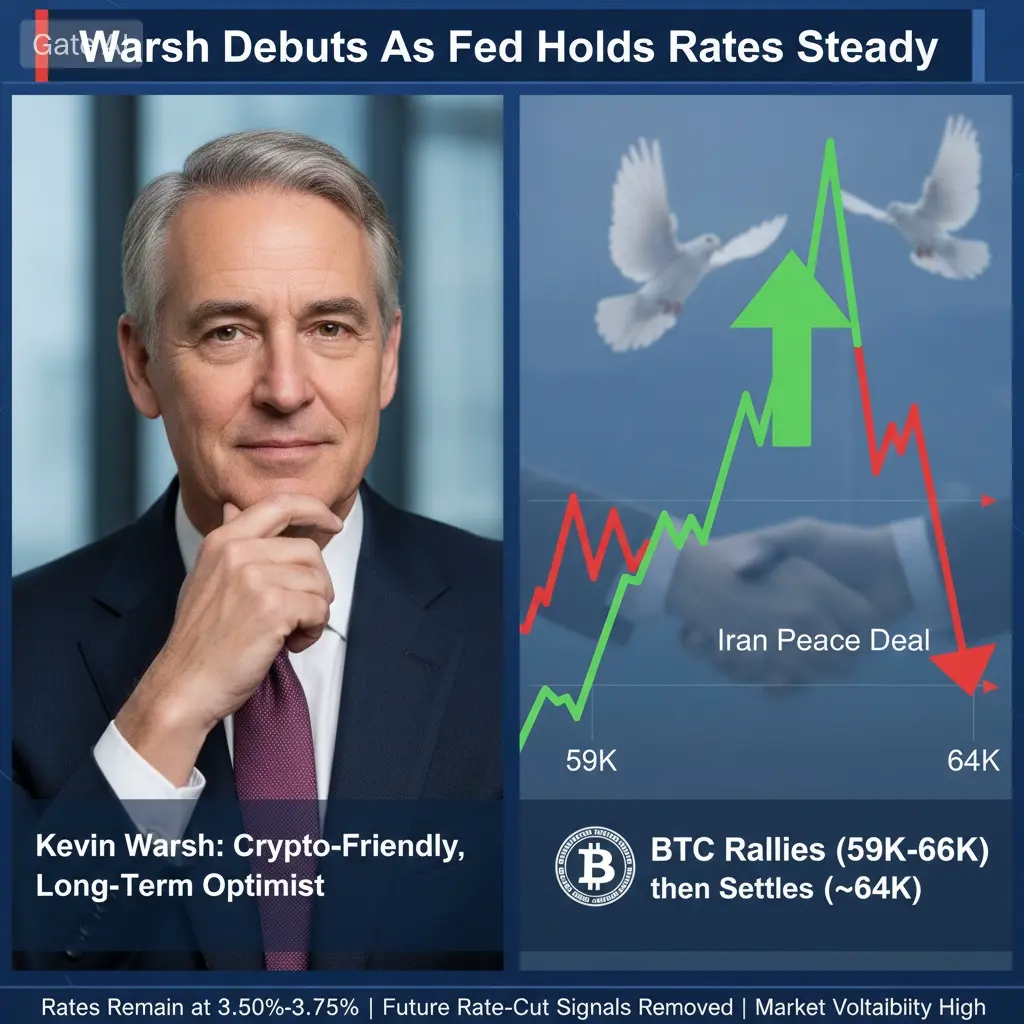
Warsh Debuts means Kevin Warsh appeared for the first time as Federal Reserve Chairman leading an FOMC meeting on June 17, 2026. He replaced Jerome Powell and brought a fundamentally new philosophy to the central bank. His debut is not ceremonial, it is regime change. Within 72 hours of his nomination, crypto markets shed over 800 billion dollars and BTC crashed below 82,000. The era of easy liquidity under Powell is ending.
Fed Holds Rates Steady means the FOMC voted 12-0 to keep the federal funds rate at 3.50 to 3.75 percent. But beneath the unanimous vote
HighAmbition
#WarshDebutsAsFedHoldsRatesSteady
Warsh Debuts means Kevin Warsh appeared for the first time as Federal Reserve Chairman leading an FOMC meeting on June 17, 2026. He replaced Jerome Powell and brought a fundamentally new philosophy to the central bank. His debut is not ceremonial, it is regime change. Within 72 hours of his nomination, crypto markets shed over 800 billion dollars and BTC crashed below 82,000. The era of easy liquidity under Powell is ending.
Fed Holds Rates Steady means the FOMC voted 12-0 to keep the federal funds rate at 3.50 to 3.75 percent. But beneath the unanimous vote lies deep division. Nine of 18 members project at least one rate hike by end of 2026, while the other nine see rates unchanged or lower. The committee actually debated a rate cut before settling on the hold. This hold is not a confident consensus, it is a compromise between opposing camps. Markets react to this kind of uncertainty with volatility, and crypto is especially sensitive because it depends on clear liquidity direction.
The most impactful decision Warsh made was removing the easing bias from the Fed statement. Under Powell, the statement signaled the next move would likely be a rate cut. Warsh cut that language entirely, making the statement shorter and simpler. Markets had been pricing in at least one rate cut by end of 2026. After the statement, those expectations vanished. For crypto this is negative because rate cuts are the primary catalyst that drives BTC rallies. Removing the cut signal tells markets that cheaper money is not coming soon.
Warsh also abstained from submitting his own rate path projection in the dot plot. Only 17 of 19 policymakers submitted projections. He said the dot plot is not helpful in the conduct of policy. He announced five task forces to overhaul Fed operations covering communications, balance sheet, data sources, productivity and jobs, and inflation frameworks. He plans to review all Fed practices by year-end including press conferences, dot plots, meeting schedules, transcripts and minutes. EY chief economist Gregory Daco told Yahoo Finance this might be the last time we see the dot plot, making it harder for markets to decipher what the Fed will do. Less guidance means more surprise potential and higher volatility for crypto.
Warsh has a unique policy stance called concurrent rate cuts and balance sheet reduction. He wants lower interest rates while simultaneously shrinking the Fed bond holdings. He believes QE was a failed experiment that created moral hazard, distorted capital allocation, and inflated speculative bubbles. He resigned from the Fed in 2011 in protest against QE2. But Warsh is not purely hawkish. J.P. Morgan notes he is open to lowering the policy rate if inflation is durably anchored, while also advocating for a smaller balance sheet and less interventionist Fed. The critical implication for crypto is mixed. Rate cuts would benefit BTC, but balance sheet shrinkage would reduce liquidity. Powell era rate cuts came with generous QE. Warsh era rate cuts would come with balance sheet discipline. Crypto would get cheaper borrowing costs but lose the liquidity amplification that QE provides. Future rallies might be smaller and more gradual.
Reuters survey shows 70 percent of economists predict rates unchanged for rest of 2026. J.P. Morgan sees hold through 2026 before a 25 basis point hike in September 2027. PGIM predicts 3 hikes totaling 75 basis points in 2026 then 3 cuts in 2027. CME FedWatch shows 42 percent probability for one hike by December. The median dot plot calls for rates ending 2026 at 3.8 percent, up from 3.4 percent in March. The December 2026 meeting is the key decision point. If inflation stays above 3 percent and Iran tensions push energy prices higher, a hike becomes likely. If the Iran deal stabilizes and inflation moderates toward 2.5 percent, the Fed stays on hold longer.
BTC is currently at 64,684 USDT, down 1.35 percent in 24 hours. The 200 day moving average sits around 77,000, meaning BTC trades roughly 16 percent below its long term average confirming bear conditions. Technical indicators lean bearish at approximately 52 percent probability of further decline. The Sharpe ratio hit a level that has marked every cycle low since 2015, but historically this precedes months of sideways basing rather than immediate rebound. 125,000 BTC were absorbed by long term holders in June, a bottom signal, but one that requires patience.
Bear scenario: If 3 rate hikes materialize taking rates to 4.25 to 4.50 percent, BTC could test 48,000 to 55,000. Base scenario: Rates unchanged through 2026 with one possible 25 basis point hike in December, BTC ranges 60,000 to 68,000 with current conditions pointing to 63,000 to 67,000 through summer. Bull scenario: Rate cuts in 2027 after inflation moderates, even without QE, BTC could recover toward 75,000 to 85,000 by late 2027. Bernstein targets 150,000 to 200,000 under maximum institutional adoption, but Warsh balance sheet discipline makes explosive rallies unlikely. The realistic bull path under Warsh is gradual recovery, not a Powell style liquidity boom.
CEX volumes dropped to lowest since September 2024 while RWA perpetual futures hit record highs, showing institutional interest shifting toward structured products. ETH gained 4.79 percent to 1,801.86 showing relative strength. XRP surged 8 percent above 1.20. Altcoins flattened after the Fed decision. BlackRock ETF inflow recovery remains the missing piece that could signal end of the price winter. The Powell era of QE fueled crypto booms is over. The Warsh era demands crypto earn gains through real demand and institutional commitment, not central bank money printing.
repost-content-media
  • Reward
  • Comment
  • Repost
  • Share
#PredictWorldCup🇨🇦vs🇶🇦
🇨🇦 vs 🇶🇦 #PredictWorldCup
Canada vs Qatar
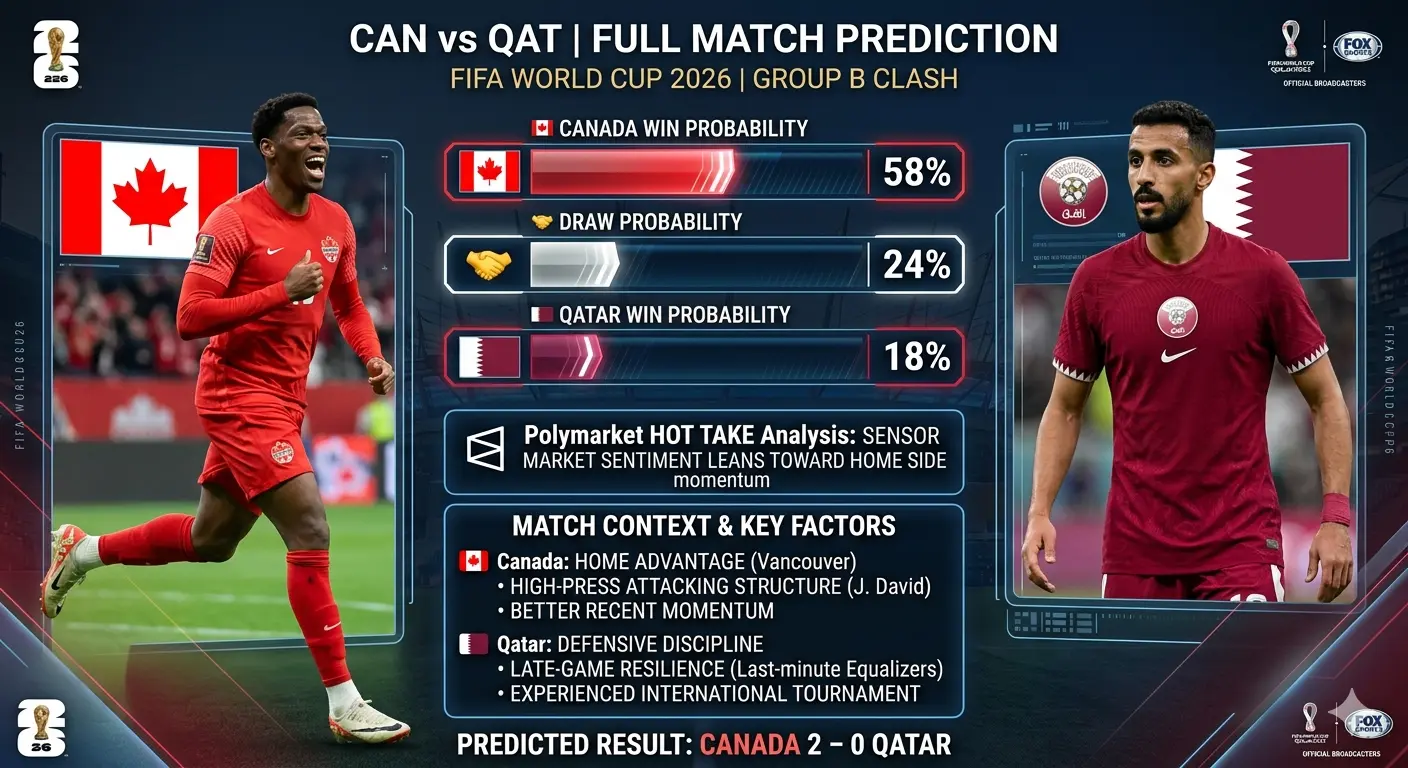
The upcoming World Cup Group B clash between Canada and Qatar is one of the most tightly balanced fixtures of the round. Both teams enter this match with equal points, similar momentum, and huge pressure to secure a decisive win. According to market sentiment, betting trends, and Polymarket-style probability discussion, this is a game where margins will be extremely fine — but momentum slightly leans toward the home side.
🔥 Match Context & Current Form
Canada enters this fixture with the advantage of home support in Va
HighAmbition
#PredictWorldCup🇨🇦vs🇶🇦
🇨🇦 vs 🇶🇦 #PredictWorldCup
Canada vs Qatar
The upcoming World Cup Group B clash between Canada and Qatar is one of the most tightly balanced fixtures of the round. Both teams enter this match with equal points, similar momentum, and huge pressure to secure a decisive win. According to market sentiment, betting trends, and Polymarket-style probability discussion, this is a game where margins will be extremely fine — but momentum slightly leans toward the home side.
🔥 Match Context & Current Form
Canada enters this fixture with the advantage of home support in Vancouver, where the atmosphere at BC Place is expected to be intense. Their attacking structure has shown flashes of quality, especially in transition moments, with players like Jonathan David providing constant goal threat.
Qatar, on the other hand, has shown defensive discipline and late-game resilience, notably earning points through last-minute equalizers in recent competitive matches. Their experience from previous international tournaments gives them composure, especially when under pressure.
Both teams currently sit in a very narrow group scenario, meaning even a draw could dramatically affect qualification chances.
📊 Polymarket / Betting Sentiment Overview
Market-style probability trends (based on aggregated predictions and odds movement patterns) suggest:
🇨🇦 Canada Win Probability: 55% – 62%
🤝 Draw Probability: 22% – 28%
🇶🇦 Qatar Win Probability: 15% – 20%
📈 Key reason behind Canada favoritism:
Home advantage (Vancouver crowd effect)
Slightly stronger attacking depth
Better recent momentum in North American fixtures
Qatar’s inconsistency against high-press teams
However, markets also highlight a strong possibility of a low-scoring tactical match, where Qatar’s defensive structure could slow Canada’s tempo.
⚔️ Tactical Breakdown
🇨🇦 Canada Strategy
High pressing in early phases
Fast wing transitions
Targeting defensive gaps behind Qatar fullbacks
Heavy reliance on midfield control and wide overloads
🇶🇦 Qatar Strategy
Compact defensive block
Counter-attacks through quick central transitions
Time management in midfield
Set-piece reliance for scoring opportunities
📉 Match Dynamics Insight
This match is expected to follow a pattern of:
Early Canada dominance in possession
Qatar sitting deep and absorbing pressure
Increased tempo after 60th minute
Potential late goal deciding outcome
🧠 Final Prediction (My Opinion + Market Alignment)
While Qatar cannot be underestimated due to their defensive resilience and ability to strike late, Canada holds the stronger overall structure and home advantage.
🏁 Predicted Result:
Canada 2 – 0 Qatar
or safer variant: Canada 2 – 1 Qatar
📊 Key Betting Scenarios
Canada to Win ✔️ (Most likely outcome)
Under 2.5 Goals ⚠️ (moderate confidence)
Both Teams to Score: NO (lean slightly)
Late Goal Scored (70’+) highly possible
🧾 Final Verdict
This is a match where Canada’s aggression meets Qatar’s discipline. The turning point will be whether Qatar can survive early pressure. If Canada scores first, the game could open up significantly. If Qatar holds until halftime, a draw becomes very realistic.
👉 Overall edge still belongs to Canada due to home momentum and attacking superiority, but not without resistance.
repost-content-media
  • Reward
  • Comment
  • Repost
  • Share
#STRC跌破面值11%創上市新低
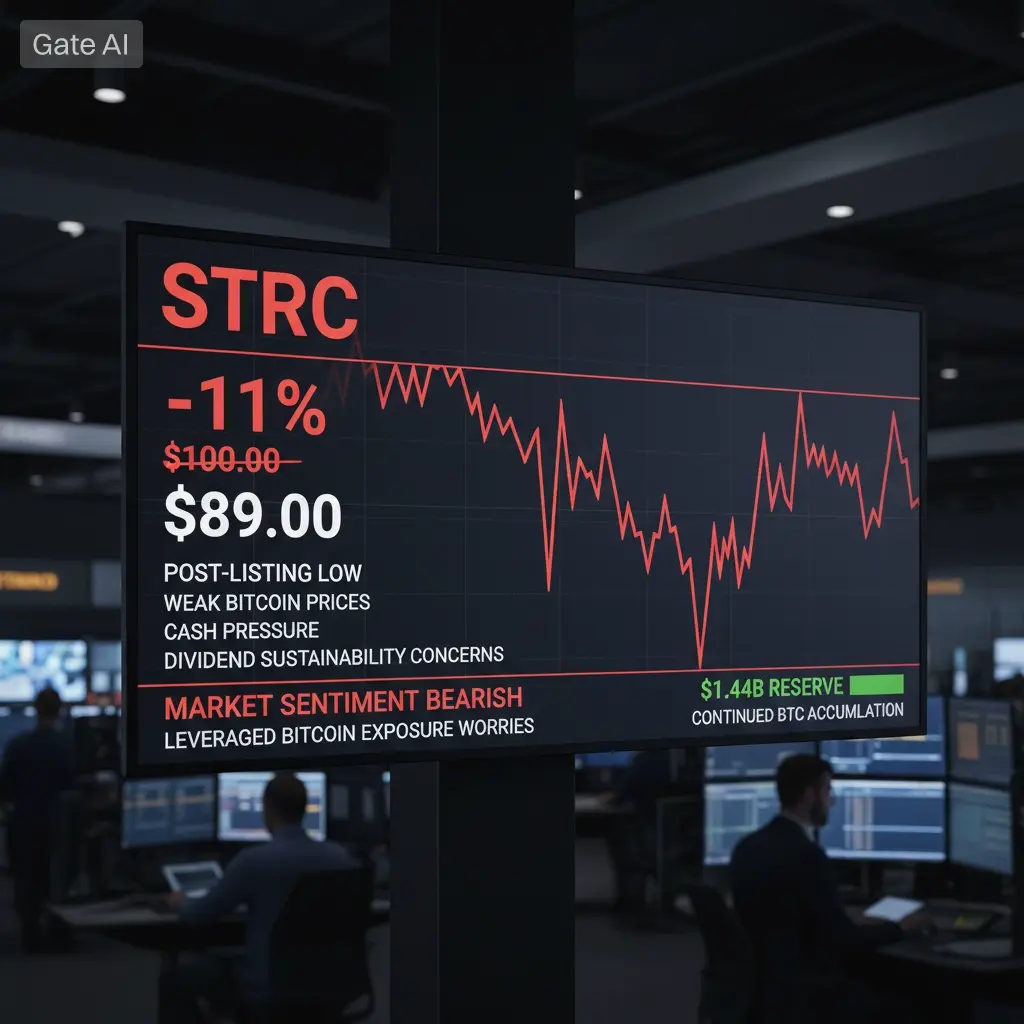
Strategy Inc’s Variable Rate Series A Perpetual Stretch Preferred Stock (STRC) has entered a decisive and highly sensitive market phase, currently trading approximately 11% below its $100 par value. This breakdown below par is not just a technical event but also a psychological shift in how the market is pricing risk, yield stability, and broader exposure to digital asset-linked financial instruments. The move toward the $89–$95 region reflects a sustained recalibration of investor expectations after a period of heightened volatility and uncertainty.
Current Market Situation
HighAmbition
#STRC跌破面值11%創上市新低
Strategy Inc’s Variable Rate Series A Perpetual Stretch Preferred Stock (STRC) has entered a decisive and highly sensitive market phase, currently trading approximately 11% below its $100 par value. This breakdown below par is not just a technical event but also a psychological shift in how the market is pricing risk, yield stability, and broader exposure to digital asset-linked financial instruments. The move toward the $89–$95 region reflects a sustained recalibration of investor expectations after a period of heightened volatility and uncertainty.
Current Market Situation and Price Structure
At present, STRC is trading within a fluctuating range of approximately $89.00 to $95.20, showing clear weakness below the $100 par threshold. The most important aspect of this movement is not just the decline itself but the persistence of price action below par, which now represents a consistent -8% to -11% deviation from the reference value. The intraday low near $88.50 represents nearly -11.5% to -12% downside pressure, confirming that sellers have repeatedly tested lower liquidity zones without strong recovery attempts. Even the recent closing level around $91.79 reflects an approximate -8.2% discount to par, while after-hours trading near $89.35 extends the weakness toward roughly -10.6% below par value.
What makes this structure more significant is that the 52-week high of $100.42 now stands only +0.4% above par, meaning the asset has effectively transitioned from a marginal premium environment into a consistent discount phase within a relatively short period. This shift highlights how quickly sentiment can reverse when liquidity conditions and macro pressures change simultaneously.
Underlying Factors Driving the Decline
The downward pressure on STRC is not the result of a single catalyst but rather a combination of interconnected structural and macroeconomic influences. The most dominant factor remains the sensitivity of STRC to broader digital asset market performance, particularly Bitcoin, where even a moderate decline of over 20% from recent highs has created a strong ripple effect across related financial instruments. Since STRC is indirectly influenced by balance sheet exposure and market confidence in underlying asset stability, any prolonged weakness in crypto markets tends to translate into immediate repricing of yield-linked securities.
Alongside this, liquidity perception has become a central theme, with investors increasingly focusing on how comfortably dividend obligations can be sustained during volatile cycles. When market participants begin to estimate stress scenarios where coverage ratios tighten, even temporarily, the result is often a repricing of risk that can lead to a 5%–15% compression in valuation bands, as seen in the current movement from par to the high-$80s range.
Another contributing factor is competitive yield displacement, where alternative instruments offering different structures, sometimes perceived as more flexible or higher frequency in payout, attract capital away from STRC. Even a small shift in yield preference across institutional or retail segments can generate noticeable pressure, especially when combined with broader risk-off sentiment.
Market Sentiment and Behavioral Shift
Investor behavior around STRC has shifted from yield-seeking optimism to a more defensive and cautious positioning framework. Instead of focusing purely on the attractive double-digit yield profile, which remains in the region of approximately 11.5% annualized yield, market participants are increasingly weighing this against the 11% capital discount currently observed relative to par value. This creates a scenario where yield attraction is being partially offset by capital depreciation concerns.
As a result, sentiment has moved toward a state where traders prioritize stability and capital preservation over yield optimization. This is reflected in reduced momentum buying, weaker breakout attempts above $95, and a general hesitation to commit fresh long positions unless stronger macro confirmation appears. The market is essentially pricing STRC as a high-yield but high-volatility instrument, where both upside and downside are amplified by sentiment shifts.
Capital Structure Dynamics and Liquidity Positioning
The issuer has taken steps to reinforce liquidity conditions by allocating dedicated reserves aimed at stabilizing near-term obligations, particularly those related to income distribution and operational cash flow requirements. This move is designed to reduce immediate pressure on the system and provide a buffer during periods of market stress.
However, despite these measures, market participants continue to focus on the broader structural dependency between asset performance and financial flexibility. When underlying asset prices fluctuate significantly, even strong reserve positions are stress-tested by forward-looking expectations, which is why price action remains volatile even after liquidity reinforcement efforts.
Technical Structure and Percentage-Based Levels
From a technical perspective, STRC is currently operating within a clearly defined but weakening range structure. The most immediate support zone sits at $88.00, which represents approximately -12% from par value, making it a critical psychological and technical floor. If this level fails to hold, the next major downside zone appears around $85.00, translating to roughly -15% deviation from par, followed by a more extended stress scenario near $80.00, representing a -20% drawdown from the $100 benchmark.
On the upside, the first resistance remains at $95.00, which is still -5% below par, indicating that even partial recovery requires significant momentum. The most important level remains the $100 par mark, representing 0% deviation, which acts as both a structural and psychological equilibrium point. A breakout and sustained close above this level would signal a full recovery phase, effectively eliminating the current discount structure and potentially shifting sentiment back toward neutrality or mild bullishness.
Strategic Trading Perspective and Risk Behavior
Different market participants are approaching STRC with varying strategies depending on their risk appetite and time horizon. Conservative positioning generally requires a full recovery above $100 (0% deviation level) before confidence is restored, as this confirms structural normalization. Moderate participants are more willing to engage within the $88–$92 (-12% to -8%) accumulation zone, provided that broader macro conditions remain stable and no further deterioration occurs. Aggressive participants, on the other hand, are positioning based on mean reversion expectations, treating the current -11% discount to par as a potential dislocation opportunity, while fully acknowledging the elevated volatility risk inherent in such positioning.
Forward-Looking Scenario Framework
Looking ahead, STRC’s trajectory will likely be determined by macro liquidity conditions and broader digital asset market direction. In a bullish recovery environment, a return to $100 would represent an approximate +11% upside from current levels, with potential extension toward $105, representing roughly +17% appreciation potential if sentiment strengthens further. In contrast, a bearish continuation scenario could push prices toward $85, implying an additional -5% downside from current levels, or even toward $80, which would represent nearly -10% further decline from current trading ranges.
The most probable near-term outcome remains a consolidation phase, where STRC continues to trade within a -12% to 0% corridor relative to par value, reflecting ongoing uncertainty but also preventing extreme directional breakout unless a strong macro catalyst emerges.
Structural Interpretation and Long-Term Outlook
From a long-term perspective, STRC functions as a hybrid yield instrument that blends income generation with exposure to digital asset-backed balance sheet dynamics. This structure inherently creates periods of amplified volatility, especially when underlying assets experience rapid directional moves. The key structural reality is that yield attractiveness must always be evaluated alongside capital stability, and in STRC’s case, the current 11% discount to par highlights the market’s ongoing reassessment of that balance.
Final Conclusion
STRC’s movement to approximately -11% below par value represents a meaningful shift in market psychology, where yield appeal is now being weighed more heavily against structural and volatility risks. While the instrument continues to offer a relatively high income profile, the current pricing suggests that investors require additional compensation for uncertainty.
The most critical levels remain unchanged: $88 as immediate support (-12%) and $100 as full recovery level (0%). Until price action decisively reclaims par, STRC is expected to remain in a volatile, sentiment-driven trading environment where both upside recovery and downside pressure remain equally possible depending on macro conditions.
repost-content-media
  • Reward
  • Comment
  • Repost
  • Share
#GateSpotVolumeLeadsGlobalGrowth
Gate has emerged as a powerhouse in the global cryptocurrency landscape, with its spot trading volume serving as a primary catalyst driving worldwide market expansion. The platform's remarkable performance in spot trading has positioned it among the top 3 exchanges globally, consistently ranking second in 24-hour spot trading volume according to CoinMarketCap data. This achievement represents more than just numbers; it reflects the trust and confidence of over 52 million registered users who choose Gate as their preferred trading platform.
In February 2026, Ga
HighAmbition
#GateSpotVolumeLeadsGlobalGrowth
Gate has emerged as a powerhouse in the global cryptocurrency landscape, with its spot trading volume serving as a primary catalyst driving worldwide market expansion. The platform's remarkable performance in spot trading has positioned it among the top 3 exchanges globally, consistently ranking second in 24-hour spot trading volume according to CoinMarketCap data. This achievement represents more than just numbers; it reflects the trust and confidence of over 52 million registered users who choose Gate as their preferred trading platform.
In February 2026, Gate's spot trading volume exceeded $74 billion, marking an impressive 11% month-over-month increase. This sustained growth trajectory demonstrates the platform's ability to attract and retain active traders across diverse market conditions. The spot trading volume serves as the foundation of Gate's ecosystem, creating deep liquidity pools that benefit every participant in the market. When traders execute buy and sell orders for Bitcoin, Ethereum, Solana, and thousands of other cryptocurrencies, they experience minimal slippage and optimal price execution thanks to Gate's robust infrastructure.
The significance of Gate's spot volume extends beyond the platform itself. High trading volume generates substantial liquidity that flows throughout the entire global cryptocurrency market. This liquidity acts as the lifeblood of crypto trading, enabling seamless transactions for institutional investors, retail traders, and market makers worldwide. As Gate's spot volume grows, it directly contributes to reducing volatility, improving price discovery, and enhancing overall market efficiency across the entire digital asset ecosystem.
Gate's commitment to user experience has been instrumental in building this volume leadership. The platform supports over 4,600 cryptocurrencies, offering one of the most comprehensive selections available on any exchange. This extensive asset coverage ensures that traders can access both established assets like Bitcoin and Ethereum, as well as emerging tokens and innovative projects. The platform's user-friendly interface, available across mobile applications and web platforms, makes spot trading accessible to beginners while providing advanced tools for professional traders.
Security and transparency form the backbone of Gate's volume growth. The platform maintains 100% Proof of Reserves with total reserves exceeding $11.676 billion and a reserve ratio of 124%. This commitment to transparency covers nearly 500 user assets, providing traders with confidence that their funds are secure and fully backed. The BTC reserve ratio has reached an impressive 147%, demonstrating Gate's conservative and responsible approach to asset management.
Gate's spot trading excellence is complemented by its comprehensive ecosystem. The platform offers spot trading alongside futures, margin trading, and wealth management products, creating a one-stop destination for all crypto needs. The Simple Earn feature has attracted cumulative subscriptions approaching 1.8 billion USDT, with over 300,000 daily participants. This integration of trading and earning opportunities encourages users to maintain active positions on the platform, contributing to sustained volume growth.
The platform's institutional-grade infrastructure supports high-frequency trading and large-volume transactions without compromising performance. Gate's matching engine processes orders with exceptional speed and reliability, ensuring that traders can execute their strategies effectively even during periods of extreme market volatility. This technical excellence has attracted institutional clients whose substantial trading volumes further enhance Gate's market position.
Gate's global expansion strategy has directly contributed to its volume leadership. The platform has secured regulatory licenses across multiple jurisdictions, including the MiCA license from Malta's Financial Services Authority, Payment Institution licenses, and registrations in Dubai, Australia, and other key markets. This regulatory compliance enables Gate to serve users in diverse regions, bringing fresh liquidity and trading activity to the platform.
The community aspect of Gate deserves recognition in understanding its volume success. Through initiatives like Launchpool, Launchpad, HODLer Airdrop, and CandyDrop, Gate has cultivated an engaged user base that actively participates in the ecosystem. These programs have distributed millions of dollars in rewards and airdrops, creating incentives for users to trade and hold assets on the platform. The WCTC trading competitions have attracted over 80,000 participants, generating more than $50 billion in trading volume.
Gate's spot volume leadership also reflects its role as a market maker for the broader crypto economy. By providing deep liquidity and tight spreads, Gate enables other market participants to execute large orders with minimal market impact. This function is particularly important for institutional investors and algorithmic traders who require reliable execution for substantial positions.
The platform's continuous innovation drives sustained volume growth. Gate AI introduces natural language trading capabilities, making spot trading accessible through conversational interfaces. The integration of traditional finance products through Gate TradFi, which reached $95 billion in monthly trading volume, bridges the gap between crypto and traditional markets, attracting new participants to the ecosystem.
Looking at the broader impact, Gate's spot trading volume serves as an indicator of global crypto adoption. As more users worldwide choose Gate for their trading needs, the platform's volume growth mirrors the expanding acceptance of digital assets as legitimate financial instruments. This growth creates a positive feedback loop: higher volume attracts more users, who generate more volume, further strengthening Gate's market position.
Gate's commitment to education and research also supports volume growth. Through Gate Learn, Gate Research, and the Gate Blog, the platform provides valuable insights that help traders make informed decisions. An educated trading community tends to be more active and engaged, contributing to sustained volume growth over time.
The platform's 12-year history demonstrates remarkable resilience and adaptability. From its founding in 2013, Gate has navigated multiple market cycles, regulatory changes, and technological shifts while consistently growing its user base and trading volume. This longevity builds trust among users who seek a reliable partner for their crypto journey.
Gate's spot volume leadership is not merely about being first in rankings; it represents the platform's success in creating value for users worldwide. By combining deep liquidity, extensive asset selection, robust security, regulatory compliance, and continuous innovation, Gate has built a trading environment where users can confidently execute their strategies. This user-centric approach ensures that Gate's spot volume will continue to drive global crypto growth for years to come.
The future looks promising as Gate continues to expand its offerings and reach. With ongoing developments in areas like prediction markets, real-world asset tokenization, and decentralized finance integration, the platform is positioned to capture emerging trends that will shape the next phase of crypto market growth. Gate's spot trading volume will remain at the center of this evolution, providing the liquidity foundation upon which the entire ecosystem thrives.
In conclusion, Gate's spot trading volume leadership represents a testament to the platform's excellence in serving the global crypto community. Through unwavering commitment to security, transparency, innovation, and user satisfaction, Gate has earned its position as a driving force in the worldwide digital asset revolution. As the crypto market continues to mature and expand, Gate stands ready to lead the next wave of global growth, powered by the trust and activity of millions of users who call Gate their crypto home.
@Gate_Square
repost-content-media
  • Reward
  • Comment
  • Repost
  • Share
#HoldUSD1EarnYield
Gate has always been at the forefront of delivering exceptional opportunities for its users across the globe. The platform consistently rolls out innovative events and campaigns designed to reward both new and experienced traders. One of the most exciting initiatives currently running is the HoldUSD1EarnYield campaign, which presents a golden opportunity for investors and traders to hold USD1 and earn substantial yields while participating in various reward programs.
USD1 is a dollar-pegged stablecoin issued by World Liberty Financial, fully collateralized by short-term Uni
HighAmbition
#HoldUSD1EarnYield
Gate has always been at the forefront of delivering exceptional opportunities for its users across the globe. The platform consistently rolls out innovative events and campaigns designed to reward both new and experienced traders. One of the most exciting initiatives currently running is the HoldUSD1EarnYield campaign, which presents a golden opportunity for investors and traders to hold USD1 and earn substantial yields while participating in various reward programs.
USD1 is a dollar-pegged stablecoin issued by World Liberty Financial, fully collateralized by short-term United States Treasury Bills and cash equivalents. This backing ensures stability and reliability, making USD1 an attractive option for those seeking a secure store of value in the volatile cryptocurrency market. Gate has partnered with World Liberty Financial to create a comprehensive ecosystem where users can maximize their returns through multiple participation avenues.
The HoldUSD1EarnYield campaign encompasses several interconnected programs that allow users to earn rewards in different ways. The more USD1 you hold, the more yield you can generate, creating a compelling incentive for long-term participation. Let us explore each component of this campaign in detail to understand how you can maximize your earnings.
The first major component is the USD1 Soft Staking program, which offers users an attractive annual percentage rate for simply holding USD1 in their accounts. Initially launched with up to 20% APR, this program allows users to earn daily returns without any lock-up period. The system takes hourly snapshots of your USD1 balance, calculating your average holdings across 24 snapshots each day. Your daily return is computed by multiplying your average holdings by the current APR and dividing by 365. These returns are automatically credited to your Assets account the following day, typically between 00:00 and 08:00 UTC. The initial return appears on the second day after activation, and subsequent distributions occur daily thereafter. It is important to note that the APR is dynamically adjusted based on the remaining reward budget and total platform holdings, with current rates around 15% as of June 17, 2026. The minimum requirement to participate is just 1 USD1, making it accessible to everyone.
The second exciting opportunity is the USD1 Convert Rewards Season, which runs from June 10, 2026, to June 24, 2026. This event rewards users who convert other stablecoins like USDT or USDC into USD1 through the Gate Convert feature. The rewards are structured in tiers based on your cumulative net purchase amount. Converting at least 100 USD1 makes you eligible for a 1 USD1 reward, with 5,000 winners accepted on a first-come, first-served basis. For those converting 1,000 USD1 or more, a 3 USD1 reward awaits the top 1,000 participants. The rewards increase significantly for larger conversions, with 5,000 USD1 conversions earning 50 USD1 rewards for the top 300 participants, and 10,000 USD1 conversions qualifying for an impressive 500 USD1 reward for the top 100 participants. Only the highest tier reward applies to each participant, ensuring fair distribution.
Beyond the tiered rewards, there is also a USD1 Convert Leaderboard competition with substantial prizes for the top 50 converters. The first-place winner receives 2,000 USD1, while second and third place each get 500 USD1. Positions 4 through 10 earn 200 USD1 each, and rankings 11 through 50 receive 50 USD1 per person. To participate, you must click the Join Now button and complete identity verification before the event concludes.
The third major component is the USD1 Points Program, which represents a comprehensive upgrade to traditional reward systems. This multi-scenario points campaign incorporates trading, holding, financial products, and Launchpad events into a unified ecosystem. Users can earn points through multiple avenues, creating flexibility for different investment strategies.
You can earn points through trading activities by executing market orders with USD1 pairs or directly swapping other stablecoins for USD1. A special bonus exists for trading the B/USD1 pair, which grants 50% extra points. Limit orders that get filled earn double points compared to market orders, incentivizing strategic trading behavior. For holding and investing, maintaining at least 1,000 USD1 in your account allows you to continuously accrue points. Participating in USD1-denominated investment products or Launchpad projects also generates points, again with a 1,000 USD1 minimum participation requirement.
The points system is particularly attractive because it accommodates different user profiles. High-frequency traders can maximize earnings through active trading, while long-term holders benefit from passive accumulation. Both approaches are equally valid and can be combined for optimal results.
New users receive special treatment through an exclusive welcome package. By accumulating just 1,000 points, newcomers can unlock a 10 USD reward. This offer is limited to 500 rewards per day and distributed on a first-come, first-served basis. This initiative significantly lowers the entry barrier for beginners while helping them quickly familiarize themselves with the platform and the points ecosystem.
The data update process for the points program follows a clear schedule. Trading volumes, purchase volumes, and holdings recorded by 23:59:59 UTC each day are updated at 08:00 UTC the following day. Points calculations are completed by 12:00 UTC the next day, covering all earnings from the previous calendar day. Users should note that data updates may experience delays of 2 to 3 hours due to system processing requirements.
To claim rewards, participants must click the Claim Now button on the event page after completing their tasks. This manual claiming process ensures that only active participants receive rewards and helps prevent automated abuse. All rewards are credited to user accounts within 7 working days after clicking the claim button, with newcomer rewards issued as position vouchers.
The snapshot scope for calculating holdings varies by account type. For Unified Accounts, the system considers only trading account balances. Classic Accounts include spot, perpetual futures, delivery, and options accounts in the calculation. However, USD1 held in Flexible Term or Fixed Term Earn products is excluded from Soft Staking calculations, as these products have their own separate reward mechanisms.
It is crucial to understand that the points issued through this campaign are provided by World Liberty Financial and are non-transferable with no fixed monetary value. Participation does not guarantee access to future airdrops or distributions. However, WLFI has announced that a total of 3,936,000 WLFI tokens will be distributed based on the proportion of points held by each user, creating a potential additional reward layer for participants.
Gate maintains strict compliance standards for all campaign activities. Bulk account registration, volume manipulation, self-trading, wash trading, and other fraudulent behaviors are strictly prohibited and will result in immediate disqualification. Multiple accounts under the same verified identity are treated as a single account, and sub-accounts are not eligible to participate. These measures ensure fair competition and protect the interests of genuine participants.
Risk awareness is essential when participating in any cryptocurrency campaign. USD1 carries inherent risks including price volatility, smart contract vulnerabilities, and potential regulatory changes. The displayed APR is an estimate rather than a guaranteed return, and actual reward values may fluctuate with USD1 market prices. Cryptocurrency trading is affected by market conditions, policy changes, and various other factors. The market is highly volatile, and price movements can be difficult to predict. Participants should carefully assess these risks and trade with caution.
Regional restrictions apply to certain campaign components. Users from the United Kingdom and other restricted regions cannot access some or all services, including participation in campaigns, games, or competitions. Detailed information about restricted regions is available in the Gate User Agreement. In case of any discrepancies between translated versions and the English version, the English version prevails. Gate reserves the final right of interpretation for all campaign rules and conditions.
To participate in these programs, users must first complete identity verification on the Gate platform. This standard Know Your Customer procedure ensures compliance with regulatory requirements and helps maintain platform security. Once verified, users can access the campaign pages through the Gate website or mobile application. App users should ensure they have upgraded to version 7.10.1 or higher to access all features.
The HoldUSD1EarnYield campaign represents Gate's commitment to creating value for its users through innovative financial products. By holding USD1, you not only maintain exposure to a stable, dollar-backed asset but also unlock multiple streams of passive income. The combination of Soft Staking yields, Convert Rewards, and Points Program creates a comprehensive ecosystem where every USD1 held works harder for you.
For traders, the ability to earn points while executing regular trades means your trading activity generates additional rewards beyond normal market profits. For investors, the Soft Staking program offers an attractive alternative to traditional savings accounts with significantly higher yields. The flexibility to move between different participation methods allows you to adapt your strategy as market conditions change.
The partnership between Gate and World Liberty Financial brings institutional credibility to this campaign. World Liberty Financial's backing by short-term United States Treasury Bills provides a level of security rarely seen in the cryptocurrency space. This institutional-grade collateralization distinguishes USD1 from many other stablecoins in the market.
As the cryptocurrency ecosystem continues to evolve, campaigns like HoldUSD1EarnYield demonstrate how exchanges can create value beyond simple trading services. By integrating holding rewards, trading incentives, and points systems into a unified program, Gate has created an ecosystem that benefits all types of participants. Whether you are a day trader looking to maximize returns on every transaction or a long-term holder seeking passive income, this campaign offers meaningful opportunities to grow your portfolio.
The time-limited nature of certain components, particularly the Convert Rewards Season ending June 24, 2026, creates urgency for participation. Early adopters often benefit from higher reward rates and better availability in capped programs. As more users discover these opportunities, competition for top-tier rewards intensifies, making immediate action advantageous.
In conclusion, Gate continues to demonstrate why it remains a leading platform in the cryptocurrency exchange space. The HoldUSD1EarnYield campaign exemplifies the innovative approach that keeps users engaged and rewarded. By holding USD1, you position yourself to earn yields, win rewards, and participate in the growing ecosystem that Gate and World Liberty Financial are building together. The more USD1 you hold, the more you earn, making this an opportunity worth exploring for anyone interested in maximizing their cryptocurrency holdings.
@Gate_Square
repost-content-media
  • Reward
  • Comment
  • Repost
  • Share
#USIran14PointMemoLeaked
On June 17, 2026, the 14-point memorandum of understanding between the United States and Iran was leaked and officially read out by a senior US official to reporters. President Trump signed it during the G7 summit, and Iranian President Masoud Pezeshkian also signed. This memo ends the US-Iran war that began on February 28, 2026, which lasted 3 months and saw the Strait of Hormuz closed, cutting 20% of global oil supply. Now a 60-day negotiation window is set for finalizing a permanent peace deal.
Point 1 Immediate Ceasefire: The US, Iran and their allies declare imme
HighAmbition
#USIran14PointMemoLeaked
On June 17, 2026, the 14-point memorandum of understanding between the United States and Iran was leaked and officially read out by a senior US official to reporters. President Trump signed it during the G7 summit, and Iranian President Masoud Pezeshkian also signed. This memo ends the US-Iran war that began on February 28, 2026, which lasted 3 months and saw the Strait of Hormuz closed, cutting 20% of global oil supply. Now a 60-day negotiation window is set for finalizing a permanent peace deal.
Point 1 Immediate Ceasefire: The US, Iran and their allies declare immediate and permanent termination of military operations on all fronts including Lebanon. Both sides commit not to initiate any war or military operation. This is the single most bullish signal for markets as the wider regional war threat hanging over every asset class for months is now formally removed.
Point 2 Mutual Sovereignty Respect: Both parties undertake to respect each other's sovereignty and territorial integrity and refrain from interfering in internal affairs. This is a symbolic win for Iran and reduces future provocation risk for markets.
Point 3 60-Day Negotiation Window: The final deal must be negotiated within maximum 60 days. Trump clearly stated that if no deal is reached in 60 days, bombing will resume. This timeframe is crucial for markets as current stability is conditional.
Point 4 Naval Blockade Removal in 30 Days: Immediately upon signing, the US naval blockade removal begins and will fully end within 30 days. This is a game-changer for oil supply chains. TankerTrackers data already shows Iran successfully exported 3.8 million barrels of oil from the Strait of Hormuz this week. This is bullish for crypto as supply disruption fears decrease.
Point 5 Safe Passage Through Hormuz 60 Days No Charge: Iran will arrange safe passage for commercial vessels with no charge for 60 days from Persian Gulf to Sea of Oman. Traffic starts immediately but demining and military obstacle removal continues for 30 days. The Strait of Hormuz is the world's most critical energy chokepoint handling 20% of daily global oil supply.
Point 6 300 Billion Dollar Reconstruction Fund: The US with regional partners will develop at least 300 billion dollars for Iran's reconstruction and economic development. Implementation mechanism finalizes in 60 days. This staggering provision represents a dramatic shift for a country being bombed weeks ago. This 300 billion could create new investment flows and digital asset demand in the global economy.
Point 7 Full Sanctions Termination: The US will terminate all sanctions against Iran including UN Security Council resolutions and all unilateral US sanctions primary and secondary. Primary sanctions restrict US entities from dealing with Iran. Secondary sanctions punish third-party countries trading with Iran. After relief Iran can sell roughly 2 million barrels daily, 33% more than pre-war 1.5 million according to Rystad Energy. Sanctions relief means Iranian individuals and businesses can access global financial systems including crypto adoption.
Point 8 Nuclear Weapons Ban and Enriched Uranium Down-Blending On-Site: Iran reaffirms it will not procure or develop nuclear weapons. Stockpiled enriched material will be resolved through mutually agreed mechanism with minimum methodology being down-blending on-site under IAEA supervision. This compromise allows Iran to maintain some nuclear infrastructure while giving US verification. The nuclear question is the most sensitive part.
Point 9 Status Quo During Negotiations: Until final deal both parties maintain status quo. Iran maintains current nuclear program status and US imposes no new sanctions. This freeze provision prevents escalation during negotiations.
Point 10 Immediate Oil Export Waivers: Immediately upon signing the US Treasury will issue waivers for Iranian crude oil, petroleum products, derivatives and all associated services including banking, insurance and transportation. This provision has the most immediate direct impact on oil markets. IEA warned that if deal holds, 2026's supply crisis could convert to significant supply glut in 2027 with supply exceeding demand by 5.05 million barrels daily.
Point 11 Unfreezing Iranian Assets: The US will make all frozen or restricted Iranian funds and assets fully available. CNN reports this involves over 100 billion dollars in frozen assets. This is massive capital injection into Iran's economy and creates new investment demand in global financial systems.
Point 12 Executive Monitoring Mechanism: Both parties agree to establish executive mechanism to monitor successful implementation. Markets gain confidence that deal has enforcement teeth.
Point 13 No Support for Hostile Groups: Iran agrees not to support, finance or arm groups threatening US or allied security. This addresses core US demands regarding Iran's proxy network support.
Point 14 UN Endorsement of Final Deal: Final deal will be endorsed by United Nations giving international legal weight. For markets UN endorsement adds credibility layer reducing long-term uncertainty about peace durability.
Bitcoin and Crypto Market Impact
Bitcoin responded powerfully to this news. After deal announcement on June 14-15, BTC surged from approximately 59,000 to above 66,000, roughly 12% gain in less than one week. By June 17-18 Bitcoin trades around 65,700 to 66,400 range. Ethereum gained 6% reaching approximately 2,257. Rally factors are directly related to Iran deal. Reduced geopolitical tension means lower risk premiums across all asset classes. Lower oil prices reduce inflation concerns making Fed more likely to maintain or cut interest rates which is bullish for crypto. Short squeeze triggered by rapid sentiment improvement. Global capital reallocation occurred as relief rally lifted stocks worldwide. European stocks rose 1.3% breaking pre-war highs, Nasdaq 100 futures climbed 2%, Asian markets advanced 3%. Broad risk-on environment naturally benefits crypto.
BTC Forecast: Near-term target late June 2026 approximately 66,000 to 68,000. If 60-day negotiation proceeds smoothly without major disruptions, BTC can comfortably hold above 66,000 and push toward 70,000 to 75,000 by late July. If negotiations stall or Iran violates terms, BTC could quickly drop to 60,000 or lower.
Oil Prices Current and Forecast
Oil prices are in freefall since deal announcement. Brent crude dropped 4.8% on June 15 to 83.17 per barrel and WTI plunged 5.2% to 80.46. By June 17 further decline saw WTI approximately 78.90 and Brent approximately 81.49. Before war oil prices were much lower. Conflict and Strait closure pushed Brent to roughly 104 to 106 at peak crisis in May and early June. Deal announcement brought prices roughly 20 to 25% lower from wartime highs in just days.
ICIS projects if peace deal holds, Brent will ease to 70s range by 2027. ICIS forecasts Brent averaging 89 in June 2026, 95 in July, then steadily declining to 80 by January 2027 and 74 by May 2027. JP Morgan baseline forecast of 60 Brent average for 2026 is now more achievable if Iranian oil fully returns. IEA warning of 5.05 million barrel daily supply surplus in 2027 suggests oil could crash significantly below current levels. Near-term WTI could fall to 75 to 78 and Brent to 78 to 82. Longer-term if final deal signs and Iran produces 2 million barrels daily or more, oil could drop to 60 to 70 range by late 2026.
Risk Factors
The 60-day negotiation window could fail. Trump clearly stated if they do not behave they will be hit again. Talks breakdown particularly over nuclear enrichment levels or regional group support could immediately reignite military tensions. Israel strongly opposes the deal and could take unilateral action. Status quo provision allows Iran to maintain current nuclear program during negotiations. Strait of Hormuz demining and military obstacle clearing continues for 30 days, any incident could disrupt shipping and spike oil prices temporarily. Iran's domestic politics are turbulent with widespread skepticism and anger about the deal creating internal pressure on leadership.
Overall Assessment
This 14-point memo is currently the most bullish signal for crypto market in 2026. Removal of largest geopolitical risk premium suppressing risk assets for over 3 months is a fundamental shift. BTC move from 59,000 to 66,000 is first wave. If 60-day negotiations proceed without major disruptions, second wave could push BTC toward 70,000 to 75,000 as full sanctions relief and 300 billion reconstruction plan flow into global economy. For oil direction is clearly downward, WTI likely heading toward 75 to 78 near term and potentially 60 to 70 by late 2026. Biggest wildcard is 60-day negotiation window. If talks succeed crypto gets massive tailwind and oil continues falling. If they fail rally reverses and volatility returns with force. Trade accordingly, manage risk, and watch negotiations closely.
@Gate_Square
repost-content-media
  • Reward
  • Comment
  • Repost
  • Share
#SpaceXMarketCapSurpassesMicrosoftRanksTopFiveGlobally
SpaceX Market Cap Surpasses Microsoft, Ranks Top Five Globally
SpaceX roared past Microsoft in market capitalization this week, briefly claiming the position of the fourth most valuable company in the United States and cementing itself among the top five globally. Microsoft took nearly four decades of public trading to reach near 3 trillion dollars. SpaceX did it in just three days after its June 12 IPO. The company's market cap touched 2.94 trillion dollars during midmorning trading on June 16, briefly overtaking Microsoft's 2.93 trillio
HighAmbition
#SpaceXMarketCapSurpassesMicrosoftRanksTopFiveGlobally
SpaceX Market Cap Surpasses Microsoft, Ranks Top Five Globally
SpaceX roared past Microsoft in market capitalization this week, briefly claiming the position of the fourth most valuable company in the United States and cementing itself among the top five globally. Microsoft took nearly four decades of public trading to reach near 3 trillion dollars. SpaceX did it in just three days after its June 12 IPO. The company's market cap touched 2.94 trillion dollars during midmorning trading on June 16, briefly overtaking Microsoft's 2.93 trillion valuation, before settling at approximately 2.65 trillion by close. This milestone signals a new era where space technology, satellite connectivity, and AI have become the dominant forces reshaping global capital markets.
Point 1: SpaceX IPO Shatters All Records
The IPO was the largest in history. Shares priced at 135 dollars, targeting a 1.77 trillion valuation and raising 75 billion. Demand exceeded 250 billion dollars, roughly 3.5 times what SpaceX sought. Retail orders alone topped 100 billion while BlackRock committed at least 5 billion. The stock opened at 150 dollars, an 11 percent premium, then surged 19 percent on Monday and 10 percent on Tuesday. In three sessions, SpaceX added nearly 890 billion in market value. Musk became the world's first trillionaire with 1.3 trillion. Over 4,400 employees became millionaires overnight. Founders Fund's early 600 million investment ballooned past 50 billion. Only 4 percent of shares trade publicly, creating extreme scarcity and fueling the surge.
Point 2: Strong Growth Engine Behind the Valuation
Revenue hit 18.7 billion in 2025, up 33 percent year over year. Starlink generated 11.4 billion, 61 percent of total revenue, rising to 69 percent by Q1 2026 with 3.26 billion and 1.19 billion operating income. Starlink now has 10.3 million subscribers, double the 4.4 million a year earlier, targeting 16.8 million by year end. 85 percent of Starlink's projected 20 billion 2026 revenue is recurring subscription income. SpaceX secured a 1.25 billion per month deal renting its Colossus 1 AI data center to Anthropic and 920 million monthly with Google. ARK Invest argued Starlink alone justifies a 2 trillion valuation.
Point 3: Successful Space Missions Fuel Confidence
The 12th Starship test flight on May 22 launched Version 3, a 408 foot rocket that is the largest and most powerful version ever flown. SpaceX conducted five Starship flights in 2025, improving on two in 2023 and four in 2024, establishing a clear upward trajectory. Falcon 9 reached its 650th mission on IPO day, with 68 launches already in 2026. SpaceX is preparing for Artemis II with NASA, carrying astronauts around the Moon for the first time in over 54 years. Musk confirmed plans for five uncrewed Starships toward Mars during the 2026 transfer window and outlined a vision for a self growing lunar city within 10 years.
Point 4: Investors Show Unprecedented Confidence
Institutional giants placed multibillion dollar orders. 250 billion in total demand exceeded supply by 4 times. ARK holds SpaceX as its largest venture position. Morningstar valued SpaceX at only 780 billion based on fundamentals, less than half the IPO target. SpaceX trades at 73 times price to sales, far exceeding established tech multiples. Q1 2026 spending hit 10.1 billion with AI accounting for 7.7 billion, while the company remains unprofitable overall. Investors prioritize future potential over current financials, backing SpaceX's claimed 28.5 trillion addressable market spanning AI, space exploration, and connectivity.
Point 5: Bullish for Space and Technology Sector
When a space company surpasses Amazon, Meta, Broadcom, and briefly Microsoft, it rewires how investors think about aerospace. Rocket Lab has gained attention as a SpaceX comparator. Satellite communications, space tourism, and lunar infrastructure companies all benefit from this validation. SpaceX straddles space and AI data centers in orbit, solar powered computing infrastructure, and connectivity serving the entire planet. The next generation of tech giants will emerge from physical infrastructure and digital intelligence, not software alone.
Point 6: Investor Confidence Increase Beyond SpaceX
Trillions in new wealth created in days have recalibrated market expectations. 4,400 employee millionaires represent a cohort deploying capital across startups and public markets. BlackRock's 5 billion commitment signals institutional adoption of space and AI as core allocations. Index managers are preparing for SpaceX integration into major ETFs this summer, forcing millions of passive investors to hold SpaceX. It will become the most volatile S&P 500 component and the only trillion dollar plus company without profits, deepening collective commitment to the narrative.
Point 7: Investors Trust SpaceX's Future Revenue Potential
The 2.65 trillion valuation is built on trust in revenue that has not yet materialized. SpaceX targets a 28.5 trillion addressable market, the largest any company has claimed. Starlink subscribers are projected to hit 16.8 million by year end with 20 billion in 2026 revenue. AI deals with Anthropic and Google represent over 2 billion monthly. SpaceX holds 18,712 BTC worth 1.45 billion, the seventh largest corporate Bitcoin holder. Investors are placing a 2.65 trillion bet that SpaceX will build the transportation, connectivity, and computing backbone for civilization's expansion beyond Earth.
Point 8: Revenue Trajectory and Business Model Evolution
Launch revenue caps near 5 billion as internal Starlink missions dominate Falcon 9 capacity. Starlink converts 85 percent of revenue into recurring cash flow. The xAI merger introduced a 14 billion annual cash burn, forcing Starlink profits to subsidize orbital AI infrastructure. Q1 capex hit 10.1 billion with 7.7 billion for AI. This mirrors Amazon's early playbook of massive infrastructure spending while reporting losses, eventually building the dominant cloud platform. Investors see the same strategy at SpaceX with an even larger scope spanning connectivity, orbital computing, and interplanetary logistics.
Point 9: Positive Effect on Crypto Sentiment
The IPO created a 75 billion liquidity drain, pulling capital from crypto. Bitcoin dropped below 60,000 during the offering week. Bloomberg noted Bitcoin rebounded as investors weighed the AI boom and SpaceX impact, suggesting the liquidity shock was temporary. SpaceX holds 18,712 BTC worth 1.45 billion, lending institutional credibility to Bitcoin as a treasury asset. SpaceX's volatility is three times the S&P 500 average, making it more volatile than most crypto assets. CNBC drew a direct parallel, noting SpaceX resembles Bitcoin with no earnings, no yield, extreme volatility, and equal numbers of believers and skeptics. When the fifth most valuable company exhibits these traits, it normalizes the risk profile crypto investors have always embraced. Medium to long term, SpaceX reinforces the thesis that transformative technology assets command massive valuations regardless of current profitability, a principle underpinning the Bitcoin investment case since inception.
SpaceX's climb past Microsoft into the global top five is a declaration that the future economy will be built on space infrastructure, satellite connectivity, and orbital AI computing. The company that once struggled to launch its first Falcon 1 has become the fifth most valuable enterprise on Earth in three days of public trading. Capital markets have decided the next frontier is not just software or semiconductors. It is the infrastructure connecting Earth to orbit and beyond.
@Gate_Square #MyGateTradeStory
repost-content-media
  • Reward
  • Comment
  • Repost
  • Share
#PredictWorldCupWin40000U
The 2026 FIFA World Cup is here, and Gate is bringing the biggest prediction event of the summer to Gate Square. A massive $40,000 prize pool is waiting for football fans and crypto enthusiasts alike. Whether you are a tactical analyst or just passionate about the game, this is your chance to turn your football knowledge into real rewards.
Event Period: June 9, 2026, 09:00 to July 21, 2026, 16:00 UTC
How to Participate
It takes just two simple steps to get involved. First, publish World Cup-related content on Gate Square using the hashtag #PredictWorldCupWin40000U. Y
ETH-1.04%
GT0.59%
SHIB-1.60%
PEPE-2.52%
BONK-6.72%
HighAmbition
#PredictWorldCupWin40000U
The 2026 FIFA World Cup is here, and Gate is bringing the biggest prediction event of the summer to Gate Square. A massive $40,000 prize pool is waiting for football fans and crypto enthusiasts alike. Whether you are a tactical analyst or just passionate about the game, this is your chance to turn your football knowledge into real rewards.
Event Period: June 9, 2026, 09:00 to July 21, 2026, 16:00 UTC
How to Participate
It takes just two simple steps to get involved. First, publish World Cup-related content on Gate Square using the hashtag #PredictWorldCupWin40000U. You can also share the official Gate World Cup campaign page directly to Gate Square along with your own opinions and analysis. Both methods count as valid participation.
What kind of content works best? Match predictions and score breakdowns, prediction trading screenshots or trade links from Gate Polymarket, daily match analysis covering team form, head-to-head records, and injury reports, dark horse and upset predictions, champion predictions, or any football expert insights and discussions. The more detailed and original your content, the higher your chances of winning.
Reward Breakdown — Four Layers of Prizes
Daily Prediction Champion: Every single day during the tournament, 10 users with the most accurate predictions or the highest quality analysis will each receive a $50 Position Voucher. That means 10 winners every day, so consistency matters. Keep posting daily and your odds stack up fast.
Lucky Share Reward: Each week, 50 users who share the official campaign page on Gate Square will each receive a $20 Position Voucher. This is a straightforward weekly raffle — just share the page and you are in the draw. 50 winners per week means solid odds for anyone who participates.
Weekly Leaderboard: Rankings are based on cumulative post views throughout each week. The top spot earns a Limited-Edition World Cup Jersey plus a $500 Position Voucher, with a minimum requirement of 4 posts and 2 predictions during that week. Positions 2 and 3 receive a 10U Prediction Market Experience Voucher plus a $300 Position Voucher, also requiring at least 4 posts and 2 predictions. Positions 4 through 10 get a 5U Experience Voucher plus a $100 Position Voucher with a minimum of 3 posts and 2 predictions. Positions 10 through 30 receive a $50 Position Voucher, needing at least 2 posts and 2 predictions.
Overall Leaderboard: This is the grand prize tier, ranked by total cumulative views across the entire campaign period. The top 3 users each receive a 50U Prediction Market Experience Voucher, a $1,000 Position Voucher, and a Limited-Edition Gift Box — but you need at least 20 posts and 10 predictions to qualify. Positions 4 through 10 earn a 20U Experience Voucher, a $500 Position Voucher, and a Gate x Red Bull Backpack, again requiring 20 posts and 10 predictions. Positions 11 through 30 receive a $500 Position Voucher with a minimum of 10 posts and 10 predictions. Positions 31 through 100 take home a $200 Position Voucher, also requiring 10 posts and 10 predictions.
Additional Ways to Earn During the World Cup
Beyond the Square posting campaign, Gate has rolled out several other World Cup events running simultaneously. The Polymarket Daily Featured Match Challenge offers a 50,000 USDT prize pool across 35 key matches. Just register, trade at least 50 USDT on a featured match prediction, and the first 100 users each day receive a 10 USDT reward — and you do not even need to predict correctly to earn it. There is also a New User Privilege pool of 10,000 USDT for first-time prediction market users who trade at least 20 USDT, and a Sunshine Award of 5,000 USDT distributed proportionally to users with 500 USDT or more in cumulative prediction trading volume.
The Gate Pitch Predictor: World Cup Prediction Carnival takes it even further with over 500,000 USDT in total rewards. Register on the campaign page to receive 1 free Prediction Ticket, then complete spot, futures, or CFD trading tasks to earn additional Polymarket Vouchers and Prediction Tickets. Use those tickets to make match predictions, earn points, and compete for leaderboard rewards and the Ultimate Prediction prize pool.
The Gate Square Creator Incentive Program Edition 9 — World Cup Edition runs from June 16 to June 30, 2026. Post World Cup content on Square to earn red packet rewards including ETH, GT, SHIB, PEPE, BONK, and high-value Position Vouchers. A single post can earn up to 10U in ETH, and new users are guaranteed a reward on their first post. The Creator Leaderboard Challenge offers separate rankings for Chinese and International communities, with the formula Score = Posts x 1 + Active Days x 1.2 + Total Engagement x 1.3. Top prize is a Gate World Cup Gift Box plus a $1,000 Position Voucher.
Important Requirements
KYC verification must be completed before the campaign ends to claim any rewards. All content must be original — plagiarism, spam, or fake engagement will result in disqualification. Multiple accounts under the same KYC are treated as a single participant. Physical merchandise like jerseys and backpacks will be shipped after winners submit their shipping information. Position Vouchers have a 7-day activation validity and 72-hour usage validity once activated. Prediction Market Experience Vouchers cannot be withdrawn directly but profits earned from using them in prediction trading can be withdrawn.
Strategy Tips for Maximizing Rewards
Post consistently every day to qualify for both Daily Prediction Champion and Weekly Leaderboard prizes. Combine your Square posts with actual Polymarket prediction trades — share your trade screenshots and links as content, which counts for both the posting campaign and the trading volume requirements of the Polymarket challenge. Focus on featured matches since those carry the 10 USDT daily reward for the first 100 qualifying users. Build toward the Overall Leaderboard by aiming for at least 20 posts and 10 predictions over the full campaign period to unlock the top-tier $1,000 Position Voucher prizes. And do not forget to share the official campaign page weekly for the Lucky Share draw — it takes almost no effort and gives you a shot at a $20 Position Voucher every week.
The 2026 World Cup is the biggest football event on the planet, and Gate has built the most rewarding prediction ecosystem around it. With $40,000 on Square, 50,000 USDT on Polymarket daily matches, and over 500,000 USDT across the full Prediction Carnival, the total prize pool exceeds half a million USDT. Head to Gate Square now, start posting with #PredictWorldCupWin40000U, and let your football knowledge pay off this summer.
repost-content-media
  • Reward
  • Comment
  • Repost
  • Share
#PredictWorldCupWin40000U
Football Expert Challenge: Czechia vs South Africa — A Knockout Game in Disguise
The 2026 FIFA World Cup Group A encounter between Czechia and South Africa at Mercedes-Benz Stadium in Atlanta on June 18 is effectively a must-win fixture for both sides. After suffering opening match defeats, neither team can afford another slip if they hope to keep their knockout stage dreams alive.
The Stakes
Both teams entered this tournament with zero points and zero goals scored in their respective openers. Czechia fell 2-1 to South Korea despite taking an early lead, while South
HighAmbition
#PredictWorldCupWin40000U
Football Expert Challenge: Czechia vs South Africa — A Knockout Game in Disguise
The 2026 FIFA World Cup Group A encounter between Czechia and South Africa at Mercedes-Benz Stadium in Atlanta on June 18 is effectively a must-win fixture for both sides. After suffering opening match defeats, neither team can afford another slip if they hope to keep their knockout stage dreams alive.
The Stakes
Both teams entered this tournament with zero points and zero goals scored in their respective openers. Czechia fell 2-1 to South Korea despite taking an early lead, while South Africa suffered a demoralizing 2-0 defeat to co-host Mexico. With Mexico and South Korea sitting on 3 points each, this match carries the intensity of a knockout tie. A loss for either side would likely eliminate them from contention, while a draw leaves both teams vulnerable heading into their final group fixtures.
Tactical Breakdown: Czechia's 3-4-2-1 System
Manager Miroslav Koubek favors a 3-4-2-1 formation that relies on wing-back width and midfield overload. The system worked well in the first half against South Korea, where they controlled possession and created chances. However, their inability to maintain defensive discipline in the second half proved costly.
Czechia's strength lies in their attacking trio. Patrik Schick, the Bayer Leverkusen striker, provides the focal point with his intelligent movement and clinical finishing. Adam Hlozek offers creativity from the left, while Jan Kuchta brings energy and pressing from the right. The midfield duo of Tomas Soucek and Alex Kral needs to dominate possession to protect a back three that looked vulnerable when stretched.
The concern for Koubek is defensive transitions. South Korea exploited the spaces behind Czechia's wing-backs, and South Africa's pace on the counter could pose similar problems. Czechia must improve their defensive organization and avoid the lapses that cost them against South Korea.
Tactical Breakdown: South Africa's Resilience Under Broos
Hugo Broos has transformed Bafana Bafana from a side that struggled to qualify for major tournaments into a cohesive unit. The Belgian manager emphasizes teamwork, defensive solidity, and quick transitions. South Africa's approach is built around Teboho Mokoena, the Sundowns midfielder who acts as the team's engine and connector between defense and attack.
However, Broos faces a significant selection crisis. Sphephelo Sithole and Themba Zwane are both suspended for this match after receiving red cards against Mexico. Zwane's three-match ban is particularly damaging, as he is one of South Africa's most creative players. These absences force Broos to reshuffle his midfield and attack, potentially weakening their already limited offensive output.
South Africa's defensive record in the opening match was concerning. Despite Mexico playing with 10 men for the final minutes, Bafana Bafana conceded 2 goals and managed just 7 shots compared to South Korea's 15 against Czechia. Their inability to convert chances and defensive lapses must be addressed if they are to compete.
Key Player Matchups
The battle between Patrik Schick and South Africa's center-back pairing will be decisive. Schick's ability to find space between defenders and his aerial threat make him Czechia's primary weapon. South Africa must deny him service from the wings and midfield.
In midfield, the contest between Tomas Soucek and Teboho Mokoena will determine which team controls the tempo. Soucek's physicality and late runs into the box contrast with Mokoena's technical ability and distribution. Whichever player imposes their style will give their team a significant advantage.
Historical Context
These teams have met only once before, a 2-2 draw in the 1997 Confederations Cup. That match was played in a different era with different personnel, so little can be drawn from that result. What matters is the present, and both teams are under pressure to deliver.
Czechia's return to the World Cup after 20 years brings expectation, while South Africa's first appearance since hosting in 2010 carries the weight of a nation eager to make amends for past disappointments.
The Prediction
Czechia enters this match as favorites with prediction markets pricing them at approximately 55% to win, compared to South Africa's 21%. The European side's superior technical quality and attacking options give them the edge, particularly with South Africa missing key players through suspension.
However, this will not be straightforward. South Africa under Broos has shown resilience and organization, and they will make Czechia work for every opportunity. The match is likely to be tight and tactical, with few clear-cut chances.
My prediction is a 2-1 victory for Czechia. The Lions should have enough quality to break down a depleted South Africa side, but Bafana Bafana will not go down without a fight. This match could be decided by a moment of individual brilliance from Schick or Hlozek, or by South Africa's inability to replace their suspended creative players.
For traders and prediction market participants, the value lies in Czechia's win probability. At current odds of approximately -130, the European side offers reasonable value given their advantages in squad depth and tactical flexibility. The under 2.5 goals market also holds appeal, as both teams will approach this cautiously given the stakes.
What are your thoughts on this Group A clash? Do you see South Africa pulling off an upset despite their suspensions, will Czechia's attacking quality prove decisive, or could we see a cagey draw that damages both teams' hopes?
Drop your predictions below and let us discuss the tactical nuances ahead of kickoff at 12:00 PM ET on June 18.
repost-content-media
  • Reward
  • Comment
  • Repost
  • Share
#GateLaunchesHongKongStockTrading
Gate TradFi Launches Hong Kong Stock Trading: A New Era of Multi-Asset Global Investing
The cryptocurrency exchange Gate has officially expanded its financial ecosystem by launching Hong Kong stock trading, marking a major step toward the convergence of digital assets and traditional capital markets. This development transforms Gate from a crypto-focused exchange into a fully integrated multi-asset investment platform, giving users direct access to global equities alongside cryptocurrencies within a single unified interface.
This launch is not just a product
BTC-0.53%
ETH-1.04%
STABLE0.61%
HighAmbition
#GateLaunchesHongKongStockTrading
Gate TradFi Launches Hong Kong Stock Trading: A New Era of Multi-Asset Global Investing
The cryptocurrency exchange Gate has officially expanded its financial ecosystem by launching Hong Kong stock trading, marking a major step toward the convergence of digital assets and traditional capital markets. This development transforms Gate from a crypto-focused exchange into a fully integrated multi-asset investment platform, giving users direct access to global equities alongside cryptocurrencies within a single unified interface.
This launch is not just a product update—it represents a structural shift in how modern investors interact with financial markets. By integrating traditional equities with digital assets, Gate is building an ecosystem where capital can move seamlessly across asset classes without friction, delays, or multiple intermediaries.
A Unified Bridge Between Crypto and Traditional Finance
For years, crypto and stock markets have operated in separate financial ecosystems. Investors typically needed different brokers, separate accounts, and complex onboarding processes to participate in global equities. Gate’s latest expansion removes this fragmentation.
Now, users can trade cryptocurrencies, US equities, ETFs, and Hong Kong-listed stocks all from one platform. This unified structure allows investors to manage risk more efficiently, diversify portfolios instantly, and respond to global market conditions in real time.
The integration of traditional finance (TradFi) with digital assets reflects a broader global trend where financial institutions are evolving into all-in-one investment ecosystems rather than single-market platforms.
Strategic Importance of Hong Kong Equity Market
The addition of Hong Kong stocks is particularly significant due to the global importance of the Hong Kong Stock Exchange.
Hong Kong serves as a critical financial gateway between mainland China and international investors. It hosts some of the world’s largest and most influential companies across technology, finance, manufacturing, and consumer sectors. Many Chinese tech giants and multinational corporations prefer Hong Kong listings due to its regulatory structure and global investor accessibility.
This gives Gate users exposure to a highly diversified and strategically important market that connects East Asian economic growth with global capital flows.
USDT Integration: Removing Traditional Financial Barriers
One of the most powerful innovations in this launch is the ability to invest in Hong Kong stocks using USDT.
This eliminates traditional friction points such as:
Bank transfer delays
Currency conversion fees
Cross-border payment restrictions
Brokerage onboarding complexity
Instead, users can directly convert crypto liquidity into equity positions. This seamless transition highlights the growing role of stablecoins as practical financial instruments in real-world investing.
It also strengthens the utility of crypto holdings, allowing digital assets to function not just as speculative instruments, but as active capital in global financial markets.
Expansion into a True Global Investment Ecosystem
With this update, Gate now provides access to:
Over 10,000 US-listed stocks and ETFs
More than 1,000 Hong Kong-listed equities
A full suite of cryptocurrency markets
This creates one of the most comprehensive retail investment ecosystems currently available in the market.
Investors can now build truly global portfolios that include:
US technology leaders
Hong Kong financial institutions
Asian growth companies
Digital assets like Bitcoin and Ethereum
This level of integration allows for advanced portfolio strategies such as cross-market hedging, sector rotation, and macro-driven asset allocation.
Market Access, Liquidity, and Investment Opportunity
The Hong Kong market offers strong liquidity and deep exposure to Asian economic growth. It is home to major global players across multiple sectors, including technology, electric vehicles, banking, and consumer goods.
Companies such as Tencent, Alibaba, and Xiaomi play a major role in shaping innovation and digital transformation across Asia. Through Hong Kong listings, investors gain indirect exposure to China’s large-scale consumer base and technological expansion.
Additionally, Hong Kong continues to rank among the world’s leading IPO destinations, attracting billions in global capital inflows each year.
Evolution of Hybrid Financial Platforms
Gate’s expansion reflects a wider industry transformation where exchanges are evolving into hybrid financial ecosystems.
Rather than separating crypto and traditional finance, platforms are now merging both into unified infrastructures. This trend is also being explored across the broader industry, as investors demand:
Single-account access to multiple asset classes
Faster capital movement
Integrated trading tools
Global diversification options
Gate’s move positions it early in this transition toward fully integrated digital financial ecosystems.
Advanced Trading Tools and Portfolio Management
The platform is designed to support both beginners and advanced investors. It provides:
Real-time market data and price tracking
Institutional-grade charting tools
Company financial insights and analytics
Integrated crypto and stock portfolio dashboards
Fast execution across multiple asset classes
This allows users to monitor global exposure in one place, improving decision-making and enabling more dynamic investment strategies.
Risk Management and Portfolio Diversification
One of the key advantages of multi-asset access is improved risk management. Investors can:
Hedge crypto volatility using stable dividend stocks
Balance high-risk crypto exposure with traditional equities
Rotate capital between asset classes based on macro conditions
Build diversified portfolios across regions and sectors
This flexibility is especially valuable in volatile market environments, where asset correlation can shift rapidly.
Security, Compliance, and Institutional Integration
To support stock trading infrastructure, Gate has strengthened its operational framework through regulated brokerage partnerships and compliance systems.
Key security features include:
Multi-factor authentication
Secure asset custody systems
Regulated clearing and settlement processes
Institutional-grade transaction monitoring
These enhancements ensure that users can operate across both crypto and equity markets with improved trust and transparency.
Future Expansion and Financial Ecosystem Growth
This Hong Kong stock launch is only the beginning of Gate’s broader strategic roadmap.
Future expansions are expected to include:
Additional global stock markets
IPO and pre-IPO access opportunities
Expanded ETF offerings
Institutional investment products
Tokenized real-world assets
The long-term vision is to create a fully integrated financial ecosystem where digital assets, equities, and global investment products coexist within a single platform.
Conclusion: The Future of Integrated Investing
The launch of Hong Kong stock trading on Gate represents a major milestone in the evolution of global finance.
By combining cryptocurrency markets with access to US and Hong Kong equities, Gate is building a unified investment environment that reflects the future of financial markets—borderless, digital-first, and fully integrated.
With exposure to thousands of global stocks and crypto assets under one system, investors are no longer limited by geography, infrastructure, or financial intermediaries. Instead, they are entering a new era where all markets are connected, and capital moves freely across a truly global financial network.@Gate_Square
repost-content-media
  • Reward
  • Comment
  • Repost
  • Share
#MyGateTradeStory
MRVL Trading Story - June 18 Update
MRVL is currently trading at 300.6, showing strong recovery momentum after the recent pullback from highs near 324.15. The stock has bounced back impressively and is now approaching key resistance zones.
Current price action at 300.6 places MRVL just below the critical psychological level of 305.00. The immediate resistance sits at 305.00, with stronger resistance at 310.00 and the previous high of 324.15. A breakout above 324.15 opens the path to 340.00 and the Street-high analyst target of 360.00.
Support levels to defend include 295.00
HighAmbition
#MyGateTradeStory
MRVL Trading Story - June 18 Update
MRVL is currently trading at 300.6, showing strong recovery momentum after the recent pullback from highs near 324.15. The stock has bounced back impressively and is now approaching key resistance zones.
Current price action at 300.6 places MRVL just below the critical psychological level of 305.00. The immediate resistance sits at 305.00, with stronger resistance at 310.00 and the previous high of 324.15. A breakout above 324.15 opens the path to 340.00 and the Street-high analyst target of 360.00.
Support levels to defend include 295.00 as the first line, followed by 290.00 and the critical zone at 280.00 to 285.00. A breakdown below 280.00 would signal deeper correction potential toward 265.00. The stock has gained over 230% year to date, showing exceptional momentum driven by AI infrastructure demand.
RSI currently reads approximately 60 to 65, indicating bullish momentum with room before overbought territory above 70. This is a healthy recovery from oversold conditions below 40 seen during the recent correction. The RSI trajectory suggests continued upside potential if buying pressure sustains.
Analyst sentiment remains strongly bullish with 38 out of 41 analysts rating MRVL as buy. The consensus price target is 215.14, though this is outdated given the rapid price appreciation. More relevant targets include Rosenblatt at 360.00, HSBC at 300.00 which has already been achieved, and Raymond James at 235.00. The median target among analysts is 240.00.
Trading strategy for the next sessions involves watching the 305.00 resistance level. A close above 305.00 opens the path to 310.00 and 324.15. Traders should consider entries on dips toward 295.00 to 298.00 with stops below 290.00. For breakout traders, a move above 305.00 with volume confirms bullish continuation toward 310.00 and beyond.
The fundamental catalyst remains strong AI demand. Nvidia CEO Jensen Huang called Marvell the next trillion-dollar company, highlighting its critical role in data center connectivity and custom AI chips. Marvell's custom chip business is forecast to exceed 10 billion dollars in revenue by fiscal 2029. The company joins the S&P 500 later this month, which typically brings index fund buying support and increased institutional ownership.
Risk management is essential given MRVL's beta of 1.06 and recent volatility. Position sizing should account for potential 5% to 10% daily swings. The upcoming earnings report on August 20 will be critical, with consensus EPS estimate at 0.93 and revenue estimate at 2.70 billion dollars.
Traders are positioning for a potential move toward 310.00 to 324.00 in the short term, with 340.00 as the next major target if momentum sustains. The 295.00 to 305.00 range is the current battleground zone where direction will be decided. A sustained hold above 300.6 signals bullish control and sets up the next leg higher.@Gate_Square
repost-content-media
  • Reward
  • Comment
  • Repost
  • Share
#MyGateTradeStory
From Zero Knowledge to Real Trading Experience — My Journey on Gate
Before I entered the world of trading, I had absolutely no idea what the financial markets really were. Terms like “crypto,” “charts,” “orders,” “liquidity,” and “market trend” sounded extremely complicated to me. I always thought trading was something only experts, professionals, or people with strong financial backgrounds could understand.
But everything changed when I discovered Gate.
This platform didn’t just give me access to markets — it gave me knowledge, experience, and confidence step by step. Today
HighAmbition
#MyGateTradeStory
From Zero Knowledge to Real Trading Experience — My Journey on Gate
Before I entered the world of trading, I had absolutely no idea what the financial markets really were. Terms like “crypto,” “charts,” “orders,” “liquidity,” and “market trend” sounded extremely complicated to me. I always thought trading was something only experts, professionals, or people with strong financial backgrounds could understand.
But everything changed when I discovered Gate.
This platform didn’t just give me access to markets — it gave me knowledge, experience, and confidence step by step. Today, I can say that my entire understanding of trading was built through real experience on Gate.
🌱 My Beginning — No Knowledge, No Direction
When I first joined the platform, I was completely new. I didn’t understand:
What is buying or selling in crypto
What is market price vs limit price
Why prices go up and down so fast
How people make profit or loss
What charts and candles represent
At that time, even placing a trade felt confusing. I was afraid of making mistakes. I thought one wrong click could lose everything.
But instead of quitting, I started exploring slowly
📊 First Step into Trading — Learning by Observation
The first thing I noticed on Gate was the live market movement. Prices were changing every second. Charts were moving like waves.
At first, it looked like random movement.
But slowly I started noticing patterns:
Prices don’t move randomly
There are trends (uptrend and downtrend)
Volume affects movement
Market reacts to news and demand
Fear and greed control price action
This was my first real understanding of trading — it is not gambling, it is behavior of the market.
📘 Learning Phase — Understanding How Trading Works
After spending time on Gate, I started learning basic trading concepts:
1. Market Orders & Limit Orders
I learned that:
Market order = instant buying/selling at current price
Limit order = waiting for a specific price
This helped me understand timing and strategy.
2. Profit and Loss Reality
I realized:
Profit is not guaranteed
Loss is part of trading
Risk management is more important than profit
This changed my mindset completely.
3. Volatility Concept
Crypto markets move fast. I learned:
Small news can move prices heavily
Emotional trading leads to mistakes
Patience is key
📈 First Real Trade Experience
My first trade was small, but it was a big moment for me emotionally.
I remember:
I entered the market carefully
I kept checking price every second
I was nervous even for small movement
I didn’t know when to exit
But that trade taught me something important:
Trading is not about luck — it is about decision making under pressure.
Even though my first experience was not perfect, it gave me confidence to continue learning.
🔍 Learning Technical Understanding
As I continued using Gate, I started exploring charts and indicators.
I slowly understood:
Candlestick patterns show market sentiment
Support and resistance levels matter
Trend direction is more important than prediction
Entry and exit timing is everything
Even though I am still learning, I can now read basic market structure.
💡 Emotional Side of Trading
One of the biggest lessons I learned is that trading is not only technical — it is emotional.
I experienced:
Fear when price drops
Excitement when price rises
Confusion during volatility
Patience when market is slow
I realized successful traders are not only skilled — they are emotionally controlled.
🧠 Risk Management Understanding
Earlier, I thought trading was only about profit.
Now I understand:
Protecting capital is first priority
Never invest everything in one trade
Small consistent gains are better than big risky trades
Stop-loss is important for survival
This mindset change was one of the most important lessons I learned on Gate.
🌍 Why I Trust Gate Platform
I continued my journey on Gate because:
It provides real market exposure
It supports learning through live trading
It offers multiple tools for analysis
It helps beginners understand step by step
It allows practice in real conditions
For me, Gate is not just a trading platform — it is a learning environment.
📊 My Growth as a Beginner Trader
Looking back, I can clearly see my progress:
Before:
No knowledge of trading
Fear of charts
No understanding of market behavior
Now:
Basic understanding of price movement
Awareness of risk management
Ability to read simple charts
Confidence to participate in markets
This transformation didn’t happen in one day — it came through experience.
🚀 What I Learned the Most
If I summarize my journey, these are my key lessons:
Trading is learning process, not shortcut to money
Emotional control is as important as analysis
Risk management is survival tool
Market teaches through experience, not theory
Consistency is more important than luck
🔥 Final Thoughts
Today I can confidently say that my trading journey started from zero, and everything I know came from real experience on Gate.
I didn’t become an expert, but I became aware, disciplined, and curious to learn more.
And that is the most important part of trading — growth mindset.
I will continue learning, improving, and exploring markets through Gate because this platform gave me my first real exposure to trading and financial understanding.
🏁 Conclusion
Trading is not just about buying and selling assets.
It is about:
Understanding markets
Managing emotions
Controlling risk
And continuously learning
My journey is still ongoing, but one thing is clear:
Gate didn’t just introduce me to trading — it taught me how trading actually works in real life.
repost-content-media
  • Reward
  • Comment
  • Repost
  • Share
  • Pinned