#USMayPCEInflationRisesTo4.1%HighestIn3Years
US May PCE Inflation Surges to 4.1 Percent: A Three-Year High Triggering Massive Volatility Across Global Financial and Cryptocurrency Markets
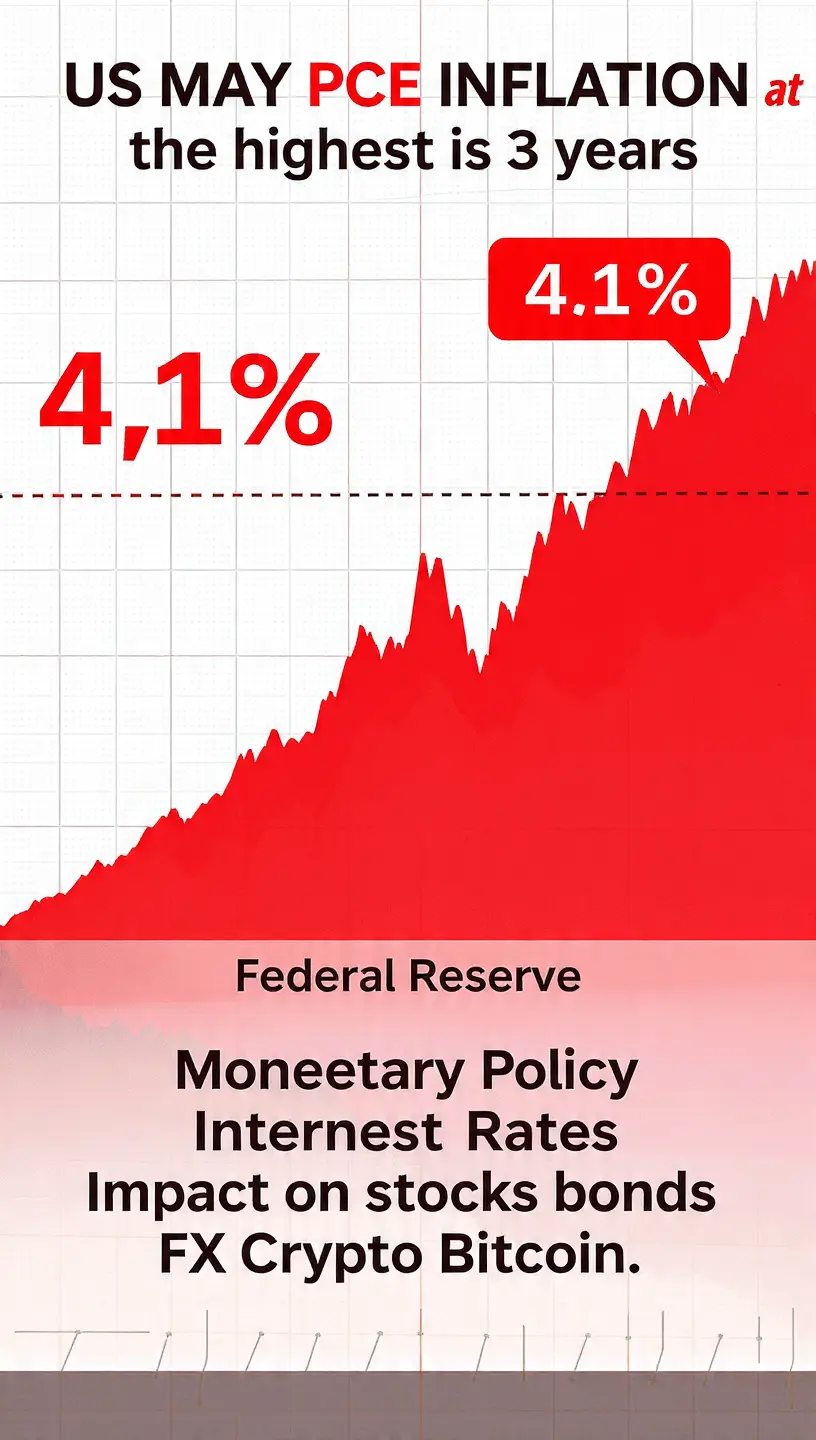
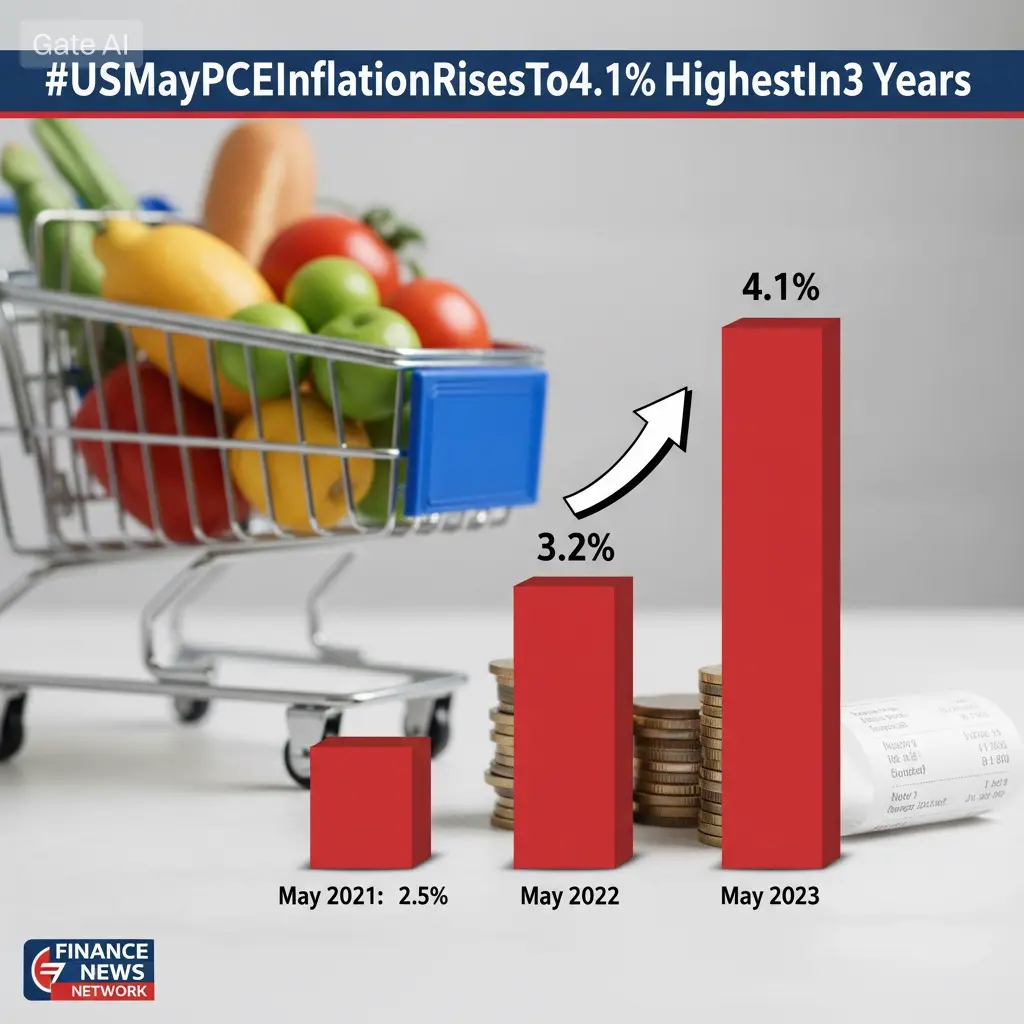
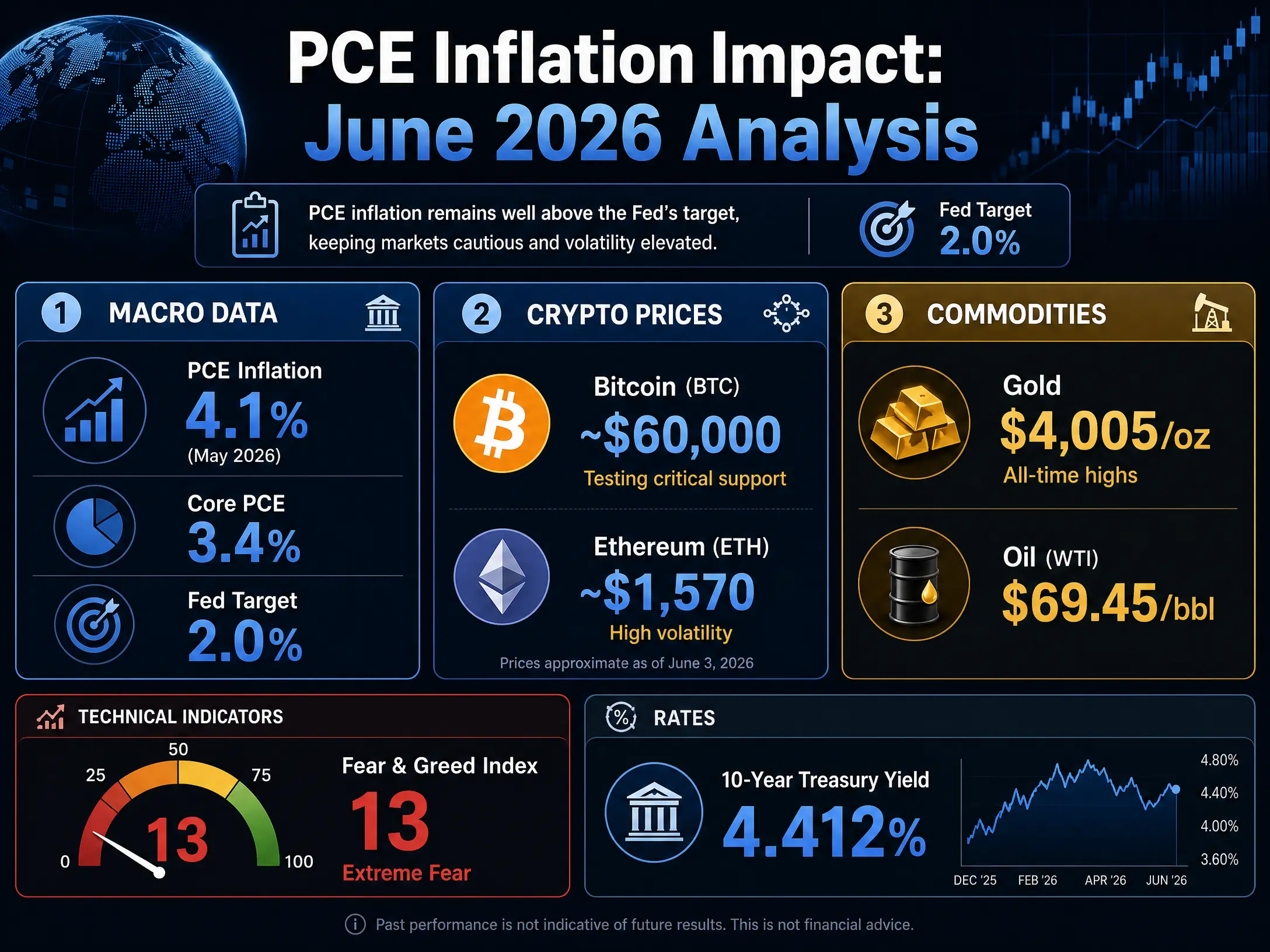
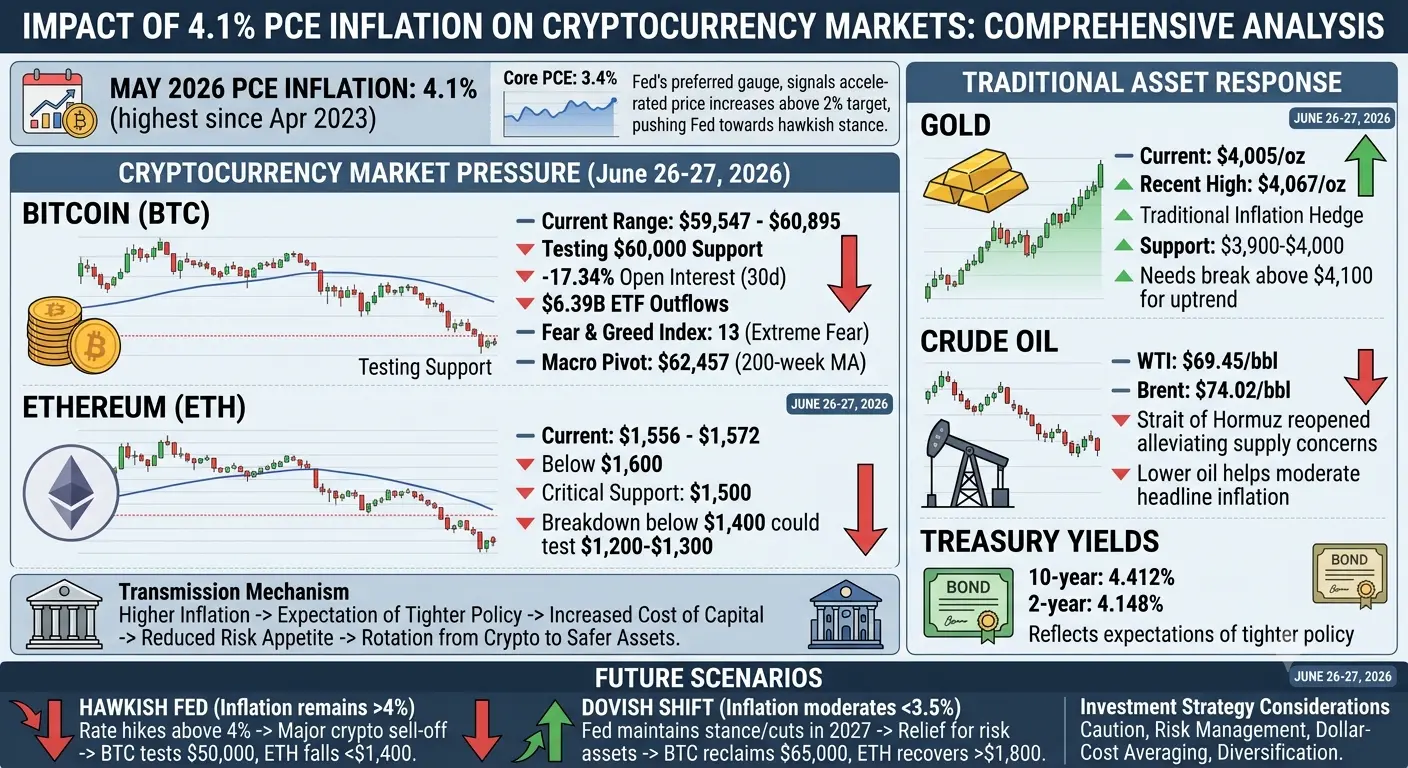
The United States Personal Consumption Expenditures (PCE) Price Index surged to 4.1% year-over-year in May, its highest reading in nearly three years and a sharp increase from 3.8% recorded in April, confirming that inflationary pressures remain significantly stronger than financial markets had anticipated.
Monthly headline PCE increased 0.4%, while Core PCE, the Federal Reserve's preferred inflation gauge excluding food and energy, accelerated to 3.4% YoY from 3.3%, with a monthly increase of 0.3%. This hotter-than-expected report immediately changed market sentiment, driving Treasury yields higher, strengthening the US Dollar, reducing global liquidity, and triggering broad-based selling across equities and cryptocurrencies as investors rapidly repriced expectations for interest-rate policy.
Why This Inflation Report Is So Important
The PCE Price Index is the Federal Reserve's primary inflation indicator because it reflects actual consumer spending patterns more accurately than CPI. A 4.1% inflation rate, which remains more than double the Fed's 2% target, signals that inflation is still deeply embedded throughout the economy despite months of restrictive monetary policy. Rising prices across housing, transportation, healthcare, insurance, food, and energy continue to erode purchasing power while increasing business costs, forcing investors to prepare for a longer period of elevated interest rates and tighter financial conditions. As expectations for rate cuts decline, liquidity across global markets contracts, making risk assets considerably more vulnerable to aggressive price corrections.
Federal Reserve Outlook and Market Expectations
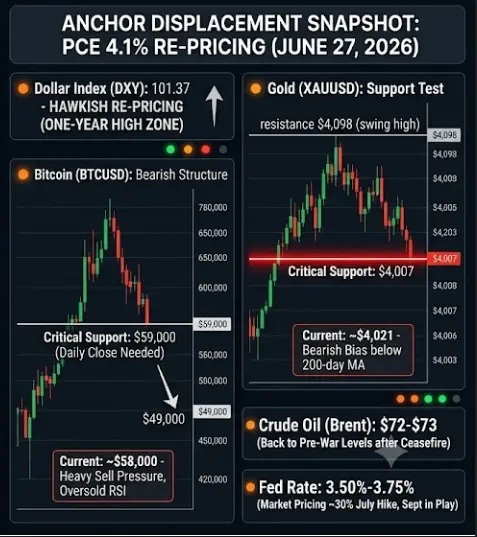
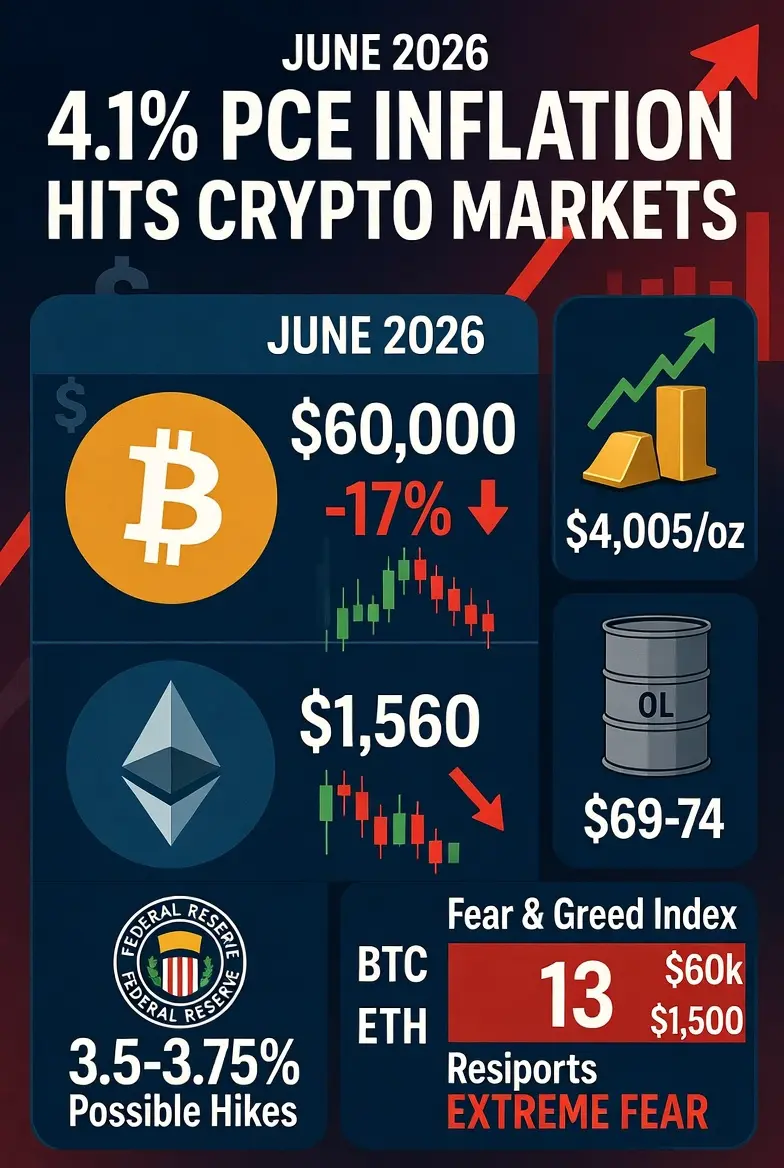
Following this inflation surprise, financial markets increasingly expect the Federal Reserve to maintain benchmark interest rates around 3.50%–3.75% for longer than previously anticipated. Higher borrowing costs generally reduce investment activity, strengthen the US Dollar, increase Treasury yields, and redirect institutional capital toward lower-risk fixed-income assets. This shift reduces available liquidity for equities and cryptocurrencies, particularly technology companies and digital assets that historically perform better in lower-rate environments. Investors are now closely watching upcoming inflation reports and labor market data for confirmation of whether inflation will remain elevated or begin moving back toward the Fed's long-term objective.
Bitcoin Experiences Heavy Selling Pressure
Bitcoin reacted sharply to the inflation release, briefly falling below the major psychological $60,000 level before attempting to stabilize near $60,150. The largest cryptocurrency declined more than 4% in a single trading session, extended weekly losses to nearly 17%, recorded monthly losses exceeding 12%, and remains more than 50% below its previous cycle peak near $126,000, illustrating how macroeconomic conditions continue to dominate market direction. Bitcoin's market capitalization declined by tens of billions of dollars as sellers overwhelmed buyers, while key technical support remains concentrated between $59,000 and $60,000. Resistance levels continue to develop around $62,000, $64,000, $67,000, and $70,000, where previous selling pressure remains significant.
Ethereum and Major Altcoins Continue Underperforming
Ethereum also faced substantial institutional selling pressure, falling approximately 9% over the week while struggling to defend support above $1,500. XRP declined nearly 10%, Solana lost around 6%, BNB weakened approximately 6%, Dogecoin dropped more than 12%, while several mid-cap altcoins recorded double-digit percentage declines as investors reduced exposure to higher-risk assets. Total cryptocurrency market capitalization declined by approximately 6%, eliminating well over $150 billion in market value within a short period and confirming that the correction extended far beyond Bitcoin into nearly every sector of the digital asset ecosystem.
Massive Liquidations, Explosive Trading Volume, and Liquidity Shock
The inflation report triggered one of the largest derivatives liquidations of recent months, with more than $1.7 billion in total cryptocurrency positions forcibly closed across major exchanges. Long positions represented approximately $1.57 billion, or more than 92% of all liquidations, while short liquidations totaled roughly $130 million, highlighting how aggressively bullish traders were positioned before the macroeconomic surprise. Bitcoin alone accounted for nearly $770 million in liquidated positions, while Ethereum contributed several hundred million dollars more as cascading stop-loss orders accelerated selling pressure. Spot trading volume increased approximately 45% month-over-month, perpetual futures volume surged dramatically, and daily exchange turnover reached multi-week highs as institutional investors, hedge funds, and retail traders rapidly adjusted their portfolios. Despite stronger trading activity, market liquidity deteriorated as order-book depth declined, bid-ask spreads widened, and market makers reduced exposure, resulting in significantly larger price swings from relatively modest orders.
Stablecoin Demand, ETF Flows, and Institutional Rotation
Capital rotated aggressively into stablecoins as investors sought temporary safety during heightened volatility. Trading volumes for USDT and USDC increased sharply while stablecoin market dominance expanded, reflecting a defensive positioning strategy across both retail and institutional participants. Bitcoin ETF outflows accelerated as institutional investors reduced exposure to digital assets in response to rising Treasury yields and tighter monetary expectations. On-chain metrics also revealed increased exchange inflows, elevated miner selling activity, reduced whale accumulation, and declining percentages of Bitcoin supply remaining in profit, all of which suggest that institutional capital is prioritizing liquidity preservation until macroeconomic uncertainty begins to ease.
Broader Market Impact and Trading Outlook
The inflation surprise affected every major asset class. Treasury yields moved higher, the US Dollar Index strengthened, and major equity indices including the Nasdaq, S&P 500, and Dow Jones declined as investors reassessed valuations under a prolonged higher-rate environment. Unless inflation begins showing consistent improvement over the coming months, financial markets are likely to remain highly volatile. Bitcoin must successfully defend the $59,000–$60,000 support region to avoid another liquidation cascade, while a recovery above $62,000–$64,000 could restore short-term bullish momentum and improve market confidence. Traders should closely monitor inflation data, Federal Reserve policy, Treasury yields, Dollar Index performance, ETF flows, funding rates, open interest, trading volume, exchange liquidity, and institutional positioning, as these macroeconomic variables are expected to remain the dominant drivers of both traditional financial markets and the cryptocurrency ecosystem throughout the remainder of the year.
The May PCE inflation reading of 4.1% marks one of the most influential macroeconomic events of the year, reinforcing expectations that inflation remains persistent and that monetary policy is likely to stay restrictive for longer. The immediate consequences included a stronger US Dollar, higher Treasury yields, weaker global equities, more than $1.7 billion in crypto liquidations, approximately 45% growth in spot trading volume, declining market liquidity, expanding stablecoin demand, accelerating ETF outflows, and billions of dollars erased from cryptocurrency market capitalization. Until inflation convincingly moves back toward the Federal Reserve's target, volatility is expected to remain elevated, making disciplined risk management and close monitoring of liquidity, volume, macroeconomic data, and institutional capital flows essential for every investor.@Gate_Square
US May PCE Inflation Surges to 4.1 Percent: A Three-Year High Triggering Massive Volatility Across Global Financial and Cryptocurrency Markets
The United States Personal Consumption Expenditures (PCE) Price Index surged to 4.1% year-over-year in May, its highest reading in nearly three years and a sharp increase from 3.8% recorded in April, confirming that inflationary pressures remain significantly stronger than financial markets had anticipated.
Monthly headline PCE increased 0.4%, while Core PCE, the Federal Reserve's preferred inflation gauge excluding food and energy, accelerated to 3.4% YoY from 3.3%, with a monthly increase of 0.3%. This hotter-than-expected report immediately changed market sentiment, driving Treasury yields higher, strengthening the US Dollar, reducing global liquidity, and triggering broad-based selling across equities and cryptocurrencies as investors rapidly repriced expectations for interest-rate policy.
Why This Inflation Report Is So Important
The PCE Price Index is the Federal Reserve's primary inflation indicator because it reflects actual consumer spending patterns more accurately than CPI. A 4.1% inflation rate, which remains more than double the Fed's 2% target, signals that inflation is still deeply embedded throughout the economy despite months of restrictive monetary policy. Rising prices across housing, transportation, healthcare, insurance, food, and energy continue to erode purchasing power while increasing business costs, forcing investors to prepare for a longer period of elevated interest rates and tighter financial conditions. As expectations for rate cuts decline, liquidity across global markets contracts, making risk assets considerably more vulnerable to aggressive price corrections.
Federal Reserve Outlook and Market Expectations
Following this inflation surprise, financial markets increasingly expect the Federal Reserve to maintain benchmark interest rates around 3.50%–3.75% for longer than previously anticipated. Higher borrowing costs generally reduce investment activity, strengthen the US Dollar, increase Treasury yields, and redirect institutional capital toward lower-risk fixed-income assets. This shift reduces available liquidity for equities and cryptocurrencies, particularly technology companies and digital assets that historically perform better in lower-rate environments. Investors are now closely watching upcoming inflation reports and labor market data for confirmation of whether inflation will remain elevated or begin moving back toward the Fed's long-term objective.
Bitcoin Experiences Heavy Selling Pressure
Bitcoin reacted sharply to the inflation release, briefly falling below the major psychological $60,000 level before attempting to stabilize near $60,150. The largest cryptocurrency declined more than 4% in a single trading session, extended weekly losses to nearly 17%, recorded monthly losses exceeding 12%, and remains more than 50% below its previous cycle peak near $126,000, illustrating how macroeconomic conditions continue to dominate market direction. Bitcoin's market capitalization declined by tens of billions of dollars as sellers overwhelmed buyers, while key technical support remains concentrated between $59,000 and $60,000. Resistance levels continue to develop around $62,000, $64,000, $67,000, and $70,000, where previous selling pressure remains significant.
Ethereum and Major Altcoins Continue Underperforming
Ethereum also faced substantial institutional selling pressure, falling approximately 9% over the week while struggling to defend support above $1,500. XRP declined nearly 10%, Solana lost around 6%, BNB weakened approximately 6%, Dogecoin dropped more than 12%, while several mid-cap altcoins recorded double-digit percentage declines as investors reduced exposure to higher-risk assets. Total cryptocurrency market capitalization declined by approximately 6%, eliminating well over $150 billion in market value within a short period and confirming that the correction extended far beyond Bitcoin into nearly every sector of the digital asset ecosystem.
Massive Liquidations, Explosive Trading Volume, and Liquidity Shock
The inflation report triggered one of the largest derivatives liquidations of recent months, with more than $1.7 billion in total cryptocurrency positions forcibly closed across major exchanges. Long positions represented approximately $1.57 billion, or more than 92% of all liquidations, while short liquidations totaled roughly $130 million, highlighting how aggressively bullish traders were positioned before the macroeconomic surprise. Bitcoin alone accounted for nearly $770 million in liquidated positions, while Ethereum contributed several hundred million dollars more as cascading stop-loss orders accelerated selling pressure. Spot trading volume increased approximately 45% month-over-month, perpetual futures volume surged dramatically, and daily exchange turnover reached multi-week highs as institutional investors, hedge funds, and retail traders rapidly adjusted their portfolios. Despite stronger trading activity, market liquidity deteriorated as order-book depth declined, bid-ask spreads widened, and market makers reduced exposure, resulting in significantly larger price swings from relatively modest orders.
Stablecoin Demand, ETF Flows, and Institutional Rotation
Capital rotated aggressively into stablecoins as investors sought temporary safety during heightened volatility. Trading volumes for USDT and USDC increased sharply while stablecoin market dominance expanded, reflecting a defensive positioning strategy across both retail and institutional participants. Bitcoin ETF outflows accelerated as institutional investors reduced exposure to digital assets in response to rising Treasury yields and tighter monetary expectations. On-chain metrics also revealed increased exchange inflows, elevated miner selling activity, reduced whale accumulation, and declining percentages of Bitcoin supply remaining in profit, all of which suggest that institutional capital is prioritizing liquidity preservation until macroeconomic uncertainty begins to ease.
Broader Market Impact and Trading Outlook
The inflation surprise affected every major asset class. Treasury yields moved higher, the US Dollar Index strengthened, and major equity indices including the Nasdaq, S&P 500, and Dow Jones declined as investors reassessed valuations under a prolonged higher-rate environment. Unless inflation begins showing consistent improvement over the coming months, financial markets are likely to remain highly volatile. Bitcoin must successfully defend the $59,000–$60,000 support region to avoid another liquidation cascade, while a recovery above $62,000–$64,000 could restore short-term bullish momentum and improve market confidence. Traders should closely monitor inflation data, Federal Reserve policy, Treasury yields, Dollar Index performance, ETF flows, funding rates, open interest, trading volume, exchange liquidity, and institutional positioning, as these macroeconomic variables are expected to remain the dominant drivers of both traditional financial markets and the cryptocurrency ecosystem throughout the remainder of the year.
The May PCE inflation reading of 4.1% marks one of the most influential macroeconomic events of the year, reinforcing expectations that inflation remains persistent and that monetary policy is likely to stay restrictive for longer. The immediate consequences included a stronger US Dollar, higher Treasury yields, weaker global equities, more than $1.7 billion in crypto liquidations, approximately 45% growth in spot trading volume, declining market liquidity, expanding stablecoin demand, accelerating ETF outflows, and billions of dollars erased from cryptocurrency market capitalization. Until inflation convincingly moves back toward the Federal Reserve's target, volatility is expected to remain elevated, making disciplined risk management and close monitoring of liquidity, volume, macroeconomic data, and institutional capital flows essential for every investor.@Gate_Square