Background: Why Individuals and Teams Need a Self-Hosted Assistant Framework
The rise of large language models has rapidly increased the demand for assistants that are always online and accessible via platforms like Telegram, Slack, and Discord. Unlike simple web-based chat, these systems typically feature persistent gateways, multi-platform compatibility, credential and webhook security, and optional browser or terminal execution capabilities. Both OpenClaw and Hermes Agent are designed for this space, catering to users who want to keep their data and processes on their own machines or internal networks, rather than relying solely on a closed-source SaaS.
Product Positioning and Maintainers
- OpenClaw: Marketed as a personal assistant for any system and platform, OpenClaw’s repository is OpenClaw. Its release notes frequently reference channels, plugin SDKs, configuration validation, key management, sandboxing, and related updates, reflecting a product- and gateway-focused engineering approach.
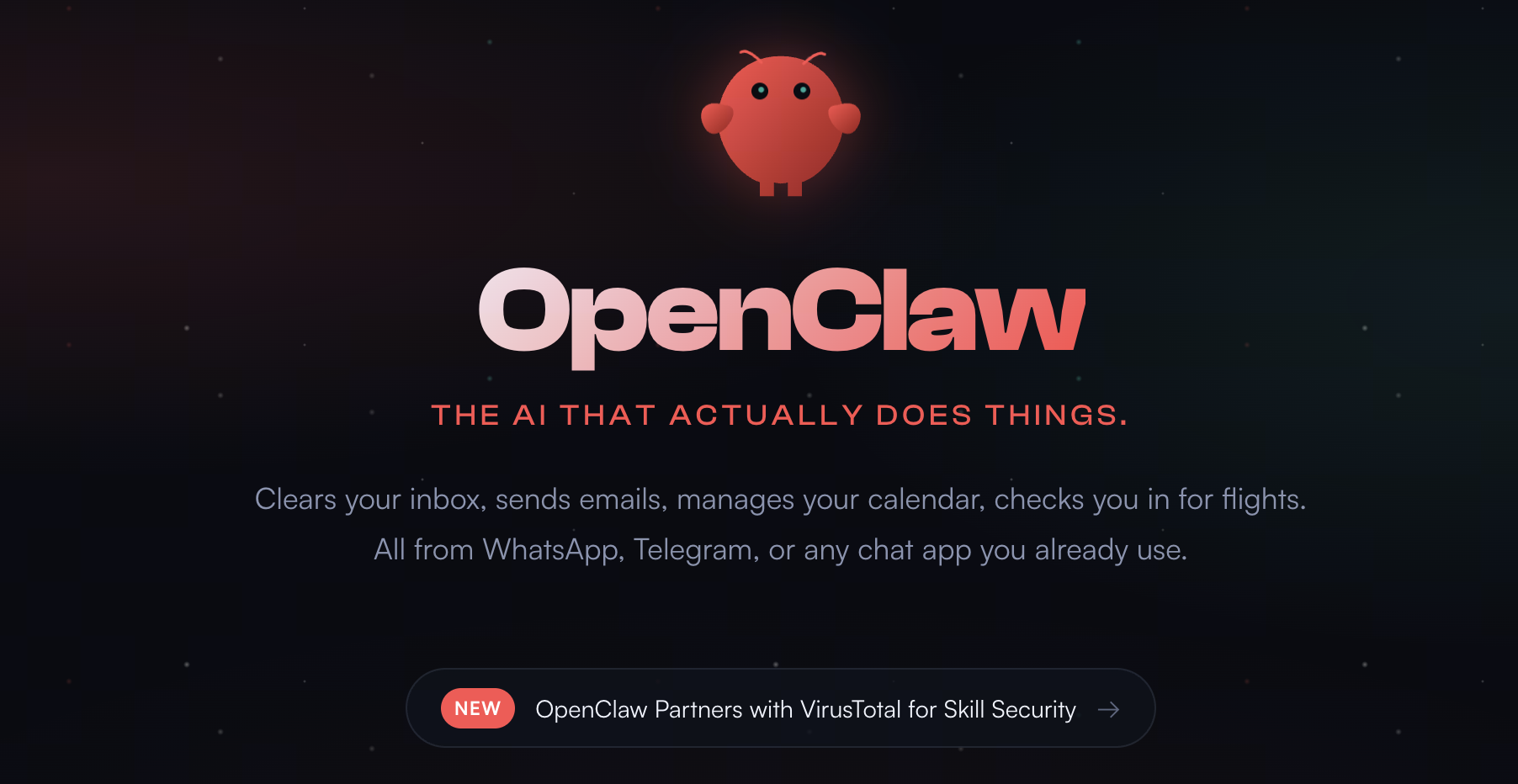
Image source: OpenClaw Official Website
- Hermes Agent: Maintained by Nous Research, Hermes Agent’s documentation centers on the core AIAgent (run_agent.py) and a unified entry point. The project balances everyday assistant functions with readable architecture and research-oriented modules, such as trajectory and environment extensions, as detailed in the official docs.
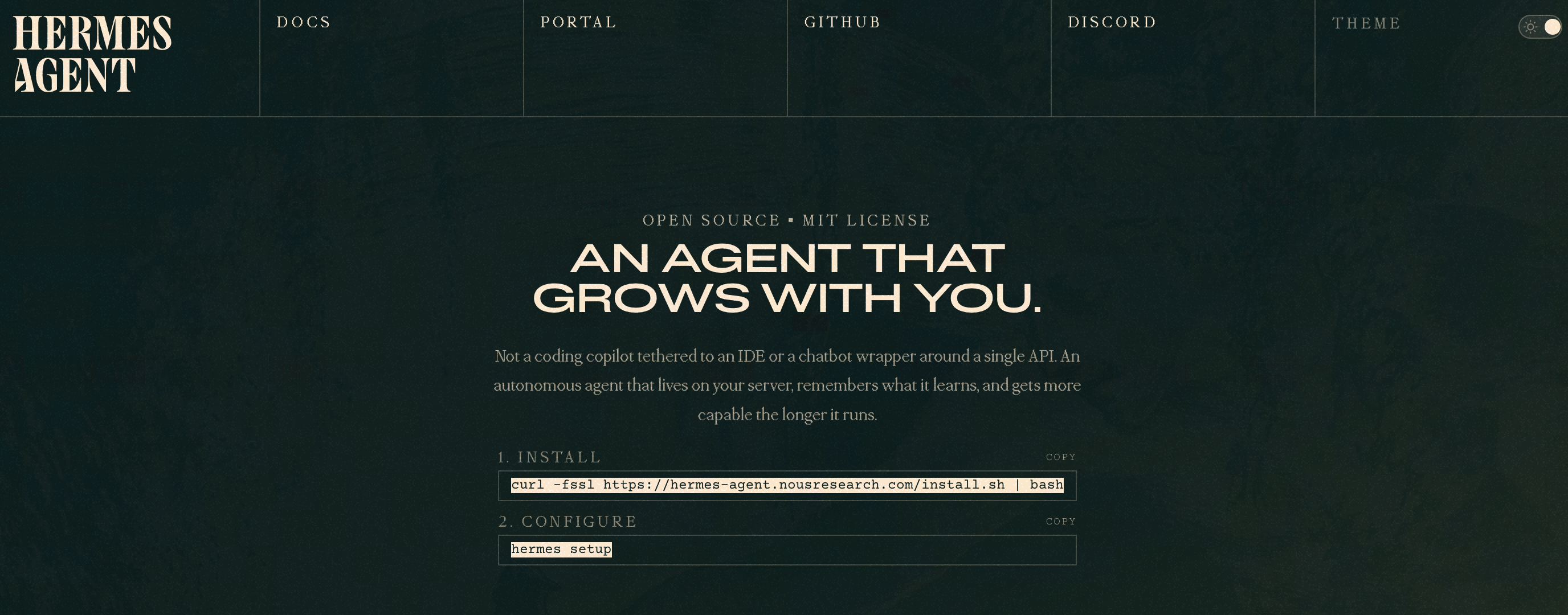
Image source: Hermes Official Website
These platforms are not simply divided into “application-layer chatbots” and “frameworks”—both now operate as persistent backend systems. Their differences lie more in implementation language, module structure, and documentation emphasis.
Tech Stack and Code Structure
| Dimension |
OpenClaw |
Hermes Agent |
| Primary Language |
TypeScript / Node ecosystem |
Python |
| Core Abstractions |
Engineering separation of gateway, channel, tools, plugins, etc. |
AIAgent, tool registry, gateway, etc., all in a single repository (see official architecture docs) |
| Extension Practices |
Follows common front-end/back-end stacks like npm, plugins, and MCP |
tools/*.py self-registration, plugins divided by memory, context engine, etc. |
If your team’s main stack is Node / TypeScript, maintenance and secondary development will feel more natural with OpenClaw. If Python is your core, or you want to align with data and research scripts, Hermes is likely a better fit.
Channels, Entry Points, and Typical Use Cases
Common ground:
-
Both integrate “conversational assistants” with popular instant messaging platforms (see each project’s official documentation for details).
-
Both emphasize self-hosting, with conversations and status by default remaining with the operator (though this depends on whether you forward requests to a closed-source model API).
Key differences:
-
OpenClaw: Release notes and community updates frequently mention multi-channel, multi-account support, and production-grade security patches, making it ideal for environments with multiple channels, rapid versioning, and teams willing to manage changes based on release notes.
-
Hermes: The official architecture lists CLI, Gateway, ACP (integration with editors like VS Code, Zed, JetBrains), and cron-style tasks as entry points. This suits teams seeking unified agent semantics across dev machines, servers, and editors.
-
OpenClaw: Features are extended via tools, MCP, and community skill sets. Release notes show ongoing enhancements like PDF analysis, browser integration, and sub-affiliate sessions—ideal for teams familiar with MCP and plugin models.
-
Hermes: Documentation describes around 47 built-in tools and 19 toolsets, supports dynamic MCP integration, and details skills in SKILL.md and agentskills.io. This is suitable for those wanting tool discovery, registration, and scheduling to be fully readable within a single repository.
When comparing, note that public “tool count” and “platform count” figures change as versions evolve; always check the latest documentation before deployment.
Memory, Conversation, and Observability
-
Hermes: The architecture explicitly includes SQLite, FTS5 full-text search, conversation lineage and compression, prompt caching, etc. The design prioritizes explainable behavior, auditability, and stable system prompts within conversations.
-
OpenClaw: Release notes mention memory retrieval providers (such as Ollama embedding), conversation and sub-affiliate support, focusing on productized memory and multi-session scenarios.
If your organization has compliance or internal audit requirements, create a checklist for data storage location, retention policy, logging, and tool auditing. Compare both projects’ official security and privacy statements—don’t just look at feature names.
Security and Operations Considerations
Assistants capable of disk access, command execution, browser control, and webhook integration have a much larger attack surface than read-only chatbots. Key points include:
-
Release notes regularly include security fixes and breaking changes, indicating ongoing issue discovery—this is normal for mature projects and means operators must continually patch.
-
Python and TypeScript themselves do not guarantee higher or lower security; the real differences are in default tool configurations, outbound network access, sandboxing, and workspace boundaries.
Top recommendations:
-
Least privilege: Restrict tool profiles, workspace read/write access, and outbound networking.
-
Gateway exposure: For public deployments, use reverse proxies, authentication, and rate limiting. Avoid exposing webhooks directly.
-
Credential management: Manage API Keys and channel tokens as per official guidelines, and rotate them regularly.
Selection Recommendations and Summary
Evaluate your situation as follows:
-
Tech stack: Is your main stack Node or Python? Can you keep up with OpenClaw’s rapid release cycle?
-
Entry points: Do you rely heavily on IDE-integrated ACP, cron, batch processing, etc.? (If so, start with Hermes documentation.)
-
Operations: Do you have resources for channel, TLS, plugin, and dependency upgrades?
-
Compliance: Can your data be stored offsite? How long are logs retained? Is browser automation permitted?
Conclusion
OpenClaw and Hermes are not direct substitutes. OpenClaw is more aligned with a TypeScript gateway and multi-channel productization, while Hermes is geared toward a Python single-core agent with integrated interfaces and research-oriented extensions. For overlapping features, real workflow testing in a controlled environment is essential. Ultimately, your choice should be based on team expertise, operational costs, and threat models—not a single ranking metric.