Bitcoin Rebound — A Bull Trap or a Genuine Trend Reversal?

Last Updated 2026-03-26 03:32:39
Reading Time: 1m
Evaluate if Bitcoin's recent rally signals a true upward trend or merely a bull trap, drawing on current price action and historical trends. Discuss whether BTC is mirroring the bear market behavior of 2022 and identify possible price risk levels.

Current Bitcoin Price Trend Overview
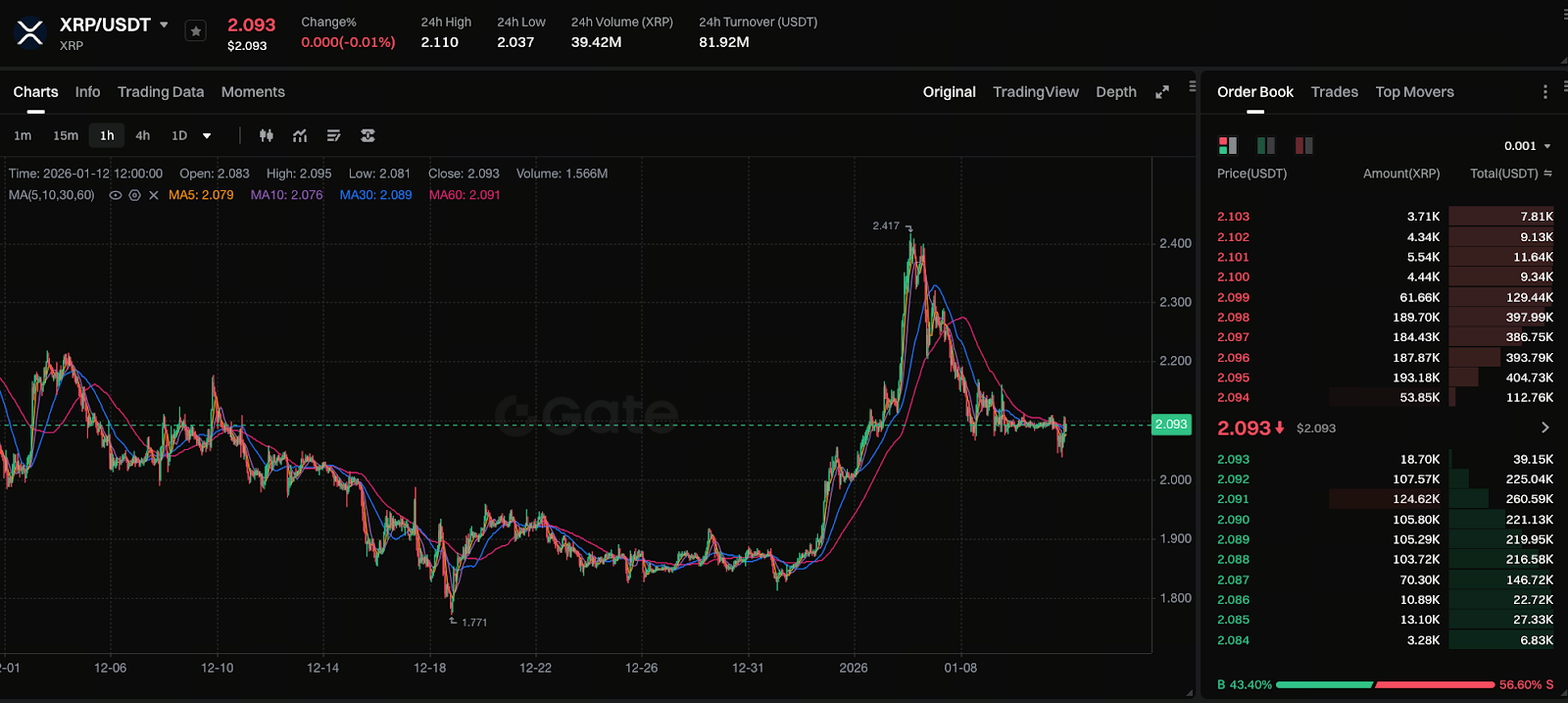

Chart: https://www.gate.com/trade/BTC_USDT

As of January 12, 2026, Bitcoin (BTC) has been trading within the $90,000–$92,000 range. Compared to the previous sharp decline, the market now shows signs of stabilization and a modest rebound. Investor sentiment has improved from the earlier phase of extreme fear.

However, current trading volume and momentum indicate that this rebound has yet to establish a clear medium-term upward trend. While some data suggest the pullback slope is less steep than in previous bear markets, overall evidence does not confirm the beginning of a new bull market.

Key Technical Features of a Bull Trap

A bull trap refers to a brief price rebound within a downtrend, which attracts new capital but quickly reverses and resumes the previous decline. Typical features include:

  • Prices briefly break through or test major resistance levels, then rapidly retreat;
  • Trading volume does not expand significantly, lacking confirmation from large-scale inflows;
  • Major technical indicators—such as MA, RSI, and MACD—fail to generate valid reversal signals.

Recently, BTC has repeatedly attempted to break above key round-number resistance levels, but has consistently failed to achieve a sustained breakout. Instead, it has retreated from higher levels, leaving bearish traders in control. This pattern, common during sharp trend corrections, is often seen as a false breakout or bull trap rally.

2022 Bear Flag Pattern: Comparative Analysis

Some technical analysts compare the current BTC structure to the Bear Flag formation seen during the 2021–2022 bear market.

This pattern typically includes:

  • A sharp initial decline forming the “flagpole”;
  • Price consolidation in a downward or sideways channel;
  • A subsequent breakdown that resumes the downward trend.

Some observers believe similar formations may reappear in the 2026 cycle. Historically, when BTC displays this pattern, it often retests lower support levels and can set new interim lows. As a result, some market participants view the current rebound as having pronounced bull trap characteristics.

Bullish Viewpoint: Why the Rebound Is Not Necessarily a Bear Trap

While technical signals point to caution, not all analyses support the bull trap scenario. Main counterarguments include:

  • Certain long-term on-chain indicators remain in bullish territory, with no signs of structural breakdown;
  • Some price formations suggest a medium-term consolidation platform is developing, rather than simply continuing the decline;
  • Macro factors—such as ETF inflows and expectations of improved global liquidity—may offer structural support for BTC.

Bullish analysts argue that, if BTC decisively breaks above the current trading range, it could be technically positioned to retest the six-figure price zone.

Moreover, compared to 2022, the current market features significantly increased institutional participation, deeper derivatives markets, and a different liquidity structure. Historical patterns may not repeat exactly.

Summary: Assessing the Current BTC Market Phase

  • The current rebound is reasonable, but a definitive trend reversal is not yet confirmed;
  • Bull Trap and Bear Flag remain key risk patterns that warrant close attention;
  • Determining whether the rebound is genuine requires multi-factor analysis—price structure, trading volume, on-chain data, and macro variables;
  • Until market direction becomes clear, investors should focus on key price levels and robust risk management strategies to avoid asymmetric risks from false breakouts.
Author: Max
Disclaimer
* The information is not intended to be and does not constitute financial advice or any other recommendation of any sort offered or endorsed by Gate.
* This article may not be reproduced, transmitted or copied without referencing Gate. Contravention is an infringement of Copyright Act and may be subject to legal action.

Related Articles

What is Fartcoin? All You Need to Know About FARTCOIN
Intermediate

What is Fartcoin? All You Need to Know About FARTCOIN

Fartcoin (FARTCOIN) is a representative meme coin within the Solana ecosystem based on an AI-driven narrative. Its core concept originated from an experiment aimed at exploring the "boundaries between AI Agents and humor." More than just a digital asset with social attributes, the project deeply couples absurd humor culture with on-chain financial logic by integrating autonomous AI interaction models.
2026-04-04 22:01:19
Gold Price Forecast for the Next Five Years: 2026–2030 Trend Outlook and Investment Implications, Could It Reach $6,000?
Beginner

Gold Price Forecast for the Next Five Years: 2026–2030 Trend Outlook and Investment Implications, Could It Reach $6,000?

Analyze current gold price trends alongside authoritative five-year forecasts, integrating an evaluation of market risks and opportunities. This gives investors insight into the potential trajectory of gold prices and the main drivers expected to shape the market over the next five years.
2026-03-25 18:13:30
Aster vs Hyperliquid: Which Perp DEX Will Prevail?
Beginner

Aster vs Hyperliquid: Which Perp DEX Will Prevail?

Aster and Hyperliquid are the two representative protocols of the "purpose-built L1 path" within the current decentralized perpetual exchange (Perp DEX) sector. As a pioneer in the field, Hyperliquid has built a deep liquidity moat through its highly mature order book architecture and strong community consensus. Conversely, Aster, as a rising challenger, seeks to leapfrog the competition in high-performance trading through more aggressive multi-chain aggregation logic, private transaction modules, and an underlying execution environment optimized for 2026 market demands.
2026-03-24 11:58:33
AI-Native Settlement Layers: How United Stables Is Building the Next Financial Rail
Beginner

AI-Native Settlement Layers: How United Stables Is Building the Next Financial Rail

Stablecoins were originally designed as dollar substitutes within exchanges, primarily used for asset pricing and trade settlement. As on-chain financial ecosystems have matured, their role has expanded beyond simple payments to include collateral assets, cross-chain liquidity mediums, and unified settlement units. In particular, as AI systems and automated agents begin to participate directly in economic activity, demand has risen sharply for programmable value units capable of instant settlement. This shift is pushing stablecoins toward the role of foundational financial infrastructure.
2026-03-25 03:16:17
Aerodrome Tokenomics: How ve(3,3) Powers Base's Most Profitable DEX
Beginner

Aerodrome Tokenomics: How ve(3,3) Powers Base's Most Profitable DEX

AERO is the native token of Aerodrome Finance, a core decentralized exchange and liquidity protocol in the Base ecosystem. It is primarily used for liquidity incentives and ecosystem operations. veAERO is a governance NFT that users receive by locking AERO, representing both voting power and the right to share protocol revenue. Through a dual track structure of AERO as a utility token and veAERO as a governance credential, Aerodrome separates liquidity usage value from long term governance power, allowing participants to act as liquidity providers, governance decision makers, and revenue sharers within the same system.
2026-03-25 06:40:31
How Does Kite Work? An In-Depth Look at Kite's Identity and Programmable Permission Architecture
Beginner

How Does Kite Work? An In-Depth Look at Kite's Identity and Programmable Permission Architecture

Kite is an EVM compatible Layer 1 blockchain network that runs on proof of stake. It is designed to give AI agents verifiable identity, programmable permissions, and real time settlement in an on-chain execution environment. In Kite's design, AI is no longer only a tool that follows instructions. It becomes an economic participant with independent on-chain identity and direct control over assets. Within secure and auditable infrastructure, an AI agent can complete payments, call services, and coordinate tasks autonomously, making Kite a foundational layer for the emerging agent economy.
2026-03-25 06:02:34