runesleo

vip
Active for: 8.6y
Peak Tier 6
No content yet
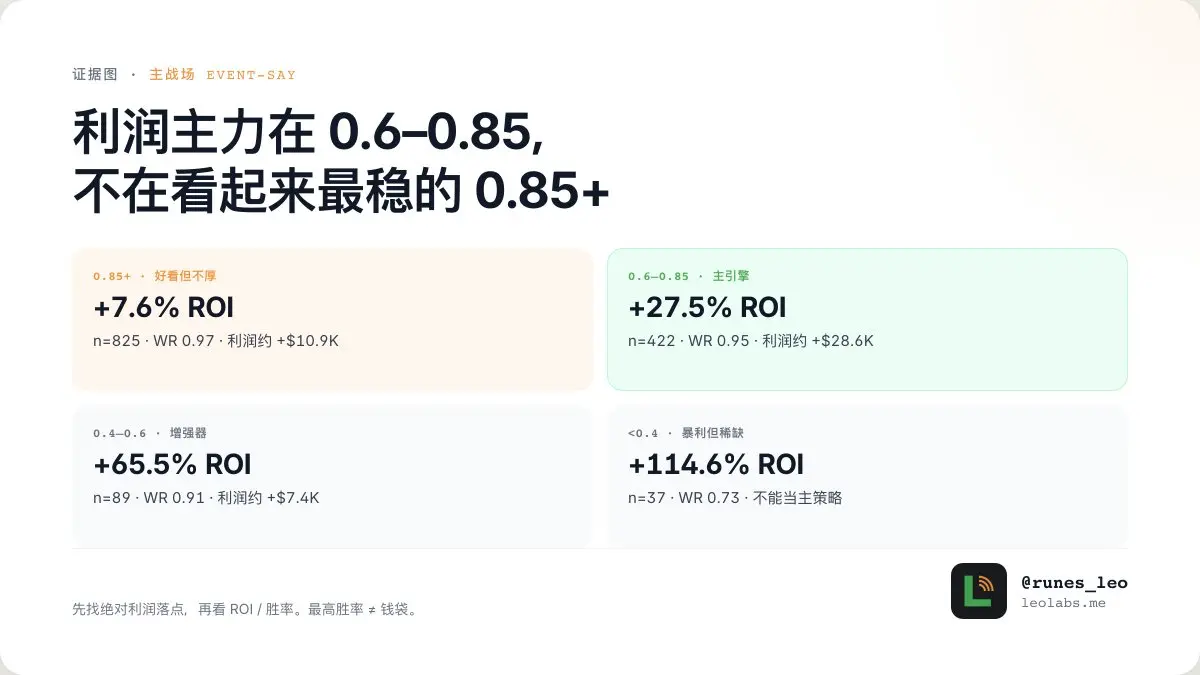
A Polymarket player with about a 96% win rate on the main battleground: I split BipBop’s 1,632 trades into separate positions
This account on the leaderboard: BipBop
1,632 settled positions, main battleground win rate about 96%, positive for multiple consecutive months.
Most people’s first reaction is: copy him.
We actually backtested that layer that looks “like him” — turning “buy 0.85–0.95 high-probability markets, and get to settlement” into a mechanical strategy, backtesting 5,378 markets (high-probability bucket compared group): win rate 88.9%, net profit −2.5%.
Win rate is an illusion. A
View Original
post-image
  • Reward
  • Comment
  • Repost
  • Share
Codex is down—congratulations, everyone is about to welcome a new round of credit limit resets!
View Original
post-image
  • Reward
  • Comment
  • Repost
  • Share
Automated trading is all the rage right now, and everyone is teaching people to have Claude place orders directly.
But permissions shouldn’t be tied together like this.
One rule you can take away is: research permissions can be given to an Agent, but trading permissions (wallet, signing, placing orders) must not be handed over together.
The correct split is: only open a public, read-only research interface; the execution interface is always separate and requires manual approval.
polymarket-toolkit does exactly this.
After GitHub open-sources runesleo/polymarket-toolkit, MCP provides
View Original
  • Reward
  • Comment
  • Repost
  • Share
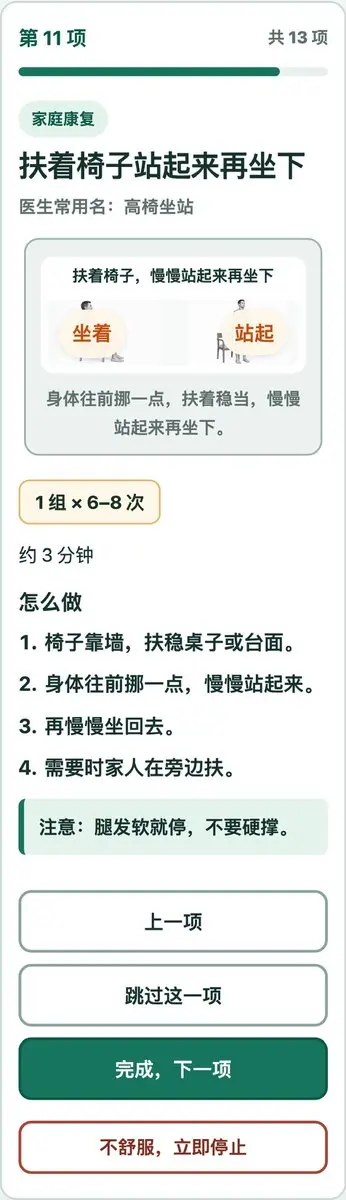
When you’re not at home and the elderly are not by your side, and they also have very specific needs, with AI now, it really becomes convenient to create highly customized small tools.
For example, in my family, an elderly person needs to do muscle rehabilitation training for a period of time. I turned the movements and intensities that have already been confirmed into a web page specifically for him: when you open it, you can immediately see what to train today, with one item per screen that you can follow directly. If the plan changes later, I can also update the page for them right away.
In
View Original
post-image
post-image
  • Reward
  • Comment
  • Repost
  • Share
Where does the money in weather markets come from?
Many niche opportunities look like toys at first glance.
Weather markets especially do.
The city, the target date, the high/low temperature, temperature thresholds or ranges, yes/no contracts (YES/NO)—all the official settlement inputs.
But after following it for a while, I’ve become increasingly certain of one thing:
The real alpha in this kind of niche markets is usually hidden somewhere others can’t be bothered to structure.
Here, alpha means “potential excess-return opportunities that may exist in the market.”
In this issue of Leo Insider,
View Original
  • Reward
  • Comment
  • Repost
  • Share
Many people, before setting up a GitHub project, will first check the number of Stars.
Stars are just a discovery signal. What ultimately determines whether you can actually install it are the four gates before installation.
Take a repository that currently has only about 1 Star as an example: chungty/unjiggle.
The command is: pip install unjiggle.
With AI + it, it organized 304 iPhone apps into 3 pages.
On the first write-back, the system immediately rearranged the layout, thinking it had failed; only after the second full read-and-write did it stabilize for real.
The path it takes is backup
View Original
  • Reward
  • Comment
  • Repost
  • Share
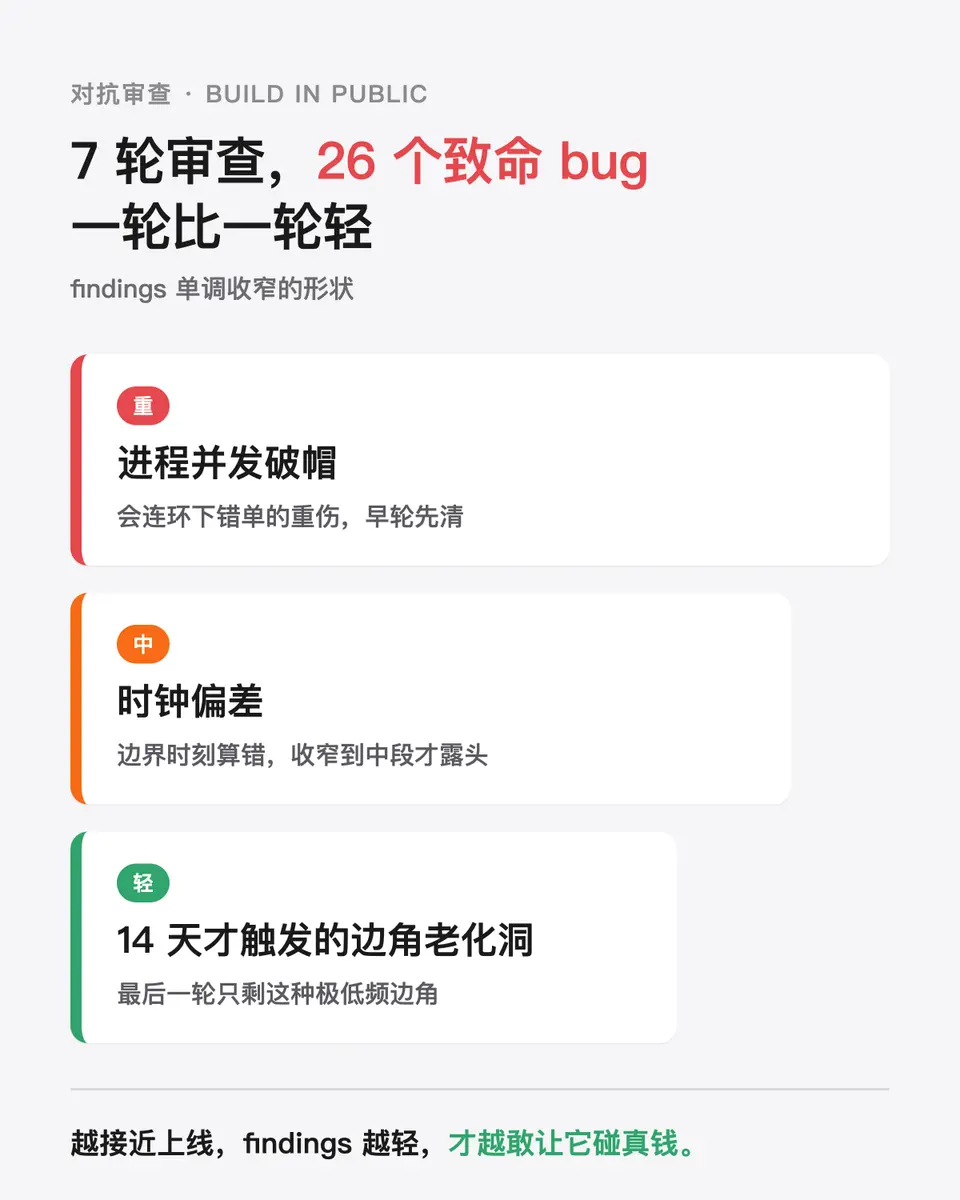
Everyone is asking AI to write code, but today I did something even more thrilling—getting it to write a piece of code that can automatically spend real money and place orders with zero human supervision.
First, I laid out the decision logic card: I thought through the boundaries, the worst-case scenarios, and the kill conditions before I dared to touch it. I initially wanted Codex to set up the actuators by itself, but the dispatch channel was unstable all day, so I switched to building it incrementally in my own main thread.
Before going live, I ran 7 rounds of adversarial code reviews, and
View Original
post-image
  • Reward
  • 1
  • Repost
  • Share
scarletxanin:
thanks a lot for this
On X, the screenshots and numbers that look the most over-the-top are actually the easiest to verify in the AI era.
If you give the original post and the screenshots to AI for deep analysis—reporting standards for the figures, gaps in the evidence, and contradictions between what comes before and what follows—everything will quickly come to light.
Which ones are trustworthy and which ones aren’t is no longer as hard to check as it used to be.
View Original
  • Reward
  • Comment
  • Repost
  • Share
Recently, I went back and restructured multi-model routing, adding explicit downgrade receipts and an artificial-action gate. The goal is to keep the system controllable even when a model goes wrong.
On the day Hugging Face’s official disclosure on 2026-07-16 released attack logs with more than 17,000 records, I realized that I hadn’t actually checked whether the self-hosted analysis route could be used on the day of the incident at all.
The Hugging Face team first used frontier models from a commercial API to process these logs. As a result, the real attack commands, exploit payloads, and C2
View Original
  • Reward
  • Comment
  • Repost
  • Share
Five days ago, I locked all four lanes—Claude, Codex, Cursor, and Grok—into the strongest model with the highest reasoning setting. The idea was: since I paid for it, I should use the best fully.
Five days later, I realized I can’t handle it at all. The quota drops too fast. The strongest model ends up doing redundant checks and formatting work—pure waste.
Now I’ve changed it: I split by judgment density. For tasks where mistakes would cost money or contaminate data—reviews, cross-validation, funding strategy—I keep the strongest seat. For day-to-day implementation and development, I use a mid
View Original
post-image
  • Reward
  • Comment
  • Repost
  • Share
Many people see that real-world events have already ended, and the market headlines are crystal clear, even with prices showing close to 0 or 1, and they assume the Polymarket market has already reached final settlement.
In fact, these signals alone cannot prove that the market has been conclusively settled. Headlines only describe the question, and displayed prices are only a reflection of the current market.
My screening gate only allows one line: pass these six questions first. If any item can’t be clarified, skip this market.
1. What exactly does the Rules ask.
The headline only describes
View Original
  • Reward
  • Comment
  • Repost
  • Share
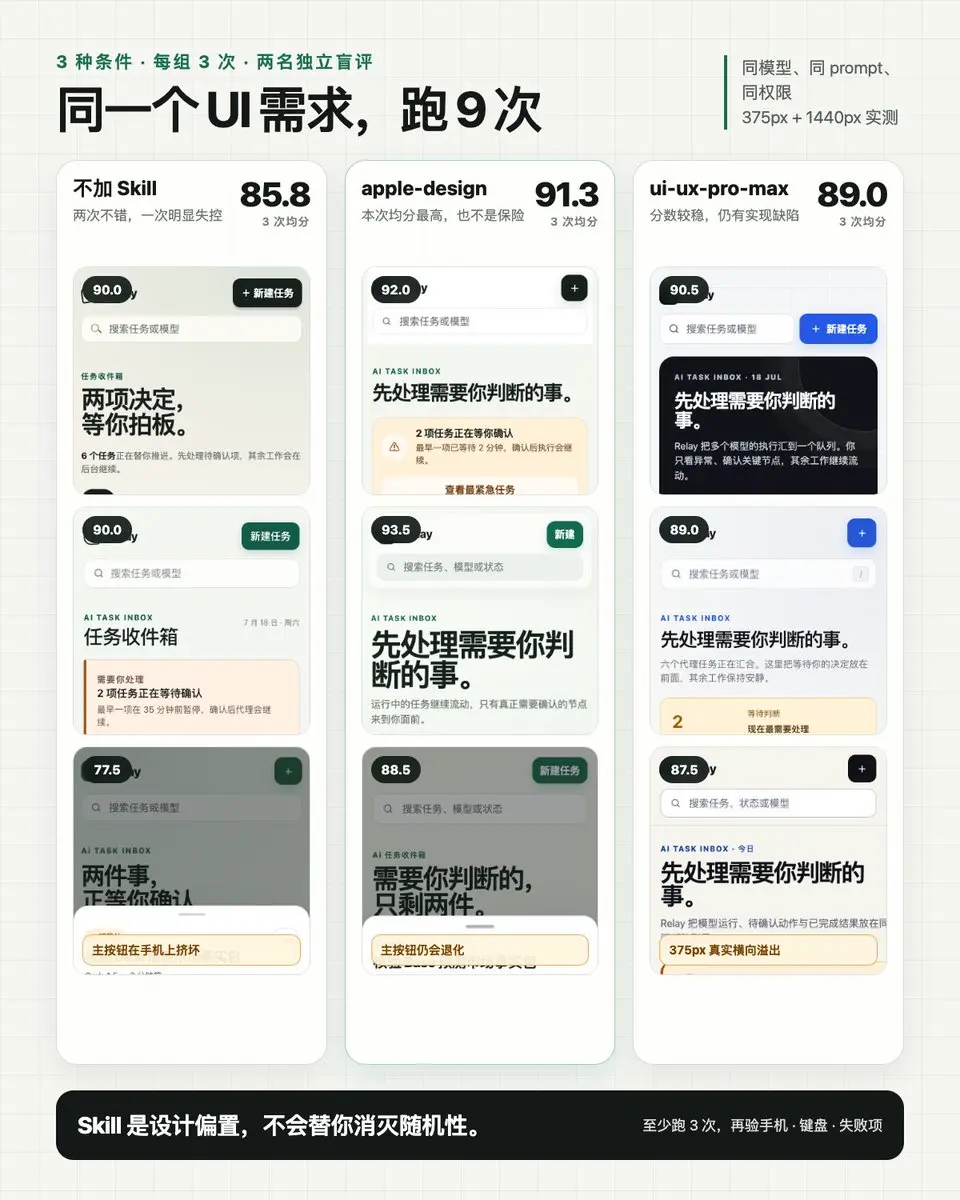
I gave the same UI requirement to the same model and ran it 9 times: 3 runs with no Skill, 3 with apple-design, and 3 with ui-ux-pro-max.
The results forced me to change my evaluation approach: the same set of Skill can produce one great output and another failure.
After anonymizing the 9 sets of results and handing them to two people for independent scoring, the average scores across the three groups are:
apple-design 91.3
ui-ux-pro-max 89.0
no Skill 85.8
But none of the three groups achieved 3/3 with zero defects.
apple-design and no Skill each had a case where the primary button on the ph
View Original
post-image
  • Reward
  • Comment
  • Repost
  • Share
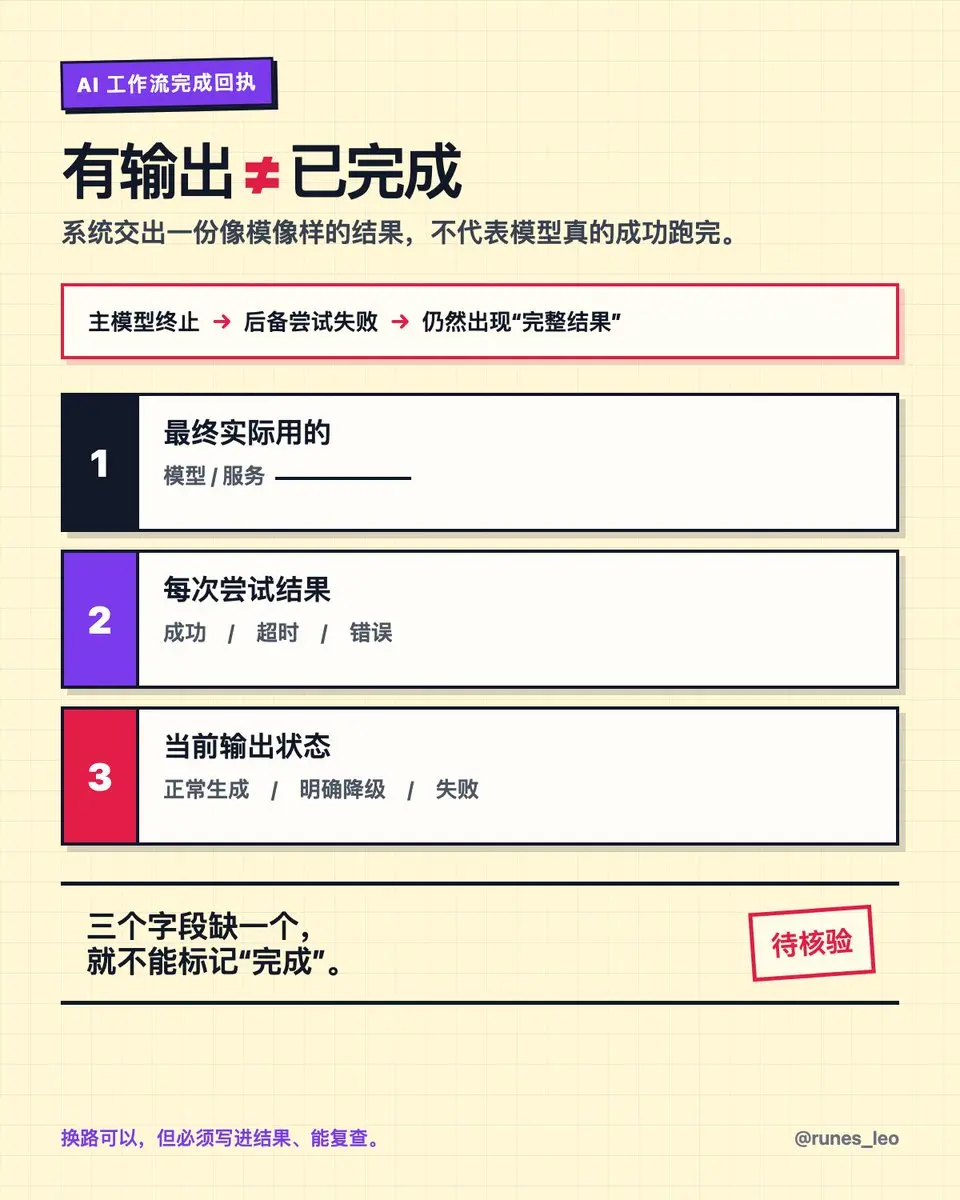
The most dangerous failure in AI workflows isn’t a direct error.
It’s when the main model goes down and the fallback also fails, yet the system still outputs a seemingly complete result—making people think it’s done.
I hit this once: during daily information processing, the main model got cut off at 60 seconds, the fallback didn’t succeed either, but in the end I still received an extraction text that looked respectable. The problem isn’t “switch to another route and keep trying,” but that after switching routes, nobody clearly explains what happened.
Later, I added three receipt checks
View Original
post-image
  • Reward
  • Comment
  • Repost
  • Share
How to build in public?
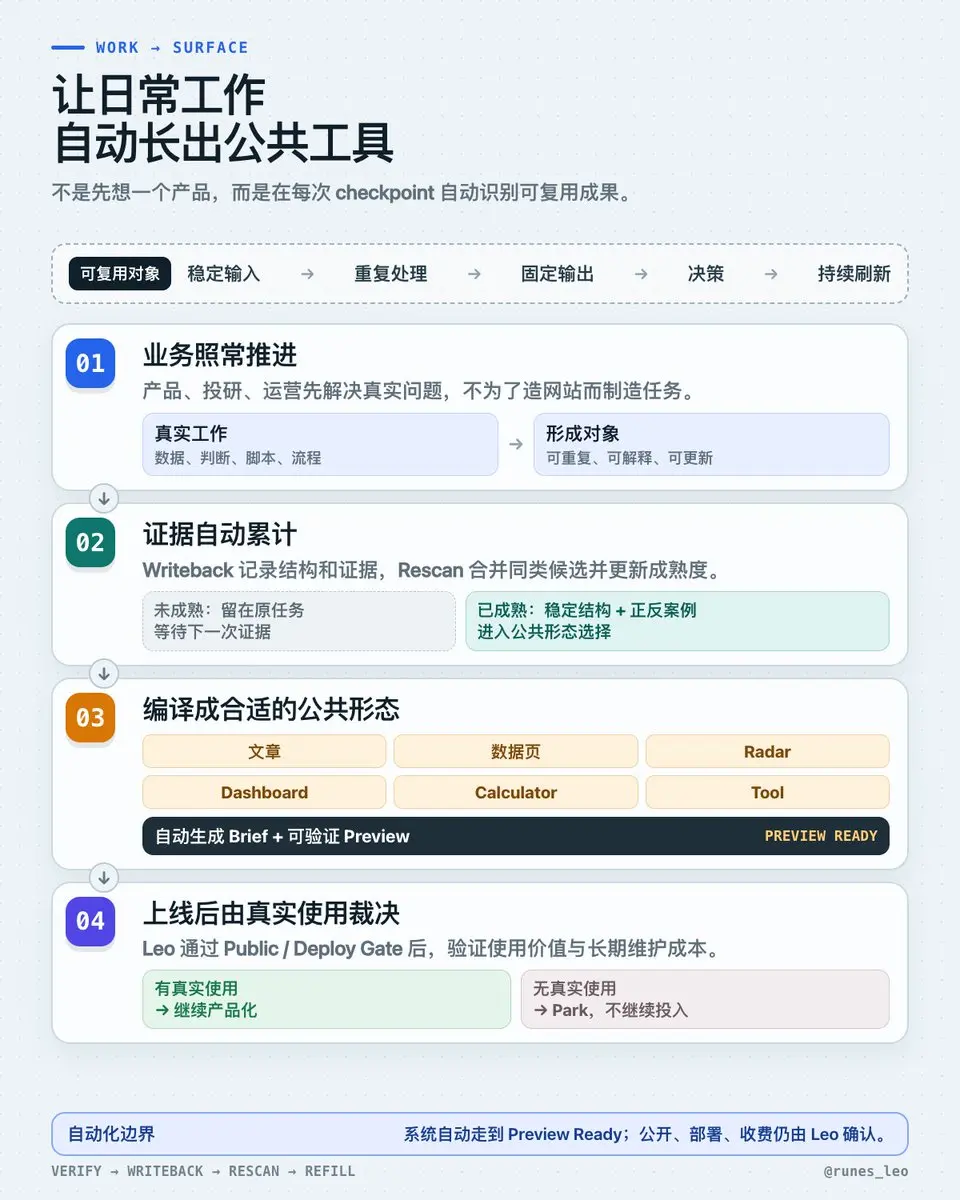
Today, I had AI work from early morning to late night—pushing tasks, research, scripts, and queues forward a lot. But on X, there’s still nothing worth posting. The content system feels like it has no topic selection at all.
On the 16th, I published 8 pieces of content; on the 17th, I did more actual work, yet the supply clearly dropped.
So I made Work → Surface v1.
It passed 19/19 tests, and it also reads and verifies 99 live task cards. Currently it only has one mature reusable object, which can automatically derive 2 preview-ready packets.
The system won’t automatica
View Original
post-image
  • Reward
  • Comment
  • Repost
  • Share
  • Pinned