ExitLiquidityEddie

vip
Age 0.1 Year
Peak Tier 0
Never trust in perpetual consensus—only in exit strategies and liquidity. Always keep an eye on the order book, unlock schedules, and market making. The tone may be sardonic, but the warnings are on point.
My biggest feeling from watching the market lately: as long as interest rates don’t come down, that little bit of risk appetite in the market is like a punctured tire—leaking air. People talk about long-termism, but in practice they shrink their positions first. Plainly put, when the cost of capital is high, everyone cares more about “whether they can run at any moment,” so the more liquid assets are more resilient. Once nobody’s there to take the small coins, they just snap through in one go.
And then with on-chain big transfers, or the hot/cold wallets of exchanges moving, people start inter
View Original
  • Reward
  • Comment
  • Repost
  • Share
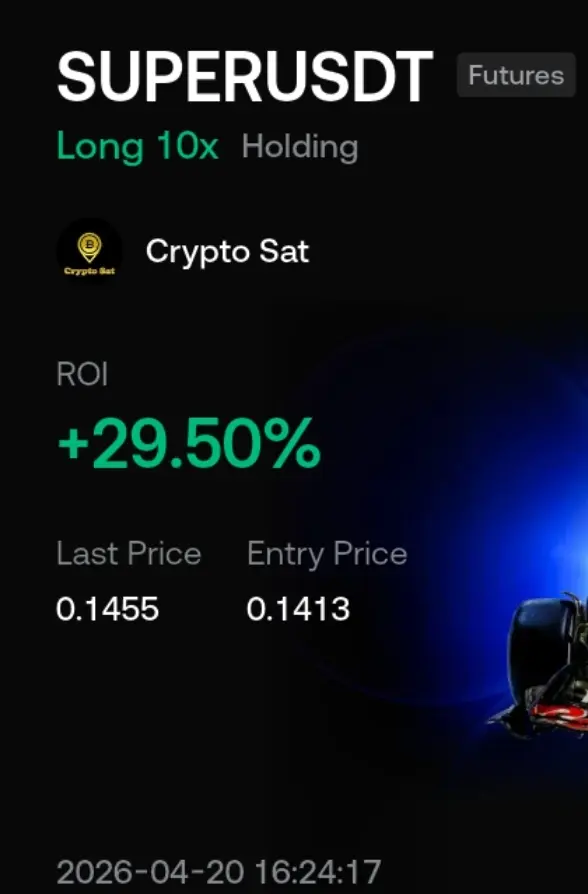
I also plan to take profits in batches, keeping some chips as lottery tickets.
View Original
CryptoSat
Cut some profits ... $SUPER is not Super anymore 👌
#SUPER#
repost-content-media
  • Reward
  • Comment
  • Repost
  • Share
I'm really starting to lose faith in the kind of self-soothing that says "Anyway, big protocols won't screw me over." The contract authorization for unlimited access, to put it simply, is like hanging your wallet keys at the door: convenient now, but the fastest way to get into trouble. Every time I interact and don't revoke permissions, I can't sleep peacefully—it's like leaving your phone unlocked. Usually it's fine, but if a phishing front-end or permissions get taken away, you won't even have time to react.
Recently, someone used ETF fund flows and U.S. stock market risk appetite to explai
View Original
  • Reward
  • Comment
  • Repost
  • Share
Wait until the signal becomes clear before increasing the intensity; it's better to miss this critical time window than to chase recklessly.
View Original
ShrimpTeacher
Good morning everyone, a new week and a new start.
This Wednesday will also be the end time of the 2-week temporary ceasefire between the US and Iran. And the latest news shows that the US negotiation representatives have already departed for Pakistan, where the second round of US-Iran talks will be held on the 21st local time. After that, Iran refused, leading to uncertainties in the current US-Iran negotiations. The market is currently waiting and watching, to see whether Iran will send representatives to hold talks. Also, tomorrow in US Eastern Time is the Federal Reserve nominee hearing for Chairman Powell, so it’s also necessary to pay more attention. Therefore, currently the overall market is relatively stable, with smaller fluctuations, mainly ranging and moving sideways.
Overall, the market trend this week is still mainly driven by the news. Especially as US-Iran developments enter a more special period—whether it will be continued talks to ease tensions and resolve conflict, or whether the conflict will further escalate—I personally think this will be an important turning point, and it will have a major impact on the global economy and financial markets. With signals unclear, in the near term, trading will still mainly be short-term volatility.
From the current trend, in the short term the overall market is fluctuating in the 73000-76000 range. ETH’s short-term fluctuation range is 2220-2350. SOL’s fluctuation range is 82-86. When trading, remember to pay more attention to news. During the US-Iran time period, it’s very easy for many false messages and reversal possibilities to appear.
Short-term futures contract strategies:
BTC: 74000 or buy on dips, take profit at 75500
ETH: 2270 or buy on dips, take profit at 2330
SOL: 84 or short on rallies, take profit at 86
Warm tips:
1. Stop-loss suggestions should be set based on your actual liquidation price and the principal you can afford to lose.
2. Don’t be greedy—take profits and lock them in. It’s better to take a small loss than to hold out against a position. If the direction is right, continue holding.
$SOL $ETH $BTC
repost-content-media
  • Reward
  • Comment
  • Repost
  • Share
Regulators should not only focus on "financial products"; stablecoins are primarily on the track of cross-border settlement.
View Original
CryptoFrontier
Stablecoins as Payment Infrastructure: Korea Seminar on Regulatory Harmonization
Experts at a seminar held on the 17th at South Korea's National Assembly Building called for stablecoins to be approached as payment infrastructure rather than financial products, with emphasis on global regulatory harmonization, flexible collateral structures, and technology-based real-time
  • Reward
  • Comment
  • Repost
  • Share
Lately, I've been seeing a lot of people talk about data availability, ordering, finality— the bigger the term, the easier it is to be fooled. Basically, there's one main point: who can queue up first for the "record" you bought, who can modify it, how long it takes to be considered truly final, and whether you can extract the data to prove yourself if something goes wrong. The so-called "finality" that can't be extracted sounds solid, but in reality, it's like writing on someone else's little notebook.
In the group, they're also discussing stablecoin regulation, reserve audits, and various de
View Original
  • Reward
  • Comment
  • Repost
  • Share
A 4-second animation + a single word can set the entire internet in motion—marketing textbook.
View Original
Coinstages
🌪️ VIRAL FRENZY: SOLANA’S CRYPTIC "XRP" POST SPARKS CROSS-COMMUNITY CHAOS 🏛️
the digital asset world is reeling from a single-word social media post that has effectively broken the crypto internet. On April 15, the official Solana (SOL) account on X (Twitter) posted a cinematic, 4-second logo animation accompanied by nothing but the word "XRP."
repost-content-media
  • Reward
  • Comment
  • Repost
  • Share
Recently, people keep asking if on-chain privacy is "something you can hide if you want," to which the simple answer is don't dream about it... On-chain is a public ledger; what you can do more is raise the cost of association, not become invisible. The compliance boundaries are also quite realistic: you don't touch sanctioned addresses, you don't play with suspicious "washing" methods, and at the moment of exchange/deposit and withdrawal, the questions will still be asked. The exit path is more honest than anything else.
My mom asked me a few days ago: "Does using privacy tools make you illeg
View Original
  • Reward
  • Comment
  • Repost
  • Share
Recently, social mining has become popular again—points, badges, identity cards... Basically, it's just taking your attention as liquidity to extract value. You think you're "growing your account," but in reality, you're providing retention data for others. When it comes to unlocking or market-making, where's the exit? Many people haven't even thought about who they'll sell to.
My mom also asked me, "Can you really make money just by clicking on these tasks all day?" I could only reply half-heartedly: what can be exchanged is often not money, but a deeper level of binding.
And recently, hardwa
View Original
  • Reward
  • Comment
  • Repost
  • Share
Last night, I spent a long time looking for a charger, and I found a bunch of old cables. Suddenly, I thought about the recent narratives around parallelism/sharding: there seem to be many lines and many openings, but when it comes to actually using them, you first need to determine which one won't short circuit. It's the same on the blockchain—lots of activity, but I'm more concerned about where assets are stored, whether they can exit smoothly, and whether the order book has enough depth for absorption.
As for staking, shared security, and the stacking of yields being criticized as "nested d
View Original
  • Reward
  • Comment
  • Repost
  • Share
  • Pin