# TrumpVisitsChina

78.98K

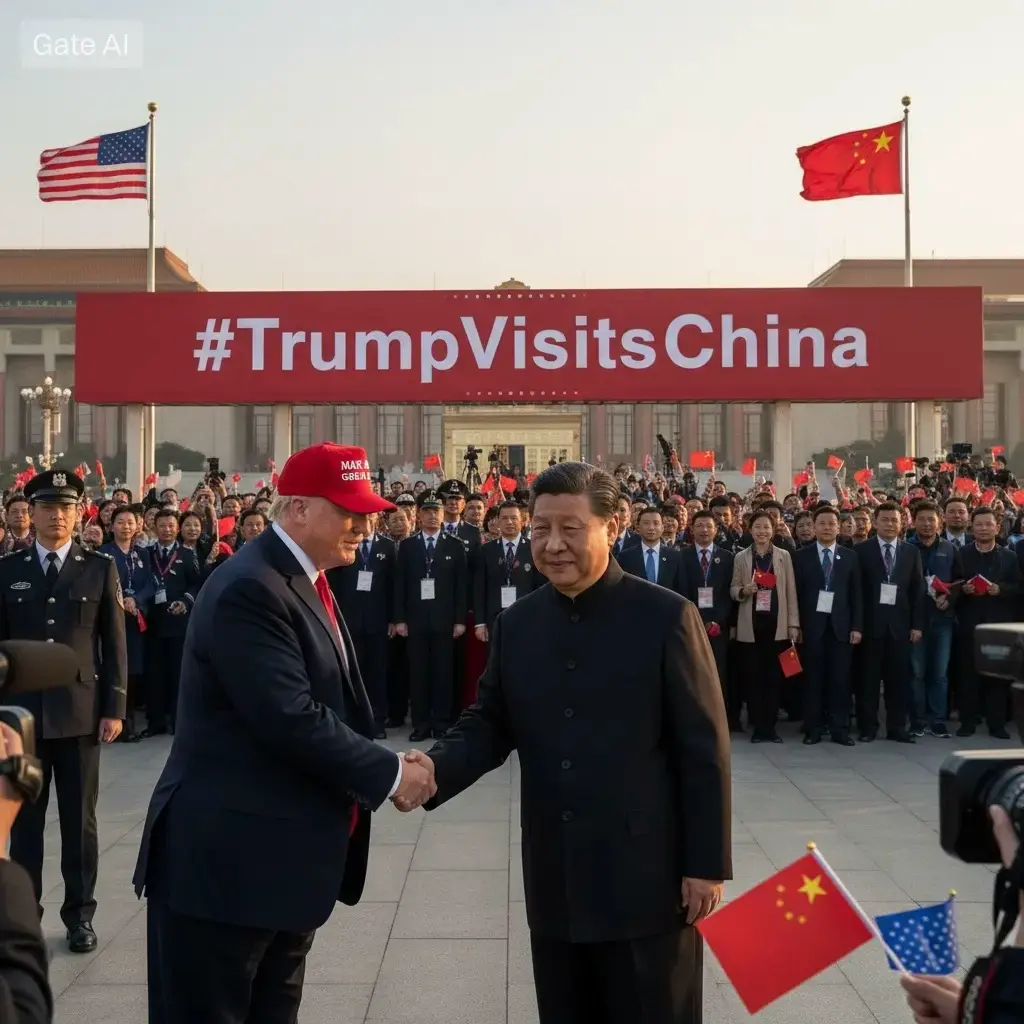
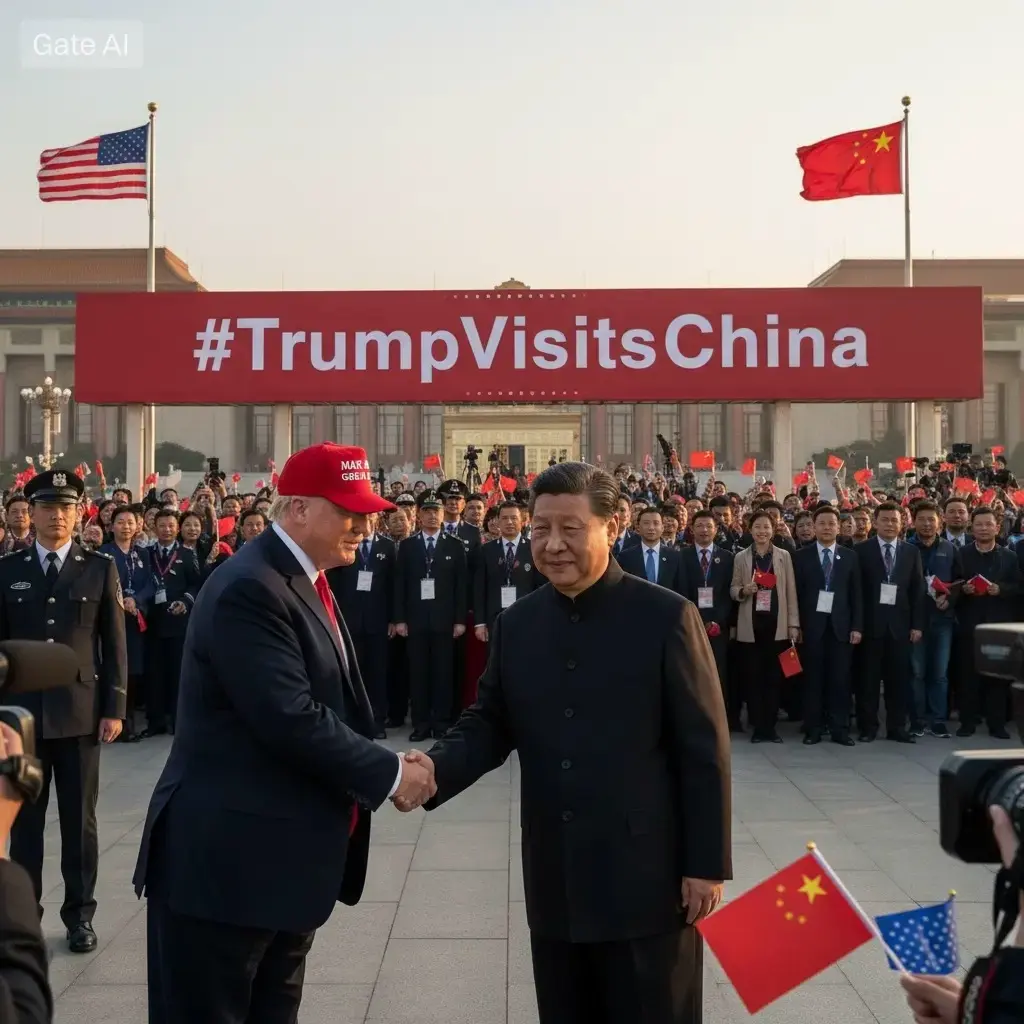
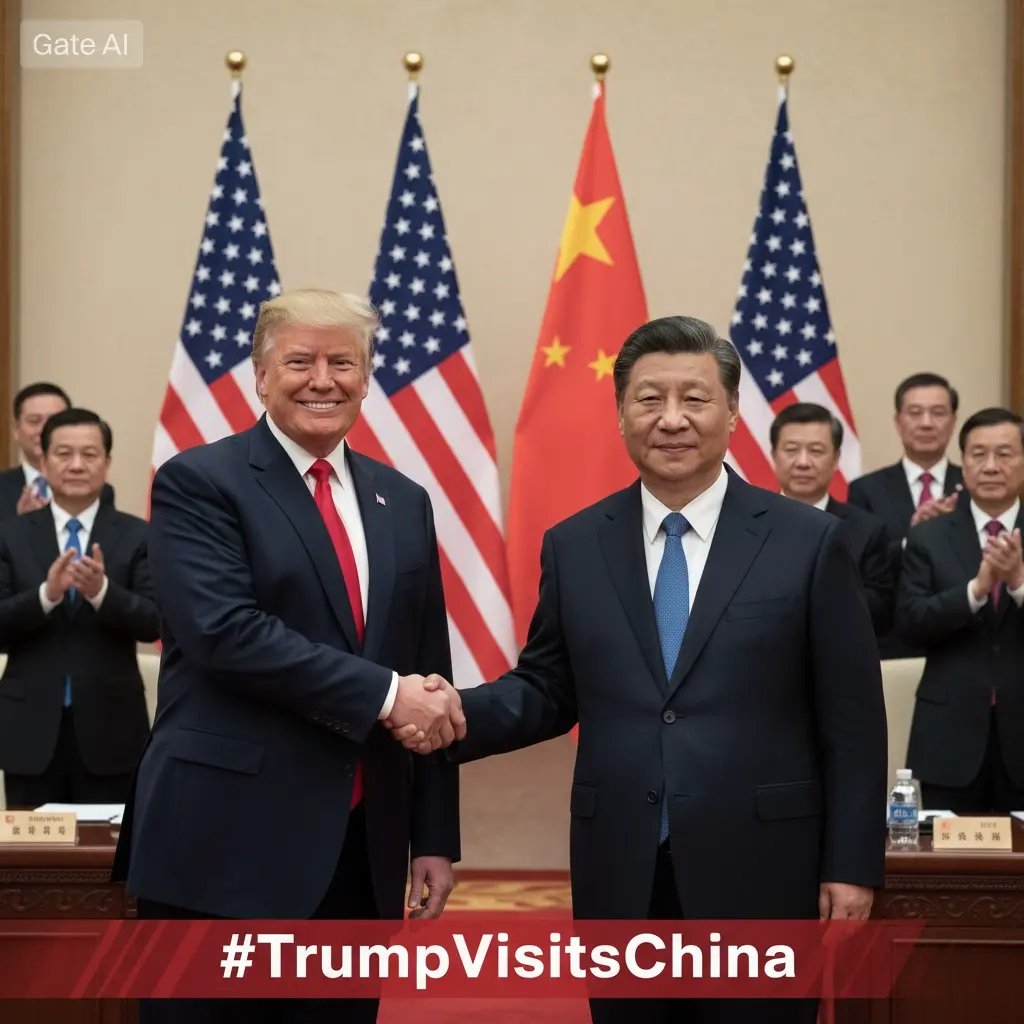
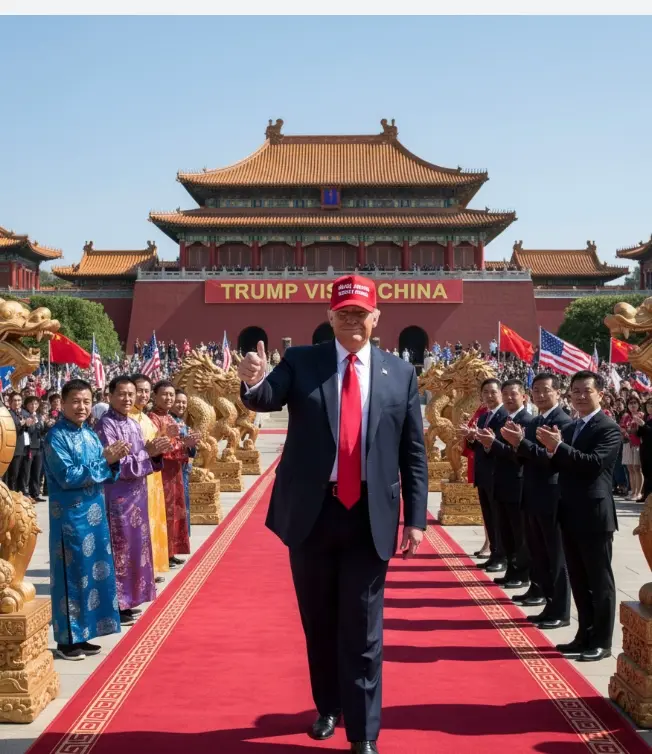
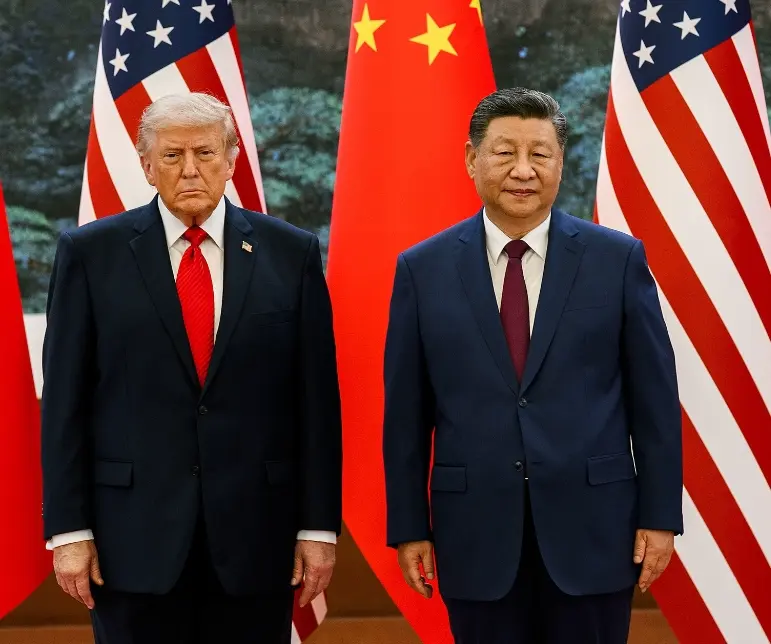
Trump paid a state visit to China from May 13 to 15, the first US presidential visit in nine years. China rolled out high-level honors including a 21-gun salute, guard inspection and state banquet. About 200 US executives including Musk, Cook and Huang accompanied Trump. First-day talks lasted about two hours, covering trade, Iran, Taiwan, AI and critical minerals. Xi stressed that bilateral economic ties are mutually beneficial and win-win. Trump said the US-China relationship will be "better than ever before". However, the US approved arms sales to Taiwan and sanctioned Chinese firms over Iranian oil shipments on the eve of the visit, sending mixed signals. China declined to negotiate on nuclear arms and AI military control. Analysts suggest Beijing's primary goal is to gauge Trump's "minimum price point". Day two moves to Zhongnanhai for tea talks, with potential deals including a Boeing aircraft purchase.

summit markets were genuinely nervous. The Iran escalation, semiconductor export tensions, Taiwan friction and tariff standoffs created a backdrop where a failed summit was a real possibility. That worst case scenario did not materialize. Both sides came out describing productive dialogue and that alone was enough to move risk assets constructively.
On tariffs — the signals suggest a framework rather than a resolution. Neither side walked away with complete victory which in diplomacy usually means both sides got something workable. A partial tariff reduction framework, if confirmed, directly r
BA-3.97%
QCOM1.11%
BTC0.74%
post-image
  • Reward
  • 2
  • Repost
  • Share
Lock_433:
Steadfast HODL💎
View More
#TrumpVisitsChina
The official visit of U.S. President to China from May 13–15, 2026, became one of the most important financial and geopolitical events of the year as global investors, crypto traders, institutions, hedge funds, and commodity markets closely monitored the meetings between Trump and Chinese President in Beijing. Financial markets entered the summit with very high expectations because traders believed the discussions could improve trade relations, stabilize global markets, increase energy cooperation, and reduce tensions between the world’s two biggest economies.
The summit h
BTC0.8%
XAUUSD-2.41%
US500-1.4%
HighAmbition
#TrumpVisitsChina
The official visit of U.S. President to China from May 13–15, 2026, became one of the most important financial and geopolitical events of the year as global investors, crypto traders, institutions, hedge funds, and commodity markets closely monitored the meetings between Trump and Chinese President in Beijing. Financial markets entered the summit with very high expectations because traders believed the discussions could improve trade relations, stabilize global markets, increase energy cooperation, and reduce tensions between the world’s two biggest economies.
The summit happened during a difficult economic environment where inflation remained high, interest rates stayed elevated, oil markets faced supply risks because of Middle East tensions, and global investors were already worried about volatility linked to the Strait of Hormuz and slowing economic growth across major economies.
Before the summit started, investors aggressively entered Bitcoin, technology stocks, oil futures, and commodity markets because expectations were rising that Trump and Xi could announce stronger trade agreements, technology cooperation, and expanded economic partnerships. However, after the meetings ended without major breakthrough agreements, markets quickly shifted toward profit-taking and defensive positioning, creating strong volatility across cryptocurrencies, commodities, and global equities.
Bitcoin (BTC) Market Reaction and Crypto Volatility
Bitcoin became one of the most closely watched assets during the Trump–China summit because traders expected that better diplomatic relations between the United States and China could indirectly support institutional crypto adoption and improve global market confidence.
Before the summit, Bitcoin traded between approximately $80,500 and $82,300 while bullish traders targeted higher resistance zones near $84,000, $85,500, and $88,000 if positive announcements emerged from Beijing. Optimism increased after reports confirmed that several major technology executives joined Trump’s delegation, which investors viewed as a positive sign for future technology cooperation and AI-related infrastructure growth.
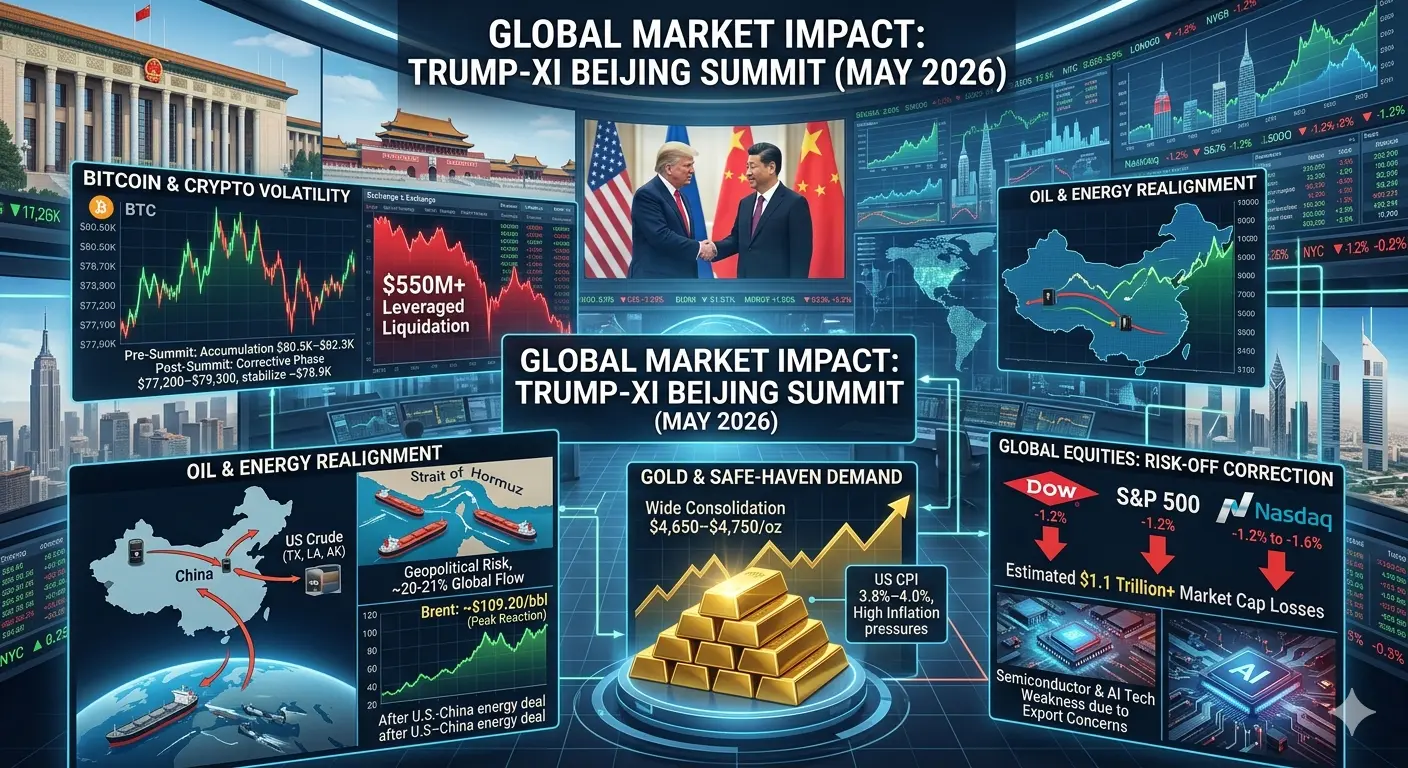
During the summit, Bitcoin initially remained stable around $81,000, but volatility expanded quickly as traders waited for official announcements related to trade policy and technology agreements. After the summit concluded without meaningful crypto-related developments, sentiment weakened and Bitcoin declined toward the $77,200–$79,300 range before stabilizing near $78,900.
The correction triggered heavy liquidations across leveraged futures markets, with approximately $550 million–$620 million worth of long positions removed within a short period. Traders described the movement as a classic “buy the rumor, sell the news” reaction where expectations became too optimistic before the event and were later reset after the final outcomes disappointed markets.
Despite short-term weakness, analysts believe Bitcoin’s broader long-term structure remains stable because ETF inflows, institutional accumulation, and long-term adoption trends continue supporting the market. Many traders now expect Bitcoin to fluctuate between $75,000 and $85,000 in the near term, while a breakout above $88,000 could reopen momentum toward $90,000 and higher levels if global tensions ease.
Oil Market Reaction and Energy Developments
The oil market experienced major volatility throughout the Trump–China meetings because investors remained concerned about Middle East tensions and supply risks connected to the Strait of Hormuz, which handles a significant portion of global oil transportation.
Before the summit, Brent crude traded between $106 and $108.50 per barrel, while WTI crude fluctuated near $104.80–$107.20 per barrel because geopolitical uncertainty and supply concerns continued supporting elevated prices.
During the summit, oil prices briefly moved lower toward $106 per barrel because traders expected diplomatic progress that could calm global tensions. However, sentiment changed after Trump announced that China plans to increase purchases of U.S. crude oil from Texas, Louisiana, and Alaska.
The announcement created a bullish reaction in energy markets, pushing Brent crude toward $109–$110 per barrel while WTI approached $108.50 per barrel during intraday trading. Investors interpreted the development as a possible revival of U.S.–China energy cooperation after years of trade restrictions and tariff disputes.
Even after prices stabilized, oil remained highly volatile between $101 and $110 per barrel, while analysts warned that any escalation involving Iran or disruptions around the Strait of Hormuz could quickly push Brent crude toward $115 or higher levels.
Gold Market Performance and Safe-Haven Demand
Gold remained one of the strongest safe-haven assets during the summit because investors continued searching for protection against inflation uncertainty, geopolitical risks, and market volatility.
Before the meetings, gold traded between $4,680 and $4,720 per ounce as Middle East tensions and inflation concerns supported strong demand. During the summit, gold prices remained relatively stable near $4,690–$4,715 per ounce, while futures contracts traded close to $4,725 per ounce.
Inflation data showed U.S. CPI remaining near 3.8%–4.0%, while producer prices continued rising, creating uncertainty for financial markets and limiting stronger upside momentum in gold.
Federal Reserve policy expectations also influenced gold prices because persistent inflation reduced the possibility of rapid interest rate cuts, keeping pressure on non-yielding assets. However, analysts still believe gold could remain structurally strong above $4,600, while a move above $4,750–$4,800 could open the path toward the psychological $5,000 level if geopolitical tensions intensify further.
Global Stock Market Reaction
Global stock markets reacted negatively after the Trump–China summit because investors expected larger breakthroughs in trade agreements and technology cooperation. Once those expectations failed to materialize, institutional investors reduced exposure to high-risk sectors.
The Dow Jones declined approximately 0.80%–0.95%, the S&P 500 fell around 0.90%–1.10%, and the Nasdaq dropped nearly 1.20%–1.60% as technology and semiconductor companies faced renewed uncertainty regarding exports and future China-related business growth.
Total market capitalization losses exceeded approximately $1.1 trillion during the post-summit selloff, showing how strongly investors repositioned after the event outcomes disappointed financial markets.
Final Market Outlook
Following the Trump–China summit, global financial markets entered a new phase of volatility where investors remain highly sensitive to geopolitical developments, inflation data, energy security risks, and central bank policy decisions. Bitcoin continues trading inside a macro-driven environment, oil remains reactive to Middle East developments, gold continues acting as a safe-haven asset, and global equities remain vulnerable to disappointment surrounding trade and technology negotiations.
The summit demonstrated that financial markets are increasingly influenced by expectations, liquidity conditions, and geopolitical narratives, meaning future diplomatic meetings between the United States and China will likely continue creating major volatility across cryptocurrencies, commodities, and stock markets.
repost-content-media
  • Reward
  • Comment
  • Repost
  • Share
#TrumpVisitsChina
TRUMP VISITS CHINA — GLOBAL MACRO SHIFT, TRADE GEOPOLITICS AND CRYPTO MARKET VOLATILITY OUTLOOK
A HIGH IMPACT GEOPOLITICAL EVENT THAT CAN REDRAW GLOBAL MARKET SENTIMENT
A potential or confirmed visit by Donald Trump to China represents a major geopolitical and macroeconomic event with wide reaching implications for global financial markets, international trade relations, and risk asset sentiment. Events involving high level US China engagement are closely monitored by institutional investors because they can directly influence global liquidity expectations, trade stability o
  • Reward
  • 1
  • Repost
  • Share
HighAmbition:
good information good 👍
#TrumpVisitsChina The visit of Donald Trump to China marks one of the most significant geopolitical and financial developments of the year, drawing global attention from policymakers, investors, and crypto traders alike. Such high-level diplomatic engagement between the United States and China is not just a political event—it is a potential turning point for global trade relations, macroeconomic stability, and risk asset performance.
From a trade perspective, discussions are expected to revolve around tariffs, technology exports, semiconductor supply chains, and agricultural imports. Any easin
BTC0.74%
ETH1.09%
post-image
  • Reward
  • 17
  • Repost
  • Share
GateUser-68291371:
Burlan 🐂
View More
#TrumpVisitsChina
The official visit of U.S. President to China from May 13–15, 2026, became one of the most important financial and geopolitical events of the year as global investors, crypto traders, institutions, hedge funds, and commodity markets closely monitored the meetings between Trump and Chinese President in Beijing. Financial markets entered the summit with very high expectations because traders believed the discussions could improve trade relations, stabilize global markets, increase energy cooperation, and reduce tensions between the world’s two biggest economies.
The summit h
BTC0.8%
post-image
post-image
  • Reward
  • 15
  • Repost
  • Share
LittleGodOfWealthPlutus:
Wishing you good luck in the Year of the Horse, and congratulations on your wealth.
View More
#TrumpVisitsChina
Trump’s May 2026 visit to Beijing was not just another diplomatic headline — it became a live macro-economic event that instantly impacted global markets, liquidity flows, inflation expectations, and crypto volatility. The summit revealed how deeply politics, energy, AI infrastructure, and financial markets are now interconnected in the modern global system.
What made this visit structurally important was the combination of political leadership and corporate power operating together. Figures like Donald Trump, Elon Musk, Jensen Huang, Tim Cook, and Larry Fink represented far
BTC0.74%
ETH1.09%
SOL1.4%
XRP1.35%
CryptoChampion
#TrumpVisitsChina
Trump’s May 2026 visit to Beijing was not just another diplomatic headline — it became a live macro-economic event that instantly impacted global markets, liquidity flows, inflation expectations, and crypto volatility. The summit revealed how deeply politics, energy, AI infrastructure, and financial markets are now interconnected in the modern global system.
What made this visit structurally important was the combination of political leadership and corporate power operating together. Figures like Donald Trump, Elon Musk, Jensen Huang, Tim Cook, and Larry Fink represented far more than symbolism. Markets understood this delegation as a direct negotiation over semiconductors, AI dominance, energy flows, manufacturing stability, and long-term capital allocation between the world’s two largest economies.
The summit happened during one of the most fragile macro environments in recent years. Oil markets remained under pressure from Middle East instability and Strait of Hormuz risks. Taiwan tensions continued to threaten semiconductor supply chains. Inflation across developed economies stayed structurally elevated, while global central banks maintained restrictive monetary policy conditions.
As a result, every headline from Beijing immediately transmitted into financial pricing mechanisms worldwide.@Gate_Square
Oil became the first major reaction channel. Brent crude surged toward the $103–$111 range while WTI approached $100–$106+. This mattered because energy is the core inflation engine of the global economy. Higher oil prices increase transportation costs, manufacturing expenses, and consumer inflation simultaneously. Markets quickly realized that persistent energy inflation could delay future rate cuts and keep liquidity conditions tight worldwide.
Meanwhile, equity markets continued trading inside an unusual dual structure. AI-driven optimism kept pushing valuations higher, especially across technology stocks, while geopolitical risks and inflation fears simultaneously created extreme fragility underneath the surface. The S&P 500, Nasdaq, and Dow Jones all remained near elevated expansion zones supported by the AI narrative and institutional capital flows.
Taiwan remained the single biggest systemic risk node in the global market structure. Investors understand that any disruption involving Taiwan would freeze semiconductor production, damage AI infrastructure development, and trigger aggressive risk-off reactions across equities, bonds, and cryptocurrencies. That is why markets interpreted the summit as temporary stabilization rather than permanent resolution.
Crypto markets reacted exactly like high-beta macro liquidity assets. Bitcoin traded near the $80,000 zone with sharp volatility swings tied more to oil, Treasury yields, and dollar strength than blockchain fundamentals. Ethereum, Solana, XRP, and Cardano followed the same liquidity-sensitive behavior. Modern crypto markets now operate as a combination of speculative derivatives systems, inflation hedge narratives, and global liquidity proxies.
The most important takeaway from Trump’s China visit is that the world has entered an era of managed instability. Cooperation and rivalry now coexist simultaneously. Markets are no longer driven by simple bullish or bearish conditions — they are driven by continuous volatility cycles fueled by inflation, AI expansion, geopolitical tension, and liquidity control mechanisms.
In 2026, volatility is no longer the exception.
It is the foundation of the entire global financial system.
repost-content-media
  • Reward
  • Comment
  • Repost
  • Share
#TrumpVisitsChina
Introduction: A Global Macro Shock Converging Politics, Liquidity & Power Cycles
President Donald Trump’s May 13–15, 2026 visit to Beijing stands as one of the most structurally important geopolitical events of the decade because it directly connects global diplomacy with real financial market pricing mechanisms across energy, technology, inflation expectations, and digital asset liquidity cycles.
Unlike traditional diplomatic summits, this visit did not operate in isolation from markets. Instead, it acted as a direct macro transmission event, where every statement, rumor,
post-image
post-image
  • Reward
  • 1
  • Repost
  • Share
Yusfirah:
2026 GOGOGO 👊
🚨 BREAKING MARKET UPDATE — $BNB $ETH
US–China trade tensions just saw a surprising shift: both sides have agreed to reciprocal tariff reductions.
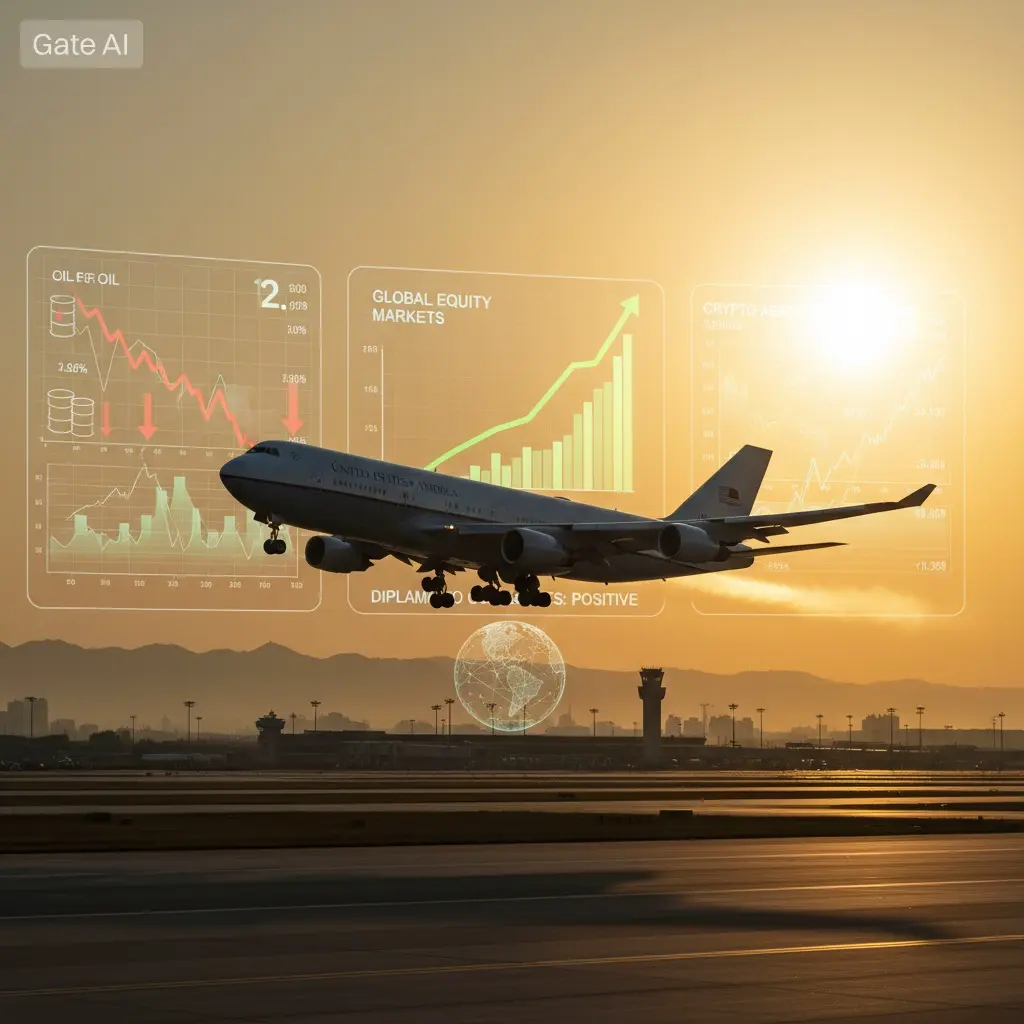
Key points: • China to increase purchases of U.S. aircraft
• Continued U.S. supply of engines & aviation parts
• Progress reported on agriculture, market access, and broader trade barriers
🔹 $BNB (653.57 | -3.1%) 🔹 $ETH (2,179.47 | -1.35%)
Market read: This is a risk-on headline at surface level, but the real impact depends on how deep and broad the tariff cuts actually are. No full breakdown has been released yet, so volatility risk remains hig
BNB0.24%
ETH1.09%
  • Reward
  • 1
  • Repost
  • Share
GateUser-c953e466:
Everyone is playing with Supra public chain, invested by the largest exchange in the United States, with their own oracle, launching their own decentralized exchange in June, with all transaction fees burned to achieve deflation, potentially replicating the big explosion of SOL the year before, becoming another dark horse in the public chain space.
#TrumpVisitsChina #TrumpVisitsChina
𝗧𝗿𝘂𝗺𝗽 𝗩𝗶𝘀𝗶𝘁𝘀 𝗖𝗵𝗶𝗻𝗮 — 𝗖𝗿𝘆𝗽𝘁𝗼 𝗠𝗮𝗿𝗸𝗲𝘁𝘀 𝗘𝗻𝘁𝗲𝗿 “𝗪𝗔𝗜𝗧 & 𝗪𝗔𝗧𝗖𝗛” 𝗠𝗢𝗗𝗘
Global markets are once again locked onto geopolitical headlines as Trump’s latest China visit begins creating waves across crypto sentiment, futures positioning, and volatility expectations. While traditional financial media focuses on diplomacy and trade narratives, crypto traders are watching something much deeper — liquidity behavior, regulatory tone, and risk appetite shifts across global markets.
Right now, Bitcoin continues showing relative st
BTC0.74%
post-image
  • Reward
  • 5
  • Repost
  • Share
Yusfirah:
To The Moon 🌕
View More
#TrumpVisitsChina
Introduction: A Global Macro Shock Converging Politics, Liquidity & Power Cycles
President Donald Trump’s May 13–15, 2026 visit to Beijing stands as one of the most structurally important geopolitical events of the decade because it directly connects global diplomacy with real financial market pricing mechanisms across energy, technology, inflation expectations, and digital asset liquidity cycles.
Unlike traditional diplomatic summits, this visit did not operate in isolation from markets. Instead, it acted as a direct macro transmission event, where every statement, rumor,
HighAmbition
#TrumpVisitsChina
Introduction: A Global Macro Shock Converging Politics, Liquidity & Power Cycles
President Donald Trump’s May 13–15, 2026 visit to Beijing stands as one of the most structurally important geopolitical events of the decade because it directly connects global diplomacy with real financial market pricing mechanisms across energy, technology, inflation expectations, and digital asset liquidity cycles.
Unlike traditional diplomatic summits, this visit did not operate in isolation from markets. Instead, it acted as a direct macro transmission event, where every statement, rumor, and trade signal immediately reflected across Bitcoin, equities, oil, gold, bonds, and foreign exchange markets within seconds.
The global environment surrounding this summit was already fragile and highly sensitive due to multiple overlapping pressure points including Iran-related disruptions in the Strait of Hormuz, persistent US-China semiconductor restrictions, unresolved Taiwan sovereignty tensions, and structurally elevated inflation expectations across developed economies.
In this environment, Trump’s delegation—accompanied by major corporate figures such as Elon Musk, Jensen Huang, Tim Cook, and Larry Fink—was not symbolic but strategic, representing a convergence of political authority and global capital infrastructure negotiating simultaneously on trade flows, energy procurement, artificial intelligence development, and semiconductor supply chain stability.
Markets interpreted this summit not as a diplomatic endpoint but as a temporary stabilization phase inside a longer structural rivalry cycle between two global superpowers.
Core Macro Debate: Stabilization Phase or Strategic Pause Before Escalation?
Bullish Interpretation: Managed Stabilization Thesis
From a bullish macro perspective, this summit signals that both Washington and Beijing recognize the systemic cost of uncontrolled decoupling. Global supply chains are too interdependent, financial markets too integrated, and technological ecosystems too entangled to allow full separation without triggering structural economic damage.
Proponents of this view argue that:
US-China cooperation—even if limited—is sufficient to stabilize global inflation expectations, reduce tail-risk premiums, and support risk asset valuations across equities and cryptocurrencies.
They highlight that:
AI infrastructure requires cross-border semiconductor coordination
Energy markets depend on predictable demand flows from China
Global manufacturing still relies heavily on Chinese production capacity
Capital markets remain interconnected through dollar liquidity systems
This interpretation supports a risk-on environment where Bitcoin, equities, and industrial commodities benefit from reduced geopolitical stress premiums.
Bearish Interpretation: Strategic Competition Continuity Thesis
The opposing view argues that the summit represents not resolution but strategic cooling inside an ongoing rivalry structure.
According to this perspective, the core issues remain completely unresolved:
Taiwan remains a systemic geopolitical flashpoint tied directly to semiconductor dominance. AI chip restrictions continue as long-term policy instruments. Military positioning in the Indo-Pacific region continues to expand. Trade agreements remain politically announced but structurally fragile in execution.
From this standpoint, the summit is viewed as a temporary narrative stabilization phase before renewed volatility cycles re-emerge.
Institutional analysts increasingly agree on a hybrid model: neither full cooperation nor escalation, but managed competition with cyclical volatility shocks.
Oil Markets: The Primary Inflation Transmission Engine
Energy markets acted as the most immediate and aggressive macro response channel following the summit.
Brent crude surged into the $103 – $111 per barrel range, while WTI moved within $100 – $106+ range, reflecting both geopolitical risk premiums and demand expectations from China.
This oil movement is not just a commodity shift—it is a global inflation transmission mechanism.
Higher energy prices directly increase transportation costs, manufacturing input costs, logistics expenses, and ultimately consumer inflation levels. This creates upward pressure on CPI readings globally, forcing central banks to maintain restrictive monetary policy conditions for longer durations.
The macro implication is clear: higher oil prices compress global liquidity conditions, which historically leads to increased volatility across equities and crypto markets.
Taiwan: The Structural Black Swan Node of Global Markets
Taiwan remains the single most sensitive geopolitical variable in the entire global financial system due to its central role in semiconductor production, particularly advanced chip manufacturing controlled by TSMC.
Any escalation scenario involving Taiwan would not be a regional conflict alone—it would represent a global supply chain shock event, freezing semiconductor flows, disrupting AI development, crashing technology equities, and triggering extreme risk-off positioning across all asset classes including cryptocurrencies.
During the summit, both sides maintained carefully calibrated language emphasizing “strategic stability” and “controlled competition,” which markets interpreted as a temporary de-escalation signal rather than a resolution.
Global Equity Markets: AI Expansion vs Macro Fragility
Global equity indices reached elevated structural levels:
S&P 500: 7,400 – 7,501
Nasdaq: 29,094 (AI-driven tech expansion zone)
Dow Jones: 49,414 – 49,600 range
These levels reflect a dual-market structure:
On one side, AI-driven productivity expansion and corporate earnings strength continue to support long-term bullish equity momentum. On the other side, stretched valuations combined with inflation sensitivity and geopolitical uncertainty introduce persistent fragility into the system.
Markets are therefore not in a pure bull or bear regime—they are in a high-altitude volatility expansion phase where both upside and downside shocks are amplified simultaneously.
Bond Markets & Dollar Liquidity Control Mechanism
US Treasury yields remained elevated in the 4.35% – 4.65% range, reflecting inflation persistence and reduced expectations of aggressive monetary easing.
The US Dollar Index strengthened within the 104.5 – 106.2 range, acting as a global liquidity regulator.
A stronger dollar environment historically leads to:
Tightened global financial conditions
Reduced emerging market liquidity
Lower crypto inflows
Pressure on commodity cycles
This creates a structural macro headwind for risk assets even during geopolitical stabilization phases.
₿ Crypto Market: Macro Beta Asset in a High-Volatility Liquidity Regime
Bitcoin traded within the $79,000 – $81,600 range, showing extreme sensitivity to macro headlines rather than blockchain-native developments.
Ethereum moved between $2,180 – $2,320, while Solana fluctuated $86 – $92, Cardano remained near $0.24 – $0.27, and XRP traded $1.38 – $1.48.
Crypto markets are now operating under a clearly defined macro identity:
It is simultaneously:
A digital liquidity proxy
A high-beta risk asset
A speculative derivatives-driven instrument
And a long-term inflation hedge narrative asset
This dual identity explains why crypto experiences sharp upside rallies and equally aggressive liquidation-driven corrections within short timeframes.
Key volatility drivers included:
Oil-driven inflation expectations
Dollar strength liquidity compression
AI narrative speculation spillover
Geopolitical uncertainty tied to Taiwan
Large-scale derivatives liquidation cascades
Forward Macro Scenarios
Bull Case:
Successful follow-through on trade agreements leads to stabilizing oil prices in the $100 – $110 range, Bitcoin potentially retesting $85,000+, and equities continuing AI-driven expansion trends.
Base Case:
Markets remain range-bound with high volatility as inflation data, Fed policy signals, and geopolitical headlines continuously rotate sentiment between risk-on and risk-off phases.
Bear Case:
Breakdown in implementation or escalation in Taiwan-related tensions pushes oil above $115, triggers equity revaluation, drives Bitcoin toward $70,000–$75,000 liquidity zones, and strengthens gold as a defensive asset above $4,900+.
Final Synthesis: Managed Instability as the Core Market Structure
Trump’s 2026 China visit did not resolve global structural tensions—it redefined how those tensions are managed within financial markets.
The modern macro environment is no longer binary. It is a layered system where cooperation and competition coexist simultaneously, producing continuous volatility rather than directional certainty.
Oil acts as the inflation engine, AI acts as the growth engine, Taiwan acts as the systemic risk node, and crypto acts as the volatility amplifier of global liquidity cycles.
Prices reflect this complexity:
Oil: $100 – $111
Bitcoin: ~$80,000 range
Gold: ~$4,500 – $4,700
Equities: All-time elevated AI-driven regime
The defining truth of this era is that volatility is not a disruption—it is the structural condition of global markets in 2026.
repost-content-media
  • Reward
  • 3
  • Repost
  • Share
MasterChuTheOldDemonMasterChu:
Just charge forward 👊
View More
Load More