








#PolymarketLaunchesPrivateCompanyPredictionMarkets
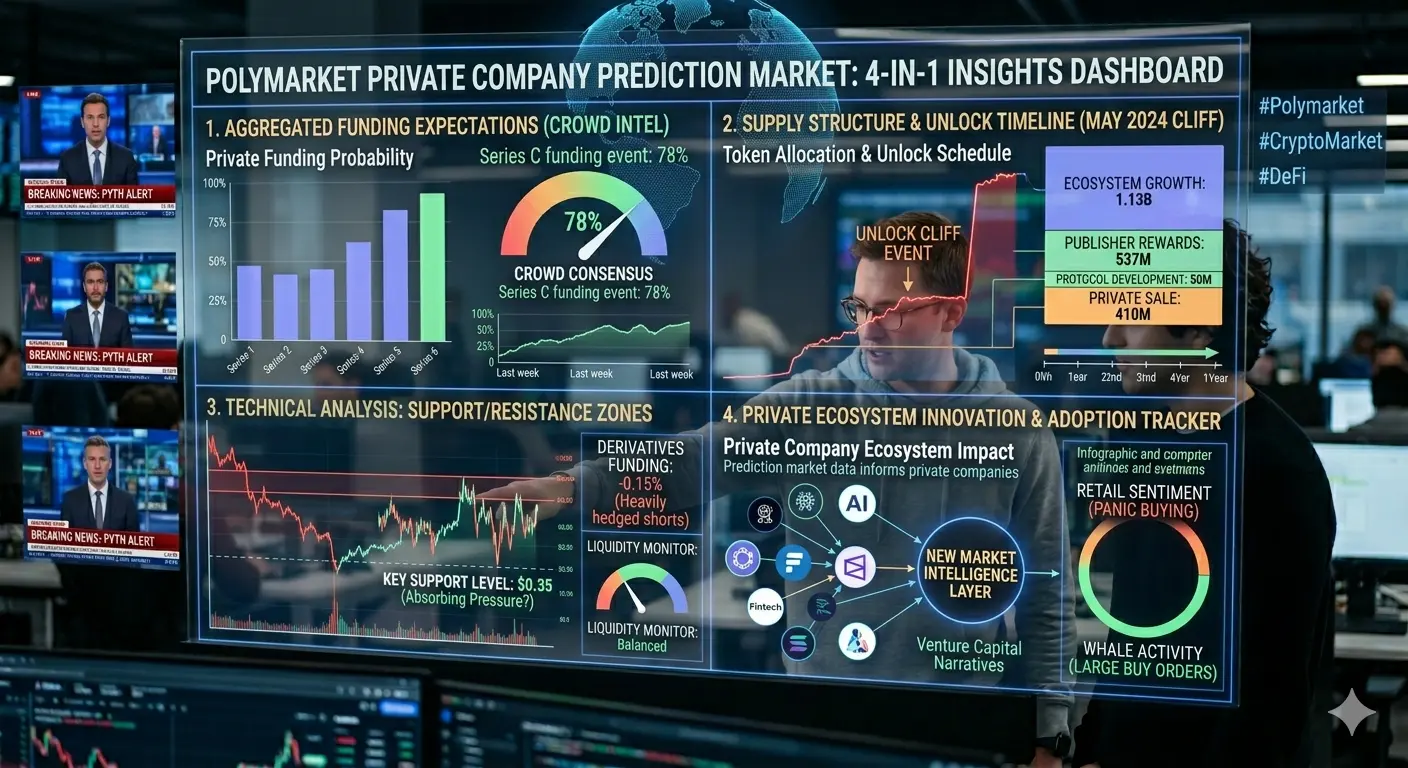
The prediction market industry is entering a completely new phase after the latest expansion from Polymarket attracted major attention across both crypto and traditional finance communities. The platform is now moving toward private company prediction markets, opening the door for users to speculate on valuations, funding events, IPO possibilities, mergers, acquisitions, and the future performance of major private businesses before they officially enter public stock markets. This development represents a major evolution in how financial information, crowd intelligence, and decentralized forecasting systems may shape the next generation of market analysis.
For years, prediction markets focused mainly on elections, macroeconomic events, sports outcomes, and geopolitical developments. However, the expansion into private company forecasting introduces an entirely new layer of financial speculation that could significantly reshape how investors analyze startup ecosystems and venture capital narratives in the future.
Understanding The Prediction Market Model
Prediction markets operate by allowing participants to trade on the probability of future outcomes. Instead of relying only on analysts or centralized financial institutions, these systems aggregate collective market sentiment from thousands of participants. Supporters believe this structure creates more efficient forecasting because crowd behavior often processes information faster than traditional reporting channels. Over time, prediction markets have gained increasing recognition for accurately reflecting public expectations around major global events.
Why Private Markets Are Gaining Attention
Private company markets have become one of the most attractive sectors in global finance. Many billion-dollar startups now remain private for significantly longer periods before launching public IPOs. During this time, retail investors often have limited access to early valuation exposure. By introducing prediction-based structures connected to private companies, platforms may create a new information layer where market participants can express expectations regarding growth, adoption, expansion, and future financial outcomes.
The Growing Influence Of Alternative Finance
The rise of decentralized finance continues challenging traditional financial infrastructure models. Platforms connected to blockchain technology are gradually experimenting with new forms of trading, forecasting, and information discovery. Prediction markets represent part of this larger transformation where crowd-based intelligence and transparent blockchain settlement systems merge together. The expansion into private company predictions highlights how crypto infrastructure is increasingly entering sectors traditionally controlled by venture capital firms and institutional finance networks.
Retail Participation Could Increase
One reason this development is attracting so much attention is because it potentially expands retail engagement with private market narratives. In traditional finance, access to private startup investment opportunities is often restricted to accredited investors or institutional participants. Prediction markets do not directly provide equity ownership, but they may allow broader public participation in forecasting company-related outcomes. This creates a new type of engagement layer between public communities and private business ecosystems.
Market Sentiment Becomes Tradable
One of the most interesting aspects of prediction markets is that sentiment itself becomes an asset class. Traders are not only reacting to charts or balance sheets. They are actively pricing probabilities, expectations, narratives, and public confidence. This transforms market psychology into measurable trading activity. In the case of private company prediction markets, investor perception regarding innovation, growth potential, user adoption, and future valuations may become increasingly visible through market pricing behavior.
Information Efficiency Could Improve
Supporters of decentralized forecasting systems argue that prediction markets improve information efficiency. Instead of relying solely on closed institutional research, broader public participation may help surface market expectations faster. Traders continuously process news developments, funding rounds, executive changes, adoption metrics, and macroeconomic conditions. As a result, prediction pricing may evolve into a dynamic reflection of collective intelligence surrounding private business performance.
Regulatory Discussions May Intensify
As prediction markets continue expanding into more sophisticated financial areas, regulatory discussions are likely to grow significantly. Governments and financial authorities around the world are still evaluating how decentralized forecasting systems should operate within broader financial frameworks. Questions regarding compliance, transparency, jurisdiction, and market integrity will probably become increasingly important as platforms move closer toward private financial markets and corporate-related speculation models.
Crypto Infrastructure Continues Expanding
The broader crypto industry continues searching for real-world utility beyond simple asset speculation. Prediction markets demonstrate one example of blockchain technology moving into practical information-based applications. Smart contracts, transparent settlement systems, decentralized participation, and global accessibility all contribute to the growing interest surrounding this sector. The private company market expansion further reinforces the idea that blockchain infrastructure may increasingly intersect with mainstream financial systems.
Venture Capital Narratives Could Shift
Private company forecasting markets may also influence how venture capital narratives evolve online. Public communities increasingly discuss startup growth, artificial intelligence companies, fintech expansion, infrastructure businesses, and technology adoption trends. If prediction markets successfully capture these discussions financially, they could become an additional layer of market intelligence surrounding emerging business ecosystems and innovation sectors.
Traders Are Watching Liquidity Closely
Liquidity remains one of the most important factors for any expanding market structure. Traders and analysts are closely monitoring whether private company prediction markets can maintain healthy trading activity and balanced participation. Strong liquidity helps create more reliable price discovery, while weak liquidity environments can produce unstable pricing behavior. Sustainable growth will likely depend on market depth, user activity, and long-term platform trust.
Community-Driven Finance Is Evolving
The expansion also reflects a broader shift toward community-driven financial participation. Modern financial markets are becoming increasingly shaped by online discussions, digital communities, social sentiment, and decentralized information sharing. Prediction markets directly transform these conversations into tradable mechanisms. This evolution could continue influencing how people interact with financial forecasting over the coming years.
Risk Awareness Remains Important
Despite growing excitement, participants should still understand the risks connected to highly speculative environments. Prediction markets can experience sharp volatility swings, emotional crowd behavior, and rapid sentiment reversals. Responsible participation requires discipline, critical thinking, and proper risk management. Markets driven heavily by narratives and expectations can change direction extremely quickly when new information enters the ecosystem.
The Future Of Financial Forecasting
Many analysts believe prediction markets may eventually become a major supplementary layer within global finance. While they may not replace traditional analysis, they could enhance how markets interpret probabilities and crowd expectations. The integration of blockchain transparency with collective forecasting systems introduces a unique financial model that continues attracting attention from traders, developers, institutions, and technology communities worldwide.
Innovation Continues Driving Crypto Forward
The crypto industry evolves rapidly because innovation cycles continue expanding beyond simple payment systems and digital currencies. New sectors such as decentralized finance, real-world asset tokenization, AI integrations, and prediction infrastructure are constantly reshaping the landscape. The move toward private company prediction markets demonstrates how blockchain platforms continue experimenting with entirely new financial concepts that were almost impossible to imagine only a few years ago.
Final Thoughts
The launch of private company prediction markets by Polymarket marks another major milestone in the evolution of decentralized finance and digital forecasting systems. By allowing users to engage with private market narratives through crowd-driven probability models, the platform is introducing a completely new intersection between crypto infrastructure, startup ecosystems, and financial intelligence. While regulatory uncertainty and volatility risks remain important considerations, this development highlights the growing ambition of blockchain-based platforms to expand far beyond traditional crypto trading and into the future architecture of global financial participation.
The prediction market industry is entering a completely new phase after the latest expansion from Polymarket attracted major attention across both crypto and traditional finance communities. The platform is now moving toward private company prediction markets, opening the door for users to speculate on valuations, funding events, IPO possibilities, mergers, acquisitions, and the future performance of major private businesses before they officially enter public stock markets. This development represents a major evolution in how financial information, crowd intelligence, and decentralized forecasting systems may shape the next generation of market analysis.
For years, prediction markets focused mainly on elections, macroeconomic events, sports outcomes, and geopolitical developments. However, the expansion into private company forecasting introduces an entirely new layer of financial speculation that could significantly reshape how investors analyze startup ecosystems and venture capital narratives in the future.
Understanding The Prediction Market Model
Prediction markets operate by allowing participants to trade on the probability of future outcomes. Instead of relying only on analysts or centralized financial institutions, these systems aggregate collective market sentiment from thousands of participants. Supporters believe this structure creates more efficient forecasting because crowd behavior often processes information faster than traditional reporting channels. Over time, prediction markets have gained increasing recognition for accurately reflecting public expectations around major global events.
Why Private Markets Are Gaining Attention
Private company markets have become one of the most attractive sectors in global finance. Many billion-dollar startups now remain private for significantly longer periods before launching public IPOs. During this time, retail investors often have limited access to early valuation exposure. By introducing prediction-based structures connected to private companies, platforms may create a new information layer where market participants can express expectations regarding growth, adoption, expansion, and future financial outcomes.
The Growing Influence Of Alternative Finance
The rise of decentralized finance continues challenging traditional financial infrastructure models. Platforms connected to blockchain technology are gradually experimenting with new forms of trading, forecasting, and information discovery. Prediction markets represent part of this larger transformation where crowd-based intelligence and transparent blockchain settlement systems merge together. The expansion into private company predictions highlights how crypto infrastructure is increasingly entering sectors traditionally controlled by venture capital firms and institutional finance networks.
Retail Participation Could Increase
One reason this development is attracting so much attention is because it potentially expands retail engagement with private market narratives. In traditional finance, access to private startup investment opportunities is often restricted to accredited investors or institutional participants. Prediction markets do not directly provide equity ownership, but they may allow broader public participation in forecasting company-related outcomes. This creates a new type of engagement layer between public communities and private business ecosystems.
Market Sentiment Becomes Tradable
One of the most interesting aspects of prediction markets is that sentiment itself becomes an asset class. Traders are not only reacting to charts or balance sheets. They are actively pricing probabilities, expectations, narratives, and public confidence. This transforms market psychology into measurable trading activity. In the case of private company prediction markets, investor perception regarding innovation, growth potential, user adoption, and future valuations may become increasingly visible through market pricing behavior.
Information Efficiency Could Improve
Supporters of decentralized forecasting systems argue that prediction markets improve information efficiency. Instead of relying solely on closed institutional research, broader public participation may help surface market expectations faster. Traders continuously process news developments, funding rounds, executive changes, adoption metrics, and macroeconomic conditions. As a result, prediction pricing may evolve into a dynamic reflection of collective intelligence surrounding private business performance.
Regulatory Discussions May Intensify
As prediction markets continue expanding into more sophisticated financial areas, regulatory discussions are likely to grow significantly. Governments and financial authorities around the world are still evaluating how decentralized forecasting systems should operate within broader financial frameworks. Questions regarding compliance, transparency, jurisdiction, and market integrity will probably become increasingly important as platforms move closer toward private financial markets and corporate-related speculation models.
Crypto Infrastructure Continues Expanding
The broader crypto industry continues searching for real-world utility beyond simple asset speculation. Prediction markets demonstrate one example of blockchain technology moving into practical information-based applications. Smart contracts, transparent settlement systems, decentralized participation, and global accessibility all contribute to the growing interest surrounding this sector. The private company market expansion further reinforces the idea that blockchain infrastructure may increasingly intersect with mainstream financial systems.
Venture Capital Narratives Could Shift
Private company forecasting markets may also influence how venture capital narratives evolve online. Public communities increasingly discuss startup growth, artificial intelligence companies, fintech expansion, infrastructure businesses, and technology adoption trends. If prediction markets successfully capture these discussions financially, they could become an additional layer of market intelligence surrounding emerging business ecosystems and innovation sectors.
Traders Are Watching Liquidity Closely
Liquidity remains one of the most important factors for any expanding market structure. Traders and analysts are closely monitoring whether private company prediction markets can maintain healthy trading activity and balanced participation. Strong liquidity helps create more reliable price discovery, while weak liquidity environments can produce unstable pricing behavior. Sustainable growth will likely depend on market depth, user activity, and long-term platform trust.
Community-Driven Finance Is Evolving
The expansion also reflects a broader shift toward community-driven financial participation. Modern financial markets are becoming increasingly shaped by online discussions, digital communities, social sentiment, and decentralized information sharing. Prediction markets directly transform these conversations into tradable mechanisms. This evolution could continue influencing how people interact with financial forecasting over the coming years.
Risk Awareness Remains Important
Despite growing excitement, participants should still understand the risks connected to highly speculative environments. Prediction markets can experience sharp volatility swings, emotional crowd behavior, and rapid sentiment reversals. Responsible participation requires discipline, critical thinking, and proper risk management. Markets driven heavily by narratives and expectations can change direction extremely quickly when new information enters the ecosystem.
The Future Of Financial Forecasting
Many analysts believe prediction markets may eventually become a major supplementary layer within global finance. While they may not replace traditional analysis, they could enhance how markets interpret probabilities and crowd expectations. The integration of blockchain transparency with collective forecasting systems introduces a unique financial model that continues attracting attention from traders, developers, institutions, and technology communities worldwide.
Innovation Continues Driving Crypto Forward
The crypto industry evolves rapidly because innovation cycles continue expanding beyond simple payment systems and digital currencies. New sectors such as decentralized finance, real-world asset tokenization, AI integrations, and prediction infrastructure are constantly reshaping the landscape. The move toward private company prediction markets demonstrates how blockchain platforms continue experimenting with entirely new financial concepts that were almost impossible to imagine only a few years ago.
Final Thoughts
The launch of private company prediction markets by Polymarket marks another major milestone in the evolution of decentralized finance and digital forecasting systems. By allowing users to engage with private market narratives through crowd-driven probability models, the platform is introducing a completely new intersection between crypto infrastructure, startup ecosystems, and financial intelligence. While regulatory uncertainty and volatility risks remain important considerations, this development highlights the growing ambition of blockchain-based platforms to expand far beyond traditional crypto trading and into the future architecture of global financial participation.