

#USPPIComesInBelowExpectations
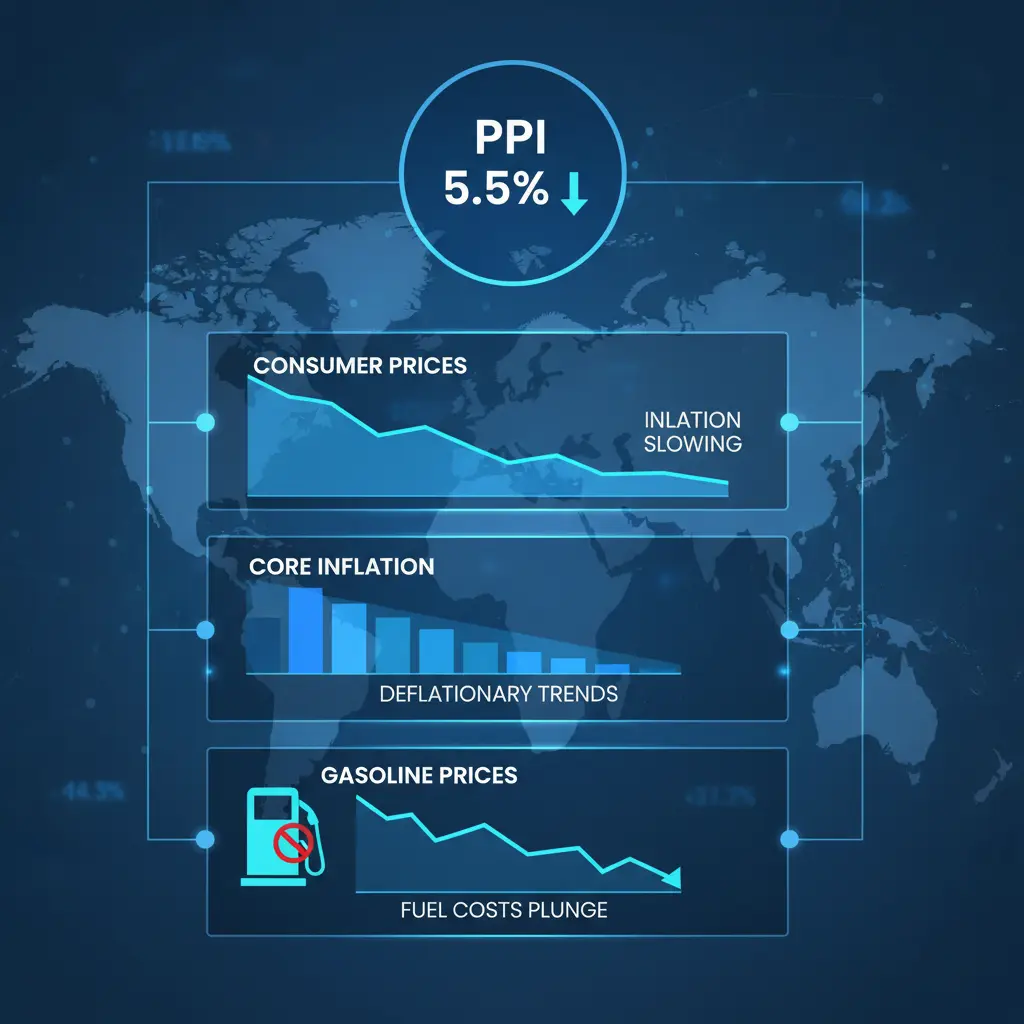
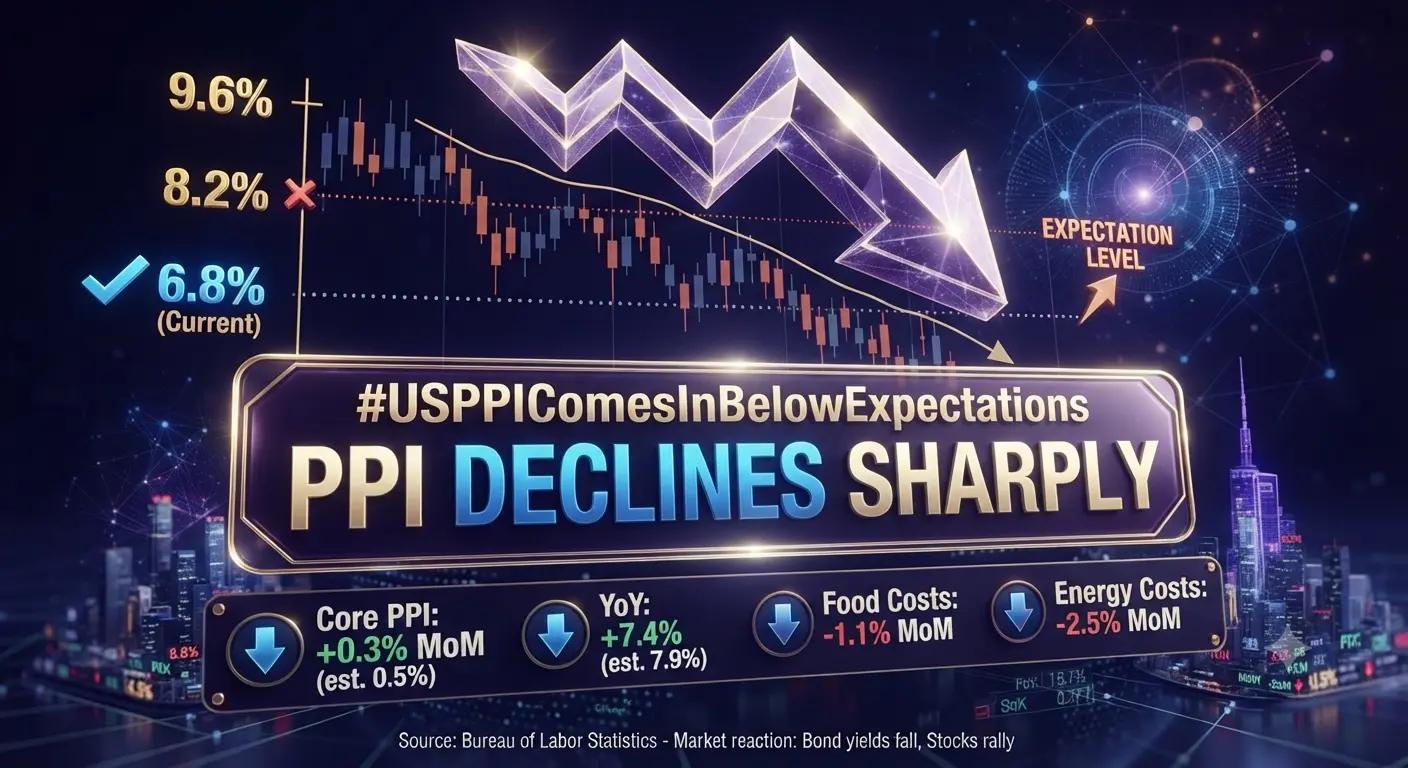
Producer Price Index (PPI) data has become one of the most closely watched economic indicators because it provides an early signal about inflation trends throughout the economy. Whenever producer inflation comes in below market expectations, investors immediately begin reassessing the outlook for monetary policy, interest rates, corporate profitability, and the broader financial markets. While a single economic report rarely changes the long-term direction of the economy on its own, it often influences expectations about future decisions by central banks and shapes investor sentiment across global markets.
The Producer Price Index measures changes in the prices businesses receive for their goods and services before those costs reach consumers. Because producers operate at the beginning of the supply chain, changes in production costs can eventually influence consumer inflation if companies pass higher expenses on to customers. For this reason, economists and investors closely compare PPI trends with Consumer Price Index (CPI) data to better understand whether inflationary pressures are accelerating, stabilizing, or easing over time.
When producer inflation is softer than expected, markets may interpret the data as a sign that cost pressures within the economy are becoming more manageable. Lower input costs can improve corporate profit margins, reduce pressure on businesses to increase prices, and potentially contribute to a more stable inflation environment. However, experienced investors understand that inflation trends are influenced by numerous factors including wages, energy prices, supply chain conditions, global demand, productivity growth, and geopolitical developments. No single economic release provides the complete picture.
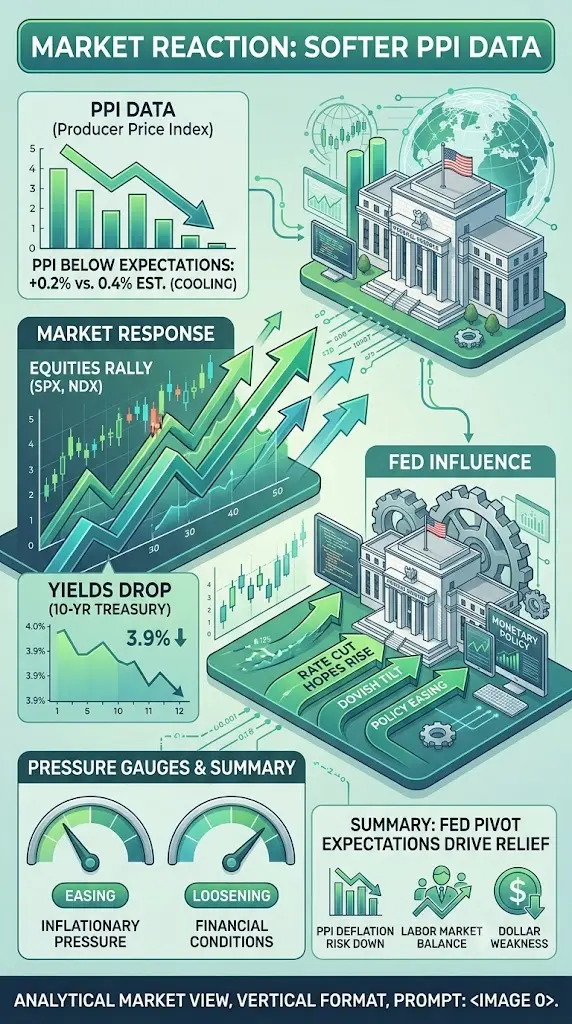
Financial markets often react quickly to inflation surprises. Equity investors evaluate how lower production costs may affect company earnings, while bond markets reassess future interest rate expectations. Currency markets also respond as traders estimate how central banks might adjust monetary policy. Cryptocurrency markets are increasingly influenced by these same macroeconomic developments because global liquidity, investor confidence, and risk appetite often move together across traditional and digital asset markets.
For cryptocurrency investors, macroeconomic awareness has become an essential component of risk management. Bitcoin, Ethereum, and other digital assets frequently respond to changing expectations surrounding inflation, monetary policy, and financial conditions. Periods of easing inflation expectations can sometimes improve market sentiment toward risk assets, while persistent inflation may encourage tighter financial conditions that affect investment flows across multiple asset classes.
The relationship between inflation and financial markets is rarely straightforward. Markets continuously evaluate whether inflation is temporary or structural, whether economic growth remains resilient, and whether central banks are likely to maintain, tighten, or eventually ease monetary policy. These expectations evolve as new economic data becomes available, making disciplined analysis more valuable than emotional reactions to individual headlines.
Successful investors recognize that long-term performance depends on consistency rather than short-term predictions. Economic reports should be viewed as pieces of a much larger puzzle rather than definitive signals. Portfolio diversification, capital preservation, thoughtful position sizing, and continuous learning remain among the most effective strategies for navigating changing market conditions.
The global economy is becoming increasingly interconnected. Inflation trends in one major economy can influence international capital flows, commodity prices, exchange rates, corporate investment decisions, and investor confidence worldwide. This is why professional investors monitor not only domestic economic indicators but also international developments that may influence broader financial markets.
Ultimately, economic data should encourage thoughtful analysis instead of immediate conclusions. Markets reward investors who combine patience with research, maintain emotional discipline during periods of volatility, and build strategies around long-term objectives rather than short-term market noise. Whether inflation strengthens or moderates over time, knowledge, preparation, and sound risk management remain the strongest advantages any investor can possess.
Disclaimer: Economic indicators are only one factor influencing financial markets. This content is for educational purposes and should not be considered financial or investment advice. Always conduct your own research before making investment decisions.
#USPPIComesInBelowExpectations #PPI
Producer Price Index (PPI) data has become one of the most closely watched economic indicators because it provides an early signal about inflation trends throughout the economy. Whenever producer inflation comes in below market expectations, investors immediately begin reassessing the outlook for monetary policy, interest rates, corporate profitability, and the broader financial markets. While a single economic report rarely changes the long-term direction of the economy on its own, it often influences expectations about future decisions by central banks and shapes investor sentiment across global markets.
The Producer Price Index measures changes in the prices businesses receive for their goods and services before those costs reach consumers. Because producers operate at the beginning of the supply chain, changes in production costs can eventually influence consumer inflation if companies pass higher expenses on to customers. For this reason, economists and investors closely compare PPI trends with Consumer Price Index (CPI) data to better understand whether inflationary pressures are accelerating, stabilizing, or easing over time.
When producer inflation is softer than expected, markets may interpret the data as a sign that cost pressures within the economy are becoming more manageable. Lower input costs can improve corporate profit margins, reduce pressure on businesses to increase prices, and potentially contribute to a more stable inflation environment. However, experienced investors understand that inflation trends are influenced by numerous factors including wages, energy prices, supply chain conditions, global demand, productivity growth, and geopolitical developments. No single economic release provides the complete picture.
Financial markets often react quickly to inflation surprises. Equity investors evaluate how lower production costs may affect company earnings, while bond markets reassess future interest rate expectations. Currency markets also respond as traders estimate how central banks might adjust monetary policy. Cryptocurrency markets are increasingly influenced by these same macroeconomic developments because global liquidity, investor confidence, and risk appetite often move together across traditional and digital asset markets.
For cryptocurrency investors, macroeconomic awareness has become an essential component of risk management. Bitcoin, Ethereum, and other digital assets frequently respond to changing expectations surrounding inflation, monetary policy, and financial conditions. Periods of easing inflation expectations can sometimes improve market sentiment toward risk assets, while persistent inflation may encourage tighter financial conditions that affect investment flows across multiple asset classes.
The relationship between inflation and financial markets is rarely straightforward. Markets continuously evaluate whether inflation is temporary or structural, whether economic growth remains resilient, and whether central banks are likely to maintain, tighten, or eventually ease monetary policy. These expectations evolve as new economic data becomes available, making disciplined analysis more valuable than emotional reactions to individual headlines.
Successful investors recognize that long-term performance depends on consistency rather than short-term predictions. Economic reports should be viewed as pieces of a much larger puzzle rather than definitive signals. Portfolio diversification, capital preservation, thoughtful position sizing, and continuous learning remain among the most effective strategies for navigating changing market conditions.
The global economy is becoming increasingly interconnected. Inflation trends in one major economy can influence international capital flows, commodity prices, exchange rates, corporate investment decisions, and investor confidence worldwide. This is why professional investors monitor not only domestic economic indicators but also international developments that may influence broader financial markets.
Ultimately, economic data should encourage thoughtful analysis instead of immediate conclusions. Markets reward investors who combine patience with research, maintain emotional discipline during periods of volatility, and build strategies around long-term objectives rather than short-term market noise. Whether inflation strengthens or moderates over time, knowledge, preparation, and sound risk management remain the strongest advantages any investor can possess.
Disclaimer: Economic indicators are only one factor influencing financial markets. This content is for educational purposes and should not be considered financial or investment advice. Always conduct your own research before making investment decisions.
#USPPIComesInBelowExpectations #PPI