








#TradfiTradingChallenge 𝐓𝐇𝐄 𝐆𝐋𝐎𝐁𝐀𝐋 𝐅𝐈𝐍𝐀𝐍𝐂𝐈𝐀𝐋 𝐒𝐘𝐒𝐓𝐄𝐌 𝐈𝐒 𝐄𝐍𝐓𝐄𝐑𝐈𝐍𝐆 𝐀 𝐍𝐄𝐖 𝐄𝐑𝐀 𝐖𝐇𝐄𝐑𝐄 𝐓𝐑𝐀𝐃𝐈𝐓𝐈𝐎𝐍𝐀𝐋 𝐅𝐈𝐍𝐀𝐍𝐂𝐄, 𝐀𝐈, 𝐀𝐍𝐃 𝐃𝐈𝐆𝐈𝐓𝐀𝐋 𝐀𝐒𝐒𝐄𝐓 𝐈𝐍𝐅𝐑𝐀𝐒𝐓𝐑𝐔𝐂𝐓𝐔𝐑𝐄 𝐀𝐑𝐄 𝐌𝐄𝐑𝐆𝐈𝐍𝐆 𝐈𝐍𝐓𝐎 𝐎𝐍𝐄 𝐌𝐀𝐒𝐒𝐈𝐕𝐄 𝐈𝐍𝐓𝐄𝐑𝐂𝐎𝐍𝐍𝐄𝐂𝐓𝐄𝐃 𝐄𝐂𝐎𝐒𝐘𝐒𝐓𝐄𝐌
The financial markets of 2026 no longer operate like the old systems of the past.
For decades, traditional finance controlled the global economy through:
• centralized banks
• stock exchanges
• bond markets
• institutional liquidity networks
• slow settlement systems
• manual financial operations
But now…
a completely new financial structure is emerging.
The rise of:
• AI-powered trading systems
• blockchain settlement technology
• tokenized real-world assets
• stablecoin liquidity rails
• digital reserve assets
• automated institutional infrastructure
is transforming global markets faster than most investors realize.
This is no longer just innovation.
It is the restructuring of the global financial order itself.
𝐓𝐑𝐀𝐃𝐅𝐈 𝐈𝐒 𝐔𝐍𝐃𝐄𝐑𝐆𝐎𝐈𝐍𝐆 𝐀 𝐌𝐀𝐒𝐒𝐈𝐕𝐄 𝐒𝐓𝐑𝐔𝐂𝐓𝐔𝐑𝐀𝐋 𝐄𝐕𝐎𝐋𝐔𝐓𝐈𝐎𝐍
Traditional finance is quietly becoming more technologically advanced than ever before.
Large financial institutions are aggressively upgrading toward:
• AI-integrated execution systems
• instant settlement mechanisms
• blockchain-based transaction rails
• algorithmic portfolio balancing
• cross-border digital liquidity systems
• tokenized treasury infrastructure
The objective is extremely clear:
Increase efficiency.
Reduce friction.
Improve settlement speed.
Optimize global liquidity movement.
The institutions that control liquidity infrastructure may become the dominant financial powers of the next decade.
𝐀𝐈 𝐈𝐒 𝐍𝐎𝐖 𝐓𝐇𝐄 𝐁𝐀𝐂𝐊𝐁𝐎𝐍𝐄 𝐎𝐅 𝐌𝐎𝐃𝐄𝐑𝐍 𝐌𝐀𝐑𝐊𝐄𝐓𝐒
Artificial intelligence is no longer being tested inside financial systems.
It is already operating inside them.
AI models are increasingly managing:
• predictive market analysis
• liquidity optimization
• automated trade execution
• institutional risk balancing
• volatility forecasting
• macro sentiment monitoring
• derivatives positioning analysis
This means modern markets are becoming:
less emotional…
more systematic…
and heavily data-driven.
But there is also a major consequence:
Volatility now expands faster because algorithms react instantly to liquidity shifts and macro news events.
𝐆𝐋𝐎𝐁𝐀𝐋 𝐋𝐈𝐐𝐔𝐈𝐃𝐈𝐓𝐘 𝐈𝐒 𝐁𝐄𝐂𝐎𝐌𝐈𝐍𝐆 𝐓𝐇𝐄 𝐌𝐎𝐒𝐓 𝐈𝐌𝐏𝐎𝐑𝐓𝐀𝐍𝐓 𝐀𝐒𝐒𝐄𝐓
The modern financial system is now completely liquidity-driven.
Markets no longer move only because of company fundamentals or economic reports.
They move because of:
• institutional capital rotation
• derivatives leverage
• ETF inflows and outflows
• interest rate expectations
• macro liquidity conditions
• algorithmic execution systems
• global risk sentiment
This creates a synchronized financial environment where:
stocks, crypto, forex, bonds, and commodities increasingly react together.
Liquidity has become the real engine of modern markets
𝐓𝐇𝐄 𝐌𝐄𝐑𝐆𝐄𝐑 𝐎𝐅 𝐓𝐑𝐀𝐃𝐅𝐈 & 𝐃𝐈𝐆𝐈𝐓𝐀𝐋 𝐅𝐈𝐍𝐀𝐍𝐂𝐄 𝐈𝐒 𝐀𝐂𝐂𝐄𝐋𝐄𝐑𝐀𝐓𝐈𝐍𝐆
One of the strongest financial trends of 2026 is the integration of traditional finance with blockchain infrastructure.
Major institutions are increasingly exploring:
• tokenized bonds
• tokenized equities
• blockchain settlement layers
• stablecoin payment systems
• digital treasury management
• programmable financial assets
This convergence is slowly creating a hybrid economy where:
traditional finance and crypto infrastructure operate together.
The future financial system may not be fully centralized…
or fully decentralized.
It may become a hybrid liquidity network powered by both systems simultaneously.
₿ 𝐁𝐈𝐓𝐂𝐎𝐈𝐍 𝐈𝐒 𝐄𝐕𝐎𝐋𝐕𝐈𝐍𝐆 𝐈𝐍𝐓𝐎 𝐀 𝐆𝐋𝐎𝐁𝐀𝐋 𝐌𝐀𝐂𝐑𝐎 𝐋𝐈𝐐𝐔𝐈𝐃𝐈𝐓𝐘 𝐀𝐒𝐒𝐄𝐓
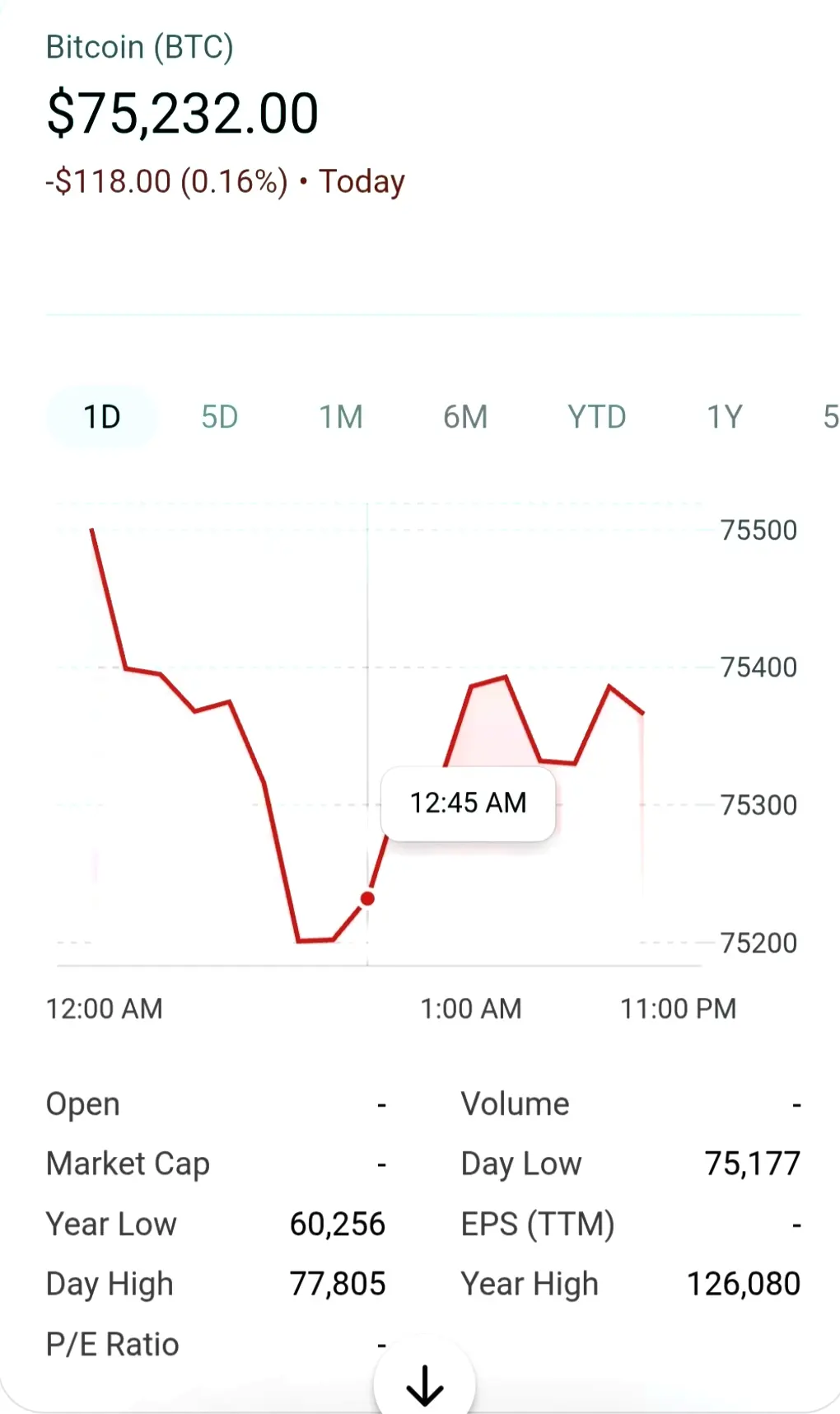
Current BTC Price: ~$75,377
24H Change: -2.60%
24H Trading Volume: Multi-Billion Dollar Daily Flow
Market Structure: High-Volatility Institutional Expansion Phase
Bitcoin is no longer behaving like a simple speculative digital currency.
It is increasingly operating as:
• a macro liquidity indicator
• a digital reserve asset
• an institutional hedge
• a capital rotation vehicle
• a global risk sentiment benchmark
• a high-volatility liquidity engine
Despite recent corrections, institutional demand for Bitcoin continues expanding.
The market is closely watching:
• ETF capital flows
• institutional wallet accumulation
• long-term holder activity
• futures market positioning
• stablecoin liquidity growth
• macro monetary policy signals
What makes Bitcoin important is not just price.
It is the role BTC is beginning to play inside the future global financial system.
𝐁𝐈𝐓𝐂𝐎𝐈𝐍’𝐒 𝐌𝐀𝐑𝐊𝐄𝐓 𝐒𝐓𝐑𝐔𝐂𝐓𝐔𝐑𝐄 𝐈𝐒 𝐒𝐓𝐈𝐋𝐋 𝐁𝐔𝐋𝐋𝐈𝐒𝐇 𝐋𝐎𝐍𝐆-𝐓𝐄𝐑𝐌
BTC remains inside a powerful macro liquidity cycle despite short-term volatility.
Key support zones continue forming near:
• $75K
• $72K
• $68K
Major resistance zones remain near:
• $78K
• $80K
• $85K
If BTC successfully breaks above major resistance levels with:
• rising spot demand
• ETF inflow expansion
• stronger institutional accumulation
• stable derivatives funding
then the market could enter another aggressive expansion phase.
Potential higher macro targets may eventually include:
• $90K
• $100K
• $120K+
if global liquidity conditions continue improving.
𝐈𝐍𝐒𝐓𝐈𝐓𝐔𝐓𝐈𝐎𝐍𝐀𝐋 𝐂𝐀𝐏𝐈𝐓𝐀𝐋 𝐈𝐒 𝐂𝐇𝐀𝐍𝐆𝐈𝐍𝐆 𝐓𝐇𝐄 𝐄𝐍𝐓𝐈𝐑𝐄 𝐂𝐑𝐘𝐏𝐓𝐎 𝐋𝐀𝐍𝐃𝐒𝐂𝐀𝐏?
One of the biggest misconceptions in markets is that institutional adoption has already fully arrived.
In reality…
the larger phase may still be developing.
Major financial firms are increasingly analyzing:
• Bitcoin reserve exposure
• blockchain settlement infrastructure
• stablecoin liquidity systems
• tokenized financial products
• AI-integrated portfolio systems
This matters because institutional capital changes market structure permanently.
It increases:
• liquidity depth
• market stability
• derivatives sophistication
• long-term adoption narratives
And over time…
it transforms speculative assets into macro financial instruments.
𝐑𝐈𝐒𝐊 𝐅𝐀𝐂𝐓𝐎𝐑𝐒 𝐓𝐑𝐀𝐃𝐄𝐑𝐒 𝐌𝐔𝐒𝐓 𝐖𝐀𝐓𝐂𝐇
Despite strong long-term narratives, risks remain significant.
Important risks include:
• macro liquidity tightening
• global recession fears
• aggressive interest rate policies
• leveraged liquidation cascades
• equity market weakness
• geopolitical instability
• sudden institutional de-risking
Modern markets are extremely interconnected.
When volatility expands…
it spreads rapidly across all asset classes.
𝐅𝐈𝐍𝐀𝐋 𝐌𝐀𝐑𝐊𝐄𝐓 𝐎𝐔𝐓𝐋𝐎𝐎𝐊
The financial world is transitioning toward a future where:
TradFi infrastructure
AI-powered execution systems
global liquidity networks
₿ Bitcoin reserve dynamics
institutional capital flows
blockchain settlement infrastructure
all operate together inside one evolving financial ecosystem.
The next era of finance will not simply reward those with the most capital.
It will reward those who control:
• liquidity
• infrastructure
• technology
• execution speed
• intelligent financial systems
And as this transformation accelerates…
Bitcoin is increasingly positioning itself at the center of the next global digital liquidity era.
₿ BTC | 🏦 TradFi | ⚙️ AI Finance | 🌐 Global Liquidity | 📊 Institutional Capital Flow | 🔗 Blockchain Infrastructure
#CreatorCarnival #ContentMining #GateSquareMayTradingShare
#TradfiTradingChallenge
The financial markets of 2026 no longer operate like the old systems of the past.
For decades, traditional finance controlled the global economy through:
• centralized banks
• stock exchanges
• bond markets
• institutional liquidity networks
• slow settlement systems
• manual financial operations
But now…
a completely new financial structure is emerging.
The rise of:
• AI-powered trading systems
• blockchain settlement technology
• tokenized real-world assets
• stablecoin liquidity rails
• digital reserve assets
• automated institutional infrastructure
is transforming global markets faster than most investors realize.
This is no longer just innovation.
It is the restructuring of the global financial order itself.
𝐓𝐑𝐀𝐃𝐅𝐈 𝐈𝐒 𝐔𝐍𝐃𝐄𝐑𝐆𝐎𝐈𝐍𝐆 𝐀 𝐌𝐀𝐒𝐒𝐈𝐕𝐄 𝐒𝐓𝐑𝐔𝐂𝐓𝐔𝐑𝐀𝐋 𝐄𝐕𝐎𝐋𝐔𝐓𝐈𝐎𝐍
Traditional finance is quietly becoming more technologically advanced than ever before.
Large financial institutions are aggressively upgrading toward:
• AI-integrated execution systems
• instant settlement mechanisms
• blockchain-based transaction rails
• algorithmic portfolio balancing
• cross-border digital liquidity systems
• tokenized treasury infrastructure
The objective is extremely clear:
Increase efficiency.
Reduce friction.
Improve settlement speed.
Optimize global liquidity movement.
The institutions that control liquidity infrastructure may become the dominant financial powers of the next decade.
𝐀𝐈 𝐈𝐒 𝐍𝐎𝐖 𝐓𝐇𝐄 𝐁𝐀𝐂𝐊𝐁𝐎𝐍𝐄 𝐎𝐅 𝐌𝐎𝐃𝐄𝐑𝐍 𝐌𝐀𝐑𝐊𝐄𝐓𝐒
Artificial intelligence is no longer being tested inside financial systems.
It is already operating inside them.
AI models are increasingly managing:
• predictive market analysis
• liquidity optimization
• automated trade execution
• institutional risk balancing
• volatility forecasting
• macro sentiment monitoring
• derivatives positioning analysis
This means modern markets are becoming:
less emotional…
more systematic…
and heavily data-driven.
But there is also a major consequence:
Volatility now expands faster because algorithms react instantly to liquidity shifts and macro news events.
𝐆𝐋𝐎𝐁𝐀𝐋 𝐋𝐈𝐐𝐔𝐈𝐃𝐈𝐓𝐘 𝐈𝐒 𝐁𝐄𝐂𝐎𝐌𝐈𝐍𝐆 𝐓𝐇𝐄 𝐌𝐎𝐒𝐓 𝐈𝐌𝐏𝐎𝐑𝐓𝐀𝐍𝐓 𝐀𝐒𝐒𝐄𝐓
The modern financial system is now completely liquidity-driven.
Markets no longer move only because of company fundamentals or economic reports.
They move because of:
• institutional capital rotation
• derivatives leverage
• ETF inflows and outflows
• interest rate expectations
• macro liquidity conditions
• algorithmic execution systems
• global risk sentiment
This creates a synchronized financial environment where:
stocks, crypto, forex, bonds, and commodities increasingly react together.
Liquidity has become the real engine of modern markets
𝐓𝐇𝐄 𝐌𝐄𝐑𝐆𝐄𝐑 𝐎𝐅 𝐓𝐑𝐀𝐃𝐅𝐈 & 𝐃𝐈𝐆𝐈𝐓𝐀𝐋 𝐅𝐈𝐍𝐀𝐍𝐂𝐄 𝐈𝐒 𝐀𝐂𝐂𝐄𝐋𝐄𝐑𝐀𝐓𝐈𝐍𝐆
One of the strongest financial trends of 2026 is the integration of traditional finance with blockchain infrastructure.
Major institutions are increasingly exploring:
• tokenized bonds
• tokenized equities
• blockchain settlement layers
• stablecoin payment systems
• digital treasury management
• programmable financial assets
This convergence is slowly creating a hybrid economy where:
traditional finance and crypto infrastructure operate together.
The future financial system may not be fully centralized…
or fully decentralized.
It may become a hybrid liquidity network powered by both systems simultaneously.
₿ 𝐁𝐈𝐓𝐂𝐎𝐈𝐍 𝐈𝐒 𝐄𝐕𝐎𝐋𝐕𝐈𝐍𝐆 𝐈𝐍𝐓𝐎 𝐀 𝐆𝐋𝐎𝐁𝐀𝐋 𝐌𝐀𝐂𝐑𝐎 𝐋𝐈𝐐𝐔𝐈𝐃𝐈𝐓𝐘 𝐀𝐒𝐒𝐄𝐓
Current BTC Price: ~$75,377
24H Change: -2.60%
24H Trading Volume: Multi-Billion Dollar Daily Flow
Market Structure: High-Volatility Institutional Expansion Phase
Bitcoin is no longer behaving like a simple speculative digital currency.
It is increasingly operating as:
• a macro liquidity indicator
• a digital reserve asset
• an institutional hedge
• a capital rotation vehicle
• a global risk sentiment benchmark
• a high-volatility liquidity engine
Despite recent corrections, institutional demand for Bitcoin continues expanding.
The market is closely watching:
• ETF capital flows
• institutional wallet accumulation
• long-term holder activity
• futures market positioning
• stablecoin liquidity growth
• macro monetary policy signals
What makes Bitcoin important is not just price.
It is the role BTC is beginning to play inside the future global financial system.
𝐁𝐈𝐓𝐂𝐎𝐈𝐍’𝐒 𝐌𝐀𝐑𝐊𝐄𝐓 𝐒𝐓𝐑𝐔𝐂𝐓𝐔𝐑𝐄 𝐈𝐒 𝐒𝐓𝐈𝐋𝐋 𝐁𝐔𝐋𝐋𝐈𝐒𝐇 𝐋𝐎𝐍𝐆-𝐓𝐄𝐑𝐌
BTC remains inside a powerful macro liquidity cycle despite short-term volatility.
Key support zones continue forming near:
• $75K
• $72K
• $68K
Major resistance zones remain near:
• $78K
• $80K
• $85K
If BTC successfully breaks above major resistance levels with:
• rising spot demand
• ETF inflow expansion
• stronger institutional accumulation
• stable derivatives funding
then the market could enter another aggressive expansion phase.
Potential higher macro targets may eventually include:
• $90K
• $100K
• $120K+
if global liquidity conditions continue improving.
𝐈𝐍𝐒𝐓𝐈𝐓𝐔𝐓𝐈𝐎𝐍𝐀𝐋 𝐂𝐀𝐏𝐈𝐓𝐀𝐋 𝐈𝐒 𝐂𝐇𝐀𝐍𝐆𝐈𝐍𝐆 𝐓𝐇𝐄 𝐄𝐍𝐓𝐈𝐑𝐄 𝐂𝐑𝐘𝐏𝐓𝐎 𝐋𝐀𝐍𝐃𝐒𝐂𝐀𝐏?
One of the biggest misconceptions in markets is that institutional adoption has already fully arrived.
In reality…
the larger phase may still be developing.
Major financial firms are increasingly analyzing:
• Bitcoin reserve exposure
• blockchain settlement infrastructure
• stablecoin liquidity systems
• tokenized financial products
• AI-integrated portfolio systems
This matters because institutional capital changes market structure permanently.
It increases:
• liquidity depth
• market stability
• derivatives sophistication
• long-term adoption narratives
And over time…
it transforms speculative assets into macro financial instruments.
𝐑𝐈𝐒𝐊 𝐅𝐀𝐂𝐓𝐎𝐑𝐒 𝐓𝐑𝐀𝐃𝐄𝐑𝐒 𝐌𝐔𝐒𝐓 𝐖𝐀𝐓𝐂𝐇
Despite strong long-term narratives, risks remain significant.
Important risks include:
• macro liquidity tightening
• global recession fears
• aggressive interest rate policies
• leveraged liquidation cascades
• equity market weakness
• geopolitical instability
• sudden institutional de-risking
Modern markets are extremely interconnected.
When volatility expands…
it spreads rapidly across all asset classes.
𝐅𝐈𝐍𝐀𝐋 𝐌𝐀𝐑𝐊𝐄𝐓 𝐎𝐔𝐓𝐋𝐎𝐎𝐊
The financial world is transitioning toward a future where:
TradFi infrastructure
AI-powered execution systems
global liquidity networks
₿ Bitcoin reserve dynamics
institutional capital flows
blockchain settlement infrastructure
all operate together inside one evolving financial ecosystem.
The next era of finance will not simply reward those with the most capital.
It will reward those who control:
• liquidity
• infrastructure
• technology
• execution speed
• intelligent financial systems
And as this transformation accelerates…
Bitcoin is increasingly positioning itself at the center of the next global digital liquidity era.
₿ BTC | 🏦 TradFi | ⚙️ AI Finance | 🌐 Global Liquidity | 📊 Institutional Capital Flow | 🔗 Blockchain Infrastructure
#CreatorCarnival #ContentMining #GateSquareMayTradingShare
#TradfiTradingChallenge