À medida que o staking de liquidez (LSD) e os mecanismos de restaking evoluem, os protocolos de blockchain estão a passar de modelos de retorno de ativo único para sistemas de incentivos em múltiplas camadas. Neste contexto, os tokens não são apenas representações de participação em ativos, mas assumem um papel central na governança e nos incentivos, coordenando o comportamento dos utilizadores e o progresso do protocolo.
Para acompanhar esta tendência, a StakeStone apresenta uma estrutura de dois tokens que separa os certificados de ativos dos incentivos de governança. Neste modelo, o STO funciona como token central do protocolo, facilitando a participação dos utilizadores, a distribuição de retornos e a expansão do ecossistema—tornando-se um elemento fundamental de todo o sistema de agregação de rendimento.
Visão geral da StakeStone
A StakeStone é um protocolo de agregação de rendimento que combina staking de liquidez e mecanismos de restaking, concebido para maximizar a utilização dos ativos através de estratégias automáticas e agendamento entre cadeias. Quem deposita ETH ou ativos relacionados pode aceder a retornos de múltiplas fontes sem necessidade de gerir estratégias complexas.
O protocolo utiliza diferentes tipos de tokens para tratar a representação de ativos e a governança, alcançando uma estrutura em camadas.
O papel do STO no sistema StakeStone
O STO é o token utilitário e de governança nativo do ecossistema StakeStone, com o objetivo de alinhar os interesses de longo prazo de todas as partes—utilizadores, parceiros e programadores.
Com uma oferta total de 1 mil milhão de tokens, o STO suporta a governança do protocolo, o aumento do rendimento e funções-chave como a obtenção de recompensas de suborno através do STO bloqueado por voto (veSTO).
O STO tem três funções principais:
Antes de mais, o STO é uma ferramenta de governança, permitindo participação na alteração de parâmetros do protocolo, seleção de estratégias e evoluções do sistema. Em segundo lugar, serve como instrumento de incentivo, recompensando utilizadores, fornecedores de liquidez e participantes do ecossistema para impulsionar o crescimento do protocolo. Finalmente, o STO permite a distribuição de valor, possibilitando que os participantes partilhem, de forma indireta, nos retornos do desenvolvimento do protocolo.
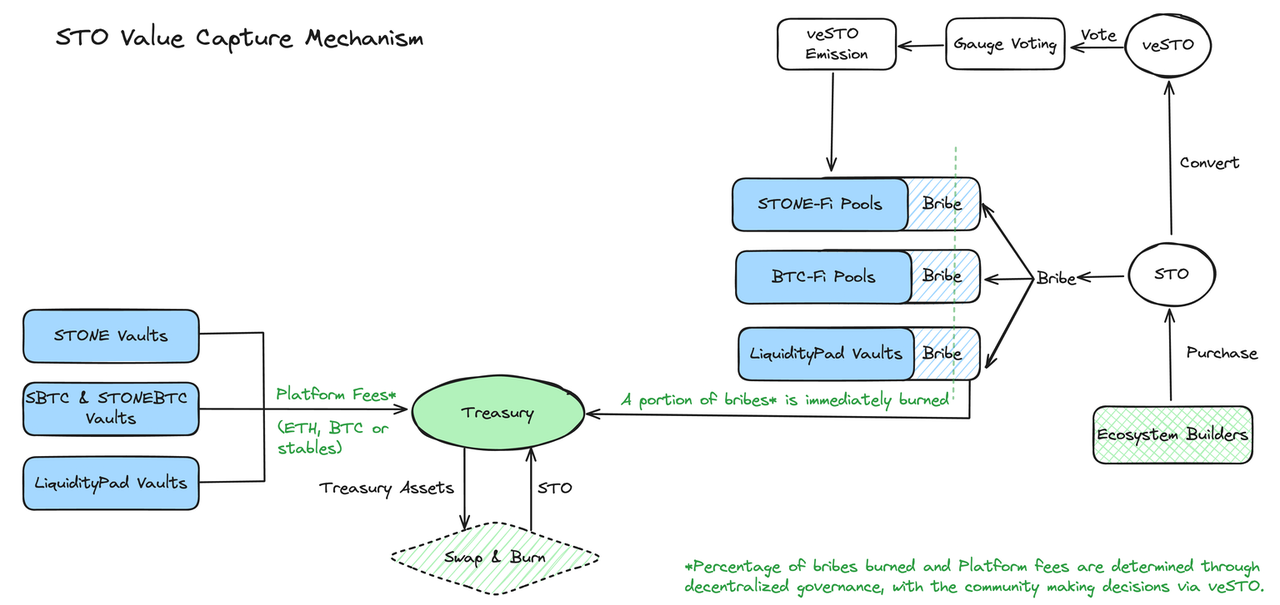
Mecanismo de captação de preço do STO, fonte: StakeStone
Em suma, o STO é o elo essencial entre o comportamento do utilizador e o desenvolvimento do protocolo.
Relação e distinção entre STO e STONE
A StakeStone utiliza um sistema de dois tokens, em que o STO e o STONE têm funções distintas.
| Dimensão |
STO |
STONE |
| Tipo |
Token de Governança/Incentivo |
Certificado de Rendimento |
| Representação de Ativo |
Não |
Sim |
| Função principal |
Governança, Incentivos, Distribuição de Valor |
Representa Ativos Depositados pelo Utilizador |
| Fontes de ganhos |
Mecanismo de Incentivo |
Retornos de Staking + Restaking |
| Casos de utilização |
Governança, Distribuição de Incentivos |
DeFi, Liquidez, Geração de Rendimento |
Esta separação permite incentivos e mecanismos de governança flexíveis, sem comprometer a liquidez dos ativos.
Mecanismo de emissão e distribuição do STO
O modelo de token da StakeStone introduz o STO no mercado através de uma alocação pré-definida e libertação gradual.
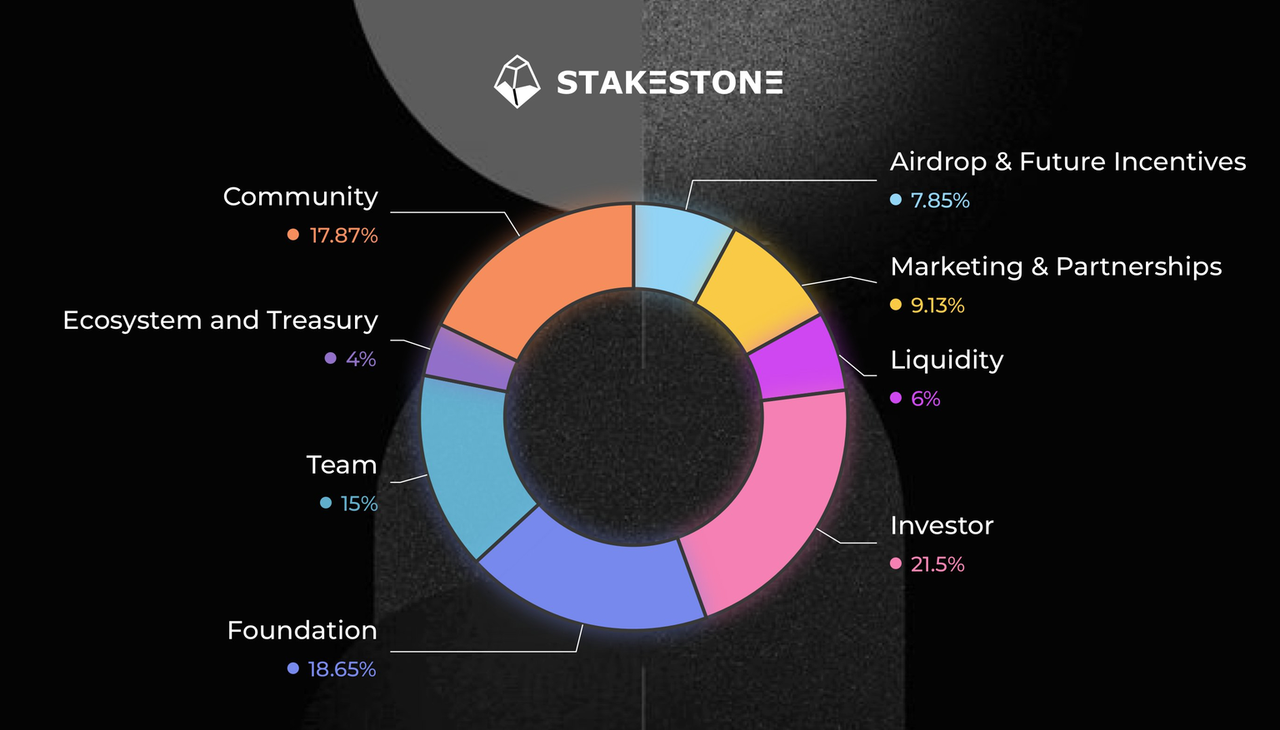
Inicialmente, o STO é atribuído a contribuintes principais, desenvolvimento do ecossistema, comunidade e futuros pools de incentivos. Esta abordagem equilibra o crescimento inicial do protocolo com as necessidades de incentivos a longo prazo.
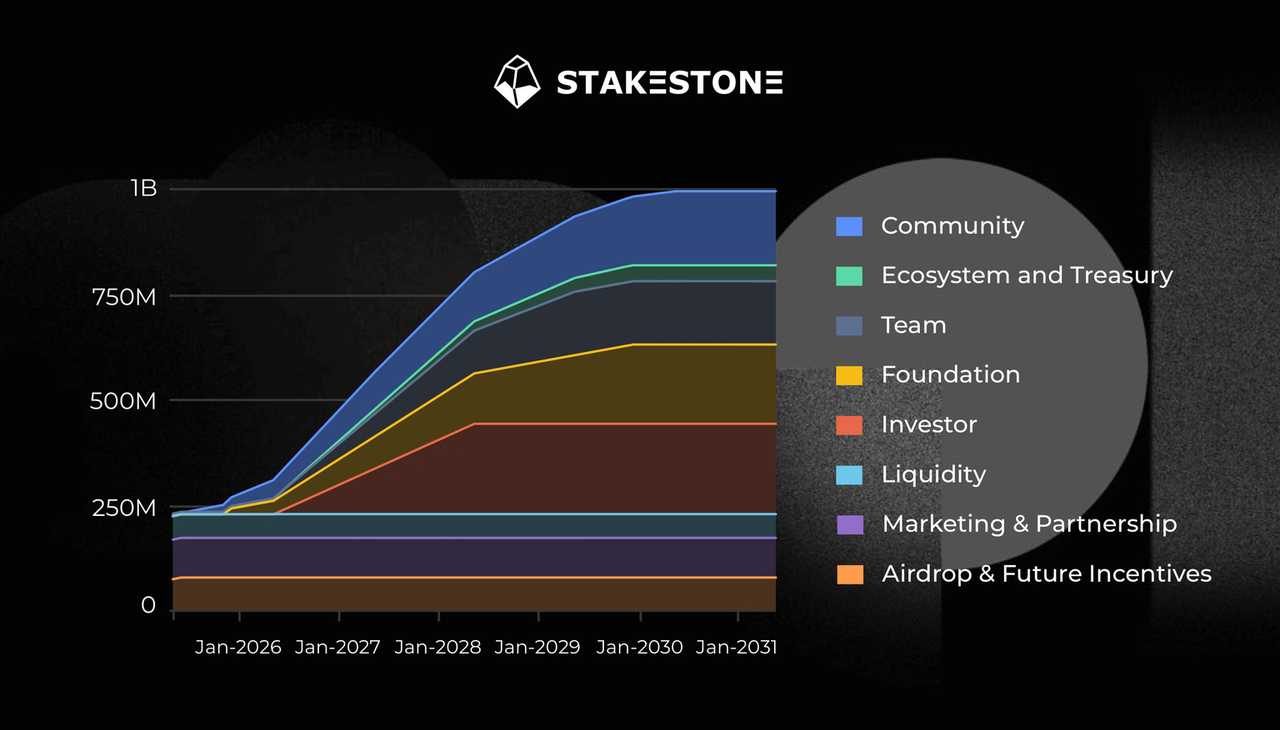
A distribuição do STO faz-se normalmente por desbloqueio faseado ou mecanismos ligados à participação. Por exemplo, alguns tokens podem ser atribuídos como recompensa a fornecedores de liquidez ou participantes do protocolo, associando diretamente a alocação de tokens à utilização do protocolo.
Como funciona o mecanismo de incentivos do STO?
O mecanismo de incentivos do STO foi concebido para orientar o comportamento dos utilizadores e fomentar o crescimento do ecossistema.
Ao nível do utilizador, o STO é distribuído como recompensa a quem faz staking, fornece liquidez ou utiliza o protocolo—aumentando o capital e a atividade global. Os incentivos ao nível do ecossistema incentivam protocolos parceiros a integrarem-se com a StakeStone, ampliando os casos de utilização.
Os incentivos estão normalmente ligados ao comportamento dos utilizadores, sendo que participantes de longo prazo ou quem fornece liquidez estável recebe recompensas superiores. Esta estrutura favorece a estabilidade do sistema e o desenvolvimento sustentado.
Análise do mecanismo de governança do STO
Os titulares de STO podem participar na governança do protocolo, que compreende fases de proposta e votação.
O STO é utilizado para definir parâmetros centrais como a alocação de estratégias de rendimento, atualizações do protocolo e medidas de controlo de risco. Mecanismos de votação descentralizada permitem aos detentores de tokens influenciar a orientação do protocolo.
Este modelo de governança permite à StakeStone manter operações automáticas, assegurando ao mesmo tempo um grau de controlo descentralizado.
Comparação: StakeStone STO vs. modelos de incentivo EigenLayer
Os modelos de incentivo do STO e do EigenLayer diferem significativamente em objetivo e estrutura. O STO apoia principalmente a governança do protocolo e incentivos ao ecossistema, enquanto os incentivos do EigenLayer estão diretamente ligados ao restaking e aos retornos de serviços de segurança.
| Dimensão |
StakeStone (STO) |
EigenLayer |
| Posição central |
Token de Governança + Incentivo |
Infraestrutura de Restaking |
| Fontes de incentivos |
Distribuição do Protocolo/Incentivos ao Ecossistema |
Retornos de Serviços AVS |
| Ligação direta ao ativo |
Não |
Sim (Ativos em Restaking) |
| Destinatários dos incentivos |
Utilizadores + Participantes do Ecossistema |
Validadores/Restakers |
| Tipo de rendimento |
Incentivos indiretos |
Retornos diretos |
| Função no sistema |
Camada de Agendamento/Camada de Incentivo |
Camada de Expansão de Segurança |
O mecanismo de incentivos do EigenLayer está ancorado no "modelo económico de segurança subjacente", com rendimentos diretamente ligados a serviços de segurança da rede, como tarefas de validação ou AVS (Active Validation Services). Por oposição, o STO da StakeStone foca-se em "sistemas de agendamento e incentivos de nível superior", orientando capitais e comportamento dos utilizadores em vez de gerar retornos subjacentes diretos.
Potenciais vantagens e limitações do modelo STO
O modelo STO oferece flexibilidade ao separar ativos da governança, permitindo ao protocolo ajustar as estratégias de incentivo em diferentes fases. A estrutura de incentivos atrai utilizadores e participantes do ecossistema, impulsionando o crescimento do protocolo.
No entanto, existem limitações. A eficácia dos incentivos depende do desenho e execução; o desalinhamento entre incentivos e utilização real pode reduzir a eficiência do sistema. O ritmo de emissão de tokens e a estrutura de distribuição podem também afetar a estabilidade a longo prazo.
Resumo
Como token central da StakeStone, o STO não representa diretamente os ativos dos utilizadores, mas liga o comportamento do utilizador ao desenvolvimento do protocolo através de mecanismos de governança e incentivos. O design em camadas, juntamente com o STONE, permite à StakeStone equilibrar os rendimentos dos ativos e o controlo do protocolo, oferecendo uma escalabilidade robusta num ecossistema de agregação de rendimento multi-cadeia.
Perguntas Frequentes
Qual é a diferença entre o STO e o STONE?
O STO serve para governança e incentivos; o STONE representa os ativos e rendimentos dos utilizadores.
O STO representa ativos em staking?
Não, os ativos são representados pelo STONE.
Qual é o principal objetivo do STO?
É utilizado para governança, incentivos e desenvolvimento do ecossistema.
A posse de STO pode gerar retornos?
Os retornos são geralmente obtidos de forma indireta, através da participação em incentivos ou na governança.
O STO participa na governança do protocolo?
Sim, os titulares podem normalmente apresentar propostas e votar.