Seiring ekspansi industri blockchain dari transfer sederhana ke aplikasi kompleks seperti DeFi, blockchain gaming, SocialFi, dan perdagangan on-chain, kinerja blockchain publik semakin mendapat perhatian. Banyak aplikasi kini menuntut kecepatan konfirmasi lebih tinggi, throughput lebih besar, dan pengalaman pengguna yang konsisten, namun blockchain tradisional kerap mengalami kemacetan jaringan serta keterlambatan transaksi saat concurrency tinggi.
EVM, sebagai lingkungan Smart Contract paling populer, menghadapi tantangan serupa. EVM tradisional mengandalkan eksekusi berurutan, yang menjadi bottleneck ketika volume transaksi meningkat. Parallelized EVM hadir sebagai inovasi utama untuk blockchain publik berperforma tinggi, dengan Sei sebagai proyek unggulan di bidang ini.
Apa Itu Parallelized EVM
Parallelized EVM adalah arsitektur EVM yang memungkinkan eksekusi beberapa transaksi secara bersamaan. Berbeda dengan EVM tradisional yang memproses transaksi satu per satu, eksekusi paralel mengidentifikasi transaksi tanpa konflik state dan menjalankannya secara simultan.
Tujuan utamanya adalah meningkatkan throughput blockchain dalam kondisi concurrency tinggi. Jika dua transaksi mempengaruhi akun, Smart Contract, atau data state yang berbeda, keduanya dapat diproses secara bersamaan tanpa saling menunggu. Parallelized EVM memanfaatkan hal ini untuk menjalankan banyak tugas secara paralel.
Parallelization tetap membutuhkan logika berurutan. Jika beberapa transaksi mencoba mengubah data state yang sama, sistem harus mendeteksi konflik dan mengatur ulang eksekusi agar tidak terjadi inkonsistensi. Pada dasarnya, eksekusi paralel memperkenalkan mekanisme penjadwalan yang lebih canggih.
Mengapa EVM Tradisional Mengalami Bottleneck Kinerja
EVM tradisional mengeksekusi transaksi secara berurutan sesuai urutan masuk ke blok, lalu memperbarui state on-chain setelah setiap transaksi.
Metode ini memang menjaga konsistensi jaringan, namun transaksi yang independen pun tidak bisa diproses bersamaan. Saat volume transaksi meningkat, antrean di jaringan makin panjang, menyebabkan kemacetan dan biaya Gas yang melonjak.
Masalah ini sangat terasa di DeFi dan perdagangan on-chain berfrekuensi tinggi. Ketika banyak pengguna Swap, perdagangan, atau mint NFT secara simultan, model berurutan kesulitan memberikan pengalaman stabil.
Bagaimana Parallelized EVM Memungkinkan Eksekusi Paralel
Dasar Parallelized EVM adalah deteksi konflik state.
Sistem menganalisis data state yang diakses setiap transaksi dan menentukan transaksi mana yang tidak saling tumpang tindih. Transaksi yang tidak menyentuh state yang sama dapat dialokasikan ke thread eksekusi terpisah dan diproses secara paralel.
Beberapa Parallelized EVM menggunakan model Optimistic Execution, mengasumsikan transaksi tidak konflik dan memverifikasi konsistensi state setelah eksekusi. Jika ditemukan konflik, transaksi terkait diatur ulang atau dieksekusi ulang.
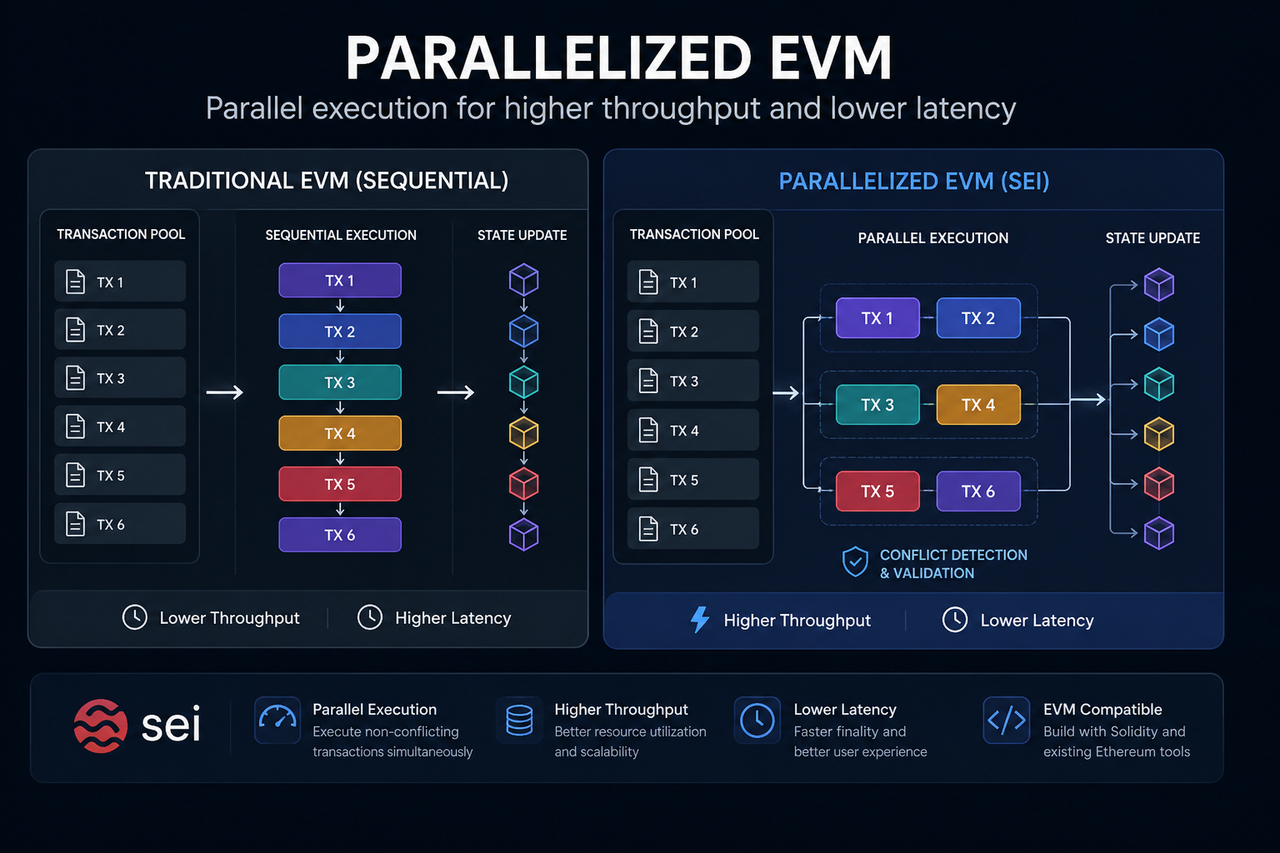
Arsitektur ini memaksimalkan kemampuan multi-core CPU modern, sehingga efisiensi pemrosesan transaksi meningkat drastis.
Namun, parallelization menambah kompleksitas sistem. Node harus menangani sinkronisasi state, rollback konflik, dan penjadwalan lanjutan, sehingga membutuhkan arsitektur yang lebih tangguh.
Mengapa Sei Menekankan Parallelized EVM
Sei diposisikan sebagai blockchain publik EVM berperforma tinggi.
Dibandingkan jaringan EVM tradisional, Sei memprioritaskan interaksi on-chain real-time, termasuk perdagangan frekuensi tinggi, Order Book on-chain, Perpetual Futures, dan blockchain gaming real-time. Use case ini membutuhkan latensi rendah dan throughput tinggi, sehingga eksekusi berurutan menjadi hambatan.
Parallelized EVM milik Sei memungkinkan transaksi independen berjalan paralel, sehingga efisiensi eksekusi keseluruhan meningkat. Ditambah fitur seperti Twin-Turbo Consensus, SeiDB, dan Finality latensi rendah, responsivitas jaringan semakin optimal.
Bagi Pengembang, kompatibilitas Sei dengan toolchain Ethereum adalah nilai tambah utama. Pengembang tetap dapat menggunakan Solidity, MetaMask, dan infrastruktur EVM yang ada tanpa perlu menyesuaikan dengan lingkungan baru.
Kelebihan Parallelized EVM
Keunggulan utama Parallelized EVM adalah meningkatkan efisiensi pemrosesan transaksi pada lingkungan concurrency tinggi.
Dengan mengeksekusi banyak transaksi sekaligus, throughput jaringan meningkat dan waktu tunggu transaksi berkurang—krusial untuk perdagangan on-chain, keuangan real-time, dan aplikasi interaktif kompleks.
Eksekusi paralel juga memaksimalkan penggunaan hardware server modern. Model berurutan tradisional kurang memanfaatkan CPU multi-core, sementara Parallelized EVM selaras dengan arsitektur komputasi saat ini.
Dari sudut pandang pengguna, eksekusi paralel membantu mengurangi kemacetan jaringan dan volatilitas Gas, sehingga pengalaman on-chain lebih stabil.
Tantangan Parallelized EVM
Meski eksekusi paralel membawa peningkatan kinerja, kompleksitas teknis juga meningkat.
Deteksi konflik state menambah beban sistem, sehingga node harus menilai konflik transaksi secara Real Time dan mengelola penjadwalan serta sinkronisasi state.
Eksekusi paralel juga meningkatkan kompleksitas pengembangan. Beberapa aplikasi harus didesain untuk menangani akses state bersamaan, atau berisiko menghasilkan hasil tidak konsisten dan perebutan resource.
Mencapai eksekusi paralel yang stabil sambil mempertahankan kompatibilitas EVM membutuhkan optimalisasi arsitektur signifikan. Menemukan keseimbangan antara kinerja, kompatibilitas, dan desentralisasi masih menjadi tantangan utama bagi Parallelized EVM.
Bagaimana Parallelized EVM Membentuk Masa Depan Blockchain Publik
Seiring aplikasi blockchain semakin kompleks, kinerja menjadi faktor pembeda utama.
Aplikasi on-chain masa depan akan melampaui transfer aset, mencakup gaming real-time, Agen AI, social on-chain, dan sistem keuangan kompleks. Skenario ini membutuhkan latensi rendah dan throughput tinggi, yang mungkin tidak bisa dipenuhi model eksekusi berurutan.
Parallelized EVM menandai perubahan dalam ekosistem EVM—dari “kompatibilitas utama” menuju fokus pada performa dan skalabilitas.
Ringkasan
Parallelized EVM adalah arsitektur EVM yang memungkinkan transaksi dieksekusi secara paralel, mengatasi keterbatasan performa model berurutan tradisional.
Dengan meningkatnya permintaan untuk DeFi, blockchain gaming, dan interaksi on-chain berfrekuensi tinggi, eksekusi paralel menjadi kebutuhan utama bagi blockchain publik berperforma tinggi. Parallelized EVM lebih memaksimalkan hardware modern dan meningkatkan throughput serta kemampuan real-time jaringan dibanding EVM tradisional.
Sei adalah proyek terkemuka di ruang Parallelized EVM, berupaya mengoptimalkan performa on-chain melalui eksekusi paralel dan arsitektur latensi rendah, sekaligus tetap kompatibel dengan tool pengembangan Ethereum.
FAQ
Apa yang membedakan Parallelized EVM dari EVM tradisional?
EVM tradisional mengeksekusi transaksi secara berurutan, sedangkan Parallelized EVM memungkinkan transaksi independen berjalan secara paralel.
Mengapa Parallelized EVM ideal untuk aplikasi frekuensi tinggi?
Perdagangan frekuensi tinggi dan interaksi Real Time membutuhkan throughput lebih besar dan latensi lebih rendah. Eksekusi paralel mengurangi waktu tunggu transaksi.
Mengapa Sei fokus pada Parallelized EVM?
Sei menargetkan interaksi on-chain berperforma tinggi, dengan tujuan meningkatkan efisiensi eksekusi sambil tetap kompatibel dengan tool Ethereum.
Apakah Parallelized EVM menghilangkan eksekusi berurutan sepenuhnya?
Tidak. Jika transaksi mengalami konflik state, sistem tetap memprosesnya secara berurutan atau mengeksekusi ulang sesuai kebutuhan.
Apa tantangan utama bagi Parallelized EVM?
Tantangan utama meliputi deteksi konflik state, penjadwalan eksekusi kompleks, serta menjaga keseimbangan antara kompatibilitas dan stabilitas.