En el contexto de una integración avanzada entre IA y Web3 en 2026, el debate sobre LAB ha evolucionado: ya no se pregunta si “subirá”, sino si su mecanismo es sostenible. Tras periodos recientes de alta volatilidad, el mercado observa con mayor detalle la estructura de circulación de LAB, el calendario de desbloqueo de tokens, la transparencia de la información y los mecanismos de acumulación de valor. Estos elementos, en conjunto, determinan si el modelo de token puede sostener el crecimiento a largo plazo de la plataforma.
Desde la perspectiva del sector, el valor central de LAB no radica en una sola narrativa, sino en su capacidad para crear un ciclo de crecimiento verificable integrando infraestructura de trading, capacidades de IA y gobernanza comunitaria. El análisis a continuación desglosa LAB en función, asignación, gobernanza de incentivos, lógica de valoración y perfil de riesgo-rentabilidad.
Funciones principales y usos del token LAB
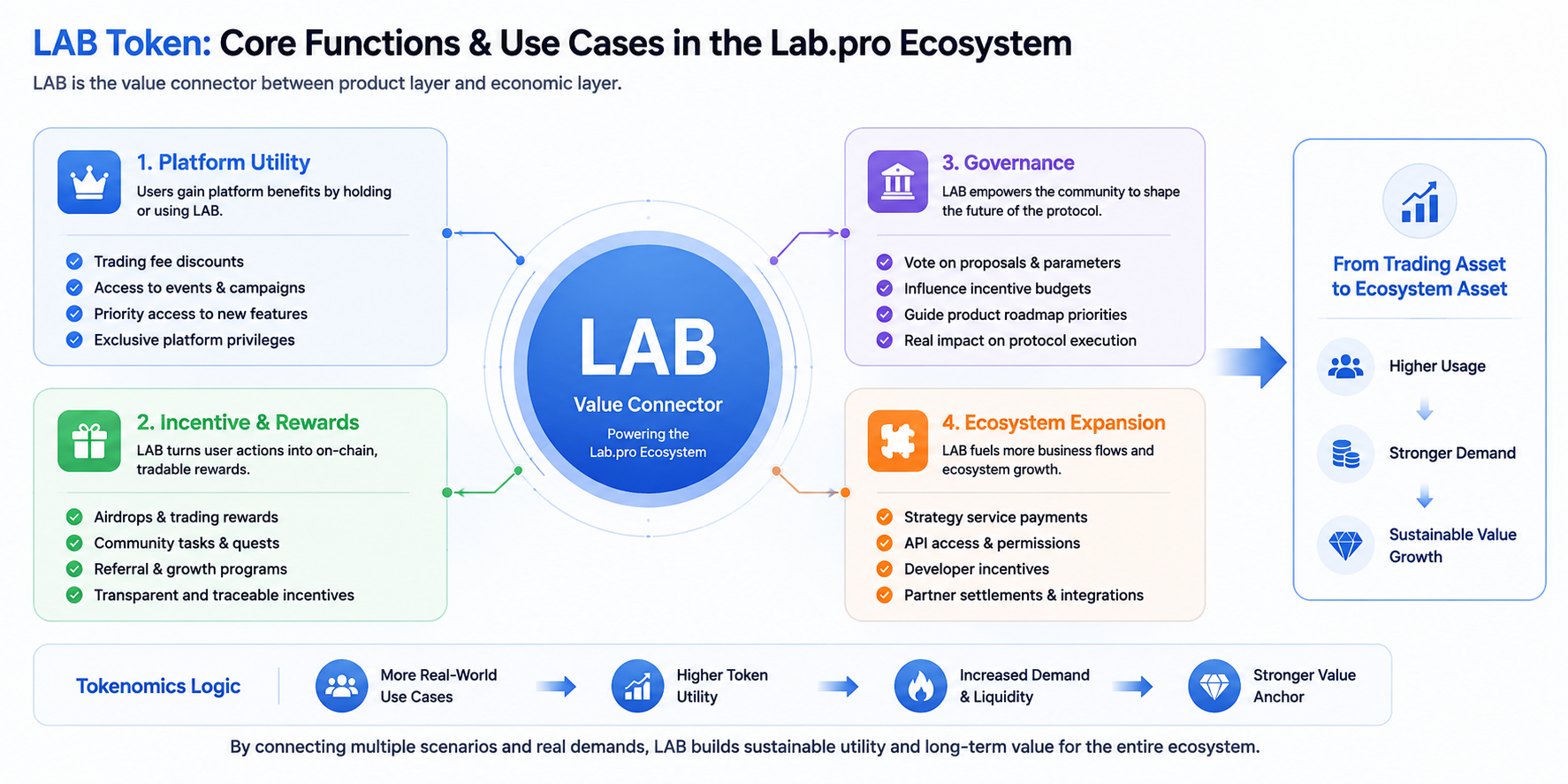
Dentro del ecosistema de Lab.pro, LAB es mucho más que un medio de intercambio: actúa como puente de valor entre las capas de producto y economía. Según la información pública, sus cuatro principales aplicaciones son:
-
Patrimonio de plataforma. Al tener o usar LAB, los usuarios acceden normalmente a descuentos en tarifas de trading, eventos y funciones prioritarias. Así, el valor del token se vincula al uso real, reduciendo la brecha entre el trading y la utilidad efectiva.
-
Distribución de incentivos. En casos como airdrops, recompensas por trading, tareas comunitarias y programas de referidos, LAB funciona como unidad de incentivo transferible, convirtiendo acciones de los usuarios en retornos settleables on-chain. Frente a créditos centralizados, los incentivos basados en tokens son más transparentes, trazables y aptos para la valoración en mercado abierto.
-
Participación en gobernanza. LAB acredita a los usuarios para presentar propuestas y votar, permitiendo que la comunidad influya en ajustes de parámetros, presupuestos de incentivos, prioridades de producto y temas clave. La gobernanza aporta valor si las propuestas repercuten realmente en la ejecución del protocolo, no solo en el proceso.
-
Expansión del ecosistema. A medida que la línea de productos crece, LAB puede usarse para llamadas a servicios estratégicos, permisos API, incentivos a desarrolladores y liquidaciones con socios. Si el token absorbe más flujos de negocio, puede pasar de “activo de trading” a “activo de ecosistema”.
Desde la óptica de la tokenómica, el valor esencial de LAB está en impulsar la demanda en diferentes escenarios para aumentar la utilidad intrínseca del token, evitando que el valor dependa únicamente de movimientos de precio a corto plazo.
Mecanismo de emisión y asignación del token
LAB cuenta con un suministro total de 1 mil millones de tokens. Según datos públicos, la estructura de asignación es la siguiente:
| Asignación |
Porcentaje |
| Recompensas del ecosistema y la comunidad |
20 % |
| Liquidez |
20 % |
| Inversores |
19,20 % |
| Marketing y colaboraciones |
15,80 % |
| Equipo y asesores |
15 % |
| Airdrop |
10 % |
Sobre ese total, las asignaciones aproximadas son:
-
Incentivos para ecosistema y comunidad: 200 millones de LAB
-
Liquidez: 200 millones de LAB
-
Inversores: 192 millones de LAB
-
Marketing y colaboraciones: 158 millones de LAB
-
Equipo y asesores: 150 millones de LAB
-
Airdrop: 100 millones de LAB
Esta estructura transmite tres mensajes claros:
Primero, el 40 % conjunto para ecosistema y liquidez refuerza la apuesta del proyecto por el crecimiento y la capacidad de trading.
Segundo, el 34,2 % para inversores y equipo representa una proporción elevada para captación de fondos y desarrollo, lo que exige más transparencia para estabilizar expectativas.
Tercero, el 15,8 % para marketing y colaboraciones indica que los incentivos y la expansión de alianzas seguirán activos.
En cuanto al vesting, la información pública indica que LAB utiliza los siguientes mecanismos:
-
Calendarios de vesting lineal;
-
Algunas asignaciones combinan cliff (retención inicial) y vesting lineal;
-
El desbloqueo se extiende hasta 2027;
-
Las recompensas comunitarias se liberan de forma gradual, nunca en un solo evento.
Actualmente, datos de terceros sitúan el suministro en circulación en torno a 210 a 230 millones de LAB (con variaciones estadísticas), colocando a LAB en una fase de “baja circulación, alto FDV”.
En este contexto, la volatilidad de precios suele ser alta y el mercado responde de forma más sensible a los desbloqueos, transferencias y cambios en liquidez.
Papel de LAB en incentivos del ecosistema y gobernanza
El mecanismo del token LAB persigue dos objetivos: impulsar el crecimiento de la plataforma y establecer la gobernanza comunitaria.
Un énfasis excesivo en las “recompensas” puede generar hype a corto plazo, mientras que centrarse solo en la “narrativa de gobernanza” puede reducir la participación. La fortaleza de LAB es crear un ciclo sostenible que conecte ambos ámbitos.
1) Incentivos del ecosistema: de la captación a la retención
La asignación del 20 % para recompensas del ecosistema y la comunidad brinda margen suficiente para la participación de usuarios. Incentivos bien diseñados pueden abarcar actividad de trading, contribuciones de contenido, construcción de comunidad y promoción de alianzas.
Un sistema eficaz debe evolucionar de “subsidios generalizados” a “niveles por calidad”: los comportamientos de mayor calidad reciben más recompensas, mientras que las actividades de volumen a corto plazo tienen menor peso, maximizando la eficiencia marginal del gasto en tokens.
2) Incentivos de liquidez: mantener la usabilidad de la plataforma
El 20 % destinado a liquidez no solo mejora la experiencia de trading, sino que es esencial para la expansión del ecosistema. En entornos cross-chain y multimerado, la falta de liquidez afecta directamente la experiencia y la ejecución.
Por tanto, la asignación de LAB a liquidez es un “presupuesto de infraestructura”, cuya eficacia a largo plazo depende de su capacidad para sostener la actividad y generar ingresos reales por tarifas de trading.
3) Gobernanza: la clave para mecanismos sostenibles
LAB incorpora capacidades de gobernanza, pero su valor real depende de si puede influir en parámetros clave como presupuestos de incentivos, estructuras de tarifas, prioridades de producto y niveles de riesgo.
Si la gobernanza se limita a temas menores, los incentivos para mantener y participar a largo plazo se diluyen. Si puede guiar la asignación de recursos críticos, la implicación de la comunidad crecerá de forma significativa.
Valor de mercado y potencial a largo plazo de LAB
La valoración de LAB a medio y largo plazo no depende de “1 mil millones de tokens”, sino de si el calendario de liberación acompaña el crecimiento fundamental.
En contextos de baja circulación y alto FDV, el mercado suele seguir dos caminos:
-
Si crecen usuarios, volumen de trading e ingresos, las futuras liberaciones de tokens se absorben como oferta natural.
-
Si el crecimiento se ralentiza o los ingresos no son sólidos, la nueva circulación genera presión vendedora y limita la valoración.
En la estructura actual, el potencial a largo plazo de LAB depende de cinco factores clave:
-
Crecimiento real y sostenido de usuarios;
-
Si la infraestructura de trading con IA es una ventaja competitiva sostenible;
-
Si los ingresos cubren de forma constante la emisión de tokens;
-
Ejecución real de mecanismos de recompra/quema y acumulación de valor;
-
Capacidad del mercado para absorber liquidez en los periodos de desbloqueo.
De todos ellos, los mecanismos de acumulación de valor son la variable crítica. Aunque algunas fuentes comunitarias mencionan la lógica de recompra y quema, con poca información oficial, la investigación y la inversión deben seguir la premisa de “primero anuncios oficiales, verificación on-chain y extrapolación prudente”.
Análisis de riesgo y rentabilidad para invertir en el token LAB
LAB tiene alto potencial de crecimiento, pero también es muy volátil. Para los inversores, riesgo y rentabilidad deben evaluarse de forma conjunta, no solo por el impulso narrativo.
Posibles fuentes de rentabilidad
-
Mayor demanda de tokens por el aumento del volumen de trading en la plataforma;
-
A medida que maduran los incentivos del ecosistema y la gobernanza, la tenencia pasa del trading a corto plazo a retornos institucionalizados;
-
Diferenciación a través de IA y escenarios de trading multicadena, impulsando la revalorización.
Principales riesgos
-
Riesgo de desbloqueo: los desbloqueos de inversores y equipo pueden afectar el equilibrio de oferta y demanda a corto plazo;
-
Riesgo de ritmo de liberación: una liberación rápida de recompensas puede aumentar la presión vendedora en el mercado secundario;
-
Riesgo de transparencia: la falta de información sobre mecanismos clave eleva la prima de riesgo;
-
Riesgo de ejecución: si no se aplican recompra, quema o distribución de ingresos, la narrativa y la realidad pueden divergir;
-
Riesgo de liquidez: en entornos de baja circulación, los precios responden con mayor sensibilidad a grandes flujos de capital y al sentimiento del mercado.
Un marco sólido de monitoreo y respuesta
-
Priorizar datos on-chain y anuncios oficiales frente a rumores;
-
Seguir de cerca los calendarios de desbloqueo, movimientos de fondos y datos de ingresos;
-
Priorizar la gestión activa de posiciones sobre las expectativas de rentabilidad, evitando alto apalancamiento que amplifique la volatilidad;
-
Evaluar con “validación trimestral” en vez de cambios diarios de precio.
En tokens de plataforma como LAB, la rentabilidad a largo plazo la determina la calidad de la ejecución de mecanismos y el ritmo de resultados fundamentales, no un evento puntual de mercado.
Conclusión
La fortaleza de la tokenómica de LAB no está en el número de funciones, sino en si los mecanismos generan un ciclo cerrado: ¿los usuarios seguirán participando?, ¿los contribuidores construirán a largo plazo?, ¿la gobernanza puede guiar realmente el protocolo?, ¿el valor de la plataforma retorna al token?
Tras la dinámica reciente del mercado, LAB ha demostrado atención y liquidez en fases iniciales. Sin embargo, la alta volatilidad, una estructura de circulación sensible y mayores demandas de transparencia indican que entra en una nueva etapa de “alto crecimiento con altas restricciones”.
Para quienes siguen LAB, el marco más eficaz es monitorizar tres variables clave: crecimiento real de uso, calidad de ejecución de los mecanismos del token y transparencia en gobernanza y divulgaciones. Solo cuando las tres aporten retroalimentación positiva de manera constante, LAB podrá pasar de ser un activo en tendencia a un activo de ecosistema sostenible.