Dans un contexte de convergence croissante entre actifs numériques et finance traditionnelle, les plateformes crypto offrent désormais un accès au trading d’indices mondiaux via un système de compte unifié, permettant aux utilisateurs d’exploiter un plus large éventail d’actifs de marché. Ce modèle transforme la finance crypto, la faisant passer du trading numérique mono-actif à une véritable infrastructure de marché globale.
Que sont le NAS100, le SPX500 et le US30 ?
Parmi les indices les plus représentatifs du marché boursier américain, le NAS100, le SPX500 et le US30 suivent respectivement les valeurs de croissance technologiques, les actifs de base à grande capitalisation et les valeurs industrielles traditionnelles de premier ordre. Ils reflètent non seulement la santé globale du marché des capitaux américain, mais sont également considérés comme des baromètres essentiels des actifs de risque mondiaux.
Le NAS100 suit généralement les plus grandes entreprises technologiques non financières du Nasdaq, couvrant des secteurs comme l’intelligence artificielle, le cloud computing, les semi-conducteurs et les plateformes Internet. Pour approfondir le fonctionnement des indices technologiques, consultez « What Is NAS100? A Comprehensive Guide to Its Composition, Calculation, and Role in the Financial Ecosystem. »
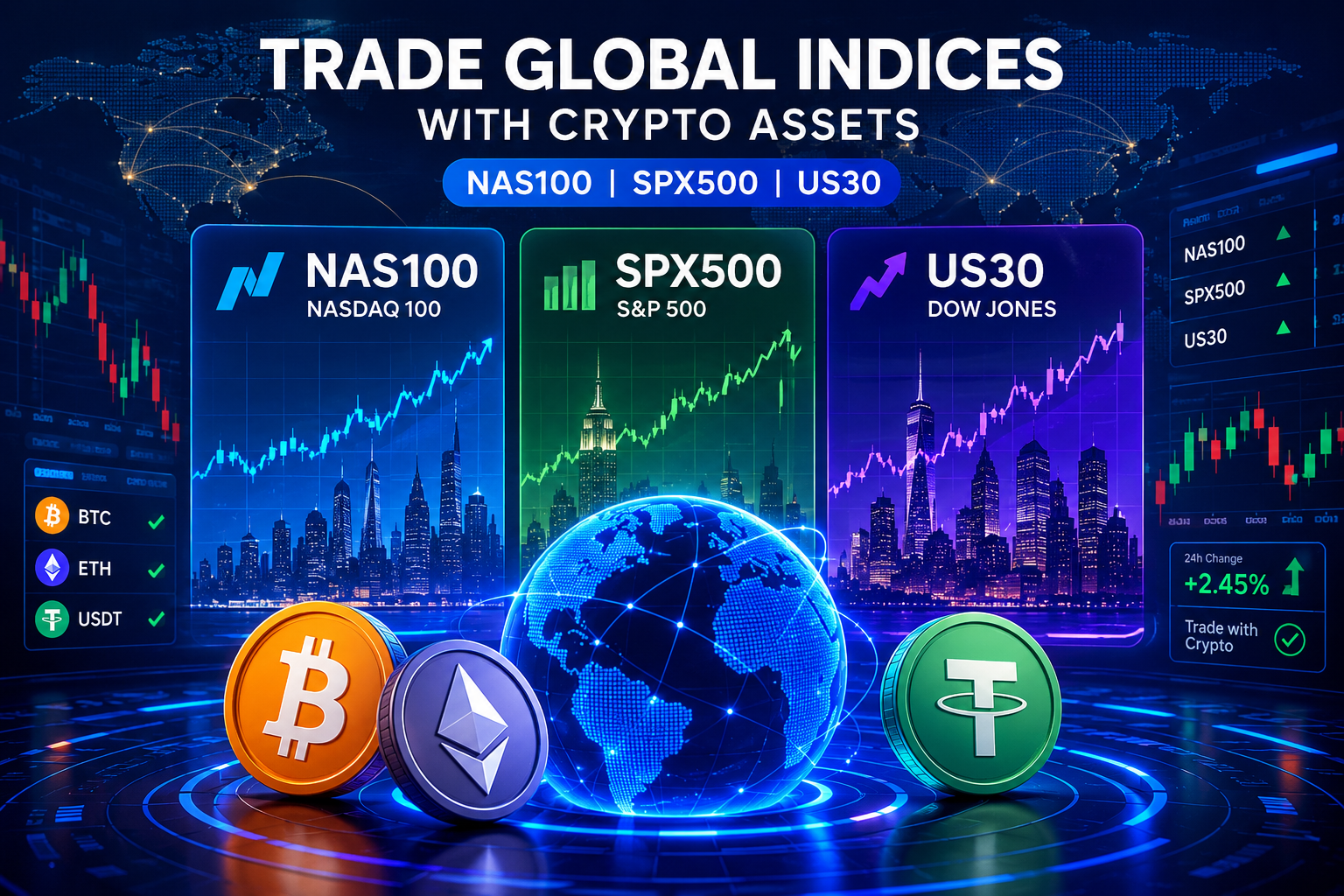
Le SPX500, quant à lui, capture la performance globale des grandes sociétés américaines cotées dans un large éventail de secteurs et sert souvent à mesurer la santé de l’économie et du marché des actions américains. En revanche, le US30 est davantage concentré sur les leaders industriels et de consommation traditionnels, ce qui lui confère un profil de volatilité distinct par rapport aux indices à forte composante technologique.
Ensemble, ces trois indices constituent un cadre de référence pour les investisseurs mondiaux souhaitant évaluer le marché américain, et ils servent d’actifs sous-jacents essentiels pour les CFD indiciels, les ETF et les dérivés financiers numériques.
Quelles sont les différences fondamentales entre le NAS100, le SPX500 et le US30 ?
NAS100, SPX500 et US30 mesurent tous la performance du marché boursier américain, mais ils diffèrent considérablement par leur composition, leur pondération sectorielle et leur profil de volatilité.
| Indice |
Caractéristiques principales |
Secteurs clés |
Profil de volatilité |
| NAS100 |
Actions de croissance technologiques |
IA, Internet, semi-conducteurs |
Volatilité plus élevée |
| SPX500 |
Couvre les grandes entreprises américaines |
Diversification sectorielle large |
Forte représentativité du marché |
| US30 |
Valeurs industrielles de premier ordre |
Industrie, finance, consommation |
Volatilité relativement stable |
Le NAS100 est plus sensible aux attentes de résultats des entreprises technologiques et aux variations des taux d’intérêt, ce qui lui confère généralement une plus grande élasticité. La composition sectorielle plus équilibrée du SPX500 en fait une référence privilégiée pour l’ensemble du marché boursier américain auprès des institutions. Le US30, avec un nombre réduit de composants et une préférence pour les sociétés établies, tend à afficher des mouvements de prix plus stables.
Les méthodes pour s’engager dans le trading d’indices mondiaux en utilisant des actifs crypto incluent les CFD indiciels, les actifs synthétiques et les protocoles de dérivés on-chain.
Les CFD indiciels (Contracts for Difference) sont des dérivés financiers réglés en fonction des mouvements de prix, permettant aux traders de prendre des positions longues ou short sur les variations de prix de l’indice sans détenir directement les actions constitutives.
Certaines plateformes d’actifs numériques permettent également aux utilisateurs de déposer des stablecoins en marge pour trader des indices comme NAS100, SPX500 et US30 au sein d’un compte unifié. Cette configuration réduit les frictions liées au basculement entre les comptes inter-marchés traditionnels.
De plus, certains protocoles on-chain émettent des actifs synthétiques adossés à des indices, se procurant les prix des indices via des oracles et traitant le règlement et la liquidation au sein de Smart Contracts. Cette approche rend les actifs indiciels composables on-chain et permet leur intégration avec les protocoles DeFi, de prêt et de rendement.
Quels sont les moteurs des prix des indices mondiaux ?
Les prix des indices mondiaux sont influencés par une combinaison de facteurs : résultats d’entreprises, conditions macroéconomiques, politique monétaire et sentiment du marché.
Le NAS100 est particulièrement réactif à la croissance des résultats du secteur technologique et aux attentes en matière de taux d’intérêt. Lorsque les marchés anticipent des baisses de taux, les valorisations des valeurs technologiques à forte croissance augmentent souvent, ce qui rend le NAS100 plus volatil.
Le SPX500 offre une image plus large de l’économie, reflétant l’emploi, les dépenses de consommation, l’industrie manufacturière et les bénéfices des entreprises. Le US30, avec sa pondération plus importante dans les entreprises industrielles et de consommation traditionnelles, est plus directement lié aux cycles économiques réels.
La liquidité en dollars américains et l’appétit pour le risque au niveau mondial jouent également un rôle. Lorsque l’appétit pour le risque augmente, les capitaux ont tendance à affluer vers les actifs de croissance ; en période d’aversion au risque, les marchés d’indices peuvent connaître une volatilité accrue.
Étant donné que les marchés crypto sont étroitement liés aux conditions de liquidité mondiales, une corrélation croissante émerge entre les indices mondiaux et les actifs numériques.
Quelle est la structure de risque dans le trading d’indices mondiaux ?
Malgré une liquidité élevée et une base de marché mature, le trading d’indices mondiaux comporte des risques importants.
Premièrement, la volatilité du marché : les prix des indices peuvent fluctuer rapidement en raison des données économiques, des rapports de résultats et des changements de politique, en particulier lors d’événements macroéconomiques.
Deuxièmement, le risque d'effet de levier : de nombreux produits CFD indiciels permettent le trading sur marge, de sorte que de petits mouvements de prix peuvent amplifier les gains ou les pertes du compte.
Troisièmement, le risque de liquidité et de session de trading : bien que certaines plateformes d’actifs numériques offrent un trading quasi 24 h/24 et 7 j/7, les indices sous-jacents restent contraints par les heures de marché boursier traditionnel et les conditions de liquidité.
Pour les actifs synthétiques on-chain, des risques supplémentaires incluent les vulnérabilités des Smart Contracts, les défaillances des oracles et les cascades de liquidation systémiques — des profils de risque qui diffèrent nettement des titres traditionnels.
Les produits impliquant le trading d’indices mondiaux et d’actifs numériques comportent un risque de marché, et les prix des actifs associés peuvent fluctuer considérablement en raison des changements macroéconomiques, des variations de liquidité et du sentiment du marché.
La convergence de la finance crypto et des marchés d’indices traditionnels transforme l’infrastructure financière, la faisant passer d’un modèle mono-actif à un écosystème inter-marchés.
Les marchés financiers traditionnels ont longtemps dépendu des courtiers, des bourses et des chambres de compensation, tandis que l’écosystème des actifs numériques met l’accent sur le règlement on-chain, les marchés ouverts 24 h/24 et les protocoles ouverts. À mesure que les stablecoins et l’infrastructure financière on-chain arrivent à maturité, davantage d’actifs financiers traditionnels entrent dans l’espace crypto sous forme numérique.
Les actifs indiciels, avec leur grande standardisation et leurs cadres de prix établis, font partie des produits traditionnels les plus faciles à numériser. Des indices comme le NAS100, le SPX500 et le US30 entrent désormais dans les systèmes financiers on-chain via des CFD, des actifs synthétiques et des mécanismes de cartographie d’actifs du monde réel (RWA).
Cette tendance indique que le marché des actifs crypto évolue d’une « classe d’actifs indépendante » vers une partie intégrante de l’infrastructure financière mondiale.
Résumé
En tant qu’indices boursiers les plus importants au monde, le NAS100, le SPX500 et le US30 représentent respectivement les valeurs de croissance technologiques, les actifs de base à grande capitalisation et les valeurs industrielles de premier ordre. Avec l’avancement continu de l’infrastructure des actifs numériques, le marché crypto offre désormais une variété de moyens pour trader les indices mondiaux, notamment les CFD indiciels, les actifs synthétiques on-chain et les dérivés financiers numériques.
FAQ
Quelles sont les différences entre le NAS100, le SPX500 et le US30 ?
Le NAS100 se compose principalement d’entreprises technologiques en croissance, le SPX500 couvre le large marché des grandes sociétés américaines cotées, et le US30 est davantage axé sur les valeurs industrielles traditionnelles de premier ordre. Ils diffèrent en termes de composition sectorielle, de volatilité et de représentativité du marché.
Qu’est-ce qu’un CFD indiciel ?
Un CFD indiciel est un contrat sur différence réglé en fonction des variations de prix de l’indice. Il permet aux traders de prendre des positions longues ou short avec effet de levier sans détenir les actions sous-jacentes.
Pourquoi le NAS100 est-il plus volatil ?
Le NAS100 a une forte concentration d’actions de croissance technologiques, ce qui le rend plus sensible aux variations des taux d’intérêt, aux attentes de résultats technologiques et à l’appétit pour le risque du marché. Sa volatilité des prix est généralement plus élevée que celle des indices industriels traditionnels.
Existe-t-il une corrélation entre les actifs crypto et les indices mondiaux ?
La liquidité mondiale, les taux d’intérêt américains et l’appétit pour le risque du marché influencent souvent à la fois les actifs crypto et les indices boursiers, de sorte que les deux marchés peuvent présenter des mouvements corrélés durant certaines périodes.
Quels sont les principaux risques du trading d’indices mondiaux ?
Les risques clés incluent la volatilité du marché, l’effet de levier, la liquidité et les changements de politique macroéconomique. Pour les actifs synthétiques on-chain, les risques liés aux Smart Contracts et aux oracles s’appliquent également.