Gate Layer: Core Architecture
Gate Layer is built on the OP Stack framework, with Gate Chain serving as its foundational settlement layer. This fusion maintains robust security and adaptability, allowing developers to migrate existing Ethereum applications effortlessly—saving both time and deployment costs.
Key Technology Features:
- Full EVM Compatibility: Enables seamless integration with Ethereum tools and smart contracts for a streamlined development experience.
- Dual-Layer Security: Combines Gate Chain consensus with GT staking to deliver enhanced security and resilience.
- Ultra-Fast Blocks & High TPS: Average block time of approximately 1 second, supporting peak throughput up to 5,700 TPS.
- Low Transaction Costs: Gas fees are far below those on most other Layer 2 networks.
- Cross-Chain Interoperability: Integrates with the LayerZero protocol for seamless interaction with ETH, BSC, Polygon, and more.
With these capabilities, Gate Layer delivers optimal performance, low costs, and developer-friendly tools—making it the preferred deployment environment for leading Web3 initiatives.
Gate Layer Debuts Gas-Free Swap Feature
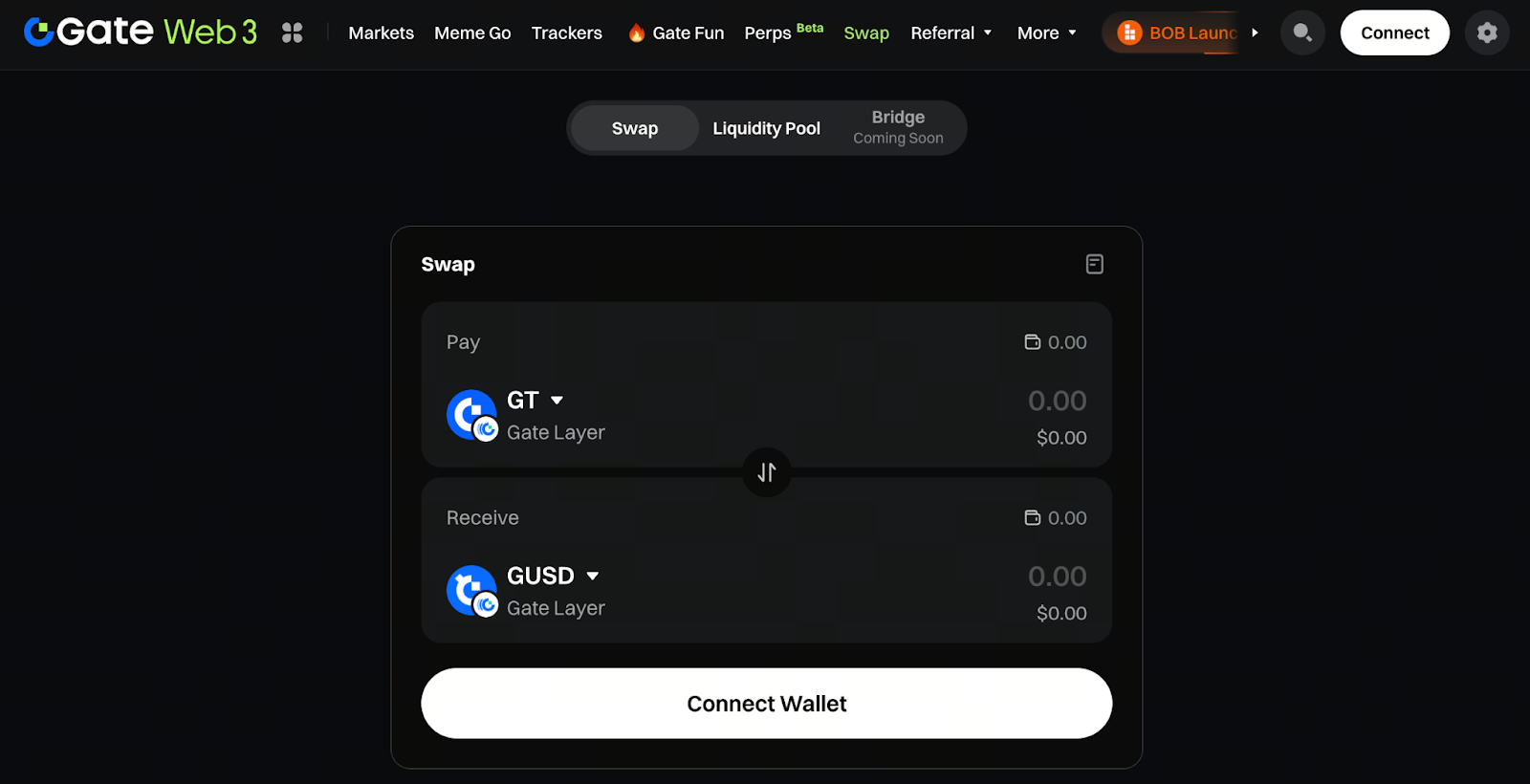
Gate Layer, Gate’s proprietary high-performance Layer 2 network, now offers gas-free swaps. If a user’s wallet lacks sufficient native assets (like GT), the system will automatically deduct gas fees from the payment token—eliminating the need to hold extra native tokens to complete transactions.
Traditionally, swaps require gas paid in the native token, and insufficient balances can interrupt transactions. On Gate Layer, users simply select their token and confirm the trade. When the gas-free mode is enabled, the system prompts and automatically deducts fees from the payment token—fees are only charged if the transaction succeeds. Afterward, users can view detailed fee deductions in their transaction history.
This feature is currently exclusive to Gate Layer, with plans to expand to other networks. The new process dramatically simplifies token swaps, reducing friction caused by gas fees and making on-chain activity more efficient and seamless. Gate is also committed to ongoing user experience enhancements, delivering a more convenient decentralized trading environment.
Experience gas-free swaps now and elevate your on-chain trading: https://web3.gate.com/en/swap/gt-gatelayer-to-gusd-gatelayer/0xeeeeeeeeeeeeeeeeeeeeeeeeeeeeeeeeeeeeeeee,0xece3f96198a5e6b9b2278edbea8d548f66050d1c
Gate Swap Liquidity Pool Goes Live
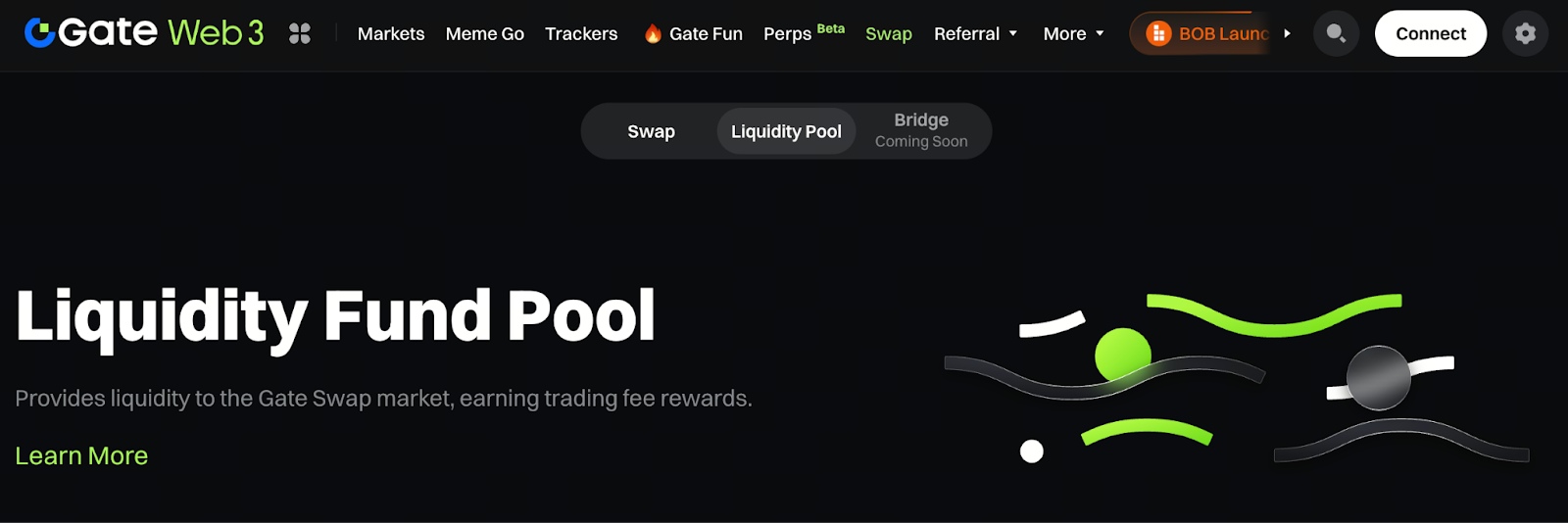
Gate Swap, the decentralized AMM protocol on Gate Layer, has officially launched liquidity pools—delivering greater on-chain trading efficiency and liquidity support for the entire ecosystem. Users can provide funds to any token pair (such as GT/USDT) to become liquidity providers (LPs), earning a proportional share of transaction fees based on their contribution. All fees are distributed 100% to LPs, with no platform commission, allowing participants to benefit directly from ecosystem growth.
Gate Swap also lets users create custom liquidity pools: simply select a token pair, set the initial price, and authorize the pool to launch a new trading pair. LP tokens serve as proof of position and can be redeemed at any time, offering flexible market entry and exit. Although LPs may face impermanent loss during volatility, trading fees and ecosystem incentives may offset these risks over time.
Gate Layer’s core liquidity infrastructure has reached a new milestone. Both retail users and DeFi power users can now earn returns by providing liquidity—driving asset flow, value creation, and innovative applications, and fueling the ecosystem’s financial growth.
Experience the Gate Swap liquidity pool now: https://web3.gate.com/en/swap/liquidity
Building a Diverse Ecosystem
Gate Layer is much more than a technical platform—it is evolving into a comprehensive ecosystem for applications spanning trading, creation, community engagement, and more. Current offerings include:
- Perp DEX: A high-speed perpetual contract trading platform delivering low slippage and real-time order execution.
- Gate Fun: A zero-code tool empowering anyone to launch tokens and build community-driven economies.
- Meme Go: A multi-chain meme coin market tracker with real-time analytics and trend monitoring.
These native applications highlight Gate Layer’s ecosystem expansion and provide developers clear insight into its potential.
GT Token: Powering the Ecosystem
GateToken (GT) has entered a new era—not just an exchange token, but the economic engine of the Gate Layer ecosystem. GT’s core functions include:
- On-Chain Medium of Exchange: Used for smart contract deployment, NFT trading, cross-chain transactions, and more.
- Dual Deflationary Design:
- Burn Mechanism: By Q2 2025, over 60% of all GT supply will have been permanently burned.
- EIP-1559 Model: Automatically burns a portion of transaction fees, enhancing scarcity and supporting price stability.
This tokenomics structure provides GT with both practical utility and long-term value within the ecosystem.
Summary
Gate Layer is more than just a Layer 2 solution—it’s an advanced infrastructure platform designed to upgrade the entire Web3 ecosystem. By balancing performance, security, and economic efficiency, Gate Layer lowers the barrier for both developers and users to participate in blockchain innovation. As the GT token economy grows and the application ecosystem expands, Gate Layer is becoming a critical node in the Web3 landscape, accelerating the progress toward a decentralized, resilient future.







